
Home      Discussion      Topics      Dictionary      Almanac
Signup       Login
Salvia divinorum

Salvia divinorum

Overview
Salvia divinorum is a psychoactive
Psychoactive drug
A psychoactive drug, psychopharmaceutical, or psychotropic is a chemical substance that crosses the blood–brain barrier and acts primarily upon the central nervous system where it affects brain function, resulting in changes in perception, mood, consciousness, cognition, and behavior...

 plant which can induce dissociative
Dissociative drug
Dissociatives are a class of psychoactive drugs which are said to reduce or block signals to the conscious mind from other parts of the brain...

 effects and is a potent producer of "visions" and other hallucinatory experiences. Its native habitat is within cloud forest
Cloud forest
A cloud forest, also called a fog forest, is a generally tropical or subtropical evergreen montane moist forest characterized by a persistent, frequent or seasonal low-level cloud cover, usually at the canopy level. Cloud forests often exhibit an abundance of mosses covering the ground and...

 in the isolated Sierra Mazateca
Sierra Madre de Oaxaca
The Sierra Madre de Oaxaca is a mountain range in southern Mexico. It begins at Pico de Orizaba and extends in a southeasterly direction for 300 km until reaching the Isthmus of Tehuantepec...

 of Oaxaca
Oaxaca
Oaxaca , , officially Estado Libre y Soberano de Oaxaca is one of the 31 states which, along with the Federal District, comprise the 32 federative entities of Mexico. It is divided into 571 municipalities; of which 418 are governed by the system of customs and traditions...

, Mexico
Mexico
The United Mexican States , commonly known as Mexico , is a federal constitutional republic in North America. It is bordered on the north by the United States; on the south and west by the Pacific Ocean; on the southeast by Guatemala, Belize, and the Caribbean Sea; and on the east by the Gulf of...

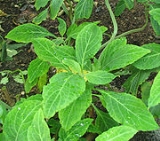
, where it grows in shady and moist locations. The plant grows to over a meter high, has hollow square stems, large leaves, and occasional white flowers with violet calyxes
Sepal
A sepal is a part of the flower of angiosperms . Collectively the sepals form the calyx, which is the outermost whorl of parts that form a flower. Usually green, sepals have the typical function of protecting the petals when the flower is in bud...

. Botanists have not determined whether Salvia divinorum is a cultigen
Cultigen
A cultigen is a plant that has been deliberately altered or selected by humans; it is the result of artificial selection. These "man-made" or anthropogenic plants are, for the most part, plants of commerce that are used in horticulture, agriculture and forestry...

 or a hybrid; native plants reproduce vegetatively
Vegetative reproduction
Vegetative reproduction is a form of asexual reproduction in plants. It is a process by which new individuals arise without production of seeds or spores...

, rarely producing viable seed.
Discussion
Ask a question about 'Salvia divinorum'
Start a new discussion about 'Salvia divinorum'
Answer questions from other users
Full Discussion Forum
 
Recent Discussions
Encyclopedia
Salvia divinorum is a psychoactive
Psychoactive drug
A psychoactive drug, psychopharmaceutical, or psychotropic is a chemical substance that crosses the blood–brain barrier and acts primarily upon the central nervous system where it affects brain function, resulting in changes in perception, mood, consciousness, cognition, and behavior...

 plant which can induce dissociative
Dissociative drug
Dissociatives are a class of psychoactive drugs which are said to reduce or block signals to the conscious mind from other parts of the brain...

 effects and is a potent producer of "visions" and other hallucinatory experiences. Its native habitat is within cloud forest
Cloud forest
A cloud forest, also called a fog forest, is a generally tropical or subtropical evergreen montane moist forest characterized by a persistent, frequent or seasonal low-level cloud cover, usually at the canopy level. Cloud forests often exhibit an abundance of mosses covering the ground and...

 in the isolated Sierra Mazateca
Sierra Madre de Oaxaca
The Sierra Madre de Oaxaca is a mountain range in southern Mexico. It begins at Pico de Orizaba and extends in a southeasterly direction for 300 km until reaching the Isthmus of Tehuantepec...

 of Oaxaca
Oaxaca
Oaxaca , , officially Estado Libre y Soberano de Oaxaca is one of the 31 states which, along with the Federal District, comprise the 32 federative entities of Mexico. It is divided into 571 municipalities; of which 418 are governed by the system of customs and traditions...

, Mexico
Mexico
The United Mexican States , commonly known as Mexico , is a federal constitutional republic in North America. It is bordered on the north by the United States; on the south and west by the Pacific Ocean; on the southeast by Guatemala, Belize, and the Caribbean Sea; and on the east by the Gulf of...

, where it grows in shady and moist locations. The plant grows to over a meter high, has hollow square stems, large leaves, and occasional white flowers with violet calyxes
Sepal
A sepal is a part of the flower of angiosperms . Collectively the sepals form the calyx, which is the outermost whorl of parts that form a flower. Usually green, sepals have the typical function of protecting the petals when the flower is in bud...

. Botanists have not determined whether Salvia divinorum is a cultigen
Cultigen
A cultigen is a plant that has been deliberately altered or selected by humans; it is the result of artificial selection. These "man-made" or anthropogenic plants are, for the most part, plants of commerce that are used in horticulture, agriculture and forestry...

 or a hybrid; native plants reproduce vegetatively
Vegetative reproduction
Vegetative reproduction is a form of asexual reproduction in plants. It is a process by which new individuals arise without production of seeds or spores...

, rarely producing viable seed.

Mazatec shamans
Mazatec shamans
The Mazatec Shamans are known for their ritual use of psilocybe mushrooms. Some shamans on occasion use other plants, such as Salvia divinorum and morning glory seeds...

 have a long and continuous tradition of religious use of Salvia divinorum, using it to facilitate visionary states of consciousness
Altered state of consciousness
An altered state of consciousness , also named altered state of mind, is any condition which is significantly different from a normal waking beta wave state. The expression was used as early as 1966 by Arnold M. Ludwig and brought into common usage from 1969 by Charles Tart: it describes induced...

 during spiritual healing sessions. Most of the plant's local common names allude to the Mazatec belief that the plant is an incarnation of the Virgin Mary, with its ritual use also invoking that relationship. Its active psychoactive constituent is a structurally unique diterpenoid called salvinorin A
Salvinorin A
Salvinorin A is the main active psychotropic molecule in Salvia divinorum, a Mexican plant which has a long history of use as an entheogen by indigenous Mazatec shamans...

, a potent κ-opioid
Kappa Opioid receptor
The κ-opioid receptor is a protein that in humans is encoded by the OPRK1 gene. The κ-opioid receptor is one of five related receptors that bind opium-like compounds in the brain and are responsible for mediating the effects of these compounds...

 and D2 receptor agonist
Agonist
An agonist is a chemical that binds to a receptor of a cell and triggers a response by that cell. Agonists often mimic the action of a naturally occurring substance...

. Salvia divinorum is generally understood to be of low toxicity (high ) and low addictive potential since it is a κ-opioid agonist.

Salvia divinorum remains legal in most countries and, within the United States, is legal in the majority of states. However, some have called for its prohibition. While not currently regulated by US federal drug laws, several states have passed laws criminalizing the substance. Some proposed state bills have failed to progress and have not been made into law (with motions having been voted down or otherwise dying in committee stages). There have not been many publicized prosecutions of individuals violating anti-salvia laws in the few countries and states in which it has been made illegal.

History


Salvia divinorum is native to the Sierra Mazateca in Oaxaca
Oaxaca
Oaxaca , , officially Estado Libre y Soberano de Oaxaca is one of the 31 states which, along with the Federal District, comprise the 32 federative entities of Mexico. It is divided into 571 municipalities; of which 418 are governed by the system of customs and traditions...

, Mexico, where it is still used by the Mazatec, primarily to facilitate shamanic
Shamanism
Shamanism is an anthropological term referencing a range of beliefs and practices regarding communication with the spiritual world. To quote Eliade: "A first definition of this complex phenomenon, and perhaps the least hazardous, will be: shamanism = technique of ecstasy." Shamanism encompasses the...

 visions in the context of curing or divination
Divination
Divination is the attempt to gain insight into a question or situation by way of an occultic standardized process or ritual...

. S. divinorum is one of several species with hallucinogenic properties that are ritually used by Mazatec shamans. Others include certain morning glory seeds (Turbina corymbosa), psilocybin mushroom
Psilocybin mushroom
Psilocybin mushrooms are fungi that contain the psychoactive compounds psilocybin and psilocin. There are multiple colloquial terms for psilocybin mushrooms, the most common being shrooms or magic mushrooms....

s, and various coleus
Coleus
Solenostemon is a genus of perennial plants, native to tropical Africa, Asia, Australia, the East Indies, the Malay Archipelago, and the Philippines...

 species. In their rituals, the shamans use only fresh S. divinorum leaves. They see the plant as an incarnation of the Virgin Mary, and begin the ritual with an invocation to Mary, Saint Peter
Saint Peter
Saint Peter or Simon Peter was an early Christian leader, who is featured prominently in the New Testament Gospels and the Acts of the Apostles. The son of John or of Jonah and from the village of Bethsaida in the province of Galilee, his brother Andrew was also an apostle...

, the Holy Trinity, and other saints. Ritual use traditionally involves being in a quiet place after ingestion of the leaf—the Maztec shamans say that "La Maria (S. divinorum) speaks with a quiet voice."

It is also used remedially at lower dosages as a diuretic
Diuretic
A diuretic provides a means of forced diuresis which elevates the rate of urination. There are several categories of diuretics. All diuretics increase the excretion of water from bodies, although each class does so in a distinct way.- Medical uses :...

, and to treat ailments including diarrhea, anemia
Anemia
Anemia is a decrease in number of red blood cells or less than the normal quantity of hemoglobin in the blood. However, it can include decreased oxygen-binding ability of each hemoglobin molecule due to deformity or lack in numerical development as in some other types of hemoglobin...

, headaches, rheumatism, and a semi-magical disease known as panzón de borrego, or a swollen belly (literally, "lamb belly").

The history of the plant is not well known, and there has been no definitive answer to the question of its origin. Speculation includes Salvia divinorum being a wild plant native to the area; a cultigen
Cultigen
A cultigen is a plant that has been deliberately altered or selected by humans; it is the result of artificial selection. These "man-made" or anthropogenic plants are, for the most part, plants of commerce that are used in horticulture, agriculture and forestry...

 of the Mazatecs; or a cultigen introduced by another indigenous group. Botanists have also not been able to determine whether it is a hybrid or a cultigen.

Academic discovery


Salvia divinorum was first recorded in print by Jean Basset Johnson
Jean Basset Johnson
Jean Bassett Johnson was an American anthropologist and linguist who conducted field studies in Mexico during the 1930s and early 1940s...

 in 1939 while he was studying Mazatec shamanism. He later documented its usage and reported its effects through personal testimonials. It was not until the 1990s that the psychoactive mechanism was identified by a team led by Daniel Siebert
Daniel Siebert
Daniel J. Siebert is an ethnobotanist, pharmacognosist, and author who lives in Malibu, California.Siebert has studied Salvia divinorum for over twenty years and claims to be the first person to unequivocally identify Salvinorin A as the primary psychoactive principal of Salvia divinorum...

.

Gordon Wasson tentatively postulated that the plant could be the mythological pipiltzintzintli, the "Noble Prince" of the Aztec codices
Aztec codices
Aztec codices are books written by pre-Columbian and colonial-era Aztecs. These codices provide some of the best primary sources for Aztec culture....

. Wasson's speculation has been the subject of further debate amongst ethnobotanists
Ethnobotany
Ethnobotany is the scientific study of the relationships that exist between people and plants....

, with some scepticism coming from Leander J. Valdés, and counterpoints more supportive of Wasson's theory from Jonathan Ott
Jonathan Ott
Jonathan Ott is an ethnobotanist, writer, translator, publisher, natural products chemist and botanical researcher in the area of entheogens and their cultural and historical uses, and helped coin the term "entheogen".-Writings:...

.

The identity of another mysterious Aztec entheogen
Aztec entheogenic complex
The ancient Aztecs employed a variety of entheogenic plants and animals within their society. The various species have been identified through their depiction on murals, vases, and other objects...

, namely that of poyomatli, has also been suggested as being Salvia divinorum.
Here too there are other candidate plants, notably Cacahuaxochitl (Quararibea funebris), again suggesting that there is no overall consensus.

Etymology


The genus name, Salvia, was first used by Pliny
Pliny the Elder
Gaius Plinius Secundus , better known as Pliny the Elder, was a Roman author, naturalist, and natural philosopher, as well as naval and army commander of the early Roman Empire, and personal friend of the emperor Vespasian...

 for a plant that was likely Salvia officinalis (common sage) and is derived from the Latin salvere. The specific epithet, divinorum, was given because of the plant's traditional use in divination
Divination
Divination is the attempt to gain insight into a question or situation by way of an occultic standardized process or ritual...

 and healing. it is often loosely translated as "diviner's sage" or "seer's sage". Albert Hofmann
Albert Hofmann
Albert Hofmann was a Swiss scientist known best for being the first person to synthesize, ingest and learn of the psychedelic effects of lysergic acid diethylamide . He authored more than 100 scientific articles and a number of books, including LSD: My Problem Child...

, who collected the first plants with Wasson, objected to the new plant being given the name divinorum:
I was not very happy with the name because Salvia divinorum means "Salvia of the ghosts", whereas Salvia divinatorum, the correct name, means "Salvia of the priests", But it is now in the botanical literature under the name Salvia divinorum.


In fact, the primary meaning of divinorum is "of the divine ones", although "of the soothsayers" is also a possible correct reading of it. An alternative choice of words (divinatorum, haruspicum, hariolorum...) would less ambiguously express "of the soothsayers/diviners".

There are many common names for S. divinorum, most of them relating to the plant's association with the Virgin Mary. The Mazatec believe the plant to be an incarnation of the Virgin Mary, so they take great care in handling the plant. The name "Ska Maria Pastora", often shortened to "Ska Maria" or "Ska Pastora", refers to "the leaf or herb of Mary, the Shepherdess." Other Spanish names include "hojas de Maria", "hojas de la Pastora", "hierba (yerba) Maria", and "la Maria". A plant believed to be S. divinorum was referred to as "hoja de adivinacion" (leaf of prophecy) by the Cuicatec and Mazatec. S. divinorum is also known as la hembra ("the female"), when it is included by the Mazatec as part of a family of similar religious hallucinogens. The others it is connected with are Coleus pumila, called el macho ("the male"), and two forms of Coleus blumei which are called el nene ("the child") and el ahijado ("the godson").

Some researchers see the lack of an indigenous Mazatec name as demonstrating a non-Mazatec origin for the plant. Others point out that the Virgin Mary is not normally viewed as a shepherdess in Christianity, and that image may hint at a pre-Hispanic Mazatec cultural reference to the plant.

Recent history


Salvia divinorum has become both increasingly well-known and available in modern culture. The Internet has allowed for the growth of many businesses selling live salvia plants, dried leaves, extracts, and other preparations.

Medical experts, as well as accident and emergency rooms, have not been reporting cases that suggest particular salvia-related health concerns, and police have not been reporting it as a significant issue with regard to public order offences; in any case, Salvia divinorum has attracted negative attention from the media and some lawmakers.

Media stories generally raise alarms over Salvia divinorums legal status
Legal status of Salvia divinorum
Salvia divinorum, a psychoactive plant, is currently legal in most countries. Current exceptions, countries where there is some form of control, include Australia, Belgium, Denmark, Estonia, Finland, Germany, Italy, Poland, Spain, and Sweden....

 and are sometimes headlined with generally ill-supported comparisons to LSD
LSD
Lysergic acid diethylamide, abbreviated LSD or LSD-25, also known as lysergide and colloquially as acid, is a semisynthetic psychedelic drug of the ergoline family, well known for its psychological effects which can include altered thinking processes, closed and open eye visuals, synaesthesia, an...

 or other psychoactive substances. Parental concerns are raised by focusing on salvia's usage by younger teens—the emergence of YouTube
YouTube
YouTube is a video-sharing website, created by three former PayPal employees in February 2005, on which users can upload, view and share videos....

 videos purporting to depict its use being an area of particular concern in this respect. The isolated and controversial suicide of Brett Chidester received much media attention.

Salvia divinorum was the subject of the first use of YouTube
YouTube
YouTube is a video-sharing website, created by three former PayPal employees in February 2005, on which users can upload, view and share videos....

 within drug-behavioral research when scientists at San Diego State University
San Diego State University
San Diego State University , founded in 1897 as San Diego Normal School, is the largest and oldest higher education facility in the greater San Diego area , and is part of the California State University system...

 rated randomly selected videos of salvia users to study observed impairment. Their findings corroborate reports that the most profound effects of smoking salvia appear almost immediately and last about eight minutes. Effects include temporary speech and coordination loss.

Botany


Salvia divinorum has large green ovate
Leaf shape
In botany, leaf shape is characterised with the following terms :* Acicular : Slender and pointed, needle-like* Acuminate : Tapering to a long point...

 (oftentimes also dentate) leaves, with a yellow undertone that reach 10 to 30 cm (4 to 12 in) long. The leaves have no hairs
Trichome
Trichomes are fine outgrowths or appendages on plants and certain protists. These are of diverse structure and function. Examples are hairs, glandular hairs, scales, and papillae.- Algal trichomes :...

 on either surface, and little or no petiole
Petiole (botany)
In botany, the petiole is the stalk attaching the leaf blade to the stem. The petiole usually has the same internal structure as the stem. Outgrowths appearing on each side of the petiole are called stipules. Leaves lacking a petiole are called sessile, or clasping when they partly surround the...

. The plant grows to well over 1 metres (3 ft) in height, on hollow square stems which tend to break or trail on the ground, with the plant rooting quite readily at the nodes
Plant stem
A stem is one of two main structural axes of a vascular plant. The stem is normally divided into nodes and internodes, the nodes hold buds which grow into one or more leaves, inflorescence , conifer cones, roots, other stems etc. The internodes distance one node from another...

 and internodes.

The flowers, which bloom only rarely, grow in whorl
Whorl (botany)
In botany, a whorl is an arrangement of sepals, petals, leaves, or branches in which all the parts are attached at the same point and surround or wrap around the stem.There are four whorls in a general flower...

s on a 30 centimetres (11.8 in) inflorescence
Inflorescence
An inflorescence is a group or cluster of flowers arranged on a stem that is composed of a main branch or a complicated arrangement of branches. Strictly, it is the part of the shoot of seed plants where flowers are formed and which is accordingly modified...

, with about six flowers to each whorl. The 3 centimetres (1.2 in) flowers are white, curved and covered with hairs, and held in a small violet calyx
Sepal
A sepal is a part of the flower of angiosperms . Collectively the sepals form the calyx, which is the outermost whorl of parts that form a flower. Usually green, sepals have the typical function of protecting the petals when the flower is in bud...

 that is covered in hairs and glands. When it does bloom in its native habitat, it does so from September to May.

Early authors erred in describing the flowers as having blue corollas, based on Epling and Játiva's description. The first plant material they received was dried, so they based the flower color on an erroneous description by Hofmann and Wasson, who didn't realize that their "blue flowers, crowned with a white dome" were in fact violet calyces
Sepal
A sepal is a part of the flower of angiosperms . Collectively the sepals form the calyx, which is the outermost whorl of parts that form a flower. Usually green, sepals have the typical function of protecting the petals when the flower is in bud...

 with unopened white corollas.

Distribution and habitat


Salvia divinorum is endemic to the Sierra Mazateca in the state of Oaxaca
Oaxaca
Oaxaca , , officially Estado Libre y Soberano de Oaxaca is one of the 31 states which, along with the Federal District, comprise the 32 federative entities of Mexico. It is divided into 571 municipalities; of which 418 are governed by the system of customs and traditions...

 in Mexico, growing in the primary or secondary cloud forest
Cloud forest
A cloud forest, also called a fog forest, is a generally tropical or subtropical evergreen montane moist forest characterized by a persistent, frequent or seasonal low-level cloud cover, usually at the canopy level. Cloud forests often exhibit an abundance of mosses covering the ground and...

 and tropical evergreen forest at elevations from 1000 to 6000 ft (304.8 to 1,828.8 m). Its most common habitat is black soil along stream banks where small trees and bushes provide an environment of low light and high humidity.

Reproduction


Salvia divinorum produces few viable seeds even when it does flower—no seeds have ever been observed on plants in the wild. For an unknown reason, pollen fertility is also comparatively reduced. There is no active pollen tube
Pollen tube
The pollen tubes is the male gametophyte of seed plants that acts as a conduit to transport the male sperm cells from the pollen grain, either from the stigma to the ovules at the base of the pistil, or directly through ovule tissue in some gymnosperms .After pollination, the pollen tube...

 inhibition within the style, but some event or process after the pollen tube reaches the ovary is aberrant. The likeliest explanations are inbreeding depression
Inbreeding depression
Inbreeding depression is the reduced fitness in a given population as a result of breeding of related individuals. It is often the result of a population bottleneck...

 or hybridity
Hybridity
Hybridity refers in its most basic sense to mixture. The term originates from biology and was subsequently employed in linguistics and in racial theory in the nineteenth century. Its contemporary uses are scattered across numerous academic disciplines and is salient in popular culture...

. All of the Mazatec populations appear to be clonal. The plant's square stems break easily and tend to trail on the ground, rooting easily at the nodes and internodes.

Taxonomy


Salvia divinorum was first documented in 1939, but it was many years before botanists could identify the plant due to Mazatec secrecy about the growing sites. Flowers were needed for a definitive identification of the species. In 1962, the Swiss chemist Albert Hofmann
Albert Hofmann
Albert Hofmann was a Swiss scientist known best for being the first person to synthesize, ingest and learn of the psychedelic effects of lysergic acid diethylamide . He authored more than 100 scientific articles and a number of books, including LSD: My Problem Child...

, and ethnomycologist R. Gordon Wasson, traveled throughout the Sierra Mazateca researching Mazatec rituals and looking for specimens of the plant. They were unable to locate live plants. Eventually, the Mazatec provided them some flowering specimens. These specimens were sent to botanists Carl Epling
Carl Epling
Carl Clawson Epling was an American botanist who is best known for being the major authority on the Lamiaceae of the Americas from the 1920s to the 1960s. In his later years he also developed an interest in genetics. After obtaining his Ph.D...

 and Carlos D. Játiva, who described and named the plant as Salvia divinorum, after its use in divination and healing by the Mazatec. By 1985, up to fifteen populations of the plant had been found.

Until 2010, there were differing opinions on whether Salvia divinorum is an interspecific hybrid. The plant's partial sterility was suggestive of a hybrid origin, though no two parent species have been found with an obvious affinity to Salvia divinorum. One other possibility for the plant's partial sterility is that long-term cultivation and selection have produced an inbred cultigen.Botanist Valdés (1987), wrote that, "It is doubtful that the Salvia is a true cultigen", based partly on his belief that it was first "collected in the highlands and planted in more accessible places, where it becomes naturalized". The main cultigen proponent is Gordon Wasson, who is not a botanist.

In 2010, a molecular phylogenetic approach by DNA sequencing
DNA sequencing
DNA sequencing includes several methods and technologies that are used for determining the order of the nucleotide bases—adenine, guanine, cytosine, and thymine—in a molecule of DNA....

 of Salvia divinorum and a number of related species strongly suggest that the species is not a hybrid. One earlier proposed parent was Salvia cyanea (a synonym for Salvia concolor), which Epling and Játiva believed to be closely allied to Salvia divinorum.Reisfield is unsure why Epling "used the invalid name (the synonym rather than the valid name S. concolor), nor why he considered this species close to S. divinorum". The 2010 study demonstrated Salvia divinorums closest relative to be Salvia venulosa
Salvia venulosa
Salvia venulosa is a perennial plant that is native to a very small region of the Western Cordillera in Colombia. It grows at elevation in deeply shaded wooded gullies. S. venulosa grows less than tall, with narrow ovate leaves that are long and wide, and violet on the underside...

—a rare and endemic Salvia that is native to Colombia, growing in shaded, wooded gullies at 1500 to 2000 m (4,921.3 to 6,561.7 ft) elevation. It also showed that Salvia divinorum does not belong to the Salvia section Dusenostachys, as believed earlier. The genetic study also indicated that Salvia venulosa was likely misplaced into Salvia section Tubiflorae, and that it may not be related to other Colombia Salvia species, though further tests are needed.

The origin of Salvia divinorum is still a mystery, one of only three plants in the extensive Salvia genus (approximately 900 species) with unknown origins—the other two are Salvia tingitana
Salvia tingitana
Salvia tingitana is an herbaceous perennial in the family Lamiaceae. It has a long and enigmatic history—it has been grown and described since the 17th century without any certainty about its origin...

 and Salvia buchananii
Salvia buchananii
Salvia buchananii is a herbaceous perennial shrub that isn't currently known in the wild, but is presumed to be from Mexico. Seed from a garden plant in Mexico City was taken to England around 1960, where it was grown by Sir Charles Buchanan. It is sometimes called Buchanan's fuchsia sage...

.

Strains


There are two commonly cultivated strains which are known to be distinct. One is the strain that was collected in 1962 by ecologist and psychologist Sterling Bunnell (the Bunnell strain), colloquially mis-attributed as the Wasson-Hofmann strain. The other was collected from Huautla de Jiménez
Municipality of Huautla de Jiménez
Huautla de Jimenez is a town and municipality in the Mexican state of Oaxaca.It is part of the Teotitlán District in the north of the Cañada Region....

 in 1991 by anthropologist Bret Blosser (the Blosser or Palatable strain). There are other strains that are not as well documented, such as the Luna strain (possibly Bunnell) isolated from a Hawaiian patch of Salvia divinorum clones, featuring unusually serrated and rounded rather than ovate leaves.

Propagation by cuttings


Salvia divinorum is usually propagated through vegetative reproduction
Vegetative reproduction
Vegetative reproduction is a form of asexual reproduction in plants. It is a process by which new individuals arise without production of seeds or spores...

. Small cuttings, between two and eight inches long, cut off of the mother plant
Mother plant
A Mother plant is a plant grown for the purpose of taking cuttings or offsets in order to grow more quantity of the same plant....

 just below a node, will usually root in plain tap water within two or three weeks.

Flowering


Blooms occur when the day length becomes shorter than 12 hours (beginning in mid-October in some places), necessitating a shade cloth in urban environments with exposure to light pollution
Light pollution
Light pollution, also known as photopollution or luminous pollution, is excessive or obtrusive artificial light.The International Dark-Sky Association defines light pollution as:...

 (HPS).

Chemistry


The known active constituent of Salvia divinorum is a trans-neoclerodane diterpenoid
Terpenoid
The terpenoids , sometimes called isoprenoids, are a large and diverse class of naturally occurring organic chemicals similar to terpenes, derived from five-carbon isoprene units assembled and modified in thousands of ways. Most are multicyclic structures that differ from one another not only in...

 known as salvinorin A
Salvinorin A
Salvinorin A is the main active psychotropic molecule in Salvia divinorum, a Mexican plant which has a long history of use as an entheogen by indigenous Mazatec shamans...

 (chemical formula C23H28O8). This compound is present in the dried plant at about 0.18%.

Salvinorin A is not an alkaloid
Alkaloid
Alkaloids are a group of naturally occurring chemical compounds that contain mostly basic nitrogen atoms. This group also includes some related compounds with neutral and even weakly acidic properties. Also some synthetic compounds of similar structure are attributed to alkaloids...

, (meaning it does not contain a basic
Base (chemistry)
For the term in genetics, see base A base in chemistry is a substance that can accept hydrogen ions or more generally, donate electron pairs. A soluble base is referred to as an alkali if it contains and releases hydroxide ions quantitatively...

 nitrogen
Nitrogen
Nitrogen is a chemical element that has the symbol N, atomic number of 7 and atomic mass 14.00674 u. Elemental nitrogen is a colorless, odorless, tasteless, and mostly inert diatomic gas at standard conditions, constituting 78.08% by volume of Earth's atmosphere...

), unlike most known opioid receptor
Opioid receptor
Opioid receptors are a group of G protein-coupled receptors with opioids as ligands. The endogenous opioids are dynorphins, enkephalins, endorphins, endomorphins and nociceptin. The opioid receptors are ~40% identical to somatostatin receptors...

 ligand
Ligand
In coordination chemistry, a ligand is an ion or molecule that binds to a central metal atom to form a coordination complex. The bonding between metal and ligand generally involves formal donation of one or more of the ligand's electron pairs. The nature of metal-ligand bonding can range from...

s. Salvinorin A is the first documented diterpene
Diterpene
Diterpenes are a type of terpenes composed of four isoprene units. They derive from geranylgeranyl pyrophosphate. Diterpenes form the basis for biologically important compounds such as retinol, retinal, and phytol...

 hallucinogen.

Similar to many psychoactive herbs, Salvia divinorum synthesizes and excretes its active constituent (salvinorin A) via trichome
Trichome
Trichomes are fine outgrowths or appendages on plants and certain protists. These are of diverse structure and function. Examples are hairs, glandular hairs, scales, and papillae.- Algal trichomes :...

s, of the peltate-glandular morphology
Morphology (biology)
In biology, morphology is a branch of bioscience dealing with the study of the form and structure of organisms and their specific structural features....

, located just beneath the cuticle
Plant cuticle
Plant cuticles are a protective waxy covering produced only by the epidermal cells of leaves, young shoots and all other aerial plant organs without periderm...

 (subcuticular) layer.

Potency


By mass, salvinorin A "is the most potent naturally occurring hallucinogen." It is active at doses as low as 200 µg
Microgram
In the metric system, a microgram is a unit of mass equal to one millionth of a gram , or 1/1000 of a milligram. It is one of the smallest units of mass commonly used...

. Synthetic chemicals, such as LSD (active at 20–30 µg doses), can be more potent. Research has shown that salvinorin A is a potent and selective κ-Opioid (kappa-Opioid) receptor
Kappa Opioid receptor
The κ-opioid receptor is a protein that in humans is encoded by the OPRK1 gene. The κ-opioid receptor is one of five related receptors that bind opium-like compounds in the brain and are responsible for mediating the effects of these compounds...

 agonist
Agonist
An agonist is a chemical that binds to a receptor of a cell and triggers a response by that cell. Agonists often mimic the action of a naturally occurring substance...

. It has been reported that the effects of salvinorin A in mice are blocked by κ-Opioid receptor antagonists
Receptor antagonist
A receptor antagonist is a type of receptor ligand or drug that does not provoke a biological response itself upon binding to a receptor, but blocks or dampens agonist-mediated responses...

. However, it is an even more potent D2 receptor partial agonist
Partial agonist
Partial agonists bind and activate a given receptor, but have only partial efficacy at the receptor relative to a full agonist...

, and it is likely this action plays a significant role in its effects as well. Salvinorin A has no actions at the 5-HT2A serotonin receptor, the principal molecular target responsible for the actions of 'classic' hallucinogens, such as mescaline
Mescaline
Mescaline or 3,4,5-trimethoxyphenethylamine is a naturally occurring psychedelic alkaloid of the phenethylamine class used mainly as an entheogen....

 and LSD
LSD
Lysergic acid diethylamide, abbreviated LSD or LSD-25, also known as lysergide and colloquially as acid, is a semisynthetic psychedelic drug of the ergoline family, well known for its psychological effects which can include altered thinking processes, closed and open eye visuals, synaesthesia, an...

, nor is it known to have affinity for any other sites to date.

Salvinorin's potency should not be confused with toxicity
Toxicity
Toxicity is the degree to which a substance can damage a living or non-living organisms. Toxicity can refer to the effect on a whole organism, such as an animal, bacterium, or plant, as well as the effect on a substructure of the organism, such as a cell or an organ , such as the liver...

. Rodents chronically exposed to dosages, many times greater than those to which humans are exposed, did not show signs of organ damage.

Other terpenoids


Other terpenoids have been isolated from Salvia divinorum, including other salvinorins and related compounds named divinatorins and salvinicins. None of these compounds has shown significant (sub-micromolar) affinity at the κ-Opioid receptor, and there is no evidence that they contribute to the plant's psychoactivity.

Other pharmaceutical action


Salvinorin A is capable of inhibiting excess intestinal motility (e.g. diarrhea), through a combination of κ-opioid and cannabinoid (mainly CB1 receptor
Cannabinoid receptor type 1
The cannabinoid receptor type 1, often abbreviated to CB1, is a G protein-coupled cannabinoid receptor located in the brain. It is activated by endocannabinoid neurotransmitters including anandamide and by the compound THC, found in the psychoactive drug cannabis.-Expression:The CB1 receptor is...

) receptors in inflamed but not normal gut in vivo
In vivo
In vivo is experimentation using a whole, living organism as opposed to a partial or dead organism, or an in vitro controlled environment. Animal testing and clinical trials are two forms of in vivo research...

. The mechanism of action for Salvinorin A on ileal
Ileum
The ileum is the final section of the small intestine in most higher vertebrates, including mammals, reptiles, and birds. In fish, the divisions of the small intestine are not as clear and the terms posterior intestine or distal intestine may be used instead of ileum.The ileum follows the duodenum...

 tissue has been described as 'prejunctional', as it was able to modify electrically-induced contractions, but not those of exogenous
Exogenous
Exogenous refers to an action or object coming from outside a system. It is the opposite of endogenous, something generated from within the system....

 acetylcholine
Acetylcholine
The chemical compound acetylcholine is a neurotransmitter in both the peripheral nervous system and central nervous system in many organisms including humans...

 Results from a small study by an assistant professor at the University of Iowa indicate that it may have potential as an analgesic
Analgesic
An analgesic is any member of the group of drugs used to relieve pain . The word analgesic derives from Greek an- and algos ....

 and as a therapeutic tool for treating drug addictions.

A pharmacologically-important aspect of the contraction-reducing (antispasmodic
Antispasmodic
An antispasmodic is a drug or a herb that suppresses muscle spasms.-Smooth muscle spasm:One type of antispasmodics is used for smooth muscle contraction, especially in tubular organs of the gastrointestinal tract...

) properties of ingested Salvinorin A on gut tissue is that it is only pharmacologically active on inflamed and not normal tissue, thus reducing possible side-effects.

Ingestion


There are a few ways to consume Salvia divinorum. In traditional Mazatec ritual, shamans use only fresh Salvia divinorum leaves. Modern methods have been developed to more effectively absorb the active principle, salvinorin A
Salvinorin A
Salvinorin A is the main active psychotropic molecule in Salvia divinorum, a Mexican plant which has a long history of use as an entheogen by indigenous Mazatec shamans...

. If enough salvinorin A is absorbed, an altered state of consciousness
Altered state of consciousness
An altered state of consciousness , also named altered state of mind, is any condition which is significantly different from a normal waking beta wave state. The expression was used as early as 1966 by Arnold M. Ludwig and brought into common usage from 1969 by Charles Tart: it describes induced...

 can occur. The duration of experience varies with the method of ingestion and the amount of salvinorin A absorbed.

Traditional methods


Mazatec shamans
Mazatec shamans
The Mazatec Shamans are known for their ritual use of psilocybe mushrooms. Some shamans on occasion use other plants, such as Salvia divinorum and morning glory seeds...

 crush the leaves to extract leaf juices from about 20 to 80 (about 50g/2 oz to 200g/7 oz.) or more fresh leaves. They usually mix these juices with water to create an infusion or 'tea
Tea
Tea is an aromatic beverage prepared by adding cured leaves of the Camellia sinensis plant to hot water. The term also refers to the plant itself. After water, tea is the most widely consumed beverage in the world...

' which they drink to induce visions in ritual healing ceremonies.

Chewing and swallowing a large number of fresh leaves is the other Mazatec method. Oral consumption of the leaf makes the effects come on more slowly, over a period of 10 to 20 minutes. The experience, from the onset of effects, lasts from about 30 minutes up to one and a half hours.

Doses for chewing vastly exceed doses used for smoking. By calculating the concentrations per leaf ("an average concentration of 2.45 mg per gram" of leaf), the average weight per leaf ("about 50 g" per 20 leaves, or 2.5g/leaf), and the standard dose for chewing (about 8-28 leaves), the doses can range from about 50 mg to 172 mg.

Modern methods


Salvia divinorum is becoming more widely known and used in modern culture. The National Survey on Drug Use and Health, an annual US based survey sponsored by the Substance Abuse and Mental Health Services Administration (SAMHSA), for 2006 estimated that about 1.8 million persons aged 12 or older had used Salvia divinorum in their lifetime, of which approximately 750,000 had done so in that year. The following year, 2007, saw the annual figure rise from 750,000 to 1 million US users.

Modern methods of ingestion include smoking or chewing the leaf, or using a tincture, as described in the following sections.

Smoking


Dry leaves can be smoked in a pipe, but most users prefer the use of a water pipe
Bong
A bong is a filtration device/apparatus generally used for smoking cannabis, tobacco,or other herbal substances.In construction and function a bong is similar to a hookah, except smaller and more portable...

 to cool the smoke. The temperature required to release salvinorin from the plant material is quite high (about 240°C). A cooler flame will work, but the direct application of a more intense flame, such as that of a torch lighter, is often preferred.

Some find that untreated dry leaf produces unnoticeable or only light effects. Concentrated preparations or extract
Extract
An extract is a substance made by extracting a part of a raw material, often by using a solvent such as ethanol or water. Extracts may be sold as tinctures or in powder form....

s which may be smoked in place of untreated leaves, have become widely available. This enhanced (or "fortified") leaf is described by a number followed by an x (e.g. 5x, 10x), the multiplicative factors being generally indicative of the relative amounts of leaf concentrate, though there is no accepted standard for these claims. Other sources may use a system of color codes to form their own standards of potency; for example, "green", "yellow", and "red."

These grades of potency may be roughly indicative of the relative concentration of the active principle, (salvinorin A), but the measure should not be taken as absolute. Overall extract potency
Potency (pharmacology)
In the field of pharmacology, potency is a measure of drug activity expressed in terms of the amount required to produce an effect of given intensity. A highly potent drug evokes a larger response at low concentrations, while a drug of lower potency evokes a small response at low concentrations...

 will depend on the (naturally varying) strength of the untreated leaf used in preparing the extract, as well as the efficiency
Partition coefficient
In chemistry and the pharmaceutical sciences, a partition- or distribution coefficient is the ratio of concentrations of a compound in the two phases of a mixture of two immiscible solvents at equilibrium. The terms "gas/liquid partition coefficient" and "air/water partition coefficient" are...

 of the extraction process itself. Extracts reduce the overall amount of inhalations needed to ingest a given amount of active principle, thus facilitating more powerful experiences.

If salvia is smoked, then the main effects are experienced quickly. The most intense 'peak' is reached within a minute or so and lasts for 1–5 minutes, followed by a gradual tapering off. At 5–10 minutes, less intense yet still noticeable effects typically persist, giving way to a returning sense of the everyday and familiar until back to baseline
Baseline (pharmacology)
In pharmacology and matters of biochemistry, baseline describes a person's state of mind or being with the absence of drugs. For example, after an LSD trip, baseline would be the point where the user is completely under control and no longer experiences any effects....

 after about 15 to 20 minutes.

Quid chewing


The traditional method of chewing the leaves has continued in modern use. However, salvinorin A is generally considered to be inactive when orally ingested, as salvinorin A is effectively deactivated by the gastrointestinal system. Therefore, in what's understood to be a modern innovation, the 'quid' of leaves is held in the mouth as long as possible in order to facilitate absorption of the active constituents through the oral mucosa. 'Quid' refers to the fact that at the end of this method the user spits out the leaves rather than swallowing them because ingesting the leaves has no known effect. Chewing consumes more of the plant than smoking, and produces a longer-lasting experience.

Using a tincture


Less commonly, some may ingest salvia in the form of a tincture
Tincture
A tincture is an alcoholic extract or solution of a non-volatile substance . To qualify as a tincture, the alcoholic extract is to have an ethanol percentage of at least 40-60%...

. This is administered sublingual
Sublingual
Sublingual, literally 'under the tongue', from Latin, refers to the pharmacological route of administration by which drugs diffuse into the blood through tissues under the tongue...

ly, usually with the aid of a glass dropper
Pasteur pipette
Pasteur pipettes, also known as droppers or eye droppers, are used to transfer small quantities of liquids. They are usually glass tubes tapered to a narrow point, and fitted with a rubber bulb at the top. The combination of the Pasteur pipette and rubber bulb has also been referred to as a teat...

. It may be taken diluted with water just before use, which may slightly reduce the intensity of its effects, but can also serve to lessen or avoid a stinging sensation in the mouth caused by the presence of alcohol. Tinctures vary in potency, and the effects can range from inducing a mild meditative state to bringing about a more intense visionary one.

When taken as a tincture the effects and duration are similar to other methods of oral ingestion, though they may be significantly more intense, depending on extract potency.

Immediate effects


Psychedelic experience
The term "psychedelic experience" is vague – characterized by polyvalence or ambiguity due to its nature – however in modern psychopharmacological science as well as philosophical, psychological, neurological, spiritual-religious and most other ideological discourses it is understood as an altered...

s are necessarily somewhat subjective and variations in reported effects are to be expected. Aside from individual reported experiences there has been a limited amount of published work summarising the effects. D.M. Turner's book Salvinorin—The Psychedelic Essence of Salvia Divinorum quotes Daniel Siebert's summarisation, mentioning that the effects may include:
  • Uncontrollable laughter
  • Past memories, such as revisiting places from childhood memory
  • Sensations of motion, or being pulled or twisted by forces
  • Visions of membranes, films and various two-dimensional surfaces
  • Merging with or becoming objects
  • Overlapping realities, such as the perception of being in several locations at once


There also may be synesthetic experiences. Glossolalia
Glossolalia
Glossolalia or speaking in tongues is the fluid vocalizing of speech-like syllables, often as part of religious practice. The significance of glossolalia has varied with time and place, with some considering it a part of a sacred language...

 (speaking in tongues) has been reported by Reason
Reason (magazine)
Reason is a libertarian monthly magazine published by the Reason Foundation. The magazine has a circulation of around 60,000 and was named one of the 50 best magazines in 2003 and 2004 by the Chicago Tribune.- History :...

.

A survey of salvia users found that 38% described the effects as unique in comparison to other methods of altering consciousness. 23% said the effects were like yoga
Yoga
Yoga is a physical, mental, and spiritual discipline, originating in ancient India. The goal of yoga, or of the person practicing yoga, is the attainment of a state of perfect spiritual insight and tranquility while meditating on Supersoul...

, meditation
Meditation
Meditation is any form of a family of practices in which practitioners train their minds or self-induce a mode of consciousness to realize some benefit....

 or trance
Trance
Trance denotes a variety of processes, ecstasy, techniques, modalities and states of mind, awareness and consciousness. Trance states may occur involuntarily and unbidden.The term trance may be associated with meditation, magic, flow, and prayer...

.

One firsthand journalistic account has been published in the UK science magazine New Scientist
New Scientist
New Scientist is a weekly non-peer-reviewed English-language international science magazine, which since 1996 has also run a website, covering recent developments in science and technology for a general audience. Founded in 1956, it is published by Reed Business Information Ltd, a subsidiary of...

 (note: the dose for this experience was not reported):
There have been few books published on the subject. One notable example is Dale Pendell
Dale Pendell
Dale Pendell is a contemporary author who combines science and poetry in his explications of the relationship between psychoactive compounds and human beings. A long time student of ethnobotany, Pendell discusses historical and cultural uses of "power plants" in his works...

's work "Phamako/Poeia—Plants Powers, Poisons, and Herbcraft", which won the 1996 Firecracker Alternative Book Award and has a chapter dedicated to Salvia divinorum. It includes some experience accounts:
Other users have written extensive prose and/or poetry about their experiences; some describe their visions pictorially, and there exist examples of visionary art
Visionary art
Visionary art is art that purports to transcend the physical world and portray a wider vision of awareness including spiritual or mystical themes, or is based in such experiences.-Definition:...

 which are 'salvia-inspired'. Others claim musical inspiration from the plant: including "Salvia divinorum" by 1200 Micrograms
1200 Micrograms
1200 Micrograms is a psychedelic trance act from Ibiza. The members are Riktam and Bansi from GMS, Raja Ram and Chicago. Raja Ram is Australian, but has lived in London for over 30 years. Bansi and Riktam are Dutch, Chicago is American, and the 3 live on Ibiza Island, Spain...

, "Salvia" by Deepwater Sunshine, and "Flight 77" by Paul Dereas.

Cautionary notes


Dale Pendell expresses some concerns about the use of highly concentrated forms of salvia. In its natural form salvia is more balanced and benevolent, and quite strong enough, he argues. High strength extracts on the other hand can show "a more precipitous, and more terrifying, face" and many who try it this way may never wish to repeat the experience.

The Salvia divinorum User's Guide hosted on Daniel Siebert's website recommends having a trip sitter
Trip sitter
Trip sitter is a term used by recreational or spiritual drug users to describe a person who remains sober to ensure the safety of the drug user while he or she is under the influence of a drug; they are especially common with first-time experiences or when using psychedelics, dissociatives and...

 present to those who are new to salvia, are experimenting with a stronger form, or are using a more effective method of ingestion.
The guide says that while the effects of salvia are generally quite different from those of alcohol, like alcohol, it impairs coordination. It also emphasizes that salvia is not a 'party drug.'

Short term


After the peak effects, normal awareness-of-self and the immediate surroundings return but lingering effects may be felt. These short-term lingering effects have a completely different character than the peak experience. About half of users report a pleasing 'afterglow
Afterglow (drug culture)
When used with regard to recreational drug use, afterglow refers to positive physical and mental effects that linger after the main effects of a drug have subsided, or after the peak experience has subsided. This state is often characterized by feelings of detachment or increased psychological...

', or pleasant state of mind following the main effects. Researchers from the University of California
University of California
The University of California is a public university system in the U.S. state of California. Under the California Master Plan for Higher Education, the University of California is a part of the state's three-tier public higher education system, which also includes the California State University...

 and California Pacific Medical Center Research Institute conducted a survey of 500 salvia users which identified that they 'sometimes or often' experience certain effects, including:
Increased insight: 47% Decreased insight: 1.8%
Improved mood: 44.8% Worsened mood: 4.0%
Increased connection with Universe or Nature: 39.8%    Decreased connection with Universe or Nature: 5.4%
Increased sweating: 28.2% Decreased sweating: 1.6%
Body felt warm or hot: 25.2% Body felt cold: 6.4%
Increased self-confidence: 21.6% Decreased self-confidence: 2.4%
Improved concentration: 19.4% Difficulty concentrating: 12.0%


Other commonly reported effects include:
  • Feelings of calmness: 42.2%
  • Weird thoughts: 36.4%
  • Things seeming unreal: 32.4%
  • Floating feelings: 32%
  • Mind racing: 23.2%
  • Feeling lightheaded: 22.2%

Long term


Differing studies suggest no overall consensus so far with regard to the long-term effects of Salvia divinorum on mood. It is well-established that some k-opioid agonists can cause dysphoria
Dysphoria
Dysphoria is medically recognized as a mental and emotional condition in which a person experiences intense feelings of depression, discontent and indifference to the world around them.Mood disorders can induce dysphoria, often with a heightened risk of suicide, especially in...

 in humans, and research using rats in forced-swim tests has been used to suggest that Salvia divinorum may have "depressive-like" effects. However, a report has been published detailing an individual case of Salvia divinorum use as self-medicated treatment for depression, and Baggott's survey of 500 people with firsthand experience of salvia found that 25.8% of respondents reported improved mood and "antidepressant
Antidepressant
An antidepressant is a psychiatric medication used to alleviate mood disorders, such as major depression and dysthymia and anxiety disorders such as social anxiety disorder. According to Gelder, Mayou &*Geddes people with a depressive illness will experience a therapeutic effect to their mood;...

-like effects" lasting 24 hours or longer. Only 4.4% reported persisting (24 hours or more) negative effects (most often anxiety
Anxiety
Anxiety is a psychological and physiological state characterized by somatic, emotional, cognitive, and behavioral components. The root meaning of the word anxiety is 'to vex or trouble'; in either presence or absence of psychological stress, anxiety can create feelings of fear, worry, uneasiness,...

) on at least one occasion.

There has been one report of salvia precipitating psychosis
Psychosis
Psychosis means abnormal condition of the mind, and is a generic psychiatric term for a mental state often described as involving a "loss of contact with reality"...

. However, the authors suspected that their patient was already genetically predisposed to schizophrenia
Schizophrenia
Schizophrenia is a mental disorder characterized by a disintegration of thought processes and of emotional responsiveness. It most commonly manifests itself as auditory hallucinations, paranoid or bizarre delusions, or disorganized speech and thinking, and it is accompanied by significant social...

.

It has been suggested that the long-term effects of salvia use may include feelings of déjà vu
Déjà vu
Déjà vu is the experience of feeling sure that one has already witnessed or experienced a current situation, even though the exact circumstances of the prior encounter are uncertain and were perhaps imagined...

.

The Baggott survey found little evidence of addictive potential (chemical dependence) in its survey population. 0.6% percent of respondents reported feeling addicted to or dependent on salvia at some point, and 1.2% reported strong cravings. About this the researchers said "there were too few of these individuals to interpret their reports with any confidence".

Most users report no hangover
Hangover
A hangover describes the sum of unpleasant physiological effects following heavy consumption of alcoholic beverages. The most commonly reported characteristics of a hangover include headache, nausea, sensitivity to light and noise, lethargy, dysphoria, diarrhea and thirst, typically after the...

 or negative after-effects (e.g. withdrawal
Withdrawal
Withdrawal can refer to any sort of separation, but is most commonly used to describe the group of symptoms that occurs upon the abrupt discontinuation/separation or a decrease in dosage of the intake of medications, recreational drugs, and alcohol...

, comedown
Comedown (drugs)
Comedown refers to the after effects of heavy recreational stimulant use, usually ecstasy, amphetamine, methylphenidate, cocaine, alcohol, and occasionally cannabis. It can be characterized by depression, apathy, dysphoria, anxiety, fatigue, intense hunger, paranoia and insomnia. These effects are...

 or rebound effect
Rebound effect
The rebound effect, or rebound phenomenon, is the tendency of some medications, when discontinued suddenly, to cause a return of the symptoms it relieved, and that, to a degree stronger than they were before treatment first began...

) the next day. This is consistent with the apparent low toxicity of salvia indicated by research conducted at the University of Nebraska.

Therapeutic potential


Aside from individual reports of self-medicated use in the treatment of depression, research suggests that Salvia divinorum, in line with the studied effects of other κ-opioid agonists, may have further therapeutic potential.

Thomas Prisinzano, assistant professor of medicinal and natural products chemistry at the University of Iowa
University of Iowa
The University of Iowa is a public state-supported research university located in Iowa City, Iowa, United States. It is the oldest public university in the state. The university is organized into eleven colleges granting undergraduate, graduate, and professional degrees...

, has suggested that salvia may help treat cocaine addiction:
Professor Bryan L. Roth, director of the National Institute on Mental Health's Psychoactive Drug Screening Program, has said:
Clinical pharmacologist John Mendelsohn has also said:

An ABC news story which reported on this went on to suggest "the excitement could vanish overnight if the federal government criminalized the sale or possession of salvia, as the Drug Enforcement Agency is considering doing right now." A proposed Schedule I classification would mean (among other things) that there's no "currently accepted medical use" as far as the United States government is concerned. Scientists worry that such legislation would restrict further work. Mendelsohn said scheduling salvia could scare away a great deal of research and development into salvia's therapeutic promise.

Controversy


The relatively recent emergence of Salvia divinorum in modern Western culture, in comparison to its long continuing traditions of indigenous use, contrasts widely differing attitudes on the subject.

Opinions range from veneration of the plant as a spiritual sacrament or "a gift from the gods", to 'threat to society', to be banned as quickly as possible in order to "spare countless families the horror of losing a loved one to the relentless tentacles of drug abuse".

Media coverage


Interest in Salvia divinorum has been escalating in the news media, particularly in the United States, where an increasing number of newspaper reports have been published and television news stories broadcast.

These stories generally raise alarms over salvia's legal status. Headlining for example with comparisons to LSD, or describing it as "the new pot" for instance, with parental concerns being raised by particular focus on salvia's use by younger teens.

Story headlines may also include 'danger' keywords, such as "Dangerous Herb is Legal..." or "Deadly Dangers Of A Street Legal High".

Mainstream news coverage and journalistic opinion has widely been negative on the subject. In a local news report aired on ABC affiliate WJLA in Washington, DC on July 11, 2007, the anchors are seen to exchange expressions of incredulity when referring to a salvia story with the following introduction "Now, an exclusive I-Team investigation of a hallucinogenic drug that has begun to sweep the nation. What might amaze you is that right now the federal government is doing nothing to stop it".

In March 2008 a Texas news report aired with the story "A legal drug that teenagers are now using to get high could soon be banned here in San Antonio - all because of a Fox News 4 investigation", going on to say, "The drug is legal in Texas, at least for now. But a News 4 investigation could lead to a new ordinance to protect your kids."

Many salvia media stories headline with comparisons to LSD
LSD
Lysergic acid diethylamide, abbreviated LSD or LSD-25, also known as lysergide and colloquially as acid, is a semisynthetic psychedelic drug of the ergoline family, well known for its psychological effects which can include altered thinking processes, closed and open eye visuals, synaesthesia, an...

. However, while LSD and salvia's active constituent salvinorin A may have comparative potencies, in the sense that both can produce their effects with low dosage amounts, they are otherwise quite different. The two substances are not chemically similar or related, as salvinorin A is found naturally in a single plant while LSD is chemically semisynthesized from lysergamides like ergotamine. They are ingested in different ways and produce different effects, which manifest themselves over different timescales. For example, the effects of salvia when smoked typically last for only a few minutes as compared to LSD, whose effects can persist for 8–12 hours.

Brett's law


A particular focus of many US media stories is the long-running coverage of the case of Brett Chidester. Chidester was a 17 year old Delaware
Delaware
Delaware is a U.S. state located on the Atlantic Coast in the Mid-Atlantic region of the United States. It is bordered to the south and west by Maryland, and to the north by Pennsylvania...

 student who committed suicide in January 2006 by carbon monoxide poisoning
Carbon monoxide poisoning
Carbon monoxide poisoning occurs after enough inhalation of carbon monoxide . Carbon monoxide is a toxic gas, but, being colorless, odorless, tasteless, and initially non-irritating, it is very difficult for people to detect...

.

Reportedly, some months before this, Brett's mother Kathleen Chidester had learned about his salvia use and questioned him about it. Brett said that he had ceased his experimentation, but his parents do not believe that he was telling the truth. They have instead argued that salvia-induced depression was largely to blame for his death. Some of Brett's earlier writings about his salvia experiences have been used to suggest that it made him think "existence in general is pointless." Some media stories have referred to these earlier written experience reports as if they were part of Brett's suicide note. In any case, a law was soon passed in Delaware classifying the herb as a Schedule I controlled substance in that state. This legislation was nicknamed Brett's law (formally referred to as Senate bill 259).

Although the Chidester story has been given continued exposure by US media, there has not been anywhere else, either before or since this controversial incident, any other reported cases involving or alleging Salvia divinorum as a serious factor in suicide, overdose, accidental, or any other kind of death. Regarding this, San Francisco attorney Alex Coolman has commented, "It's remarkable that Chidester's parents, and only Chidester's parents, continue to be cited over and over again by the mainstream media in their coverage of the supposed 'controversy' over the risks of Salvia divinorum."

Kathleen Chidester has continued campaigning for "Schedule I"-like legislation beyond their home state of Delaware. For example, three years after Brett's death, in written testimony in support of Senator Richard Colburn's proposed Senate Bill to the Maryland State Legislature, saying, "My hope and goal is to have salvia regulated across the US. It's my son's legacy and I will not end my fight until this happens."

Usage shown on YouTube


A reported concern has been the emergence of YouTube
YouTube
YouTube is a video-sharing website, created by three former PayPal employees in February 2005, on which users can upload, view and share videos....

 videos showing alleged salvia users laughing uncontrollably, apparently unable to perform simple tasks or to communicate. In an interview with California-based newspaper the San Francisco Chronicle, published in June 2007, Daniel Siebert
Daniel Siebert
Daniel J. Siebert is an ethnobotanist, pharmacognosist, and author who lives in Malibu, California.Siebert has studied Salvia divinorum for over twenty years and claims to be the first person to unequivocally identify Salvinorin A as the primary psychoactive principal of Salvia divinorum...

 was quoted as saying:

"Those videos are certainly not going to help the situation. They make salvia look like some horrible drug that makes people nuts and dangerous [...]" and "The sad thing is it creates this public image where people don't realize there are sensible ways to use something like this."


The New York Times has reported that "in state after state [...] the YouTube videos have become Exhibit A in legislative efforts to regulate salvia."

Waco Representative Charles Anderson
Charles Anderson (Texas politician)
Charles “Doc” Anderson is a veterinarian and a Texas state politician from Waco. He is a member of the Texas House of Representatives, where he represents...

 (R
Republican Party (United States)
The Republican Party is one of the two major contemporary political parties in the United States, along with the Democratic Party. Founded by anti-slavery expansion activists in 1854, it is often called the GOP . The party's platform generally reflects American conservatism in the U.S...

), who is sponsoring one of several bills to ban salvia in Texas saying, "When you see it, well, it sure makes a believer out of you." Anderson told colleagues at a legislative hearing about a video that depicts a salvia user behind the wheel of a car.

"What we really worry about," said Mr. Anderson at the hearing, "is youngsters doing this and then getting in a vehicle or getting on a motorcycle or jumping in a pool somewhere."

Michigan Representative Michael Sak
Michael Sak
Michael G. Sak was a politician from the U.S. state of Michigan. He was a member of the Michigan State House of Representatives, representing the 76th district, located in urban Grand Rapids...

 (D
Democratic Party (United States)
The Democratic Party is one of two major contemporary political parties in the United States, along with the Republican Party. The party's socially liberal and progressive platform is largely considered center-left in the U.S. political spectrum. The party has the lengthiest record of continuous...

) submitted a bill which proposed Schedule I classification of Salvia divinorum and salvinorin A. He said that if people had questions about the deleterious affects of salvia, they should go on YouTube to watch the videos. A reporter questioned Sak as to whether he had ever seen a "Girls Gone Wild
Girls Gone Wild
The Girls Gone Wild franchise, created by Joe Francis, is a video series by the production company Mantra Films, Inc., which is headquartered in Santa Monica, California.-Content:...

" video, and whether that would incite him to make alcohol illegal (Sak replied that he hadn't yet had a chance to review the material).

Nebraska Senator Vickie McDonald said:

"Anytime anything's on YouTube it's an issue," and "Legislators, parents, grandparents, we need to be on top of these things," [...] "We need to protect our children..."

Senator McDonald of Nebraska proposed Schedule I listing Salvia divinorum as part of their Controlled Substances Act, under which possession of salvia would have been considered a Class IV felony with a penalty of up to five years and trafficking would have fallen under a Class III felony with up to a 20 year penalty.

In Massachusetts, YouTube videos were shown by a retired police officer to public health and judiciary committees as evidence in favor of outlawing it there.

The issue has been raised of whether the salvia videos are in breach of YouTube's own community guidelines, which ask users not to "cross the line" and post videos showing "bad stuff" like "drug abuse". The question is considered as particularly problematical as the videos may be something of an enforcement grey area.

Legal status


At present Salvia divinorum remains legal in most countries. Countries where salvia is controlled in some manner include:
Australia, Belgium, Canada, Denmark, Estonia, Finland, Italy, Japan, the United States, Russia, Spain, and Sweden.

The prohibitive degree of Salvia divinorum legislation varies widely from country to country. Australia has imposed its strictest 'schedule 9
Standard for the Uniform Scheduling of Drugs and Poisons
The Standard for the Uniform Scheduling of Medicines and Poisons, abbreviated SUSMP, is a document used in the regulation of drugs and poisons in Australia. It is produced by the National Drugs and Poisons Scheduling Committee , a committee of the Therapeutic Goods Administration...

' (US Schedule I equivalent), and Italy has also placed salvia in its 'Table I' of controlled substances (also US Schedule I equivalent). In Spain, there are controls focusing only on the commercial trade of Salvia divinorum, personal cultivation (i.e. for non-commercial use) is not targeted.

Salvia legislation may prove difficult to enforce. The plant has a nondescript appearance; unlike many other drug plants, the leaves are non-descript, and without a detectable odour. Salvia divinorum can be grown as an ordinary houseplant
Houseplant
A houseplant is a plant that is grown indoors in places such as residences and offices. Houseplants are commonly grown for decorative purposes, positive psychological effects, or health reasons such as indoor air purification...

 without the need of special equipment such as hydroponics or high-power lights.

UK legality


In the United Kingdom, following a local newspaper story in October 2005, a parliamentary Early Day Motion
Early day motion
An Early Day Motion , in the Westminster system, is a motion, expressed as a single sentence, tabled by Members of Parliament for debate "on an early day" . Controversial EDMs are not signed by Government Ministers, PPS or the Speaker of the House of Commons and very few are debated on the floor...

 was raised calling for Salvia divinorum to be banned there. However, it only received 11 signatures. A second motion was raised in October 2008 attracting 18 signatures, with it being reported that Mann had also written to the then Home Secretary
Home Secretary
The Secretary of State for the Home Department, commonly known as the Home Secretary, is the minister in charge of the Home Office of the United Kingdom, and one of the country's four Great Offices of State...

 Jacqui Smith. The Advisory Council on the Misuse of Drugs
Advisory Council on the Misuse of Drugs
The Advisory Council on the Misuse of Drugs is a statutory and non-executive non-departmental British public body, which was established under the UK's Misuse of Drugs Act 1971.-Mandate:Its terms of reference, according to the Act, are as follows:...

, the independent body that advises UK government on drugs, was asked to investigate further.

US legality


National legislation for amendment of the Controlled Substances Act
Controlled Substances Act
The Controlled Substances Act was enacted into law by the Congress of the United States as Title II of the Comprehensive Drug Abuse Prevention and Control Act of 1970. The CSA is the federal U.S. drug policy under which the manufacture, importation, possession, use and distribution of certain...

 to place salvinorin A and Salvia divinorum in Schedule I at the federal level in the United States was proposed in 2002 by Representative Joe Baca (D- California). Those opposed to bill HR 5607 include Daniel Siebert, who sent a letter to Congress arguing against the proposed legislation, and the Center for Cognitive Liberty and Ethics (CCLE), who sent key members of the US Congress a report on Salvia divinorum and its active principle, along with letters from an array of scientists who expressed concern that scheduling Salvia divinorum would negatively impact important research on the plant. The bill did not pass.

Although salvia is not regulated under the Controlled Substances Act, some American states, including Alabama, Delaware, Louisiana, Michigan, Missouri, Ohio and others, have passed their own laws. Several other states have proposed legislation against salvia, including Alaska, California, Florida, Iowa, Maryland, New Jersey, New York, Oregon, Pennsylvania, and Texas. Many of these proposals have not made it into law, with motions having failed, stalled or otherwise died, for example at committee review stages.

Where individual state legislation does exist, it varies from state to state in its prohibitive degree.

Salvia divinorum has been banned by various branches of the U.S. military and some military bases.

Internet sale


Some internet vendors will not sell live salvia cuttings, leaf, or leaf products to states where its use is restricted or prohibited.

Per their drugs and drug paraphernelia policy, eBay
EBay
eBay Inc. is an American internet consumer-to-consumer corporation that manages eBay.com, an online auction and shopping website in which people and businesses buy and sell a broad variety of goods and services worldwide...

 does not permit sale of Salvia divinorum or derived products (despite legality in most areas).

Opinions and arguments


Concerns expressed by some politicians on the subject of Salvia reflect those of the media, with comparisons to LSD and particular focus on "protecting our children
For The Children (politics)
Citing the interests of children is a rationale that is sometimes given for why something should or should not be done.It can also be seen as:* a rationalization/justification* a political tool* a rhetorical phrase Citing the interests of children is a rationale that is sometimes given for why...

" being echoed; and with legislative proposals following soon after news stories breaking.

Some arguments against Salvia have been of a preventative nature, "We need to stop this before it gets to be a huge problem not after it gets to be a huge problem," or of an imitative nature, "The Australians have clearly found a problem with it. There's obviously a risk in people taking it." Concerns about driving while under the influence of Salvia have also been expressed.

Opponents of more prohibitive measures against Salvia argue that such reactions are largely due to an inherent prejudice and a particular cultural bias rather than any actual balance of evidence, pointing out inconsistencies in attitudes toward other more toxic and addictive drugs such as alcohol
Alcohol
In chemistry, an alcohol is an organic compound in which the hydroxy functional group is bound to a carbon atom. In particular, this carbon center should be saturated, having single bonds to three other atoms....

 and nicotine
Nicotine
Nicotine is an alkaloid found in the nightshade family of plants that constitutes approximately 0.6–3.0% of the dry weight of tobacco, with biosynthesis taking place in the roots and accumulation occurring in the leaves...

. While not objecting to some form of legal control, in particular with regard to the sale to minors or sale of enhanced high-strength extracts, most salvia proponents otherwise argue against stricter legislation.

Those advocating consideration of Salvia divinorums potential for beneficial use in a modern context argue that more could be learned from Mazatec culture, where salvia is not really associated with notions of drug taking at all and it is rather considered as a spiritual sacrament. In light of this it is argued that Salvia divinorum could be better understood more positively as an entheogen
Entheogen
An entheogen , in the strict sense, is a psychoactive substance used in a religious, shamanic, or spiritual context. Historically, entheogens were mostly derived from plant sources and have been used in a variety of traditional religious contexts...

 rather than pejoratively as a hallucinogen.

Public opinion


Despite its growing notoriety in some circles, media stories generally suggest that the public at large are still mostly unaware of salvia, with the majority perhaps having never even heard of it.

Although published responses may not necessarily be representative of public opinion as a whole, some news agencies generally support reader and viewer feedback in connection with their stories.

UK