
Home      Discussion      Topics      Dictionary      Almanac
Signup       Login
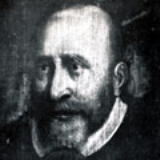
Robert Recorde

Robert Recorde

Overview
Robert Recorde was a Welsh
Welsh people
The Welsh people are an ethnic group and nation associated with Wales and the Welsh language.John Davies argues that the origin of the "Welsh nation" can be traced to the late 4th and early 5th centuries, following the Roman departure from Britain, although Brythonic Celtic languages seem to have...

 physician
Physician
A physician is a health care provider who practices the profession of medicine, which is concerned with promoting, maintaining or restoring human health through the study, diagnosis, and treatment of disease, injury and other physical and mental impairments...

 and mathematician
Mathematician
A mathematician is a person whose primary area of study is the field of mathematics. Mathematicians are concerned with quantity, structure, space, and change....

. He introduced the "equals" sign (=)
Equals sign
The equality sign, equals sign, or "=" is a mathematical symbol used to indicate equality. It was invented in 1557 by Robert Recorde. The equals sign is placed between the things stated to have the same value, as in an equation...

 in 1557.
Discussion
Ask a question about 'Robert Recorde'
Start a new discussion about 'Robert Recorde'
Answer questions from other users
Full Discussion Forum
 
Unanswered Questions
Encyclopedia
Robert Recorde was a Welsh
Welsh people
The Welsh people are an ethnic group and nation associated with Wales and the Welsh language.John Davies argues that the origin of the "Welsh nation" can be traced to the late 4th and early 5th centuries, following the Roman departure from Britain, although Brythonic Celtic languages seem to have...

 physician
Physician
A physician is a health care provider who practices the profession of medicine, which is concerned with promoting, maintaining or restoring human health through the study, diagnosis, and treatment of disease, injury and other physical and mental impairments...

 and mathematician
Mathematician
A mathematician is a person whose primary area of study is the field of mathematics. Mathematicians are concerned with quantity, structure, space, and change....

. He introduced the "equals" sign (=)
Equals sign
The equality sign, equals sign, or "=" is a mathematical symbol used to indicate equality. It was invented in 1557 by Robert Recorde. The equals sign is placed between the things stated to have the same value, as in an equation...

 in 1557.

Biography


A member of a respectable family of Tenby, Wales, he entered the University of Oxford
University of Oxford
The University of Oxford is a university located in Oxford, United Kingdom. It is the second-oldest surviving university in the world and the oldest in the English-speaking world. Although its exact date of foundation is unclear, there is evidence of teaching as far back as 1096...

 about 1525, and was elected a fellow of All Souls College
All Souls College, Oxford
The Warden and the College of the Souls of all Faithful People deceased in the University of Oxford or All Souls College is one of the constituent colleges of the University of Oxford in England....

 in 1531. Having adopted medicine as a profession, he went to the University of Cambridge
University of Cambridge
The University of Cambridge is a public research university located in Cambridge, United Kingdom. It is the second-oldest university in both the United Kingdom and the English-speaking world , and the seventh-oldest globally...

 to take the degree of M.D. in 1545. He afterwards returned to Oxford, where he publicly taught mathematics, as he had done prior to going to Cambridge. It appears that he afterwards went to London
London
London is the capital city of :England and the :United Kingdom, the largest metropolitan area in the United Kingdom, and the largest urban zone in the European Union by most measures. Located on the River Thames, London has been a major settlement for two millennia, its history going back to its...

, and acted as physician to King Edward VI
Edward VI of England
Edward VI was the King of England and Ireland from 28 January 1547 until his death. He was crowned on 20 February at the age of nine. The son of Henry VIII and Jane Seymour, Edward was the third monarch of the Tudor dynasty and England's first monarch who was raised as a Protestant...

 and to Queen Mary
Mary I of England
Mary I was queen regnant of England and Ireland from July 1553 until her death.She was the only surviving child born of the ill-fated marriage of Henry VIII and his first wife Catherine of Aragon. Her younger half-brother, Edward VI, succeeded Henry in 1547...

, to whom some of his books are dedicated. He was also controller of the Royal Mint
Royal Mint
The Royal Mint is the body permitted to manufacture, or mint, coins in the United Kingdom. The Mint originated over 1,100 years ago, but since 2009 it operates as Royal Mint Ltd, a company which has an exclusive contract with HM Treasury to supply all coinage for the UK...

 and served as "Comptroller of Mines and Monies" in Ireland. After being sued for defamation by a political enemy, he was arrested for debt and died in the King's Bench Prison
King's Bench Prison
The King's Bench Prison was a prison in Southwark, south London, from medieval times until it closed in 1880. It took its name from the King's Bench court of law in which cases of defamation, bankruptcy and other misdemeanours were heard; as such, the prison was often used as a debtor's prison...

, Southwark
Southwark
Southwark is a district of south London, England, and the administrative headquarters of the London Borough of Southwark. Situated east of Charing Cross, it forms one of the oldest parts of London and fronts the River Thames to the north...

, in 1558.

Publications


Recorde published several works upon mathematical subjects, chiefly in the form of dialogue between master and scholar, such as the following:
  • The Grounde of Artes
    The Ground of Arts
    Robert Recorde's Arithmetic: or, The Ground of Arts was one of the first printed English textbooks on arithmetic and the most popular of its time. It was preceded only by two anonymous texts in 1537 and 1539; The Ground of Arts appeared in London around 1542, and it was reprinted in 27 more...

    , teachings the Worke and Practise, of Arithmeticke, both in whole numbers and fractions
    (ca. 1540), the first English book on algebra
    Algebra
    Algebra is the branch of mathematics concerning the study of the rules of operations and relations, and the constructions and concepts arising from them, including terms, polynomials, equations and algebraic structures...

    .
  • The Pathway to Knowledge, containing the First Principles of Geometry ... bothe for the use of Instrumentes Geometricall and Astronomicall, and also for Projection of Plattes (London, 1551)
  • The Castle of Knowledge, containing the Explication of the Sphere both Celestiall and Materiall, etc. (London, 1556)
  • The Whetstone of Witte
    The Whetstone of Witte
    The Whetstone of Witte is the shortened title of Robert Recorde's mathematics book published in 1557. The full title being, The Whetstone of Witte, whiche is the seconde parte of Arithmeteke: containing the extraction of rootes; the cossike practise, with the rule of equation; and the workes of...

    , whiche is the seconde parte of Arithmeteke: containing the extraction of rootes; the cossike practise, with the rule of equation; and the workes of Surde Nombers
    (London, 1557). This was the book in which the equals sign
    Equals sign
    The equality sign, equals sign, or "=" is a mathematical symbol used to indicate equality. It was invented in 1557 by Robert Recorde. The equals sign is placed between the things stated to have the same value, as in an equation...

     was introduced. With the publication of this book Recorde is credited with introducing algebra
    Algebra
    Algebra is the branch of mathematics concerning the study of the rules of operations and relations, and the constructions and concepts arising from them, including terms, polynomials, equations and algebraic structures...

     into England.
  • a medical work, The Urinal of Physic (1548), frequently reprinted.


Sherburne states that Recorde also published Cosmographiae isagoge, and that he wrote a book De Arte faciendi Horologium and another De Usu Globorum et de Statu temporum. Recorde's chief contributions to the progress of algebra were in the way of systematizing its notation.

See also

  • Equality
  • Equals sign
    Equals sign
    The equality sign, equals sign, or "=" is a mathematical symbol used to indicate equality. It was invented in 1557 by Robert Recorde. The equals sign is placed between the things stated to have the same value, as in an equation...

  • Equation
    Equation
    An equation is a mathematical statement that asserts the equality of two expressions. In modern notation, this is written by placing the expressions on either side of an equals sign , for examplex + 3 = 5\,asserts that x+3 is equal to 5...

  • History of mathematical notation
    History of mathematical notation
    Mathematical notation comprises the symbols used to write mathematical equations and formulas. It includes Hindu-Arabic numerals, letters from the Roman, Greek, Hebrew, and German alphabets, and a host of symbols invented by mathematicians over the past several centuries.The development of...

  • St. Mary's Church, Tenby
    St. Mary's Church, Tenby
    St Mary's Church, Tenby is a church located in the centre of the town of Tenby in Pembrokeshire, western Wales. The church is in the Diocese of Saint David's within the Church in Wales, and members of the Anglican Communion....

  • The Ground of Arts
    The Ground of Arts
    Robert Recorde's Arithmetic: or, The Ground of Arts was one of the first printed English textbooks on arithmetic and the most popular of its time. It was preceded only by two anonymous texts in 1537 and 1539; The Ground of Arts appeared in London around 1542, and it was reprinted in 27 more...

  • Welsh mathematicians
    Welsh mathematicians
    Several mathematicians who have made contributions to the development of mathematics have hailed from the country of Wales.* Robert Recorde, sixteenth-century inventor of the equals sign was from Tenby...

  • Zenzizenzizenzic
    Zenzizenzizenzic
    Zenzizenzizenzic is an obsolete form of mathematical notation representing the eighth power of a number , dating from a time when powers were written out in words rather than as superscript numbers...

     - a word to describe a number to the eighth power coined by Robert Recorde.

External links