Home      Discussion      Topics      Dictionary      Almanac
Signup       Login
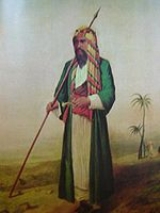
Richard Francis Burton

Richard Francis Burton

Overview
Captain
Captain (British Army and Royal Marines)
Captain is a junior officer rank of the British Army and Royal Marines. It ranks above Lieutenant and below Major and has a NATO ranking code of OF-2. The rank is equivalent to a Lieutenant in the Royal Navy and to a Flight Lieutenant in the Royal Air Force...

 Sir Richard Francis Burton KCMG
Order of St Michael and St George
The Most Distinguished Order of Saint Michael and Saint George is an order of chivalry founded on 28 April 1818 by George, Prince Regent, later George IV of the United Kingdom, while he was acting as Prince Regent for his father, George III....

 FRGS (19 March 1821 – 20 October 1890) was a British geographer
Geographer
A geographer is a scholar whose area of study is geography, the study of Earth's natural environment and human society.Although geographers are historically known as people who make maps, map making is actually the field of study of cartography, a subset of geography...

, explorer, translator, writer, soldier
Soldier
A soldier is a member of the land component of national armed forces; whereas a soldier hired for service in a foreign army would be termed a mercenary...

, orientalist
Oriental studies
Oriental studies is the academic field of study that embraces Near Eastern and Far Eastern societies and cultures, languages, peoples, history and archaeology; in recent years the subject has often been turned into the newer terms of Asian studies and Middle Eastern studies...

, cartographer, ethnologist, spy
SPY
SPY is a three-letter acronym that may refer to:* SPY , ticker symbol for Standard & Poor's Depositary Receipts* SPY , a satirical monthly, trademarked all-caps* SPY , airport code for San Pédro, Côte d'Ivoire...

, linguist
Linguistics
Linguistics is the scientific study of human language. Linguistics can be broadly broken into three categories or subfields of study: language form, language meaning, and language in context....

, poet
Poetry
Poetry is a form of literary art in which language is used for its aesthetic and evocative qualities in addition to, or in lieu of, its apparent meaning...

, fencer
Fencing
Fencing, which is also known as modern fencing to distinguish it from historical fencing, is a family of combat sports using bladed weapons.Fencing is one of four sports which have been featured at every one of the modern Olympic Games...

 and diplomat
Diplomat
A diplomat is a person appointed by a state to conduct diplomacy with another state or international organization. The main functions of diplomats revolve around the representation and protection of the interests and nationals of the sending state, as well as the promotion of information and...

. He was known for his travels and explorations within Asia, Africa and the Americas as well as his extraordinary knowledge of languages and cultures. According to one count, he spoke 29 European, Asian and African languages.
Discussion
Ask a question about 'Richard Francis Burton'
Start a new discussion about 'Richard Francis Burton'
Answer questions from other users
Full Discussion Forum
 
Quotations

Is not man born with a love of change — an Englishman to be discontented — an Anglo-Indian to grumble?

Goa, and The Blue Mountains; or, Six Months of Sick Leave (1851)

Travellers like poets are mostly an angry race.

"Narrative of a Trip to Harar" (11 June 1855); published in The Journal of the Royal Geographical Society (June 1855)

Of the gladest moments in human life, methinks is the departure upon a distant journey to unknown lands. Shaking off with one mighty effort the fetters of habit, the leaden weight of Routine, the cloak of many Cares and the Slavery of Home, man feels once more happy. The blood flows with the fast circulation of childhood....afresh dawns the morn of life...

Journal Entry (2 December 1856)

Support a compatriot against a native, however the former may blunder or plunder.

Exploration of the Highlands of Brazil (1869)

The dearest ambition of a slave is not liberty but to have a slave of his own.

The Book of The Thousand Nights And A Night (1885) When it was the Three Hundred and Sixtieth Night, footnote

The more I study religions the more I am convinced that man never worshipped anything but himself.

The Book of The Thousand Nights And A Night (1885) Terminal Essay: Social Conditions, fn. 13.

Conquer thyself, till thou hast done this, thou art but a slave; for it is almost as well to be subjected to another's appetite as to thine own.

As quoted in The New Dictionary of Thoughts : A Cyclopedia of Quotations from the Best Authors of the World, Both Ancient and Modern, Alphabetically Arranged by Subjects (1957) by Tryon Edwards, p. 510
Encyclopedia
Captain
Captain (British Army and Royal Marines)
Captain is a junior officer rank of the British Army and Royal Marines. It ranks above Lieutenant and below Major and has a NATO ranking code of OF-2. The rank is equivalent to a Lieutenant in the Royal Navy and to a Flight Lieutenant in the Royal Air Force...

 Sir Richard Francis Burton KCMG
Order of St Michael and St George
The Most Distinguished Order of Saint Michael and Saint George is an order of chivalry founded on 28 April 1818 by George, Prince Regent, later George IV of the United Kingdom, while he was acting as Prince Regent for his father, George III....

 FRGS (19 March 1821 – 20 October 1890) was a British geographer
Geographer
A geographer is a scholar whose area of study is geography, the study of Earth's natural environment and human society.Although geographers are historically known as people who make maps, map making is actually the field of study of cartography, a subset of geography...

, explorer, translator, writer, soldier
Soldier
A soldier is a member of the land component of national armed forces; whereas a soldier hired for service in a foreign army would be termed a mercenary...

, orientalist
Oriental studies
Oriental studies is the academic field of study that embraces Near Eastern and Far Eastern societies and cultures, languages, peoples, history and archaeology; in recent years the subject has often been turned into the newer terms of Asian studies and Middle Eastern studies...

, cartographer, ethnologist, spy
SPY
SPY is a three-letter acronym that may refer to:* SPY , ticker symbol for Standard & Poor's Depositary Receipts* SPY , a satirical monthly, trademarked all-caps* SPY , airport code for San Pédro, Côte d'Ivoire...

, linguist
Linguistics
Linguistics is the scientific study of human language. Linguistics can be broadly broken into three categories or subfields of study: language form, language meaning, and language in context....

, poet
Poetry
Poetry is a form of literary art in which language is used for its aesthetic and evocative qualities in addition to, or in lieu of, its apparent meaning...

, fencer
Fencing
Fencing, which is also known as modern fencing to distinguish it from historical fencing, is a family of combat sports using bladed weapons.Fencing is one of four sports which have been featured at every one of the modern Olympic Games...

 and diplomat
Diplomat
A diplomat is a person appointed by a state to conduct diplomacy with another state or international organization. The main functions of diplomats revolve around the representation and protection of the interests and nationals of the sending state, as well as the promotion of information and...

. He was known for his travels and explorations within Asia, Africa and the Americas as well as his extraordinary knowledge of languages and cultures. According to one count, he spoke 29 European, Asian and African languages.

Burton's best-known achievements include travelling in disguise to Mecca
Mecca
Mecca is a city in the Hijaz and the capital of Makkah province in Saudi Arabia. The city is located inland from Jeddah in a narrow valley at a height of above sea level...

, an unexpurgated translation of One Thousand and One Nights (also commonly called The Arabian Nights in English after Andrew Lang
Andrew Lang
Andrew Lang was a Scots poet, novelist, literary critic, and contributor to the field of anthropology. He is best known as a collector of folk and fairy tales. The Andrew Lang lectures at the University of St Andrews are named after him.- Biography :Lang was born in Selkirk...

's abridgement), bringing the Kama Sutra
Kama Sutra
The Kama Sutra is an ancient Indian Hindu text widely considered to be the standard work on human sexual behavior in Sanskrit literature written by Vātsyāyana. A portion of the work consists of practical advice on sexual intercourse. It is largely in prose, with many inserted anustubh poetry verses...

 to publication in English, and journeying with John Hanning Speke
John Hanning Speke
John Hanning Speke was an officer in the British Indian Army who made three exploratory expeditions to Africa and who is most associated with the search for the source of the Nile.-Life:...

 as the first Europeans led by Africa's greatest explorer guide, Sidi Mubarak Bombay
Sidi Mubarak Bombay
Sidi Mubarak Bombay also known as Chuma was an African guide who participated in numerous expeditions by 19th century British explorers to East Africa....

, utilizing route information by Indian and Omani merchants who traded in the region, to visit the Great Lakes
African Great Lakes
The African Great Lakes are a series of lakes and the Rift Valley lakes in and around the geographic Great Rift Valley formed by the action of the tectonic East African Rift on the continent of Africa...

 of Africa in search of the source of the Nile. Burton extensively criticized colonial policies (to the detriment of his career) in his works and letters. He was a prolific and erudite author and wrote numerous books and scholarly articles about subjects including human behaviour

Human Behaviour
"Human Behaviour" is Icelandic singer Björk's first solo single, taken from the album Debut. It contains a sample of "Go Down Dying" by Antonio Carlos Jobim. The lyrics reflect on human nature and emotion from a non-human animal's point of view. The song is the first part of a series of songs that...

, travel, falconry
Falconry
Falconry is "the taking of wild quarry in its natural state and habitat by means of a trained raptor". There are two traditional terms used to describe a person involved in falconry: a falconer flies a falcon; an austringer flies a hawk or an eagle...

, fencing
Fencing
Fencing, which is also known as modern fencing to distinguish it from historical fencing, is a family of combat sports using bladed weapons.Fencing is one of four sports which have been featured at every one of the modern Olympic Games...

, sexual practices and ethnography
Ethnography
Ethnography is a qualitative method aimed to learn and understand cultural phenomena which reflect the knowledge and system of meanings guiding the life of a cultural group...

. A unique feature of his books is the copious footnotes and appendices containing remarkable observations and unexpurgated information.

He was a captain in the army of the East India Company
British East India Company
The East India Company was an early English joint-stock company that was formed initially for pursuing trade with the East Indies, but that ended up trading mainly with the Indian subcontinent and China...

 serving in India (and later, briefly, in the Crimean War
Crimean War
The Crimean War was a conflict fought between the Russian Empire and an alliance of the French Empire, the British Empire, the Ottoman Empire, and the Kingdom of Sardinia. The war was part of a long-running contest between the major European powers for influence over territories of the declining...

). Following this he was engaged by the Royal Geographical Society
Royal Geographical Society
The Royal Geographical Society is a British learned society founded in 1830 for the advancement of geographical sciences...

 to explore the east coast of Africa and led an expedition guided by the locals and was the first European to see Lake Tanganyika
Lake Tanganyika
Lake Tanganyika is an African Great Lake. It is estimated to be the second largest freshwater lake in the world by volume, and the second deepest, after Lake Baikal in Siberia; it is also the world's longest freshwater lake...

. In later life he served as British consul
Consul (representative)
The political title Consul is used for the official representatives of the government of one state in the territory of another, normally acting to assist and protect the citizens of the consul's own country, and to facilitate trade and friendship between the peoples of the two countries...

 in Fernando Po
Bioko
Bioko is an island 32 km off the west coast of Africa, specifically Cameroon, in the Gulf of Guinea. It is the northernmost part of Equatorial Guinea with a population of 124,000 and an area of . It is volcanic with its highest peak the Pico Basile at .-Geography:Bioko has a total area of...

, Santos
Santos (São Paulo)
-Sister cities: Shimonoseki, Japan Nagasaki, Japan Funchal, Portugal Trieste, Italy Coimbra, Portugal Ansião, Portugal Arouca, Portugal Ushuaia, Argentina Havana, Cuba Taizhou. China Ningbo. China Constanţa, Romania Ulsan, South Korea Colón, Panama* Cadiz, Spain...

, Damascus
Damascus
Damascus , commonly known in Syria as Al Sham , and as the City of Jasmine , is the capital and the second largest city of Syria after Aleppo, both are part of the country's 14 governorates. In addition to being one of the oldest continuously inhabited cities in the world, Damascus is a major...

 and, finally, Trieste
Trieste
Trieste is a city and seaport in northeastern Italy. It is situated towards the end of a narrow strip of land lying between the Adriatic Sea and Italy's border with Slovenia, which lies almost immediately south and east of the city...

. He was a Fellow of the Royal Geographical Society and was awarded a knighthood (KCMG) in 1886.

Early life and education (1822–1842)


Burton was born in Torquay
Torquay
Torquay is a town in the unitary authority area of Torbay and ceremonial county of Devon, England. It lies south of Exeter along the A380 on the north of Torbay, north-east of Plymouth and adjoins the neighbouring town of Paignton on the west of the bay. Torquay’s population of 63,998 during the...

, Devon
Devon
Devon is a large county in southwestern England. The county is sometimes referred to as Devonshire, although the term is rarely used inside the county itself as the county has never been officially "shired", it often indicates a traditional or historical context.The county shares borders with...

, at 21:30 on 19 March 1821; in his autobiography, he falsely claimed to have been born in the family home at Barham House in Elstree
Elstree
Elstree is a village in the Hertsmere borough of Hertfordshire on the A5 road, about 10 miles north of London. In 2001, its population was 4,765, and forms part of the civil parish of Elstree and Borehamwood, originally known simply as Elstree....

 in Hertfordshire
Hertfordshire
Hertfordshire is a ceremonial and non-metropolitan county in the East region of England. The county town is Hertford.The county is one of the Home Counties and lies inland, bordered by Greater London , Buckinghamshire , Bedfordshire , Cambridgeshire and...

. He was baptised on 2 September 1821 at Elstree Church in Borehamwood
Borehamwood
-Film industry:Since the 1920s, the town has been home to several film studios and many shots of its streets are included in final cuts of 20th century British films. This earned it the nickname of the "British Hollywood"...

, Hertfordshire. His father, Lieutenant Colonel
Lieutenant colonel
Lieutenant colonel is a rank of commissioned officer in the armies and most marine forces and some air forces of the world, typically ranking above a major and below a colonel. The rank of lieutenant colonel is often shortened to simply "colonel" in conversation and in unofficial correspondence...

 Joseph Netterville Burton, 36th Regiment, was an Irish-born British army
British Army
The British Army is the land warfare branch of Her Majesty's Armed Forces in the United Kingdom. It came into being with the unification of the Kingdom of England and Scotland into the Kingdom of Great Britain in 1707. The new British Army incorporated Regiments that had already existed in England...

 officer of Anglo-Irish
Anglo-Irish
Anglo-Irish was a term used primarily in the 19th and early 20th centuries to identify a privileged social class in Ireland, whose members were the descendants and successors of the Protestant Ascendancy, mostly belonging to the Church of Ireland, which was the established church of Ireland until...

 extraction. His mother, Martha Baker, was the heiress of a wealthy squire
Squire
The English word squire is a shortened version of the word Esquire, from the Old French , itself derived from the Late Latin , in medieval or Old English a scutifer. The Classical Latin equivalent was , "arms bearer"...

 from Hertfordshire. Burton had two siblings, Maria Katherine Elizabeth Burton (who married Lt.-General Sir Henry William Stisted
Henry William Stisted
Lieut.-General Sir Henry William Stisted, KCB , served as the first Lieutenant Governor of Ontario after Confederation, from 1867 to 1868....

) and Edward Joseph Netterville Burton, born in 1823 and 1824, respectively.

Burton's family travelled considerably during his childhood. In 1825, they moved to Tours
Tours
Tours is a city in central France, the capital of the Indre-et-Loire department.It is located on the lower reaches of the river Loire, between Orléans and the Atlantic coast. Touraine, the region around Tours, is known for its wines, the alleged perfection of its local spoken French, and for the...

, France. Burton's early education was provided by various tutors employed by his parents. He first began a formal education in 1829 at a preparatory school
Preparatory school (UK)
In English language usage in the former British Empire, the present-day Commonwealth, a preparatory school is an independent school preparing children up to the age of eleven or thirteen for entry into fee-paying, secondary independent schools, some of which are known as public schools...

 on Richmond Green
Richmond Green
Richmond Green is a recreation area located near the centre of Richmond, which is a town of about twenty thousand inhabitants situated in south west London. The green is essentially square in shape and its open grassland, framed with broadleaf trees, extends to roughly twelve acres...

 in Richmond, London run by Rev. Charles Delafosse. Over the next few years, his family travelled between England, France, and Italy. Burton showed an early gift for languages and quickly learned French, Italian, Neapolitan
Neapolitan language
Neapolitan is the language of the city and region of Naples , and Campania. On October 14, 2008 a law by the Region of Campania stated that the Neapolitan language had to be protected....

, and Latin
Latin
Latin is an Italic language originally spoken in Latium and Ancient Rome. It, along with most European languages, is a descendant of the ancient Proto-Indo-European language. Although it is considered a dead language, a number of scholars and members of the Christian clergy speak it fluently, and...

, as well as several dialects. During his youth, he was rumoured to have carried on an affair with a young Roma (Gypsy) woman, even learning the rudiments of her language
Romani language
Romani or Romany, Gypsy or Gipsy is any of several languages of the Romani people. They are Indic, sometimes classified in the "Central" or "Northwestern" zone, and sometimes treated as a branch of their own....

. The peregrinations of his youth may have encouraged Burton to regard himself as an outsider for much of his life. As he put it, "Do what thy manhood bids thee do, from none but self expect applause".

Richard Francis matriculated
Matriculation
Matriculation, in the broadest sense, means to be registered or added to a list, from the Latin matricula – little list. In Scottish heraldry, for instance, a matriculation is a registration of armorial bearings...

 at Trinity College
Trinity College, Oxford
The College of the Holy and Undivided Trinity in the University of Oxford, of the foundation of Sir Thomas Pope , or Trinity College for short, is one of the constituent colleges of the University of Oxford in England. It stands on Broad Street, next door to Balliol College and Blackwells bookshop,...

, Oxford on 19 November 1840. Before getting rooms in college, he lived for a short time in the house of Dr. William Alexander Greenhill
William Alexander Greenhill
William Alexander Greenhill was an English physician, literary editor and sanitary reformer.-Biography:...

, then physician to the Radcliffe Infirmary
Radcliffe Infirmary
The Radcliffe Infirmary was a hospital in central Oxford, England, located at the southern end of Woodstock Road on the western side, backing onto Walton Street. The Radcliffe Infirmary, named after physician John Radcliffe, opened in 1770 and was Oxford's first hospital...

. Here he met John Henry Newman, whose churchwarden
Churchwarden
A churchwarden is a lay official in a parish church or congregation of the Anglican Communion, usually working as a part-time volunteer. Holders of these positions are ex officio members of the parish board, usually called a vestry, parish council, parochial church council, or in the case of a...

 was Dr. Greenhill. Despite his intelligence and ability, Richard Francis soon antagonized his teachers and peers. During his first term, he is said to have challenged another student to a duel
Duel
A duel is an arranged engagement in combat between two individuals, with matched weapons in accordance with agreed-upon rules.Duels in this form were chiefly practised in Early Modern Europe, with precedents in the medieval code of chivalry, and continued into the modern period especially among...

 after the latter mocked Burton's moustache. Burton continued to gratify his love of languages by studying Arabic
Arabic language
Arabic is a name applied to the descendants of the Classical Arabic language of the 6th century AD, used most prominently in the Quran, the Islamic Holy Book...

; he also spent his time learning falconry
Falconry
Falconry is "the taking of wild quarry in its natural state and habitat by means of a trained raptor". There are two traditional terms used to describe a person involved in falconry: a falconer flies a falcon; an austringer flies a hawk or an eagle...

 and fencing. In 1842, he attended a steeplechase
Steeplechase (horse racing)
The steeplechase is a form of horse racing and derives its name from early races in which orientation of the course was by reference to a church steeple, jumping fences and ditches and generally traversing the many intervening obstacles in the countryside...

 in deliberate violation of college rules and subsequently dared to tell the college authorities that students should be allowed to attend such events. Hoping to be merely "rusticated
Rustication (academia)
Rustication is a term used at Oxbridge to mean being sent down or expelled temporarily. The term derives from the Latin word rus, countryside, to indicate that a student has been sent back to their family in the country, or from medieval Latin rustici, meaning "heathens or barbarians"...

"—that is, suspended with the possibility of reinstatement, the punishment of some less provocative students who had visited the steeplechase—he was instead permanently expelled from Trinity College. In a final jab at the environment he had come to despise, Burton reportedly trampled the College's flower beds with his horse and carriage while departing Oxford.

Army career (1842–1853)


In his own words "fit for nothing but to be shot at for six pence a day", Burton enlisted in the army of the East India Company
British East India Company
The East India Company was an early English joint-stock company that was formed initially for pursuing trade with the East Indies, but that ended up trading mainly with the Indian subcontinent and China...

 at the behest of his ex-college classmates who were already members. He hoped to fight in the first Afghan war
First Anglo-Afghan War
The First Anglo-Afghan War was fought between British India and Afghanistan from 1839 to 1842. It was one of the first major conflicts during the Great Game, the 19th century competition for power and influence in Central Asia between the United Kingdom and Russia, and also marked one of the worst...

 but the conflict was over before he arrived in India. He was posted to the 18th Bombay Native Infantry based in Gujarat and under the command of General Sir Charles James Napier
Charles James Napier
General Sir Charles James Napier, GCB , was a general of the British Empire and the British Army's Commander-in-Chief in India, notable for conquering the Sindh Province in what is now Pakistan.- His genealogy :...

. While in India he became a proficient speaker of Hindustani
Hindustani language
Hindi-Urdu is an Indo-Aryan language and the lingua franca of North India and Pakistan. It is also known as Hindustani , and historically, as Hindavi or Rekhta...

, Gujarati
Gujarati language
Gujarati is an Indo-Aryan language, and part of the greater Indo-European language family. It is derived from a language called Old Gujarati which is the ancestor language of the modern Gujarati and Rajasthani languages...

, Punjabi
Punjabi language
Punjabi is an Indo-Aryan language spoken by inhabitants of the historical Punjab region . For Sikhs, the Punjabi language stands as the official language in which all ceremonies take place. In Pakistan, Punjabi is the most widely spoken language...

, Sindhi
Sindhi language
Sindhi is the language of the Sindh region of Pakistan that is spoken by the Sindhi people. In India, it is among 22 constitutionally recognized languages, where Sindhis are a sizeable minority. It is spoken by 53,410,910 people in Pakistan, according to the national government's Statistics Division...

 and Marathi
Marathi language
Marathi is an Indo-Aryan language spoken by the Marathi people of western and central India. It is the official language of the state of Maharashtra. There are over 68 million fluent speakers worldwide. Marathi has the fourth largest number of native speakers in India and is the fifteenth most...

 as well as Persian
Persian language
Persian is an Iranian language within the Indo-Iranian branch of the Indo-European languages. It is primarily spoken in Iran, Afghanistan, Tajikistan and countries which historically came under Persian influence...

 and Arabic. His studies of Hindu
Hinduism
Hinduism is the predominant and indigenous religious tradition of the Indian Subcontinent. Hinduism is known to its followers as , amongst many other expressions...

 culture had progressed to such an extent that "my Hindu teacher officially allowed me to wear the Janeu (Brahmanical Thread
Upanayanam
Upanayana is the initiation ritual by which initiates are invested with a sacred thread, to symbolize the transference of spiritual knowledge .- Significance of the sacred thread :...

)" although the truth of this has been questioned since it would usually have required long study, fasting and a partial shaving of the head. Burton's interest (and active participation) in the cultures and religions of India
Religion in India
Indian religions is a classification for religions that originated in the Indian subcontinent; namely Hinduism, Jainism, Buddhism and Sikhism. These religions are also classified as Eastern religions...

 was considered peculiar by some of his fellow soldiers who accused him of "going native" and called him "the White Nigger". Burton had many peculiar habits that set him apart from other soldiers. While in the army, he kept a large menagerie
Menagerie
A menagerie is/was a form of keeping common and exotic animals in captivity that preceded the modern zoological garden. The term was first used in seventeenth century France in reference to the management of household or domestic stock. Later, it came to be used primarily in reference to...

 of tame monkey
Monkey
A monkey is a primate, either an Old World monkey or a New World monkey. There are about 260 known living species of monkey. Many are arboreal, although there are species that live primarily on the ground, such as baboons. Monkeys are generally considered to be intelligent. Unlike apes, monkeys...

s in the hopes of learning their language
Animal communication
Animal communication is any behavior on the part of one animal that has an effect on the current or future behaviour of another animal. The study of animal communication, is sometimes called Zoosemiotics has played an important part in the...

. He also earned the name "Ruffian Dick" for his "demonic ferocity as a fighter and because he had fought in single combat more enemies than perhaps any other man of his time."

He was appointed to the Sindh
Sindh
Sindh historically referred to as Ba'ab-ul-Islam , is one of the four provinces of Pakistan and historically is home to the Sindhi people. It is also locally known as the "Mehran". Though Muslims form the largest religious group in Sindh, a good number of Christians, Zoroastrians and Hindus can...

 survey, where he learned to use the measuring equipment that would later be useful in his career as an explorer. At this time he began to travel in disguise
Disguise
A disguise can be anything which conceals or changes a person's physical appearance, including a wig, glasses, makeup, costume or other ways. Camouflage is one type of disguise for people, animals and objects...

. He adopted the alias of Mirza Abdullah and often fooled local people and fellow officers into failing to recognise him. It was at this point that he began to work as an agent for Napier and, although details of exactly what this work entailed are not known, it is known that he participated in an undercover investigation of a brothel
Brothel
Brothels are business establishments where patrons can engage in sexual activities with prostitutes. Brothels are known under a variety of names, including bordello, cathouse, knocking shop, whorehouse, strumpet house, sporting house, house of ill repute, house of prostitution, and bawdy house...

 in Karachi
Karachi
Karachi is the largest city, main seaport and the main financial centre of Pakistan, as well as the capital of the province of Sindh. The city has an estimated population of 13 to 15 million, while the total metropolitan area has a population of over 18 million...

 said to be frequented by British soldiers where the prostitutes were young boys. His life-long interest in sexual practices led him to produce a detailed report which was later to cause trouble for Burton when subsequent readers of the report (which Burton had been assured would be kept secret) came to believe that Burton had, himself, participated in some of the practices described in his writing.

In March 1849 he returned to Europe on sick leave. In 1850 he wrote his first book Goa and the Blue Mountains, a guide to the Goa
Goa
Goa , a former Portuguese colony, is India's smallest state by area and the fourth smallest by population. Located in South West India in the region known as the Konkan, it is bounded by the state of Maharashtra to the north, and by Karnataka to the east and south, while the Arabian Sea forms its...

 region. He travelled to Boulogne
Boulogne-sur-Mer
-Road:* Metropolitan bus services are operated by the TCRB* Coach services to Calais and Dunkerque* A16 motorway-Rail:* The main railway station is Gare de Boulogne-Ville and located in the south of the city....

 to visit the fencing school there and it was there where he first encountered his future wife Isabel Arundell
Isabel Burton
Isabel Burton was the wife and partner of explorer, adventurer, and writer Sir Richard Francis Burton....

, a young Catholic
Roman Catholic Church
The Catholic Church, also known as the Roman Catholic Church, is the world's largest Christian church, with over a billion members. Led by the Pope, it defines its mission as spreading the gospel of Jesus Christ, administering the sacraments and exercising charity...

 woman from a respected family.

First explorations and journey to Mecca (1851–1853)


Motivated by his love of adventure, Burton got the approval of the Royal Geographical Society
Royal Geographical Society
The Royal Geographical Society is a British learned society founded in 1830 for the advancement of geographical sciences...

 for an exploration of the area and he gained permission from the Board of Directors of the British East India Company
British East India Company
The East India Company was an early English joint-stock company that was formed initially for pursuing trade with the East Indies, but that ended up trading mainly with the Indian subcontinent and China...

 to take leave from the army. His seven years in India gave Burton a familiarity with the customs and behaviour of Muslims
Islam
Islam . The most common are and .   : Arabic pronunciation varies regionally. The first vowel ranges from ~~. The second vowel ranges from ~~~...

 and prepared him to attempt a Hajj
Hajj
The Hajj is the pilgrimage to Mecca, Saudi Arabia. It is one of the largest pilgrimages in the world, and is the fifth pillar of Islam, a religious duty that must be carried out at least once in their lifetime by every able-bodied Muslim who can afford to do so...

 (pilgrimage to Mecca
Mecca
Mecca is a city in the Hijaz and the capital of Makkah province in Saudi Arabia. The city is located inland from Jeddah in a narrow valley at a height of above sea level...

 and, in this case, Medina
Medina
Medina , or ; also transliterated as Madinah, or madinat al-nabi "the city of the prophet") is a city in the Hejaz region of western Saudi Arabia, and serves as the capital of the Al Madinah Province. It is the second holiest city in Islam, and the burial place of the Islamic Prophet Muhammad, and...

). It was this journey, undertaken in 1853, which first made Burton famous. He had planned it whilst travelling disguised among the Muslims of Sindh, and had laboriously prepared for the ordeal by study and practice (including undergoing the Muslim tradition of circumcision to further lower the risk of being discovered).

Although Burton was not the first non-Muslim European to make the Hajj (Ludovico de Varthema did this in 1503), his pilgrimage is the most famous and the best documented of the time. He adopted various disguises including that of a Pashtun
Pashtun people
Pashtuns or Pathans , also known as ethnic Afghans , are an Eastern Iranic ethnic group with populations primarily between the Hindu Kush mountains in Afghanistan and the Indus River in Pakistan...

 to account for any oddities in speech, but he still had to demonstrate an understanding of intricate Islamic ritual
Ritual
A ritual is a set of actions, performed mainly for their symbolic value. It may be prescribed by a religion or by the traditions of a community. The term usually excludes actions which are arbitrarily chosen by the performers....

, and a familiarity with the minutiae of Eastern manners and etiquette. Burton's trek to Mecca was dangerous and his caravan was attacked by bandits (a common experience at the time). As he put it, "... neither Koran or Sultan
Sultan
Sultan is a title with several historical meanings. Originally, it was an Arabic language abstract noun meaning "strength", "authority", "rulership", and "dictatorship", derived from the masdar سلطة , meaning "authority" or "power". Later, it came to be used as the title of certain rulers who...

 enjoin the death of Jew or Christian intruding within the columns that note the sanctuary limits, nothing could save a European detected by the populace, or one who after pilgrimage declared himself an unbeliever." The pilgrimage entitled him to the title of Hajji
Hajji
Hajji or El-Hajj, is an honorific title given to a Muslim person who has successfully completed the Hajj to Mecca, and is often used to refer to an elder, since it can take time to accumulate the wealth to fund the travel. The title is placed before a person's name...

 and to wear green head wrap. Burton's own account of his journey is given in A Personal Narrative of a Pilgrimage to Al-Medinah and Meccah (1855).

Some members of his entourage suspected there was more to Burton than met the eye. He came close to being discovered one night when he lifted his robe to urinate, rather than squatting as an Arab would. He thought he was unseen, but the youngest member of his group happened to see him. The lad accused him of being an impostor, but let Burton convince him to keep his doubts to himself.

When Burton returned to the British Army he sat for examination as an Arab linguist, which he failed.

Early explorations (1854–1855)


Following his return to Cairo from Mecca, Burton sailed to India to rejoin his regiment. In March 1854, he transferred to the political department of the East India Company and went to Aden on the Arabian Peninsula in order to prepare for a new expedition, supported by the Royal Geographical Society, to explore the interior of the Somali Country and beyond, where Burton hoped to discover the large lakes he had heard about from Arab travellers. It was in Aden in September of this year that he first met Captain (then Lieutenant) John Hanning Speke
John Hanning Speke
John Hanning Speke was an officer in the British Indian Army who made three exploratory expeditions to Africa and who is most associated with the search for the source of the Nile.-Life:...

 who would accompany him on his most famous exploration. Burton undertook the first part of the trip alone. He made an expedition to Harar
Harar
Harar is an eastern city in Ethiopia, and the capital of the modern Harari ethno-political division of Ethiopia...

 (in present day Ethiopia
Ethiopia
Ethiopia , officially known as the Federal Democratic Republic of Ethiopia, is a country located in the Horn of Africa. It is the second-most populous nation in Africa, with over 82 million inhabitants, and the tenth-largest by area, occupying 1,100,000 km2...

), which no European had entered (indeed there was a prophecy that the city would decline if a Christian was admitted inside).
This leg of the expedition lasted three months, although much of the time was spent in the port of Zeila
Zeila
Zeila, also known as Zaila , is a port city on the Gulf of Aden coast, situated in the northwestern Awdal region of Somalia.Located near the Djibouti border, the town sits on a sandy spit surrounded by the sea. It is known for its offshore islands, coral reef and mangroves. Landward, the terrain is...

, where Burton, once again in disguise, awaited word that the road to Harar was safe. Burton not only travelled to Harar but also was introduced to the Emir and stayed in the city for ten days, officially a guest of the Emir but in reality his prisoner. The journey back was plagued by lack of supplies, and Burton wrote that he would have died of thirst had he not seen desert birds and realised they would be near water.

Following this adventure, he prepared to set out for the interior accompanied by Lieutenant Speke, Lieutenant G. E. Herne and Lieutenant William Stroyan and a number of Africans employed as bearers. However, before the expedition was able to leave camp, his party was attacked by a group of Somali
Somali people
Somalis are an ethnic group located in the Horn of Africa, also known as the Somali Peninsula. The overwhelming majority of Somalis speak the Somali language, which is part of the Cushitic branch of the Afro-Asiatic language family...

 waranle ("warriors"). The officers estimated the number of attackers at 200. In the ensuing fight, Stroyan was killed and Speke was captured and wounded in eleven places before he managed to escape. Burton was impaled with a javelin, the point entering one cheek and exiting the other. This wound left a notable scar that can be easily seen on portraits and photographs. He was forced to make his escape with the weapon still transfixing his head. It was no surprise then that he found the Somalis to be a "fierce and turbulent race". However, the failure of this expedition was viewed harshly by the authorities, and a two-year investigation was set up to determine to what extent Burton was culpable for this disaster. While he was largely cleared of any blame, this did not help his career. He describes the harrowing attack in First Footsteps in East Africa (1856).

In 1855, Burton rejoined the army and travelled to the Crimea
Crimea
Crimea , or the Autonomous Republic of Crimea , is a sub-national unit, an autonomous republic, of Ukraine. It is located on the northern coast of the Black Sea, occupying a peninsula of the same name...

 hoping to see active service in the Crimean War
Crimean War
The Crimean War was a conflict fought between the Russian Empire and an alliance of the French Empire, the British Empire, the Ottoman Empire, and the Kingdom of Sardinia. The war was part of a long-running contest between the major European powers for influence over territories of the declining...

. He served on the staff of Beatson's Horse a corps of Bashi-bazouk
Bashi-bazouk
A bashi-bazouk or bashibazouk was an irregular soldier of the Ottoman army...

s, local fighters under the command of General Beatson, in the Dardanelles
Dardanelles
The Dardanelles , formerly known as the Hellespont, is a narrow strait in northwestern Turkey connecting the Aegean Sea to the Sea of Marmara. It is one of the Turkish Straits, along with its counterpart the Bosphorus. It is located at approximately...

. The corps was disbanded following a "mutiny" after they refused to obey orders and Burton's name was mentioned (to his detriment) in the subsequent inquiry.

Exploring the African Great Lakes (1856–1860)


In 1856 the Royal Geographical Society
Royal Geographical Society
The Royal Geographical Society is a British learned society founded in 1830 for the advancement of geographical sciences...

 funded another expedition in which Burton set off from Zanzibar
Zanzibar
Zanzibar ,Persian: زنگبار, from suffix bār: "coast" and Zangi: "bruin" ; is a semi-autonomous part of Tanzania, in East Africa. It comprises the Zanzibar Archipelago in the Indian Ocean, off the coast of the mainland, and consists of numerous small islands and two large ones: Unguja , and Pemba...

 to explore an "inland sea
African Great Lakes
The African Great Lakes are a series of lakes and the Rift Valley lakes in and around the geographic Great Rift Valley formed by the action of the tectonic East African Rift on the continent of Africa...

" that had been described by Arab traders and slavers. His mission was to study the area's tribes and to find out what exports might be possible from the region. It was hoped that the expedition might lead to the discovery of the source of the River Nile, although this was not an explicit aim. Burton had been told that only a fool would say his expedition aimed to find the source of the Nile because anything short of that would be regarded as a failure.

Before leaving for Africa, Burton became secretly engaged to Isabel Arundell
Isabel Burton
Isabel Burton was the wife and partner of explorer, adventurer, and writer Sir Richard Francis Burton....

. Her family, particularly her mother, would not allow a marriage since Burton was not a Catholic and was not wealthy, although in time the relationship became tolerated.

Speke again accompanied him and on the 27 June 1857 they set out from the east coast of Africa heading west in search of the lake or lakes. They were helped greatly by the Omani Arabs who lived and traded in the region. They followed the traditional caravan routes, hiring the professional porters and guides, who had been making similar treks for years. From the start the outward journey was beset with problems such as recruiting reliable bearers and the theft of equipment and supplies by deserting expedition members.

Both men were beset by a variety of tropical diseases on the journey. Speke was rendered blind for some of the journey and deaf in one ear (due to an infection caused by attempts to remove a beetle). Burton was unable to walk for some of the journey and had to be carried by the bearers.

The expedition arrived at Lake Tanganyika
Lake Tanganyika
Lake Tanganyika is an African Great Lake. It is estimated to be the second largest freshwater lake in the world by volume, and the second deepest, after Lake Baikal in Siberia; it is also the world's longest freshwater lake...

 in February 1858. Burton was awestruck by the sight of the magnificent lake, but Speke, who had been temporarily blinded by a disease, was unable to see the body of water. By this point much of their surveying equipment was lost, ruined, or stolen, and they were unable to complete surveys of the area as well as they wished. Burton was again taken ill on the return journey and Speke continued exploring without him, making a journey to the north and eventually locating the great Lake Victoria
Lake Victoria
Lake Victoria is one of the African Great Lakes. The lake was named for Queen Victoria of the United Kingdom, by John Hanning Speke, the first European to discover this lake....

, or Victoria Nyanza. Lacking supplies and proper instruments Speke was unable to survey the area properly but was privately convinced that it was the long sought source of the Nile. Burton's description of the journey is given in Lake Regions of Equatorial Africa (1860). Speke gave his own account in The Journal of the Discovery of the Source of the Nile (1863).

Both Burton and Speke were in extremely poor health after the journey and returned home separately. As usual Burton kept very detailed notes, not just on the geography but also on the languages, customs, and even sexual habits of the people he encountered. Although it was Burton's last great expedition his geographical and cultural notes proved invaluable for subsequent explorations by Speke and James Augustus Grant
James Augustus Grant
James Augustus Grant, CB, CSI, FRS, FRGS was a Scottish explorer of eastern equatorial Africa.Grant was born at Nairn in the Scottish Highlands, where his father was the parish minister, and educated at the grammar school and Marischal College, Aberdeen. In 1846 he joined the Indian army...

, Sir Samuel Baker
Samuel Baker
Sir Samuel White Baker, KCB, FRS, FRGS was a British explorer, officer, naturalist, big game hunter, engineer, writer and abolitionist. He also held the titles of Pasha and Major-General in the Ottoman Empire and Egypt. He served as the Governor-General of the Equatorial Nile Basin between Apr....

, David Livingstone
David Livingstone
David Livingstone was a Scottish Congregationalist pioneer medical missionary with the London Missionary Society and an explorer in Africa. His meeting with H. M. Stanley gave rise to the popular quotation, "Dr...

 and Henry Morton Stanley
Henry Morton Stanley
Sir Henry Morton Stanley, GCB, born John Rowlands , was a Welsh journalist and explorer famous for his exploration of Africa and his search for David Livingstone. Upon finding Livingstone, Stanley allegedly uttered the now-famous greeting, "Dr...

. Speke and Grant's (1863) exploration began on the east coast near Zanzibar again and went around the west side of Lake Victoria to Lake Albert and finally returning in triumph via the River Nile. However, crucially, they had lost track of the river's course between Lake Victoria and Albert. This left Burton, and others, unsatisfied that the source of the Nile was conclusively proven.

Burton and Speke


Burton and Speke's exploration to Lake Tanganyika and Lake Victoria was, arguably, his most celebrated exploration but what followed was a prolonged public quarrel between the two men, which for a time damaged Burton's reputation. Speke was never Burton's first choice, but, due to illness, Speke was available. Speke being unable to speak any African language or capable of exploring was a severe trial during the trek. Speke exemplified the typical arrogant Imperialist attitudes despising Africans and Asians, hunting and killing animals indiscriminately. Burton solved the problem of Speke's handicap by hiring Sidi Mubarak Bombay
Sidi Mubarak Bombay
Sidi Mubarak Bombay also known as Chuma was an African guide who participated in numerous expeditions by 19th century British explorers to East Africa....

 who was able to communicate and guide Speke. From surviving letters it is clear that Speke's paranoia already was evident where he mistrusted and disliked Burton before the start of their second expedition. There are several reasons why they became estranged. It seems obvious that the two men were very different in character, with Speke being more in tune with the prevailing morality of Victorian England
Victorian morality
Victorian morality is a distillation of the moral views of people living at the time of Queen Victoria's reign and of the moral climate of the United Kingdom throughout the 19th century in general, which contrasted greatly with the morality of the previous Georgian period...

 and imperialistic attitude to other cultures. There was obviously a great element of professional rivalry. Some biographers have suggested that homosexual friends of Speke (particularly Laurence Oliphant) stirred up trouble between the two. It also seems that Speke resented Burton's position as expedition leader and claimed that this leadership was nominal only and that Burton was an invalid for most of the second expedition. There were problems with debts run up by the expedition that were left unpaid when they left Africa. Speke, in collusion with the new Consul Rigby (a sworn enemy of Burton, who had bested Rigby in every linguist test in India), claimed that Burton had sole responsibility for these debts and Rigby used every official method to falsely undermine Burton. Finally, there was the issue of the source of the Nile, perhaps the greatest prize of its day to European explorers though well known to the Arab, Indian, and Omani merchants and traders. It is now known that Lake Victoria
Lake Victoria
Lake Victoria is one of the African Great Lakes. The lake was named for Queen Victoria of the United Kingdom, by John Hanning Speke, the first European to discover this lake....

 is a source, but at the time the issue was controversial. Speke's expedition with Burton's permission was led by Sidi Mubarak Bombay. It was undertaken without Burton who was incapacitated by several illnesses at the time. Speke's survey of the area was, by necessity, rudimentary and completely erroneous, leaving the issue unresolved. Burton (and indeed many eminent explorers such as Livingstone
David Livingstone
David Livingstone was a Scottish Congregationalist pioneer medical missionary with the London Missionary Society and an explorer in Africa. His meeting with H. M. Stanley gave rise to the popular quotation, "Dr...

) were very sceptical that the lake was the primary source.

After the expedition, the two men travelled home to England separately with Speke arriving in London first. Despite an agreement between them that they would give their first public speech together, Speke gave a lecture at the Royal Geographical Society
Royal Geographical Society
The Royal Geographical Society is a British learned society founded in 1830 for the advancement of geographical sciences...

 in which he made the claim that his discovery, Lake Victoria, was the source of the Nile. When Burton arrived in London he found Speke being lionised, and felt his own role was being considered as that of sickly companion. Furthermore, Speke was organising other expeditions to the region and clearly had no plans to include Burton. Burton had many enemies because of his "going native" and anti-imperialist sentiments.

In the subsequent months, Speke and his clique did much to attempt to harm Burton's reputation, even going so far as to claim that Burton had tried to poison him during the expedition. Meanwhile Burton spoke out against Speke's claim to have discovered the source of the Nile, saying that the evidence was inconclusive and the measurements made by Speke were inaccurate. It is notable that in Speke's expedition with Grant he made Grant sign a statement saying, amongst other things, "I renounce all my rights to publishing ... my own account [of the expedition] until approved of by Captain Speke or the R. G. S. (Royal Geographical Society)".

Speke undertook a second expedition, along with Captain James Grant and Sidi Mubarak Bombay, to prove that Lake Victoria was the true source of the Nile. After a harrowing journey through the kingdom of Buganda, Speke found a large river issuing from the north of the lake. He followed the river, off and on, until he met Samuel Baker, who had ascended the Nile from Khartoum. Because Speke did not follow the river's course where it bends into Lake Albert (which Baker subsequently discovered), Speke left room for doubt that the river flowing out of Lake Victoria was the same river flowing into Lake Albert, which Baker proved to be at least a secondary source of the Nile. Several geographers, including Burton and Livingstone were still unconvinced that Lake Victoria was the true source of the Nile, although most members of the Royal Geographical Society, which awarded Speke its Gold Medal, believed the matter to be settled. On 16 September 1864 Burton and Speke were due to debate the issue of the source of the Nile in front of the British Association for the Advancement of Science
British Association for the Advancement of Science
frame|right|"The BA" logoThe British Association for the Advancement of Science or the British Science Association, formerly known as the BA, is a learned society with the object of promoting science, directing general attention to scientific matters, and facilitating interaction between...

 at that body's annual meeting in Bath. Burton was regarded as the superior public speaker and scholar and was likely to get the better of such a debate. On the day prior to the debate, Burton and Speke sat near each other in the lecture hall. According to Burton's wife, who was present, Speke stood up, said "I can't stand this any longer," and abruptly left the hall. That afternoon, while hunting on the nearby estate of a relative, Speke was discovered lying near a stone wall, felled by a fatal gunshot wound from his hunting rifle. Burton learned of Speke's death the following day while at the lecture hall waiting for the debate to begin. It has been speculated that Speke's death was a suicide. However, based on the evidence of the two persons present at the scene, the jury at the coroner's inquest ruled it an accident. The Times obituary surmised that Speke, while climbing over the wall, had carelessly pulled the gun after himself with the muzzle pointing at his chest and accidentally discharged it by knocking it against the wall. Speke's only biographer, Alexander Maitland, concurs. However, because of the eerie coincidence of the timing of his death, speculation of suicide has never abated. One motive often given is that Speke killed himself to avoid losing a meaningless debate with Burton. Another is that Speke was ashamed of the way he had treated Burton. There is no documentary evidence to support either claim.

Diplomatic service, scholarship, and death (1861–1890)


In January 1861, Richard and Isabel married in a quiet Catholic ceremony although he did not adopt the Catholic faith at this time. Shortly after this, the couple were forced to spend some time apart when he formally entered the Foreign Service as consul
Consul (representative)
The political title Consul is used for the official representatives of the government of one state in the territory of another, normally acting to assist and protect the citizens of the consul's own country, and to facilitate trade and friendship between the peoples of the two countries...

 at Fernando Po
Bioko
Bioko is an island 32 km off the west coast of Africa, specifically Cameroon, in the Gulf of Guinea. It is the northernmost part of Equatorial Guinea with a population of 124,000 and an area of . It is volcanic with its highest peak the Pico Basile at .-Geography:Bioko has a total area of...

, the modern island of Bioko in Equatorial Guinea
Equatorial Guinea
Equatorial Guinea, officially the Republic of Equatorial Guinea where the capital Malabo is situated.Annobón is the southernmost island of Equatorial Guinea and is situated just south of the equator. Bioko island is the northernmost point of Equatorial Guinea. Between the two islands and to the...

. This was not a prestigious appointment; because the climate was considered extremely unhealthy for Europeans, Isabel could not accompany him. Burton spent much of this time exploring the coast of West Africa
West Africa
West Africa or Western Africa is the westernmost region of the African continent. Geopolitically, the UN definition of Western Africa includes the following 16 countries and an area of approximately 5 million square km:-Flags of West Africa:...

.

The couple were reunited in 1865 when Burton was transferred to Santos
Santos (São Paulo)
-Sister cities: Shimonoseki, Japan Nagasaki, Japan Funchal, Portugal Trieste, Italy Coimbra, Portugal Ansião, Portugal Arouca, Portugal Ushuaia, Argentina Havana, Cuba Taizhou. China Ningbo. China Constanţa, Romania Ulsan, South Korea Colón, Panama* Cadiz, Spain...

 in Brazil
Brazil
Brazil , officially the Federative Republic of Brazil , is the largest country in South America. It is the world's fifth largest country, both by geographical area and by population with over 192 million people...

. Once there, Burton traveled through Brazil's central highlands, canoeing down the Sao Francisco river
São Francisco River
The São Francisco is a river in Brazil. With a length of , it is the longest river that runs entirely in Brazilian territory, and the fourth longest in South America and overall in Brazil...

 from its source to the falls of Paulo Afonso
Paulo Afonso
Paulo Afonso is a city in Bahia, Brazil. It is located at around . It was founded in 1958.The city is the seat of the Roman Catholic Diocese of Paulo Afonso.The city is served by Paulo Afonso Airport....

.

In 1869 he was made consul in Damascus
Damascus
Damascus , commonly known in Syria as Al Sham , and as the City of Jasmine , is the capital and the second largest city of Syria after Aleppo, both are part of the country's 14 governorates. In addition to being one of the oldest continuously inhabited cities in the world, Damascus is a major...

, an ideal post for someone with Burton's knowledge of the region and customs. However, Burton made many enemies during his time there. He managed to antagonize much of the Jewish population of the area because of a dispute concerning money lending. It had been the practice for the British consulate to take action against those who defaulted on loans but Burton saw no reason to continue this practice and this caused a great deal of hostility.
He and Isabel greatly enjoyed their time there and befriended Jane Digby, the well-known adventurer, and Abd al-Qadir al-Jazairi, a prominent leader of the Algerian revolution then living in exile.

However, the area was in some turmoil at the time with considerable tensions between the Christian, Jewish and Muslim populations. Burton did his best to keep the peace and resolve the situation but this sometimes led him into trouble. On one occasion, he claims to have escaped an attack by hundreds of armed horsemen and camel riders sent by Mohammed Rashid Pasha, the Governor of Syria. He wrote "I have never been so flattered in my life than to think it would take three hundred men to kill me."

In addition to these incidents, there were a number of people who disliked Burton and wished him removed from such a sensitive position. Eventually, to resolve the situation, Burton was transferred to Trieste
Trieste
Trieste is a city and seaport in northeastern Italy. It is situated towards the end of a narrow strip of land lying between the Adriatic Sea and Italy's border with Slovenia, which lies almost immediately south and east of the city...

 (then part of Austria-Hungary
Austria-Hungary
Austria-Hungary , more formally known as the Kingdoms and Lands Represented in the Imperial Council and the Lands of the Holy Hungarian Crown of Saint Stephen, was a constitutional monarchic union between the crowns of the Austrian Empire and the Kingdom of Hungary in...

) during 1871. Burton was never particularly content with this post but it required little work and allowed him the freedom to write and travel.

In 1863 Burton co-founded the Anthropological Society of London
Anthropological Society of London
The Anthropological Society of London was founded in 1863 by Richard Francis Burton and Dr. James Hunt. It broke away from the existing Ethnological Society of London, founded in 1843, and defined itself in opposition to the older society...

 with Dr. James Hunt
James Hunt (speech therapist)
James Hunt was a speech therapist in London, England who had among his clients Charles Kingsley and Charles Dodgson. His other main interest was in anthropology and in 1863 he established the Anthropological Society of London, which after his death merged with the more established Ethnological...

. In Burton's own words, the main aim of the society (through the publication of the periodical Anthropologia) was "to supply travellers with an organ that would rescue their observations from the outer darkness of manuscript and print their curious information on social and sexual matters". On 5 February 1886 he was awarded a knighthood (KCMG
Order of St Michael and St George
The Most Distinguished Order of Saint Michael and Saint George is an order of chivalry founded on 28 April 1818 by George, Prince Regent, later George IV of the United Kingdom, while he was acting as Prince Regent for his father, George III....

) by Queen Victoria
Victoria of the United Kingdom
Victoria was the monarch of the United Kingdom of Great Britain and Ireland from 20 June 1837 until her death. From 1 May 1876, she used the additional title of Empress of India....

.

He wrote a number of travel books in this period that were not particularly well received. His best-known contributions to literature were those considered risqué or even pornographic at the time and which were published under the auspices of the Kama Shastra society. These books include The Kama Sutra of Vatsyayana (1883) (popularly known as the Kama Sutra
Kama Sutra
The Kama Sutra is an ancient Indian Hindu text widely considered to be the standard work on human sexual behavior in Sanskrit literature written by Vātsyāyana. A portion of the work consists of practical advice on sexual intercourse. It is largely in prose, with many inserted anustubh poetry verses...

), The Book of the Thousand Nights and a Night (1885) (popularly known as The Arabian Nights
The Book of One Thousand and One Nights
One Thousand and One Nights is a collection of Middle Eastern and South Asian stories and folk tales compiled in Arabic during the Islamic Golden Age...

), The Perfumed Garden of the Shaykh Nefzawi
The Perfumed Garden
The Perfumed Garden of Sensual Delight by Muhammad ibn Muhammad al-Nafzawi is a fifteenth-century Arabic sex manual and work of erotic literature....

 (1886) and The Supplemental Nights to the Thousand Nights and a Night (sixteen volumes 1886–1898).

Published in this period, but composed on his return journey from Mecca, The Kasidah
The Kasidah
The Kasidah of Haji Abdu El-Yezdi is a long poem written by "Haji Abdu El-Yezdi," who is widely considered an invention by the true author, Sir Richard Francis Burton...

 has been cited as evidence of Burton's status as a Sufi. Deliberately presented by Burton as a translation, the poem and his notes and commentary on it contain layers of Sufic meaning, that seem to have been designed to project Sufi teaching in the West. "Do what thy manhood bids thee do/ from none but self expect applause;/ He noblest lives and noblest dies/ who makes and keeps his self-made laws" is The Kasidah
The Kasidah
The Kasidah of Haji Abdu El-Yezdi is a long poem written by "Haji Abdu El-Yezdi," who is widely considered an invention by the true author, Sir Richard Francis Burton...

's most often-quoted passage. As well as references to many themes from Classical Western myths, the poem contains many laments that are accented with fleeting imagery
Imagery
Imagery is used in literature to refer to descriptive language that evokes emotional responses. It is useful as it allows an author to add depth and understanding to his work, like a sculptor adding layer and layer to his statue, building it up into a beautiful work of art.-Forms of imagery :Visual...

 such as repeated comparisons to "the tinkling of the Camel
Camel
A camel is an even-toed ungulate within the genus Camelus, bearing distinctive fatty deposits known as humps on its back. There are two species of camels: the dromedary or Arabian camel has a single hump, and the bactrian has two humps. Dromedaries are native to the dry desert areas of West Asia,...

 bell" that becomes inaudible as the animal vanishes in the darkness of the desert.

Other works of note include a collection of Hindu tales, Vikram and the Vampire (1870); and his uncompleted history of swordsmanship
Swordsmanship
Swordsmanship refers to the skills of a swordsman, a person versed in the art of the sword. The term is modern, and as such was mainly used to refer to smallsword fencing, but by extension it can also be applied to any martial art involving the use of a sword...

, The Book of the Sword (1884). He also translated The Lusiads, the Portuguese
Portugal
Portugal , officially the Portuguese Republic is a country situated in southwestern Europe on the Iberian Peninsula. Portugal is the westernmost country of Europe, and is bordered by the Atlantic Ocean to the West and South and by Spain to the North and East. The Atlantic archipelagos of the...

 national epic by Luís de Camões
Luís de Camões
Luís Vaz de Camões is considered Portugal's and the Portuguese language's greatest poet. His mastery of verse has been compared to that of Shakespeare, Vondel, Homer, Virgil and Dante. He wrote a considerable amount of lyrical poetry and drama but is best remembered for his epic work Os Lusíadas...

, in 1880 and wrote a sympathetic biography
Biography
A biography is a detailed description or account of someone's life. More than a list of basic facts , biography also portrays the subject's experience of those events...

 of the poet and adventurer the next year. The book The Jew, the Gipsy and el Islam was published posthumously in 1898 and was controversial for its criticism of Jews
Jews
The Jews , also known as the Jewish people, are a nation and ethnoreligious group originating in the Israelites or Hebrews of the Ancient Near East. The Jewish ethnicity, nationality, and religion are strongly interrelated, as Judaism is the traditional faith of the Jewish nation...

 and asserted the existence of Jewish human sacrifices. (Burton's investigations into this had provoked hostility from the Jewish population in Damascus (see the Damascus affair
Damascus affair
The Damascus affair was an 1840 incident in which the accusation of ritual murder was brought against members of the Jewish community of Damascus. Eight notable Jews of Damascus were falsely accused of murdering a Christian monk, imprisoned and tortured. Several of the imprisoned died of torture,...

). The manuscript of the book included an appendix discussing the topic in more detail, but by the decision of his widow, it was not included in the book when published).

Burton died in Trieste early on the morning of 20 October 1890 of a heart attack. His wife Isabel persuaded a priest to perform the last rites, although Burton was not a Catholic and this action later caused a rift between Isabel and some of Burton's friends. It has been suggested that the death occurred very late on 19 October and that Burton was already dead by the time the last rites were administered.

Isabel never recovered from the loss. After his death she burned many of her husband's papers, including journals and a planned new translation of The Perfumed Garden to be called The Scented Garden, for which she had been offered six thousand guineas and which she regarded as his "magnum opus." She believed she was acting to protect her husband's reputation, and that she had been instructed to burn the manuscript of The Scented Garden by his spirit, but her actions have been widely condemned.

Isabel wrote a biography in praise of her husband. The couple are buried in a remarkable tomb in the shape of a Bedouin tent at Mortlake
Mortlake
Mortlake is a district of London, England and part of the London Borough of Richmond upon Thames. It is on the south bank of the River Thames between Kew and Barnes with East Sheen inland to the south. Mortlake was part of Surrey until 1965.-History:...

 in southwest London
London
London is the capital city of :England and the :United Kingdom, the largest metropolitan area in the United Kingdom, and the largest urban zone in the European Union by most measures. Located on the River Thames, London has been a major settlement for two millennia, its history going back to its...

.

Kama Shastra Society


Burton had long had an interest in sexuality and some erotic literature. However, the Obscene Publications Act of 1857
Obscene Publications Act 1857
The Obscene Publications Act 1857 , also known as Lord Campbell's Act or Campbell's Act, was a major piece of obscenity legislation in the United Kingdom of Great Britain and Ireland...

 had resulted in many jail sentences for publishers, with prosecutions being brought by the Society for the Suppression of Vice. Burton referred to the society and those who shared its views as Mrs Grundy
Mrs Grundy
Mrs Grundy is the name of an imaginary English character, who typifies the disciplinary control of the conventional proprieties of society over conduct, the tyrannical pressure of the opinion of neighbours on the acts of others...

. A way around this was the private circulation of books amongst the members of a society. For this reason Burton, together with Forster Fitzgerald Arbuthnot
Forster Fitzgerald Arbuthnot
Forster Fitzgerald Arbuthnot was a notable British Orientalist and translator. His early career was spent as a civil servant in India; his last post was as Collector for the Bombay government. He was named after his grandfather, Field Marshal Sir John FitzGerald...

, created the Kama Shastra Society to print and circulate books that would be illegal to publish in public.
One of the most celebrated of all his books is his translation of The Book of the Thousand Nights and a Night (more commonly known in English as The Arabian Nights
The Book of One Thousand and One Nights
One Thousand and One Nights is a collection of Middle Eastern and South Asian stories and folk tales compiled in Arabic during the Islamic Golden Age...

 because of Andrew Lang
Andrew Lang
Andrew Lang was a Scots poet, novelist, literary critic, and contributor to the field of anthropology. He is best known as a collector of folk and fairy tales. The Andrew Lang lectures at the University of St Andrews are named after him.- Biography :Lang was born in Selkirk...

's abridged collection) in ten volumes, (1885) with six further volumes being added later. The volumes were printed by the Kama Shastra Society in a subscribers-only edition of one thousand with a guarantee that there would never be a larger printing of the books in this form. The stories collected were often sexual in content and were considered pornography
Pornography
Pornography or porn is the explicit portrayal of sexual subject matter for the purposes of sexual arousal and erotic satisfaction.Pornography may use any of a variety of media, ranging from books, magazines, postcards, photos, sculpture, drawing, painting, animation, sound recording, film, video,...

 at the time of publication. In particular, the Terminal Essay in volume 10 of the Nights contained an 14,000 word essay entitled "Pederasty" (Volume 10, section IV, D). Burton postulated that male homosexuality was prevalent in an area of the southern latitudes named by him the "Sotadic zone
Sotadic zone
The existence of a Sotadic zone was a hypothesis of Richard Francis Burton. It asserted that there existed a geographic zone in which homosexuality was particularly prevalent and tolerated....

". Rumors about Burton's own sexuality were already circulating and were further incited by this work.

Perhaps Burton's best-known book is his translation of The Kama Sutra
Kama Sutra
The Kama Sutra is an ancient Indian Hindu text widely considered to be the standard work on human sexual behavior in Sanskrit literature written by Vātsyāyana. A portion of the work consists of practical advice on sexual intercourse. It is largely in prose, with many inserted anustubh poetry verses...

. In fact, it is untrue that he was the translator since the original manuscript was in ancient Sanskrit
Sanskrit
Sanskrit , is a historical Indo-Aryan language and the primary liturgical language of Hinduism, Jainism and Buddhism.Buddhism: besides Pali, see Buddhist Hybrid Sanskrit Today, it is listed as one of the 22 scheduled languages of India and is an official language of the state of Uttarakhand...

 which he could not read. However, he collaborated with Forster Fitzgerald Arbuthnot
Forster Fitzgerald Arbuthnot
Forster Fitzgerald Arbuthnot was a notable British Orientalist and translator. His early career was spent as a civil servant in India; his last post was as Collector for the Bombay government. He was named after his grandfather, Field Marshal Sir John FitzGerald...

 on the work and provided translations from other manuscripts of later translations. The Kama Shastra Society first printed the book in 1883 and numerous editions of the Burton translation are in print to this day.

His English translation from a French edition of the Arabic erotic guide The Perfumed Garden
The Perfumed Garden
The Perfumed Garden of Sensual Delight by Muhammad ibn Muhammad al-Nafzawi is a fifteenth-century Arabic sex manual and work of erotic literature....

 was printed as The Perfumed Garden of the Cheikh Nefzaoui: A Manual of Arabian Erotology (1886). After Burton's death, Isabel
Isabel Burton
Isabel Burton was the wife and partner of explorer, adventurer, and writer Sir Richard Francis Burton....

 burnt many of his papers, including a manuscript of a subsequent translation, The Scented Garden, containing the final chapter of the work, on pederasty
Pederasty
Pederasty or paederasty is an intimate relationship between an adult and an adolescent boy outside his immediate family. The word pederasty derives from Greek "love of boys", a compound derived from "child, boy" and "lover".Historically, pederasty has existed as a variety of customs and...

. Burton all along intended for this translation to be published after his death, to provide an income for his widow, and also, as a final gesture of defiance against Victorian society.

Scandals


Burton's writings are unusually open and frank about his interest in sex
Sex
In biology, sex is a process of combining and mixing genetic traits, often resulting in the specialization of organisms into a male or female variety . Sexual reproduction involves combining specialized cells to form offspring that inherit traits from both parents...

 and sexuality
Human sexuality
Human sexuality is the awareness of gender differences, and the capacity to have erotic experiences and responses. Human sexuality can also be described as the way someone is sexually attracted to another person whether it is to opposite sexes , to the same sex , to either sexes , or not being...

. His travel writing is often full of details about the sexual lives of the inhabitants of areas he travelled through. Burton's interest in sexuality led him to make measurements of the lengths of the sexual organs of male inhabitants of various regions which he includes in his travel books. He also describes sexual techniques common in the regions he visited, often hinting that he had participated, hence breaking both sexual and racial taboo
Taboo
A taboo is a strong social prohibition relating to any area of human activity or social custom that is sacred and or forbidden based on moral judgment, religious beliefs and or scientific consensus. Breaking the taboo is usually considered objectionable or abhorrent by society...

s of his day. Many people at the time considered the Kama Shastra Society and the books it published scandalous.

Biographers disagree on whether or not Burton ever experienced homosexual
Homosexuality
Homosexuality is romantic or sexual attraction or behavior between members of the same sex or gender. As a sexual orientation, homosexuality refers to "an enduring pattern of or disposition to experience sexual, affectional, or romantic attractions" primarily or exclusively to people of the same...

 sex (he never directly acknowledges it in his writing). Allegations began in his army days when General Sir Charles James Napier
Charles James Napier
General Sir Charles James Napier, GCB , was a general of the British Empire and the British Army's Commander-in-Chief in India, notable for conquering the Sindh Province in what is now Pakistan.- His genealogy :...

 requested that Burton go undercover to investigate a male brothel
Brothel
Brothels are business establishments where patrons can engage in sexual activities with prostitutes. Brothels are known under a variety of names, including bordello, cathouse, knocking shop, whorehouse, strumpet house, sporting house, house of ill repute, house of prostitution, and bawdy house...

 reputed to be frequented by British soldiers. It has been suggested that Burton's detailed report on the workings of the brothel may have led some to believe he had been a customer. There is no documentary evidence that such a report was written or submitted, nor that Sir Charles ordered such research by Burton, and it has been argued that this is one of Burton's embellishments.

Burton was believed to have murdered the boy who caught him urinating in European fashion on the trip to Mecca
Mecca
Mecca is a city in the Hijaz and the capital of Makkah province in Saudi Arabia. The city is located inland from Jeddah in a narrow valley at a height of above sea level...

. Burton denied this, pointing out that killing the boy would almost certainly have led to his being discovered as an impostor. Burton became so tired of denying this accusation that he took to baiting his accusers. A doctor once asked him, "How do you feel when you have killed a man?" Burton retorted, "Quite jolly, what about you?" When asked by a priest
Priest
A priest is a person authorized to perform the sacred rites of a religion, especially as a mediatory agent between humans and deities. They also have the authority or power to administer religious rites; in particular, rites of sacrifice to, and propitiation of, a deity or deities...

 about the same incident Burton is said to have replied "Sir, I'm proud to say I have committed every sin in the Decalogue
Ten Commandments
The Ten Commandments, also known as the Decalogue , are a set of biblical principles relating to ethics and worship, which play a fundamental role in Judaism and most forms of Christianity. They include instructions to worship only God and to keep the Sabbath, and prohibitions against idolatry,...

."

These allegations coupled with Burton's often-irascible nature were said to have harmed his career and may explain why he was not promoted further, either in army life or in the diplomatic service. As an obituary described: "... he was ill fitted to run in official harness, and he had a Byronic love of shocking people, of telling tales against himself that had no foundation in fact." Ouida
Ouida
Ouida was the pseudonym of the English novelist Maria Louise Ramé .-Biography:...

 reported that "Men at the FO [Foreign Office] ... used to hint dark horrors about Burton, and certainly justly or unjustly he was disliked, feared and suspected ... not for what he had done, but for what he was believed capable of doing". Whatever the truth of the many allegations made against him, Burton's interests and outspoken nature ensured that he was always a controversial character in his lifetime.

Chronology


In popular culture

, a novel of the two friends/rivals
  • In the short story The Aleph by Argentinian writer Jorge Luis Borges
    Jorge Luis Borges
    Jorge Francisco Isidoro Luis Borges Acevedo , known as Jorge Luis Borges , was an Argentine writer, essayist, poet and translator born in Buenos Aires. In 1914 his family moved to Switzerland where he attended school, receiving his baccalauréat from the Collège de Genève in 1918. The family...

    , a manuscript by Burton is discovered in a library. The manuscript contains a description of a mirror in which the whole universe is reflected.
  • The Collector of Worlds by Iliya Troyanov, is a fictional reconstruction of three periods of Burton's life, focussing on his time in India, his pilgrimage to Medina and Mecca, and his explorations with Speke.
  • Mountains of the Moon
    Mountains of the Moon (film)
    Mountains of the Moon is a 1990 theatrical film depicting the 1857-58 journey of Richard Francis Burton and John Hanning Speke in their expedition to central Africa — the project that culminated in Speke's discovery of the source of the Nile River. The expedition led to a bitter rivalry between the...

     (1990) (starring Patrick Bergin
    Patrick Bergin
    Patrick Connolly Bergin is an Irish actor and singer. He may be best-known internationally for playing the menacing husband of Julia Roberts' character in the thriller Sleeping with the Enemy and is also known for his role as Irish terrorist Kevin O'Donnell in the film adaption of Patriot Games....

     as Burton) related the story of the Burton-Speke exploration and the subsequent controversy over the source of the Nile. This was based on the 1984 novel Burton and Speke by William Harrison.

Works


Burton also wrote a great number of journal and magazine pieces, many of which have never been catalogued. Over 200 of these have been collected in PDF facsimile format at burtoniana.org.

Brief selections from a variety of Burton's writings are available in Frank McLynn
Frank McLynn
Francis James McLynn, FRHistS, FRGS — known as Frank McLynn — is a British author, biographer, historian and journalist. He is noted for critically acclaimed biographies of Napoleon Bonaparte, Robert Louis Stevenson, Carl Jung, Richard Francis Burton and Henry Morton Stanley.McLynn was educated at...

's Of No Country: An Anthology of Richard Burton (1990; New York: Charles Scribner's Sons
Charles Scribner's Sons
Charles Scribner's Sons, or simply Scribner, is an American publisher based in New York City, known for publishing a number of American authors including Ernest Hemingway, F. Scott Fitzgerald, Kurt Vonnegut, Stephen King, Robert A. Heinlein, Thomas Wolfe, George Santayana, John Clellon...

).

Books and articles

  • Carnochan, W.B. (2006), The Sad Story of Burton, Speke, and the Nile; or, Was John Hanning Speke a Cad: Looking at the Evidence, Stanford General Books.
  • Hitchman, Francis (1887), Richard F. Burton, K.C.M.G.: His Early, Private and Public Life with an Account of his Travels and Explorations, Two volumes; London
    London
    London is the capital city of :England and the :United Kingdom, the largest metropolitan area in the United Kingdom, and the largest urban zone in the European Union by most measures. Located on the River Thames, London has been a major settlement for two millennia, its history going back to its...

    : Sampson and Low.
  • Kennedy, Dane (2005), The Highly Civilized Man: Richard Burton and the Victorian World, Harvard University Press
    Harvard University Press
    Harvard University Press is a publishing house established on January 13, 1913, as a division of Harvard University, and focused on academic publishing. In 2005, it published 220 new titles. It is a member of the Association of American University Presses. Its current director is William P...

  • McDow, Thomas F. ‘Trafficking in Persianness: Richard Burton between mimicry and similitude in the Indian Ocean and Persianate worlds’. Comparative Studies of South Asia, Africa and the Middle East 30.3 (2010): 491-511.
  • Newman, James L. (2009), Paths without Glory: Richard Francis Burton in Africa, Potomac Books, Dulles, Virginia; ISBN 978-1-59797-287-1.
  • Tim Jeal
    Tim Jeal
    Tim Jeal is a British novelist, and biographer of notable Victorian men. His publications include biographies of Baden-Powell, Livingstone and his most recent, Henry Morton Stanley . In 2004 his memoir Swimming with my Father was acclaimed and was shortlisted for the J.R...

     (2011) Explorers of the Nile: The Triumph and Tragedy of a Great Victorian Adventure (Faber & Faber, London).
  • Wisnicki, Adrian S. (2009). "Charting the Frontier: Indigenous Geography, Arab-Nyamwezi Caravans, and the East African Expedition of 1856-59". Victorian Studies 51.1 (Aut.): 103-37.

Film documentaries

  • Search for the Nile, 1971 BBC mini-series featured Kenneth Haigh
    Kenneth Haigh
    Kenneth Haigh is a British actor. He played the central role of Jimmy Porter in the very first production of John Osborne's seminal play Look Back in Anger in 1956. His performance in a 1958 Broadway theatre production of that play so moved one young woman in the audience that she mounted the...

     as Burton
  • In The Victorian Sex Explorer, Rupert Everett documents Burton's travels. Part of the Channel Four (UK) 'Victorian Passions' season. First Broadcast on 9 June 2008.

External links