
All Topics  
Ramie

 
Ramie

   Email Print
   Bookmark   Link


Ramie


Ramie (Boehmeria nivea) is a flowering plant
Flowering plant

The flowering plants or angiosperms are the most widespread group of Embryophytes. The flowering plants and the gymnosperms are the only extant groups of Spermatophyte....
 in the nettle
Nettle

Nettle is the common name for between 30-45 species of flowering plants of the genus Urtica in the family Urticaceae, with a cosmopolitan distribution though mainly temperate distribution....
 family Urticaceae
Urticaceae

Urticaceae, or the nettle family, is a family of flowering plants. The family name comes from the genus Urtica . Urticaceae includes a number of well-known, interesting and useful plants, including genus Urtica , Boehmeria nivea , Pipturus albidus , and Debregeasia saeneb ....
, native to eastern Asia
Asia

Asia is the world's largest and most populous continent. It covers 8.6% of the Earth's total surface area and, with over 4 billion people, it contains more than 60% of the world's current human population....
. It is a herbaceous
Herbaceous

A herbaceous plant is a plant that has leaf and stem that die down at the end of the growing season to the soil level. A herbaceous plant may be Annual plant, Biennial plant or Perennial plant....
 perennial
Perennial plant

A perennial plant or perennial is a plant that lives for more than two years. When used by gardeners or horticulturalists, this term applies specifically to perennial herbaceous plants....
 growing to 1 - 2.5 m tall; the leaves
Leaf

In botany, a leaf is an above-ground plant Organ specialized for photosynthesis. For this purpose, a leaf is typically flat and thin, to expose the cells containing chloroplast to light over a broad area, and to allow light to penetrate fully into the tissues....
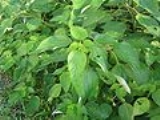
 are heart-shaped, 7-15 cm long and 6-12 cm broad, and white on the underside with dense small hairs - this gives it a silvery appearance; unlike nettles, the hairs do not sting. The true ramie or China Grass also called Chinese plant or white ramie is the Chinese cultivated plant.


Discussion
Ask a question about 'Ramie'
Start a new discussion about 'Ramie'
Answer questions from other users
Full Discussion Forum


Recent Posts


Encyclopedia


Ramie (Boehmeria nivea) is a flowering plant
Flowering plant

The flowering plants or angiosperms are the most widespread group of Embryophytes. The flowering plants and the gymnosperms are the only extant groups of Spermatophyte....
 in the nettle
Nettle

Nettle is the common name for between 30-45 species of flowering plants of the genus Urtica in the family Urticaceae, with a cosmopolitan distribution though mainly temperate distribution....
 family Urticaceae
Urticaceae

Urticaceae, or the nettle family, is a family of flowering plants. The family name comes from the genus Urtica . Urticaceae includes a number of well-known, interesting and useful plants, including genus Urtica , Boehmeria nivea , Pipturus albidus , and Debregeasia saeneb ....
, native to eastern Asia
Asia

Asia is the world's largest and most populous continent. It covers 8.6% of the Earth's total surface area and, with over 4 billion people, it contains more than 60% of the world's current human population....
. It is a herbaceous
Herbaceous

A herbaceous plant is a plant that has leaf and stem that die down at the end of the growing season to the soil level. A herbaceous plant may be Annual plant, Biennial plant or Perennial plant....
 perennial
Perennial plant

A perennial plant or perennial is a plant that lives for more than two years. When used by gardeners or horticulturalists, this term applies specifically to perennial herbaceous plants....
 growing to 1 - 2.5 m tall; the leaves
Leaf

In botany, a leaf is an above-ground plant Organ specialized for photosynthesis. For this purpose, a leaf is typically flat and thin, to expose the cells containing chloroplast to light over a broad area, and to allow light to penetrate fully into the tissues....
 are heart-shaped, 7-15 cm long and 6-12 cm broad, and white on the underside with dense small hairs - this gives it a silvery appearance; unlike nettles, the hairs do not sting. The true ramie or China Grass also called Chinese plant or white ramie is the Chinese cultivated plant. A second type, is known as green ramie or rhea and is believed to have originated in the Malay Peninsula. This type has smaller leaves which are green on the underside, and it appears to be better suited to tropical conditions.

Cultivation

Ramie is one of the oldest fibre crops, having been used for at least six thousand years, and is principally used for fabric production. It is a bast fibre
Bast fibre

Bast fibre or skin fibre is plant fibre collected from the phloem or bast surrounding the stem of certain, mainly dicotyledonic, plants....
, and the part used is the bark (phloem
Phloem

In vascular plants, phloem is the living Biological tissue that carries organic nutrients , particularly sucrose, a sugar, to all parts of the plant where needed....
) of the vegetative stalks. Ramie is normally harvested two to three times a year but under good growing conditions can be harvested up to six times per year. Unlike other bast crops, ramie requires chemical processing to de-gum the fibre.

Harvesting is done just before or soon after the beginning of flowering. It is done at this time because at this stage there is a decline in plant growth and the maximum fiber content is achieved. Stems are harvested by either cutting just above the lateral roots or else bending the stem. This will enable the core to be broken and the cortex
Cortex (botany)

In botany, the cortex is the outer of the plant stem or root of a plant, bounded on the outside by the Epidermis and on the inside by the endodermis....
 can be stripped from the plant in situ.

After harvesting, stems are decorticated while the plants are fresh. If this is not done while the plants are still fresh the plants will dry out and the bark will be hard to remove. The bark ribbon is then dried as quickly as possible. This will prevent bacteria
Bacteria

The Bacteria are a large group of unicellular microorganisms. Typically a few micrometres in length, bacteria have a wide range of shapes, ranging from spheres to rods and spirals....
 and fungi from attacking it.

The dry weight of harvested stem from crops ranges from 3.4 to 4.5 t/ha/year, so a 4.5 ton crop yields 1,600 kg/ha/year of dry non-de-gummed fiber. The weight loss during de-gumming can be up to 25% giving a yield of de-gummed fiber of about 1,200 kg/ha/year.

The extraction of the fiber occurs in three stages. First the cortex or bark is removed; this can be done by hand or by machine. This process is called de-cortication. Second the cortex is scraped to remove most of the outer bark, the parenchyma
Parenchyma

Parenchyma is a term used to describe a bulk of a substance. It is used in different ways in animals and in plants.The term is New Latin, from Greek language parenkhuma, visceral flesh, from parenkhein, to pour in beside : para-, beside + en-, in + khein, to pour....
 in the bast layer and some of the gums and pectins. Finally the residual cortex material is washed, dried, and de-gummed to extract the spinnable fiber
Fiber

Fiber or fibre is a class of materials that are continuous filaments or are in discrete elongated pieces, similar to lengths of yarn. They are very important in the biology of both plants and animals, for holding tissue s together....
.

History

Ramie has been around for so long that it was even used in mummy
Mummy

A mummy is a corpse whose skin and organs have been preserved by either intentional or incidental exposure to chemicals, extreme coldness, very high humidity, or lack of air when bodies are submerged in bogs....
 cloths in Egypt
Egypt

Egypt is a country mainly in North Africa, with the Sinai Peninsula forming a land bridge in Western Asia. Covering an area of about , Egypt borders the Mediterranean Sea to the north, the Gaza Strip and Israel to the northeast, the Red Sea to the east, Sudan to the south and Libya to the west....
 during the period 5000-3300 BC and has been grown in China for many centuries. In the study of the "Lazarus" mummy, three types of textiles were found. The outermost cloth was heavy and coarsely woven; the innermost was the lightest and most tightly woven. The outer cloth appeared to be ramie (which Wiseman notes "contains non-fibrous material that is toxic to bacteria and fungi"-- in other words, an ideal textile for mummymaking).

Brazil began production in the late 1930s with production peaking in 1971. Since then, production has steadily declined as a result of competition with alternative crops, such as soybeans and the important synthetic fibres.They used it in Ancient China for the farmers clothes.

Properties

Ramie is one of the strongest natural fibers. It exhibits even greater strength when wet. Ramie fiber is known especially for its ability to hold shape, reduce wrinkling, and introduce a silk
Silk

Silk is a natural protein fiber, some forms of which can be weaving into textiles. The best-known type of silk is obtained from Pupa#Cocoons made by the larvae of the mulberry silkworm Bombyx mori reared in captivity ....
y lustre to the fabric appearance. It is not as durable as other fibers, and so is usually used as a blend with other fibers such as cotton
Cotton

Cotton is a soft, staple fiber that grows in a form known as a boll around the seeds of the cotton plant a shrub native to tropical and subtropical regions around the world, including the Americas, India and Africa....
 or wool
Wool

Wool is the fiber derived from the specialized skin cells, called follicles, of animals in the Caprinae family, principally domestic sheep, but the hair of certain species of other Mammalia such as cashmere goat, llamas, rabbits and keeshonds may also be called wool....
. It is similar to flax in absorbency, density and microscopic appearance. However it will not dye as well as cotton
Cotton

Cotton is a soft, staple fiber that grows in a form known as a boll around the seeds of the cotton plant a shrub native to tropical and subtropical regions around the world, including the Americas, India and Africa....
. Because of its high molecular crystallinity, ramie is stiff and brittle and will break if folded repeatedly in the same place; it lacks resiliency and is low in elasticity and elongation potential.

Physical and chemical properties of ramie fiber
Cellulose (wt%) Lignin (wt%) Hemicellulose (wt%) Pectin (wt%) Wax (wt%) Microfibrillar angle (°) Moisture content (wt%) Density (mg/m3)
68.6 - 76.2 0.6 - 0.7 13.1 - 16.7 1.9 0.3 7.5 8.0 1.50
Source:


Mechanical properties of untreated ramie fibers
Fiber diameter (mm) Fracture load (N) Tensile strength (MPa) Fracture strain (%)
0.034 0.467 560 0.025
Source:


Uses


Despite its strength, ramie has had limited acceptance for textile use. The fiber's extraction and cleaning are expensive, chiefly because of the several steps—involving scraping, pounding, heating, washing, or exposure to chemicals. Some or all are needed to separate the raw fiber from the adhesive gums or resins in which it is ensheathed. Spinning the fiber is made difficult by its brittle quality and low elasticity; and weaving is complicated by the hairy surface of the yarn, resulting from lack of cohesion between the fibers. The greater utilization of ramie depends upon the development of improved processing methods.

Ramie is used to make such products as industrial sewing thread, packing materials, fishing nets, and filter cloths. It is also made into fabrics for household furnishings (upholstery
Upholstery

Upholstery is the work of providing furniture, especially chairs, with padding, Spring s, webbing, and textile or leather covers. The word upholstery comes from the Middle English words up and holden, meaning to hold up....
, canvas
Canvas

Canvas is an extremely heavy-duty plain weave cloth used for making sails, tents, marquees, backpacks, and other functions where sturdiness is required....
) and clothing, frequently in blends with other textile fibers (for instance when used in admixture with wool
Wool

Wool is the fiber derived from the specialized skin cells, called follicles, of animals in the Caprinae family, principally domestic sheep, but the hair of certain species of other Mammalia such as cashmere goat, llamas, rabbits and keeshonds may also be called wool....
, shrinkage is reported to be greatly reduced when compared with pure wool.) Shorter fibres and waste are used in paper manufacture.

Ramie is also used as an ornamental plant
Ornamental plant

Ornamental plants are typically grown in the flower garden or as house plants. Most commonly they are grown for the display of their flowers. Other common ornamental features include leaves, scent, fruit, Plant stem and bark....
 in eastern Asia.

Producers


China
China

China is a Culture of China, an ancient civilization, and, depending on perspective, a national or multinational entity extending over a large area in East Asia....
 leads in the production of ramie and exports mainly to Japan
Japan

Japan is an island country in East Asia. Located in the Pacific Ocean, it lies to the east of the Sea of Japan, People's Republic of China, North Korea, South Korea and Russia, stretching from the Sea of Okhotsk in the north to the East China Sea and Taiwan in the south....
 and Europe
Europe

Europe is, conventionally, one of the world's seven continents. Comprising the westernmost peninsula of Eurasia, Europe is generally divided from Asia to its east by the water divide of the Ural Mountains, the Ural , the Caspian Sea, and by the Caucasus Mountains to the southeast....
. Other producers include Japan, Taiwan
Taiwan

Taiwan is an island in East Asia. "Taiwan" is also commonly used to refer to the country governed by the Republic of China and to the ROC itself, which governs the island of Taiwan, Orchid Island and Green Island, Taiwan in the Pacific Ocean off the Taiwan coast, the Penghu islands in the Taiwan Strait, and Kinmen and the Matsu Islands...
, the Philippines
Philippines

The Philippines, officially known as the Republic of the Philippines, is a country in Southeast Asia with Manila as its capital city. It comprises 7,107 islands in the western Pacific Ocean....
, and Brazil
Brazil

Brazil , officially the Federative Republic of Brazil , is a country in South America. It is the List of countries and outlying territories by total area country by geographical area, occupying nearly half of South America, the List of countries by population country, and the fourth most populous democracy in the world....
. Only a small percentage of the ramie produced is available on the international market. Japan, Germany
Germany

Germany , officially the Federal Republic of Germany , is a country in Central Europe. It is bordered to the north by the North Sea, Denmark, and the Baltic Sea; to the east by Poland and the Czech Republic; to the south by Austria and Switzerland; and to the west by France, Luxembourg, Belgium, and the Netherlands....
, France
France

France , officially the French Republic , is a country whose Metropolitan France is located in Western Europe and that also comprises various Overseas departments and territories of France....
 and the UK are the main importers, the remaining supply is used domestically.

Sources


External links