
All Topics  
Pragmatism


   Email Print
   Bookmark   Link


Pragmatism


Pragmatism is the philosophy
Philosophy

Philosophy is the study of general problems concerning matters such as existence, knowledge, truth, beauty, justice, validity, mind, and language....
 of considering practical consequences or real effects to be vital components of meaning and truth
Truth

semantic fields for the word truth extend from honesty, good faith, and sincerity in general, to agreement with fact or reality in particular....
. Pragmatism is generally considered to have originated in the late nineteenth century with Charles Peirce
Charles Peirce

Charles Sanders Peirce was an American logician, mathematics, Philosophy, and science, born in Cambridge, Massachusetts. Peirce was educated as a chemist and employed as a scientist for 30 years....
, who first stated the pragmatic maxim
Pragmatic maxim

The pragmatic maxim, also known as the maxim of pragmatism or the maxim of pragmaticism, is a maxim of logic formulated by Charles Sanders Peirce....
. It came to fruition in the early twentieth-century philosophies of William James
William James

William James was a pioneering American psychology and philosophy trained as a medical doctor. He wrote influential books on the young science of psychology, educational psychology, psychology of religion experience and mysticism, and the philosophy of pragmatism....
 and John Dewey
John Dewey

John Dewey was an American philosopher, psychologist, and school reform whose thoughts and ideas have been highly influential in the United States and around the world....
 and, in a more unorthodox manner, in the works of George Santayana
George Santayana

George Santayana , was a philosopher, essayist, poet, and novelist.A lifelong Spain citizen, Santayana was raised and educated in the United States, wrote in English language and is generally considered an American Intellectual#Modes of .27intellectual class.27 in nineteenth-century Europe, although, of his nearly 89 years, he spent only 39...
. Other important aspects of pragmatism include anti-Cartesianism
Embodied philosophy

Philosophers, cognitive sciences and artificial intelligences who study embodied cognition and the embodied mind believe that the nature of the human mind is largely determined by the form of the human body....
, radical empiricism
Radical empiricism

Radical empiricism is a pragmatism doctrine put forth by William James. It asserts that experience includes both particulars and relations between those particulars, and that therefore both deserve a place in our explanations....
, instrumentalism
Instrumentalism

In the philosophy of science, instrumentalism is the view that concepts and theories are useful instruments whose worth is measured not by whether the concepts and theories are true or false , but by how effective they are in explaining and predicting phenomena....
, anti-realism
Anti-realism

In philosophy, the term anti-realism is used to describe anyposition involving either the denial of an Objectivity reality of entities of a certain type or the denial that verification-transcendent statements about a type of entity are either true or false....
, verificationism, conceptual relativity
Conceptualism

Conceptualism is a doctrine in philosophy intermediate between nominalism and Philosophical realism that says Universal s exist only within the mind and have no external or substantial reality....
, a denial of the fact-value distinction
Fact-value distinction

The fact-value distinction is a concept used to distinguish between arguments which can be claimed through reason alone, and those where rationality is limited to describing a collective opinion....
, a high regard for science, and fallibilism
Fallibilism

Fallibilism is the philosophical doctrine that all claims of knowledge could, in principle, be mistaken. Some fallibilists go further, arguing that absolute certainty about knowledge is impossible....
.

Pragmatism began enjoying renewed attention from the 1950s on, because a new school of philosophy put forth a revised pragmatism which criticized the logical positivism
Logical positivism

Logical positivism is a school of philosophy that combines empiricism, the idea that observational evidence is indispensable for knowledge of the world, with a version of rationalism incorporating mathematical and logico-linguistic constructs and deductions in epistemology.See, e.g., : in Stanford Encyclopedia of Philosophy
 that had dominated philosophy in the United States and Britain since the 1930s, notably in the work of analytic philosophers like W. V. O. Quine
Willard Van Orman Quine

Willard Van Orman Quine , was an American analytic philosophy and logician. From 1930 until his death 70 years later, Quine was affiliated in some way with Harvard University, first as a student, then as a professor of philosophy and a teacher of mathematics, and finally as an emeritus elder statesman who published or revised seven books in...
 and Wilfrid Sellars
Wilfrid Sellars

Wilfrid Stalker Sellars was an United States philosopher. His father was the noted Canadian-American philosopher Roy Wood Sellars, a leading American philosophical naturalist in the first half of the twentieth-century....
.


Discussion
Ask a question about 'Pragmatism'
Start a new discussion about 'Pragmatism'
Answer questions from other users
Full Discussion Forum


Recent Posts


Encyclopedia


Pragmatism is the philosophy
Philosophy

Philosophy is the study of general problems concerning matters such as existence, knowledge, truth, beauty, justice, validity, mind, and language....
 of considering practical consequences or real effects to be vital components of meaning and truth
Truth

semantic fields for the word truth extend from honesty, good faith, and sincerity in general, to agreement with fact or reality in particular....
. Pragmatism is generally considered to have originated in the late nineteenth century with Charles Peirce
Charles Peirce

Charles Sanders Peirce was an American logician, mathematics, Philosophy, and science, born in Cambridge, Massachusetts. Peirce was educated as a chemist and employed as a scientist for 30 years....
, who first stated the pragmatic maxim
Pragmatic maxim

The pragmatic maxim, also known as the maxim of pragmatism or the maxim of pragmaticism, is a maxim of logic formulated by Charles Sanders Peirce....
. It came to fruition in the early twentieth-century philosophies of William James
William James

William James was a pioneering American psychology and philosophy trained as a medical doctor. He wrote influential books on the young science of psychology, educational psychology, psychology of religion experience and mysticism, and the philosophy of pragmatism....
 and John Dewey
John Dewey

John Dewey was an American philosopher, psychologist, and school reform whose thoughts and ideas have been highly influential in the United States and around the world....
 and, in a more unorthodox manner, in the works of George Santayana
George Santayana

George Santayana , was a philosopher, essayist, poet, and novelist.A lifelong Spain citizen, Santayana was raised and educated in the United States, wrote in English language and is generally considered an American Intellectual#Modes of .27intellectual class.27 in nineteenth-century Europe, although, of his nearly 89 years, he spent only 39...
. Other important aspects of pragmatism include anti-Cartesianism
Embodied philosophy

Philosophers, cognitive sciences and artificial intelligences who study embodied cognition and the embodied mind believe that the nature of the human mind is largely determined by the form of the human body....
, radical empiricism
Radical empiricism

Radical empiricism is a pragmatism doctrine put forth by William James. It asserts that experience includes both particulars and relations between those particulars, and that therefore both deserve a place in our explanations....
, instrumentalism
Instrumentalism

In the philosophy of science, instrumentalism is the view that concepts and theories are useful instruments whose worth is measured not by whether the concepts and theories are true or false , but by how effective they are in explaining and predicting phenomena....
, anti-realism
Anti-realism

In philosophy, the term anti-realism is used to describe anyposition involving either the denial of an Objectivity reality of entities of a certain type or the denial that verification-transcendent statements about a type of entity are either true or false....
, verificationism, conceptual relativity
Conceptualism

Conceptualism is a doctrine in philosophy intermediate between nominalism and Philosophical realism that says Universal s exist only within the mind and have no external or substantial reality....
, a denial of the fact-value distinction
Fact-value distinction

The fact-value distinction is a concept used to distinguish between arguments which can be claimed through reason alone, and those where rationality is limited to describing a collective opinion....
, a high regard for science, and fallibilism
Fallibilism

Fallibilism is the philosophical doctrine that all claims of knowledge could, in principle, be mistaken. Some fallibilists go further, arguing that absolute certainty about knowledge is impossible....
.

Pragmatism began enjoying renewed attention from the 1950s on, because a new school of philosophy put forth a revised pragmatism which criticized the logical positivism
Logical positivism

Logical positivism is a school of philosophy that combines empiricism, the idea that observational evidence is indispensable for knowledge of the world, with a version of rationalism incorporating mathematical and logico-linguistic constructs and deductions in epistemology.See, e.g., : in Stanford Encyclopedia of Philosophy
 that had dominated philosophy in the United States and Britain since the 1930s, notably in the work of analytic philosophers like W. V. O. Quine
Willard Van Orman Quine

Willard Van Orman Quine , was an American analytic philosophy and logician. From 1930 until his death 70 years later, Quine was affiliated in some way with Harvard University, first as a student, then as a professor of philosophy and a teacher of mathematics, and finally as an emeritus elder statesman who published or revised seven books in...
 and Wilfrid Sellars
Wilfrid Sellars

Wilfrid Stalker Sellars was an United States philosopher. His father was the noted Canadian-American philosopher Roy Wood Sellars, a leading American philosophical naturalist in the first half of the twentieth-century....
. The concept of naturalized epistemology
Naturalized epistemology

Naturalized epistemology is a collection of philosophy views concerned with the theory of knowledge that emphasize the role of natural scientific methods....
 was further developed and widely publicized by Richard Rorty
Richard Rorty

Richard McKay Rorty was an American philosopher. He had a long and diverse career in Philosophy, Humanities, and Literature departments. His complex intellectual background gave him a comprehensive and nuanced understanding of the analytic philosophy tradition in philosophy he would later famously reject....
, whose later work grew closer to continental philosophy
Continental philosophy

Continental philosophy, in contemporary usage, refers to a set of traditions of 19th and 20th century philosophy from mainland Europe. This sense of the term originated among English-speaking philosophers in the second half of the 20th century, who found it useful for referring to a range of thinkers and traditions outside the analytic philo...
 and is often considered relativistic
Relativism

Relativism is the idea that some elements or aspects of experience or culture are relative to, i.e., dependent on, other elements or aspects.Common statements that might be considered relativistic include...
 by its critics. Contemporary pragmatism is still divided between work that is strictly within the analytic tradition, and a more relativistic strand in the wake of Rorty, and lastly neoclassical pragmatism (which includes philosophers such as Susan Haack
Susan Haack

Susan Haack is an England professor of philosophy and law at the University of Miami in the United States. She has written on logic, the philosophy of language, epistemology, and metaphysics....
) that stays closer to the work of Peirce, James, and Dewey.

Origins

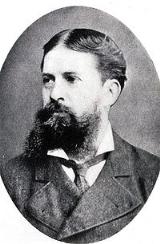
Charles Sanders Peirce Theb3558
As a philosophical movement, pragmatism originated in the United States
United States

The United States of America is a Federal government constitutional republic comprising U.S. state and a federal district. The country is situated mostly in central North America, where its Contiguous United States and Washington, D.C., the Capital districts and territories, lie between the Pacific Ocean and Atlantic Oceans, Borders of the U...
 in the late 1800s. The thought and works of Charles Sanders Peirce ( like "purse") and William James
William James

William James was a pioneering American psychology and philosophy trained as a medical doctor. He wrote influential books on the young science of psychology, educational psychology, psychology of religion experience and mysticism, and the philosophy of pragmatism....
 (both members of The Metaphysical Club
The Metaphysical Club

The Metaphysical Club was a conversational philosophical club that future Supreme Court Justice Oliver Wendell Holmes, Jr., psychologist William James, and polymath Charles Sanders Peirce formed in January 1872 in Cambridge, Massachusetts and dissolved in December 1872....
) as well as John Dewey
John Dewey

John Dewey was an American philosopher, psychologist, and school reform whose thoughts and ideas have been highly influential in the United States and around the world....
 and George Herbert Mead
George Herbert Mead

George Herbert Mead was an United States philosopher, sociologist and psychologist, primarily affiliated with the University of Chicago, where he was one of several distinguished pragmatisms....
 figured most prominently in its overall direction. The term pragmatism was first used in print by James, who credited Peirce with coining the term during the early 1870s. Prompted by James' use of the term and its attribution to him, Peirce began writing and lecturing on pragmatism to make clear his own interpretation. Peirce eventually coined the new name pragmaticism
Pragmaticism

Pragmaticism is a term used by Charles Sanders Peirce for his pragmatic philosophy after 1905, in order to distance himself and it from pragmatism, the original name, which had been used in a manner he did not approve of in the "literary journals"....
 to mark what he regarded as the original idea, for clarity's sake and possibly (but not certainly) because he disagreed with James (cf. Menand 2001 on the former interpretation; below on the latter). He claimed the term was so ugly, nobody would be tempted to steal it (Haack 1998).

James and Peirce were inspired by the crucial links among belief, conduct, and disposition
Disposition

A disposition is a habit , a preparation, a state of readiness, or a tendency to act in a specified way.The terms dispositional belief and occurrent belief refer, in the former case, to a belief that is held in the mind but not currently being considered, and in the latter case, to a belief that is currently being considered by the mind....
 by saying a belief is a proposition on which a person is prepared to act. Inspiration for the pragmatists include Francis Bacon
Francis Bacon

Francis Bacon, 1st Viscount St Alban King's Counsel , son of Nicholas Bacon by his second wife Anne Bacon, was an English philosopher, statesman, scientist, lawyer, jurist, and author....
 who coined the phrase "knowledge is power", David Hume
David Hume

David Hume was a Scotland philosopher, economist, historian and a key figure in the history of Western philosophy and the Scottish Enlightenment....
 for his naturalistic account of knowledge and action, Thomas Reid
Thomas Reid

Thomas Reid , Scotland philosopher, and a contemporary of David Hume, was the founder of the Scottish School of Common Sense, and played an integral role in the Scottish Enlightenment....
 for his direct realism
Direct realism

Direct realism, also known as naive realism or common sense realism, is a theory of perception that claims that the senses provide us with direct awareness of the external world....
, Immanuel Kant
Immanuel Kant

Immanuel Kant was an 18th-century German Philosophy from the Kingdom of Prussia city of K?nigsberg . He is regarded as one of the most influential thinkers of modern Europe and of the late Age of Enlightenment....
 for his idealism and from whom Peirce derives the name "pragmatism", Georg Hegel for his introduction of temporality into philosophy (Pinkard in Misak 2007), and J.S. Mill for his nominalism and empiricism.

Pragmatist epistemology

The epistemology
Epistemology

Epistemology or theory of knowledge is the branch of philosophy concerned with the nature and scope of knowledge. It addresses the questions:...
 of early pragmatism was heavily influenced by Darwinian thinking. Pragmatism was not the first to see the relevance of evolution for theories of knowledge: the same rationale had for example convinced Schopenhauer we should adopt biological idealism because what's useful to an organism to believe might differ wildly from what is actually true. Pragmatism differs from this idealist account because it challenges the assumption that knowledge and action are two separate spheres, and there exists an absolute or transcendental truth above and beyond the sort of inquiry organisms use to cope with life. Pragmatism, in short, provides what might be termed an ecological account of knowledge: inquiry is construed as a means by which organisms can get a grip on their environment. 'Real' and 'true' are labels that have a function in inquiry and cannot be understood outside of that context. It is not realist in a traditional robust sense of realism (what Hilary Putnam
Hilary Putnam

Hilary Whitehall Putnam is an American philosopher who has been a central figure in analytic philosophy since the 1960s, especially in philosophy of mind, philosophy of language, and philosophy of science....
 would later call metaphysical realism), but it is realist
Philosophical realism

Contemporary philosophical realism is the belief in a reality that is completely ontologically independent of our conceptual schemes, linguistic practices, beliefs, etc....
 in that it acknowledges an external world which must be dealt with.

A philosopher's general tendency is to push all views into either the idealist or realist camp, as well as William James
William James

William James was a pioneering American psychology and philosophy trained as a medical doctor. He wrote influential books on the young science of psychology, educational psychology, psychology of religion experience and mysticism, and the philosophy of pragmatism....
' occasional penchant for eloquence at the expense of public understanding, resulted in the widespread but false characterization of pragmatism as a form of subjectivism
Subjectivism

Subjectivism is a philosophical tenet that accords primacy to subjective experience as fundamental of all measure and law. In an extreme form, it may hold that the nature and existence of every object depends solely on someone's subjective awareness of it....
 or idealism
Idealism

Idealism is the philosophical theory which maintains that the ultimate nature of reality is based on mind or ideas. It holds that the so-called external or "real world" is inseparable from mind, consciousness, or perception....
. Many of James' best-turned phrases — "truth's cash value" (James 1907, p. 200) and "the true is only the expedient in our way of thinking" (James 1907, p. 222) — were taken out of context and caricatured in contemporary literature as representing the view any idea that has practical utility is true. William James writes:

In reality, James asserts, the theory is a great deal more subtle. (See Dewey 1910 for a 'FAQ')

The view that beliefs must represent reality
Reality

Reality, in everyday usage, means "the state of things as they actually exist". In a sense it is what is real. The term reality, in its widest sense, includes everything that being, whether or not it is observation or comprehension....
 to be true is widely disagreed in pragmatism – "Copying is one (and only one) genuine mode of knowing" says James (James 1907, p. 91) – as is the argument that beliefs are dispositions which qualify as true or false depending on how helpful they prove in inquiry and in action. It is only in the struggle of intelligent
Intelligence

Intelligence is an umbrella term used to describe a property of the mind that encompasses many related abilities, such as the capacities to reason, to plan, to problem solving, to think abstraction, to comprehend ideas, to use language, and to Learning....
 organism
Organism

In biology, an organism is any life thing . In at least some form, all organisms are capable of response to stimulus , reproduction, growth and developmental biology, and maintenance of homeostasis as a stable whole....
s with the surrounding environment that theories acquire meaning, and only with a theory's success in this struggle does it become true. However, in pragmatism, nothing practical or useful is held to be necessarily true, nor is anything which helps to survive merely in the short term. For example, to believe my cheating
Cheating

'Cheating' is an act of lying, deception, fraud, trickery, imposture, or imposition. Cheating characteristically is employed to create an unfair advantage, usually in one's own interest, and often at the expense of others....
 spouse
Spouse

The term spouse generally refers to a partner in a marriage:*A husband, referring to a male.*A wife, referring to a female.It may also mean:...
 is faithful may help me feel better now, but it is certainly not useful from a more long-term perspective because it doesn't accord with the facts (and is therefore not true).

Concept of truth

Going back to James, in pragmatism spoken truth is not ready-made, but jointly we and reality "make" truth. This idea has two senses, one which is often attributed to William James and F.C.S. Schiller, and another that is more widely accepted in pragmatism: (1) truth is mutable, and (2) truth is relative to a conceptual scheme.

(1) Mutability of truth

One major difference within pragmatism about the definition of 'truth' is the question of whether beliefs can pass from being true to being untrue and back. For James, beliefs are not true until they have been made true by verification. James believed propositions become true over the long term through proving their utility in a person's specific situation. The opposite of this process is not falsification, but rather a belief ceasing to be a "live option." F.C.S. Schiller, on the other hand, very clearly asserted that beliefs could pass into and problems. If I want to know how to return home safely, the true answer will be whatever is useful to solving that problem. Later on, when faced with a different problem, what I came to believe when faced with the earlier problem may now be false. As my problems change and as the most useful way to solve a problem shifts, so does the property of truth.

C.S. Peirce thought the idea that beliefs could be true at one time but false at another (or true for one person but false for another) was one of the "seeds of death" by which James allowed his pragmatism to become "infected." Peirce avoided this position because he took the pragmatic theory to imply that theoretical claims should be tied to verification practices (i.e. they should be subject to test), not that they should be tied to our specific problems or life needs. Truth is defined, for Peirce, as what
would be the ultimate outcome (not any outcome in real time) of inquiry by a (usually scientific) community of investigators. John Dewey, while agreeing broadly with this definition, also characterized truthfulness as a species of the good: to state that something is true means stating that it is trustworthy or reliable and will remain so in every conceivable situation. Both Peirce and Dewey clearly connect the definitions of truth and warranted assertability. Hilary Putnam also developed his internal realism around the idea that a belief is true if it is ideally epistemically justified. About James' and Schiller's account, Putnam says this:

Rorty has also weighed in against James and Schiller:

(2) Conceptual Relativity

Part of what James and Schiller mean by the phrase 'making truth' is their idea that we make things true by verifying them. This sense of 'making truth' has not been adopted by many other pragmatists. However, there is another sense to this phrase that nearly all pragmatists do adopt. It is the idea that there can be no truths without a conceptual scheme to express those truths. That is,

F.C.S. Schiller used the analogy of a chair to make clear what he meant by the phrase that truth is made: just as a carpenter
makes a chair out of existing materials and doesn't create it out of nothing, truth is a transformation of our experience but that doesn't imply reality is something we're free to construct or imagine as we please.

Central pragmatist tenets


The primacy of practice

The pragmatist proceeds from the basic premise that the human capability of theorizing is integral to intelligent practice. Theory and practice are not separate spheres; rather, theories and distinctions are tools or maps for finding our way in the world. As John Dewey put it, there is no question of theory
versus practice but rather of intelligent practice versus uninformed, stupid practice and noted in a conversation with William Pepperell Montague that "[h]is effort had not been to practicalize intelligence but to intellectualize practice". (Quoted in Eldridge 1998, p. 5) Theory is an abstraction from direct experience and ultimately must return to inform experience in turn. Thus an organism navigating his or her environment is the grounds for pragmatist inquiry.

Anti-reification of concepts and theories

Dewey, in
The Quest For Certainty, criticized what he called "the philosophical fallacy": philosophers often take categories (such as the mental and the physical) for granted because they don't realize that these are merely nominal
Nominalism

Nominalism is a Metaphysics view in philosophy according to which general or abstract terms and Predicate exist but that either Universal or abstract objects, which are sometimes thought to correspond to these terms, do not exist....
 concepts that were invented to help solve specific problems. This causes metaphysical and conceptual confusion. Various examples are the "ultimate Being" of Hegelian philosophers, the belief in a "realm of value", the idea that logic, because it is an abstraction from concrete thought, has nothing to do with the act of concrete thinking, and so on. David L. Hildebrand sums up the problem: "Perceptual inattention to the specific functions comprising inquiry led realists and idealists alike to formulate accounts of knowledge that project the products of extensive abstraction back onto experience." (Hildebrand 2003)

Naturalism and anti-Cartesianism

From the outset, pragmatists wanted to reform philosophy and bring it more in line with the scientific method as they understood it. They argued that idealist and realist philosophy had a tendency to present human knowledge as something beyond what science could grasp. These philosophies then resorted either to a phenomenology inspired by Kant or to correspondence theories of knowledge and truth. Pragmatists criticized the former for its a priori
A priori

A priori may refer to:* A priori , a type of constructed language* A priori , a knowledge of the actual population* A priori and a posteriori , used to distinguish two types of propositional knowledge...
sm, and the latter because it takes correspondence as an unanalyzable fact. Pragmatism instead tries to explain, psychologically and biologically, how the relation between knower and known 'works' in the world.

In "The Fixation of Belief" (1877), C.S. Peirce denied that introspection and intuition (staple philosophical tools at least since Descartes) were valid methods for philosophical investigation. He argued that intuition could lead to faulty reasoning, e.g. when we reason intuitively about infinity. Furthermore, introspection does not give privileged access to knowledge about the mind - the self is a concept that is derived from our interaction with the external world and not the other way around. (De Waal 2005, pp. 7-10) By the time of his Harvard Lectures in 1903, however, he had become convinced that pragmatism and epistemology in general could not be derived from principles of psychology: what we
do think is too different from what we should think. This is an important point of disagreement with most other pragmatists, who advocate a more thorough naturalism and psychologism.

Richard Rorty expanded on these and other arguments in
Philosophy and the Mirror of Nature in which he criticized attempts by many philosophers of science to carve out a space for epistemology that is entirely unrelated to - and sometimes thought of as superior to - the empirical sciences. W.V. Quine, instrumental in bringing naturalized epistemology
Naturalized epistemology

Naturalized epistemology is a collection of philosophy views concerned with the theory of knowledge that emphasize the role of natural scientific methods....
 back into favor with his essay
Epistemology Naturalized (Quine 1969), also criticized 'traditional' epistemology and its "Cartesian dream" of absolute certainty. The dream, he argued, was impossible in practice as well as misguided in theory because it separates epistemology from scientific inquiry.

Hilary Putnam

The reconciliation of anti-skepticism and fallibilism

Hilary Putnam
Hilary Putnam

Hilary Whitehall Putnam is an American philosopher who has been a central figure in analytic philosophy since the 1960s, especially in philosophy of mind, philosophy of language, and philosophy of science....
 suggests that the reconciliation of antiskepticism and fallibilism
Fallibilism

Fallibilism is the philosophical doctrine that all claims of knowledge could, in principle, be mistaken. Some fallibilists go further, arguing that absolute certainty about knowledge is impossible....
 is the central goal of American pragmatism. Although all human knowledge is partial, with no ability to take a 'God's-eye-view,' this does not necessitate a globalized skeptical attitude. Peirce insisted that contrary to Descartes' famous and influential methodology in the Meditations on First Philosophy
Meditations on First Philosophy

Meditations on First Philosophy is a philosophy treatise written by Ren? Descartes first published in Latin language in 1641. The French language translation was made by the Duke of Luynes with the supervision of Descartes and was published in 1647 with the title M?ditations Metaphysiques....
, doubt cannot be feigned or created for the purpose of conducting philosophical inquiry. Doubt, like belief, requires justification. It arises from confrontation with some specific recalcitrant matter of fact (which Dewey called a 'situation'), which unsettles our belief in some specific proposition. Inquiry is then the rationally self-controlled process of attempting to return to a settled state of belief about the matter. Note that anti-skepticism is a reaction to modern academic skepticism in the wake of Descartes. The pragmatist insistence that all knowledge is tentative is actually quite congenial to the older skeptical tradition.

Pragmatism in other fields of philosophy

While pragmatism started out simply as a criterion of meaning, it quickly expanded to become a full-fledged epistemology with wide-ranging implications for the entire philosophical field. Pragmatists who work in these fields share a common inspiration, but their work is diverse and there are no received views.

Philosophy of science

In the philosophy of science, instrumentalism
Instrumentalism

In the philosophy of science, instrumentalism is the view that concepts and theories are useful instruments whose worth is measured not by whether the concepts and theories are true or false , but by how effective they are in explaining and predicting phenomena....
 is the view that concepts and theories are merely useful instruments whose worth is measured not by whether the concepts and theories somehow mirror reality, but by how effective they are in explaining and predicting phenomena. Instrumentalism does not state that truth doesn't matter, but rather provides a specific answer to the question of what truth and falsity mean and how they function in science.

One of C.I. Lewis' main arguments in
Mind and the World Order: Outline of a Theory of Knowledge was that science does not merely provide a copy of reality but must work with conceptual systems and that those are chosen for pragmatic reasons, that is, because they aid inquiry. Lewis' own development of multiple modal logic
Modal logic

A modal logic is any system of mathematical logic#Formal logic that attempts to deal with notions of possibility and necessity. Traditionally, there are three "modes" or "moods" or "modalities" of the Copula to be, namely, Logical possibility, probability, and Necessary_and_sufficient_conditions#Necessary_conditions....
s is a case in point. Lewis is sometimes called a 'conceptual pragmatist' because of this. (Lewis 1929)

Another development is the cooperation of logical positivism
Logical positivism

Logical positivism is a school of philosophy that combines empiricism, the idea that observational evidence is indispensable for knowledge of the world, with a version of rationalism incorporating mathematical and logico-linguistic constructs and deductions in epistemology.See, e.g., : in Stanford Encyclopedia of Philosophy
 and pragmatism in the works of Charles W. Morris
Charles W. Morris

Charles W. Morris was an American Semiotics and Philosophy....
 and Rudolph Carnap. The influence of pragmatism on these writers is mostly limited to the incorporation of the pragmatic maxim
Pragmatic maxim

The pragmatic maxim, also known as the maxim of pragmatism or the maxim of pragmaticism, is a maxim of logic formulated by Charles Sanders Peirce....
 into their epistemology. Pragmatists with a broader conception of the movement don't often refer to them.

W. V. Quine's paper "Two Dogmas of Empiricism
Two Dogmas of Empiricism

W. V. O. Quine paper "Two Dogmas of Empiricism", published in 1951, is one of the most celebrated papers of twentieth century philosophy in the analytic philosophy tradition....
," published 1951, is one of the most celebrated papers of twentieth-century philosophy in the analytic tradition. The paper is an attack on two central tenets of the logical positivists' philosophy. One is the distinction between analytic truths, statements which are true simply in value of the meanings of their words ('all bachelors are unmarried'), and synthetic truths, which are grounded in empirical fact. The other is reductionism, the theory that each meaningful statement gets its meaning from some logical construction of terms which refers exclusively to immediate experience. Quine's argument brings to mind Peirce's insistence that axioms aren't a priori truths but synthetic statements.

Logic

Later in his life Schiller became famous for his attacks on logic in his textbook "Formal Logic." By then, Schiller's pragmatism had become the nearest of any of the classical pragmatists to an ordinary language philosophy. Schiller sought to undermine the very possibility of formal logic, by showing that words only had meaning when used in an actual context. The least famous of Schiller's main works was the constructive sequel to his destructive book "Formal Logic." In this sequel, "Logic for Use," Schiller attempted to construct a new logic to replace the formal logic he had just decimated in "Formal Logic." What he offers is something philosophers would recognize today as a logic covering the context of discovery and the hypothetico-deductive method.

Whereas F.C.S. Schiller actually dismissed the possibility of formal logic, most pragmatists are critical rather of its pretension to ultimate validity and see logic as one logical tool among others - or perhaps, considering the multitude of formal logics, one
set of tools among others. This is the view of C.I. Lewis. C.S. Peirce developed multiple methods for doing formal logic.

Stephen Toulmin's
The Uses of Argument inspired scholars in informal logic and rhetoric studies (although it is actually an epistemological work).

Metaphysics

James and Dewey were empirical
Empiricism

In philosophy, empiricism is a theory of knowledge which asserts that knowledge arises from experience. Empiricism is one of several competing views about how we know "things," part of the branch of philosophy called epistemology, or "theory of knowledge"....
 thinkers in the most straightforward fashion: experience is the ultimate test and experience is what needs to be explained. They were dissatisfied with ordinary empiricism because in the tradition dating from Hume, empiricists had a tendency to think of experience as nothing more than individual sensations. To the pragmatists, this went against the spirit of empiricism: we should try to explain all that is given in experience including connections and meaning, instead of explaining them away and positing sense data as the ultimate reality. Radical empiricism
Radical empiricism

Radical empiricism is a pragmatism doctrine put forth by William James. It asserts that experience includes both particulars and relations between those particulars, and that therefore both deserve a place in our explanations....
, or Immediate Empiricism in Dewey's words, wants to give a place to meaning and value instead of explaining them away as subjective additions to a world of whizzing atoms.

William James gives an interesting example of this philosophical shortcoming:

F.C.S. Schiller's first book, "Riddles of the Sphinx", was published before he became aware of the growing pragmatist movement taking place in America. In it, Schiller argues for a middle ground between materialism and absolute metaphysics. The result of the split between these two explanatory schemes that are comparable to what William James called tough-minded empiricism and tender-minded rationalism, Schiller contends, is that mechanistic naturalism cannot make sense of the "higher" aspects of our world (freewill, consciousness, purpose, universals and some would add God), while abstract metaphysics cannot make sense of the "lower" aspects of our world (the imperfect, change, physicality). While Schiller is vague about the exact sort of middle ground he is trying to establish, he suggests metaphysics as a tool that can aid inquiry and is only valuable insofar as it actually does help in explanation.

In the second half of the twentieth century, Stephen Toulmin
Stephen Toulmin

Stephen Edelston Toulmin is a United Kingdom philosopher, author, and educator. Influenced by the Austrian philosopher Ludwig Wittgenstein, Toulmin devoted his works to the analysis of ethics....
 argued that the need to distinguish between reality and appearance only arises within an explanatory scheme and therefore that there is no point in asking what 'ultimate reality' consists of. More recently, a similar idea has been suggested by the postanalytical philosopher
Postanalytic philosophy

Postanalytic philosophy describes a detachment from the mainstream philosophical movement of analytic philosophy, which is the predominant school of thought in Anglosphere....
 Daniel Dennett
Daniel Dennett

Daniel Clement Dennett is a prominent United States Philosophy whose research centers on philosophy of mind, philosophy of science and philosophy of biology, particularly as those fields relate to evolutionary biology and cognitive science....
, who argues that anyone who wants to understand the world has to adopt the intentional stance and acknowledge both the 'syntactical' aspects of reality (i.e. whizzing atoms) and its emergent or 'semantic' properties (i.e. meaning and value).

Radical Empiricism gives interesting answers to questions about the limits of science if there are any, the nature of meaning and value and the workability of reductionism
Reductionism

Reductionism can either mean an approach to understanding the nature of complex things by reducing them to the interactions of their parts, or to simpler or more fundamental things or a philosophical position that a complex system is nothing but the sum of its parts, and that an account of it can be reduced to accounts of individual consti...
. These questions feature prominently in current debates about the relationship between religion and science
Relationship between religion and science

The relationship between religion and science has been a focus of the Demarcation problem. Statements about the world made by science and religion rely on different methodologies....
, where it is often assumed - most pragmatists would disagree - that science degrades everything that is meaningful into 'merely' physical phenomena
Materialism

The philosophy of materialism holds that the only thing that can be truly proven to existence is matter, and is considered a form of physicalism....
.

Philosophy of mind

Both John Dewey
John Dewey

John Dewey was an American philosopher, psychologist, and school reform whose thoughts and ideas have been highly influential in the United States and around the world....
 in
Nature and Experience (1929) and half a century later Richard Rorty
Richard Rorty

Richard McKay Rorty was an American philosopher. He had a long and diverse career in Philosophy, Humanities, and Literature departments. His complex intellectual background gave him a comprehensive and nuanced understanding of the analytic philosophy tradition in philosophy he would later famously reject....
 in his monumental
Philosophy and the Mirror of Nature (1979) argued that much of the debate about the relation of the mind to the body results from conceptual confusions. They argue instead that there is no need to posit the mind or mindstuff as an ontological category.

Pragmatists disagree over whether philosophers ought to adopt a quietist or a naturalist stance toward the mind-body problem. The former (Rorty among them) want to do away with the problem because they believe it's a pseudo-problem, whereas the latter believe that it is a meaningful empirical question.

Ethics

Pragmatism sees no fundamental difference between practical and theoretical reason, nor any ontological difference between facts and values. Both facts and values have cognitive content: knowledge is what we should believe; values are hypotheses about what is good in action. Pragmatist ethics is broadly humanist
Humanism

Humanism is a broad category of ethics that affirm the dignity and worth of all people, based on the ability to determine right and wrong by appealing to universal human qualities, particularly rationalism, without resorting to the supernatural or alleged divine authority from religious texts....
 because it sees no ultimate test of morality beyond what matters for us as humans. Good values are those for which we have good reasons, viz. the Good Reasons approach
Good reasons approach

The Good Reasons approach is a meta-ethics that states simply that ethical conduct is justified if the actor has good reasons for that conduct. The Good Reasons approach is not opposed to ethical theory per se, but is antithetical to wholesale justifications of morality and stresses that our moral conduct requires no further ontological o...
. The pragmatist formulation pre-dates those of other philosophers who have stressed important similarities between values and facts such as Jerome Schneewind and John Searle
John Searle

John Rogers Searle is an American philosopher and the Slusser Professor of Philosophy and Mills Professor of Philosophy of Mind and Language at the University of California, Berkeley ....
.

William James' contribution to ethics, as laid out in his essay
The Will to Believe has often been misunderstood as a plea for relativism or irrationality. On its own terms it argues that ethics always involves a certain degree of trust or faith and that we cannot always wait for adequate proof when making moral decisions.

Of the classical pragmatists, John Dewey wrote most extensively about morality and democracy. (Edel 1993) In his classic article
Three Independent Factors in Morals (Dewey 1930), he tried to integrate three basic philosophical perspectives on morality: the right, the virtuous and the good. He held that while all three provide meaningful ways to think about moral questions, the possibility of conflict among the three elements cannot always be easily solved. (Anderson, SEP)

Dewey also criticized the dichotomy between means and ends which he saw as responsible for the degradation of our everyday working lives and education, both conceived as merely a means to an end. He stressed the need for meaningful labor and a conception of education that viewed it not as a preparation for life but as life itself. (Dewey 2004 [1910] ch. 7; Dewey 1997 [1938], p. 47)

Dewey was opposed to other ethical philosophies of his time, notably the emotivism
Emotivism

Emotivism is the meta-ethics view which claims that:# Ethical Sentence s do not express propositions.# Instead, ethical sentences express emotional attitudes....
 of Alfred Ayer
Alfred Ayer

Sir Alfred Jules Ayer , better known as A. J. Ayer or "Freddie" to friends, was a British philosopher known for his promotion of logical positivism, particularly in his books Language, Truth and Logic and The Problem of Knowledge ....
. Dewey envisioned the possibility of ethics as an experimental discipline, and thought values could best be characterized not as feelings or imperatives, but as hypotheses about what actions will lead to satisfactory results or what he termed
consummatory experience. A further implication of this view is that ethics is a fallible undertaking, since human beings are frequently unable to know what would satisfy them.

A recent pragmatist contribution to meta-ethics
Meta-ethics

In philosophy, meta-ethics is the branch of ethics that seeks to understand the nature of ethical property , and ethical statements, attitudes, and judgments....
 is Todd Lekan's "Making Morality" (Lekan 2003). Lekan argues that morality is a fallible but rational practice and that it has traditionally been misconceived as based on theory or principles. Instead, he argues, theory and rules arise as tools to make practice more intelligent.

Aesthetics

John Dewey's
Art as Experience, based on the William James lectures he delivered at Harvard
Harvard University

Harvard University is a private university in Cambridge, Massachusetts, Massachusetts, United States, and a member of the Ivy League. Founded in 1636 by the colonial Massachusetts legislature, Harvard is the Colonial Colleges institution of higher learning in the United States....
, was an attempt to show the integrity of art, culture and everyday experience. (Field, IEP) Art, for Dewey, is or should be a part of everyone's creative lives and not just the privilege of a select group of artists. He also emphasizes that the audience is more than a passive recipient. Dewey's treatment of art was a move away from the transcendental
Transcendental

Transcendental can refer to:In mathematics:* Transcendental number, a class of irrational numbers* Transcendental function, a class of functions...
 approach to aesthetics
Aesthetics

Aesthetics or esthetics is commonly known as the study of senses or sensori-emotional values, sometimes called judgments of sentiment and taste ....
 in the wake of Immanuel Kant
Immanuel Kant

Immanuel Kant was an 18th-century German Philosophy from the Kingdom of Prussia city of K?nigsberg . He is regarded as one of the most influential thinkers of modern Europe and of the late Age of Enlightenment....
 who emphasized the unique character of art and the disinterested nature of aesthetic appreciation.

A notable contemporary pragmatist aesthetician is Joseph Margolis
Joseph Margolis

Joseph Zalman Margolis is an American Philosophy. A radical Historicism, he has published many books critical of the central assumptions of Western philosophy, and has elaborated a robust form of relativism....
. He defines a work of art as "a physically embodied, culturally emergent entity", a human "utterance" that isn't an ontological quirk but in line with other human activity and culture in general. He emphasizes that works of art are complex and difficult to fathom, and that no determinate interpretation can be given.

Philosophy of religion

Both Dewey and James have investigated the role that religion can still play in contemporary society, the former in
A Common Faith and the latter in The Varieties of Religious Experience.

It should be noted, from a general point of view, that for William James, something is true
only insofar as it works. Thus, the statement, for example, that prayer is heard may work on a psychological level but (a) will not actually help to bring about the things you pray for (b) may be better explained by referring to its soothing effect than by claiming prayers are actually heard. As such, pragmatism isn't antithetical to religion but it isn't an apologetic for faith either.

Joseph Margolis
Joseph Margolis

Joseph Zalman Margolis is an American Philosophy. A radical Historicism, he has published many books critical of the central assumptions of Western philosophy, and has elaborated a robust form of relativism....
, in
Historied Thought, Constructed World (California, 1995), makes a distinction between "existence" and "reality". He suggests using the term "exists" only for those things which adequately exhibit Pierce's Secondness: things which offer brute physical resistance to our movements. In this way, such things which affect us, like numbers, may be said to be "real", though they do not "exist". Margolis suggests that God, in such a linguistic usage, might very well be "real", causing believers to act in such and such a way, but might not "exist".

Analytical, neoclassical and neopragmatism

Neopragmatism
Neopragmatism

Neopragmatism, sometimes called linguistic pragmatism is a recent philosophical term for philosophy that reintroduces many concepts from pragmatism....
 is a broad contemporary category used for various thinkers, some of them radically opposed to one another. The name neopragmatist signifies that the thinkers in question incorporate important insights of, and yet significantly diverge from, the classical pragmatists. This divergence may occur either in their philosophical methodology (many of them are loyal to the analytic tradition) or in actual conceptual formation (C.I. Lewis was very critical of Dewey; Richard Rorty
Richard Rorty

Richard McKay Rorty was an American philosopher. He had a long and diverse career in Philosophy, Humanities, and Literature departments. His complex intellectual background gave him a comprehensive and nuanced understanding of the analytic philosophy tradition in philosophy he would later famously reject....
 dislikes Peirce). Important analytical neopragmatists include the aforementioned Lewis, W.V.O. Quine, Donald Davidson
Donald Davidson

Donald Davidson is the name of:*Donald Davidson , American poet*Donald Davidson , American philosopher*Donald Davidson , historian of the Indianapolis Motor Speedway...
, Hilary Putnam
Hilary Putnam

Hilary Whitehall Putnam is an American philosopher who has been a central figure in analytic philosophy since the 1960s, especially in philosophy of mind, philosophy of language, and philosophy of science....
 and the early Richard Rorty
Richard Rorty

Richard McKay Rorty was an American philosopher. He had a long and diverse career in Philosophy, Humanities, and Literature departments. His complex intellectual background gave him a comprehensive and nuanced understanding of the analytic philosophy tradition in philosophy he would later famously reject....
. Stanley Fish
Stanley Fish

Stanley Eugene Fish is an American literary theory and legal scholar. He was born and raised in Providence, Rhode Island. He is among the most important critics of the English poet John Milton in the 20th century , and is often associated with postmodernism, at times to his irritation as he describes himself as an anti-foundationalism....
, the later Rorty and Jürgen Habermas
Jürgen Habermas

J?rgen Habermas is a Germany philosopher and sociologist in the tradition of critical theory and American pragmatism. He is perhaps best known for his work on the concept of the public sphere, the topic of his first book....
 are closer to continental thought
Continental philosophy

Continental philosophy, in contemporary usage, refers to a set of traditions of 19th and 20th century philosophy from mainland Europe. This sense of the term originated among English-speaking philosophers in the second half of the 20th century, who found it useful for referring to a range of thinkers and traditions outside the analytic philo...
.

Neoclassical pragmatism denotes those thinkers who consider themselves inheritors of the project of the classical pragmatists. Sidney Hook
Sidney Hook

Sidney Hook was a prominent New York intellectual and philosopher who championed pragmatism....
 and Susan Haack
Susan Haack

Susan Haack is an England professor of philosophy and law at the University of Miami in the United States. She has written on logic, the philosophy of language, epistemology, and metaphysics....
 (known for the theory of foundherentism
Foundherentism

In epistemology, foundherentism is a theory of justification that combines elements from the two rival theories addressing infinite regress, foundationalism prone to arbitrariness and coherentism prone to circularity, hence the name....
) are well-known examples.

Not all pragmatists are easily characterized. It is probable, considering the advent of postanalytic philosophy
Postanalytic philosophy

Postanalytic philosophy describes a detachment from the mainstream philosophical movement of analytic philosophy, which is the predominant school of thought in Anglosphere....
 and the diversification of Anglo-American philosophy, that more philosophers will be influenced by pragmatist thought without necessarily publicly committing themselves to that philosophical school. Daniel Dennett
Daniel Dennett

Daniel Clement Dennett is a prominent United States Philosophy whose research centers on philosophy of mind, philosophy of science and philosophy of biology, particularly as those fields relate to evolutionary biology and cognitive science....
, a student of Quine's, falls into this category, as does Stephen Toulmin
Stephen Toulmin

Stephen Edelston Toulmin is a United Kingdom philosopher, author, and educator. Influenced by the Austrian philosopher Ludwig Wittgenstein, Toulmin devoted his works to the analysis of ethics....
, who arrived at his philosophical position via Wittgenstein
Ludwig Wittgenstein

Ludwig Josef Johann Wittgenstein was an Austrian-United Kingdom philosopher who worked primarily in logic, the philosophy of mathematics, the philosophy of mind, and the philosophy of language....
, whom he calls "a pragmatist of a sophisticated kind" (foreword for Dewey 1929 in the 1988 edition, p. xiii). Another example is Mark Johnson
Mark Johnson (professor)

Mark L. Johnson is Knight Professor of Liberal Arts and Sciences in the Department of Philosophy at the University of Oregon. He is well-known for contributions to embodied philosophy, cognitive science and cognitive linguistics, some of which he has coauthored with George Lakoff such as Metaphors We Live By....
 whose embodied philosophy
Embodied philosophy

Philosophers, cognitive sciences and artificial intelligences who study embodied cognition and the embodied mind believe that the nature of the human mind is largely determined by the form of the human body....
 (Lakoff and Johnson 1999) shares its psychologism, direct realism and anti-cartesianism with pragmatism. Conceptual pragmatism is a theory of knowledge originating with the work of the philosopher and logician Clarence Irving Lewis
Clarence Irving Lewis

Clarence Irving Lewis - February 3, 1964 Cambridge, Massachusetts), usually cited as C. I. Lewis, was an American academic philosopher and the founder of conceptual pragmatism....
. The epistemology of conceptual pragmatism was first formulated in the 1929 book
Mind and the World Order: Outline of a Theory of Knowledge.

'French Pragmatism' is attended with theorists like Bruno Latour
Bruno Latour

Bruno Latour is a France sociology of science, Anthropology and an influential theorist in the field of Science and Technology Studies . After teaching at the ?cole des Mines de Paris from 1982 to 2006, he is now Professor and vice-president for research at the Institut d'?tudes politiques de Paris , where he is associated with the Centre d...
, Michel Crozier
Michel Crozier

Michel Crozier is a France sociologist and member of the Acad?mie des sciences morales et politiques since 1999. He is also an officer of the L?gion d'honneur and a commander of the Ordre National du M?rite, as well as a laureate of the Prix Tocqueville....
 and Luc Boltanski
Luc Boltanski

Luc Boltanski is the leading figure in the new "French Pragmatism" school of French sociology. He is a professor at the ?cole des hautes ?tudes en sciences sociales, Paris and the founder of the Groupe de Sociologie Politique et Morale ....
 and Laurent Thévenot
Laurent Thévenot

Professor Laurent Th?venot is Directeur d'?tudes at the Ecole des Hautes Etudes en Sciences Sociales, Paris , and Senior researcher at the Centre d'Etudes de l'Emploi....
. It is often seen as opposed to structural problems connected to the French Critical Theory
Critical theory

In the humanities and social sciences, critical theory is the examination and critique of society and literature, drawing from knowledge across social sciences and humanities disciplines....
 of Pierre Bourdieu
Pierre Bourdieu

Pierre Bourdieu was an acclaimed France Sociology and writer known for his outspoken political views and public engagement. One of the principal players in French intellectual life, Bourdieu became the "intellectual reference" for movements opposed to neo-liberalism and globalisation that developed in France and elsewhere during the 1990s....
.

Contemporary echoes and ties

In the twentieth century, the movements of logical positivism
Logical positivism

Logical positivism is a school of philosophy that combines empiricism, the idea that observational evidence is indispensable for knowledge of the world, with a version of rationalism incorporating mathematical and logico-linguistic constructs and deductions in epistemology.See, e.g., : in Stanford Encyclopedia of Philosophy
 and ordinary language philosophy
Ordinary language philosophy

Ordinary language philosophy or linguistic philosophy is a philosophical school that approached traditional philosophical problems as rooted in misunderstandings philosophers develop by forgetting what words actually mean in a language....
 have similarities with pragmatism. Like pragmatism, logical positivism provides a verification criterion of meaning that is supposed to rid us of nonsense metaphysics. However, logical positivism doesn't stress action like pragmatism does. Furthermore, the pragmatists rarely used their maxim of meaning to rule out all metaphysics as nonsense. Usually, pragmatism was put forth to correct metaphysical doctrines or to construct empirically verifiable ones rather than to provide a wholesale rejection.

Ordinary language philosophy

Ordinary language philosophy or linguistic philosophy is a philosophical school that approached traditional philosophical problems as rooted in misunderstandings philosophers develop by forgetting what words actually mean in a language....
 is closer to pragmatism than other philosophy of language
Philosophy of language

Philosophy of language is the reasoned inquiry into the nature, origins, and usage of language. As a topic, the philosophy of language for Analytic philosophys is concerned with four central problems: the nature of Meaning , language use, language cognition, and the relationship between language and reality....
 because of its nominalist
Nominalism

Nominalism is a Metaphysics view in philosophy according to which general or abstract terms and Predicate exist but that either Universal or abstract objects, which are sometimes thought to correspond to these terms, do not exist....
 character and because it takes the broader functioning of language in an environment as its focus instead of investigating abstract relations between
language and world.

Pragmatism has ties to process philosophy
Process philosophy

Process philosophy identifies metaphysics reality with change and dynamism. Since the time of Plato and Aristotle, philosophers have posited true reality as "timeless", based on permanent Substance theorys, whilst processes are denied or subordinated to timeless substances....
. Much of their work developed in dialogue with process philosophers like Henri Bergson
Henri Bergson

Henri-Louis Bergson was a French philosophy, influential in the first half of the 20th century....
 and Alfred North Whitehead
Alfred North Whitehead

Alfred North Whitehead, Order of Merit was an England mathematician who became a philosopher. He wrote on algebra, logic, foundations of mathematics, philosophy of science, physics, metaphysics, and education....
, who aren't usually considered pragmatists because they differ so much on other points. (Douglas Browning et al. 1998; Rescher, SEP)

Behaviorism
Behaviorism

Behaviorism or Behaviourism,also called the learning perspective is a philosophy of psychology based on the proposition that all things which organisms do ? including acting, thinking and feeling?can and should be regarded as behaviors....
 and functionalism
Functionalism

Functionalism may refer to:* Functionalism * Functionalism * Functionalism versus intentionalism * Functionalism In social sciences:...
 in psychology and sociology also have ties to pragmatism, which is not surprising considering that James and Dewey were both scholars of psychology and that Mead
George Herbert Mead

George Herbert Mead was an United States philosopher, sociologist and psychologist, primarily affiliated with the University of Chicago, where he was one of several distinguished pragmatisms....
 became a sociologist.

Utilitarianism
Utilitarianism

Utilitarianism is the idea that the morality of an action is determined solely by its contribution to overall utility: that is, its contribution to happiness or pleasure as summed among all persons....
 has some significant parallels to Pragmatism and John Stuart Mill
John Stuart Mill

John Stuart Mill , United Kingdom philosopher, political economy, civil servant and Parliament of the United Kingdom, was an influential liberalism thinker of the 19th century....
 espoused similar values.

Criticism

Although many later pragmatists such as W.V.O. Quine were actually analytic philosophers, the most vehement criticisms of classical pragmatism came from within the analytic school. Bertrand Russell
Bertrand Russell

Bertrand Arthur William Russell, 3rd Earl Russell, Order of Merit , Fellow of the Royal Society , was a British people philosopher, mathematical logic, mathematician, historian, advocate for social reform, and pacifism....
 was especially known for his vituperative attacks on what he considered little more than epistemological relativism and short-sighted practicalism. Realists in general often could not fathom how pragmatists could seriously call themselves empirical or realist thinkers and thought pragmatist epistemology was only a disguised manifestation of idealism
Idealism

Idealism is the philosophical theory which maintains that the ultimate nature of reality is based on mind or ideas. It holds that the so-called external or "real world" is inseparable from mind, consciousness, or perception....
. (Hildebrand 2003)

Louis Menand argues that during the Cold War
Cold War

The Cold War was the continuing state of conflict, tension and competition that existed between a number of world powers, including the United States, the Soviet Union, People's Republic of China, France, United Kingdom and those countries' respective allies from the mid-1940s to the early 1990s....
, the intellectual life of the United States became dominated by ideologies. Since pragmatism seeks "to avoid the violence inherent in abstraction," it was not very popular at the time.

Neopragmatism
Neopragmatism

Neopragmatism, sometimes called linguistic pragmatism is a recent philosophical term for philosophy that reintroduces many concepts from pragmatism....
 as represented by Richard Rorty has been criticized as relativistic both by neoclassical pragmatists such as Susan Haack
Susan Haack

Susan Haack is an England professor of philosophy and law at the University of Miami in the United States. She has written on logic, the philosophy of language, epistemology, and metaphysics....
 (Haack 1997) and by many analytic philosophers (Dennett 1998). Rorty's early analytical work, however, differs notably from his later work which some, including Rorty himself, consider to be closer to literary criticism
Literary criticism

Literary criticism is the study, discussion, evaluation, and interpretation of literature. Modern literary criticism is often informed by literary theory, which is the philosophical discussion of its methods and goals....
 than to philosophy - most criticism is aimed at this latter phase of Rorty's thought.

Cultural references

In the musical Evita, the song "The Art of the Possible" emphasizes the spirit of pragmatism even on matters of life and death.

A list of pragmatists


Classical pragmatists (1850-1950)

  • Charles Sanders Peirce (1839-1914): was the founder of American pragmatism (later called by Peirce pragmaticism
    Pragmaticism

    Pragmaticism is a term used by Charles Sanders Peirce for his pragmatic philosophy after 1905, in order to distance himself and it from pragmatism, the original name, which had been used in a manner he did not approve of in the "literary journals"....
    ). He wrote on a wide range of topics, from mathematical logic and semiotics to psychology.
  • William James
    William James

    William James was a pioneering American psychology and philosophy trained as a medical doctor. He wrote influential books on the young science of psychology, educational psychology, psychology of religion experience and mysticism, and the philosophy of pragmatism....
     (1842-1910): influential psychologist
    Psychology

    Psychology is an academic and applied science discipline involving the science study of human mental functions and behavior. Occasionally it also relies on symbolic hermeneutics and critical theory, although these traditions are less pronounced than in other social sciences such as sociology....
     and theorist of religion
    Religion

    A religion is an organized approach to human spirituality which usually encompasses a set of myth, symbols, beliefs and practices, often with a supernatural or transcendence quality, that give meaning to the practitioner's experiences of life through reference to a higher power or truth....
    , as well as philosopher. First to be widely associated with the term "pragmatism" due to Peirce's lifelong unpopularity.
  • John Dewey
    John Dewey

    John Dewey was an American philosopher, psychologist, and school reform whose thoughts and ideas have been highly influential in the United States and around the world....
     (1859-1952): prominent philosopher of education
    Philosophy of education

    Philosophy of education is the philosophy study of the purpose, process, nature and ideals of education. Philosophy of education can naturally be considered a branch of both philosophy and education....
    , referred to his brand of pragmatism as instrumentalism
    Instrumentalism

    In the philosophy of science, instrumentalism is the view that concepts and theories are useful instruments whose worth is measured not by whether the concepts and theories are true or false , but by how effective they are in explaining and predicting phenomena....
    .
  • F.C.S. Schiller (1864-1937): one of the most important pragmatists of his time, Schiller is largely forgotten today.


Important protopragmatists or related thinkers
  • George Herbert Mead
    George Herbert Mead

    George Herbert Mead was an United States philosopher, sociologist and psychologist, primarily affiliated with the University of Chicago, where he was one of several distinguished pragmatisms....
     (1863-1931): philosopher and sociological social psychologist
    Social psychology

    Social psychology is the study of how people and groups interact. Scholars in this interdisciplinarity area are typically either psychology or sociology, though all social psychologists employ both the individual and the group as their Unit of analysis....
    .
  • Ralph Waldo Emerson
    Ralph Waldo Emerson

    Ralph Waldo Emerson was an American essayist, philosopher, poet, and leader of the transcendentalism movement in the early 19th century. His teachings directly influenced the growing New Thought movement of the mid 1800s....
     (1803-1882): the American protopragmatist.
  • Josiah Royce
    Josiah Royce

    Josiah Royce was an American objective idealism philosopher....
     (1855-1916): colleague of James who employed pragmatism in an idealist metaphysical framework, he was particularly interested in the philosophy of religion and community; his work is often associated with neo-Hegelianism.
  • George Santayana
    George Santayana

    George Santayana , was a philosopher, essayist, poet, and novelist.A lifelong Spain citizen, Santayana was raised and educated in the United States, wrote in English language and is generally considered an American Intellectual#Modes of .27intellectual class.27 in nineteenth-century Europe, although, of his nearly 89 years, he spent only 39...
     (1863-1952): often not considered to be a canonical pragmatist, he applied pragmatist methodologies to naturalism (philosophy)
    Naturalism (philosophy)

    Naturalism is a philosophical position that all phenomena can be explained in terms of natural causes and natural law. In its broadest and strongest sense, naturalism is the metaphysics position that "nature is all there is and all basic truths are truths of nature." This is generally referred to as metaphysical or ontological natur...
    , exemplified in his early masterwork,
    The Life of Reason
    The Life of Reason

    The Life of Reason, subtitled "the Phases of Human Progress", is a book published in five volumes from 1905 to 1906, by Spain-born American philosopher George Santayana ....
    .


Fringe figures
  • Giovanni Papini
    Giovanni Papini

    Giovanni Papini was an Italy journalist, essayist, Literary criticism, poet, and novelist....
     (1881-1956): Italian essayist, mostly known because James occasionally mentioned him.
  • Giovanni Vailati
    Giovanni Vailati

    Giovanni Vailati was an Italy Analytic philosophy, History of science, and Mathematics....
     (1863-1909): Italian analytic and pragmatist philosopher.
  • Hu Shi (1891-1962): Chinese intellectual and reformer, student and translator of Dewey's and advocate of pragmatism in China.


Neoclassical pragmatists (1950-)

Neoclassical pragmatists stay closer to the project of the classical pragmatists than neopragmatists do.

  • Sidney Hook
    Sidney Hook

    Sidney Hook was a prominent New York intellectual and philosopher who championed pragmatism....
     (1902-1989): a prominent New York intellectual and philosopher, a student of Dewey at Columbia.
  • Isaac Levi
    Isaac Levi

    Isaac Levi is the John Dewey Professor of Philosophy Emeritus at Columbia University. Levi came onto the philosophic scene with his groundbreaking first book, Gambling with Truth....
     (1930): seeks to apply pragmatist thinking in a decision-theoretic perspective.
  • Susan Haack
    Susan Haack

    Susan Haack is an England professor of philosophy and law at the University of Miami in the United States. She has written on logic, the philosophy of language, epistemology, and metaphysics....
     (1945): teaches at the University of Miami, sometimes called the intellectual granddaughter of C.S. Peirce, known chiefly for foundherentism
    Foundherentism

    In epistemology, foundherentism is a theory of justification that combines elements from the two rival theories addressing infinite regress, foundationalism prone to arbitrariness and coherentism prone to circularity, hence the name....
    .
  • Larry Hickman: philosopher of technology and important Dewey scholar as head of the Center for Dewey Studies
    Center for Dewey Studies

    The Center for John Dewey Studies at Southern Illinois University Carbondale was established as the central home for the works and study of philosopher/educator John Dewey....
    .
  • David Hildebrand: like other scholars of the classical pragmatists, Hildebrandt is dissatisfied with neopragmatism and argues for the continued importance of the writings of John Dewey.
  • Nicholas Rescher
    Nicholas Rescher

    Nicholas Rescher is an United States philosophy, affiliated for many years with the University of Pittsburgh, where he is currently University Professor of Philosophy and Chairman of the Center for Philosophy of Science....

Analytical, neo- and other pragmatists (1950-)

(Often labelled neopragmatism as well.)

  • Willard van Orman Quine (1908-2000): pragmatist philosopher, concerned with language
    Philosophy of language

    Philosophy of language is the reasoned inquiry into the nature, origins, and usage of language. As a topic, the philosophy of language for Analytic philosophys is concerned with four central problems: the nature of Meaning , language use, language cognition, and the relationship between language and reality....
    , logic
    Logic

    Logic is the study of the principles of valid demonstration and inference. Logic is a branch of philosophy, a part of the classical Trivium . The word derives from Greek language ?????? , fem....
    , and philosophy of mathematics
    Philosophy of mathematics

    The philosophy of mathematics is the branch of philosophy that studies the philosophical assumptions, foundations, and implications of mathematics....
    .
  • Clarence Irving Lewis
    Clarence Irving Lewis

    Clarence Irving Lewis - February 3, 1964 Cambridge, Massachusetts), usually cited as C. I. Lewis, was an American academic philosopher and the founder of conceptual pragmatism....
     (1883-1964).
  • Richard Rorty
    Richard Rorty

    Richard McKay Rorty was an American philosopher. He had a long and diverse career in Philosophy, Humanities, and Literature departments. His complex intellectual background gave him a comprehensive and nuanced understanding of the analytic philosophy tradition in philosophy he would later famously reject....
     (1931 - 2007): famous author of
    Philosophy and the Mirror of Nature
    Philosophy and the Mirror of Nature

    Philosophy and the Mirror of Nature is a famous and controversial work by United States philosophy Richard Rorty. In this book, Rorty attempts to dissolve so-called philosophical problems instead of solving them by showing that they are in fact pseudo-problems that only exist in the language-game of Analytic philosophy....
    .
  • Hilary Putnam
    Hilary Putnam

    Hilary Whitehall Putnam is an American philosopher who has been a central figure in analytic philosophy since the 1960s, especially in philosophy of mind, philosophy of language, and philosophy of science....
    : in many ways the opposite of Rorty and thinks classical pragmatism was too permissive a theory.
  • Stanley Fish
    Stanley Fish

    Stanley Eugene Fish is an American literary theory and legal scholar. He was born and raised in Providence, Rhode Island. He is among the most important critics of the English poet John Milton in the 20th century , and is often associated with postmodernism, at times to his irritation as he describes himself as an anti-foundationalism....
    : Literary and Legal Studies pragmatist. Criticizes Rorty's and Posner's legal theories as "almost pragmstism" and authored the afterword in the collection
    The Revival of Pragmatism.
  • Richard Shusterman
    Richard Shusterman

    Richard Shusterman is an United States pragmatism philosophy, currently the Dorothy F. Schmidt Eminent Scholar in the Humanities and Professor of Philosophy at Florida Atlantic University....
    : philosopher of art.
  • Mike Sandbothe
    Mike Sandbothe

    Mike Sandbothe is a Germany intellectual and philosopher. He is co-founder of the new branch of media philosophy and one of the main proponents of philosophical pragmatism in Europe....
    : Applied Rorty's neopragmatism to media studies and developed a new branch that he called Media Philosophy. Together with authors like Juergen Habermas, Hans Joas, Sami Pihlstroem, Mats Bergmann, Michael Esfeld and Helmut Pape he belongs to a group of European Pragmatists who make use of Peirce, James, Dewey, Rorty, Brandom, Putnam and other representatives of American pragmatism in continental philosophy.
  • Stephen Toulmin
    Stephen Toulmin

    Stephen Edelston Toulmin is a United Kingdom philosopher, author, and educator. Influenced by the Austrian philosopher Ludwig Wittgenstein, Toulmin devoted his works to the analysis of ethics....
    : student of Wittgenstein, known especially for his
    The Uses of Argument.
  • John Hawthorne
    John Hawthorne

    John Hawthorne is the Waynflete Professor of Metaphysical Philosophy at Oxford University, though he continues to teach on a visiting basis at Rutgers University at New Brunswick....
    : Defends a pragmatist form of contextualism
    Contextualism

    Contextualism describes a collection of views in philosophy which emphasize the context in which an action, utterance, or expression occurs, and argues that, in some important respect, the action, utterance, or expression can only be understood relative to that context....
     to deal with the lottery paradox
    Lottery paradox

    Henry E. Kyburg, Jr.'s Lottery Paradox arises from considering a fair 1000 ticket lottery that has exactly one winning ticket. If this much is known about the execution of the lottery it is therefore rational to accept that some ticket will win....
     in his
    Knowledge and Lotteries.
  • Jason Stanley
    Jason Stanley

    Jason Stanley is an United States philosopher currently teaching at Rutgers University in New Brunswick, NJ. His primary interests include linguistics, cognitive science, philosophy of language, and epistemology....
    : Defends a pragmatist form of contextualism against semantic varieties of contextualism in his
    Knowledge and Practical Interest.
  • Arthur Fine
    Arthur Fine

    Arthur Fine is a Jewish United States Philosophy of science teaching at the University of Washington . Before moving to UW he taught for many years at Northwestern University and, before that, at Cornell University and the University of Illinois at Chicago....
    : Philosopher of Science who proposed the Natural Ontological Attitude to the debate of scientific realism
    Scientific realism

    Scientific realism is, at the most general level, the view that the world described by science is the real world, as it is, independent of what we might take it to be....
    .
  • Joseph Margolis
    Joseph Margolis

    Joseph Zalman Margolis is an American Philosophy. A radical Historicism, he has published many books critical of the central assumptions of Western philosophy, and has elaborated a robust form of relativism....
     still proudly defends the original Pragmatists and sees his recent work on Cultural Realism as extending and deepening their insights, especially the contribution of Peirce
    Peirce

    Peirce may mean:*Benjamin Peirce, American mathematician, author of an article on rejection of data outliers Peirce's Criterion, and father of Charles Peirce...
     and Dewey
    Dewey

    Dewey may refer to:...
    , in the context of a rapprochement with Continental philosophy.
  • Robert Pirsig author of the philosophical novel, "Zen and the Art of Motorcycle Maintenance", rejects the primacy of the subject-object dichotomy and gives precedence to a concept he calls "dynamic quality" – the precognitive leading edge of reality. Pirsig considers dynamic quality to be the simple, direct stimulus to awareness. Pirsig acknowledges the similarity of his approach to that of other pragmatists, particularly James.


Other pragmatists

Legal pragmatists
  • Oliver Wendell Holmes, Jr.
    Oliver Wendell Holmes, Jr.

    Oliver Wendell Holmes, Jr. was an United States jurist who served on the Supreme Court of the United States from 1902 to 1932. Noted for his long service, his concise and pithy opinions, and his deference to the decisions of elected legislatures, he is one of the most widely cited United States Supreme Court justices in history, particularly...
    : justice of the Supreme Court of the United States
    Supreme Court of the United States

    The Supreme Court of the United States is the highest judicial body in the United States, and leads the federal United States federal courts. It consists of the Chief Justice of the United States and eight Associate Justice of the Supreme Court of the United States, who are nominated by the President of the United States and confirmed with th...
    .
  • Stephen Breyer
    Stephen Breyer

    Stephen Gerald Breyer is an American Lawyer and jurist. Since 1994, he has served as an Associate Justice of the Supreme Court of the United States of the Supreme Court of the United States....
    : U.S. Supreme Court Associate Justice.
  • Richard Posner
    Richard Posner

    Richard Allen Posner is currently a judge on the United States Court of Appeals for the Seventh Circuit in Chicago. He helped start the law and economics movement while a professor at the University of Chicago Law School; he currently serves as a senior lecturer at the Law School....
    : Judge on U.S. Court of Appeals for the Seventh Circuit.
Pragmatists in the extended sense
  • Cornel West
    Cornel West

    Cornel Ronald West is an American philosopher, critic, pastor, and civil rights activist. West currently serves as the Class of 1943 University Professor at Princeton University, where he teaches in the Center for African American Studies and in the department of Religion....
    : thinker on race, politics, and religion; operates under the sign of "prophetic pragmatism".
  • Wilfrid Sellars
    Wilfrid Sellars

    Wilfrid Stalker Sellars was an United States philosopher. His father was the noted Canadian-American philosopher Roy Wood Sellars, a leading American philosophical naturalist in the first half of the twentieth-century....
    : broad thinker, attacked foundationalism
    Foundationalism

    Foundationalism is any theory in epistemology that holds that beliefs are justified based on what are called basic beliefs . Basic beliefs are beliefs that give justificatory support to other beliefs, and more derivative beliefs are basing relation in epistemology on those more basic beliefs....
     in the analytic tradition.
  • Frank P. Ramsey
    Frank P. Ramsey

    Frank Plumpton Ramsey was a United Kingdom mathematician who, in addition to mathematics, made significant contributions in philosophy and economics....
  • Karl-Otto Apel
    Karl-Otto Apel

    Karl-Otto Apel is a Germany philosopher and Professor Emeritus at the University of Frankfurt am Main. Apel worked in ethics, the philosophy of language and human sciences....
  • Randolph Bourne
    Randolph Bourne

    Randolph Silliman Bourne was a progressivism writer and public intellectual born in Bloomfield, New Jersey, and a graduate of Columbia University....


Bibliography


IEP SEP

  • Elizabeth Anderson. . Stanford Encyclopedia of Philosophy.
  • Douglas Browning, William T. Myers (Eds.) Philosophers of Process. 1998.
  • Robert Burch. . Stanford Encyclopedia of Philosophy.
  • John Dewey. Donald F. Koch (ed.) Lectures on Ethics 1900–1901. 1991.
  • Daniel Dennett. . 1998.
  • John Dewey. The Quest for Certainty: A Study of the Relation of Knowledge and Action. 1929.
  • John Dewey. Three Independent Factors in Morals. 1930.
  • John Dewey. . 1910.
  • John Dewey. Experience & Education. 1938.
  • Cornelis De Waal. On Pragmatism. 2005.
  • Abraham Edel. . In: Ethics at the Crossroads: Normative Ethics and Objective Reason. George F. McLean, Richard Wollak (eds.) 1993.
  • Michael Eldridge. Transforming Experience: John Dewey's Cultural Instrumentalism. 1998.
  • Richard Field. . Internet Encyclopedia of Philosophy.
  • David L. Hildebrand. Beyond Realism & Anti-Realism. 2003.
  • David L. Hildebrand. . Southwest Philosophy Review Vol. 19, no. 1. January, 2003.
  • William James. . 1907.
  • William James . 1896.
  • George Lakoff and Mark Johnson. Philosophy in the Flesh : The Embodied Mind and Its Challenge to Western Thought. 1929.
  • Todd Lekan. Making Morality: Pragmatist Reconstruction in Ethical Theory. 2003.
  • C.I. Lewis. Mind and the World Order: Outline of a Theory of Knowledge. 1929.
  • Keya Maitra. On Putnam. 2003.
  • Joseph Margolis. Historied Thought, Constructed World. 1995.
  • Louis Menand. The Metaphysical Club. 2001.
  • Hilary Putnam Reason, Truth and History. 1981.
  • W.V.O. Quine. . Philosophical Review. January 1951.
  • W.V.O. Quine Ontological Relativity and Other Essays. 1969.
  • N. Rescher. . The Stanford Encyclopedia of Philosophy.
  • Richard Rorty Rorty Truth and Progress: Philosophical Papers. Volume 3. 1998.
  • Stephen Toulmin. The Uses of Argument. 1958.
  • William Egginton/Mike Sandbothe
    Mike Sandbothe

    Mike Sandbothe is a Germany intellectual and philosopher. He is co-founder of the new branch of media philosophy and one of the main proponents of philosophical pragmatism in Europe....
     (Eds.)
    The Pragmatic Turn in Philosophy. Contemporary Engagement between Analytic and Continental Thought. 2004.
  • Mike Sandbothe
    Mike Sandbothe

    Mike Sandbothe is a Germany intellectual and philosopher. He is co-founder of the new branch of media philosophy and one of the main proponents of philosophical pragmatism in Europe....
    .
    Pragmatic Media Philosophy. 2005.


Resources

Important introductory primary texts
Note that this is an
introductory list: some important works are left out and some less monumental works that are excellent introductions are included.
  • C.S. Peirce, How to Make Our Ideas Clear (paper)
  • C.S. Peirce, A Definition of Pragmatism (paper)
  • William James, Pragmatism (especially lectures I, II and VI)
  • John Dewey, Reconstruction in Philosophy
  • John Dewey, Three Independent factors in Morals (paper)
  • John Dewey, (chapter)
  • W.V.O. Quine, Three Dogmas of Empiricism (paper)


Secondary texts
  • Cornelis De Waal, On Pragmatism
  • Louis Menand, The Metaphysical Club
  • Hilary Putnam, Pragmatism: An Open Question
  • Abraham Edel,
  • D. S. Clarke, Rational Acceptance and Purpose
  • Haack, Susan & Lane, Robert, Eds. (2006). Pragmatism Old and New: Selected Writings. New York: Prometheus Books.
  • Louis Menand, ed., Pragmatism: A Reader (includes essays by Peirce, James, Dewey, Rorty, others)


Journals
There are several peer-reviewed journals dedicated to pragmatism, for example
  • Contemporary Pragmatism
    Contemporary Pragmatism

    Contemporary Pragmatism is an interdisciplinary, international, academic journal for discussions of applying pragmatism, broadly understood, to today's issues....


Online resources
  • (requires RealAudio
    RealAudio

    RealAudio is a Proprietary format audio format developed by RealNetworks. It uses a variety of audio codecs, ranging from low-bitrate formats that can be used over dialup modems, to high-fidelity formats for music....
    )