
All Topics  
Perfume

 
Perfume

   Email Print
   Bookmark   Link


Perfume


Perfume is a mixture of fragrant essential oil
Essential oil

An essential oil is a concentrated, hydrophobic liquid containing volatile aroma compounds from plants. They are also known as volatile or ethereal oils, or simply as the "oil of" the plant material from which they were extracted, such as oil of clove....
s and aroma compound
Aroma compound

An aroma compound, also known as odorant, aroma, fragrance or flavor, is a chemical compound that has a smell or odor. A chemical compound has a smell or odor when two conditions are met: the compound needs to be volatile, so it can be transported to the olfactory system in the upper part of the nose, and it needs to b...
s, fixative
Fixative

A fixative is a stabilizing or preservative agent:*Fixative *Fixation , a solution used to preserve or harden fresh tissue of cell specimens for microscopic examination....
s, and solvent
Solvent

A solvent is a liquid or gas that dissolves a solid, liquid, or gaseous solute, resulting in a solution.The most common solvent in everyday life is water....
s used to give the human body, animals, objects, and living spaces a pleasant smell
Smell

Smell may refer to:* Olfaction, the sense of smell, the ability of humans and other animals to perceive odors* Odor* In programming, a code smell is a symptom in the source code of a program that something is wrong....
.

word perfume used today derives from the Latin "per fumum", meaning through smoke.


Discussion
Ask a question about 'Perfume'
Start a new discussion about 'Perfume'
Answer questions from other users
Full Discussion Forum


Recent Posts


Encyclopedia


Perfume is a mixture of fragrant essential oil
Essential oil

An essential oil is a concentrated, hydrophobic liquid containing volatile aroma compounds from plants. They are also known as volatile or ethereal oils, or simply as the "oil of" the plant material from which they were extracted, such as oil of clove....
s and aroma compound
Aroma compound

An aroma compound, also known as odorant, aroma, fragrance or flavor, is a chemical compound that has a smell or odor. A chemical compound has a smell or odor when two conditions are met: the compound needs to be volatile, so it can be transported to the olfactory system in the upper part of the nose, and it needs to b...
s, fixative
Fixative

A fixative is a stabilizing or preservative agent:*Fixative *Fixation , a solution used to preserve or harden fresh tissue of cell specimens for microscopic examination....
s, and solvent
Solvent

A solvent is a liquid or gas that dissolves a solid, liquid, or gaseous solute, resulting in a solution.The most common solvent in everyday life is water....
s used to give the human body, animals, objects, and living spaces a pleasant smell
Smell

Smell may refer to:* Olfaction, the sense of smell, the ability of humans and other animals to perceive odors* Odor* In programming, a code smell is a symptom in the source code of a program that something is wrong....
.

History

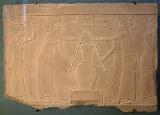
Egypte Louvre 021
The word perfume used today derives from the Latin "per fumum", meaning through smoke. Perfumery, or the art of making perfumes, began in ancient Mesopotamia
Mesopotamia

Mesopotamia is the area of the Tigris-Euphrates river system, along the Tigris and Euphrates rivers, largely corresponding to modern Iraq, as well as some parts of northeastern Syria, some parts of southeastern Turkey, and some parts of the Khuzestan Province of southwestern Iran....
 and Egypt
Ancient Egypt

Ancient Egypt was an Ancient history civilization in eastern North Africa, concentrated along the lower reaches of the Nile in what is now the modern nation of Egypt....
 and was further refined by the Romans
Ancient Rome

Ancient Rome was a civilization that grew out of a small agricultural community founded on the Italian Peninsula as early as the 10th century BC....
 and Persians. Although perfume and perfumery also existed in India
India

India, officially the Republic of India , is a country in South Asia. It is the List of countries and outlying territories by total area country by geographical area, the List of countries by population country, and the most populous liberal democracy in the world....
, much of its fragrances are incense
Incense

Incense is composed of aromatic Biotic material materials. It releases fragrant smoke when burned. The term incense refers to the substance itself, rather than to the odor that it produces....
 based. The earliest distillation of Attar was mentioned in the Hindu Ayurvedic text Charaka Samhita. The Harshacharita, written in 7th century A.D. in Northern India mentions use of fragrant Agarwood
Agarwood

File:Agarwood.jpgAgarwood is the resinous heartwood from Aquilaria trees, large evergreens native to southeast Asia. The trees occasionally become infected with mold and begin to produce an aromatic resin in response to this attack....
 oil.

The world's first recorded chemist is considered to be a woman named Tapputi
Tapputi

Tapputi is in the history of chemistry considered to be the world?s first chemist, a perfume-maker mentioned in a cuneiform tablet from the second millennium BC in Mesopotamia....
, a perfume maker who was mentioned in a cuneiform tablet from the second millennium BC in Mesopotamia. She distilled flowers, oil, and calamus with other aromatics then filtered and put them back in the still several times.

Recently, archaeologists have uncovered what are believed to be the world's oldest perfumes in Pyrgos
Pyrgos (Cyprus)

Pyrgos is officially comprised of two villages, the larger Kato Pyrgos and the smaller Pano Pyrgos . Together they have around 3000 inhabitants....
, Cyprus
Cyprus

Cyprus , officially the Republic of Cyprus , is an island country situated in the eastern Mediterranean Sea, east of Greece, west of Lebanon, Syria, and Israel, south of Turkey and north of Egypt....
. The perfumes date back more than 4,000 years. The perfumes were discovered in an ancient perfumery. At least 60 stills, mixing bowls, funnels and perfume bottles were found in the factory. In ancient times people used herb
Herb

A herb is a plant that is valued for qualities such as medicinal properties, flavor, scent, or the like....
s and spice
Spice

A spice is a dried seed, fruit, root, bark, leaf, or vegetable used in nutritionally insignificant quantities as a food additive for the purpose of flavor, color, or as a preservative that kills harmful bacteria or prevents their growth....
s, like almond
Almond

The Almond is a species of tree of the genus Prunus, belonging to the subfamily Prunoideae of the family Rosaceae and native to the Middle East....
, coriander
Coriander

Coriander is an annual plant herb in the family Apiaceae. It is also known as cilantro, particularly in the USA. Coriander is native to southwestern Asia west to north Africa....
, myrtle
Myrtle

The Myrtle is a genus of one or two species of flowering plants in the family Myrtaceae, native to southern Europe and north Africa. They are evergreen shrubs or small trees, growing to 5 m tall....
, conifer resin, bergamot
Bergamot

Bergamot may refer to:*Bergamot orange, a citrus fruit used in Earl Grey tea*HMS Bergamot, one of two ships of the Royal Navy of the United Kingdom...
, as well as flowers.

The Arabian chemist
Alchemy and chemistry in Islam

Alchemy and chemistry in Islam refers to the study of both traditional alchemy and early practical chemistry by Islamic science in the Islamic Golden Age....
, Al-Kindi
Al-Kindi

, also known to the Western world by the Latinized version of his name 'Alkindus', was an Arab polymath: an Early Islamic philosophy, Islamic science, Islamic astrology, Islamic astronomy, Alchemy and chemistry in Islam, Logic in Islamic philosophy, Islamic mathematics, Arabic music, Islamic medicine, Islamic physics, Islamic psychologi...
 (Alkindus), wrote in the 9th century a book on perfumes which he named Book of the Chemistry of Perfume and Distillations. It contained more than a hundred recipes for fragrant oils, salves, aromatic waters and substitutes or imitations of costly drugs. The book also described 107 methods and recipes for perfume-making, and even the perfume making equipment, like the alembic, still bears its Arabic name.

The Persian Muslim doctor
Islamic medicine

In the history of medicine, Islamic medicine or Arabic medicine refers to medicine developed in the Islamic Golden Age and written in Arabic language, the lingua franca of the Islamic civilization....
 and chemist Avicenna
Avicenna

, known as Abu Ali Sina Balkhi or Ibn Sina and commonly known in English by his Latinized name Avicenna , was a Persian people polymath and the foremost Islamic medicine and Early Islamic philosophy of his time....
 (also known as Ibn Sina) introduced the process of extracting oils from flowers by means of distillation
Distillation

Distillation is a method of separation process mixtures based on differences in their Volatility in a boiling liquid mixture. Distillation is a unit operation, or a physical separation process, and not a chemical reaction....
, the procedure most commonly used today. He first experimented with the rose
Rose

A rose is a perennial plant flower shrub or vine of the genus Rosa, within the family Rosaceae, that contains over 100 species and comes in a variety of colors....
. Until his discovery, liquid perfumes were mixtures of oil and crushed herbs or petals, which made a strong blend. Rose water was more delicate, and immediately became popular. Both of the raw ingredients and distillation technology significantly influenced western perfumery and scientific
Science

In its broadest sense, science refers to any systematic knowledge or practice. In its more usual restricted sense, science refers to a system of acquiring knowledge based on scientific method, as well as to the organized body of knowledge gained through such research....
 developments, particularly chemistry
Chemistry

Chemistry is the science concerned with the composition, structure, and properties of matter, as well as the changes it undergoes during chemical reactions....
.

Knowledge of perfumery came to Europe
Europe

Europe is, conventionally, one of the world's seven continents. Comprising the westernmost peninsula of Eurasia, Europe is generally divided from Asia to its east by the water divide of the Ural Mountains, the Ural , the Caspian Sea, and by the Caucasus Mountains to the southeast....
 as early as the 14th century due partially to the spread of Islam. But it was the Hungarians who ultimately introduced the first modern perfume. Made of scented oils blended in an alcohol solution, the first modern perfume was made in 1370 at the command of Queen Elizabeth of Hungary
Elisabeth of Poland

Elisabeth of Kujavia was Queen consort of Hungary and regent of Poland.She was a member of the Polish royal clan of Piast, the daughter of Wladyslaw I the Elbow-high, prince of Kujavia and Jadwiga of Greater Poland, she was the sister of Casimir III of Poland, King of Poland and the last ruler of Piast dynasty, who died in 1370....
 and was known throughout Europe
Europe

Europe is, conventionally, one of the world's seven continents. Comprising the westernmost peninsula of Eurasia, Europe is generally divided from Asia to its east by the water divide of the Ural Mountains, the Ural , the Caspian Sea, and by the Caucasus Mountains to the southeast....
 as Hungary Water
Hungary Water

Hungary water was the first alcohol-based perfume, claimed to date to about the late 1300s. According to legend it was first formulated at the command of a Queen of Hungary, sometimes identified as Isabella but usually as Elisabeth, or in one document "Saint Elisabeth, Queen of Hungary" ....
. The art of perfumery prospered in Renaissance
Renaissance

The Renaissance was a cultural movement that spanned roughly the 14th to the 17th century, beginning in Italy in the late Middle Ages and later spreading to the rest of Europe....
 Italy
Italy

Italy , officially the Italian Republic , is a country located on the Italian Peninsula in Southern Europe and on the two largest islands in the Mediterranean Sea, Sicily and Sardinia....
, and in the 16th century, Italian refinements were taken to France by Catherine de' Medici
Catherine de' Medici

Catherine de' Medici was born in Florence, as Caterina Maria Romula di Lorenzo de' Medici. Her parents, Lorenzo II de' Medici, Duke of Urbino, and Madeleine de la Tour d'Auvergne, both died within weeks of her birth....
's personal perfumer, Rene le Florentin. His laboratory was connected with her apartments by a secret passageway, so that no formulas could be stolen en route. France
France

France , officially the French Republic , is a country whose Metropolitan France is located in Western Europe and that also comprises various Overseas departments and territories of France....
 quickly became the European center of perfume and cosmetic manufacture. Cultivation of flowers for their perfume essence, which had begun in the 14th century, grew into a major industry in the south of France. During the Renaissance
Renaissance

The Renaissance was a cultural movement that spanned roughly the 14th to the 17th century, beginning in Italy in the late Middle Ages and later spreading to the rest of Europe....
 period, perfumes were used primarily by the wealthy to mask body odors resulting from infrequent bathing. Partly due to this patronage, the western perfumery industry was created. By the 18th century, aromatic plants were being grown in the Grasse
Grasse

Grasse is a town in southeastern France. It is a commune in France of the Alpes-Maritimes Departments of France , on the French Riviera....
 region of France
France

France , officially the French Republic , is a country whose Metropolitan France is located in Western Europe and that also comprises various Overseas departments and territories of France....
 to provide the growing perfume industry with raw materials. Even today, France remains the centre of the European perfume design and trade
Trade

Tradeis the willing exchange of goods, Service , or both. Trade is also called commerce. A mechanism that allows trade is called a market. The original form of trade was barter , the direct exchange of goods and services....
.

Concentration

Perfume types reflect the concentration of aromatic compounds in a solvent, which in fine fragrance is typically ethanol
Ethanol

Ethanol, also called ethyl alcohol, pure alcohol, grain alcohol, or drinking alcohol, is a volatility , flammable, colorless liquid....
 or a mix of water and ethanol. Various sources differ considerably in the definitions of perfume types. The concentration by percent/volume of perfume oil is as follows:

  • Perfume extract (Extrait): 15-40% (IFRA: typical 20%) aromatic compounds
  • Eau de Parfum (EdP), Parfum de Toilette (PdT): 10-20% (typical ~15%) aromatic compounds. Sometimes listed as "eau de perfume" or "millésime".
  • Eau de Toilette (EdT): 5-15% (typical ~10%) aromatic compounds
  • Eau de Cologne
    Eau de Cologne

    Cologne or Eau de Cologne is a toiletry, a perfume in a style of that originated from Cologne, Germany. It is nowadays a generic term for scented formulations in typical concentration of 2-5% essential oils....
     (EdC): Chypre
    Chypre

    Chypre is a name used to describe a family of perfumes, usually with a top note of citrus and woody base notes derived from oak moss and ambergris....
     citrus type perfumes with 3-8% (typical ~5%) aromatic compounds
  • Splash and After shave: 1-3% aromatic compounds


Perfume oil is necessarily diluted with a solvent because undiluted oils (natural or synthetic) contain high concentrations of chemical components (natural or otherwise) that will likely result in allergic reactions and possibly injury when applied directly to skin or clothing. As well, the scents in pure perfume oils are far too concentrated to smell pleasant. By far the most common solvent for perfume oil dilution is ethanol or a mixture of ethanol and water. Perfume oil can also be diluted by means of neutral-smelling oils such as fractionated coconut oil
Coconut oil

Coconut oil, also known as coconut butter, is a tropical oil with many applications. It is extracted from copra . Coconut oil constitutes seven percent of the total export income of the Philippines, the world's largest exporter of the product....
, or liquid wax
Wax

Wax has traditionally referred to a substance that is secreted by bees and used by them in constructing their honeycombs.It is an imprecisely defined term generally understood to be a substance with properties similar to beeswax, namely...
es such as jojoba oil
Jojoba oil

Jojoba oil is the liquid wax produced in the seed of the jojoba plant, a shrub native to southern Arizona, southern California and northwestern Mexico....
.

The intensity and longevity of a perfume is based on the concentration, intensity and longevity of the aromatic compounds (natural essential oils / perfume oils) used: As the percentage of aromatic compounds increases, so does the intensity and longevity of the scent created. Different perfumeries or perfume houses assign different amounts of oils to each of their perfumes. Therefore, although the oil concentration of a perfume in Eau de Parfum (EdP) dilution will necessarily be higher than the same perfume in Eau de Toilette (EdT) from within the same range, the actual amounts can vary between perfume houses. An EdT from one house may be stronger than an EdP from another.

Men's fragrances are rarely as EdP or perfume extracts. As well, women's fragrances are rarely sold in EdC concentrations. Although this gender specific naming trend is common for assigning fragrance concentrations, it does not directly have anything to do with whether a fragrance was intended for men or women.

Furthermore, some fragrances with the same product name but having a different concentration name may not only differ in their dilutions, but actually use different perfume oil mixtures altogether. For instance, in order to make the EdT version of a fragrance brighter and fresher than its EdP, the EdT oil may be "tweaked" to contain slightly more top notes or fewer base notes. In some cases, words such as "extrême", "intense" or "concentrée", that might indicate aromatic concentration are sometimes completely different fragrances that relates only because of a similar perfume accord. An example of this would be Chanel‘s Pour Monsieur and Pour Monsieur Concentrée.

Eau de Cologne
Eau de Cologne

Cologne or Eau de Cologne is a toiletry, a perfume in a style of that originated from Cologne, Germany. It is nowadays a generic term for scented formulations in typical concentration of 2-5% essential oils....
 (EdC) since 1706 in Cologne
Cologne

Cologne is Germany's fourth-largest city , and is the largest city both in the German Federal State of North Rhine-Westphalia and within the Rhine-Ruhr, one of the major European metropolitan areas with more than ten million inhabitants....
, Germany
Germany

Germany , officially the Federal Republic of Germany , is a country in Central Europe. It is bordered to the north by the North Sea, Denmark, and the Baltic Sea; to the east by Poland and the Czech Republic; to the south by Austria and Switzerland; and to the west by France, Luxembourg, Belgium, and the Netherlands....
 is originally a specific fragrance and trademark
TradeMark

TradeMark is a tall, primarily residential, skyscraper in Charlotte, North Carolina. It was completed in 2007 and has 28 floors. There are 200 hundred residential units....
. However outside of Germany the term has become generic for Chypre citrus perfumes (without fond notes).

Describing a perfume

Perfume Shelf 536pix
The precise formulae of commercial perfumes are kept secret
Trade secret

A trade secret is a formula, Best practice, process, design, Legal instrument, pattern, or compilation of information which is not generally known or reasonably ascertainable, by which a business can obtain an economic advantage over competitors or customers....
. Even if they were widely published, they would be dominated by such complex ingredients and odorants that they would be of little use in providing a guide to the general consumer in description of the experience of a scent. Nonetheless, connoisseurs of perfume can become extremely skillful at identifying components and origins of scents in the same manner as wine experts .

The most practical way to start describing a perfume is according to the elements of the fragrance notes of the scent or the family it belongs to, all of which affect the overall impression of a perfume from first application to the last lingering hint of scent

Fragrance notes

Perfume is described in a musical metaphor as having three sets of 'notes', making the harmonious scent accord. The notes unfold over time, with the immediate impression of the top note leading to the deeper middle notes, and the base notes gradually appearing as the final stage. These notes are created carefully with knowledge of the evaporation process of the perfume.
  • Top notes: The scents that are perceived immediately on application of a perfume. Top notes consist of small, light molecules that evaporate quickly. They form a person's initial impression of a perfume and thus are very important in the selling of a perfume. Also called the head notes.
  • Middle notes: The scent of a perfume that emerges just prior to when the top notes dissipate. The middle note compounds form the "heart" or main body of a perfume and act to mask the often unpleasant initial impression of base notes, which become more pleasant with time. They are also called the "heart notes".
  • Base notes: The scent of a perfume that appears close to the departure of the middle notes. The base and middle notes together are the main theme of a perfume. Base notes bring depth and solidity to a perfume. Compounds of this class of scents are typically rich and "deep" and are usually not perceived until 30 minutes after application.


The scents in the top and middle notes are influenced by the base notes, as well the scents of the base notes will be altered by the type of fragrance materials used as middle notes. Manufactures of perfumes usually publish perfume notes and typically they present it as fragrance pyramid, with the components listed in imaginative and abstract terms.

Olfactive families

Grouping perfumes, like any taxonomy
Taxonomy

Taxonomy is the practice and science of classification. The word comes from the Greek language ', taxis and ', nomos .Taxonomies, or taxonomic schemes, are composed of taxonomic units known as taxa , or kinds of things that are arranged frequently in a hierarchical structure....
, can never be a completely objective or final process. Many fragrances contain aspects of different families. Even a perfume designated as "single flower", however subtle, will have undertones of other aromatics. "True" unitary scents can rarely be found in perfumes as it requires the perfume to exist only as a singular aromatic material.

Classification by olfactive family is a starting point for a description of a perfume, but it cannot by itself denote the specific characteristic of that perfume.

Traditional
The traditional classification which emerged around 1900 comprised the following categories:
  • Single Floral: Fragrances that are dominated by a scent from one particular flower; in French called a soliflore. (e.g. Serge Lutens
    Serge Lutens

    Serge Lutens is a French photographer, filmmaker, hair stylist, perfume art-director and fashion designer....
    ' Sa Majeste La Rose, which is dominated by rose.)
  • Floral Bouquet: Containing the combination of several flowers in a scent.
  • Amber: A large fragrance class featuring the sweet slightly animalic scents of ambergris
    Ambergris

    Ambergris is a solid, waxy, flammable substance of a dull gray or blackish color produced in the digestive system of sperm whales.Ambergris has a peculiar sweet, earthy odor....
     or labdanum
    Labdanum

    Labdanum is a sticky brown resin obtained from the shrubs Gum rockrose and Cistus creticus , species of rockrose. It has a long history of use in herbal medicine and as a perfume ingredient....
    , often combined with vanilla
    Vanilla

    Vanilla is a flavoring derived from orchids of the genus Vanilla native to Mexico. Etymologically, vanilla derives from the Spanish language word "", little pod....
    , flowers and woods. Can be enhanced by camphorous oils and incense resins, which bring to mind Victorian era
    Victorian era

    The Victorian Era of the United Kingdom of Great Britain and Ireland was the period of Victoria of the United Kingdom reign from June 1837 to January 1901....
     imagery of the Middle East
    Middle East

    File:GreaterMiddleEast1.pngThe Middle East is a region that spans southwestern Asia, western Asia, and northeastern Africa. It has no clear boundaries, often used as a synonym to Near East, in opposition to Far East....
     and Far East
    Far East

    The Far East is a term current in English language to refer to the countries of East Asia. The term is often expanded to also include Southeast Asia and South Asia, for economic and cultural reasons, for example because Buddhism is common to East Asia, Southeast Asia and South Asia....
    .
  • Wood: Fragrances that are dominated by woody scents, typically of agarwood
    Agarwood

    File:Agarwood.jpgAgarwood is the resinous heartwood from Aquilaria trees, large evergreens native to southeast Asia. The trees occasionally become infected with mold and begin to produce an aromatic resin in response to this attack....
    , sandalwood
    Sandalwood

    Sandalwood is the name for several Fragrance woods. From the Sanskrit candanam the name is borrowed as the Greek sandanon. The local name in Indonesia and Malaysia is "Cendana" ....
     and cedar
    Cedar

    Cedar is a genus of coniferous trees in the plant family Pinaceae. They are most closely related to the Firs , sharing a very similar cone structure....
    . Patchouli, with its camphoraceous smell, is commonly found in these perfumes.
  • Leather: A family of fragrances which features the scents of honey
    Honey

    Honey is a sweet fluid produced by honey bees , and derived from the nectar of flowers. According to the United States National Honey Board and various international food regulations, "honey stipulates a pure product that does not allow for the addition of any other substance?this includes, but is not limited to, water or other sweeteners...
    , tobacco
    Tobacco

    Tobacco is an agricultural product processed from the fresh leaves of plants in the genus Nicotiana. It can be consumed, used as an organic pesticide, and in the form of nicotine tartrate it is used in some medicines....
    , wood and wood tar
    Tar

    Tar is modified resin produced from the wood and roots of pine by destructive distillation under pyrolysis. It is a viscosity black liquid. Production and trade in tar was a major contributor in the economies of Northern Europe and Colonial America....
    s in its middle or base notes and a scent that alludes to leather.
  • Chypre
    Chypre

    Chypre is a name used to describe a family of perfumes, usually with a top note of citrus and woody base notes derived from oak moss and ambergris....
    : Meaning Cyprus
    Cyprus

    Cyprus , officially the Republic of Cyprus , is an island country situated in the eastern Mediterranean Sea, east of Greece, west of Lebanon, Syria, and Israel, south of Turkey and north of Egypt....
     in French, this includes fragrances built on a similar accord consisting of bergamot
    Bergamot

    Bergamot may refer to:*Bergamot orange, a citrus fruit used in Earl Grey tea*HMS Bergamot, one of two ships of the Royal Navy of the United Kingdom...
    , oakmoss
    Oakmoss

    Oakmoss, also known as Evernia prunastri, is a type of lichen used extensively in modern perfumery. This lichen can be found in many mountainous temperate forests throughout the Northern Hemisphere, including parts of France, Portugal, Spain, North America, and much of Central Europe....
    , patchouli
    Patchouli

    Patchouli is a species from the genus Pogostemon and a bushy herb of the lamiaceae family, with erect Plant stems, reaching two or three feet in height and bearing small pale pink-white flowers....
    , and labdanum
    Labdanum

    Labdanum is a sticky brown resin obtained from the shrubs Gum rockrose and Cistus creticus , species of rockrose. It has a long history of use in herbal medicine and as a perfume ingredient....
    . This family of fragrances is named after a perfume by François Coty
    François Coty

    Fran?ois Coty was a France perfume manufacturer and the founder of the Fascism far-right league Solidarit? Fran?aise, a paramilitary organization founded in 1933, during Edouard Daladier's government supported by the Cartel des gauches ....
    . A notable example
    Example

    Example may refer to:*Example , a British rapper*example.com and .example, domain names reserved for use in documentation as examples...
     is Mitsouko
    Mitsouko (perfume)

    Mitsouko is an 1919 perfume by Guerlain. Its name is derived from the French transliteration of a Japanese female personal name. Its top notes are a fruity chypre, with floral middle notes and spice base notes....
     (a popular name for girls in Japanese
    Japanese language

    IPA: [n?iho?go] is a language spoken by over 130 million people in Japan and in Japanese emigrant communities. It is related to the Ryukyuan languages....
    ) by Guerlain
    Guerlain

    Guerlain is among the oldest perfume houses in the world. It has a large and loyal customer following, and is held in high esteem in the perfume industry....
    .
  • Fougère
    Fougeré

    Fouger? is the name of the following communes in France:* Fouger?, Maine-et-Loire, in the Maine-et-Loire department* Fouger?, Vend?e, in the Vend?e department...
    : Meaning Fern
    Fern

    A fern is any one of a group of about 20,000 species of plants classified in the phylum or division Pteridophyta, also known as Filicophyta....
     in French, built on a base of lavender
    Lavender

    The Lavenders Lavandula are a genus of 39 species of flowering plants in the mint family, Lamiaceae, native to the Mediterranean region south to tropical Africa and to the southeast regions of India....
    , coumarin
    Coumarin

    Coumarin is a chemical compound ; a toxin found in many plants, notably in high concentration in the tonka bean, vanilla grass, woodruff, mullein, and bison grass....
     and oakmoss
    Oakmoss

    Oakmoss, also known as Evernia prunastri, is a type of lichen used extensively in modern perfumery. This lichen can be found in many mountainous temperate forests throughout the Northern Hemisphere, including parts of France, Portugal, Spain, North America, and much of Central Europe....
    . Houbigant
    Houbigant (perfume)

    Houbigant was a perfume manufacturer founded in Paris, France in 1775 by Jean-Fran?ois Houbigant of Grasse , originally selling gloves, perfumes, and bridal bouquets....
    's Fougère Royale pioneered the use of this base. Many men's fragrances belong to this family of fragrances, which is characterized by its sharp herbaceous and woody scent.


Modern
Since 1945, due to great advances in the technology of perfume creation (i.e., compound design and synthesis) as well as the natural development of styles and tastes; new categories have emerged to describe modern scents:
  • Bright Floral: combining the traditional Single Floral & Floral Bouquet categories.
  • Green: a lighter and more modern interpretation of the Chypre type, with pronounced cut grass and cucumber like scents
  • Oceanic/Ozone: the newest category in perfume history, appearing in 1991 with Christian Dior's Dune. A very clean, modern smell leading to many of the modern androgynous perfumes.
  • Citrus or Fruity: An old fragrance family that until recently consisted mainly of "freshening" eau de colognes due to the low tenacity of citrus scents. Development of newer fragrance compounds has allowed for the creation of primarily citrus fragrances.
  • Gourmand: scents with "edible" or "dessert"-like qualities. These often contain notes like vanilla and tonka bean
    Tonka bean

    The tonka bean is the seed of Dipteryx odorata, a legume tree in the neotropics, of the Fabaceae family. The seed is black and wrinkled in appearance, with a smooth brown interior....
    , as well as synthetic components designed to resemble food flavors. An example is Thierry Mugler
    Thierry Mugler

    Thierry Mugler, born 1948 in Strasbourg, France is a fashion designer, photography, and creator of a fashion design company of the same name....
    's Angel.


Fragrance wheel
The Fragrance wheel is a relatively new classification method that is widely used in retail and in the fragrance industry. The method was created in 1983 by Michael Edwards, a consultant in the perfume industry, who designed his own scheme of fragrance classification.The new scheme was created in order to simplify fragrance classification and naming scheme, as well as to show the relationships between each of the individual classes.

The five standard families consist of Floral, Oriental, Woody,Fougère, and Fresh, with the former four families being more "classic" while the latter consisting of newer bright and clean smelling citrus and oceanic fragrances that have arrived due to improvements in fragrance technology. With the exception of the Fougère family, each of the families are in turn divided into sub-groups and arranged around a wheel.

Aromatics sources


Plant sources

Plants have long been used in perfumery as a source of essential oils and aroma compounds. These aromatics are usually secondary metabolites produced by plants as protection against herbivore
Herbivore

Herbivory is a form of predation in which an organism, known as an herbivore, heterotrophs principally autotrophs such as plants, algae and photosynthesizing bacteria....
s, infections, as well as to attract pollinator
Pollinator

A pollinator is the biotic agent that moves pollen from the male anthers of a flower to the female carpel of a flower to accomplish fertilization or syngamy of the female gamete in the ovule of the flower by the male gamete from the pollen grain....
s. Plants are by far the largest source of fragrant compounds used in perfumery. The sources of these compounds may be derived from various parts of a plant. A plant can offer more than one source of aromatics, for instance the aerial portions and seeds of coriander
Coriander

Coriander is an annual plant herb in the family Apiaceae. It is also known as cilantro, particularly in the USA. Coriander is native to southwestern Asia west to north Africa....
 have remarkably different odors from each other. Orange
Orange (fruit)

An orange?specifically, the sweet orange?is the citrus Citrus sinensis and its fruit. The orange is a Hybrid of ancient cultivated origin, possibly between pomelo and tangerine ....
 leaves, blossoms, and fruit zest are the respective sources of petit grain, neroli
Neroli

File:Koeh-042.jpgNeroli oil is a plant oil similar in scent to Bergamot orange produced from the blossom of the bitter orange tree .The blossoms are gathered, usually by hand, in late April to early May....
, and orange oil
Orange oil

Orange oil is an essential oil produced by glands inside the rind of an orange . It is extracted or Steam distillation as a by-product of orange juice production....
s.
  • Bark
    BARK

    BARK was an early Electromechanics. BARK was built using standard phone relays, implementing a 32-bit binary machine and could perform addition in 150 ms and multiplication in 250 ms....
    : Commonly used barks includes cinnamon
    Cinnamon

    Cinnamon is a small evergreen tree 10?15 metres tall, belonging to the family Lauraceae, and is native to Sri Lanka.The leaf are ovate-oblong in shape, 7?18 cm long....
     and cascarilla. The fragrant oil in sassafras
    Sassafras

    Sassafras is a genus of three species of deciduous trees in the family Lauraceae, native to eastern North America and eastern Asia.Sassafras trees grow from 15?35 m tall and 70?150 cm in diameter, with many slender branches, and smooth, orange-brown bark....
     root bark is also used either directly or purified for its main constituent, safrole
    Safrole

    Safrole is a colorless or slightly yellow oily liquid. It is typically extracted from the root-bark or the fruit of sassafras plants in the form of sassafras oil, or synthesized from other related methylenedioxy compounds....
    , which is used in the synthesis of other fragrant compounds such as helional.
  • Flower
    Flower

    A flower, sometimes known as a bloom or blossom, is the reproduction structure found in flowering plants . The biological function of a flower is to mediate the union of male sperm with female ovum in order to produce seeds....
    s
    and blossom
    Blossom

    Blossom is a term given to the flowers of stone fruit fruit tree and of some other plants with a similar appearance that flower profusely but for a short period of time in the spring....
    s
    : Undoubtedly the largest source of aromatics. Includes the flowers of several species of rose
    Rose

    A rose is a perennial plant flower shrub or vine of the genus Rosa, within the family Rosaceae, that contains over 100 species and comes in a variety of colors....
     and jasmine
    Jasmine

    Jasmine is a genus of shrubs and vines in the olive family ,with about 200 species, native to tropical and warm temperate regions of the Old World....
    , as well as osmanthus
    Osmanthus

    Osmanthus is a genus of about 30 species of flowering plants in the family Oleaceae, mostly native to warm temperate Asia but one species in North America ....
    , mimosa, tuberose
    Tuberose

    The tuberose is a perennial plant of the agave family Agavaceae, extracts of which are used as a middle note in perfumery. The common name derives from the Latin tuberosa, meaning swollen or tuberous in reference to its root system....
    , narcissus
    Narcissus

    Narcissus may refer to:People* Narcissus , a mythological hero* Narcissus , assassin of the Roman emperor Commodus* Tiberius Claudius Narcissus , freedman and secretary to the Roman emperor Claudius...
    , as well as the blossoms of citrus
    Citrus

    Citrus is a common term and genus of flowering plants in the family Rutaceae, originating in tropical and subtropical southeast regions of the world....
     and ylang-ylang
    Ylang-ylang

    Ylang-ylang Cananga odorata, is a small flower of the cananga tree. It is a fast-growing tree that exceeds 5 meters per year and attains an average height of 12 meters....
     trees. Although not traditionally thought of as a flower, the unopened flower buds of the clove
    Clove

    Cloves are the aromatic dried flower buds of a tree in the family Myrtaceae. Cloves are native to Indonesia and used as a spice in cuisine all over the world....
     are also commonly used. Orchid flowers are not commercially used to produce essential oils or absolutes, except in the case of vanilla
    Vanilla

    Vanilla is a flavoring derived from orchids of the genus Vanilla native to Mexico. Etymologically, vanilla derives from the Spanish language word "", little pod....
    , an orchid, which must be pollinated first and made into seed pods before use in perfumery.
  • Fruit
    Fruit

    The term fruit has different meanings dependent on context, and the term is not synonymous in food preparation and biology. In botany, which is the scientific study of plants, fruits are the ripened Ovary of flowering plants....
    s
    : Fresh fruits such as apple
    APPLE

    This article is about the satellite APPLE. For the fruit apple, see Apple. For other uses see Apple .The Ariane Passenger PayLoad Experiment , was an experimental communication satellite with a C-Band transponder launched by Indian Space Research Organisation satellite on June 19, 1981 by Ariane 1, a launch vehicle of the European Spac...
    s, strawberries
    Strawberry

    Fragaria is the name of a genus of flowering plants in the rose family, Rosaceae, commonly known as strawberries for their edible fruits....
    , cherries
    Cherry

    The word cherry refers to a fleshy fruit that contains a single stony seed. The cherry belongs to the family Rosaceae, genus Prunus, along with almonds, peaches, plums, apricots and bird cherry ....
     unfortunately do not yield the expected odors when extracted; if such fragrance notes are found in a perfume, they are synthetic. Notable exceptions include litsea cubeba
    Litsea

    Litsea is a genus of evergreen or deciduous trees or shrubs belonging to the Laurel family, Lauraceae. The genus includes 200-400 species in tropical and subtropical Australia, New Zealand, North America and South America and Asia....
    , vanilla
    Vanilla

    Vanilla is a flavoring derived from orchids of the genus Vanilla native to Mexico. Etymologically, vanilla derives from the Spanish language word "", little pod....
    , and juniper berry
    Juniper

    Junipers are coniferous plants in the genus Juniperus of the cypress family Cupressaceae. Depending on taxonomic viewpoint, there are between 50-67 species of juniper, widely distributed throughout the northern hemisphere, from the Arctic, south to tropical Africa in the Old World, and to the mountains of Central America....
    . The most commonly used fruits yield their aromatics from the rind; they include citrus
    Citrus

    Citrus is a common term and genus of flowering plants in the family Rutaceae, originating in tropical and subtropical southeast regions of the world....
     such as orange
    Orange (fruit)

    An orange?specifically, the sweet orange?is the citrus Citrus sinensis and its fruit. The orange is a Hybrid of ancient cultivated origin, possibly between pomelo and tangerine ....
    s, lemon
    Lemon

    The lemon is the common name for Citrus limon. The reproductive tissue surrounds the seed of the angiosperm lemon tree. The lemon is used for culinary and nonculinary purposes throughout the world....
    s, and limes
    Lime (fruit)

    Lime is a term referring to a number of different fruits , both species and Hybrid , which are typically round, green to yellow in color, 3?6 cm in diameter, generally containing sour pulp, and frequently associated with the lemon....
    . Although grapefruit
    Grapefruit

    The grapefruit is a subtropics citrus tree grown for its bitter fruit which was originally named the "forbidden fruit" of Barbados.These evergreen trees are usually found at around 5-6 m tall, although they can reach 13-15 m ....
     rind is still used for aromatics, more and more commercially used grapefruit aromatics are artificially synthesized since the natural aromatic contains sulfur
    Sulfur

    Sulfur or sulphur is the chemical element that has the atomic number 16. It is denoted with the symbol S. It is an abundant Valence non-metal....
     and its degradation product is quite unpleasant in smell.
  • Leaves
    Leaves

    Leaves are an Iceland five-piece alternative rock band who formed in 2001. They came to prominence in 2002 with their debut album, Breathe, drawing comparisons to groups such as Coldplay and Doves....
     and twigs: Commonly used for perfumery are lavender
    Lavender

    The Lavenders Lavandula are a genus of 39 species of flowering plants in the mint family, Lamiaceae, native to the Mediterranean region south to tropical Africa and to the southeast regions of India....
     leaf, patchouli
    Patchouli

    Patchouli is a species from the genus Pogostemon and a bushy herb of the lamiaceae family, with erect Plant stems, reaching two or three feet in height and bearing small pale pink-white flowers....
    , sage
    Common sage

    Salvia officinalis is a small perennial evergreen subshrub, with woody stems, grayish leaves, and blue to purplish flowers. It is native to the Mediterranean region and commonly grown as a kitchen and medicinal herb or as an ornamental garden plant....
    , violet
    Violet (plant)

    Viola is a genus of flowering plants in the violet family Violaceae, with around 400?500 species distributed around the world. Most species are found in the temperate Northern Hemisphere, however viola species are also found in widely divergent areas such as Hawaii, Australasia, and the Andes in South America....
    s, rosemary
    Rosemary

    Rosemary is a woody, perennial plant herb with fragrant evergreen needle-like leaf. It is native to the Mediterranean region. It is a member of the mint family Lamiaceae, which also includes many other herbs....
    , and citrus
    Citrus

    Citrus is a common term and genus of flowering plants in the family Rutaceae, originating in tropical and subtropical southeast regions of the world....
     leaves. Sometimes leaves are valued for the "green" smell they bring to perfumes, examples of this include hay
    Hay

    Hay is a generic term for Poaceae or legumes that have been cut, dried, and stored for use as animal fodder, particularly for grazing animals like cattle, horses, domestic goat, and sheep....
     and tomato
    Tomato

    The Tomato is an herbaceous, usually sprawling plant in the Solanaceae or nightshade family, as are its close cousins Nicotiana, potatoes, aubergine , chilli peppers, and the poisonous Atropa belladonna....
     leaf.
  • Resin
    Resin

    Resin is a hydrocarbon secretion of many plants, particularly Pinophyta. It is valued for its chemical constituents and uses, such as varnishes and adhesives, as an important source of raw materials for organic synthesis, or for incense and perfume....
    s
    : Valued since antiquity, resins have been widely used in incense
    Incense

    Incense is composed of aromatic Biotic material materials. It releases fragrant smoke when burned. The term incense refers to the substance itself, rather than to the odor that it produces....
     and perfumery. Highly fragrant and antiseptic resins and resin-containing perfumes have been used by many cultures as medicines for a large variety of ailments. Commonly used resins in perfumery include labdanum
    Labdanum

    Labdanum is a sticky brown resin obtained from the shrubs Gum rockrose and Cistus creticus , species of rockrose. It has a long history of use in herbal medicine and as a perfume ingredient....
    , frankincense
    Frankincense

    Frankincense, also called olibanum , is an Aroma compound resin obtained from trees of the genus Boswellia, particularly Boswellia sacra ....
    /olibanum, myrrh
    Myrrh

    Myrrh is a reddish-brown resinous material, the dried Plant sap of a number of trees, but primarily from Commiphora myrrha, native to Yemen, Somalia, the eastern parts of Ethiopia and Commiphora gileadensis, native to Jordan....
    , Peru balsam, gum benzoin. Pine
    Pine

    Pines are Pinophyta trees in the genus Pinus, in the family Pinaceae. They make up the monotypic subfamily Pinoideae. There are about 115 species of pine, although different authorities accept between 105 and 125 species....
     and fir
    Fir

    Firs are a genus of between 45-55 species of evergreen Pinophyta in the family Pinaceae. All are trees, reaching heights of 10-80 m tall and trunk diameters of 0.5-4 m when mature....
     resins are a particularly valued source of terpene
    Terpene

    Terpenes are a large and varied class of hydrocarbons, produced primarily by a wide variety of plants, particularly conifers, though also by some insects such as termites or swallowtail butterflies, which emit terpenes from their osmeterium....
    s used in the organic synthesis
    Organic synthesis

    Organic synthesis is a special branch of chemical synthesis and is concerned with the construction of organic compounds via organic reactions. Organic_chemistry molecules can often contain a higher level of complexity compared to purely Inorganic_chemistry compounds, so the synthesis of organic compounds has developed into one of the most im...
     of many other synthetic or naturally occurring aromatic compounds. Some of what is called amber
    Amber

    Amber is fossil tree resin, which is appreciated for its color and beauty. Good quality amber is used for the manufacture of ornamental objects and jewelry....
     and copal
    Copal

    Copal is a type of resin produced from plant sap, often taken from members of the genus Copaifera. The term is particularly identified with the forms of aromatic tree resins used by the cultures of pre-Columbian Mesoamerica as a ceremonially burned incense, as well as for a number of other purposes....
     in perfumery today is the resinous secretion of fossil conifers.
  • Root
    Root

    In vascular plants, the root is the organ of a plant body that typically lies below the surface of the soil. This is not always the case, however, since a root can also be aerial root or aerating ....
    s, rhizome
    Rhizome

    In botany, a rhizome is a characteristically horizontal plant stem of a plant that is usually found underground, often sending out roots and shoots from its nodes....
    s and bulb
    Bulb

    A bulb is an underground vertical shoot that has modified leaf that are used as food storage organs by a dormancy plant.A bulb's leaf bases generally do not support leaves, but contain food reserves to enable the plant to survive adverse conditions....
    s
    : Commonly used terrestrial portions in perfumery include iris
    Iris (plant)

    Iris is a genus of between 200-300 species of flowering plants with showy flowers. It takes its name from the Greek word for a rainbow, referring to the wide variety of flower colors found among the many species....
     rhizome
    Rhizome

    In botany, a rhizome is a characteristically horizontal plant stem of a plant that is usually found underground, often sending out roots and shoots from its nodes....
    s, vetiver
    Vetiver

    Vetiver - Chrysopogon zizanioides is a perennial grass of the Poaceae family, native to India. The name comes from Tamil language. In western and northern India, it is popularly known as khus, giving the earlier English names cuscus, cuss cuss, kuss-kuss grass, etc....
     roots, various rhizomes of the ginger
    Ginger

    Ginger is a spice which is used for cooking and is also consumed whole as a delicacy or medicine. It is the rhizome of the Zingiber, Zingiber officinale....
     family.
  • Seed
    Seed

    A seed is a small Plant embryogenesis plant enclosed in a covering called the seed coat, usually with some Food storage. It is the product of the ripened ovule of gymnosperm and angiosperm plants which occurs after fertilization and some growth within the mother plant....
    s
    : Commonly used seeds include tonka bean
    Tonka bean

    The tonka bean is the seed of Dipteryx odorata, a legume tree in the neotropics, of the Fabaceae family. The seed is black and wrinkled in appearance, with a smooth brown interior....
    , coriander
    Coriander

    Coriander is an annual plant herb in the family Apiaceae. It is also known as cilantro, particularly in the USA. Coriander is native to southwestern Asia west to north Africa....
    , caraway
    Caraway

    Caraway or Persian cumin is a biennial plant in the family Apiaceae, native to Europe and western Asia.The plant is similar in appearance to a carrot plant, with finely divided, feathery leaves with thread-like divisions, growing on 20?30 cm stems....
    , cocoa
    Cocoa

    Cocoa is the dried and fully fermented fatty seed of the cacao from which chocolate is made. "Cocoa" can often also refer to the drink commonly known as hot chocolate; Cocoa solids, the dry powder made by grinding cocoa seeds and removing the cocoa butter from the dark, bitter cocoa solids; or it may refer to the combination of both cocoa p...
    , nutmeg
    Nutmeg

    The nutmegs Myristica are a genus of evergreen trees indigenous to tropical southeast Asia and Australasia. They are important for two spices derived from the fruit, nutmeg and mace....
    , mace, cardamom
    Cardamom

    The name cardamom is used for herbs within two genera of the ginger family Zingiberaceae, namely Elettaria and Amomum. Both varieties take the form of a small seedpod, triangular in cross-section and spindle-shaped, with a thin papery outer shell and small black seeds....
    , and anise
    Anise

    is a flowering plant in the family Apiaceae native to the eastern Mediterranean region and southwest Asia known for its flavor that resembles licorice, fennel, and tarragon....
    .
  • Wood
    Wood

    Wood is an organic material; in the strict sense wood is produced as secondary xylem in the stems of woody plants, notably trees but also shrubs, etc....
    s
    : Highly important in providing the base notes to a perfume, wood oils and distillates are indispensable in perfumery. Commonly used woods include sandalwood
    Sandalwood

    Sandalwood is the name for several Fragrance woods. From the Sanskrit candanam the name is borrowed as the Greek sandanon. The local name in Indonesia and Malaysia is "Cendana" ....
    , rosewood
    Rosewood

    Rosewood refers to any of a number of richly hued timbers, often brownish with darker veining but found in many different hues. All rosewoods are strong and heavy, taking an excellent polish, being suitable for Parquetry, furniture, Woodturning, musical instruments, John Parris, and chess piece ....
    , agarwood
    Agarwood

    File:Agarwood.jpgAgarwood is the resinous heartwood from Aquilaria trees, large evergreens native to southeast Asia. The trees occasionally become infected with mold and begin to produce an aromatic resin in response to this attack....
    , birch
    Birch

    Birch is the name of any tree of the genus Betula , in the family Betulaceae, closely related to the beech/oak family, Fagaceae....
    , cedar
    Cedar

    Cedar is a genus of coniferous trees in the plant family Pinaceae. They are most closely related to the Firs , sharing a very similar cone structure....
    , juniper
    Juniper

    Junipers are coniferous plants in the genus Juniperus of the cypress family Cupressaceae. Depending on taxonomic viewpoint, there are between 50-67 species of juniper, widely distributed throughout the northern hemisphere, from the Arctic, south to tropical Africa in the Old World, and to the mountains of Central America....
    , and pine
    Pine

    Pines are Pinophyta trees in the genus Pinus, in the family Pinaceae. They make up the monotypic subfamily Pinoideae. There are about 115 species of pine, although different authorities accept between 105 and 125 species....
    . These are used in the form of macerations or dry-distilled (rectified) forms.


Animal sources

  • Ambergris
    Ambergris

    Ambergris is a solid, waxy, flammable substance of a dull gray or blackish color produced in the digestive system of sperm whales.Ambergris has a peculiar sweet, earthy odor....
    : Lumps of oxidized fatty compounds, whose precursors were secreted and expelled by the Sperm Whale
    Sperm Whale

    The Sperm Whale is the largest of all toothed whales and largest living toothed animal. The whale was named after the milky-white waxy substance, spermaceti, found in its head and originally mistaken for sperm or semen....
    . Ambergris is commonly referred to as "amber" in perfumery and should not be confused with yellow amber
    Amber

    Amber is fossil tree resin, which is appreciated for its color and beauty. Good quality amber is used for the manufacture of ornamental objects and jewelry....
    , which is used in jewelry.
  • Castoreum
    Castoreum

    Castoreum is the name given to the exudate from the castor sacs of the mature North American Beaver Castor canadensis and the European Beaver, Castor fiber....
    : Obtained from the odorous sacs of the North American beaver.
  • Civet
    Civet

    The family Viverridae is made up of 35 species, including all of the genet , the Binturong, most of the civets, and the four linsangs.Viverrids are native to most of the Old World tropics, nearly all of Africa , Madagascar, and the Iberian Peninsula....
    : Also called Civet Musk, this is obtained from the odorous sacs of the civets, animals in the family Viverridae, related to the Mongoose
    Mongoose

    A mongoose is a member of the family Herpestidae , a family of small, cat-like Carnivoras.The word mongoose is derived from the Marathi language name mangus "mongoose", perhaps ultimately from Dravidian languages ....
    . The World Society for the Protection of Animals
    World Society for the Protection of Animals

    The World Society for the Protection of Animals is an international non-profit animal welfare organisation and also a federation of such organisations and active in over 150 countries with more than 900 member societies....
     investigated African civets caught for this purpose.
  • Honeycomb
    Honeycomb

    A honeycomb is a mass of hexagonal waxcells built by honey bees in their beehive to contain their larva and stores of honey and pollen.beekeeping may remove the entire honeycomb to harvest honey....
    : From the honeycomb of the Honeybee. Both beeswax and honey can be solvent extracted to produce an absolute. Beeswax is extracted with ethanol and the ethanol evaporated to produce beeswax absolute.
  • Musk
    Musk

    Musk is the name originally given to a substance with a penetrating odor obtained from a gland of the male musk deer, which is situated between its stomach and genitals....
    : Originally derived from the musk sacs from the Asian musk deer, it has now been replaced by the use of synthetic musks which usually are called “white musk
    White musk

    White musk, in the perfume industry, refers to a group of synthetic molecules that replaces natural, animal musk. The formulas and the names of these synthesis are varied, like fixolide, habanolide, galaxolide or ambrettolide....
    ”.


Other natural sources

  • Lichen
    Lichen

    Lichens are composite organisms consisting of a symbiosis association of a fungus with a Photosynthesis partner , usually either a green algae or Cyanobacteria ....
    s
    : Commonly used lichens include oakmoss
    Oakmoss

    Oakmoss, also known as Evernia prunastri, is a type of lichen used extensively in modern perfumery. This lichen can be found in many mountainous temperate forests throughout the Northern Hemisphere, including parts of France, Portugal, Spain, North America, and much of Central Europe....
     and treemoss thalli.
  • "Seaweed"
    Brown algae

    The Phaeophyceae or brown algae, is a large group of mostly Ocean multicellular algae, including many seaweeds of colder Northern Hemisphere waters....
    : Distillates are sometimes used as essential oil
    Essential oil

    An essential oil is a concentrated, hydrophobic liquid containing volatile aroma compounds from plants. They are also known as volatile or ethereal oils, or simply as the "oil of" the plant material from which they were extracted, such as oil of clove....
     in perfumes. An example of a commonly used seaweed is Fucus vesiculosus, which is commonly referred to as bladder wrack. Natural seaweed fragrances are rarely used due to their higher cost and lower potency than synthetics.


Synthetic sources

Many modern perfumes contain synthesized
Chemical synthesis

In chemistry, chemical synthesis is purposeful execution of chemical reactions in order to get a product , or several products. This happens by physics and chemical manipulations usually involving one or more reactions....
 odorants. Synthetics can provide fragrances which are not found in nature. For instance, Calone
Calone

Calone or methylbenzodioxepinone, trade-named Calone 1951, was discovered by Pfizer in 1966. It is used to give the olfactory impression of a fresh seashore through the Marine /ozone nuances....
, a compound of synthetic origin, imparts a fresh ozonous metallic marine scent that is widely used in contemporary perfumes. Synthetic aromatics are often used as an alternate source of compounds that are not easily obtained from natural sources. For example, linalool
Linalool

Linalool is a naturally-occurring terpene alcohol chemical found in many flowers and spice plants with many commercial applications, the majority of which are based on its pleasant scent ....
 and coumarin
Coumarin

Coumarin is a chemical compound ; a toxin found in many plants, notably in high concentration in the tonka bean, vanilla grass, woodruff, mullein, and bison grass....
 are both naturally occurring compounds that can be inexpensively synthesized from terpenes. Orchid scents (typically salicylates
Salicylic acid

Salicylic acid is a beta hydroxy acid with the chemical formula C6H4COOH, where the OH group is adjacent to the carboxylic acid....
) are usually not obtained directly from the plant itself but are instead synthetically created to match the fragrant compounds found in various orchids.

The majority of the world's synthetic aromatics are created by relatively few companies. They include:
  • International Flavors and Fragrances
    International Flavors and Fragrances

    International Flavors and Fragrances is a major producer of flavors and fragrances with sales of $2.277 billion in .Major competitors include Firmenich, Givaudan, and Symrise....
     (IFF)
  • Givaudan
    Givaudan

    Givaudan is the world's largest producer of flavors and fragrances with sales of Swiss franc 4,132 million in 2007. Flavor sales account for 54% of total sales while fragrances makes up the remaining 46%....
  • Firmenich
    Firmenich

    Firmenich SA is a private business specialising in flavors and fragrances and is a major worldwide chemical manufacturer. Their fragrances and flavors are generally used in perfumes, cosmetics, beverages, food, and other household products....
  • Takasago
    Takasago International Corporation

    is a major international producer of flavors and fragrances headquartered in Japan, with presence in 22 countries worldwide and net sales of $900 million in ....
  • Symrise
    Symrise

    Symrise is a major producer of flavors and fragrances with sales of ? 1,230 million in 2006 . Major competitors include Firmenich, Givaudan, International Flavors and Fragrances and Takasago International Corporation....
Each of these companies patents several processes for the production of aromatic synthetics annually.

Characteristics

Natural and synthetics are used for their different odor characteristics in perfumery
NaturalsSynthetics
VarianceVary by the times and locations where they are harvested. It's much more difficult to produce consistent products with equivalent odor over years of harvest. As such, the perfumer has to "manually" balance-out the natural variations of the ingredients in order to maintain the quality of the perfume.Much more consistent than natural aromatics. However, differences in organic synthesis may result in minute differences in concentration of impurities. If these impurities have low smell (detection) thresholds, the differences in the scent of the synthetic aromatic will be significant.
ComponentsThousands of chemical compounds.Depending on purity, consists primarily of one chemical compound.
Scent UniquenessBears a somewhat similar scent to its originating material, depending on the extraction method.Similar to natural scents if the compounds are the same. Novel scent compounds not mimicking natural compounds however, bear little scent likeness to natural materials.
Scent ComplexityDeep and complex fragrance notes. Softer with subtle scent nuances.Pure and pronounced fragrance notes. Structural and defined.
PricePerfume composed of largely natural materials are usually much more expensive.Perfumes using largely synthetic aromatics can be available at widely-affordable prices. However, synthetic aromatics and perfumes are not necessarily cheaper than naturals. Some synthetics can be more costly than most natural ingredients due to various factors such as the complexity of systhesis or extraction procedure.


Obtaining natural odorants

Before perfumes can be composed, the odorants used in various perfume compositions must first be obtained. Synthetic odorants are produced through organic synthesis
Organic synthesis

Organic synthesis is a special branch of chemical synthesis and is concerned with the construction of organic compounds via organic reactions. Organic_chemistry molecules can often contain a higher level of complexity compared to purely Inorganic_chemistry compounds, so the synthesis of organic compounds has developed into one of the most im...
 and purified. Odorants from natural sources require the use of various methods to extract the aromatics from the raw materials. The results of the extraction are either essential oils, absolutes, concretes, or butters, depending on the amount of wax
Wax

Wax has traditionally referred to a substance that is secreted by bees and used by them in constructing their honeycombs.It is an imprecisely defined term generally understood to be a substance with properties similar to beeswax, namely...
es in the extracted product.

All these techniques will, to a certain extent, distort the odor of the aromatic compounds obtained from the raw materials. This is due to the use of heat, harsh solvents, or through exposure to oxygen in the extraction process which will denature the aromatic compounds, which either change their odor character or renders them odorless.
  • Maceration
    Maceration

    Maceration may refer to:* Maceration , the softening or breaking into pieces with liquid* Maceration, in chemistry and herbalism, the preparation of an extract by solvent extraction material in water, vegetable oil or some organic solvent....
    /Solvent extraction
    : The most used and economically important technique for extracting aromatics in the modern perfume industry. Raw materials are submerged in a solvent that can dissolve the desired aromatic compounds. Maceration lasts anywhere from hours to months. Fragrant compounds for woody and fibrous plant materials are often obtained in this manner as are all aromatics from animal sources. The technique can also be used to extract odorants that are too volatile for distillation or easily denatured
    Denaturation (biochemistry)

    Denaturation is a process in which proteins or nucleic acids lose their structure by application of some external stress or compound for example, treatment of proteins with strong acids or bases, high concentrations of inorganic salts, organic compound solvents , or heat....
     by heat. Commonly used solvents for maceration/solvent extraction include hexane
    Hexane

    Hexane is an alkane hydrocarbon with the chemical formula CH34CH3 or C6H14. The "hex" prefix refers to its six carbons, while the "ane" ending indicates that its carbons are connected by single bonds....
    , and dimethyl ether
    Dimethyl ether

    Dimethyl ether is the organic compound with the formula CH3OCH3. The simplest ether, it is a colourless gas that is a useful precursor to other organic compounds and an aerosol propellant....
    . The product of this process is called a "concrete".
    • Supercritical fluid extraction
      Supercritical fluid extraction

      Supercritical Fluid Extraction is the process of separating one component from another using supercritical fluids as the extracting solvent. Extraction is usually from a solid matrix, but can also be from liquids....
      : A relatively new technique for extracting fragrant compounds from a raw material, which often employs Supercritical CO2
      Supercritical carbon dioxide

      Supercritical carbon dioxide refers to carbon dioxide that is in a fluid state while also being at or above both its critical temperature and pressure, yielding rather uncommon properties....
      . Due to the low heat of process and the relatively nonreactive solvent used in the extraction, the fragrant compounds derived often closely resemble the original odor of the raw material.
    • Ethanol extraction: A type of solvent extraction used to extract fragrant compounds directly from dry raw materials, as well as the impure oily compounds materials resulting from solvent extraction or enfleurage. Ethanol extraction is not used to extract fragrance from fresh plant materials since these contain large quantities of water, which will also be extracted into the ethanol.
  • Distillation
    Distillation

    Distillation is a method of separation process mixtures based on differences in their Volatility in a boiling liquid mixture. Distillation is a unit operation, or a physical separation process, and not a chemical reaction....
    : A common technique for obtaining aromatic compounds from plant
    Plant

    Plants are Life organisms belonging to the Kingdom Plantae. They include familiar organisms such as trees, herbs, bushes, grasses, vines, ferns, mosses, and green algae....
    s, such as orange blossom
    Orange Blossom

    Orange Blossom is a French band that plays a mix of electronic and world music.The band was formed in Nantes in 1993 with Pierre-Jean Chabot on violin and Jean-Christophe Waechter on percussions and vocals....
    s and rose
    Rose

    A rose is a perennial plant flower shrub or vine of the genus Rosa, within the family Rosaceae, that contains over 100 species and comes in a variety of colors....
    s. The raw material is heated and the fragrant compounds are re-collected through condensation
    Condensation

    Condensation is the change of the physical state of aggregation of matter from gaseous phase into liquid phase. When the transition happens from the gaseous phase into the solid phase directly, bypassing the liquid phase the change is called Deposition , which is the opposite of sublimation....
     of the distilled vapour.
    • Steam distillation: Steam from boiling water is passed through the raw material, which drives out their volatile fragrant compounds. The condensate from distillation are settled in a Florentine flask. This allows for the easy separation of the fragrant oils from the water. The water collected from the condensate, which retains some of the fragrant compounds and oils from the raw material is called hydrosol and sometimes sold. This is most commonly used for fresh plant materials such as flower
      Flower

      A flower, sometimes known as a bloom or blossom, is the reproduction structure found in flowering plants . The biological function of a flower is to mediate the union of male sperm with female ovum in order to produce seeds....
      s, leaves
      Leaf

      In botany, a leaf is an above-ground plant Organ specialized for photosynthesis. For this purpose, a leaf is typically flat and thin, to expose the cells containing chloroplast to light over a broad area, and to allow light to penetrate fully into the tissues....
      , and stems
      Plant stem

      A stem is one of two main structural axes of a vascular plant. The stem is normally divided into nodes and internodes, the nodes hold buds which grow into one or more leaf, inflorescence , conifer cones or other stems etc....
      .
    • Dry/destructive distillation: The raw materials are directly heated in a still without a carrier solvent such as water. Fragrant compounds that are released from the raw material by the high heat often undergo anhydrous pyrolysis
      Pyrolysis

      Pyrolysis is the chemical decomposition of a condensed substance by heating. The word is coined from the Greek language-derived morphemes pyro "fire" and lysys "decomposition"....
      , which results in the formation of different fragrant compounds, and thus different fragrant notes. This method is used to obtain fragrant compounds from fossil amber
      Amber

      Amber is fossil tree resin, which is appreciated for its color and beauty. Good quality amber is used for the manufacture of ornamental objects and jewelry....
       and fragrant wood
      Wood

      Wood is an organic material; in the strict sense wood is produced as secondary xylem in the stems of woody plants, notably trees but also shrubs, etc....
      s where an intentional "burned" or "toasted" odor is desired.
    • Fractionation: Through the use of a fractionation column, different fractions distilled from a material can be selectively excluded to modify the scent of the final product. Although the product is more expensive, this is sometimes performed to remove unpleasant or undesirable scents of a material and affords the perfumer more control over their composition process.
  • Expression
    Expression

    Expression may refer to:* A statement or sentence * Idiom* Facial expression* Artificial discharge of breast milk; see breastfeeding* Expression ...
    : Raw material is squeezed or compressed and the oils are collected. Of all raw materials, only the fragrant oils from the peels of fruits in the citrus family are extracted in this manner since the oil is present in large enough quantities as to make this extraction method economically feasible.
  • Enfleurage
    Enfleurage

    Enfleurage is a process that uses odorless fats that are solid at room temperature to capture the fragrant compounds exuded by plants. The process can be "cold" enfleurage or "hot" enfleurage....
    : Absorption of aroma materials into solid fat or wax and then extracting the odorous oil with ethyl alcohol
    Ethanol

    Ethanol, also called ethyl alcohol, pure alcohol, grain alcohol, or drinking alcohol, is a volatility , flammable, colorless liquid....
    . Extraction by enfleurage
    Enfleurage

    Enfleurage is a process that uses odorless fats that are solid at room temperature to capture the fragrant compounds exuded by plants. The process can be "cold" enfleurage or "hot" enfleurage....
     was commonly used when distillation
    Distillation

    Distillation is a method of separation process mixtures based on differences in their Volatility in a boiling liquid mixture. Distillation is a unit operation, or a physical separation process, and not a chemical reaction....
     was not possible because some fragrant compounds denature
    Denaturation (biochemistry)

    Denaturation is a process in which proteins or nucleic acids lose their structure by application of some external stress or compound for example, treatment of proteins with strong acids or bases, high concentrations of inorganic salts, organic compound solvents , or heat....
     through high heat. This technique is not commonly used in the present day industry due to its prohibitive cost and the existence of more efficient and effective extraction methods.


Fragrant extracts

Although fragrant extracts are known to the general public as the generic term "essential oil
Essential oil

An essential oil is a concentrated, hydrophobic liquid containing volatile aroma compounds from plants. They are also known as volatile or ethereal oils, or simply as the "oil of" the plant material from which they were extracted, such as oil of clove....
s", a more specific language is used in the fragrance industry to describe the source, purity, and technique used to obtain a particular fragrant extract.

Of these extracts, only absolutes, essential oils, and tinctures are directly used to formulate perfumes.
  • Absolute: Fragrant materials that are purified from a pommade or concrete by soaking them in ethanol
    Ethanol

    Ethanol, also called ethyl alcohol, pure alcohol, grain alcohol, or drinking alcohol, is a volatility , flammable, colorless liquid....
    . By using a slightly hydrophilic compound such as ethanol, most of the fragrant compounds from the waxy source materials can be extracted without dissolving any of the fragrantless waxy molecules. Absolutes are usually found in the form of an oily liquid.
  • Concrete: Fragrant materials that have been extracted from raw materials through solvent extraction using volatile hydrocarbon
    Hydrocarbon

    In organic chemistry, a hydrocarbon is an organic compound consisting entirely of hydrogen and carbon. With relation to chemical terminology, aromatic hydrocarbons or arenes, alkanes, alkenes and alkyne-based compounds composed entirely of carbon or hydrogen are referred to as "pure" hydrocarbons, whereas other hydrocarbons with bonded com...
    s. Concretes usually contain a large amount of wax due to the ease in which the solvents dissolve various hydrophobic compounds. As such concretes are usually further purified through distillation or ethanol based solvent extraction. Concretes are typically either waxy or resinous solids or thick oily liquids.
  • Essential oil
    Essential oil

    An essential oil is a concentrated, hydrophobic liquid containing volatile aroma compounds from plants. They are also known as volatile or ethereal oils, or simply as the "oil of" the plant material from which they were extracted, such as oil of clove....
    : Fragrant materials that have been extracted from a source material directly through distillation or expression and obtained in the form of an oily liquid. Oils extracted through expression are sometimes called expression oils.
  • Pomade: A fragrant mass of solid fat created from the enfleurage
    Enfleurage

    Enfleurage is a process that uses odorless fats that are solid at room temperature to capture the fragrant compounds exuded by plants. The process can be "cold" enfleurage or "hot" enfleurage....
     process, in which odorous compounds in raw materials are adsorbed into animal fats. Pommades are found in the form of an oily and sticky solid.
  • Tincture
    Tincture

    In medicine, a tincture is an alcoholic extract or solution of a non-Volatility substance; . To qualify as a tincture, the alcoholic extract is to have an ethanol percentage of at least 40-60% ....
    : Fragrant materials produced by directly soaking and infusing raw materials in ethanol
    Ethanol

    Ethanol, also called ethyl alcohol, pure alcohol, grain alcohol, or drinking alcohol, is a volatility , flammable, colorless liquid....
    . Tinctures are typically thin liquids.


Products from different extraction methods are known under different names even though their starting materials are the same. For instance, orange blossoms from Citrus aurantium that have undergone solvent extraction produces "orange blossom absolute" but that which have been steam distilled is known as "neroli oil".

Composing perfumes

Perfume compositions are an important part of many industries ranging from the luxury goods sectors, food services industries, to manufacturers of various household chemicals. The purpose of using perfume or fragrance compositions in these industries is to affect customers through their sense of smell
Olfaction

Olfaction refers to the sense of smell. This sense is mediated by specialized sensory cells of the nasal cavity of vertebrates, and, by analogy, sensory cells of the antennae of invertebrates....
 and entice them into purchasing the perfume or perfumed product. As such there is significant interest in producing a perfume formulation that people will find aesthetically pleasing.

The perfumer

The job of composing perfumes that will sell is left up to an expert on perfume composition or known in the fragrance industry as the perfumer. They are also sometimes referred to affectionately as a "Nez" (French for nose) due to their fine sense of smell and skill in smell composition.

The composition of a perfume typically begins with a brief by the perfumer's employer or an outside customer. The customers to the perfumer or their employers, are typically fashion houses or large corporation
Corporation

A corporation is a legal entity separate from the persons that form it. It is a legal entity owned by individual stockholders. In British tradition it is the term designating a body corporate, where it can be either a corporation sole or a corporation aggregate ....
s of various industries. The perfumer will then go through the process of blending multiple perfume mixtures and sell the formulation to the customer, often with modifications of the composition of the perfume.

The perfume composition will then be either used to enhance another product as a functional fragrance (shampoo
Shampoo

Shampoo is a hair care product used for the removal of sebum, dirt, skin particles, dandruff, environmental pollutants and other contaminant particles that gradually build up in hair....
s, make-up, detergent
Detergent

A detergent is a material intended to assist cleaning. The term is sometimes used to differentiate between soap and other surfactants used for cleaning....
s, car interiors, etc.), or marketed and sold directly to the public as a fine fragrance.

Technique

Although there is no single "correct" technique for the formulation of a perfume, there are general guidelines as to how a perfume can be constructed from a concept. Although many ingredients do not contribute to the smell of a perfume, many perfumes include colorants and anti-oxidants to improve the marketability and shelf life of the perfume, respectively.

Basic framework
Perfume oils usually contain tens to hundreds of ingredients and these are typically organized in a perfume for the specific role they will play. These ingredients can be roughly grouped into four groups:
  • Primary scents: Can consist of one or a few main ingredients for a certain concept, such as "rose". Alternatively, multiple ingredients can be used together to create an "abstract" primary scent that does not bear a resemblance to a natural ingredient. For instance, jasmine and rose scents are commonly blends for abstract floral fragrances. Cola
    Cola

    Cola is a beverage usually with caramel coloring and containing caffeine.Originally invented by the druggist John Pemberton, it has become popular worldwide....
     flavourant is a good example of an abstract primary scent.
  • Modifiers: These ingredients alter the primary scent to give the perfume a certain desired character: for instance, fruit ester
    Ester

    An ester is an often Aroma compound organic chemistry or partially organic compound formed by the reaction between an acid and an alcohol or aromatic alcohol with the elimination of water....
    s may be included in a floral primary to create a fruity floral; calone
    Calone

    Calone or methylbenzodioxepinone, trade-named Calone 1951, was discovered by Pfizer in 1966. It is used to give the olfactory impression of a fresh seashore through the Marine /ozone nuances....
     and citrus scents can be added to create a "fresher" floral. The cherry scent in cherry cola can be considered a modifier.
  • Blenders: A large group of ingredients that smooth out the transitions of a perfume between different "layers" or bases. Common blending ingredients include linalool
    Linalool

    Linalool is a naturally-occurring terpene alcohol chemical found in many flowers and spice plants with many commercial applications, the majority of which are based on its pleasant scent ....
     and hydroxycitronellal.
  • Fixatives: Used to support the primary scent by bolstering it. Many resins and wood scents, and amber bases are used as fixatives.


The top, middle, and base notes of a fragrance may have separate primary scents and supporting ingredients. The perfume's fragrance oils are then blended with ethyl alcohol
Ethanol

Ethanol, also called ethyl alcohol, pure alcohol, grain alcohol, or drinking alcohol, is a volatility , flammable, colorless liquid....
 and water, aged in tanks for several weeks and filtered through processing equipment to, respectively allow the perfume ingredients in the mixture to stabilize and to remove any sediment and particles before the solution can be filled into the perfume bottles.

Fragrance bases
Instead of building a perfume from "ground up", many modern perfumes and colognes are made using fragrance bases or simply bases. Each base is essentially modular perfume that is blended from essential oils and aromatic chemicals, and formulated with a simple concept such as "fresh cut grass" or "juicy sour apple". Many of Guerlain
Guerlain

Guerlain is among the oldest perfume houses in the world. It has a large and loyal customer following, and is held in high esteem in the perfume industry....
's Aqua Allegoria line, with their simple fragrance concepts, are good examples of what perfume fragrance bases are like.

The effort used in developing bases by fragrance companies or individual perfumers may equal that of a marketed perfume, since they are useful in that they are reusable. On top of its reusability, the benefit in using bases for construction are quite numerous:
  1. Ingredients with "difficult" or "overpowering" scents that are tailored into a blended base may be more easily incorporated into a work of perfume
  2. A base may be better scent approximations of a certain thing than the extract of the thing itself. For example, a base made to embody the scent for "fresh dewy rose" might be a better approximation for the scent concept of a rose after rain than plain rose oil
    Rose oil

    Rose oil, meaning either rose otto or rose absolute, is the essential oil extracted from the petals of various types of rose. Rose ottos are extracted through steam distillation, while rose absolutes are obtained through solvent extraction or supercritical carbon dioxide, with the absolute being used more commonly in pe...
    . Flowers whose scents cannot be extracted, such as gardenia
    Gardenia

    Gardenia is a genus of about 250 species of flowering plants in the family Rubiaceae, native to the tropical and subtropical regions of Africa, southern Asia, Australasia ecozone and Oceania ecozone....
     or hyacinth
    Hyacinth

    Hyacinth may refer to the following persons:* Hyacinth , divine hero in Greek mythology* Hyacinth and Protus , Christian saints* Saint Hyacinth , Polish priest, canonized 1594...
    , are composed as bases from data derived from headspace technology
    Headspace technology

    Headspace technology is a technique to elucidate the odor compounds present in the air surrounding various objects Usually the objects of interest are odoriferous objects such as plants, flowers and foods....
    .
  3. A perfumer can quickly rough out a concept from a brief by cobbling together multiple bases, then present it for feedback. Smoothing out the "edges" of the perfume can be done after a positive response.


Reverse engineering

Creating perfumes through reverse engineering with analytical techniques such as GC/MS can reveal the "general" formula for any particular perfume. The difficulty of GC/MS analysis arises due to the complexity of a perfume's ingredients, this is particularly due to presence of natural essential oils and other ingredients consisting of complex chemical mixtures. However, "anyone armed with good GC/MS equipment and experienced in using this equipment can today, within days, find out a great deal about the formulation of any perfume... customers and competitors can analyze most perfumes more or less precisely."

Antique or badly preserved perfumes undergoing this analysis can also be difficult due to the numerous degradation by-products and impurities that may have resulted from breakdown of the odorous compounds. Ingredients and compounds can usually be ruled out or identified using gas chromatograph (GC) smellers, which allow individual chemical components to be identified both through their physical properties and their scent. Reverse engineering of best-selling perfumes in the market is a very common practice in the fragrance industry due to the relative simplicity of operating GC equipment, the pressure to produce marketable fragrances, and the highly lucrative nature of perfume market.

Health and environmental issues

Perfume ingredients, regardless of natural or synthetic origins, may all cause health or environmental problems when used or abused in substantial quantities. Although the areas are under active research, much remains to be learned about the effects of fragrance on human health and the environment.

Health


Immunological
Evidence in peer-reviewed journals shows that some fragrances can cause asthmatic reactions in some individuals, especially those with more severe and/or atopic asthma. Many fragrance ingredients can also cause allergic skin reactions or nausea.

In some cases, an excessive use of perfumes may cause allergic
Allergy

Allergy is a Disorder of the immune system often also referred to as atopy. Allergic reactions occur to Natural environmental substances known as allergens; these reactions are Acquired disorder, predictable and rapid....
 reactions of the skin. For instance, acetophenone
Acetophenone

Acetophenone is the organic compound with the chemical formula C6H5CCH3. It is the simplest aromatic ketone. This colourless, viscous liquid is a precursor to useful resins and fragrances....
, ethyl acetate
Ethyl acetate

Ethyl acetate is the organic compound with the formula CH3COOCH2CH3. This colorless liquid has a characteristic sweet smell like certain glues or nail polish removers, in which it is used....
 and acetone
Acetone

Acetone is the organic compound with the chemical formula OC2. This colorless, mobile, flammable liquid is the simplest example of the ketones....
 while present in many perfumes, are also known or potential respiratory allergen
Allergen

An allergen is a parasite antigen capable of stimulating a type-I hypersensitivity reaction in atopy individuals.Most humans mount significant Immunoglobulin E responses only as a defense against parasitic infections....
s. Nevertheless this may be misleading, since the harm presented by many of these chemicals (either natural or synthetic) is dependent on environmental conditions and their concentrations in a perfume. For instance, linalool, which is listed as an irritant, causes skin irritation when it degrades to peroxides, however the use of antioxidants in perfumes or reduction in concentrations can prevent this.

Some research on natural aromatics have shown that many contain compounds that cause skin irritation, However some studies, such as IFRA's research claim that opoponax
Opoponax

Opopanax chironium, also known as "sweet myrrh" or "bisabol myrrh," is a herb that grows one to three feet high and produces a large, yellow flower....
 is too dangerous to be used in perfumery, still lack scientific consensus . It is also true that sometimes inhalation alone can cause skin irritation.

Carcinogenicity
There is scientific evidence that some common ingredients, like certain synthetic musks, can disrupt the balance of hormones in the human body (endocrine disruption) and even cause cancer (nitro-musks). Some natural aromatics, such as oakmoss absolutes, contain allergens and carcinogenic compounds .

Environmental


Pollution
Synthetic musks are pleasant in smell and relatively inexpensive, as such they are often employed in large quantities to cover the unpleasant scent of laundry detergents and many personal cleaning products. Due to their large scale use, several types of synthetic musks have been found in human fat and milk, as well as in the sediments and waters of the Great Lakes .

These pollutants may pose additional health and environmental problems when they enter human and animal diets.

Species endangerment
The demands for aromatic materials like sandalwood, agarwood, musk has led to the endangerment of these species as well as illegal trafficking and harvesting.

Safety regulation

The perfume industry in the US is not directly regulated by the FDA, instead the FDA controls the safety of perfumes through their ingredients and require that they be tested to the extent that they are Generally recognized as safe
Generally recognized as safe

Generally Recognized as Safe is a United States of America Food and Drug Administration designation that a chemical or substance added to food is considered safe by experts, and so is exempted from the usual Federal Food, Drug, and Cosmetic Act food additive tolerance requirements....
 (GRAS). Due to the need for protection of trade secrets, companies rarely give the full listing of ingredients regardless of their effects on health. In Europe, the mandatory listing of any of a number of chemicals thought to be hazardous has just begun. As well many old perfumes of like chypres and fougeres
Fougères

Foug?res is a Communes of France and a Subprefectures in France of the Ille-et-Vilaine Departments of France in Bretagne in northwestern France....
 classes, which require the use of oakmoss extract, are being reformulated because of these new regulations.

Preserving perfume

Fragrance compounds in perfumes will degrade or break down if improperly stored in the presence of:
  • Heat
    Heat

    In physics and thermodynamics, heat is any transfer of energy from one body or thermodynamic system to another due to a difference in temperature....
  • Light
    Light

    Light, or visible light, is electromagnetic radiation of a wavelength that is Visible spectrum to the human eye , or up to 380?750 nm. In the broader field of physics, light is sometimes used to refer to electromagnetic radiation of all wavelengths, whether visible or not....
  • Oxygen
    Oxygen

    Oxygen no O2 produced; 2) O2 produced, but absorbed in oceans & seabed rock; 3) O2 starts to gas out of the oceans, but is absorbed by land surfaces and formation of ozone layer; 4-5) O2 sinks filled and the gas accumulates]]...
  • Extraneous organic materials
Proper preservation of perfumes involve keeping them away from sources of heat and storing them where they will not be exposed to light. An opened bottle will keep its aroma intact for several years, as long as it is well stored. However the presence of oxygen in the head space of the bottle and environmental factors will in the long run alter the smell of the fragrance.

Perfumes are best preserved when kept in light-tight aluminium
Aluminium

Aluminium or aluminum is a silvery white and ductile member of the boron group of chemical elements. It has the symbol Al; its atomic number is 13....
 bottles or in their original packaging when not in use, and refrigerated at a relatively low temperatures between 3-7 degrees Celsius (37-45 degrees Fahrenheit). Although it is difficult to completely remove oxygen from the headspace of a stored flask of fragrance, opting for spray dispensers instead of rollers and "open" bottles will minimize oxygen exposure. Sprays also have the advantage of isolating fragrance inside a bottle and preventing it from mixing with dust, skin, and detritus, which would degrade and alter the quality of a perfume.

Lists of perfumes


See also

  • Aromatherapy
    Aromatherapy

    Aromatherapy is a form of alternative medicine that uses volatile liquid plant materials, known as essential oils , and other aromatic compounds from plants for the purpose of affecting a person's mood or health....
Fragrance companies
  • Fragrance museum
    Fragrance museum

    The Farina fragrance museum is situated across from the town-hall, and near the famous Wallraf-Richartz-Museum in the Obenmarspforten street in Cologne....
  • Fragrance oil
    Fragrance oil

    Fragrance oil, also known as aroma oils, aromatic oils, and flavor oils, are blended Chemical synthesis aroma compounds or natural essential oils that are diluted with a carrier like propylene glycol, vegetable oil, or mineral oil....
  • Incense
    Incense

    Incense is composed of aromatic Biotic material materials. It releases fragrant smoke when burned. The term incense refers to the substance itself, rather than to the odor that it produces....
  • Pheromone
    Pheromone

    A pheromone is a chemical that triggers a natural behavioral response in another member of the opposite gender of the same species. There are alarm signal pheromones, food trail pheromones, sex pheromones, and many others that affect behavior or physiology....
  • Sex in advertising
    Sex in advertising

    Sex in advertising is the use of sexual or erotic imagery in advertising to draw interest to a particular product , for purpose of sale. A feature of sex in advertising is that the imagery used, such as that of a pretty woman, typically has no connection to the product being advertised....
  • Fixative (perfumery)
    Fixative (perfumery)

    In perfumery, a fixative is a natural or synthetic substance used to reduce the evaporation rate and improve stability when added to more volatile components....
  • FiFi Awards - annual fragrance awards
    FiFi Awards

    The FiFi Awards are an annual event sponsored by The Fragrance Foundation which honor the perfume industry's creative achievements and are considered the 'Academy Award' of the fragrance industry....


Further reading

  • Edwards, Michael (1997). "Perfume Legends: French Feminine Fragrances". Crescent House Publishing. ISBN 0-646-27794-4.
  • Moran, Jan (2000). "Fabulous Fragrances II: A Guide to Prestige Perfumes for Women and Men". Crescent House Publishing. ISBN 0-9639065-4-2.
  • Turin, Luca (2006). "The Secret of Scent". Faber & Faber. ISBN 0-571-21537-8.
  • Stamelman, Richard: "Perfume - Joy, Obsession, Scandal, Sin". Rizzoli. ISBN-13:978-0-8478-2832-6. A cultural history of fragrance from 1750 to the present day.


External links

  • from Time.com
  • : Award-winning, online guide to the world of perfume and fragrances
  • perfumes magazine, online encyclopedia of fragrances with user reviews, visual pyramid of notes and online community
  • : International Fragrance Association
  • "FiFi"
  • : All on the perfumes