

Missouri National Recreational River

Encyclopedia
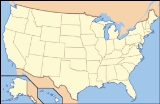
The Missouri National Recreational River is located on the border between Nebraska
and South Dakota
. The designation was first applied in 1978 to a 59-mile section of the Missouri River
between Gavins Point Dam
and Ponca State Park
. In 1991, an additional 39-mile section between Fort Randall Dam
and Niobrara, Nebraska
, was added to the designation. These two stretches of the Missouri River are the only parts of the river between Montana and the mouth of the Missouri that remain undammed or unchannelized.
The Missouri National Recreational River is managed by the National Park Service
. It lies in parts of Boyd
, Cedar
, and Dixon
counties in Nebraska, and Bon Homme
, Charles Mix, Clay, Union
, and Yankton
counties in South Dakota. There are visitor centers at Gavins Point Dam and Ponca State Park.
and Santa Fe
trails. It was a pathway of American Indians, Lewis and Clark, trappers and traders, steamboat captains, and settlers. The 1858 Treaty
with the Yankton Sioux opened the southeastern portion of the Dakota Territory
to white settlement. The Homestead Act
of 1862 encouraged immigration into the region. By the late 19th century steamboats plied the river.
During Steamboat Era, the Missouri was characterized by shifting channel, numerous braided channels, chutes, sloughs, islands, sandbars, and backwater areas. Well over 200 steamboats have sunk in the river between 1819 to 1897.
By the mid-20th century, extensive flooding prompted the passage of many flood control measures. The Flood Control Act of 1944, (the Pick-Sloan Plan) created the Fort Randall and Gavins Point dams.
and cottonwood. The bluffs are covered by elm
and oak
. The annual floods create a variation of floodplain vegetation and succession throughout the park. New deposits such as sandbars and accretions adjacent to the riverbanks are covered with the pioneer species: annual weeds, short-lived grasses, sedges, and seedling willow and cottonwood. On higher above the water table, larger willow and cottonwood trees dominate. The floodplain forest includes larger cottonwoods on the highest banks and islands. The understory in the cottonwood forest is primarily dogwood, sumac, wild grape, and poison ivy. The sparse vegetation under the mature cottonwoods consists mostly of scouring rush, Kentucky bluegrass, smooth brome, and other invasive grasses and weeds.
Above the floodplain, there is a mixed forest and agricultural fields. The forests on the adjoining bluffs are primarily hardwoods with the slopes covered by a dense growth of oak, ash, mulberry, and walnut, with burr oak as the dominant species.
Wildlife is plentiful. Since the days of Lewis and Clark the larger mammals have disappeared, including the grizzly bear, bison, and elk. Small mammals, including mice, voles, bats, rats, and ground squirrels make up the bulk of the species within the park. Deer are often seen on private property along the banks.
The American Bald Eagle has been gradually increasing throughout the park. Two other birds, the Piping Plover (Northern Great Plains population) and the Least Tern (Interior population), are still listed as threatened and endangered respectively. There are over 250 bird species identified within the riverway.
Nebraska
Nebraska is a state on the Great Plains of the Midwestern United States. The state's capital is Lincoln and its largest city is Omaha, on the Missouri River....
and South Dakota
South Dakota
South Dakota is a state located in the Midwestern region of the United States. It is named after the Lakota and Dakota Sioux American Indian tribes. Once a part of Dakota Territory, South Dakota became a state on November 2, 1889. The state has an area of and an estimated population of just over...
. The designation was first applied in 1978 to a 59-mile section of the Missouri River
Missouri River
The Missouri River flows through the central United States, and is a tributary of the Mississippi River. It is the longest river in North America and drains the third largest area, though only the thirteenth largest by discharge. The Missouri's watershed encompasses most of the American Great...
between Gavins Point Dam
Gavins Point Dam
Gavins Point Dam is a hydroelectric dam on the Missouri River in the U.S. states of Nebraska and South Dakota. Built from 1952 to 1957, it impounds Lewis and Clark Lake. The dam is on the Nebraska-South Dakota border, west of Yankton, South Dakota....
and Ponca State Park
Ponca State Park
Ponca State Park is a state park of Nebraska, USA, situated among the high bluffs and forested steep hills along the banks of the Missouri River. It is located north of Ponca in northeastern Nebraska. The park is adjacent to the Missouri National Recreational River...
. In 1991, an additional 39-mile section between Fort Randall Dam
Fort Randall Dam
The Fort Randall Dam is an earth embankment dam impounding the Missouri River in South Dakota, United States and forming Lake Francis Case. It is one of six Missouri River dams, four being located in South Dakota....
and Niobrara, Nebraska
Niobrara, Nebraska
Niobrara is a village in Knox County, Nebraska, United States. The population was 370 at the 2010 census.-Geography:Niobrara is located at ....
, was added to the designation. These two stretches of the Missouri River are the only parts of the river between Montana and the mouth of the Missouri that remain undammed or unchannelized.
The Missouri National Recreational River is managed by the National Park Service
National Park Service
The National Park Service is the U.S. federal agency that manages all national parks, many national monuments, and other conservation and historical properties with various title designations...
. It lies in parts of Boyd
Boyd County, Nebraska
Boyd County is a county located in the U.S. state of Nebraska. As of 2010, the population is 2,099. Its county seat is Butte.In the Nebraska license plate system, Boyd County is represented by the prefix 63 .-Geography:According to the U.S...
, Cedar
Cedar County, Nebraska
-History:Cedar County was formed in 1855. It was named for the great number of cedars that grow there.-Demographics:As of the census of 2000, there were 9,615 people, 3,623 households, and 2,565 families residing in the county. The population density was 13 people per square mile . There were...
, and Dixon
Dixon County, Nebraska
-Demographics:As of the census of 2000, there were 6,339 people, 2,413 households, and 1,705 families residing in the county. The population density was 13 people per square mile . There were 2,673 housing units at an average density of 6 per square mile...
counties in Nebraska, and Bon Homme
Bon Homme County, South Dakota
As of the census of 2000, there were 7,260 people, 2,635 households, and 1,786 families residing in the county. The population density was 13 people per square mile . There were 3,007 housing units at an average density of 5 per square mile...
, Charles Mix, Clay, Union
Union County, South Dakota
As of the census of 2000, there were 12,584 people, 4,927 households, and 3,517 families residing in the county. The population density was 27 people per square mile . There were 5,345 housing units at an average density of 12 per square mile...
, and Yankton
Yankton County, South Dakota
Yankton County is a county located in the U.S. state of South Dakota. As of the 2010 census, the population was 22,438. It's county seat is Yankton.Yankton County is the only county in the Yankton Micropolitan Statistical Area.-Geography:...
counties in South Dakota. There are visitor centers at Gavins Point Dam and Ponca State Park.
History
People have lived along the river for some 10,000 years. Archeologists have found their tools and weapons, homes, foods, religious, and ceremonial objects. The River is one of three historic east-west corridors, similar to the OregonOregon Trail
The Oregon Trail is a historic east-west wagon route that connected the Missouri River to valleys in Oregon and locations in between.After 1840 steam-powered riverboats and steamboats traversing up and down the Ohio, Mississippi and Missouri rivers sped settlement and development in the flat...
and Santa Fe
Santa Fe Trail
The Santa Fe Trail was a 19th-century transportation route through central North America that connected Missouri with Santa Fe, New Mexico. Pioneered in 1822 by William Becknell, it served as a vital commercial and military highway until the introduction of the railroad to Santa Fe in 1880...
trails. It was a pathway of American Indians, Lewis and Clark, trappers and traders, steamboat captains, and settlers. The 1858 Treaty
Yankton Treaty
In 1858 the United States government and the Sioux and Yankton Indian tribes reached an agreement, ceding most of eastern South Dakota to the U.S. The agreement immediately opened this territory up for settlement by whites, resulting in the establishment of an unofficial local government not...
with the Yankton Sioux opened the southeastern portion of the Dakota Territory
Dakota Territory
The Territory of Dakota was an organized incorporated territory of the United States that existed from March 2, 1861, until November 2, 1889, when the final extent of the reduced territory was split and admitted to the Union as the states of North and South Dakota.The Dakota Territory consisted of...
to white settlement. The Homestead Act
Homestead Act
A homestead act is one of three United States federal laws that gave an applicant freehold title to an area called a "homestead" – typically 160 acres of undeveloped federal land west of the Mississippi River....
of 1862 encouraged immigration into the region. By the late 19th century steamboats plied the river.
During Steamboat Era, the Missouri was characterized by shifting channel, numerous braided channels, chutes, sloughs, islands, sandbars, and backwater areas. Well over 200 steamboats have sunk in the river between 1819 to 1897.
By the mid-20th century, extensive flooding prompted the passage of many flood control measures. The Flood Control Act of 1944, (the Pick-Sloan Plan) created the Fort Randall and Gavins Point dams.
Flora and fauna
Along the river there are two major plant communities. The floodplain forest includes willowWillow
Willows, sallows, and osiers form the genus Salix, around 400 species of deciduous trees and shrubs, found primarily on moist soils in cold and temperate regions of the Northern Hemisphere...
and cottonwood. The bluffs are covered by elm
Elm
Elms are deciduous and semi-deciduous trees comprising the genus Ulmus in the plant family Ulmaceae. The dozens of species are found in temperate and tropical-montane regions of North America and Eurasia, ranging southward into Indonesia. Elms are components of many kinds of natural forests...
and oak
Oak
An oak is a tree or shrub in the genus Quercus , of which about 600 species exist. "Oak" may also appear in the names of species in related genera, notably Lithocarpus...
. The annual floods create a variation of floodplain vegetation and succession throughout the park. New deposits such as sandbars and accretions adjacent to the riverbanks are covered with the pioneer species: annual weeds, short-lived grasses, sedges, and seedling willow and cottonwood. On higher above the water table, larger willow and cottonwood trees dominate. The floodplain forest includes larger cottonwoods on the highest banks and islands. The understory in the cottonwood forest is primarily dogwood, sumac, wild grape, and poison ivy. The sparse vegetation under the mature cottonwoods consists mostly of scouring rush, Kentucky bluegrass, smooth brome, and other invasive grasses and weeds.
Above the floodplain, there is a mixed forest and agricultural fields. The forests on the adjoining bluffs are primarily hardwoods with the slopes covered by a dense growth of oak, ash, mulberry, and walnut, with burr oak as the dominant species.
Wildlife is plentiful. Since the days of Lewis and Clark the larger mammals have disappeared, including the grizzly bear, bison, and elk. Small mammals, including mice, voles, bats, rats, and ground squirrels make up the bulk of the species within the park. Deer are often seen on private property along the banks.
The American Bald Eagle has been gradually increasing throughout the park. Two other birds, the Piping Plover (Northern Great Plains population) and the Least Tern (Interior population), are still listed as threatened and endangered respectively. There are over 250 bird species identified within the riverway.
See also
- Niobrara National Scenic RiverNiobrara National Scenic RiverThe Niobrara National Scenic River is located in north-central Nebraska, United States, approximately 300 miles northwest of Omaha. In 1991, Congress set aside 76 miles along two stretches of the Niobrara River for preservation under the management of the National Park Service with assistance...
- Niobrara State ParkNiobrara State ParkNiobrara State Park is a state park of Nebraska, USA, located on the bluffs at the confluence of the Missouri and Niobrara rivers. The park is on the outskirts of the village of Niobrara in northeastern Nebraska. The state park has of land and of water....
- Lewis and Clark LakeLewis and Clark LakeLewis and Clark Lake is an impoundment on the Missouri River above Gavins Point Dam, near Yankton, South Dakota. It is located on the border of South Dakota and Nebraska. The reservoir is approximately long, with a surface area of 31,000 acres ; it has a maximum depth of . It is the smallest of...
- Ponca State ParkPonca State ParkPonca State Park is a state park of Nebraska, USA, situated among the high bluffs and forested steep hills along the banks of the Missouri River. It is located north of Ponca in northeastern Nebraska. The park is adjacent to the Missouri National Recreational River...