
MIL-STD-1553 is a military
standardStandardization is the process of developing and implementing technical standards.The goals of standardization can be to help with independence of single suppliers , compatibility, interoperability, safety, repeatability, or quality....
published by the
United States Department of DefenseThe United States Department of Defense is the U.S...
that defines the
mechanicalA machine manages power to accomplish a task, examples include, a mechanical system, a computing system, an electronic system, and a molecular machine. In common usage, the meaning is that of a device having parts that perform or assist in performing any type of work...
, electrical, and functional characteristics of a
serialIn telecommunication and computer science, serial communication is the process of sending data one bit at a time, sequentially, over a communication channel or computer bus. This is in contrast to parallel communication, where several bits are sent as a whole, on a link with several parallel channels...
data bus. It was originally designed for use with military
avionicsAvionics are electronic systems used on aircraft, artificial satellites and spacecraft.Avionic systems include communications, navigation, the display and management of multiple systems and the hundreds of systems that are fitted to aircraft to meet individual roles...
, but has also become commonly used in spacecraft on-board data handling (OBDH) subsystems, both military and civil. It features a dual redundant
balanced lineIn telecommunications and professional audio, a balanced line or balanced signal pair is a transmission line consisting of two conductors of the same type, each of which have equal impedances along their lengths and equal impedances to ground and to other circuits. The chief advantage of the...
physical layer, a (differential)
network interfaceNetwork interface may refer to:* Network interface controller, the device a computer uses to connect to a computer network* Network interface device, a demarcation point for a telephone network...
, time division multiplexing, half-duplex command/response protocol, and up to 31 remote terminals (devices). A version of MIL-STD-1553 using optical cabling in place of electrical is known as
MIL-STD-1773.
MIL-STD-1553 was first published as a U.S. Air Force standard in 1973, and first was used on the
F-16 Fighting FalconThe General Dynamics F-16 Fighting Falcon is a multirole jet fighter aircraft originally developed by General Dynamics for the United States Air Force . Designed as an air superiority day fighter, it evolved into a successful all-weather multirole aircraft. Over 4,400 aircraft have been built since...
fighter aircraft. Other aircraft designs quickly followed, including the F-18 Hornet, AH-64 Apache and
F-20 TigersharkThe Northrop F-20 Tigershark was a privately-financed light fighter, designed and built by Northrop. Its development began in 1975 as a further evolution of Northrop's F-5E Tiger II, featuring a new engine that greatly improved overall performance, and a modern avionics suite including a powerful...
. It now is widely used by all branches of the U.S. military and has been adopted by
NATO as
STANAGSTANAG is the NATO abbreviation for Standardization Agreement, which sets up processes, procedures, terms, and conditions for common military or technical procedures or equipment between the member countries of the alliance. Each NATO state ratifies a STANAG and implements it within their own...
3838 AVS. MIL-STD-1553 is being replaced on some newer U.S. designs by
FireWireThe IEEE 1394 interface is a serial bus interface standard for high-speed communications and isochronous real-time data transfer, frequently used by personal computers, as well as in digital audio, digital video, automotive, and aeronautics applications. The interface is also known by the brand...
. The Russian made
MiG-35The Mikoyan MiG-35 is a further development of the MiG-29M/M2 and MiG-29K/KUB technology. It is classified as a 4++ generation jet fighter by Mikoyan. The first prototype was a modification of the aircraft that previously served as MiG-29M2 model demonstrator. 10 prototypes have been built so far...
also uses MIL-STD-1553.
Revisions
MIL-STD-1553B, which superseded the earlier 1975 specification MIL-STD-1553A, was published in 1978. The basic difference between the 1553A and 1553B revisions is that in the latter, the options are defined rather than being left for the user to define as required. It was found that when the standard did not define an item, there was no coordination in its use. Hardware and software had to be redesigned for each new application. The primary goal of the 1553B was to provide flexibility without creating new designs for each new user. This was accomplished by specifying the electrical interfaces explicitly so that electrical compatibility between designs by different manufacturers could be assured.
Six change notices to the standard have been published since 1978. For example, change notice 2 in 1986 changed the title of the document from "Aircraft internal time division command/response multiplex data bus" to "Digital time division command/response multiplex data bus".
The MIL-STD-1553 standard is now maintained by both the U.S. Department of Defense and the Aerospace branch of the Society of Automotive Engineers.
Physical layer
A single bus consists of a wire pair with 70–85 Ω impedance at 1 MHz. Where a circular connector is used, its center pin is used for the high (positive)
ManchesterIn telecommunication and data storage, Manchester code is a line code in which the encoding of each data bit has at least one transition and occupies the same time...
bi-phase signal. Transmitters and receivers couple to the bus via isolation transformers, and stub connections branch off using a pair of isolation resistors and a coupling transformer. This reduces the impact of a
short circuitA short circuit in an electrical circuit that allows a current to travel along an unintended path, often where essentially no electrical impedance is encountered....
and assures that the bus does not conduct current through the aircraft. A
Manchester codeIn telecommunication and data storage, Manchester code is a line code in which the encoding of each data bit has at least one transition and occupies the same time...
is used to present both clock and data on the same wire pair and to eliminate any DC component in the signal (which cannot pass the transformers). The
bit rateIn telecommunications and computing, bit rate is the number of bits that are conveyed or processed per unit of time....
is 1.0 megabit per second (1 bit per
μsA microsecond is an SI unit of time equal to one millionth of a second. Its symbol is µs.A microsecond is equal to 1000 nanoseconds or 1/1000 millisecond...
). The combined accuracy and long-term stability of the bit rate is only specified to be within ±0.1%; the short-term clock stability must be within ±0.01%. The peak-to-peak output voltage of a transmitter is 18–27 V.
The bus can be made
dual or triply redundantIn engineering, redundancy is the duplication of critical components or functions of a system with the intention of increasing reliability of the system, usually in the case of a backup or fail-safe....
by using several independent wire pairs, and then all devices are connected to all buses. There is provision to designate a new bus control computer in the event of a failure by the current master controller. Usually, the auxiliary flight control computer(s) monitor the master computer and aircraft sensors via the main data bus. A different version of the bus uses
optical fiberAn optical fiber is a flexible, transparent fiber made of a pure glass not much wider than a human hair. It functions as a waveguide, or "light pipe", to transmit light between the two ends of the fiber. The field of applied science and engineering concerned with the design and application of...
, which weighs less and has better resistance to electromagnetic interference, including
EMPAn electromagnetic pulse is a burst of electromagnetic radiation. The abrupt pulse of electromagnetic radiation usually results from certain types of high energy explosions, especially a nuclear explosion, or from a suddenly fluctuating magnetic field...
. This is known as MIL-STD-1773.
Bus protocol
A 1553 bus consists of a Bus Controller (BC) controlling multiple Remote Terminals (RT). Messages consist of one or more 16-bit words (command, data or status). Each word is preceded by a 3 μs sync pulse (1.5 μs low plus 1.5 μs high for data words and the opposite for command and status words, which cannot occur in the Manchester code) and followed by an odd
parity bitA parity bit is a bit that is added to ensure that the number of bits with the value one in a set of bits is even or odd. Parity bits are used as the simplest form of error detecting code....
. Practically each word could be considered as a 20-bit word: 3 bit for sync, 16 bit for payload and 1 bit for odd parity control. The words within a message are transmitted contiguously and there is a 4 μs gap between messages. Devices have to start transmitting their response to a valid command within 4–12 μs and are considered to not have received a message if no response has started within 14 μs.
All communication on the bus is under the control of the master BC and is on the basis of a command from the BC to RT to receive or transmit. The sequence of words, (the form of the notation is
. and is a notation similar to CSPIn computer science, Communicating Sequential Processes is a formal language for describing patterns of interaction in concurrent systems. It is a member of the family of mathematical theories of concurrency known as process algebras, or process calculi...
), for transfer of data from the BC to a terminal is
- master.command(terminal) → terminal.status(master) → master.data(terminal) → master.command(terminal) → terminal.status(master)
and for terminal to terminal communication is
- master.command(terminal_1) → terminal_1.status(master) → master.command(terminal_2) → terminal_2.status(master) → master.command(terminal_1) → terminal_1.data(terminal_2) → master.command(terminal_2) → terminal_2.status(master)
This means during the RT to RT transfer, communication is done via the Bus Controller. The data is first written into the buffer of the RT who initiates the communication (e.g. RT1). The Bus controller reads the data from the RT1 buffer and writes it into the destination RT buffer (RT2).
The sequences ensure that the terminal is functioning and able to receive data. The status request at the end of a data transfer sequence ensures that the data has been received and that the result of the data transfer is acceptable. It is this sequence that gives MIL-STD-1553 its high integrity. The above sequences are simplified and do not show the actions to be taken in the case of an error or other fault.
A terminal device cannot originate a data transfer of itself. Requests for transmission from terminal devices are handled by the master controller pollingPolling, or polled operation, in computer science, refers to actively sampling the status of an external device by a client program as a synchronous activity. Polling is most often used in terms of input/output , and is also referred to as polled or software driven .Polling is sometimes used...
the terminals. Higher-priority functions (for example, commands to the aircraft control surfaces) are polled more frequently. Lower-priority commands are polled less frequently. However, the standard does not specify any particular timing for any particular word—that's up to the system designers. The absence of a response when a device is polled indicates a fault.
Five types of transactions exist between the BC and RTs:
- Receive data. The Bus Controller sends one 16 bit command word, immediately followed by 1 to 32 16-bit data words. The selected Remote Terminal then sends a single 16 bit Status Response word back to the Bus Controller.
- Transmit data. The Bus Controller sends one command word to Remote Terminal. The Remote Terminal then sends a single Status Response word, immediately followed by 1 to 32 words to the Bus Controller.
- Broadcast data. New for 1553B. The Bus Controller sends one command word with a Terminal address of 31 signifying a broadcast type command, followed by 0 to 32 data words. All Remote Terminals will accept the data but none will respond. This can be used for system wide updates, such as time of day.
- Mode Code. The Bus Controller sends one command word with a Subaddress of 0 or 31 signifying a Mode Code type command. This command may or may not be followed by a single word depending on which code is used. The Remote Terminal responds with a Status Response word which may or may not be followed by a single data word.
- RT to RT Transfer. The Bus Controller sends out a Receive data command followed by a Transmit data command. The transmitting Terminal sends a Status Word followed by 1 to 32 data words to the Receiving RT. The receiving Terminal then sends its Status Word.
The Command Word is built as follows. The first 5 bits are the Remote Terminal
address (0–31). The sixth bit is 0 for Receive or 1 for Transmit. The next 5
bits indicate the location (subaddress) to hold or get data on the Terminal (1–30).
Note that subaddresses 0 and 31 are reserved for Mode Codes. The last 5 bits indicate the number of words to expect (1–32). All zero bits indicate 32 words. In the case of a Mode Code, these bits indicate the Mode Code number (e.g., Initiate Self Test and Transmit BIT Word).
Command Word Bit Usage
| Remote Terminal address (0 - 31) |
Receive or Transmit |
Location (subaddress) of data (1 - 30) |
Number of words to expect (1 - 32) |
| 1 |
2 |
3 |
4 |
5 |
6 |
7 |
8 |
9 |
10 |
11 |
12 |
13 |
14 |
15 |
16 |
The Status Word decodes as follows. The first 5 bits are the address of the
Remote Terminal that is responding. The rest of the word is single bit condition codes. Some bits are reserved. A 'one' state indicates condition is true; Message Error and Service Request are examples. More than one condition may be true at the same time.
Status Word Bit Usage
| Remote Terminal address |
Single bit condition codes |
| 1 |
2 |
3 |
4 |
5 |
6 - 16 |
Conceptual description
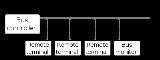
Figure 1 at right shows a typical MIL-STD-1553B
system.
It consists of:
- a dual-redundant MIL-STD-1553B bus
- a Bus Controller
- three Remote Terminals
- a Bus Monitor
The Bus Controller
There is only one Bus Controller at a time on any
MIL-STD-1553 bus. It initiates
all message communication over the bus.
Figure 1 shows 1553 data bus details:
- operates according to a command list stored in its local memory
- commands the various Remote Terminals to send or receive messages
- services any requests that it receives from the Remote Terminals
- detects and recovers from errors
- keeps a history of errors
The Remote Terminals
A Remote Terminal can be used to provide:
- an interface between the MIL-STD-1553B data bus and an attached subsystem
- a bridge between a MIL-STD-1553B bus and another MIL-STD-1553B bus.
For example, in a tracked vehicle, a Remote Terminal might acquire data from
an inertial navigational subsystem, and send that data over a 1553 data bus to another Remote Terminal, for display on a crew instrument. Simpler examples of Remote Terminals might be interfaces that switch on the headlights, the landing lights, or the annunciators in an aircraft.
Test Plans for Remote Terminals:
The RT Validation Test Plan is intended for design verification of remote terminals designed to meet the requirements of AS 15531 and MIL-STD-1553B with Notice 2. This test plan was initially defined in MIL-HDBK-1553, Appendix A. It was updated in MIL-HDBK-1553A, Section 100. The test plan is now maintained by the SAE AS-1A Avionic Networks Subcommittee as AS4111.
The RT Production Test Plan is a simplified subset of the validation test plan and is intended for production testing of remote terminals. This test plan is maintained by the SAE AS-1A Avionic Networks Subcommittee as AS4112.
Bus monitor
A Bus Monitor cannot transmit messages over the data bus. Its primary role is to monitor and record bus transactions, without interfering with the operation of the Bus Controller or the Remote Terminals.
These recorded bus transactions can then be stored, for later off-line analysis.
Ideally, a Bus Monitor captures and records all messages sent over the 1553
data bus. However recording all of the transactions on a busy data bus might be impractical, so a Bus Monitor is often configured to record a subset of the transactions, based on some criteria provided by the application program.
Alternatively, a Bus Monitor is used in conjunction with a back-up Bus Controller. This allows the back-up Bus Controller to “hit the ground running”, if it is called upon to become the active Bus Controller.
Bus hardware characteristics
The bus hardware encompasses (1) cabling, (2) bus couplers, (3) terminators and (4) connectors.
Cabling
Although MIL-STD-1553B specifies that the data bus should have characteristic impedance between 70 and 85 ohms, industry has standardized on 78 ohms. Likewise, the industry has generally standardized on the cable known as twinax cable that has a characteristic impedance of 78 ohms.
MIL-STD-1553B does not specify the length of the bus. However, the maximum length of bus is directly related to the gauge of the cable conductor and time delay of the transmitted signal. A smaller conductor attenuates the signal more than a larger conductor. Typical propagation delay for a 1553B cable is 1.6 nanoseconds per foot. Thus, the end-to-end 100-ft. bus would have a 160 nanosecond propagation delay, which is equal to the average rise time of a 1553B signal. According to MIL-HDBK-1553A, when a signal's propagation delay time is more than 50% of the rise or fall time, it is necessary to consider transmission line effects. This delay time is proportional to the distance propagated. Also, consideration must be given to the actual distance between the transmitter and receiver, and the individual waveform characteristics of the transmitters and receivers.
MIL-STD-1553B specifies that the longest stub length is 20 feet for transformer coupled stubs, but can be exceeded. With no stubs attached, the main bus looks like an infinite length transmission line with no disturbing reflections. When a stub is added, the bus is loaded and a mismatch occurs with resulting reflections. The degree of mismatch and signal distortion due to reflections are a function of the impedance presented by the stub and terminal input impedance. To minimize signal distortion, it is desirable that the stub maintain high impedance. This impedance is reflected back to the bus. At the same time, however, the impedance must be kept low so that adequate signal power will be delivered to the receiving end. Therefore, a tradeoff between these conflicting requirements is necessary to achieve the specified signal-to-noise ratio and system error rate performance (for more information, refer to MIL-HDBK-1553A).
Bus Couplers
The purpose of the bus couplerBus coupler is a device which is used switch from one bus to the other without any interruption in power supply and without creating hazardous arcs.It is achieved with the help of circuit breaker and isolators.-Characteristics:...
is to reduce reflections, maintain signal impedance levels, and protect the bus in an event of a short circuit. Since direct coupled devices (without couplers) provide no DC isolation or common mode rejection, direct connection to the bus should be avoided. Without couplers, any shorting fault between the device's internal isolation resistors (usually found on the circuit board) and the main bus will cause failure of the entire bus because the device's internal isolation resistors are not sufficient to ensure against shorting out the bus. In addition to transformers, the bus couplers have built-in fault isolation resistors providing protection for the main bus in the event of a short circuit in the stub. All devices, including the bus controller, bus monitor and remote terminal must be connected to the stub ends of the coupler.
Terminators
Both ends of the bus, whether it includes one coupler or a series of couplers connected together, must be terminated (in accordance with MIL-STD-1553B) with 78 ohm terminators. The purpose of electrical terminationElectrical termination of a signal involves providing a terminator at the end of a wire or cable to prevent an RF signal from being reflected back from the end, causing interference...
is to minimize the effects of signal reflections that can cause waveform distortion. If termination is not used, the communications signal can be compromised causing disruption or intermittent communications failures.
Connectors
Although there are potentially many types of connectors that can be used on the bus cable and couplers, the most common type is the concentric twinax connector. The most popular concentric twinax connectorA concentric twinax connector has a center pin and a cylindrical intermediate contact as compared to a dual polarized pin type.-MIL-STD-1553:...
has three bayonet coupling slots/lugs (same envelope size as a coaxial BNC connector).
Development tools
When developing and/or troubleshooting MIL-STD-1553, examination of hardware signals can be very important to find problems. A logic analyzer with protocol decoding capabilities or protocol analyzers are useful tools which collect, analyze, decode, store signals so people can view the high-speed waveforms at their leisure.
See also
- MIL-STD-1760
MIL-STD-1760 Aircraft/Store Electrical Interconnection System defines a standardized electrical interface between a military aircraft and its carriage stores. Carriage stores range from weapons, such as GBU-31 JDAM, to pods, such as AN/AAQ-14 LANTIRN, to external fuel tanks...
- Aircraft flight control systems
A conventional fixed-wing aircraft flight control system consists of flight control surfaces, the respective cockpit controls, connecting linkages, and the necessary operating mechanisms to control an aircraft's direction in flight...
- Fly by wire
Fly by Wire: The Geese, the Glide, the Miracle on the Hudson is a book written in 2009 by William Langewiesche about US Airways Flight 1549 with emphasis on the role played by the advanced fly-by-wire flight control system of the aircraft....
- Avionics Full-Duplex Switched Ethernet
Avionics Full-Duplex Switched Ethernet is a data network for safety-critical applications that utilizes dedicated bandwidth while providing deterministic Quality of Service . AFDX is based on IEEE 802.3 Ethernet technology and utilizes commercial off-the-shelf components...
(AFDX) – a faster Ethernet-based technology
- ARINC 429
ARINC 429 is the technical standard for the predominant avionics data bus used on most higher-end commercial and transport aircraft. It defines the physical and electrical interfaces of a two-wire data bus and a data protocol to support an aircraft's avionics local area network.-Messages:ARINC 429...
Commercial Avionics Counterpart
External links