

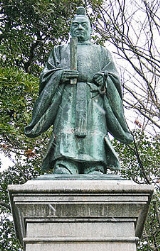
Ii Naosuke

Encyclopedia
was daimyo
of Hikone (1850–1860) and also Tairō
of Tokugawa Shogunate
, Japan
, a position he held from April 23, 1858 until his death on March 24, 1860. He is most famous for signing the Harris Treaty with the United States, granting access to ports for trade to American merchants and seamen and extraterritoriality to American citizens. He was also an enthusiastic and accomplished practitioner of the Japanese tea ceremony
, in the Sekishūryū style, and his writings include at least two works on the tea ceremony.
Under Naosuke Ii’s guidance, the Tokugawa shogunate
navigated past a particularly difficult conflict over the succession to the ailing and childless Tokugawa Iesada
. Ii Naosuke managed to coerce the Tokugawa Shogunate to its last brief resurgence of its power and position in Japanese society before the starting of the Meiji period
. Ii was assassinated in the Sakuradamon incident
by a group of 17 Mito
and 1 Satsuma
samurai on the 24th of March 1860.
of Hikone by his concubine. Since Naosuke was the 14th son, he was not in line for a prominent position and early in his life was sent to a Buddhist temple where he lived on a small stipend from his family. Fortunately for Ii between the time he was sent to the monastery and 1850 his 13 elder brothers were either adopted into other families who needed an heir or died. Accordingly in 1850 when his father died Ii was called back from the monastery and became the daimyo of Hikone, a fudai domain, and took the family name of Ii. As the daimyo of Hikone, Ii was one of the daimyo who were eligible for a position in the bakufu, the council of the Shogun’s advisors.
Ii became involved in national politics, rapidly rising to lead a coalition of daimyo. In 1853 Ii put forward a proposal concerning the Japanese negotiations with Commodore Matthew Perry. Realizing that Japan was “faced with immediate military danger” Ii argued that Japan should use their relationship with the Dutch to allow them to buy enough time to develop armed forces, which could resist invasion. Ii recommended that only the port of Nagasaki be opened for trade with foreigners Ii, like Hotta Masayoshi, refused to remain silent while shogunal advisor Abe Masahiro appeased the anti-foreign party Ii led the fudai
daimyo in their effort to bring about the downfall of Abe Masahiro
and replace him with Hotta Masayoshi
. This alienated many reformist daimyo, leading them to strengthen their association with the Imperial court
Ii Naosuke regarded the Harris treaty, which Hotta Masayoshi had negotiated with the American envoy Townsend Harris
as in Japan’s best interests. In accordance with the protocol he asked the three house lords of the gosankyō
for their views in writing. However Ii faced a problem in the form of an obstructionist policy from members of the Hitotsubashi faction led by Hitotsubashi Keiki’s father Tokugawa Nariaki
.
Ii was unwilling to sign the Harris treaty without approval from Emperor Kōmei
in Kyoto
. However the daimyo of the Hitotsubashi faction were preventing him from presenting the treaty to the emperor by withholding their approval. At this time Harris started putting pressure on the shogunal officials to sign the treaty. Ii decided not to risk aggravating the Americans and on the 29th of July 1858, encouraged by the full backing of the bakufu officials, Ii ordered the Harris treaty to be signed. Soon after this Ii negotiated a number of similar unequal treaties with the Dutch, the Russians, the British and the French. The recovery of Japan’s sovereignty and power, which were lost due to the treaties conducted by Ii Naosuke, were the basis of a large part of the policies formed during the Meiji period.
Due to the frail health of the Shogun, Tokugawa Iesada
, the members of the Hitotsubashi faction wanted to force Ii to support Hitotsubashi Keiki as the heir to the ailing Shogun. Hitotsubashi Keiki was the reformist candidate, supported by the reformist faction, headed by his father Tokugawa Nariaki; his supporters pointed to his experience and skill in handling policy decisions. Ii was aware that Japan needed strong leadership, but unlike the reformist daimyo, Ii was not prepared to accept strong leadership from outside the traditional forms of government. The bakufu, led by Ii, wanted the 12 year old daimyo of Kii, Tokugawa Yoshitomi, to ascend to the position of shogun. The bakufu supported such a young candidate because they felt that it would be easier for them to influence and control a young and inexperienced shogun.
To end meddling in bakufu affairs, shortly after he signed the Harris treaty Ii settled the matter of the shogunal succession by claiming that the shogunal succession was a matter for the Tokugawa house alone and neither the shinpan daimyo or the Emperor had the right to interfere. As head councilor of the Tokugawa house Ii was now free to influence the decision in favor of whichever candidate he preferred without any interference. In this way Ii was able to ignore the Daimyo who supported Hitotsubashi Keiki, the reformist candidate for the office of Shogun and crowned the fudai daimyo‘s candidate, Tokugawa Yoshitomi who changed his name to Tokugawa Iemochi, as the 14th Tokugawa Shogun.
Ii’s decision made him very unpopular with Imperial loyalists, especially with the Mito samurai. Towards the end of 1858 the reformists went to the emperor with the hopes of restraining Ii. In response to the attempt by Tokugawa Nariaki and his supporters to denounce him in the emperor’s court Ii had a shogunal decree passed which allowed him to conduct the Ansei Purge
. During the rest of 1858 and into 1859 Naosuke purged over 100 officials from the bakufu, the imperial court and the lands of various daimyo. Eight of the officials who were purged were executed; the remainder were forced into retirement. During the Ansei purge Ii Naosuke was able to force Hitotsubashi Keiki’s supporters to retire and place Hitotsubashi and his family under house arrest. Ii Naosuke was also able to remove officials who had expressed unhappiness with his handling of the Harris treaty and the shogunal succession from public life.
. Kōbu Gattai is the policy of binding Kyoto and Edo closer together to shore up the failing shogunate with the prestige of the imperial court. This policy was to be carried out by means of a marriage between the Shogun and the Emperor’s younger sister, Princess Kazunomiya
. Naosuke broached the topic to the Imperial court through his Envoy Manabe Akibuke. Manabe was tasked with gauging the measure of acceptability for the proposed marriage between Shogun Iemochi and Princess Kazunomiya. Prominent court official Konoe Tadahiro responded favorably to the proposal, insinuating a marriage between the shogun and Princess Kazunomiya was possible if her present engagement failed. However in March 1859 Konoe was forced to retire from the court by Naosuke’s Ansei purge, and the idea of Kōbu Gattai faded into the background until 1861, after the death of Ii Naosuke. In 1861 due to the further deteriorating status of the shogunate the marriage between Tokugawa Iemochi and Princess Kazunomiya finally took place, though their marriage was cut short by Iemochi’s death in 1866.

 Although Ii’s Ansei purge was very effective in silencing the officials and his high ranking opponents, it did not have the same effect on lower ranking samurai. Ii Naosuke’s 20 month dictatorial reign as Tairō came to an abrupt end in the third month of Ansei 7 (March 24, 1860). Accounts of the dramatic event were sent via ship across the Pacific to San Francisco and then sped by Pony Express
across the American West. On June 12, the New York Times reported that Japan's first diplomatic mission to the West
received the news about what had happened in Edo.
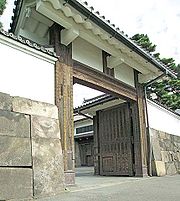
In the Sakuradamon incident
, Ii was attacked by a band of 17 young samurai loyalists from the Mito province and cut down just in front of one of the gates of the Shogun’s Edo castle entering to meet with the shogun. The assassination of Ii Naosuke, who was seen as the symbol of the bakufu’s power and authority, was construed as crushing any hopes for the resurrection of the shogunate's power.
The death of Tairō Ii Naosuke started a wave of loyalist terrorism across Japan, the poet Tsunada Tadayuki even wrote a poem praising Ii’s assassins. Soon attempts were being made on the lives of other members of the bakufu and their informants. The wave of popular dissent also turned against officials with a connection to Ii Naosuke, no matter how distant it was. Shimada Sakon, retainer of the Kujō, (one of the Sekke families; the 5 regent houses, and among the most powerful in the court), Imperial regent, was killed by dissidents for supporting the Harris treaty and helping Ii’s confidant, Nagano Shuzen, expose members of the court who were targeted during the Ansei purge.
The Shogun and the Bakufu were astounded and taken completely unaware by the death of Ii Naosuke. They didn’t even announce his death until several months after the assassination took place. Instead the Shogun and the bakufu pretended that Ii was still alive and rendering service to the Shogun, then they faked an illness and had him render his resignation to the Shogun before announcing his death. In this way Ii continued to serve the Shogun, even after death. Ii’s assassins were later granted a general amnesty by the bakufu, a precedent later used by Yamagata Aritomo, a key member of the Meiji restoration, to show that any action can be forgiven if it is performed for the betterment of the emperor.
After Ii Naosuke’s death the Ii family was disgraced for many years; recently, however, Ii’s actions have been looked at in a more favorable light and Ii Naosuke has taken his place as one of the most important political figures of Japanese history. On October 7, 2009, Naotake Ii, a family descendent of Naosuke attended a memorial ceremony with the people of Fukui in reconciliation over the execution of Hashimoto Sanai in the Ansei Purge.
Daimyo
is a generic term referring to the powerful territorial lords in pre-modern Japan who ruled most of the country from their vast, hereditary land holdings...
of Hikone (1850–1860) and also Tairō
Tairo
Tairō was a high-ranking official position in the bakuhan taisei government of Japan. The tairō would preside over the governing Rōjū council in the event of an emergency. A tairō would be nominated from among a group of samurai families who supported Tokugawa Ieyasu...
of Tokugawa Shogunate
Tokugawa shogunate
The Tokugawa shogunate, also known as the and the , was a feudal regime of Japan established by Tokugawa Ieyasu and ruled by the shoguns of the Tokugawa family. This period is known as the Edo period and gets its name from the capital city, Edo, which is now called Tokyo, after the name was...
, Japan
Japan
Japan is an island nation in East Asia. Located in the Pacific Ocean, it lies to the east of the Sea of Japan, China, North Korea, South Korea and Russia, stretching from the Sea of Okhotsk in the north to the East China Sea and Taiwan in the south...
, a position he held from April 23, 1858 until his death on March 24, 1860. He is most famous for signing the Harris Treaty with the United States, granting access to ports for trade to American merchants and seamen and extraterritoriality to American citizens. He was also an enthusiastic and accomplished practitioner of the Japanese tea ceremony
Japanese tea ceremony
The Japanese tea ceremony, also called the Way of Tea, is a Japanese cultural activity involving the ceremonial preparation and presentation of matcha, powdered green tea. In Japanese, it is called . The manner in which it is performed, or the art of its performance, is called...
, in the Sekishūryū style, and his writings include at least two works on the tea ceremony.
Under Naosuke Ii’s guidance, the Tokugawa shogunate
Tokugawa shogunate
The Tokugawa shogunate, also known as the and the , was a feudal regime of Japan established by Tokugawa Ieyasu and ruled by the shoguns of the Tokugawa family. This period is known as the Edo period and gets its name from the capital city, Edo, which is now called Tokyo, after the name was...
navigated past a particularly difficult conflict over the succession to the ailing and childless Tokugawa Iesada
Tokugawa Iesada
Tokugawa Iesada Tokugawa Iesada Tokugawa Iesada (徳川 家定 (May 6, 1824 – August 14, 1858) was the 13th shogun of the Tokugawa shogunate of Japan who held office for only 5 years, from 1853 to 1858. He was physically weak and therefore unfit to be shogun in this period of great challenges...
. Ii Naosuke managed to coerce the Tokugawa Shogunate to its last brief resurgence of its power and position in Japanese society before the starting of the Meiji period
Meiji period
The , also known as the Meiji era, is a Japanese era which extended from September 1868 through July 1912. This period represents the first half of the Empire of Japan.- Meiji Restoration and the emperor :...
. Ii was assassinated in the Sakuradamon incident
Sakuradamon incident (1860)
The on 24 March 1860 was the assassination of Japanese Chief Minister Ii Naosuke , by rōnin samurai of the Mito Domain, outside the Sakuradamon gate of Edo Castle.-Context:...
by a group of 17 Mito
Mito
Mito can refer to:a person*Anji Mito, a fictional character from the video game Guilty Geara place name:*Mito, Ibaraki, a Japanese city*Mito, Aichi, a Japanese town*Mito, Shimane, a Japanese town*Mitō, Yamaguchi, a Japanese town...
and 1 Satsuma
Satsuma
Satsuma may refer to:* Satsuma , a citrus fruit* Satsuma , a genus of land snails-In Japan:* Satsuma, Kagoshima, a Japanese town* Satsuma District, Kagoshima, a district in Kagoshima Prefecture...
samurai on the 24th of March 1860.
Early life
Ii Naosuke was born on November 29, 1815 as the 14th son of Ii Naonake, the daimyoDaimyo
is a generic term referring to the powerful territorial lords in pre-modern Japan who ruled most of the country from their vast, hereditary land holdings...
of Hikone by his concubine. Since Naosuke was the 14th son, he was not in line for a prominent position and early in his life was sent to a Buddhist temple where he lived on a small stipend from his family. Fortunately for Ii between the time he was sent to the monastery and 1850 his 13 elder brothers were either adopted into other families who needed an heir or died. Accordingly in 1850 when his father died Ii was called back from the monastery and became the daimyo of Hikone, a fudai domain, and took the family name of Ii. As the daimyo of Hikone, Ii was one of the daimyo who were eligible for a position in the bakufu, the council of the Shogun’s advisors.
Ii became involved in national politics, rapidly rising to lead a coalition of daimyo. In 1853 Ii put forward a proposal concerning the Japanese negotiations with Commodore Matthew Perry. Realizing that Japan was “faced with immediate military danger” Ii argued that Japan should use their relationship with the Dutch to allow them to buy enough time to develop armed forces, which could resist invasion. Ii recommended that only the port of Nagasaki be opened for trade with foreigners Ii, like Hotta Masayoshi, refused to remain silent while shogunal advisor Abe Masahiro appeased the anti-foreign party Ii led the fudai
Fudai
was a class of daimyo who were hereditary vassals of the Tokugawa in Edo period Japan. It was primarily the fudai who filled the ranks of the Tokugawa administration.-Origins:...
daimyo in their effort to bring about the downfall of Abe Masahiro
Abe Masahiro
was the chief senior councillor in the Japanese government at the time of the arrival of Commodore Matthew Perry. Against the shogun's wishes, and the wishes of many other government officials, he worked to open Japan to the West, signing the Convention of Kanagawa in 1854, and other unequal...
and replace him with Hotta Masayoshi
Hotta Masayoshi
was a Japanese daimyo in the Edo period; and he was a prominent figure in the Tokugawa shogunate.-Rōjū:the Shogun's advisor from 1837 to 1843, and again from 1855 to 1858...
. This alienated many reformist daimyo, leading them to strengthen their association with the Imperial court
Tairō
In 1858 after Hotta Masayoshi’s disastrous attempt to obtain the emperor’s approval for the Harris treaty the Tokugawa Shogun, Tokugawa Iesada (徳川家定), chose Ii Naosuke to be the Tairō (Great Elder); a decision influenced by the Kii Party. The position of Tairō, a post traditionally held by members of the Ii family, was rarely filled; in fact there had only been three Tairō between 1700 and Ii Naosuke’s rise to power 158 years later. Ii’s promotion to the post of Tairō annoyed many of the shinpan daimyo (daimyo related to the Shogun, they were unable to be members of the bakufu, but in the event of the Shogun dying heirless the next Shogun would be chosen from one of the shinpan families) including Tokugawa Nariaki. As the Tairō Ii Naosuke had both prestige and power second only to the Shogun; Ii also enjoyed the full backing of the Fudai daimyo. An intelligent and capable politician Ii Naosuke was determined to restore the power of the bakufu in Japanese policy making, both in a domestic and a foreign role.Ii Naosuke regarded the Harris treaty, which Hotta Masayoshi had negotiated with the American envoy Townsend Harris
Townsend Harris
Townsend Harris was a successful New York City merchant and minor politician, and the first United States Consul General to Japan...
as in Japan’s best interests. In accordance with the protocol he asked the three house lords of the gosankyō
Gosankyo
The ' were three branches of the Tokugawa clan of Japan. They were descended from the eighth of the fifteen Tokugawa shoguns, Yoshimune . Yoshimune established the Gosankyo to augment the Gosanke, the heads of the powerful han of Owari, Kishū, and Mito...
for their views in writing. However Ii faced a problem in the form of an obstructionist policy from members of the Hitotsubashi faction led by Hitotsubashi Keiki’s father Tokugawa Nariaki
Tokugawa Nariaki
Tokugawa Nariaki was a prominent Japanese daimyo who ruled the Mito domain and contributed to the rise of nationalism and the Meiji restoration.- Clan leader :...
.
Ii was unwilling to sign the Harris treaty without approval from Emperor Kōmei
Emperor Komei
was the 121st emperor of Japan, according to the traditional order of succession. Kōmei's reign spanned the years from 1846 through 1867.-Genealogy:Before Kōmei's accession to the Chrysanthemum Throne, his personal name was ;, his title was ....
in Kyoto
Kyoto
is a city in the central part of the island of Honshū, Japan. It has a population close to 1.5 million. Formerly the imperial capital of Japan, it is now the capital of Kyoto Prefecture, as well as a major part of the Osaka-Kobe-Kyoto metropolitan area.-History:...
. However the daimyo of the Hitotsubashi faction were preventing him from presenting the treaty to the emperor by withholding their approval. At this time Harris started putting pressure on the shogunal officials to sign the treaty. Ii decided not to risk aggravating the Americans and on the 29th of July 1858, encouraged by the full backing of the bakufu officials, Ii ordered the Harris treaty to be signed. Soon after this Ii negotiated a number of similar unequal treaties with the Dutch, the Russians, the British and the French. The recovery of Japan’s sovereignty and power, which were lost due to the treaties conducted by Ii Naosuke, were the basis of a large part of the policies formed during the Meiji period.
Due to the frail health of the Shogun, Tokugawa Iesada
Tokugawa Iesada
Tokugawa Iesada Tokugawa Iesada Tokugawa Iesada (徳川 家定 (May 6, 1824 – August 14, 1858) was the 13th shogun of the Tokugawa shogunate of Japan who held office for only 5 years, from 1853 to 1858. He was physically weak and therefore unfit to be shogun in this period of great challenges...
, the members of the Hitotsubashi faction wanted to force Ii to support Hitotsubashi Keiki as the heir to the ailing Shogun. Hitotsubashi Keiki was the reformist candidate, supported by the reformist faction, headed by his father Tokugawa Nariaki; his supporters pointed to his experience and skill in handling policy decisions. Ii was aware that Japan needed strong leadership, but unlike the reformist daimyo, Ii was not prepared to accept strong leadership from outside the traditional forms of government. The bakufu, led by Ii, wanted the 12 year old daimyo of Kii, Tokugawa Yoshitomi, to ascend to the position of shogun. The bakufu supported such a young candidate because they felt that it would be easier for them to influence and control a young and inexperienced shogun.
To end meddling in bakufu affairs, shortly after he signed the Harris treaty Ii settled the matter of the shogunal succession by claiming that the shogunal succession was a matter for the Tokugawa house alone and neither the shinpan daimyo or the Emperor had the right to interfere. As head councilor of the Tokugawa house Ii was now free to influence the decision in favor of whichever candidate he preferred without any interference. In this way Ii was able to ignore the Daimyo who supported Hitotsubashi Keiki, the reformist candidate for the office of Shogun and crowned the fudai daimyo‘s candidate, Tokugawa Yoshitomi who changed his name to Tokugawa Iemochi, as the 14th Tokugawa Shogun.
Ii’s decision made him very unpopular with Imperial loyalists, especially with the Mito samurai. Towards the end of 1858 the reformists went to the emperor with the hopes of restraining Ii. In response to the attempt by Tokugawa Nariaki and his supporters to denounce him in the emperor’s court Ii had a shogunal decree passed which allowed him to conduct the Ansei Purge
Ansei Purge
The Ansei Purge was a purge, in 1858 and 1859, of over 100 people from the bakufu, various han, and the Japanese Imperial court...
. During the rest of 1858 and into 1859 Naosuke purged over 100 officials from the bakufu, the imperial court and the lands of various daimyo. Eight of the officials who were purged were executed; the remainder were forced into retirement. During the Ansei purge Ii Naosuke was able to force Hitotsubashi Keiki’s supporters to retire and place Hitotsubashi and his family under house arrest. Ii Naosuke was also able to remove officials who had expressed unhappiness with his handling of the Harris treaty and the shogunal succession from public life.
Kōbu gattai and the Kazunomiya Marriage
In early 1859 Ii Naosuke’s agent in the Imperial Court, Nagano Shuzen, approached him with the idea of Kōbu GattaiKōbu Gattai
Kōbu gattai was a policy in Bakumatsu Japan aiming at obtaining a political coordination between the Bakufu and the Imperial Court....
. Kōbu Gattai is the policy of binding Kyoto and Edo closer together to shore up the failing shogunate with the prestige of the imperial court. This policy was to be carried out by means of a marriage between the Shogun and the Emperor’s younger sister, Princess Kazunomiya
Kazu-no-Miya Chikako
was the wife of 14th shogun Tokugawa Iemochi. She was renamed Lady Seikan'in no miya after she took the tonsure as a widow.She was the eighth and youngest daughter of Emperor Ninkō and his concubine, Hashimoto Tsuneko - renamed Kangyouin after she took the tonsure. She was the younger half-sister...
. Naosuke broached the topic to the Imperial court through his Envoy Manabe Akibuke. Manabe was tasked with gauging the measure of acceptability for the proposed marriage between Shogun Iemochi and Princess Kazunomiya. Prominent court official Konoe Tadahiro responded favorably to the proposal, insinuating a marriage between the shogun and Princess Kazunomiya was possible if her present engagement failed. However in March 1859 Konoe was forced to retire from the court by Naosuke’s Ansei purge, and the idea of Kōbu Gattai faded into the background until 1861, after the death of Ii Naosuke. In 1861 due to the further deteriorating status of the shogunate the marriage between Tokugawa Iemochi and Princess Kazunomiya finally took place, though their marriage was cut short by Iemochi’s death in 1866.
Death and consequences
Pony Express
The Pony Express was a fast mail service crossing the Great Plains, the Rocky Mountains, and the High Sierra from St. Joseph, Missouri, to Sacramento, California, from April 3, 1860 to October 1861...
across the American West. On June 12, the New York Times reported that Japan's first diplomatic mission to the West
Japanese Embassy to the United States (1860)
The was dispatched in 1860 by the Tokugawa shogunate . Its objective was to ratify the new Treaty of Friendship, Commerce, and Navigation between the United States and Japan, in addition to being Japan’s first diplomatic mission to the United States since the 1854 opening of Japan by Commodore...
received the news about what had happened in Edo.
In the Sakuradamon incident
Sakuradamon incident (1860)
The on 24 March 1860 was the assassination of Japanese Chief Minister Ii Naosuke , by rōnin samurai of the Mito Domain, outside the Sakuradamon gate of Edo Castle.-Context:...
, Ii was attacked by a band of 17 young samurai loyalists from the Mito province and cut down just in front of one of the gates of the Shogun’s Edo castle entering to meet with the shogun. The assassination of Ii Naosuke, who was seen as the symbol of the bakufu’s power and authority, was construed as crushing any hopes for the resurrection of the shogunate's power.
The death of Tairō Ii Naosuke started a wave of loyalist terrorism across Japan, the poet Tsunada Tadayuki even wrote a poem praising Ii’s assassins. Soon attempts were being made on the lives of other members of the bakufu and their informants. The wave of popular dissent also turned against officials with a connection to Ii Naosuke, no matter how distant it was. Shimada Sakon, retainer of the Kujō, (one of the Sekke families; the 5 regent houses, and among the most powerful in the court), Imperial regent, was killed by dissidents for supporting the Harris treaty and helping Ii’s confidant, Nagano Shuzen, expose members of the court who were targeted during the Ansei purge.
The Shogun and the Bakufu were astounded and taken completely unaware by the death of Ii Naosuke. They didn’t even announce his death until several months after the assassination took place. Instead the Shogun and the bakufu pretended that Ii was still alive and rendering service to the Shogun, then they faked an illness and had him render his resignation to the Shogun before announcing his death. In this way Ii continued to serve the Shogun, even after death. Ii’s assassins were later granted a general amnesty by the bakufu, a precedent later used by Yamagata Aritomo, a key member of the Meiji restoration, to show that any action can be forgiven if it is performed for the betterment of the emperor.
Legacy
After his death Ii Naosuke was quickly both vilified and defended. Even his enemies would admit that along with Tokugawa Nariaki, Ii was one of the most important political figures of the late Edo period of Japanese history. Due to the often-tyrannical means Ii used to maintain his power he was the subject of extremely negative press and was portrayed as a villain in much of the literature from his time, for example the poems of Tsunada Tadayuki. Historians such as Miyauchi and Beasley consider that Ii was nonetheless a patriot who carried out all of his acts in the belief that they were for the good of Japan and the Emperor. They base this theory upon Ii’s 1853 proposal concerning the Japanese negotiations with commodore Matthew Perry, where Ii realized that Japan couldn’t stand up to the western powers and so suggested a policy of placation while the Japanese built up their armed forces (which was the tactic chosen by the Meiji government). In fact Ii’s successors could not overturn his policy decisions, and his attitude towards the foreigners became the cornerstone of Japanese policy well into the Meiji period.After Ii Naosuke’s death the Ii family was disgraced for many years; recently, however, Ii’s actions have been looked at in a more favorable light and Ii Naosuke has taken his place as one of the most important political figures of Japanese history. On October 7, 2009, Naotake Ii, a family descendent of Naosuke attended a memorial ceremony with the people of Fukui in reconciliation over the execution of Hashimoto Sanai in the Ansei Purge.
External links
- National Diet Library: photograph of Sakurada-mon (1902)