

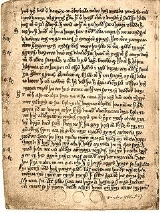
Icelandic literature

Encyclopedia
Icelandic literature refers to literature written in Iceland or by Icelandic people. It is best known for the sagas
written in medieval times, starting in the 13th century. As Icelandic
and Old Norse are almost the same, and because Icelandic works constitute most of Old Norse literature, Old Norse literature is often wrongly considered a subset of Icelandic literature. But still, works by Norwegians are present in the standard reader Sýnisbók íslenzkra bókmennta til miðrar átjándu aldar, compiled by Sigurður Nordal
on the grounds that the language was the same.
, a place where Snorri Sturluson
(the writer of the Prose Edda
) was brought up.
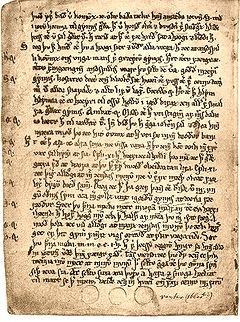 The Elder Edda or Poetic Edda
(originally attributed to Sæmundr fróði
, although this is now rejected by modern scholars) is a collection of Old Norse poems and stories originated in the late 10th century.
Although these poems and stories probably come from the Scandinavia
n mainland, they were first written down in the 13th century in Iceland. The first and original manuscript of the Poetic Edda is the Codex Regius
, found in the southern Iceland in 1643 by Brynjólfur Sveinsson
, Bishop of Skálholt
.
The Younger Edda or Prose Edda
was written by Snorri Sturluson, and it is the main source of modern understanding of the Norse mythology
and also of some features of medieval Icelandic poetics, as it contains many mythological stories and also several kenning
s. In fact, its main purpose was to use it as a manual of poetics for the Icelandic skald
s.
s, the Icelandic poets. Instead of talking about mythological events or telling mythological stories, skaldic poetry was usually sung to honor nobles and kings, commemorate or satirize important or any current event (e.g. a battle won by their lord, a political event in town etc.). In narratives, poems were usually used to pause the story and more closely examine an experience occurring. Poetry was also used to dramatize the emotions in a saga. For example, Egil's Saga contains a poem about the loss of Egil's sons that is lyrical and very emotional.
Skaldic poets were highly regarded members of Icelandic society, and are typically divided into four categories:
1) Professional Poets (for the court or aristocrats)
When Skaldic poets composed lyrics for the king, they wrote with the purpose of praising the king, recording his dealings, and celebrating him. These poems are generally considered historically correct because a poet would not have written something false about the king; a king would have taken that as the poet mocking him.
Ruling aristocratic families also appreciated poetry, and poets composed verses for important events in their lives as well.
2) Private Poets
These poets did not write for financial gain, rather, they wrote to participate in societal poetic exchanges.
3) Clerics
These poets composed religious verses.
4) Anonymous Poets
These poets are anonymously quoted and incorporated into sagas. The anonymity allowed them to mask the comments they made with their verses.
Skaldic poetry is written with strict metric system and many figures of speech, like the complicated kenning
s, favorite among the skalds, and also with much “artistic license” concerning word order and syntax, with sentences usually inverted.
. As the Eddas contain mainly mythological stories, sagas are usually realistic and deal with real events, although there some legendary sagas, sagas of saints, bishops and translated romances. Only sometimes some mythological references are added or a story is rendered more romantic and fantastic as it really happened. Sagas are the main source to study the History of Scandinavia between the ninth and thirteenth centuries.
; rímur
, rhymed epic poems with alliterative verse
that consist of two to four verses per stanza, popular until the end of the nineteenth century; and autobiographical prose writings such as the Píslarsaga of Jón Magnússon
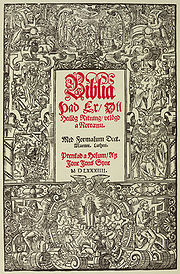
. A full translation of the Bible was published in the sixteenth century. The most prominent poet of the eighteenth century was Eggert Ólafsson
(1726–1768), while Jón Þorláksson frá Bægisá (1744–1819) undertook several major translations, including the Paradísarmissir, a translation of John Milton's Paradise Lost
.
arrived in Iceland and was dominant especially during the 1830s, in the work of poets like Bjarni Thorarensen
(1786–1841) and Jónas Hallgrímsson
(1807–45). Jónas Hallgrímsson, also the first writer of modern Icelandic short stories, influenced Jón Thoroddsen
(1818–68), who, in 1850, published the first Icelandic novel, and so he is considered the father of modern Icelandic novel.
This classic Icelandic style from the nineteenth and early 20th centuries were continued chiefly by Grímur Thomsen
(1820–96), who wrote many heroic poems and Matthías Jochumsson
(1835–1920), who wrote many plays that are considered the beginning of modern Icelandic drama, among many others. In short, this period was a great revival of Icelandic literature.
Realism
and Naturalism
followed the Romanticism. Notable Realistic writers include the short-story writer Gestur Pálsson (1852–91), known by his satires, and the Icelandic-Canadian poet Stephan G. Stephansson
(1853–1927), noted for his sensitive way to deal with the language and for his ironic vein.
In the early twentieth century several Icelandic writers started writing in Danish, among them Jóhann Sigurjónsson
, and Gunnar Gunnarsson
(1889–1975), one of the best-known and most translated Icelandic authors. However, the best-known Icelandic author internationally is Halldór Laxness
(1902–98), winner of the Nobel Prize in Literature
in 1955, author of several articles, essays, poems, short stories and novels, the best known of which are Expressionist works Independent People
, Salka Valka and Iceland's Bell
.
After World War I
, there was a revival of the classic style, mainly in poetry, with authors such as Davíð Stefánsson
and Tómas Guðmundsson
, who later became the representer of traditional poetry in Iceland in the twentieth century. Modern authors, from the end of World War II
, tend to merge the classical style with a modernist style.
More recently, crime novelist Arnaldur Indriðason
's (b. 1961) works have met with success outside of Iceland.
Norse saga
The sagas are stories about ancient Scandinavian and Germanic history, about early Viking voyages, the battles that took place during the voyages, about migration to Iceland and of feuds between Icelandic families...
written in medieval times, starting in the 13th century. As Icelandic
Icelandic language
Icelandic is a North Germanic language, the main language of Iceland. Its closest relative is Faroese.Icelandic is an Indo-European language belonging to the North Germanic or Nordic branch of the Germanic languages. Historically, it was the westernmost of the Indo-European languages prior to the...
and Old Norse are almost the same, and because Icelandic works constitute most of Old Norse literature, Old Norse literature is often wrongly considered a subset of Icelandic literature. But still, works by Norwegians are present in the standard reader Sýnisbók íslenzkra bókmennta til miðrar átjándu aldar, compiled by Sigurður Nordal
Sigurður Nordal
Sigurður Nordal was an Icelandic scholar, writer and ambassador. He was influential in forming the theory of the Icelandic sagas as works of literature composed by individual authors....
on the grounds that the language was the same.
Early Icelandic literature
The medieval Icelandic literature is usually divided into three parts:- Eddic poetryPoetic EddaThe Poetic Edda is a collection of Old Norse poems primarily preserved in the Icelandic mediaeval manuscript Codex Regius. Along with Snorri Sturluson's Prose Edda, the Poetic Edda is the most important extant source on Norse mythology and Germanic heroic legends, and from the early 19th century...
- Skaldic poetry
- SagasSagàsSagàs is a small town and municipality located in Catalonia, in the comarca of Berguedà. It is located in the geographical area of the pre-Pyrenees.-Population:...
The Eddas
There has been some discussion on the probable etymology of the term “Edda”. Most say it stems from the Old Norse term edda, which means great-grandmother, but some see a reference to OddiOddi
Oddi at Rangárvellir was a center of learning in South Iceland during the Middle Ages.For centuries it was the central home of the powerful family, Oddaverjar. The two best known leaders in Oddi were Sæmundur Sigfússon the Learned and his grandson Jón Loftsson . The famous historian Snorri...
, a place where Snorri Sturluson
Snorri Sturluson
Snorri Sturluson was an Icelandic historian, poet, and politician. He was twice elected lawspeaker at the Icelandic parliament, the Althing...
(the writer of the Prose Edda
Prose Edda
The Prose Edda, also known as the Younger Edda, Snorri's Edda or simply Edda, is an Icelandic collection of four sections interspersed with excerpts from earlier skaldic and Eddic poetry containing tales from Nordic mythology...
) was brought up.
Poetic Edda
The Poetic Edda is a collection of Old Norse poems primarily preserved in the Icelandic mediaeval manuscript Codex Regius. Along with Snorri Sturluson's Prose Edda, the Poetic Edda is the most important extant source on Norse mythology and Germanic heroic legends, and from the early 19th century...
(originally attributed to Sæmundr fróði
Sæmundr fróði
Sæmundr Sigfússon was an Icelandic priest and scholar. Sæmundr is known to have studied abroad. Previously it has generally been held that he studied in France, but modern scholars rather believe his studies were carried out in Franconia. In Iceland he founded a long-lived school at Oddi...
, although this is now rejected by modern scholars) is a collection of Old Norse poems and stories originated in the late 10th century.
Although these poems and stories probably come from the Scandinavia
Scandinavia
Scandinavia is a cultural, historical and ethno-linguistic region in northern Europe that includes the three kingdoms of Denmark, Norway and Sweden, characterized by their common ethno-cultural heritage and language. Modern Norway and Sweden proper are situated on the Scandinavian Peninsula,...
n mainland, they were first written down in the 13th century in Iceland. The first and original manuscript of the Poetic Edda is the Codex Regius
Codex Regius
Cōdex Rēgius is an Icelandic manuscript in which the Poetic Edda is preserved. It is made up of 45 vellum leaves, thought to have been written in the 1270s. It originally contained a further 8 leaves, which are now missing...
, found in the southern Iceland in 1643 by Brynjólfur Sveinsson
Brynjólfur Sveinsson
Brynjólfur Sveinsson served as the Lutheran Bishop of the see of Skálholt in Iceland. His main influence has been on modern knowledge of Old Norse literature. He is currently pictured on the Icelandic 1000 krónur bill....
, Bishop of Skálholt
Skálholt
Skálholt is an historical site situated in the south of Iceland at the river Hvítá.-History:Skálholt was, through eight centuries, one of the most important places in Iceland. From 1056 until 1785, it was one of Iceland's two episcopal sees, along with Hólar, making it a cultural and political...
.
The Younger Edda or Prose Edda
Prose Edda
The Prose Edda, also known as the Younger Edda, Snorri's Edda or simply Edda, is an Icelandic collection of four sections interspersed with excerpts from earlier skaldic and Eddic poetry containing tales from Nordic mythology...
was written by Snorri Sturluson, and it is the main source of modern understanding of the Norse mythology
Norse mythology
Norse mythology, a subset of Germanic mythology, is the overall term for the myths, legends and beliefs about supernatural beings of Norse pagans. It flourished prior to the Christianization of Scandinavia, during the Early Middle Ages, and passed into Nordic folklore, with some aspects surviving...
and also of some features of medieval Icelandic poetics, as it contains many mythological stories and also several kenning
Kenning
A kenning is a type of literary trope, specifically circumlocution, in the form of a compound that employs figurative language in place of a more concrete single-word noun. Kennings are strongly associated with Old Norse and later Icelandic and Anglo-Saxon poetry...
s. In fact, its main purpose was to use it as a manual of poetics for the Icelandic skald
Skald
The skald was a member of a group of poets, whose courtly poetry is associated with the courts of Scandinavian and Icelandic leaders during the Viking Age, who composed and performed renditions of aspects of what we now characterise as Old Norse poetry .The most prevalent metre of skaldic poetry is...
s.
Skaldic poetry
Skaldic poetry mainly differs from Eddaic poetry by the fact that skaldic poetry were composed by well-known skaldSkald
The skald was a member of a group of poets, whose courtly poetry is associated with the courts of Scandinavian and Icelandic leaders during the Viking Age, who composed and performed renditions of aspects of what we now characterise as Old Norse poetry .The most prevalent metre of skaldic poetry is...
s, the Icelandic poets. Instead of talking about mythological events or telling mythological stories, skaldic poetry was usually sung to honor nobles and kings, commemorate or satirize important or any current event (e.g. a battle won by their lord, a political event in town etc.). In narratives, poems were usually used to pause the story and more closely examine an experience occurring. Poetry was also used to dramatize the emotions in a saga. For example, Egil's Saga contains a poem about the loss of Egil's sons that is lyrical and very emotional.
Skaldic poets were highly regarded members of Icelandic society, and are typically divided into four categories:
1) Professional Poets (for the court or aristocrats)
When Skaldic poets composed lyrics for the king, they wrote with the purpose of praising the king, recording his dealings, and celebrating him. These poems are generally considered historically correct because a poet would not have written something false about the king; a king would have taken that as the poet mocking him.
Ruling aristocratic families also appreciated poetry, and poets composed verses for important events in their lives as well.
2) Private Poets
These poets did not write for financial gain, rather, they wrote to participate in societal poetic exchanges.
3) Clerics
These poets composed religious verses.
4) Anonymous Poets
These poets are anonymously quoted and incorporated into sagas. The anonymity allowed them to mask the comments they made with their verses.
Skaldic poetry is written with strict metric system and many figures of speech, like the complicated kenning
Kenning
A kenning is a type of literary trope, specifically circumlocution, in the form of a compound that employs figurative language in place of a more concrete single-word noun. Kennings are strongly associated with Old Norse and later Icelandic and Anglo-Saxon poetry...
s, favorite among the skalds, and also with much “artistic license” concerning word order and syntax, with sentences usually inverted.
Sagas
The sagas are prose stories written in Old Norse, that talk about historic facts of the Germanic and Scandinavian world; for instance, the migration of people to Iceland, voyages of Vikings to unexplored lands or the early history of the inhabitants of GotlandGotland
Gotland is a county, province, municipality and diocese of Sweden; it is Sweden's largest island and the largest island in the Baltic Sea. At 3,140 square kilometers in area, the region makes up less than one percent of Sweden's total land area...
. As the Eddas contain mainly mythological stories, sagas are usually realistic and deal with real events, although there some legendary sagas, sagas of saints, bishops and translated romances. Only sometimes some mythological references are added or a story is rendered more romantic and fantastic as it really happened. Sagas are the main source to study the History of Scandinavia between the ninth and thirteenth centuries.
Middle Icelandic literature
Important compositions of the time from the fifteenth century to the nineteenth include sacred verse, most famously the Passíusálmar of Hallgrímur PéturssonHallgrímur Pétursson
Hallgrímur Pétursson was one of Iceland's most famous poets and a minister at Hvalneskirkja and Saurbær in Hvalfjörður. The Hallgrímskirkja in Reykjavík and the Hallgrímskirkja in Saurbær are named after him. He was one of the most influential pastors during the Age of Orthodoxy...
; rímur
Rímur
In Icelandic literature, a ríma is an epic poem written in any of the so-called rímnahættir . They are rhymed, they alliterate and consist of two to four lines per stanza...
, rhymed epic poems with alliterative verse
Alliterative verse
In prosody, alliterative verse is a form of verse that uses alliteration as the principal structuring device to unify lines of poetry, as opposed to other devices such as rhyme. The most commonly studied traditions of alliterative verse are those found in the oldest literature of many Germanic...
that consist of two to four verses per stanza, popular until the end of the nineteenth century; and autobiographical prose writings such as the Píslarsaga of Jón Magnússon
Jón Magnússon (author)
Jón Magnússon was an Icelandic Lutheran pastor and author of the Píslarsaga , which recounts the physical and mental torments he believed he had suffered as a result of witchcraft.-Early life:...
. A full translation of the Bible was published in the sixteenth century. The most prominent poet of the eighteenth century was Eggert Ólafsson
Eggert Ólafsson
Eggert Ólafsson was an Icelandic explorer, writer and conservator of the Icelandic language.He was the son of a farmer from Svefneyjar in Breiðafjörður. He studied natural sciences, Classics, Grammar, Law and Agriculture at the University of Copenhagen.Ólafsson wrote on a wide range of topics...
(1726–1768), while Jón Þorláksson frá Bægisá (1744–1819) undertook several major translations, including the Paradísarmissir, a translation of John Milton's Paradise Lost
Paradise Lost
Paradise Lost is an epic poem in blank verse by the 17th-century English poet John Milton. It was originally published in 1667 in ten books, with a total of over ten thousand individual lines of verse...
.
Literary revival
In the beginning of the nineteenth century, there was a linguistic and literary revival. RomanticismRomanticism
Romanticism was an artistic, literary and intellectual movement that originated in the second half of the 18th century in Europe, and gained strength in reaction to the Industrial Revolution...
arrived in Iceland and was dominant especially during the 1830s, in the work of poets like Bjarni Thorarensen
Bjarni Thorarensen
Bjarni Vigfússon Thorarensen was an Icelandic poet and official. He was deputy governor of northern and eastern Iceland. As a poet he was influenced by classicism and romanticism. Politically he was aligned with the Fjölnismenn and favored the reestablishment of the Althing at Þingvellir...
(1786–1841) and Jónas Hallgrímsson
Jónas Hallgrímsson
Jónas Hallgrímsson was an Icelandic poet, author and naturalist. He was one of the founders of the Icelandic journal Fjölnir, which was first published in Copenhagen in 1835...
(1807–45). Jónas Hallgrímsson, also the first writer of modern Icelandic short stories, influenced Jón Thoroddsen
Jón Thoroddsen elder
Jón Thoroddsen elder was an Icelandic author.His novels Piltur og Stúlka and Maður og Kona mark the beginning of the modern Icelandic novel. His son, Þorvaldur Thoroddsen, became a well-known scientist.-In English:* Lad and Lass, a Story of Life in Iceland , trans...
(1818–68), who, in 1850, published the first Icelandic novel, and so he is considered the father of modern Icelandic novel.
This classic Icelandic style from the nineteenth and early 20th centuries were continued chiefly by Grímur Thomsen
Grímur Thomsen
Grímur Thomsen , Icelandic poet and editor, was born in Bessastaðir in 1820. He was the son of Þorgrímur Tómasson, a goldsmith. In 1837, he went to the University of Copenhagen, where he studied law and philology, but he also became interested in philosophy and aesthetics...
(1820–96), who wrote many heroic poems and Matthías Jochumsson
Matthías Jochumsson
Matthías Jochumsson was an Icelandic poet, playwright, and translator. He is best known for his lyrical poetry and for writing the national anthem of Iceland, Lofsöngur, in 1874. He was born in Skógar into a poor family and traveled to the continent to further his education...
(1835–1920), who wrote many plays that are considered the beginning of modern Icelandic drama, among many others. In short, this period was a great revival of Icelandic literature.
Realism
Literary realism
Literary realism most often refers to the trend, beginning with certain works of nineteenth-century French literature and extending to late-nineteenth- and early-twentieth-century authors in various countries, towards depictions of contemporary life and society "as they were." In the spirit of...
and Naturalism
Naturalism (literature)
Naturalism was a literary movement taking place from the 1880s to 1940s that used detailed realism to suggest that social conditions, heredity, and environment had inescapable force in shaping human character...
followed the Romanticism. Notable Realistic writers include the short-story writer Gestur Pálsson (1852–91), known by his satires, and the Icelandic-Canadian poet Stephan G. Stephansson
Stephan G. Stephansson
Stephan G. Stephansson was a Western Icelander, poet, and farmer. His original name was Stefán Guðmundur Guðmundsson....
(1853–1927), noted for his sensitive way to deal with the language and for his ironic vein.
In the early twentieth century several Icelandic writers started writing in Danish, among them Jóhann Sigurjónsson
Jóhann Sigurjónsson
Jóhann Sigurjónsson was an Icelandic playwright and poet. Atypically, Jóhann wrote plays and poetry in both his native Icelandic and in Danish.Jóhann was the son of an Icelandic farmer and was born in Laxamýri, Iceland...
, and Gunnar Gunnarsson
Gunnar Gunnarsson
Gunnar Gunnarsson was an Icelandic author who wrote mainly in Danish. He grew up, in considerable poverty, on Valþjófsstaður in Fljótsdalur valley and on Ljótsstaðir in Vopnafjörður...
(1889–1975), one of the best-known and most translated Icelandic authors. However, the best-known Icelandic author internationally is Halldór Laxness
Halldór Laxness
Halldór Kiljan Laxness was a twentieth-century Icelandic writer. Throughout his career Laxness wrote poetry, newspaper articles, plays, travelogues, short stories, and novels...
(1902–98), winner of the Nobel Prize in Literature
Nobel Prize in Literature
Since 1901, the Nobel Prize in Literature has been awarded annually to an author from any country who has, in the words from the will of Alfred Nobel, produced "in the field of literature the most outstanding work in an ideal direction"...
in 1955, author of several articles, essays, poems, short stories and novels, the best known of which are Expressionist works Independent People
Independent People
Independent People is an epic novel by Nobel laureate Halldór Laxness, originally published in two volumes in 1934 and 1935; literally the title means "Self-standing [i.e. self-reliant] folk"...
, Salka Valka and Iceland's Bell
Iceland's Bell
Iceland's Bell is a historical novel by Nobel prize-winning Icelandic author Halldór Kiljan Laxness. It was published in three parts in the period between 1943 and 1946: Iceland's Bell , The Bright Jewel and Fire in Copenhagen...
.
After World War I
World War I
World War I , which was predominantly called the World War or the Great War from its occurrence until 1939, and the First World War or World War I thereafter, was a major war centred in Europe that began on 28 July 1914 and lasted until 11 November 1918...
, there was a revival of the classic style, mainly in poetry, with authors such as Davíð Stefánsson
Davíð Stefánsson
Davíð Stefánsson from Fagriskógur was a famous Icelandic poet and novelist, best known as a poet of humanity....
and Tómas Guðmundsson
Tómas Guðmundsson
Tómas Guðmundsson was an Icelandic author. He was known as Reykjavík's poet ....
, who later became the representer of traditional poetry in Iceland in the twentieth century. Modern authors, from the end of World War II
World War II
World War II, or the Second World War , was a global conflict lasting from 1939 to 1945, involving most of the world's nations—including all of the great powers—eventually forming two opposing military alliances: the Allies and the Axis...
, tend to merge the classical style with a modernist style.
More recently, crime novelist Arnaldur Indriðason
Arnaldur Indriðason
Arnaldur Indriðason is an Icelandic writer of crime fiction. He has repeatedly proved to be the most popular writer in Iceland in recent years — topping bestseller lists year after year...
's (b. 1961) works have met with success outside of Iceland.
See also
- Icelandic Literary PrizeIcelandic Literary PrizeThe Icelandic Literary Prize , or Icelandic Literary Award, is an award which is given to two books each year by the Icelandic Publishers Association. The prize was founded on the association's centennial in 1989. One award is for fiction or poetry and the other for academic and non-fiction works...
- Nordic Council's Literature Prize
- List of Icelandic writers
External links
- Icelandic Saga Database - Icelandic sagas in translation
- Old Norse Prose and Poetry
- From Online Encyclopedia
- Northvegr.org
- Nat.is: little but good page on Icelandic literature
- Electronic Gateway for Icelandic Literature (EGIL)
- Sagnanetið - digital images of Icelandic manuscripts and texts
- Icelandic Literature Information on contemporary authors
- Netútgáfan Literary works in Icelandic.
- Icelandic Online Dictionary and Readings from the University of Wisconsin Digital Collections Center. Collection includes interactive Icelandic dictionary; bilingual readings about Iceland and Icelandic history, society, and culture; readings in Icelandic about contemporary Iceland and Icelanders; and Icelandic literature.