
Home      Discussion      Topics      Dictionary      Almanac
Signup       Login
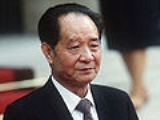
Hu Yaobang

Hu Yaobang

Overview
Hu Yaobang was a leader of the People's Republic of China
People's Republic of China
China , officially the People's Republic of China , is the most populous country in the world, with over 1.3 billion citizens. Located in East Asia, the country covers approximately 9.6 million square kilometres...

 who served as both Chairman
Chairman of the Communist Party of China
The Chairman of the Central Committee of the Communist Party of China was the head of the Communist Party of China . In 1982, it was succeeded by the General Secretary of the Central Committee.-History and functions:...

 and Party General Secretary
General Secretary of the Communist Party of China
The General Secretary of the Communist Party of China , officially General Secretary of the Central Committee of the Communist Party of China, is the highest ranking official within the Communist Party of China, a standing member of the Politburo and head of the Secretariat...

. Hu joined the Chinese Communist Party in the 1930s, and rose to prominence as a comrade of Deng Xiaoping
Deng Xiaoping
Deng Xiaoping was a Chinese politician, statesman, and diplomat. As leader of the Communist Party of China, Deng was a reformer who led China towards a market economy...

. During the Cultural Revolution
Cultural Revolution
The Great Proletarian Cultural Revolution, commonly known as the Cultural Revolution , was a socio-political movement that took place in the People's Republic of China from 1966 through 1976...

 (1966-1976), Hu was purged, recalled, and purged again, following the political career of Deng.
Discussion
Ask a question about 'Hu Yaobang'
Start a new discussion about 'Hu Yaobang'
Answer questions from other users
Full Discussion Forum
 
Unanswered Questions
Encyclopedia
Hu Yaobang was a leader of the People's Republic of China
People's Republic of China
China , officially the People's Republic of China , is the most populous country in the world, with over 1.3 billion citizens. Located in East Asia, the country covers approximately 9.6 million square kilometres...

 who served as both Chairman
Chairman of the Communist Party of China
The Chairman of the Central Committee of the Communist Party of China was the head of the Communist Party of China . In 1982, it was succeeded by the General Secretary of the Central Committee.-History and functions:...

 and Party General Secretary
General Secretary of the Communist Party of China
The General Secretary of the Communist Party of China , officially General Secretary of the Central Committee of the Communist Party of China, is the highest ranking official within the Communist Party of China, a standing member of the Politburo and head of the Secretariat...

. Hu joined the Chinese Communist Party in the 1930s, and rose to prominence as a comrade of Deng Xiaoping
Deng Xiaoping
Deng Xiaoping was a Chinese politician, statesman, and diplomat. As leader of the Communist Party of China, Deng was a reformer who led China towards a market economy...

. During the Cultural Revolution
Cultural Revolution
The Great Proletarian Cultural Revolution, commonly known as the Cultural Revolution , was a socio-political movement that took place in the People's Republic of China from 1966 through 1976...

 (1966-1976), Hu was purged, recalled, and purged again, following the political career of Deng.

After Deng rose to power, following the death of Mao Zedong
Mao Zedong
Mao Zedong, also transliterated as Mao Tse-tung , and commonly referred to as Chairman Mao , was a Chinese Communist revolutionary, guerrilla warfare strategist, Marxist political philosopher, and leader of the Chinese Revolution...

, Deng promoted Hu to a series of high political positions. Throughout the 1980s Hu pursued a series of economic and political reforms under the direction of Deng. Hu's political and economic reforms made him the enemy of several powerful Party elders, who opposed free market reforms and attempts to make China's government more transparent. When a series of widespread student protests occurred across China in 1987, Hu's political opponents successfully blamed Hu for the disruptions, claiming that Hu's "laxness" and "bourgeois liberalization" had either led to, or worsened, the protests. Hu was forced to resign as Party General Secretary, but was allowed to retain a seat in the Politburo
Politburo of the Communist Party of China
The Central Politburo of the Communist Party of China or Political bureau of the CPC Central Committee , formerly as Central Bureau before 1927, is a group of 24 people who oversee the Communist Party of China...

.

Hu's position as Party General Secretary was taken by Zhao Ziyang
Zhao Ziyang
Zhao Ziyang was a high-ranking politician in the People's Republic of China . He was the third Premier of the People's Republic of China from 1980 to 1987, and General Secretary of the Communist Party of China from 1987 to 1989....

, who continued many of Hu's economic and political reforms. A day after Hu's death, in 1989, a small-scale demonstration commemorated him and demanded that the government reassess his legacy. A week later, the day before Hu's funeral, some 100,000 students marched on Tiananmen Square, leading to the Tiananmen Square protests of 1989
Tiananmen Square protests of 1989
The Tiananmen Square protests of 1989, also known as the June Fourth Incident in Chinese , were a series of demonstrations in and near Tiananmen Square in Beijing in the People's Republic of China beginning on 15 April 1989...

.

Young revolutionary


Hu Yaobang's ancestors were from Jiangxi
Jiangxi
' is a southern province in the People's Republic of China. Spanning from the banks of the Yangtze River in the north into hillier areas in the south, it shares a border with Anhui to the north, Zhejiang to the northeast, Fujian to the east, Guangdong to the south, Hunan to the west, and Hubei to...

, but migrated into Hunan
Hunan
' is a province of South-Central China, located to the south of the middle reaches of the Yangtze River and south of Lake Dongting...

 (where Hu was born) during the Ming Dynasty
Ming Dynasty
The Ming Dynasty, also Empire of the Great Ming, was the ruling dynasty of China from 1368 to 1644, following the collapse of the Mongol-led Yuan Dynasty. The Ming, "one of the greatest eras of orderly government and social stability in human history", was the last dynasty in China ruled by ethnic...

. Hu Yaobang was born into a poor peasant family, and received little formal education. As a child he never attended school, and he taught himself to read. Hu participated in his first rebellion when he was twelve, left his family to join the Chinese Communist Party when he was only fourteen, and became a full member of the Party in 1933. During the factional struggles that polarized the CCP during the 1930s, Hu supported Mao Zedong and opposed the 28 Bolsheviks
28 Bolsheviks
The 28 Bolsheviks were a group of Chinese students who studied at the Moscow Sun Yat-sen University from the late 1920s until early 1935, also known as the "Returned Students". The university was founded in 1925 as a result of Kuomintang's founder Sun Yat-Sen's policy of alliance with the Soviet...

.

Hu was one of the youngest veterans of the Long March
Long March
The Long March was a massive military retreat undertaken by the Red Army of the Communist Party of China, the forerunner of the People's Liberation Army, to evade the pursuit of the Kuomintang army. There was not one Long March, but a series of marches, as various Communist armies in the south...

. Once Mao was removed from power, shortly before the beginning of the Fourth Encirclement Campaign
Fourth Encirclement Campaign
The Fourth Encirclement Campaign is an abbreviated name used for several different encirclement campaigns launched by the Nationalist Government with the goal of destroying the developing Chinese Red Army and its communist bases. The battles took place in several separate locations in China during...

, Mao's supporters were persecuted, and Hu Yaobang was sentenced to death. Just before the beginning of the Long March
Long March
The Long March was a massive military retreat undertaken by the Red Army of the Communist Party of China, the forerunner of the People's Liberation Army, to evade the pursuit of the Kuomintang army. There was not one Long March, but a series of marches, as various Communist armies in the south...

, he and others were on their way to be beheaded. However, a powerful local communist commander named Tan Yubao (谭余保, 1899 - 10 January 1980) intervened at the last minute, saving Hu's life. Because of Hu's support of Mao, he was deemed unreliable and ordered to join the Long March so that he could be placed under surveillance.

Hu Yaobang was seriously wounded in the battle of Mount Lu, near Zunyi
Zunyi
Zunyi is a prefecture-level city in Guizhou province in southwestern China. Along with Guiyang and Liupanshui, it is one of the most important cities of the province...

, close to the area where Mao Zedong rose back to power via the Zunyi Conference
Zunyi Conference
The Zunyi Conference was a meeting of the Communist Party of China in January of 1935 during the Long March. This meeting involved a power struggle between the leadership of Bo Gu and Otto Braun and the opposition led by Mao Zedong. The result was that Mao left the meeting in position to take...

. After Hu was wounded the communist field medic teams chose not to help Hu, and left him in the battlefield to die on the side of the road. Hu was rescued by a childhood friend of his, a Chinese Red Army
People's Liberation Army
The People's Liberation Army is the unified military organization of all land, sea, strategic missile and air forces of the People's Republic of China. The PLA was established on August 1, 1927 — celebrated annually as "PLA Day" — as the military arm of the Communist Party of China...

 commander, who happened to pass by. Hu called out his friend's nickname to ask for help, and the friend helped him catch up with the retreating main force of the Chinese Red Army and get treatment for his wounds.

In 1936, Hu joined an expeditionary force led by Zhang Guotao
Zhang Guotao
Zhang Guotao was a founding member and important leader of the Chinese Communist Party and bitter rival to Mao Zedong. During the 1920s he studied in the Soviet Union and became a key contact with the Comintern and organized the CCP labor movement in the United Front with the Guomindang...

. The objective of Zhang's 21,800+ strong force, was to cross the Yellow River
Yellow River
The Yellow River or Huang He, formerly known as the Hwang Ho, is the second-longest river in China and the sixth-longest in the world at the estimated length of . Originating in the Bayan Har Mountains in Qinghai Province in western China, it flows through nine provinces of China and empties into...

, to expand the communist base west of Shaanxi
Shaanxi
' is a province in the central part of Mainland China, and it includes portions of the Loess Plateau on the middle reaches of the Yellow River in addition to the Qinling Mountains across the southern part of this province...

, and to link up with forces from the Soviet Union
Soviet Union
The Soviet Union , officially the Union of Soviet Socialist Republics , was a constitutionally socialist state that existed in Eurasia between 1922 and 1991....

 or with the Xinjiang
Xinjiang
Xinjiang is an autonomous region of the People's Republic of China. It is the largest Chinese administrative division and spans over 1.6 million km2...

 warlord Sheng Shicai
Sheng Shicai
Sheng Shicai was a Chinese warlord who "ruled" Xinjiang province from April 12, 1933 to August 29, 1944....

, who was an ally of the communists and the Soviet Union. Zhang Guotao's forces were soundly defeated by the local Nationalist
Kuomintang
The Kuomintang of China , sometimes romanized as Guomindang via the Pinyin transcription system or GMD for short, and translated as the Chinese Nationalist Party is a founding and ruling political party of the Republic of China . Its guiding ideology is the Three Principles of the People, espoused...

 warlords, the Ma clique
Ma clique
The Ma clique or Ma family warlords is a collective name for a group of Muslim warlords in Northwestern China who ruled the Chinese provinces of Qinghai, Gansu and Ningxia from the 1910s until 1949. There were 3 families in the Ma clique , each of them respectively controlled 3 areas, Gansu,...

. Hu Yaobang, along with Qin Jiwei
Qin Jiwei
Qin Jiwei was a general of the People's Republic of China, Minister of National Defense and a member of the Chinese Communist Party Politburo.Qin Jiwei was born to a poor peasant family in Huang'an , Hubei Province of China in November 1914....

, became two of the thousands of prisoners-of-war captured by Ma clique's forces. Hu was one of only 1,500 prisoners-of-war whom Ma Bufang
Ma Bufang
Ma Bufang was a prominent Muslim Ma clique warlord in China during the Republic of China era, ruling the northwestern province of Qinghai. His rank was Lieutenant-general...

 decided to use as forced labor rather than execute.

As Chiang Kai-shek
Chiang Kai-shek
Chiang Kai-shek was a political and military leader of 20th century China. He is known as Jiǎng Jièshí or Jiǎng Zhōngzhèng in Mandarin....

 pressured Ma Bufang to contribute more of his troops to fight Japanese
Empire of Japan
The Empire of Japan is the name of the state of Japan that existed from the Meiji Restoration on 3 January 1868 to the enactment of the post-World War II Constitution of...

 invaders, Ma Bufang decided that, instead of using his own troops, he would instead send the 1,500 Chinese Red Army prisoners-of-war as conscripts. Since the marching route had to pass the border of the communist base in Shaanxi, Hu Yaobang and Qin Jiwei decided to return to the communists, and secretly organized an escape. The escape took place as planned and was a success: out of the total 1,500 POWs, more than 1,300 successfully returned to Yan'an
Yan'an
Yan'an , is a prefecture-level city in the Shanbei region of Shaanxi province in China, administering several counties, including Zhidan County , which served as the Chinese communist capital before the city of Yan'an proper took that role....

. Mao personally welcomed these returning communists, and Hu Yaobang returned to communist forces, where he would remain for rest of his life.

After Hu arrived in Yan'an
Yan'an
Yan'an , is a prefecture-level city in the Shanbei region of Shaanxi province in China, administering several counties, including Zhidan County , which served as the Chinese communist capital before the city of Yan'an proper took that role....

, he attended the Anti-Japanese Military School. While studying in Yan'an, Hu met and married his wife, Li Zhao, who was also a student in Yan'an. After his training, Hu worked in the political department, and was assigned to work as a member of Peng Dehuai
Peng Dehuai
Peng Dehuai was a prominent military leader of the Communist Party of China, and China's Defence Minister from 1954 to 1959. Peng was an important commander during the Second Sino-Japanese War, the Chinese civil war and was also the commander-in-chief of People's Volunteer Army in the Korean War...

's Third Front Army.

Hu befriended and worked closely with Deng Xiaoping in the 1930s. In the 1940s, Hu worked under Deng as the a political commissar in the Second Field Army. In the final stages of the Chinese Civil War
Chinese Civil War
The Chinese Civil War was a civil war fought between the Kuomintang , the governing party of the Republic of China, and the Communist Party of China , for the control of China which eventually led to China's division into two Chinas, Republic of China and People's Republic of...

, Hu accompanied Deng to Sichuan
Sichuan
' , known formerly in the West by its postal map spellings of Szechwan or Szechuan is a province in Southwest China with its capital in Chengdu...

, and communist forces successfully took control of the province from Nationalist forces in 1949.

Early PRC politician


In 1949, the CCP successfully defeated Nationalist forces on mainland China, and the communists founded the People's Republic. In 1952, Hu accompanied Deng to Beijing
Beijing
Beijing , also known as Peking , is the capital of the People's Republic of China and one of the most populous cities in the world, with a population of 19,612,368 as of 2010. The city is the country's political, cultural, and educational center, and home to the headquarters for most of China's...

, and Hu became the leader of the Communist Youth League
Communist Youth League
The Communist Youth League of China also known as the China Youth League is a youth movement of the People's Republic of China for youth between the ages of fourteen and twenty-eight, run by Communist Party of China. The league is organized on the party pattern. Its leader is its First Secretary...

 from 1952-1966. Hu rose rapidly up the Communist Party hierarchy, until Mao sent Hu to work as First Party Secretary of Shaanxi
Shaanxi
' is a province in the central part of Mainland China, and it includes portions of the Loess Plateau on the middle reaches of the Yellow River in addition to the Qinling Mountains across the southern part of this province...

 in 1964, saying: "He needs some practical training". Hu may have been assigned to work outside of Beijing because he was judged as being not sufficiently enthusiastic about Maoism
Maoism
Maoism, also known as the Mao Zedong Thought , is claimed by Maoists as an anti-Revisionist form of Marxist communist theory, derived from the teachings of the Chinese political leader Mao Zedong . Developed during the 1950s and 1960s, it was widely applied as the political and military guiding...

. Unlike many of his colleagues, Hu was able to keep his membership within the Party Central Committee until the 9th Party Congress in April, 1969.

During the Cultural Revolution
Cultural Revolution
The Great Proletarian Cultural Revolution, commonly known as the Cultural Revolution , was a socio-political movement that took place in the People's Republic of China from 1966 through 1976...

, Hu was purged twice and rehabilitated twice, mirroring the political career of Hu's mentor, Deng Xiaoping. In 1969, Hu was recalled to Beijing to be persecuted. Hu became "number one" among the "Three Hus", whose names were vilified and who were paraded through Beijing wearing heavy wooden collars around their necks. The other two "Hus" were Hu Keshi, who was the second most senior member of the Communist Youth League, and Hu Qili
Hu Qili
Hu Qili is a politician of the People's Republic of China.-Biography:In 1948 at the age of 19, Hu joined the Communist Party of China . He studied at Peking University from 1946-1951...

, who was third most senior in the Communist Youth League and who had also become a close associate of Deng Xiaoping. After being publicly humiliated, Hu was sent to an isolated work camp to participate in "reformation through labour" under strict security. While in political exile Hu was forced to work hauling large boulders by hand.

When Deng was temporarily recalled to Beijing, from 1973-1976, he also recalled Hu; but, when Deng was purged again, in 1976, Hu was also purged. After his second purge, Hu was sent to herd cattle. Hu was recalled and rehabilitated a second time in 1977, shortly after Mao's death. After Hu was recalled, he was promoted to directing the Party's organizational department, and later directed Party propaganda through a department of the Politburo. Hu was one of the main leaders responsible for re-assessing the fates of people who had been persecuted during the Cultural Revolution. According to the Chinese government, Hu was personally responsible for exonerating over three million people. Hu tacitly supported the 1978 Democracy Wall
Democracy Wall
The Democracy Wall was a long brick wall on Xidan Street, Xicheng District, Beijing, which became the focus for democratic dissent. Beginning in December 1978, in line with the Communist Party of China's policy of "seeking truth from facts," activists in the Democracy movement—such as Xu...

 protesters, and invited two of the activists to his home in Beijing. Hu opposed Hua Guofeng
Hua Guofeng
Su Zhu, better known by the nom de guerre Hua Guofeng , was Mao Zedong's designated successor as the Paramount Leader of the Communist Party of China and the People's Republic of China. Upon Zhou Enlai's death in 1976, he succeeded Zhou as the second Premier of the People's Republic of China...

's "Two Whatevers
Two Whatevers
The Two Whatevers refers to the statement that "We will resolutely uphold whatever policy decisions Chairman Mao made, and unswervingly follow whatever instructions Chairman Mao gave" ....

" policy, and was an important supporter of Deng Xiaoping's ascent to power.

Public policies


Hu Yaobang's rise to power was engineered by Deng Xiaoping, and Hu rose to the highest levels of the Party after Deng displaced Hua Guofeng as China's "paramount leader
Paramount leader
Paramount leader literally "the highest leader of the party and the state ", in modern Chinese political science, unofficially refers to the political leader of the People's Republic of China....

". In 1980 Hu became Party General Secretary, and was elected to the powerful Politburo Standing Committee
Politburo Standing Committee of the Communist Party of China
The Politburo Standing Committee of the Communist Party of China is a committee consisting of the top leadership of the Communist Party of China, whose membership varies between 5 and 9 people. The inner workings of the PSC are not well known, although it is believed that decisions of the PSC are...

. In 1981, Hu became Party Chairman, but helped abolish the position of Party Chairman in 1982, as part of a broader effort to distance China from Maoist politics. Deng's displacement of Hua Guofeng marked the Party leadership's consensus that China should abandon strict Maoist economics in favor of more pragmatic policies, and Hu directed many of Deng's attempts to reform the Chinese economy. By 1982 Hu's position made him the second most powerful person in China, after Deng Xiaoping. Throughout the last decade of Hu's career, he promoted the role of intellectuals as being fundamental to China's achievement of the Four Modernizations
Four Modernizations
The Four Modernizations were goals, set forth by Zhou Enlai in 1963, to strengthen the fields of agriculture, industry, national defense, science and technology...

.

During the early 1980s, Deng referred to Hu and Zhao Ziyang as his "left and right hands". After advancing to the position of General Secretary, Hu promoted a number of political reforms, often collaborating with Zhao. The ultimate goals of Hu's reforms were sometimes vaguely defined. Hu attempted to reform China's political system by: requiring candidates to be directly elected in order to enter the Politburo; holding more elections with more than one candidate; increasing government transparency; increasing public consultation before determining Party policy; and, increasing the degree that government officials could be held directly responsible for their mistakes.

During his time in office, Hu tried to rehabilitate the people who were persecuted during the Cultural Revolution
Cultural Revolution
The Great Proletarian Cultural Revolution, commonly known as the Cultural Revolution , was a socio-political movement that took place in the People's Republic of China from 1966 through 1976...

. Many Chinese people think that this was his most important achievement. He was also in favor of a pragmatic policy in Tibet
Tibet
Tibet is a plateau region in Asia, north-east of the Himalayas. It is the traditional homeland of the Tibetan people as well as some other ethnic groups such as Monpas, Qiang, and Lhobas, and is now also inhabited by considerable numbers of Han and Hui people...

 after realising the mistakes of previous policies. He ordered the withdrawal of thousands of Chinese Han cadres from the Tibet Autonomous Region following a May 1980 visit to the region, believing that Tibetans should be empowered to administer their own affairs. Han Chinese who remained were required to learn Tibetan. He set out six requirements to improve 'existing conditions', including the increase of state funds to the Autonomous Region, improvements in education, and "efforts to revive Tibetan culture". At the same time, Hu stated that "anything that is not suited to Tibet's conditions should be rejected or modified". Hu made a point of explicitly apologizing to Tibetans for China's misrule of the region during this trip.

Hu traveled widely throughout his time as General Secretary, visiting 1500 individual districts and villiages in order to inspect the work of local officials and to keep in touch with the common people. When he was sixty-five, Hu retraced the route of the Long March, and took the opportunity to visit and inspect remote military bases located in Tibet, Xinjiang
Xinjiang
Xinjiang is an autonomous region of the People's Republic of China. It is the largest Chinese administrative division and spans over 1.6 million km2...

, Yunnan
Yunnan
Yunnan is a province of the People's Republic of China, located in the far southwest of the country spanning approximately and with a population of 45.7 million . The capital of the province is Kunming. The province borders Burma, Laos, and Vietnam.Yunnan is situated in a mountainous area, with...

, Qinghai
Qinghai
Qinghai ; Oirat Mongolian: ; ; Salar:) is a province of the People's Republic of China, named after Qinghai Lake...

, and Inner Mongolia
Inner Mongolia
Inner Mongolia is an autonomous region of the People's Republic of China, located in the northern region of the country. Inner Mongolia shares an international border with the countries of Mongolia and the Russian Federation...

.

Controversial political opinions


Hu was notable for his liberalism and the frank expression of his opinions, which sometimes agitated other senior Chinese leaders. On a trip to Inner Mongolia
Inner Mongolia
Inner Mongolia is an autonomous region of the People's Republic of China, located in the northern region of the country. Inner Mongolia shares an international border with the countries of Mongolia and the Russian Federation...

 in 1984, Hu publicly suggested that Chinese people might start eating in a Western way (with forks and knives, on individual plates) in order to prevent communicable diseases. He was one of the first Chinese officials to abandon wearing a Mao suit
Mao suit
The modern Chinese tunic suit is a style of male attire known in China as the Zhongshan suit , and known in the West as the Mao suit...

 in favor of Western business suits. When asked which of Mao Zedong's theories
Maoism
Maoism, also known as the Mao Zedong Thought , is claimed by Maoists as an anti-Revisionist form of Marxist communist theory, derived from the teachings of the Chinese political leader Mao Zedong . Developed during the 1950s and 1960s, it was widely applied as the political and military guiding...

 were desirable for modern China, he replied "I think, none".

Hu was not prepared to abandon Marxism completely, but frankly expressed the opinion that Communism could not solve "all of mankind's problems". Hu encouraged intellectuals to raise controversial subjects in the media, including democracy, human rights, and the possibility of introducing legal limits to the Communist Party's influence within the Chinese government. Many Party elders mistrusted Hu from the start, and eventually grew to fear his influence.

Hu made sincere efforts to repair Sino-Japanese relations, but was criticized for the scope of his efforts. In 1984, when Beijing recognized the twelfth anniversary of Japan's diplomatic recognition of the People's Republic, Hu invited 3,000 Japanese youth to Beijing, and arranged for them to tour Shanghai
Shanghai
Shanghai is the largest city by population in China and the largest city proper in the world. It is one of the four province-level municipalities in the People's Republic of China, with a total population of over 23 million as of 2010...

. Hangzhou
Hangzhou
Hangzhou , formerly transliterated as Hangchow, is the capital and largest city of Zhejiang Province in Eastern China. Governed as a sub-provincial city, and as of 2010, its entire administrative division or prefecture had a registered population of 8.7 million people...

, Nanjing
Nanjing
' is the capital of Jiangsu province in China and has a prominent place in Chinese history and culture, having been the capital of China on several occasions...

, Wuhan
Wuhan
Wuhan is the capital of Hubei province, People's Republic of China, and is the most populous city in Central China. It lies at the east of the Jianghan Plain, and the intersection of the middle reaches of the Yangtze and Han rivers...

, and Xi'an
Xi'an
Xi'an is the capital of the Shaanxi province, and a sub-provincial city in the People's Republic of China. One of the oldest cities in China, with more than 3,100 years of history, the city was known as Chang'an before the Ming Dynasty...

. Many senior officials considered Hu's efforts extravagant, since Japan had only invited 500 youth to Japan the previous year. Hu was criticized internally for the lavish gifts that he gave to visiting Japanese officials, and for allowing his daughter to privately accompany Japanese prime minister Nakasone
Yasuhiro Nakasone
is a Japanese politician who served as Prime Minister of Japan from November 27, 1982 to November 6, 1987. A contemporary of Brian Mulroney, Ronald Reagan, Helmut Kohl, François Mitterrand, Margaret Thatcher, and Mikhail Gorbachev, he is best known for pushing through the privatization of...

's son when they visited Beijing. Hu defended his actions by citing the importance of strong Sino-Japanese relations, and his belief that the atricities committed by Japan in China during World War II
World War II
World War II, or the Second World War , was a global conflict lasting from 1939 to 1945, involving most of the world's nations—including all of the great powers—eventually forming two opposing military alliances: the Allies and the Axis...

 were the actions of military warlords, and not ordinary citizens.

Hu alienated potential allies within the People's Liberation Army
People's Liberation Army
The People's Liberation Army is the unified military organization of all land, sea, strategic missile and air forces of the People's Republic of China. The PLA was established on August 1, 1927 — celebrated annually as "PLA Day" — as the military arm of the Communist Party of China...

 when he suggested for two consecutive years that the Chinese defense budget should be reduced, and senior military leaders began to criticize him. Military officials accused Hu of making poor choices when purchasing military hardware from Australia in 1985. When Hu visited Britain
United Kingdom
The United Kingdom of Great Britain and Northern IrelandIn the United Kingdom and Dependencies, other languages have been officially recognised as legitimate autochthonous languages under the European Charter for Regional or Minority Languages...

, military officials criticized him for drinking soup too loudly during a banquet hosted by Queen Elizabeth II.

Zhao and Hu began a large-scale anti-corruption programme, and permitted the investigations of the children of high-ranking Party elders, who had grown up protected by their parents' influence. Hu's investigation of Party officials belonging to this "Crown Prince Party
Crown Prince Party
In modern usage, the Crown Prince Party, or The Princelings, refers to the descendants of prominent and influential senior communist officials in the People's Republic of China. It is not a political party, but an informal, and often derogatory, categorization to signify those benefiting from...

" made Hu unpopular with many powerful Party officials. After Deng refused to support some of Hu's reforms, Hu made private comments critical of Deng Xiaoping for his indecisiveness and "old-fashioned" way of thinking, opinions which Deng eventually became aware of.

"Resignation"


In December 1986, a group of students organized public protests across over a dozen cities in support of political and economic liberalization. The protests began in the University of Science and Technology
University of Science and Technology of China
The University of Science and Technology of China is a national research university in Hefei, People's Republic of China. It is a member of the C9 League formed by nine top universities in China...

 in Hefei
Hefei
Hefei is the capital and largest city of Anhui Province in Eastern China. A prefecture-level city, it is the political, economic, and cultural centre of Anhui...

, Anhui
Anhui
Anhui is a province in the People's Republic of China. Located in eastern China across the basins of the Yangtze River and the Huai River, it borders Jiangsu to the east, Zhejiang to the southeast, Jiangxi to the south, Hubei to the southwest, Henan to the northwest, and Shandong for a tiny...

, where they were led by the controversial astrophysicist, Fang Lizhi
Fang Lizhi
Fang Lizhi is a professor of astrophysics and former vice-president of the University of Science and Technology of China whose liberal ideas inspired the pro-democracy student movement of 1986-87 and, finally, the Tiananmen Square protests of 1989...

, who was then Vice Chancellor of the university. Fang talked openly about introducing political reforms which would end the influence of the Communist Party within the Chinese government. The protests were also led by two other "radical intellectuals", Wang Ruowang
Wang Ruowang
Wang Ruowang , born as Shouhua but more popularly known from his pen name Ruowang, was a Chinese author and dissident who was imprisoned various times for political reasons by both the Kuomintang and the Communist government of China...

 and Liu Binyan
Liu Binyan
Liu Binyan was a Chinese author and journalist, as well as a political dissident.Many of the events in Liu's life are recounted in his memoir, A Higher Kind of Loyalty.-Early life:...

.

Deng Xiaoping disliked all three leaders, and directed Hu to dismiss them from the Party in order to silence them, but Hu refused. In January 1987, after two weeks of student protests demanding greater Western-style freedoms, a clique of Party elders and senior military officials forced Hu to resign on the grounds that he had been too lenient with student protesters and for moving too quickly towards free market-style economics.

After Hu's dismissal, Deng promoted Zhao Ziyang to replace Hu as Party General Secretary, putting Zhao in a position to succeed Deng as "paramount leader". Hu officially resigned as Party General Secretary on January 16, but retained his seat in the Politburo Standing Committee. When Hu "resigned", the Party forced him to issue a humiliating "self-criticism of his mistakes on major issues of political principles in violation of the party's principle of collective leadership." After 1987 Hu became more reclusive and less active in Chinese politics, studying revolutionary history and practicing his calligraphy in his spare time, and taking long walks for exercise. Hu was generally viewed as having no real power after 1987, and he was resigned to largely ceremonial roles.

Hu's "resignation" harmed the credibility of the CCP while improving Hu's own. Among Chinese intellectuals, Hu became an example of a man who refused to compromise his convictions in the face of political resistance, and who had paid the price as a result. The promotion of a conservative, Li Peng
Li Peng
Li Peng served as the fourth Premier of the People's Republic of China, between 1987 and 1998, and the Chairman of the Standing Committee of the National People's Congress, China's top legislative body, from 1998 to 2003. For much of the 1990s Li was ranked second in the Communist Party of China ...

, to the position of Premier after Hu's departure from executive-level positions made the government less enthusiastic to pursue reform, and upset plans of an orderly succession of power from Deng Xiaoping to Hu.

Death and public reactions


In October 1987 Hu retained his membership of CCP's Central Committee at the 13th Party Congress, and was subsequently elected a member of the new Politburo by the first plenary session of the Central Committee. In April 8 1989, Hu suffered a heart attack while attending a Politburo meeting in Zhongnanhai
Zhongnanhai
Zhongnanhai is an area in central Beijing, China adjacent to the Forbidden City which serves as the central headquarters for the Communist Party of China and the State Council of the People's Republic of China. The term Zhongnanhai is closely linked with the central government and senior Communist...

 to discuss education reform. Hu was rushed to the hospital, accompanied by his wife. Hu died several days later, on April 15. He was 74 years old. Hu's last words were that he should be buried simply, without extravagance, in his hometown.

In his official obituary, Hu was described as "a long-tested and staunch communist warrior, a great proletarian revolutionist and statesman, an outstanding political leader for the Chinese army". Western reporters observed that Hu's obituary was intentionally "glowing" in order to divert suspicion that the Party had mistreated him.

Although he had become a semi-retired official by the time of his death, and had been removed positions of real power for his "mistakes", public pressure forced the Chinese government to give him a state funeral, attended by Party leaders. The eulogy at Hu's funeral praised his work in restoring political normality and promoting economic development after the Cultural Revolution
Cultural Revolution
The Great Proletarian Cultural Revolution, commonly known as the Cultural Revolution , was a socio-political movement that took place in the People's Republic of China from 1966 through 1976...

. Public mourners at Hu's funeral lined up ten miles long, a reaction which surprised China's leaders. Shortly after Hu's funeral, students in Beijing began petitioning the government to officially reverse the verdict that had led to Hu's "resignation", and to provide a more elaborate public funeral. The government then held a public memorial service for Hu in the Great Hall of the People
Great Hall of the People
The Great Hall of the People is located at the western edge of Tiananmen Square, Beijing, People's Republic of China, and is used for legislative and ceremonial activities by the People's Republic of China and the Communist Party of China. It functions as the People's Republic of China's...

.

On April 22 1989, 50,000 students marched to Tiananmen Square to participate in Hu's memorial service, and to deliver a letter of petition to Premier Li Peng
Li Peng
Li Peng served as the fourth Premier of the People's Republic of China, between 1987 and 1998, and the Chairman of the Standing Committee of the National People's Congress, China's top legislative body, from 1998 to 2003. For much of the 1990s Li was ranked second in the Communist Party of China ...

. Many people were dissatisfied with the party's slow response and relatively subdued funerary arrangements. Public mourning began on the streets of Beijing and elsewhere. In Beijing this was centred on the Monument to the People's Heroes
Monument to the People's Heroes
The Monument to the People's Heroes is a ten-story obelisk that was erected as a national monument of the People's Republic of China.The Monument was built in memory of the martyrs who laid down their lives for the revolutionary struggles of the Chinese people during the 19th and 20th centuries...

 in Tiananmen Square
Tiananmen Square
Tiananmen Square is a large city square in the center of Beijing, China, named after the Tiananmen Gate located to its North, separating it from the Forbidden City. Tiananmen Square is the third largest city square in the world...

. The mourning became a public conduit for anger against perceived nepotism
Nepotism
Nepotism is favoritism granted to relatives regardless of merit. The word nepotism is from the Latin word nepos, nepotis , from which modern Romanian nepot and Italian nipote, "nephew" or "grandchild" are also descended....

 in the government, the unfair dismissal and early death of Hu, and the behind-the-scenes role of the "old men", officially retired leaders who nevertheless maintained quasi-legal power, such as Deng Xiaoping. The protests eventually escalated into the Tiananmen Square protests of 1989
Tiananmen Square protests of 1989
The Tiananmen Square protests of 1989, also known as the June Fourth Incident in Chinese , were a series of demonstrations in and near Tiananmen Square in Beijing in the People's Republic of China beginning on 15 April 1989...

. Hu's promotion of the ideas on freedom of speech and freedom of press greatly influenced the students participating in the protests.

Hu Yaobang's tomb


After Hu's funeral, his body was cremated
Cremation
Cremation is the process of reducing bodies to basic chemical compounds such as gasses and bone fragments. This is accomplished through high-temperature burning, vaporization and oxidation....

, and his remains were buried in Babaoshan
Babaoshan Revolutionary Cemetery
The Babaoshan Revolutionary Cemetery is Beijing's main resting place for revolutionary heroes, high government officials and in recent years, any individual deemed important due to their contributions to society. In Chinese, Babaoshan literally means "The Eight-Treasure Mountains"...

, a graveyard in Beijing reserved for senior Party officials. Hu's wife, Li Zhao, was unhappy with the location of Hu's grave, and successfully petitioned the government to move Hu's remains to a more suitable site. Eventually Hu's remains were moved to a large mausoleum in Gongqing
Gongqing
Gongqing City is a small planned city of around 120,000 people located in Jiangxi Province in the People's Republic of China. The city is relatively famous for its association with its founder, former CCP General Secretary Hu Yaobang.-History:...

, Jiangxi, a city that Hu had helped found in 1955. Hu's mausoleum is arguably the most impressive tomb of any senior CCP leader.

Li Zhao collected money for the construction of Hu's tomb from both private and public sources; and, with the help of her son, they selected an appropriate location in Gongqing. The tomb was constructed in the shape of a pyramid, on the top of a hill. On December 5 1990 Hu's ashes were flown to Gongqing, carried by his son, Hu Deping
Hu Deping
Hu Deping is currently the vice chairman of All-China General Chamber of Industry & Commerce, Secretary of National Association of Industry and Commerce and vice minister of the Propaganda Department of the Communist Party of China...

. The ceremony was attended by Wen Jiabao
Wen Jiabao
Wen Jiabao is the sixth and current Premier and Party secretary of the State Council of the People's Republic of China, serving as China's head of government and leading its cabinet. In his capacity as Premier, Wen is regarded as the leading figure behind China's economic policy...

, numerous Jiangxi public officials, and 2,000 members of the Communist Youth League. Gongqing's factories and schools were closed for the day, allowing 7,000 Gongqing citizens to attend. At the ceremony, Li Zhao made a speech expressing her gratitude towards the government and for the people who attended.

Media censorship


The Tiananmen protests eventually ended in the violent suppression of protesters on June 4 1989, in which hundreds or perhaps thousands of civilians were killed. Because the protests had been sparked by the death of Hu Yaobang, the government determined that any public discussion of Hu and his legacy could destabilize China by renewing debate about the political reforms that Hu supported. Because of the public association with Hu and the "Tianamnen Massacre", Hu's name became taboo on the mainland, and the Chinese government censored any mention of him in the media. In one example of government censorship, printed media which commemorated the anniversary of his death in 1994 were withdrawn from publication.

Official rehabilitation


Hu Jintao
Hu Jintao
Hu Jintao is the current Paramount Leader of the People's Republic of China. He has held the titles of General Secretary of the Communist Party of China since 2002, President of the People's Republic of China since 2003, and Chairman of the Central Military Commission since 2004, succeeding Jiang...

 announced plans to rehabilitate Hu Yaobang in August 2005, with events organised for November 20, the 90th anniversary of Hu's birth. Ceremonies were planned in Beijing, where Hu died, in Hunan, where Hu was born, and in Jiangxi
Jiangxi
' is a southern province in the People's Republic of China. Spanning from the banks of the Yangtze River in the north into hillier areas in the south, it shares a border with Anhui to the north, Zhejiang to the northeast, Fujian to the east, Guangdong to the south, Hunan to the west, and Hubei to...

, where Hu was buried. Western observers noted that the move to rehabilitate Hu Yaobang may have been part of a broader political effort by Hu Jintao to gain support from reform-minded colleagues, who had always respected Hu Yaobang.

Some political analysts have argued that the current administration under General Secretary Hu Jintao
Hu Jintao
Hu Jintao is the current Paramount Leader of the People's Republic of China. He has held the titles of General Secretary of the Communist Party of China since 2002, President of the People's Republic of China since 2003, and Chairman of the Central Military Commission since 2004, succeeding Jiang...

 wishes to associate itself with the popular Hu Yaobang. Both rose to power through the Communist Youth League, and have been described as part of the same "Youth League Clique"
Tuanpai
Tuanpai , is a term used by political observers to represent cadres and government officials in the Communist Party of China who originated from the Communist Youth League. The term is also used to represent Hu Jintao and his group of populist associates and other political allies...

. Hu Yaobang's support was partially responsible for Hu Jintao's rapid promotion during the 1980s.

Some observers noted that Hu Yaobang's rehabilitation made it more likely that the Party would be willing to re-evaluate the 1989 Tiananmen protests, but other observers expressed skepticism. Memorials with the purpose of recognizing the date of someone's birth or death are often signs of political trends within China, with some pointing to the prospect of further reform. Skeptics noted that Hu Jintao made a statement praising the governments of Cuba
Cuba
The Republic of Cuba is an island nation in the Caribbean. The nation of Cuba consists of the main island of Cuba, the Isla de la Juventud, and several archipelagos. Havana is the largest city in Cuba and the country's capital. Santiago de Cuba is the second largest city...

 and North Korea
North Korea
The Democratic People’s Republic of Korea , , is a country in East Asia, occupying the northern half of the Korean Peninsula. Its capital and largest city is Pyongyang. The Korean Demilitarized Zone serves as the buffer zone between North Korea and South Korea...

 (in spite of their economic "flaws") shortly after announcing Hu Yaobang's public commemoration, implying that it would be unlikely that the party would pursue a dramatic programme of political reform in the near future.

On 18 November 2005, The Communist Party officially celebrated the 90th anniversary of Hu Yaobang's birth with activities at the People's Hall (the date was changed to two days before it was officially scheduled). Around 350 people attended, including premier Wen Jiabao
Wen Jiabao
Wen Jiabao is the sixth and current Premier and Party secretary of the State Council of the People's Republic of China, serving as China's head of government and leading its cabinet. In his capacity as Premier, Wen is regarded as the leading figure behind China's economic policy...

, vice president
Vice President of the People's Republic of China
The Vice President of the People's Republic of China , formerly called Vice Chairman of the People's Republic of China from 1954 to 1975, or abbreviated Guójiā Fù Zhǔxí 国家副主席, literally State Vice-chairman) is a senior position in the government of the People's Republic of China.-Selection and...

 Zeng Qinghong
Zeng Qinghong
Zeng Qinghong was the Vice-President of the People's Republic of China from 2003 to 2008. He became a member of the Politburo Standing Committee and member of the Secretariat of the CPC Central Committee during the 2002 16th Party Congress. Although he was formally ranked fifth in the nine PSC...

, and numerous other Party officials, celebrities, and members of Hu Yaobang's family. It was rumored that Hu Jintao wanted to attend, but was prevented from doing so by other senior members of the Party who still disliked Hu Yaobang. Wen was not given the opportunity to talk, and Zeng Qinghong was the most senior Party member to speak. In his speech, Zeng's said that members should learn from Hu's merits, especially his frankness and genuine concern for the Chinese people. Zeng stated that Hu had "contributed all his life and built immortal merits for the liberation and happiness of the Chinese people... His historic achievements and moral character will always be remembered by the Party and our people."

In the media after 2005


An official three-volume biography and a collection of Hu's writings were slated for release in China. The project was originally begun by a group of Hu's former aides, led by Zhang Liqun (who died in 2003). After the government learned of the project, it insisted on taking control of it. One of the main issues that government censors identified was the concern that details of Hu's relationship with Deng Xiaoping (especially details of Hu's removal from power after resisting orders to crack down on student demonstrators in 1987) would reflect poorly on Deng's legacy. The authors of Hu's biography subsequently rejected offers from the government to released a censored version. Only one volume (dealing with events up to the end of the Cultural Revolution) of the biography written by Hu's former aides was eventually published, with the other two volumes held by the government and remaining unpublished.

Although magazines publishing commemorative articles were initially stopped from being released, the ban was lifted in 2005 and these magazines were publicly issued. Yanhuang Chunqiu, a reform-minded magazine, was allowed to publish a series of articles in 2005 commemorating the birthday of Hu Yaobang, but the government acted to limit the availability of the magazine. The issue commemorating Hu sold 50,000 copies, but the remaining 5,000 copies were destroyed by propaganda officials. This was the first time since his death that Hu's name appeared publicly.

On 15 April 2010 (the 21st anniversary of Hu's death), Chinese Premier Wen Jiabao
Wen Jiabao
Wen Jiabao is the sixth and current Premier and Party secretary of the State Council of the People's Republic of China, serving as China's head of government and leading its cabinet. In his capacity as Premier, Wen is regarded as the leading figure behind China's economic policy...

 wrote an article in the People's Daily
People's Daily
The People's Daily is a daily newspaper in the People's Republic of China. The paper is an organ of the Central Committee of the Communist Party of China , published worldwide with a circulation of 3 to 4 million. In addition to its main Chinese-language edition, it has editions in English,...

titled "Recalling Hu Yaobang when I return to Xingyi". Presented as an essay, it recollected an investigation of ordinary people's lives by Hu Yaobang and Wen Jiabao in Xingyi County
Xingyi, Guizhou
Xingyi is a county level city in Guizhou in southern China. It has an area of 2911 square kilometers and a population of 740,700 as the end of 2003.-History:-External links:*...

, Guizhou
Guizhou
' is a province of the People's Republic of China located in the southwestern part of the country. Its provincial capital city is Guiyang.- History :...

, in 1986. Wen, who worked with Hu from 1985 to 1987, praised Hu's "superior working style of being totally devoted to the suffering of the masses", and his "lofty morality and openness [of character]". Wen's essay elicited an enthusiastic reaction in the cyberspace, generating over 20,000 responses on Sina.com
Sina.com
SINA is an online media company for China and Chinese communities around the world. SINA operates four major business lines: Sina Weibo, SINA Mobile, SINA Online, and SINA.net. SINA has over 100 million registered users worldwide...

 on the day the article appeared. The article was interpreted by observers familiar with the Chinese political system as a confirmation by Wen that he was a protege of Hu, rather than Zhao Ziyang.

See also

  • Politics of the People's Republic of China
    Politics of the People's Republic of China
    The politics of the People's Republic of China take place in a framework of a single-party socialist republic. The leadership of the Communist Party is stated in the Constitution of the People's Republic of China...

  • History of the People's Republic of China
    History of the People's Republic of China
    The history of the People's Republic of China details the history of mainland China since October 1, 1949, when, after a near complete victory by the Communist Party of China in the Chinese Civil War, Mao Zedong proclaimed the People's Republic of China from atop Tiananmen...

  • Hu Deping
    Hu Deping
    Hu Deping is currently the vice chairman of All-China General Chamber of Industry & Commerce, Secretary of National Association of Industry and Commerce and vice minister of the Propaganda Department of the Communist Party of China...

    , son of Hu Yaobang
  • Zhang Zhixin
    Zhang Zhixin
    Zhang Zhixin was a dissident during the Cultural Revolution who became famous for criticizing the idolization of Mao Zedong and the ultra-left...


Further reading

  • Pang, Pang. The Death of Hu Yaobang. Center for Chinese Studies, School of Hawaiian, Asian, and Pacific Studies. University of Hawai'i. University of Michigan. 1998.
  • Sina.com: Over 30,000 comments on Wen Jiabao's article on Hu Yaobang.

|-
|-
|-
|-
|-
|-