
All Topics  
Glasses

 
Glasses

   Email Print
   Bookmark   Link


Glasses


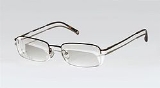
Glasses or specs, more formally known as eyeglasses or spectacles, are frames bearing lenses
Lens (optics)

A lens is an optics device with perfect or approximate axial symmetry which transmittance and refraction light, converging or diverging the beam....
 worn in front of the eye
Eye

Eyes are Organ that detect light, and send signals along the optic nerve to the visual system and other areas of the brain. Complex optical systems with resolving power have come in ten fundamentally different forms, and 96% of animal species possess a complex optical system....
s, normally for vision correction
Corrective lens

A corrective lens is a lens worn in front of the eye, mainly used to treat myopia, hyperopia, Astigmatism , and presbyopia. Glasses or "spectacles" are worn on the face a short distance in front of the eye....
, eye protection
Eye protection

Eye protection is protective clothing for the eyes, which comes in many types depending upon the threat that is to be reduced.*Goggles are forms of protective eyewear that usually enclose or protect the eye area in order to prevent particulates, infectious fluids, or chemicals from striking the eyes....
, or for protection from UV rays
UV Coating

The term "UV coating" has various meanings....
.

Modern glasses are typically supported by pads on the bridge of the nose
Nose

Anatomically, a nose is a protuberance in vertebrates that houses the nostrils, or nares, which admit and expel air for Respiration in conjunction with the mouth....
 and by temples placed over the ear
Ear

The ear is the sense organ that detects sounds. The vertebrate ear shows a common biology from fish to humans, with variations in structure according to order and species....
s. Historical types include the pince-nez
Pince-nez

Pince-nez are a style of spectacles, popular in the nineteenth century, which are supported without earpieces, by pinching the bridge of the nose....
, monocle
Monocle

A monocle is a type of corrective lens used to correct the visual perception in only one eye. It consists of a circular Lens , generally with a wire ring around the circumference that can be attached to a string....
, and lorgnette
Lorgnette

A lorgnette is a pair of glasses with a handle, used to hold them in place, rather than fitting over the ears. They were invented by an Englishman named George Adams ....
.

Eyeglass frames are commonly made from metal or plastic. Lenses were originally made from glass
Glass

Glass generally refers to a Hardness, brittle, transparency amorphous solid, such as that used for windows, many Glass Bottles, or eyewear, including, but not limited to, soda-lime glass, borosilicate glass, acrylic glass, sugar glass, Muscovite , or aluminium oxynitride....
, but many are now made from various types of metal plastic
Plastic

Plastic is the general common term for a wide range of synthetic or semisynthetic organic chemistry solid materials suitable for the manufacture of industrial products....
, including CR-39
CR-39

CR-39, or allyl diglycol carbonate, is a plastic polymer commonly used in the manufacture of eyeglass lens . It should not be confused with polycarbonate, a homopolymer made from bis-phenol A, a tough polymer widely used for glazing....
 and polycarbonate
Polycarbonate

Polycarbonates are a particular group of thermoplastic polymers. They are easily worked, injection moulding, and thermoforming; as such, these plastics are very widely used in the modern chemical industry....
.


Discussion
Ask a question about 'Glasses'
Start a new discussion about 'Glasses'
Answer questions from other users
Full Discussion Forum


Recent Posts


Quotations


Men seldom make passes / At girls who wear glasses.

The optimist looks at the world through rose-tinted spectacles.

When you're a kid that sees through plastic With a harness of elastic So the girls all think you're icky And the boys all think you're queer.

John Sebastian, "Four Eyes"

Rose-colored glasses are never made in bifocals. Nobody wants to read the small print in dreams.


Encyclopedia


Glasses or specs, more formally known as eyeglasses or spectacles, are frames bearing lenses
Lens (optics)

A lens is an optics device with perfect or approximate axial symmetry which transmittance and refraction light, converging or diverging the beam....
 worn in front of the eye
Eye

Eyes are Organ that detect light, and send signals along the optic nerve to the visual system and other areas of the brain. Complex optical systems with resolving power have come in ten fundamentally different forms, and 96% of animal species possess a complex optical system....
s, normally for vision correction
Corrective lens

A corrective lens is a lens worn in front of the eye, mainly used to treat myopia, hyperopia, Astigmatism , and presbyopia. Glasses or "spectacles" are worn on the face a short distance in front of the eye....
, eye protection
Eye protection

Eye protection is protective clothing for the eyes, which comes in many types depending upon the threat that is to be reduced.*Goggles are forms of protective eyewear that usually enclose or protect the eye area in order to prevent particulates, infectious fluids, or chemicals from striking the eyes....
, or for protection from UV rays
UV Coating

The term "UV coating" has various meanings....
.

Modern glasses are typically supported by pads on the bridge of the nose
Nose

Anatomically, a nose is a protuberance in vertebrates that houses the nostrils, or nares, which admit and expel air for Respiration in conjunction with the mouth....
 and by temples placed over the ear
Ear

The ear is the sense organ that detects sounds. The vertebrate ear shows a common biology from fish to humans, with variations in structure according to order and species....
s. Historical types include the pince-nez
Pince-nez

Pince-nez are a style of spectacles, popular in the nineteenth century, which are supported without earpieces, by pinching the bridge of the nose....
, monocle
Monocle

A monocle is a type of corrective lens used to correct the visual perception in only one eye. It consists of a circular Lens , generally with a wire ring around the circumference that can be attached to a string....
, and lorgnette
Lorgnette

A lorgnette is a pair of glasses with a handle, used to hold them in place, rather than fitting over the ears. They were invented by an Englishman named George Adams ....
.

Eyeglass frames are commonly made from metal or plastic. Lenses were originally made from glass
Glass

Glass generally refers to a Hardness, brittle, transparency amorphous solid, such as that used for windows, many Glass Bottles, or eyewear, including, but not limited to, soda-lime glass, borosilicate glass, acrylic glass, sugar glass, Muscovite , or aluminium oxynitride....
, but many are now made from various types of metal plastic
Plastic

Plastic is the general common term for a wide range of synthetic or semisynthetic organic chemistry solid materials suitable for the manufacture of industrial products....
, including CR-39
CR-39

CR-39, or allyl diglycol carbonate, is a plastic polymer commonly used in the manufacture of eyeglass lens . It should not be confused with polycarbonate, a homopolymer made from bis-phenol A, a tough polymer widely used for glazing....
 and polycarbonate
Polycarbonate

Polycarbonates are a particular group of thermoplastic polymers. They are easily worked, injection moulding, and thermoforming; as such, these plastics are very widely used in the modern chemical industry....
. These materials reduce the danger of breakage and weigh less than glass lenses. Some plastics also have more advantageous optical properties than glass, such as better transmission of visible light and greater absorption of ultraviolet light. Some plastics have a greater index of refraction than most types of glass; this is useful in the making of corrective lenses shaped to correct various vision abnormalities
List of eye diseases and disorders

This is a partial list of human eye diseases and disorders.The World Health Organization publishes a classification of known diseases and injuries called the ICD or ICD....
 such as myopia
Myopia

Myopia , also called near- or short-sightedness, is a Refractive error of the eye in which collimated light produces image focus in front of the retina when accommodation is relaxed....
, allowing thinner lenses for a given prescription
Eyeglass prescription

An eyeglass prescription is a written order by an optometrist or ophthalmologist to an optician for eyeglasses. It specifies the refractive power to which the eyeglasses are to be made in order to correct blurred Visual perception due to refraction error, including myopia, hyperopia, astigmatism , and presbyopia....
. Newer plastic lenses, called izon, can also correct for the higher order aberrations that naturally occur in the surface of our eye. These lenses create sharper vision and help with the halos, starbursts, and comet-tails often associated with night time driving glare. Wavefront guided LASIK surgery also corrects for the higher order aberrations.

Scratch-resistant coatings can be applied to most plastic lenses giving them similar scratch resistance to glass. Hydrophobic coatings designed to ease cleaning are also available, as are anti-reflective coating
Anti-reflective coating

Anti-reflective or antireflection coatings are a type of optical coating applied to the surface of lens es and other optical devices to reduce reflection ....
s intended to reduce glare, improve night vision and make the wearer's eyes more visible.

CR-39 lenses are the most common plastic lenses due to their low weight, high scratch resistance, and low transparency for ultra violet and infrared radiation. Polycarbonate and Trivex lenses are the lightest and most shatter-resistant, making them the best for impact protection, yet offer poor optics due to high dispersion, and having a low Abbe number
Abbe number

In physics and optics, the Abbe number, also known as the V-number or constringence of a Transparency material, is a measure of the material's dispersion in relation to the refractive index....
 of 31.

Not all glasses are designed solely for vision correction but are worn for protection, viewing visual information (such as stereoscopy
Stereoscopy

Stereoscopy, stereoscopic imaging or 3-D imaging is any technique capable of recording three-dimensional visual information or creating the stereopsis in an image....
) or simply just for aesthetic or fashion values. Safety glasses are a kind of eye protection
Eye protection

Eye protection is protective clothing for the eyes, which comes in many types depending upon the threat that is to be reduced.*Goggles are forms of protective eyewear that usually enclose or protect the eye area in order to prevent particulates, infectious fluids, or chemicals from striking the eyes....
 against flying debris or against visible and near visible light
Light

Light, or visible light, is electromagnetic radiation of a wavelength that is Visible spectrum to the human eye , or up to 380?750 nm. In the broader field of physics, light is sometimes used to refer to electromagnetic radiation of all wavelengths, whether visible or not....
 or radiation
Radiation

In physics, radiation describes any process in which energy emitted by one body travels through a medium or through space, ultimately to be absorbed by another body....
. Sunglasses
Sunglasses

Sunglasses or sun glasses are a visual aid, variously termed spectacles or glasses, which feature lenses that are coloured or darkened to prevent strong light from reaching the eyes....
 allow better vision in bright daylight, and may protect against damage from high levels of ultraviolet light.

History of eyeglasses


Precursors

Hugh Specs
The earliest historical reference to magnification
Magnification

Magnification is the process of enlarging something only in appearance, not in physical size. This enlargement is quantified by a calculated number also called magnification....
 dates back to ancient Egypt
Ancient Egypt

Ancient Egypt was an Ancient history civilization in eastern North Africa, concentrated along the lower reaches of the Nile in what is now the modern nation of Egypt....
ian hieroglyphs
Egyptian hieroglyphs

Egyptian hieroglyphs was a formal writing system used by the ancient Egyptians that contained a combination of logographic and alphabetic elements....
 in the 8th century BC, which depict "simple glass meniscal lenses
Lens (optics)

A lens is an optics device with perfect or approximate axial symmetry which transmittance and refraction light, converging or diverging the beam....
". The earliest written record of magnification dates back to the 1st century AD, when Seneca the Younger
Seneca the Younger

Lucius Annaeus Seneca was a Ancient Rome Stoicism philosopher, statesman, dramatist, and in one work humorist, of the Silver Age of Latin literature....
, a tutor of Emperor Nero
Nero

Nero Claudius Caesar Augustus Germanicus , born Lucius Domitius Ahenobarbus, also called Nero Claudius Caesar Drusus Germanicus, was the fifth and final Roman emperor of the Julio-Claudian dynasty....
, wrote: "Letters, however small and indistinct, are seen enlarged and more clearly through a globe or glass filled with water". Emperor Nero is also said to have watched the gladiatorial games
Gladiator

A Gladiator was a slave, criminal or professional fighter in ancient Rome. Gladiators fought other gladiators, wild animals and condemned criminals, sometimes to the death, for the entertainment of Spectator sport in cities and towns of the Roman Republic and the Roman Empire, from the 3rd century BCE to the 5th century CE....
 using an emerald
Emerald

Emeralds are a variety of the mineral beryl colored green by trace amounts of chromium and sometimes vanadium. Beryl has a Hardness of 7.5 - 8 on the 10 point Mohs scale of mineral hardness....
 as a corrective lens.

Corrective lenses were said to be used by Abbas Ibn Firnas
Abbas Ibn Firnas

Abbas Ibn Firnas , also known as Abbas Qasim Ibn Firnas and ?????? ?? ????? , was an Arabic-speaking Berber people, born in Izn-Rand Onda, al-Andalus , who lived in the Umayyad Caliph of Cordoba in al-Andalus....
 in the 9th century, who had devised a way to produce very clear glass. These glasses could be shaped and polished into round rocks used for viewing and were known as reading stone
Reading stone

A reading stone was an approximately hemispherical transparent object placed on top of text to magnification the letters so that people with presbyopia could read the text more easily....
s. The earliest evidence of "a magnifying device
Magnifying glass

A magnifying glass is a Lens #Types of lenses which is used to produce a magnification of an object. The lens is usually mounted in a frame with a handle ....
, a convex lens
Lens (optics)

A lens is an optics device with perfect or approximate axial symmetry which transmittance and refraction light, converging or diverging the beam....
 forming a magnified image," dates back the Book of Optics
Book of Optics

The Book of Optics was a seven-volume treatise on optics, Islamic physics, Islamic mathematics, Islamic medicine and Islamic psychology written by the Iraqi Islamic science Ibn al-Haytham in 1011?21, when he was under house arrest in Cairo, Egypt....
 published by Alhazen in 1021. Its translation into Latin in the 12th century was instrumental to the invention of eyeglasses in 13th century Italy
Italy

Italy , officially the Italian Republic , is a country located on the Italian Peninsula in Southern Europe and on the two largest islands in the Mediterranean Sea, Sicily and Sardinia....
.

Sunglasses
Sunglasses

Sunglasses or sun glasses are a visual aid, variously termed spectacles or glasses, which feature lenses that are coloured or darkened to prevent strong light from reaching the eyes....
, in the form of flat panes of smoky quartz
Smoky quartz

Smoky quartz or Smokey quartz is a brown to black variety of quartz caused through the natural irradiation of aluminium-containing rock crystal....
, protected the eyes from glare and were used in China
China

China is a Culture of China, an ancient civilization, and, depending on perspective, a national or multinational entity extending over a large area in East Asia....
 in the 12th century or possibly earlier. However, they did not offer any corrective powers.

Invention of eyeglasses


Around 1284 in Italy, Salvino D'Armate
Salvino D'Armate

Salvino D'Amato of Florence is credited with inventing eyeglasses sometime in the thirteenth century, perhaps around 1284. Although there is some doubt as to the authenticity of this claim, Leopoldo del Migliore stated in his 1684 history of Florence that a memorial honoring D'Armati at the church of Santa Maria Maggiore bore the inscriptio...
 is credited with inventing the first wearable eye glasses. The earliest pictorial evidence for the use of eyeglasses, however, is Tomaso da Modena's 1352 portrait of the cardinal Hugh de Provence reading in a scriptorium
Scriptorium

Scriptorium, literally "a place for writing", is commonly used to refer to a room in medieval European monasteries devoted to the copying of manuscripts by monastic scribes....
. Another early example would be a depiction of eyeglasses found north of the Alpes in an altarpiece of the church of Bad Wildungen
Bad Wildungen

Bad Wildungen is a state-run spa and a small town in Waldeck-Frankenberg district in Hesse, Germany....
, Germany
Germany

Germany , officially the Federal Republic of Germany , is a country in Central Europe. It is bordered to the north by the North Sea, Denmark, and the Baltic Sea; to the east by Poland and the Czech Republic; to the south by Austria and Switzerland; and to the west by France, Luxembourg, Belgium, and the Netherlands....
, in 1403.

Many theories abound for who should be credited for the invention of traditional eyeglasses. In 1676, Francesco Redi
Francesco Redi

Francesco Redi was an Italy physician.He is most well-known for his experiment in 1668 which is regarded as one of the first steps in refuting "spontaneous generation" - a theory also known as Aristotelian abiogenesis....
, a professor of medicine at the University of Pisa
University of Pisa

The University of Pisa is one of the most renowned Italian universities. It is located in Pisa, Tuscany. It was formally founded on the September 3, 1343 by an edict of Pope Clement VI, although there had been lectures on law in Pisa since the 11th century....
, wrote that he possessed a 1289 manuscript whose author complains that he would be unable to read or write were it not for the recent invention of glasses. He also produced a record of a sermon
Sermon

A sermon is an public speaking by a prophet or member of the clergy. Sermons address a Bible, Theology, Religion, or Morality topic, usually expounding on a type of belief, law or Human behavior within both past and present contexts....
 given in 1305, in which the speaker, a Dominican
Dominican Order

The Order of Preachers , after the 15th century more commonly known as the Dominican Order or Dominicans, is a Roman Catholic religious order founded by Saint Dominic in the early 13th century in France....
 monk named Fra Giordano da Rivalto, remarked that glasses had been invented less than twenty years previously, and that he had met the inventor. Based on this evidence, Redi credited another Dominican monk, Fra Alessandro da Spina of Pisa, with the re-invention of glasses after their original inventor kept them a secret, a claim contained in da Spina's obituary record.

Other stories, possibly legendary, credit Roger Bacon
Roger Bacon

For the Nova Scotia premier see Roger Bacon .Roger Bacon, Order of Friars Minor , also known as Doctor Mirabilis , was an England philosopher and Franciscan friar who placed considerable emphasis on empiricism....
 with the invention. Bacon is known to have made one of the first recorded references to the magnifying properties of lenses in 1262, though this was predated by Alhazen's Book of Optics
Book of Optics

The Book of Optics was a seven-volume treatise on optics, Islamic physics, Islamic mathematics, Islamic medicine and Islamic psychology written by the Iraqi Islamic science Ibn al-Haytham in 1011?21, when he was under house arrest in Cairo, Egypt....
 in 1021. Bacon's treatise De iride ("On the Rainbow"), which was written while he was a student of Robert Grosseteste
Robert Grosseteste

Robert Grosseteste , England statesman, scholasticism, theologian and Bishop of Lincoln, was born of humble parents at Stradbroke in Suffolk. Alistair Cameron Crombie calls him "the real founder of the tradition of scientific thought in mediaeval Oxford, and in some ways, of the modern English intellectual tradition"....
, no later than 1235, mentions using optics to "read the smallest letters at incredible distances". While the exact date and inventor may be forever disputed, it is almost certain that spectacles were invented between 1280 and 1300 in Italy. These early spectacles had convex lenses
Lens (optics)

A lens is an optics device with perfect or approximate axial symmetry which transmittance and refraction light, converging or diverging the beam....
 that could correct both hyperopia
Hyperopia

Hyperopia, also known as far-sightedness, long-sightedness or hypermetropia, is a defect of visual system caused by an imperfection in the eye , causing inability to Focus on near objects, and in extreme cases causing a sufferer to be unable to focus on objects at any distance....
 (farsightedness), and the presbyopia
Presbyopia

Presbyopia describes the condition where the eye exhibits a progressively diminished ability to focus on near objects with age. Presbyopia's exact mechanisms are not known with certainty, however, the research evidence most strongly supports a loss of elasticity of the Lens , although changes in the lens's curvature from continual growth and...
 that commonly develops as a symptom of aging. Nicholas of Cusa
Nicholas of Cusa

Nicholas of Kues was a Roman Catholic cardinal from Germany , a Philosophy, jurist, Mathematics, and an Astronomy. He is widely considered as one of the greatest geniuses and polymaths of the 15th century....
 is believed to have discovered the benefits of concave lens
Lens (optics)

A lens is an optics device with perfect or approximate axial symmetry which transmittance and refraction light, converging or diverging the beam....
 in the treatment of myopia
Myopia

Myopia , also called near- or short-sightedness, is a Refractive error of the eye in which collimated light produces image focus in front of the retina when accommodation is relaxed....
 (nearsightedness). However, it was not until 1604 that Johannes Kepler
Johannes Kepler

Johannes Kepler was a Germans mathematician, astronomer and astrologer, and key figure in the 17th century Scientific revolution. He is best known for his eponymous Kepler's laws of planetary motion, codified by later astronomers based on his works Astronomia nova, Harmonices Mundi, and Epitome of Copernican Astrononomy....
 published in his treatise on optics
Optics

Optics is the study of the behavior and properties of light including its optical phenomena with matter and its imaging by optical instruments....
 and astronomy
Astronomy

Astronomy is the science of Astronomical object and Phenomenon that originate outside the Earth's atmosphere . It is concerned with the evolution, physics, chemistry, meteorology, and motion of celestial objects, as well as the physical cosmology....
, the first correct explanation as to why convex and concave lenses could correct presbyopia and myopia.

Later developments


Don Francisco De Quevedo Villegas
The American
United States

The United States of America is a Federal government constitutional republic comprising U.S. state and a federal district. The country is situated mostly in central North America, where its Contiguous United States and Washington, D.C., the Capital districts and territories, lie between the Pacific Ocean and Atlantic Oceans, Borders of the U...
 scientist Benjamin Franklin
Benjamin Franklin

Benjamin Franklin was one of the Founding Fathers of the United States of the United States. A noted polymath, Franklin was a leading author and Printer , Satire, list of political philosophers, politician, scientist, inventor, activism, statesman, and diplomacy....
, who suffered from both myopia
Myopia

Myopia , also called near- or short-sightedness, is a Refractive error of the eye in which collimated light produces image focus in front of the retina when accommodation is relaxed....
 and presbyopia
Presbyopia

Presbyopia describes the condition where the eye exhibits a progressively diminished ability to focus on near objects with age. Presbyopia's exact mechanisms are not known with certainty, however, the research evidence most strongly supports a loss of elasticity of the Lens , although changes in the lens's curvature from continual growth and...
, invented bifocals
Bifocals

Bifocals are eyeglasses whose corrective lenses each contain regions with two distinct optical powers. Bifocals are most commonly prescribed to people with presbyopia who also require a correction for myopia, hypermetropia, and/or Astigmatism ....
 in 1784 to avoid having to regularly switch between two pairs of glasses. The first lenses for correcting astigmatism
Astigmatism (eye)

Astigmatism is an optical defect in which vision is blurred due to the inability of the optics of the eye to focus a point object into a sharp focused image on the retina....
 were constructed by the British
United Kingdom

The United Kingdom of Great Britain and Northern Ireland, commonly known as the United Kingdom , the UK or Britain,is a sovereign state located off the northwestern coast of continental Europe....
 astronomer George Airy in 1825.

Over time, the construction of spectacle frames also evolved. Early eyepieces were designed to be either held in place by hand or by exerting pressure on the nose (pince-nez
Pince-nez

Pince-nez are a style of spectacles, popular in the nineteenth century, which are supported without earpieces, by pinching the bridge of the nose....
). Girolamo Savonarola
Girolamo Savonarola

Girolamo Savonarola , was an Italian Dominican Order priest and leader of Florence from 1494 until his execution in 1498. He was known for his book burning, destruction of what he considered immoral art, and hostility to the Renaissance....
 suggested that eyepieces could be held in place by a ribbon passed over the wearer's head, this in turn secured by the weight of a hat
Hat

A hat is a headcovering. It may be worn for protection against the elements, for religious reasons, for safety, or as a fashion accessory. In the past, hats were an indicator of social status....
. The modern style of glasses, held by temples passing over the ears, was developed in 1727 by the British optician Edward Scarlett. These designs were not immediately successful, however, and various styles with attached handles such as "scissors-glasses
Scissors-glasses

Scissors-glasses are eyeglasses, normally used to correct distance-vision, mounted on scissoring stems rather than on temple stems as modern eyeglasses are....
" and lorgnettes remained fashionable throughout the 18th and into the early 19th century.

In the early 20th century, Moritz von Rohr
Moritz von Rohr

Moritz von Rohr was an optical scientist at Zeiss in Jena.A street in Jena is named after him: Moritz-von-Rohr-Stra?e, near Carl-Zeiss-Promenade and Otto-Schott-Stra?e, reminders of the proud optical heritage of the city....
 at Zeiss
Zeiss

The Carl Zeiss company is a Germany manufacturer of optics, industrial measurements and medical devices originally founded in Jena in 1846 by Carl Zeiss, Ernst Abbe, and Otto Schott....
 (with the assistance of H. Boegehold and A. Sonnefeld), developed the Zeiss Punktal spherical point-focus lenses that dominated the eyeglass lens field for many years.

Despite the increasing popularity of contact lenses and laser
Laser

A laser is a device that emits light through a process called stimulated emission. The term laser is an acronym for light amplification by stimulated emission of radiation....
 corrective eye surgery
Refractive surgery

Refractive eye surgery is any eye surgery used to improve the refractive state of the eye and decrease or eliminate dependency on glasses or contact lenses....
, glasses remain very common, as their technology has improved. For instance, it is now possible to purchase frames made of special memory metal alloys that return to their correct shape after being bent. Other frames have spring-loaded hinges. Either of these designs offers dramatically better ability to withstand the stresses of daily wear and the occasional accident. Modern frames are also often made from strong, light-weight materials such as titanium
Titanium

Titanium is a chemical element with the symbol Ti and atomic number 22. Sometimes called the ?space age metal?, it has a low density and is a strong, lustrous, corrosion-resistant transition metal with a silver colour....
 alloys, which were not available in earlier times.

Types


Corrective

Refraction Through Glasses 090306
Corrective lenses modify the focal length of the eye to alleviate the effects of nearsightedness (myopia)
Myopia

Myopia , also called near- or short-sightedness, is a Refractive error of the eye in which collimated light produces image focus in front of the retina when accommodation is relaxed....
, farsightedness (hyperopia)
Hyperopia

Hyperopia, also known as far-sightedness, long-sightedness or hypermetropia, is a defect of visual system caused by an imperfection in the eye , causing inability to Focus on near objects, and in extreme cases causing a sufferer to be unable to focus on objects at any distance....
 or astigmatism
Astigmatism (eye)

Astigmatism is an optical defect in which vision is blurred due to the inability of the optics of the eye to focus a point object into a sharp focused image on the retina....
. As people age, the eye's crystalline lens
Lens (anatomy)

The lens is a transparent, Lens_#Types_of_lenses structure in the eye that, along with the cornea, helps to refract light to be Focus on the retina....
 loses elasticity, resulting in presbyopia
Presbyopia

Presbyopia describes the condition where the eye exhibits a progressively diminished ability to focus on near objects with age. Presbyopia's exact mechanisms are not known with certainty, however, the research evidence most strongly supports a loss of elasticity of the Lens , although changes in the lens's curvature from continual growth and...
, which limits their ability to change focus
Accommodation (eye)

Accommodation is the process by which the :eye increases optical power to maintain a clear image on an object as it draws near the eye. The young human eye can change focus from distance to 7 cm from the eye in 350 milliseconds....
.

The power of a lens is generally measured in diopters. Over-the-counter reading glasses are typically rated at +1.00 to +4.00 diopters. Glasses correcting for myopia will have negative diopter strengths. Lenses made to conform to the prescription of an ophthalmologist or optometrist are called prescription lenses
Eyeglass prescription

An eyeglass prescription is a written order by an optometrist or ophthalmologist to an optician for eyeglasses. It specifies the refractive power to which the eyeglasses are to be made in order to correct blurred Visual perception due to refraction error, including myopia, hyperopia, astigmatism , and presbyopia....
 and are used to make prescription glasses, which are then verified correct using a professional lensmeter
Lensmeter

A lensmeter or lensometer, also known as a focimeter, is an ophthalmology instrument. It is mainly used by optometrists and opticians to verify the correct prescription in a pair of glasses, to properly orient and mark uncut lenses, and to confirm the correct mounting of lenses in spectacle frames....
.

Safety


Safety glasses are usually made with shatter-resistant plastic lenses to protect the eye from flying debris. Although safety lenses may be constructed from a variety of materials of various impact resistance, certain standards suggest that they maintain a minimum 1 millimeter thickness at the thinnest point, regardless of material. Safety glasses can vary in the level of protection they provide. For example, those used in medicine may be expected to protect against blood splatter while safety glasses in a factory might have stronger lenses and a stronger frame with additional shields at the temples. The lenses of safety glasses can also be shaped for correction.

Safetyglassesshield
The American National Standards Institute has established standard for safety glasses in the United States, and similar standards have been established elsewhere.

provides guidance on the type of safety eyewear that should be used for a particular application.

Some safety glasses are designed to fit over corrective glasses or sunglasses. They may provide less eye protection than goggles
Goggles

Goggles or safety glasses are forms of Eye protection that usually enclose or protect the eye area in order to prevent particulates, water or chemicals from striking the eyes....
 or other forms of eye protection, but their light weight increases the likelihood that they will actually be used. Modern safety glasses tend to be given a more stylish design in order to encourage their use. Corrective glasses with plastic lenses can be used in the place of safety glasses in many environments; this is one advantage that they have over contact lens
Contact lens

A contact lens is a corrective lens, cosmetics, or therapeutic lens usually placed on the cornea of the eye. Modern soft contact lenses were invented by the Czech Republic chemists Otto Wichterle and Drahoslav L?m, who also invented the first gel used for their production....
es.

There are also safety glasses for welding
Welding

Welding is a fabrication or sculpture process that joins materials, usually metals or thermoplastics, by causing coalescence . This is often done by melting the workpieces and adding a filler material to form a pool of molten material that cools to become a strong joint, with pressure sometimes used in conjunction with heat, or by itself,...
, which are styled like wraparound sunglasses, but with much darker lenses, for use in welding where a full sized welding helmet is inconvenient or uncomfortable. These are often called "flash goggles", because they provide protection from welding flash.

Worker safety eyewear is available in various lens colors and/or with coatings to protect or enable eyesight in different lighting conditions, particularly when outdoors.

Nylon frames are usually used for protection eyewear for sports because of their lightweight and flexible properties. They are able to bend slightly and return to their original shape instead of breaking when pressure is applied to them. Nylon frames can become very brittle with age and they can be difficult to adjust.

Sunglasses


Sunglasses may be made with either prescription or non-prescription lenses that are darkened to provide protection against bright visible and possibly ultraviolet
Ultraviolet

Ultraviolet light is electromagnetic radiation with a wavelength shorter than that of visible light, but longer than x-rays, in the range 400 nanometer to 10 nm, and energies from 3 Electron volt to 124 eV....
 light.

Glasses with photosensitive lenses, called photochromic lenses, become darker in the presence of UV light. Unfortunately, many car windshields block the passage of UV light, making photochromic lenses less effective whilst driving on bright days. Still, they offer the convenience of not having to carry both clear glasses and sunglasses to those who frequently go indoors and outdoors during the course of a day. Recent technology has developed specialized photochromic lenses that work behind the windshield of the car, as well as outside of the car.

Light polarization
Polarization

Polarization is a property of waves that describes the orientation of their oscillations. For transverse waves such as many electromagnetic waves, it describes the orientation of the oscillations in the plane perpendicular to the wave's direction of travel....
 is an added feature that can be applied to sunglass lenses. Polarization filters remove horizontally polarized rays of light, which can cause glare. Popular among fishermen and hunters, polarized sunglasses allow wearers to see into water when normally glare or reflected light would be seen. Polarized sunglasses may present some difficulties for pilots since reflections from water and other structures often used to gauge altitude may be removed, or instrument readings on liquid crystal displays may be blocked.

Yellow lenses are commonly used by golfers and shooters for their contrast enhancement and depth perception properties. Brown lenses are also common among golfers, but cause color distortion. Blue, purple, and green lenses offer no real benefits to vision enhancement and are mainly cosmetic. Some sunglasses with interchangeable lenses have optional clear lenses to protect the eyes during low light or night time activities and a colored lens with UV protection for times where sun protection is needed. Debate exists as to whether "blue blocking" or amber tinted lenses have a protective effect.

Sunglasses are often worn just for aesthetic purposes, or simply to hide the eyes. Examples of sunglasses that were popular for these reasons include teashades and mirrorshades.

3D Glasses

The illusion of three dimensions
Stereogram

A stereogram is an optical illusion of depth created from flat, two-dimensional image or images. Originally, stereogram referred to a pair of stereo images which could be viewed using stereoscope....
 on a two dimensional surface can be created by providing each eye with different visual information. Classic 3D glasses create the illusion of three dimensions when viewing specially prepared images. The classic 3D glasses have one red lens and one blue lens. 3D glasses made of cardboard and plastic are distributed at 3D movies
3-D film

In film, the term 3-D is used to describe any visual presentation system that attempts to maintain or recreate moving images of the third dimension, the optical illusion of depth as seen by the viewer....
. Another kind of 3D glasses uses polarized filters, with one lens polarized vertically and the other horizontally, with the two images required for stereo vision polarized the same way. Polarized 3D glasses allow for color 3D, while the red-blue lenses produce a dull black-and-white picture with red and blue fringes.

One kind of electronic 3D spectacles uses electronic shutter
Shutter (photography)

In photography, a shutter is a device that allows light to pass for a determined period of time, for the purpose of exposing photographic film or a light-sensitive electronic sensor to light to capture a permanent image of a scene....
s, while virtual reality
Virtual reality

Virtual reality is a technology which allows a user to interact with a computer-simulated environment, whether that environment is a simulation of the real world or an imaginary world....
 glasses and helmets have separate video screens for each eye. A 3D effect can also be produced using LCD shutter glasses
LCD shutter glasses

LCD shutter glasses are glasses used in conjunction with a display screen to create the illusion of a three dimensional image, an example of stereoscopy....


Others

  • Bed spectacles or prism glasses are glasses with mirrors or prisms that turn the view approximately 90 degrees, allowing the wearer to watch television or read while lying down. They may be used by bed patients or for simply relaxing.


Variations

Magnifying lenses which are used to treat mild hyperopia
Hyperopia

Hyperopia, also known as far-sightedness, long-sightedness or hypermetropia, is a defect of visual system caused by an imperfection in the eye , causing inability to Focus on near objects, and in extreme cases causing a sufferer to be unable to focus on objects at any distance....
 and presbyopia
Presbyopia

Presbyopia describes the condition where the eye exhibits a progressively diminished ability to focus on near objects with age. Presbyopia's exact mechanisms are not known with certainty, however, the research evidence most strongly supports a loss of elasticity of the Lens , although changes in the lens's curvature from continual growth and...
, normally referred to as reading glasses, can be bought off the shelf. Most glasses are made to an individual prescription, based on degree of myopia or hyperopia combined with astigmatism
Astigmatism

An optical system with astigmatism is one where ray that propagate in two perpendicular Plane have different focus . If an optical system with astigmatism is used to form an image of a cross, the vertical and horizontal lines will be in sharp focus at two different distances....
 if applicable. Lenses can be ground to specific prescriptions, but in some cases standard off-the-shelf prescriptions suffice, though they require custom fitting to particular frames.

As people age, their ability to focus is lessened and many decide to use multiple-focus lenses, bifocal
Bifocal

Bifocal may refer to:* Bifocals, eyeglasses whose corrective lenses each contain regions with two distinct optical powers* Fundamental matrix , which sometimes is referred to as "bifocal tensor"...
 or even trifocal
Trifocal

Trifocals are eyeglasses where the lens have 3 regions to correct for distance, intermediate , and near vision. They are mostly used by people with advanced presbyopia who have been prescribed 2 diopters or more of reading addition....
 to cover all the situations in which they use their sight. Traditional multifocal lenses have two or three distinct horizontal viewing areas, each requiring a conscious effort of refocusing. Some modern multifocal lenses, such as Progressive lenses
Progressive lenses

Progressive lenses, also called progressive addition lenses , progressive power lenses, graduated lenses, no-line bifocals, and varifocal lenses, are corrective lenses used in glasseses to correct presbyopia and other disorders of accommodation reflex....
 (known as "no-line bifocals"), give a smooth transition between these different focal points, unnoticeable by most wearers, while other glasses have lenses specifically intended for use with computer monitors at a fixed distance. People may have several pairs of glasses, one for each task or distance, with specific glasses for reading, computer use, television watching, and writing.

Rimless

Three-piece rimless and semi-rimless glasses are common variations that differ from regular glasses in that their frames do not completely encircle the lenses. Three-piece rimless glasses have no frame around the lenses, and the bridge and temples are mounted directly onto the lenses. Semi-rimless (or half-rimless) glasses have a frame that only partially encircles the lenses (commonly the top portion). When the style was first introduced in the 1930s, lenses were screwed directly to the front of the frame; most modern variations feature the lenses held inside of the frame by high strength nylon wire, although the semi-rimless style has been around since at least the 1940s. A rare and currently noncommercial variation are rimless and frameless glasses attached to a piercing
Bridge piercing

A bridge piercing is a body piercing through the skin on the bridge of the nose, usually directly between the eyes of the wearer. The bridge piercing is also known as an "Erl" or "Earl" piercing, after its first recipient, Erl van Aken....
 at the bridge of a wearers nose. Such glasses have the visual look of the pince-nez
Pince-nez

Pince-nez are a style of spectacles, popular in the nineteenth century, which are supported without earpieces, by pinching the bridge of the nose....
.

Glazing

Spectacle lenses are edged into the frame's rim using glazing machines operated by ophthalmic technicians. The edging process begins with a trace being taken of the frame's eye shape. In earlier days the trace was replicated onto a plastic pattern called a Former. Nowadays the process is patternless and the shape is sent to the edger electronically.

The lens, in the form of a round uncut, is positioned in the correct manner to match the prescription and a block is stuck to the lens and that block fits into a chuck in the edging machine. A diamond coated wheel spins as the edger replicates the frame's eye-shape to the uncut lens. A 'v' bevel is applied to allow the edge of the lens to fit into the frame rim.

Fashion

Barrygoldwater
Glasses can be a major part of personal image and expression, from Groucho Marx
Groucho Marx

Julius Henry "Groucho" Marx , was an American comedian and film star famed as a master of wit. He made 13 feature films with his siblings the Marx Brothers and also had a successful solo career, most notably as the host of the radio and television game shows You Bet Your Life and Tell it to Groucho....
 and Buddy Holly
Buddy Holly

Charles Hardin Holley, known professionally as Buddy Holly was an American singer-songwriter and a pioneer of rock and roll. Although his success lasted only a year and a half before his The Day the Music Died, Holly is described by critic Bruce Eder as "the single most influential creative force in early rock and roll." His works and...
 to the extravagance of Elton John
Elton John

Sir Elton Hercules John Order of the British Empire is an England singer-songwriter, composer and pianist.In his four-decade career, John has been one of the dominant forces in rock and popular music, especially during the 1970s....
 and Dame Edna Everage
Dame Edna Everage

Dame Edna Everage is a character played by Australian comedian Barry Humphries. As Dame Edna, Humphries has written several books and hosted various television shows ....
.

For some celebrities, glasses form part of their identity. United States Senator Barry Goldwater
Barry Goldwater

Barry Morris Goldwater was a five-term United States Senate from Arizona and the History of the United States Republican Party's nominee for President of the United States in the U.S....
 continued to wear lensless horn-rimmed spectacles after being fitted with contact lenses because he was not recognizable without his trademark glasses. British soap star Anne Kirkbride
Anne Kirkbride

Anne Kirkbride is an England soap opera actor....
 had the same problem: her character on Coronation Street
Coronation Street

Coronation Street is an award-winning soap opera created by Tony Warren. It is one of the longest-running television programmes in the United Kingdom, first broadcast on 9 December 1960, made by Granada Television and broadcast in all regions of ITV almost throughout its existence....
, Deirdre Barlow
Deirdre Barlow

Deirdre Anne Barlow is a long-running fictional character on the British soap opera Coronation Street. In the past, Deirdre has been employed at the Corner Shop, helping Renee Bradshaw and Alf Roberts in the 1970s, and then Dev Alahan two decades later....
, became so well-known for her big frames that she was expected to wear them at social gatherings and in international tours, even though Kirkbride has always worn contact lenses. Comedian Drew Carey
Drew Carey

Drew Allison Carey is an United States comedian, actor, and game show host. After serving in the United States Marine Corps and making a name for himself in stand-up comedy, Carey eventually gained popularity starring on his own Situation comedy, The Drew Carey Show, and serving as host on the U.S....
 continued to wear glasses for the same reason after getting corrective laser eye surgery
LASIK

LASIK or Lasik is a type of refractive surgery laser eye surgery performed by ophthalmologists for correcting myopia, hyperopia, and astigmatism ....
. British
United Kingdom

The United Kingdom of Great Britain and Northern Ireland, commonly known as the United Kingdom , the UK or Britain,is a sovereign state located off the northwestern coast of continental Europe....
 comedic actor Eric Sykes
Eric Sykes

Eric Sykes, Order of the British Empire is an England comedy writer and actor. He is known for his BBC television sitcom with Hattie Jacques and Deryck Guyler, called Sykes....
, who became profoundly deaf as an adult, wears glasses that contain no lenses; they are actually a bone-conducting hearing aid
Hearing aid

A hearing aid is an electroacoustic body worn apparatus which typically fits in or behind the wearer's ear, and is designed to amplify and Modulation sounds for the wearer....
. Masaharu Morimoto
Masaharu Morimoto

is a well-known Japanese chef, best-known as the third Iron Chef Japanese on the TV cooking show Iron Chef, and an Iron Chef on its spinoff, Iron Chef America....
 wears glasses to separate his professional persona as a chef
Chef

A chef is a person who cooking professionally. In a professional kitchen setting, the term is used only for the one person in charge of everyone else in the kitchen, the executive chef....
 from his stage persona as Iron Chef
Iron Chef

Iron Chef is a Japanese television program produced by Fuji Television. The original Japanese title is . The series, which premiered on October 10, 1993, was a stylized cooking competition featuring accomplished guest chefs challenging one of the show's resident "Iron Chefs" in a timed cooking battle built around a specific theme ingredi...
 Japan
Japan

Japan is an island country in East Asia. Located in the Pacific Ocean, it lies to the east of the Sea of Japan, People's Republic of China, North Korea, South Korea and Russia, stretching from the Sea of Okhotsk in the north to the East China Sea and Taiwan in the south....
ese. John Lennon
John Lennon

John Winston Ono Lennon, Order of the British Empire was an English Rock music musician, singer, songwriter, artist, and peace activist who gained worldwide fame as one of the founding members of The Beatles....
 wore his round-lens 'Windsor' spectacles from some of his time with the Beatles to his murder in 1980. The rock band Weezer
Weezer

Weezer is a Grammy-winning United States Rock music band from Los Angeles, California formed in 1992. Initially, the band consisted of Rivers Cuomo , Patrick Wilson , Matt Sharp , and Jason Cropper ....
 is known for some of the members wearing thick-rimmed glasses.

In popular culture
Popular culture

Popular culture is the totality of Distinction memes, ideas, Perspective s and Attitude s that are deemed preferred per an informal consensus within the mainstream of a given culture....
, glasses were all the disguise Superman
Superman

Superman is a Character , a comic book superhero widely considered to be an American cultural icon. Created by American writer Jerry Siegel and Canadian-born artist Joe Shuster in 1932 while both were living in Cleveland, Ohio, Ohio, and sold to DC Comics in 1938, the character first appeared in Action Comics Action Comics 1 and subseque...
 and Wonder Woman
Wonder Woman

Wonder Woman is a Character , a DC Comics Superhero#Superheroines created by William Moulton Marston. First appearing in All Star Comics #8 , she is one of three characters to have been continuously published by DC Comics since the company's 1944 inception ....
 needed to hide in plain view as alter ego
Alter ego

An alter ego is a 2 Self , a second Personality psychology or persona within a person. It was coined in the early nineteenth century when schizophrenia was first described by early psychologists....
s Clark Kent
Clark Kent

Clark Joseph Kent is a fictional character created by Joe Shuster and Jerry Siegel. He serves as the civilian and secret identity of the superhero Superman....
 and Diana Prince
Diana Prince

Diana Prince is a fictional character created by Charles Moulton and Harry G. Peter. She serves as the civilian and secret identity of the superhero Wonder Woman....
, respectively. An example of halo effect
Halo effect

The halo effect refers to a cognitive bias whereby the perception of a particular trait is influenced by the perception of the former traits in a sequence of interpretations....
 is seen in the stereotype
Stereotype

A stereotype is a preconceived idea that attributes certain characteristics to all the members of class or set. The term is often used with a negative connotation when referring to an oversimplified, exaggerated, or demeaning assumption that a particular individual possesses the characteristics associated with the class due to his or her me...
 that those who wear glasses are intelligent or, especially in teen culture, even geek
Geek

The word geek is a slang term, noting individuals as "a peculiar or otherwise odd person, especially one who is perceived to be overly obsessed with one or more things including those of intellectuality, electronics, etc." Formerly, the term referred to a carnival performer often billed as a wild man whose act usually includes biting the head...
s and nerd
Nerd

Nerd is a term often bearing a derogatory connotation or stereotype, that refers to a person who passionately pursues intellectual activities, esoteric knowledge, or other obscure interests rather than engaging in more Social relation or popular activities....
s. Some people who find that wearing glasses may look 'nerdy' turn to contact lenses or laser eye surgery, especially under peer pressure
Peer pressure

Peer pressure refers to the influence exerted by a peer group in encouraging a person to change his or her attitudes, values, or behavior in order to conformity to the group....
.

Another unpopular aspect of glasses is their inconvenience. Even through the creation of light frames, such as those made of titanium
Titanium

Titanium is a chemical element with the symbol Ti and atomic number 22. Sometimes called the ?space age metal?, it has a low density and is a strong, lustrous, corrosion-resistant transition metal with a silver colour....
, very flexible frames, and new lens materials and optical coating
Optical coating

An optical coating is a thin-film optics of material deposited on an optical component such as a lens or mirror, which alters the way in which the optic Reflection and transmission light....
s, glasses can still cause problems during rigorous sports. The lenses can become greasy or trap vapour when eating hot food, swimming, walking in rain or rapid temperature changes (such as walking into a warm building from cold temperatures outside), reducing visibility significantly. Scraping, fracturing, or breakage of the lenses require time-consuming and costly professional repair, though modern plastic lenses are almost indestructible and very scratch-resistant.

Apple, Inc. co-founder Steve Wozniak
Steve Wozniak

Stephen Gary "Woz" Wozniak is an United States computer engineer who founded Apple Computer with Steve Jobs. His inventions and machines are credited with contributing significantly to the personal computer revolution of the 1970s....
 had a pair of eyeglasses made with lenses in the shape of the well-known Apple logo
Logo

A logo is a graphical element that, together with its logotype form a trademark or commercial brand. Typically, a logo's design is for immediate recognition....
. The lenses were made from a block of acrylic
Acrylic glass

Poly poly is a thermoplastic and transparency plastic. Chemically, it is the synthetic polymer of methyl methacrylate. It is sold by the trade names Plexiglas, Vitroflex, Limacryl, 'R-Cast, 'Per-Clax, 'Perspex, 'Plazcryl, 'Acrylex, 'Acrylite, 'Acrylplast, 'Altuglas, 'Polycast...
, laminated from layers in the usual rainbow colors, and machined into the appropriate outline, with a custom-made frame in the same shape. They were made by a Silicon Valley optician.

Redistribution

Some organizations like Lions Clubs International
Lions Clubs International

Lions Clubs International is the world's largest secular service club organization with over 44,500 clubs and more than 1.4 million members in 201 countries around the world....
 and Unite For Sight
Unite For Sight

Unite For Sight is a nonprofit organization that "empowers communities worldwide to eliminate preventable blindness." The organization was founded in 2000 by social entrepreneur Jennifer Staple when she was a 19-year old college sophomore at Yale University.Now Jennifer is 26, and Unite For Sight has provided eye care to 600,000 people worldw...
 provide a way to donate glasses and sunglasses. Unite For Sight has redistributed more than 200,000 pairs.

See also

  • Eye examination
    Eye examination

    An eye examination is a battery of tests performed by an optometrist or ophthalmologist assessing Visual perception and ability to Focus on and discern objects, as well as other tests and examinations pertaining to the eyes....
  • Eyeglass prescription
    Eyeglass prescription

    An eyeglass prescription is a written order by an optometrist or ophthalmologist to an optician for eyeglasses. It specifies the refractive power to which the eyeglasses are to be made in order to correct blurred Visual perception due to refraction error, including myopia, hyperopia, astigmatism , and presbyopia....
  • Corrective lens
    Corrective lens

    A corrective lens is a lens worn in front of the eye, mainly used to treat myopia, hyperopia, Astigmatism , and presbyopia. Glasses or "spectacles" are worn on the face a short distance in front of the eye....
  • Geek chic
    Geek chic

    Geek chic refers to the embracing of stereotypically unpopular "geek" characteristics such as glasses, comic books, and computer games.It is highly debatable whether this trend actually means that "real geeks" are more popular than they were previously, or if it merely represents a superficial addition of "nerdy" elements to current fashio...
  • History of optics
    History of optics

    Optics began with the development of Lens by the ancient Egyptians and Mesopotamians, followed by theories on light and Visual perception developed by ancient Greek philosophy and Indian philosophy philosophers, and the development of geometrical optics in the Greco-Roman world....
  • Meganekko
    Meganekko

    is Japanese language slang which translates to "glasses girl". It is also often used in anime and manga fandom to refer to females who wear glasses, especially when it is considered their most attractive trait....
  • Sunglasses
    Sunglasses

    Sunglasses or sun glasses are a visual aid, variously termed spectacles or glasses, which feature lenses that are coloured or darkened to prevent strong light from reaching the eyes....
  • X-ray vision
    X-Ray Vision

    In science fiction stories, X-ray vision has generally been portrayed as the ability to see through layers of objects at the discretion of the holder of this superpower....
  • Stereoscopy
    Stereoscopy

    Stereoscopy, stereoscopic imaging or 3-D imaging is any technique capable of recording three-dimensional visual information or creating the stereopsis in an image....


External links

  • , extensive history and pictures of spectacles.
  • , Spectacles Gallery
  • , Teagle Optometry