
All Topics  
Pince-nez

 
Pince Nez

   Email Print
   Bookmark   Link


Pince-nez


Pince-nez ( or as French ) are a style of spectacles, popular in the nineteenth century, which are supported without earpieces, by pinching the bridge of the nose. The name comes from the French language
French language

French is a Romance language spoken around the world by around 80 million people as first language, by 190 million as second language, and by about another 200 million people as an acquired tongue, with significant speakers in 54 countries....
 - pincer, to pinch, and nez, nose.

Although they were used in Europe in the 15th, 16th and 17th centuries, modern pince-nez made their appearance in the 1840s, reaching their peak popularity around 1880 to 1900.


Discussion
Ask a question about 'Pince-nez'
Start a new discussion about 'Pince-nez'
Answer questions from other users
Full Discussion Forum


Encyclopedia


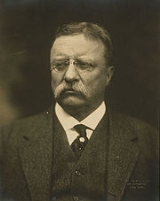
T Roosevelt
Pince-nez ( or as French ) are a style of spectacles, popular in the nineteenth century, which are supported without earpieces, by pinching the bridge of the nose. The name comes from the French language
French language

French is a Romance language spoken around the world by around 80 million people as first language, by 190 million as second language, and by about another 200 million people as an acquired tongue, with significant speakers in 54 countries....
 - pincer, to pinch, and nez, nose.

Although they were used in Europe in the 15th, 16th and 17th centuries, modern pince-nez made their appearance in the 1840s, reaching their peak popularity around 1880 to 1900. By the late 1930s, they were popular mostly only with the elderly.

Varieties of pince-nez


  • Hard bridge - Also known as the fingerpiece, these have a solid bridge piece which is molded to fit the curvature of the bridge of the nose. They are anchored onto the bridge of the nose via two small spring
    Spring (device)

    A spring is an Elasticity object used to store mechanical energy. Springs are usually made out of hardened steel. Small springs can be wound from pre-hardened stock, while larger ones are made from annealing steel and hardened after fabrication....
    -loaded clips terminating in special nose-pads made from bone
    Bone

    Bones are rigid organ that form part of the endoskeleton of vertebrates. They function to move, support, and protect the various organs of the body, produce red blood cell and white blood cells and store minerals....
     or tortoise shell on metal called plaquettes, which are tweezered
    Tweezers

    Tweezers are tools used for picking up small objects that are not easily handled with the human hands. They are probably derived from tongs, Pincer s, or scissors-like pliers used to grab or hold hot objects from the dawn of recorded history....
     apart for placement on the face through applying pressure to two small lever
    Lever

    In physics, a lever is a rigid object that is used with an appropriate fulcrum or wiktionary:pivot point to multiply the mechanical force that can be applied to another object....
    -like finger-pieces located on the front of the bridge. Plaquettes could be either hinged and flexible, like modern spectacle nose-pads, permitting a better fit, or static as in the older examples of this type. This variety was manufactured as either a frame or as a two-piece mount for rimless. They were popular from the 1890s through to the 1950s, and were probably the most commonly seen variety during that time. Their popularity stemmed from the fact that they could be set and removed at will using only two fingers of one hand to operate the finger-pieces, which made them practical compared to other varieties which often required two hands to place the spectacles on the nose. Additionally they could sit comfortably on most nose bridges without having to be set at an angle to compensate for bone structure. However, because of the inflexibility of the bridge piece they had to be manufactured in a range of sizes for different width nose-bridges.
  • C-bridge - These, as their name would suggest, possess a C-shaped bridge, which was composed of a curved, flexible piece of metal which would provide the tension needed to stay on the nose. This variety is the earliest style of true pince-nez. They existed from the 1820s through to the 1940s, and were available in a tremendous variety of styles - ranging from the early nose-padless type of the 1800s to the gutta-percha variety of the American Civil War
    American Civil War

    The American Civil War , also known as the War Between the States and several Naming the American Civil War, was a civil war in the United States....
     era, and then on to the plaquette variety of the 1900s. Like the Hard bridge variety, this type was available either as a frame or as a two-piece mount for frameless glasses. Some of the earlier frames had cork nose-pads, as did some of the cheaper later ones, instead of plaquettes. The frames or bridge pieces could be gold
    Gold

    Gold is a chemical element with the symbol Au and atomic number 79. It is a highly sought-after precious metal, having been used as money, as a store of value, in jewelry, in sculpture, and for ornamentation since the beginning of recorded history....
     or silver
    Silver

    Silver is a chemical element with the chemical symbol Ag and atomic number 47. A soft, white, lustrous transition metal, it has the highest electrical conductivity of any element and the highest thermal conductivity of any metal....
     plated
    Plating

    Plating describes surface-covering where a metal is deposited on a conductive surface. Plating has been done for hundreds of years, but it is also critical for modern technology....
     or made from stainless steel
    Stainless steel

    In metallurgy, stainless steel is defined as a steel alloy with a minimum of 10% chromium content by mass. Stainless steel does not stain, corrode, or rust as easily as ordinary steel , but it is not stain-proof....
    . The bridges were subject to constant wear and tear as they required repeated flexing when being set and removed from the face, so would frequently break or lose their tension. The advantage of this variety was that one size could fit a variety of nose bridges; however, often they had to be worn at an angle, especially if the wearer had a low forehead.
  • Spring bridge - Also known as Astig, this variety consists of a sliding bar connecting the lenses which can be separated through a gentle pull. The bar is telescopic, consisting of two sliders within a tube-like spring, which provides the tension. The nose pads are usually cork and are attached directly to the frames. They can either be hinged or static. This variety was popular from the 1890s to the 1930s, after which they were seldom seen. They were created and marketed as 'sporting pince-nez', which were purportedly more difficult to jar from the face than the other varieties as well as being more comfortable to wear for longer periods. A major advantage was that one size could often fit a wide variety of nose shapes and sizes. This style was usually available only as a frame, with rimless examples being very difficult to find.


Others


In this category are placed frames that should not be referred to as pince-nez, but resemble them in form and function.

  • Oxford spectacles (or Oxfords for short) - The distinction between this style and pince-nez is not frequently drawn; often they are listed as a pince-nez when they are in fact a distinct style of spectacle. The style was developed in the 1800s when a professor at Oxford University accidentally broke off the handle from a pair of lorgnette
    Lorgnette

    A lorgnette is a pair of glasses with a handle, used to hold them in place, rather than fitting over the ears. They were invented by an Englishman named George Adams ....
     spectacles. He reputedly affixed two small nose-pads to the frame and found that he could use the tension in the folding spring to perch them on his nose. Whether or not this story is apocryphal is unknown. Oxfords are undoubtedly descended from the lorgnette, as early examples of them often had handles in addition to nose-pads. In style Oxfords are much like the C-bridge as the tension is provided by a flexible, sprung piece of metal; however, they also resemble the spring bridge, as the spring connects the two lenses and is distinct from the nose-pieces. Oxfords were popular up until the 1930s, and were manufactured as both frames and as 4 piece mounts for frameless, although the latter are hard to find.
  • Nose spectacles - These were developed in the 15th century as amongst the first practical vision correction aids, and could be seen up until the 18th century. They consisted of simple frames made of wood or metal; they could not be flexed or adjusted, instead having to be 'slotted' onto the bridge of the nose. They were designed for long sightedness
    Hyperopia

    Hyperopia, also known as far-sightedness, long-sightedness or hypermetropia, is a defect of visual system caused by an imperfection in the eye , causing inability to Focus on near objects, and in extreme cases causing a sufferer to be unable to focus on objects at any distance....
    , as reading lenses were the only ones that could be manufactured at that time. Original examples of nose spectacles are exceedingly hard to find in good condition today, and command large sums as collectors' pieces whenever they come onto the market.


Retention methods and movie appearances


Pince-nez spectacles were worn by both men and women. Since they can be uncomfortable to wear for extended periods if the wrong bridge size is chosen, and also because the constant wearing of glasses was out of fashion at the time, pince-nez were often suspended from a ribbon or chain worn round the neck, tied to the buttonhole of a lapel, or attached to a special ear-mount or to a hair-pin. Women often used a special brooch
Brooch

A brooch is a decorative jewelry item designed to be attached to garments. It is usually made of metal, often silver or gold but sometimes bronze or some other material....
-like device pinned to the clothing, which would automatically retract the line to which the glasses were attached when they were not in use.

In the late 1990s and early 2000s, the pince-nez style was given a spotlight thanks to Laurence Fishburne
Laurence Fishburne

Laurence John Fishburne III is an Academy Award-nominated and Tony Award-winning United States actor of film and theater, as well as playwright, film director, and Film producer....
's character Morpheus from The Matrix trilogy
The Matrix series

The Matrix franchise comprises a trilogy of science-fiction-adventure films written and directed by the Wachowski brothers and produced by Joel Silver....
, who sported reflective-lensed pince-nez sunglasses as part of his attire.

See also

  • Lorgnette
    Lorgnette

    A lorgnette is a pair of glasses with a handle, used to hold them in place, rather than fitting over the ears. They were invented by an Englishman named George Adams ....
  • Monocle
    Monocle

    A monocle is a type of corrective lens used to correct the visual perception in only one eye. It consists of a circular Lens , generally with a wire ring around the circumference that can be attached to a string....
  • The Adventure of the Golden Pince-Nez
    The Adventure of the Golden Pince-Nez

    The Adventure of the Golden Pince-Nez, one of the 56 Sherlock Holmes short stories written by British author Sir Arthur Conan Doyle, is one of 13 stories in the cycle collected as The Return of Sherlock Holmes....
    , a Sherlock Holmes
    Sherlock Holmes

    Sherlock Holmes is a fictional character of the late nineteenth and early twentieth centuries, who first appeared in publication in 1887. He is the creation of Scotland-born author and physician Sir Arthur Conan Doyle....
     adventure