
All Topics  
Frock

 
Frock

   Email Print
   Bookmark   Link


Frock


Frock has been used since Middle English
Middle English

Middle English is the name given by historical linguistics to the diverse forms of the English language spoken between the Norman conquest of England of 1066 and about 1470, when the #Chancery Standard, a form of London-based English, began to become widespread, a process aided by the introduction of the printing press into England by William...
as the name for an article of clothing
Clothing

A feature of all human societies, except perhaps the most primitive, is the wearing of clothing or clothes, especially in public. The primary purpose of clothing is functional, as a protection from the weather....
 for men and women (see also clothing terminology
Clothing terminology

Clothing terminology comprises the names of individual garments and classes of garments, as well as the specialized vocabulary ofthe trades that have fashion design, manufactured, marketing and retailer clothing over hundreds of years....
).

inally, a frock was a loose, long garment with wide, full sleeve
Sleeve

Sleeve is that part of a garment which covers the arm, or through which the arm passes or slips. Originally invented to serve as a snot-rag or handy handkerchief; the pattern of the sleeve is one of the characteristics of fashion in dress, varying in every country and period....
s, such as the habit of a monk or priest, commonly belted.


Discussion
Ask a question about 'Frock'
Start a new discussion about 'Frock'
Answer questions from other users
Full Discussion Forum


Recent Posts


Encyclopedia


Frock has been used since Middle English
Middle English

Middle English is the name given by historical linguistics to the diverse forms of the English language spoken between the Norman conquest of England of 1066 and about 1470, when the #Chancery Standard, a form of London-based English, began to become widespread, a process aided by the introduction of the printing press into England by William...
as the name for an article of clothing
Clothing

A feature of all human societies, except perhaps the most primitive, is the wearing of clothing or clothes, especially in public. The primary purpose of clothing is functional, as a protection from the weather....
 for men and women (see also clothing terminology
Clothing terminology

Clothing terminology comprises the names of individual garments and classes of garments, as well as the specialized vocabulary ofthe trades that have fashion design, manufactured, marketing and retailer clothing over hundreds of years....
).

History of the frock

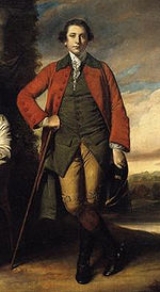
Reynolds Fane Detail
Originally, a frock was a loose, long garment with wide, full sleeve
Sleeve

Sleeve is that part of a garment which covers the arm, or through which the arm passes or slips. Originally invented to serve as a snot-rag or handy handkerchief; the pattern of the sleeve is one of the characteristics of fashion in dress, varying in every country and period....
s, such as the habit of a monk or priest, commonly belted. (This is the origin of the modern term defrock or unfrock, meaning "to eject from the priesthood").

The term has been continually applied to various types of clothing, generally denoting a loosely fitted garment:

  • From the sixteenth century to the early twentieth century, frock was applied to a woman's dress or gown
    Gown

    A gown is a loose outer garment from knee- to full-length worn by men and women in Europe from the early Middle Ages to the seventeenth century ; later, gown was applied to any woman's garment consisting of a bodice and attached skirt....
    , in the fashion of the day, often indicating an unfitted, comfortable garment for wear in the house, or (later) a light overdress worn with a slip
    Slip (clothing)

    A slip is a woman's undergarment worn beneath a dress or skirt to help it hang smoothly and to prevent chafing of the skin from coarse textiles such as wool....
     or underdress.
  • From the seventeenth century on, a frock is a thigh- or full-length loose outer garment worn by shepherd
    Shepherd

    A shepherd is a person who tends to, feeds or guards sheep, especially in flocks. The word may also refer to one who provides religious guidance, as a pastor....
    s, workmen, and farm workers in Britain
    United Kingdom

    The United Kingdom of Great Britain and Northern Ireland, commonly known as the United Kingdom , the UK or Britain,is a sovereign state located off the northwestern coast of continental Europe....
    , generally of heavy linen
    Linen

    Linen is a textile made from the fibers of the flax plant, Linum usitatissimum. Linen is labor-intensive to manufacture, but when it is made into garments, it is valued for its exceptional coolness and freshness in hot weather....
     with a broad flat collar
    Collar (clothing)

    In clothing, a collar is the part of a shirt, dress, coat or blouse that fastens around or frames the neck. A collar may also be a separate or detachable accessory worn around the neck....
    , now usually called a smock-frock
    Smock-frock

    A smock-frock or smock is an outer clothing traditionally worn by rural workers, especially shepherds and wagon, in parts of England and Wales from the early eighteenth century....
    . In some areas, this traditional frock buttons up the front in the manner of a coat
    Coat (clothing)

    A coat is a long clothing worn by both men and women, for warmth, protection or fashion. Coats typically have long sleeves and open down the front, closing by means of buttons, zippers, Velcro, toggles, a belt , or a combination of these....
    , while in others it is a pullover style.
  • In the eighteenth century in Britain and America
    United States

    The United States of America is a Federal government constitutional republic comprising U.S. state and a federal district. The country is situated mostly in central North America, where its Contiguous United States and Washington, D.C., the Capital districts and territories, lie between the Pacific Ocean and Atlantic Oceans, Borders of the U...
    , a frock was an unfitted men's coat for hunting or other country pursuits, with a broad, flat collar, derived from the traditional working-class frock. Late in the eighteenth century it came to be made with a cutaway front without a waist seam and this may have evolved into the standard dress coat with horizontally cutaway fronts worn for daytime wear by the early nineteenth century and from which the modern tail coat for white tie
    White tie

    White tie is the most formal evening dress code . It is worn to events such as balls, the opera, and formal dinners. The chief components for men are the dress coat, white bow tie and waistcoat, and starched shirt, while women wear a suitable dress for the occasion, such as a ball gown....
     is derived. The great coat may similarly be historically derived from the frock as it similarly is single breasted, with a high and broad collar, waist pockets, and also lacked a waist seam early in its history as can be seen in an example in the Victoria and Albert Museum, London.


The precise historical evolution of the frock after the second half of the eighteenth century is obscure, however it is likely that the frock was gradually supplanted by the frock coat in the early nineteenth century, eventually being relegated to evening dress. The frock coat in turn became cut away into the modern coat, giving us the two modern coats with tails.

  • Frock (especially in the phrase "short frock") is also a child's dress or light overdress.
  • A frock is a dense knitted overgarment worn by sailor
    Sailor

    A sailor or mariner is a person who navigates ships or assists in their operation, maintenance, or service. The term can apply to professional mariners, military personnel, and recreational sailors as well as a plethora of other uses....
    s and fishermen
    Fisherman

    A fisherman or fisher is someone who gathers shellfish, or captures fish and other animals from a body of water. Worldwide, there are about 38 million Commercial fishing and Artisan fishing fishermen and fish farmers....
    , as guernsey frock, jersey frock (now usually simply guernsey
    Guernsey (clothing)

    A guernsey or gansey is a seaman's knitted woolen sweater, similar to a Jersey , which originated from the Channel Islands of Guernsey....
     and jersey
    Jersey (clothing)

    A jersey is an item of knitted clothing, traditionally in wool or cotton, with sleeves, worn as a pullover; this is to say, it does not open at the front, unlike a Cardigan ....
    ).
  • The name "oil frock" has been used for a type of sailor's oilskin
    Oilskin

    Oilskin referred originally to a type of cloth - canvas with, literally, a skin of oil applied to it as waterproofing, often linseed oil. They are commonly known as 'oilies' Old types of oilskin included:-...
    .


Related terms


A frock coat
Frock coat

A frock coat is a man's coat characterised by knee-length skirts all around the base, popular during the Victorian era and Edwardian periods....
 is a men's coat
Coat

Coat can refer to any one of the following: *Coat , an article of clothing for humans.*Coat , the fur coat of an animal.*Coat of arms, a heraldic design used to identify a nation, city, family, or individual....
 style of the nineteenth century, characterized by full skirts reaching to the lower thigh or knee. Despite the similarity in the name, the frock coat
Frock coat

A frock coat is a man's coat characterised by knee-length skirts all around the base, popular during the Victorian era and Edwardian periods....
 should be regarded as being a distinct garment quite separate from the frock. In the French language the frock coat
Frock coat

A frock coat is a man's coat characterised by knee-length skirts all around the base, popular during the Victorian era and Edwardian periods....
 is called 'une redingote', and so unlike the English language implies no immediate relationship to the frock which is called 'une fraque'. Indeed the modern French word for a tail coat is 'une frac' which better betrays the historical relationship between the tail coat and the frock. In construction the frock coat
Frock coat

A frock coat is a man's coat characterised by knee-length skirts all around the base, popular during the Victorian era and Edwardian periods....
 could scarcely be more different from the frock for unlike the latter it is usually double breasted, lacks any pockets, lacks a high collar, has V-shaped lapels, is closely fitted and is constructed with a waist seam.

See also

  • Frock coat
    Frock coat

    A frock coat is a man's coat characterised by knee-length skirts all around the base, popular during the Victorian era and Edwardian periods....


External links