
All Topics  
Ethane


   Email Print
   Bookmark   Link


Ethane


Ethane is a chemical compound
Chemical compound

A chemical compound is a Chemical substance consisting of two or more different chemical element Chemical bond together in a fixed mass ratio that can be split into simpler substances....
 with chemical formula
Chemical formula

A chemical formula is a way of expressing information about the atoms that constitute a particular chemical compound, and how the relationship between those atoms changes in chemical reactions....
 C2H6. It is the only two-carbon alkane
Alkane

Alkanes, also known as paraffins, are chemical compounds that consist only of the elements carbon and hydrogen , wherein these atoms are linked together exclusively by single bonds without any cyclic structure ....
, that is, an aliphatic hydrocarbon
Hydrocarbon

In organic chemistry, a hydrocarbon is an organic compound consisting entirely of hydrogen and carbon. With relation to chemical terminology, aromatic hydrocarbons or arenes, alkanes, alkenes and alkyne-based compounds composed entirely of carbon or hydrogen are referred to as "pure" hydrocarbons, whereas other hydrocarbons with bonded com...
. At standard temperature and pressure, ethane is a colorless, odorless gas
Gas

In physics, a gas is a state of matter, consisting of a collection of particles without a definite shape or volume that are in more or less random motion....
.

Ethane is isolated on an industrial scale from natural gas
Natural gas

Natural gas is a gas consisting primarily of methane. It is found associated with fossil fuels, in coal beds, as methane clathrates, and is created by methanogenic organisms in marshes, bogs, and landfills....
, and as a byproduct of petroleum refining
Oil refinery

An oil refinery is an industrial process plant where crude oil is processed and refined into more useful petroleum products, such as gasoline, diesel fuel, asphalt, heating oil, kerosene, and liquefied petroleum gas....
. Its chief use is as petrochemical
Petrochemical

Petrochemicals are chemical products made from raw materials of petroleum or other hydrocarbon origin. Although some of the chemical compounds that originate from petroleum may also be derived from coal and natural gas, petroleum is the major source....
 feedstock for ethylene
Ethylene

Ethylene is the chemical compound with the formula C2H4. It is the simplest alkene. Because it contains a carbon-carbon double bond, ethylene is called an unsaturated hydrocarbon or an olefin....
 production.

ne was first prepared synthetically in 1834 by Michael Faraday
Michael Faraday

Michael Faraday, Fellow of the Royal Society was an English chemist and physicist who contributed to the fields of electromagnetism and electrochemistry....
, applying electrolysis
Electrolysis

In chemistry and manufacturing, electrolysis is a method of separating Chemical bond chemical compound by passing an electric current through them....
 of a potassium acetate
Potassium acetate

Potassium acetate is a chemical compound.It can be prepared by reacting a potassium-containing base such as potassium hydroxide or potassium carbonate with acetic acid:...
 solution.


Discussion
Ask a question about 'Ethane'
Start a new discussion about 'Ethane'
Answer questions from other users
Full Discussion Forum


Recent Posts


Encyclopedia


Ethane is a chemical compound
Chemical compound

A chemical compound is a Chemical substance consisting of two or more different chemical element Chemical bond together in a fixed mass ratio that can be split into simpler substances....
 with chemical formula
Chemical formula

A chemical formula is a way of expressing information about the atoms that constitute a particular chemical compound, and how the relationship between those atoms changes in chemical reactions....
 C2H6. It is the only two-carbon alkane
Alkane

Alkanes, also known as paraffins, are chemical compounds that consist only of the elements carbon and hydrogen , wherein these atoms are linked together exclusively by single bonds without any cyclic structure ....
, that is, an aliphatic hydrocarbon
Hydrocarbon

In organic chemistry, a hydrocarbon is an organic compound consisting entirely of hydrogen and carbon. With relation to chemical terminology, aromatic hydrocarbons or arenes, alkanes, alkenes and alkyne-based compounds composed entirely of carbon or hydrogen are referred to as "pure" hydrocarbons, whereas other hydrocarbons with bonded com...
. At standard temperature and pressure, ethane is a colorless, odorless gas
Gas

In physics, a gas is a state of matter, consisting of a collection of particles without a definite shape or volume that are in more or less random motion....
.

Ethane is isolated on an industrial scale from natural gas
Natural gas

Natural gas is a gas consisting primarily of methane. It is found associated with fossil fuels, in coal beds, as methane clathrates, and is created by methanogenic organisms in marshes, bogs, and landfills....
, and as a byproduct of petroleum refining
Oil refinery

An oil refinery is an industrial process plant where crude oil is processed and refined into more useful petroleum products, such as gasoline, diesel fuel, asphalt, heating oil, kerosene, and liquefied petroleum gas....
. Its chief use is as petrochemical
Petrochemical

Petrochemicals are chemical products made from raw materials of petroleum or other hydrocarbon origin. Although some of the chemical compounds that originate from petroleum may also be derived from coal and natural gas, petroleum is the major source....
 feedstock for ethylene
Ethylene

Ethylene is the chemical compound with the formula C2H4. It is the simplest alkene. Because it contains a carbon-carbon double bond, ethylene is called an unsaturated hydrocarbon or an olefin....
 production.

History

Ethane was first prepared synthetically in 1834 by Michael Faraday
Michael Faraday

Michael Faraday, Fellow of the Royal Society was an English chemist and physicist who contributed to the fields of electromagnetism and electrochemistry....
, applying electrolysis
Electrolysis

In chemistry and manufacturing, electrolysis is a method of separating Chemical bond chemical compound by passing an electric current through them....
 of a potassium acetate
Potassium acetate

Potassium acetate is a chemical compound.It can be prepared by reacting a potassium-containing base such as potassium hydroxide or potassium carbonate with acetic acid:...
 solution. He mistook the hydrocarbon product of this reaction for methane
Methane

Methane is a chemical compound with the molecular formula . It is the simplest alkane, and the principal component of natural gas. Methane's bond angles are 109.5 degrees....
, and did not investigate it further. During the period 1847–1849, in an effort to vindicate the radical theory of organic chemistry
Organic chemistry

Organic chemistry is a discipline within chemistry which involves the science study of the structure, properties, composition, chemical reaction, and preparation of chemical compounds that contain carbon....
, Hermann Kolbe and Edward Frankland
Edward Frankland

Sir Edward Frankland, Order of the Bath, Fellow of the Royal Society was a chemist, one of the foremost of his day. He was an expert in water quality and analysis, and originated the concept of combining power, or valence , in chemistry....
 produced ethane by the reductions of propionitrile
Propionitrile

Propionitrile, or ethyl cyanide, is a low-molecular weight nitrile with the molecular formula C2H5CN. It is a clear liquid with an ethereal, sweet odor....
 (ethyl cyanide) and ethyl iodide
Ethyl iodide

Ethyl iodide is a colorless, flammable chemical compound. It has the chemical formula C2H5I and is prepared by heating ethanol with iodine and phosphorus....
  with potassium
Potassium

Potassium is a chemical element. It has the symbol K , atomic number 19, and atomic mass 39.0983. Potassium was first isolated from potash, hence the name....
 metal, and, as did Faraday, by the electrolysis of aqueous acetates. They, however, mistook the product of these reactions for methyl radical, rather than the dimer
Dimer

File:Carboxylic acid dimers.pngA dimer is a chemical or biological entity consisting of two identical subunits called monomers, which are held together by either intramolecular forces or weaker intermolecular forces....
 of methyl, ethane. This error was corrected in 1864 by Carl Schorlemmer
Carl Schorlemmer

Carl Schorlemmer Fellow of the Royal Society was a German chemist who did research on hydrocarbons and contributed to the study of the history of chemistry....
, who showed that the product of all these reactions was in fact ethane.

Its name was made from the name of ether
Ether

Ether is a class of organic compounds which contain an ether functional group ? an oxygen atom connected to two alkyl or aryl groups ? of general formula R?O?R....
, which at first meant diethyl ether
Diethyl ether

Diethyl ether, also known as ether and ethoxyethane, is a clear, colorless, and highly flammable liquid with a low boiling point and a characteristic odor....
.

Chemistry

In the laboratory, ethane may be conveniently prepared by Kolbe electrolysis
Kolbe electrolysis

Kolbe electolysis or Kolbe reaction is an organic reaction named after Adolph Wilhelm Hermann Kolbe. The Kolbe reaction is formally a decarboxylative dimerisation and proceeds by a free radical reaction mechanism....
. In this technique, an aqueous solution of an acetate
Acetate

An acetate, or ethanoate, is either a salt or ester of acetic acid.In chemistry, the abbreviation Ac refers to the acetyl group. The anion and the functional group may be written as -OAc and AcO-, or OAc respectively....
 salt is electrolysed
Electrolysis

In chemistry and manufacturing, electrolysis is a method of separating Chemical bond chemical compound by passing an electric current through them....
. At the anode
Anode

An anode is an electrode through which electric charge flows into a polarized electrical device. Mnemonic: ACID . Electrons flow in the opposite direction to the positive electric current....
, acetate is oxidized to produce carbon dioxide
Carbon dioxide

Carbon dioxide is a chemical compound composed of two oxygen atoms covalent bond to a single carbon atom. It is a gas at standard temperature and pressure and exists in Earth's atmosphere in this state....
 and methyl radicals, and the highly reactive methyl radicals combine to produce ethane:

CH3COO-
Acetate

An acetate, or ethanoate, is either a salt or ester of acetic acid.In chemistry, the abbreviation Ac refers to the acetyl group. The anion and the functional group may be written as -OAc and AcO-, or OAc respectively....
 ? CH3• + CO2
Carbon dioxide

Carbon dioxide is a chemical compound composed of two oxygen atoms covalent bond to a single carbon atom. It is a gas at standard temperature and pressure and exists in Earth's atmosphere in this state....
 + e-
Electron

The electron is a subatomic particle that carries a negative electric charge. It has elementary particle and is believed to be a point particle....
CH3• + •CH3 ? C2H6


Another method, the oxidation of acetic anhydride
Acetic anhydride

Acetic anhydride is the chemical compound with the chemical formula 2O. Commonly abbreviated Acetyl2O, it is one of the simplest acid anhydrides and is a widely used reagent in organic synthesis....
 by peroxide
Peroxide

A peroxide is a compound containing an oxygen-oxygen chemical bond. The simplest stable peroxide is hydrogen peroxide. Superoxides, dioxygenyls, ozones and ozonides compound are considered separately....
s, is conceptually similar.

The chemistry of ethane also involves chiefly free radical reaction
Free radical reaction

A free radical reaction is any chemical reaction involving free radicals. This reaction type is abundant in organic reactions.Two pioneering studies into free radical reactions have been the discovery of the triphenylmethyl radical by Moses Gomberg and the lead-mirror experiment described by Friedrich Paneth in 1927....
s. Ethane can react with the halogen
Halogen

|}The halogens or halogen elements are a chemical series of nonmetal chemical element from Periodic table group International Union of Pure and Applied Chemistry of the periodic table, comprising fluorine, F; chlorine, Cl; bromine, Br; iodine, I; and astatine, At....
s, especially chlorine
Chlorine

Chlorine...
 and bromine
Bromine

Bromine , , meaning "stench " ), is a chemical element with the symbol Br and atomic number 35. A halogen element, bromine is a reddish-brown Volatility liquid at Standard conditions for temperature and pressure that is intermediate in reactivity between chlorine and iodine....
, by free radical halogenation
Free radical halogenation

In organic chemistry, free radical halogenation is a type of halogenation. This chemical reaction is typical of alkanes and alkyl-substituted aromatics under application of heat or UV light....
. This reaction proceeds through the propagation of the ethyl
Ethyl group

In chemistry, an ethyl group is an alkyl functional group derived from ethane . It has the chemical formula -Carbon2Hydrogen5 and is very often abbreviated -Et....
 radical:

C2H5• + Cl2
Chlorine

Chlorine...
 ? C2H5Cl + Cl•
Cl• + C2H6 ? C2H5• + HCl
Hydrochloric acid

Hydrochloric acid is the solution of hydrogen chloride in water. It is a highly corrosive, strong acid mineral acid and has major industrial uses....


Because halogenated ethanes can undergo further free radical halogenation, this process results in a mixture of several halogenated products. In the chemical industry, more selective chemical reactions are used for the production of any particular two-carbon halocarbon.

Combustion

The complete combustion
Combustion

Combustion or burning is a complex sequence of exothermic chemical reactions between a fuel and an oxidant accompanied by the production of heat or both heat and light in the form of either a glow or flames, appearance of light flickering....
 of ethane releases 1561 kJ/mol, or 51.9 kJ/g, of heat, and produces carbon dioxide
Carbon dioxide

Carbon dioxide is a chemical compound composed of two oxygen atoms covalent bond to a single carbon atom. It is a gas at standard temperature and pressure and exists in Earth's atmosphere in this state....
 and water
Water

Water is a common chemical substance that is essential for the survival of all known forms of life. In typical usage, water refers only to its liquid form or States of matter, but the substance also has a solid state, ice, and a gaseous state, water vapor or steam....
 according to the chemical equation
Chemical equation

A chemical equation may be described as a chemical reaction or a means of writing out and describing such a phenomenon. The coefficients next to the symbols and formulae of entities are the absolute values of the stoichiometric coefficient....


2 C2H6 + 7 O2
Oxygen

Oxygen no O2 produced; 2) O2 produced, but absorbed in oceans & seabed rock; 3) O2 starts to gas out of the oceans, but is absorbed by land surfaces and formation of ozone layer; 4-5) O2 sinks filled and the gas accumulates]]...
 ? 4 CO2
Carbon dioxide

Carbon dioxide is a chemical compound composed of two oxygen atoms covalent bond to a single carbon atom. It is a gas at standard temperature and pressure and exists in Earth's atmosphere in this state....
 + 6 H2O
Water

Water is a common chemical substance that is essential for the survival of all known forms of life. In typical usage, water refers only to its liquid form or States of matter, but the substance also has a solid state, ice, and a gaseous state, water vapor or steam....
 + 1561 kJ/mol


Combustion occurs by a complex series of free-radical reactions. Computer simulation
Computer simulation

A computer simulation, a computer model or a computational model is a computer program, or network of computers, that attempts to simulation an abstract model of a particular system....
s of the chemical kinetics
Chemical kinetics

Chemical kinetics, also known as reaction kinetics, is the study of reaction rate of chemical processes. Chemical kinetics includes investigations of how different experimental conditions can influence the speed of a chemical reaction and yield information about the reaction mechanism and transition states, as well as the construction of ma...
 of ethane combustion have included hundreds of reactions. An important series of reaction in ethane combustion is the combination of an ethyl radical with oxygen
Oxygen

Oxygen no O2 produced; 2) O2 produced, but absorbed in oceans & seabed rock; 3) O2 starts to gas out of the oceans, but is absorbed by land surfaces and formation of ozone layer; 4-5) O2 sinks filled and the gas accumulates]]...
, and the subsequent breakup of the resulting peroxide
Peroxide

A peroxide is a compound containing an oxygen-oxygen chemical bond. The simplest stable peroxide is hydrogen peroxide. Superoxides, dioxygenyls, ozones and ozonides compound are considered separately....
 into ethoxy and hydroxyl radicals.

C2H5• + O2
Oxygen

Oxygen no O2 produced; 2) O2 produced, but absorbed in oceans & seabed rock; 3) O2 starts to gas out of the oceans, but is absorbed by land surfaces and formation of ozone layer; 4-5) O2 sinks filled and the gas accumulates]]...
 ? C2H5OO•
C2H5OO• + HR ? C2H5OOH + •R
C2H5OOH ? C2H5O• + •OH


The principal carbon-containing products of incomplete ethane combustion are single-carbon compounds such as carbon monoxide
Carbon monoxide

Carbon monoxide, with the chemical formula CO, is a colorless and odorless, tasteless, yet highly toxic gas. Its molecules consist of one carbon atom covalent bond to one oxygen atom....
 and formaldehyde
Formaldehyde

Formaldehyde is a chemical compound with the chemical formula H2CO. It is the simplest aldehyde. Formaldehyde exists in several forms aside from H2CO: the cyclic trimer trioxane and the polymer Polyoxymethylene....
. One important route by which the carbon-carbon bond in ethane is broken to yield these single-carbon products is the decomposition of the ethoxy radical into a methyl radical and formaldehyde, which can in turn undergo further oxidation.

C2H5O• ? CH3• + CH2O
Formaldehyde

Formaldehyde is a chemical compound with the chemical formula H2CO. It is the simplest aldehyde. Formaldehyde exists in several forms aside from H2CO: the cyclic trimer trioxane and the polymer Polyoxymethylene....


Some minor products in the incomplete combustion of ethane include acetaldehyde
Acetaldehyde

Acetaldehyde is an organic compound with the chemical formula CarbonHydrogen3CHOxygen or MeCHO. It is a flammable liquid with a fruity smell....
, methane
Methane

Methane is a chemical compound with the molecular formula . It is the simplest alkane, and the principal component of natural gas. Methane's bond angles are 109.5 degrees....
, methanol
Methanol

Methanol, also known as methyl alcohol, carbinol, wood alcohol, wood naphtha or wood spirits, is a chemical compound with chemical formula carbonhydrogen3oxygenhydrogen ....
, and ethanol
Ethanol

Ethanol, also called ethyl alcohol, pure alcohol, grain alcohol, or drinking alcohol, is a volatility , flammable, colorless liquid....
. At higher temperatures, especially in the range 600–900 °C, ethylene
Ethylene

Ethylene is the chemical compound with the formula C2H4. It is the simplest alkene. Because it contains a carbon-carbon double bond, ethylene is called an unsaturated hydrocarbon or an olefin....
 is a significant product. It arises via reactions like

C2H5• + O2
Oxygen

Oxygen no O2 produced; 2) O2 produced, but absorbed in oceans & seabed rock; 3) O2 starts to gas out of the oceans, but is absorbed by land surfaces and formation of ozone layer; 4-5) O2 sinks filled and the gas accumulates]]...
 ? C2H4
Ethylene

Ethylene is the chemical compound with the formula C2H4. It is the simplest alkene. Because it contains a carbon-carbon double bond, ethylene is called an unsaturated hydrocarbon or an olefin....
 + •OOH


Similar reactions (although with species other than oxygen as the hydrogen abstractor) are involved in the production of ethylene from ethane in steam cracking.

Production

After methane
Methane

Methane is a chemical compound with the molecular formula . It is the simplest alkane, and the principal component of natural gas. Methane's bond angles are 109.5 degrees....
, ethane is the second-largest component of natural gas
Natural gas

Natural gas is a gas consisting primarily of methane. It is found associated with fossil fuels, in coal beds, as methane clathrates, and is created by methanogenic organisms in marshes, bogs, and landfills....
. Natural gas from different gas fields varies in ethane content from less than 1% to over 6% by volume. Prior to the 1960s, ethane and larger molecules were typically not separated from the methane component of natural gas, but simply burnt along with the methane as a fuel. Today, however, ethane is an important petrochemical
Petrochemical

Petrochemicals are chemical products made from raw materials of petroleum or other hydrocarbon origin. Although some of the chemical compounds that originate from petroleum may also be derived from coal and natural gas, petroleum is the major source....
 feedstock, and it is separated from the other components of natural gas in most well-developed gas fields. Ethane can also be separated from petroleum gas, a mixture of gaseous hydrocarbons that arises as a byproduct of petroleum refining. Economics of building and running processing plants can change, however. If the relative value of sending the unprocessed natural gas to a consumer exceeds the value of extracting ethane, then the plant may not be run. This can cause operational issues managing the changing quality of the gas in downstream systems.

Ethane is most efficiently separated from methane by liquefying it at cryogenic temperatures. Various refrigeration strategies exist: the most economical process presently in wide use employs turboexpansion, and can recover over 90% of the ethane in natural gas. In this process, chilled gas expands through a turbine
Turbine

A turbine is a rotary engine that extracts energy from a fluid flow. Claude Burdin coined the term from the Latin turbo, or vortex, during an 1828 engineering competition....
; as it expands, its temperature drops to about -100 °C. At this low temperature, gaseous methane can be separated from the liquefied ethane and heavier hydrocarbons by distillation
Distillation

Distillation is a method of separation process mixtures based on differences in their Volatility in a boiling liquid mixture. Distillation is a unit operation, or a physical separation process, and not a chemical reaction....
. Further distillation then separates ethane from the propane
Propane

Propane is a three-carbon alkane, normally a gas, but compressible to a transportable liquid. It is derived from other petroleum products during oil or natural gas processing....
 and heavier hydrocarbons.

Uses

The chief use of ethane is in the chemical industry (usually uses a catalyst to boost up the reaction), in the production of ethylene
Ethylene

Ethylene is the chemical compound with the formula C2H4. It is the simplest alkene. Because it contains a carbon-carbon double bond, ethylene is called an unsaturated hydrocarbon or an olefin....
 by steam cracking. When diluted with steam and briefly heated to very high temperatures (900 °C or more), heavy hydrocarbons break down into lighter hydrocarbons, and saturated hydrocarbons become unsaturated. Ethane is favored for ethylene production because the steam cracking of ethane is fairly selective for ethylene, while the steam cracking of heavier hydrocarbons yields a product mixture poorer in ethylene, and richer in heavier olefins such as propylene
Propylene

Propene, also known as propylene, is an saturation organic chemistry having the chemical formula Carbon3Hydrogen6. It has one covalent bond, and is the second simplest member of the alkene class of hydrocarbons, and it is also second in natural abundance....
 and butadiene, and in aromatic hydrocarbon
Aromatic hydrocarbon

An aromatic hydrocarbon or arene is a hydrocarbon, of which the molecular structure incorporates one or more planar sets of six carbon atoms that are connected by delocalised electrons numbering the same as if they consisted of alternating single and double covalent bonds....
s.

Experimentally, ethane is under investigation as a feedstock for other commodity chemicals. Oxidative chlorination of ethane has long appeared to be a potentially more economical route to vinyl chloride
Vinyl chloride

Vinyl chloride is the organic compound with the formula CH2:CHCl. This colourless compound is an important industrial chemical chiefly used to produce the polymer polyvinyl chloride ....
 than ethylene chlorination. Many processes for carrying out this reaction have been patent
Patent

A patent is a set of exclusive rights granted by a state to an inventor or his assignee for a term of patent in exchange for a disclosure of an invention....
ed, but poor selectivity for vinyl chloride and corrosive reaction conditions (specifically, a hydrochloric acid
Hydrochloric acid

Hydrochloric acid is the solution of hydrogen chloride in water. It is a highly corrosive, strong acid mineral acid and has major industrial uses....
-containing reaction mixture at temperatures greater than 500 °C) have discouraged the commercialization of most of them. Presently, INEOS
Ineos

INEOS is a privately owned UK chemicals company. By revenue it is the third largest chemicals firm in the world and the biggest privately owned company in Britain ....
 operates a 1000 t/a ethane-to-vinyl chloride pilot plant at Wilhelmshaven
Wilhelmshaven

Wilhelmshaven is a town in Lower Saxony, Germany. It is situated at the western coast of the Jadebusen, which is a bay of the North Sea. Population: 83,238 ....
 in Germany
Germany

Germany , officially the Federal Republic of Germany , is a country in Central Europe. It is bordered to the north by the North Sea, Denmark, and the Baltic Sea; to the east by Poland and the Czech Republic; to the south by Austria and Switzerland; and to the west by France, Luxembourg, Belgium, and the Netherlands....
.

Similarly, the Saudi Arabia
Saudi Arabia

The Kingdom of Saudi Arabia, KSA , is an Arab country and the largest country of the Arabian Peninsula. It is bordered by Jordan on the northwest, Iraq on the north and northeast, Kuwait, Qatar, Bahrain, and the United Arab Emirates on the east, Oman on the southeast, and Yemen on the south....
n firm SABIC
SABIC

SABIC is a diversified manufacturing company, active in chemicals and intermediates, industrial polymers, fertilizers and metals. It is the largest public company in Saudi Arabia as listed in Tadawul, but the Saudi government still owns 70% of its shares....
 has announced construction of a 30,000 t/a plant to produce acetic acid
Acetic acid

Acetic acid, CH3COOH, also known as ethanoic acid, is an organic acid which gives vinegar its sour taste and pungent smell. Pure, water-free acetic acid is a colourless liquid that absorbs water from the environment , and freezes at 16.7 Celsius to a colourless crystalline solid....
 by ethane oxidation at Yanbu. This economic viability of this process may rely on the low cost of ethane near Saudi oil fields, and it may not be competitive with methanol carbonylation elsewhere in the world.

Ethane can be used as a refrigerant in cryogenic refrigeration systems. On a much smaller scale, in scientific research, liquid ethane is used to vitrify
Vitrification

Vitrification is a process of converting a material into a glass-like amorphous solid that is free from any crystalline structure, either by the quick removal or addition of heat, or by mixing with an additive....
 water-rich samples for electron microscopy. A thin film of water, quickly immersed in liquid ethane at -150 °C or colder, freezes too quickly for water to crystallize. This rapid freezing does not disrupt the structure of soft objects present in the liquid state, as the formation of ice
Ice

Ice is a solid phases of matter, usually crystalline solid, of a non-metallic substance that is liquid or gas at room temperature, such as ammonia ice or methane ice....
 crystals can do.

Health and safety

At room temperature, ethane is a flammable gas. When mixed with air at 3.0% – 12.5% by volume, it forms an explosive
Explosion

An explosion is a sudden increase in volume and release of energy in an extreme manner, usually with the generation of high temperatures and the release of gases....
 mixture.

Some additional precautions are necessary where ethane is stored as a cryogenic liquid. Direct contact with liquid ethane can result in severe frostbite
Frostbite

Frostbite is the medical condition wherein localized damage is caused to skin and other biological tissue due to extreme cold.Frostbite is most likely to happen in body parts farthest from the heart and those with large exposed areas....
. In addition, the vapors evaporating from liquid ethane are, until they warm to room temperature, heavier than air and can creep along the ground or gather in low places, and if they encounter an ignition source, can flash back to the body of ethane from which they evaporated.

Containers recently emptied of ethane may contain insufficient oxygen
Oxygen

Oxygen no O2 produced; 2) O2 produced, but absorbed in oceans & seabed rock; 3) O2 starts to gas out of the oceans, but is absorbed by land surfaces and formation of ozone layer; 4-5) O2 sinks filled and the gas accumulates]]...
 to support life. Beyond this asphyxiation hazard, ethane poses no known acute or chronic toxicological risk. It is not known or suspected to be a carcinogen
Carcinogen

The term carcinogen refers to any substance, radionuclide or radiation that is an agent directly involved in the promotion of cancer or in the increase of its propagation....
.

Atmospheric and extraterrestrial ethane

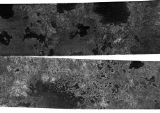
Titan North Pole Lakes Pia08630
Ethane occurs as a trace gas in the Earth's atmosphere
Earth's atmosphere

The Earth's atmosphere is a layer of gases surrounding the planet Earth that is retained by the Earth's gravity. Dry air contains roughly 78.08% nitrogen, 20.95% oxygen, 0.93% argon, 0.038% Carbon dioxide in the Earth's atmosphere, and trace amounts of other gases....
, having a concentration at sea level
Sea level

Mean sea level is the average height of the sea, with reference to a suitable reference surface. Defining the reference level , however, involves complex measurement, and accurately determining MSL can prove difficult....
 of around 0.5 ppbv at present, though its pre-industrial concentration is likely to have been substantially less as a large proportion of the ethane in today's atmosphere probably originated as unburned fossil fuel
Fossil fuel

Fossil fuels or mineral fuels are fossil source fuels, that is, carbon or hydrocarbons found in the earth?s Crust .Fossil fuel range from volatile materials with low carbon:hydrogen ratios like methane, to liquid petroleum to nonvolatile materials composed of almost pure carbon, like anthracite coal....
s. Although ethane is a greenhouse gas
Greenhouse gas

Greenhouse gases are gases in an atmosphere that Absorption and Emission radiation within the Infrared#Different regions in the infrared range....
, it is much less abundant than methane and also less efficient relative to mass. It has also been detected as a trace component in the atmospheres of all four giant planets, and in the atmosphere of Saturn's moon Titan
Titan (moon)

Titan or Saturn VI is the largest natural satellite of Saturn, the only moon known to have a dense celestial body atmosphere, and the only object other than Earth for which clear evidence of stable bodies of surface liquid has been found....
.

Atmospheric ethane results from the Sun's photochemical
Photochemistry

Photochemistry, a sub-discipline of chemistry, is the study of the interactions between atoms, small molecules, and light . The pillars of photochemistry are UV/VIS spectroscopy, photochemical reactions in organic chemistry and photosynthesis in biochemistry....
 action on methane gas, also present in these atmospheres: ultraviolet
Ultraviolet

Ultraviolet light is electromagnetic radiation with a wavelength shorter than that of visible light, but longer than x-rays, in the range 400 nanometer to 10 nm, and energies from 3 Electron volt to 124 eV....
 photons of shorter wavelength
Wavelength

In physics, wavelength is the distance between repeating units of a propagating wave of a given frequency. It is commonly designated by the Greek language letter lambda ....
s than 160 nm can photo-dissociate the methane molecule into a methyl radical and a hydrogen
Hydrogen

Hydrogen is the chemical element with atomic number 1. It is represented by the chemical symbol H. At standard temperature and pressure, hydrogen is a colorless, odorless, nonmetallic, tasteless, highly combustion and explosive Diatomic molecule gas with the molecular formula H2....
 atom. When two methyl radicals recombine, the result is ethane:

CH4
Methane

Methane is a chemical compound with the molecular formula . It is the simplest alkane, and the principal component of natural gas. Methane's bond angles are 109.5 degrees....
 ? CH3• + •H
CH3• + •CH3 ? C2H6


In the case of Titan, it was once widely hypothesized that ethane produced in this fashion rained back onto the moon's surface, and over time had accumulated into hydrocarbon seas or oceans covering much of the moon's surface. Infrared telescopic observations cast significant doubt on this hypothesis, and the Huygens probe
Huygens probe

The Huygens probe, supplied by the European Space Agency and named after the Dutch 17th century astronomer Christiaan Huygens, was an atmospheric entry probe carried to Saturn 's moon Titan as part of the Cassini-Huygens mission....
, which landed on Titan in 2005, failed to observe any surface liquids, although it did photograph features that could be presently dry drainage channels. In December 2007 the Cassini probe found at least one lake at Titan's south pole, now called Ontario Lacus because of the lake's similar area to Lake Ontario
Lake Ontario

Lake Ontario is one of the five Great Lakes of North America. The lake is bounded on the north by the Canadian province of Ontario and on the south by Ontario's Niagara Peninsula and by the U.S....
 on Earth (approximately 20,000 km²). Further analysis of infrared spectroscopic data presented in July 2008 provided stronger evidence for the presence of liquid ethane in Ontario Lacus.

In 1996, ethane was detected in Comet Hyakutake
Comet Hyakutake

Comet Hyakutake is a comet discovered on January 30, 1996, which passed very close to Earth in March of that year. It was dubbed The Great Comet of 1996; its passage near the Earth was one of the closest cometary approaches of the previous 200 years....
, and it has since been detected in some other comets. The existence of ethane in these distant solar system bodies may implicate ethane as a primordial component of the solar nebula
Solar nebula

In cosmogony, the nebular hypothesis is the most widely accepted model explaining the formation and evolution of the Solar System. It was first proposed in 1734 by Emanuel Swedenborg....
 from which the sun and planets are believed to have formed.

External links