
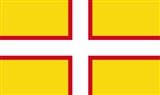
Dorset (or
archaicallyIn language, an archaism is the use of a form of speech or writing that is no longer current. This can either be done deliberately or as part of a specific jargon or formula...
,
Dorsetshire), is a
countyCounties of England are areas used for the purposes of administrative, geographical and political demarcation. For administrative purposes, England outside Greater London and the Isles of Scilly is divided into 83 counties. The counties may consist of a single district or be divided into several...
in
South West EnglandSouth West England is one of the regions of England defined by the Government of the United Kingdom for statistical and other purposes. It is the largest such region in area, covering and comprising Bristol, Gloucestershire, Somerset, Dorset, Wiltshire, Devon, Cornwall and the Isles of Scilly. ...
on the
English ChannelThe English Channel , often referred to simply as the Channel, is an arm of the Atlantic Ocean that separates southern England from northern France, and joins the North Sea to the Atlantic. It is about long and varies in width from at its widest to in the Strait of Dover...
coast. The
county townA county town is a county's administrative centre in the United Kingdom or Ireland. County towns are usually the location of administrative or judicial functions, or established over time as the de facto main town of a county. The concept of a county town eventually became detached from its...
is Dorchester which is situated in the south. The
HampshireHampshire is a county on the southern coast of England in the United Kingdom. The county town of Hampshire is Winchester, a historic cathedral city that was once the capital of England. Hampshire is notable for housing the original birthplaces of the Royal Navy, British Army, and Royal Air Force...
towns of
BournemouthBournemouth is a large coastal resort town in the ceremonial county of Dorset, England. According to the 2001 Census the town has a population of 163,444, making it the largest settlement in Dorset. It is also the largest settlement between Southampton and Plymouth...
and
ChristchurchChristchurch is a borough and town in the county of Dorset on the south coast of England. The town adjoins Bournemouth in the west and the New Forest lies to the east. Historically in Hampshire, it joined Dorset with the reorganisation of local government in 1974 and is the most easterly borough in...
joined the county with the
reorganisation of local government in 1974The Local Government Act 1972 is an Act of Parliament in the United Kingdom that reformed local government in England and Wales on 1 April 1974....
. The ceremonial county comprises the area covered by the non-metropolitan county, which is governed by Dorset County Council, together with the unitary authorities of Poole and Bournemouth. Dorset is an average sized county with an area of 2653 square kilometres (1,024 sq mi); it borders
DevonDevon is a large county in southwestern England. The county is sometimes referred to as Devonshire, although the term is rarely used inside the county itself as the county has never been officially "shired", it often indicates a traditional or historical context.The county shares borders with...
to the west,
SomersetThe ceremonial and non-metropolitan county of Somerset in South West England borders Bristol and Gloucestershire to the north, Wiltshire to the east, Dorset to the south-east, and Devon to the south-west. It is partly bounded to the north and west by the Bristol Channel and the estuary of the...
to the north-west,
WiltshireWiltshire is a ceremonial county in South West England. It is landlocked and borders the counties of Dorset, Somerset, Hampshire, Gloucestershire, Oxfordshire and Berkshire. It contains the unitary authority of Swindon and covers...
to the north-east, and Hampshire to the east. Around half of Dorset's population lives in the
South East Dorset conurbationThe South east Dorset conurbation is a multi-centred conurbation on the south coast of Dorset in England. The area is rapidly becoming an amalgamation with the area of South West Hampshire immediately on the fringe of the newly formed New Forest National Park...
. The rest of the county is largely rural with a low population density.
The county has a long history of human settlement and some notable archaeology, including the
hill fortA hill fort is a type of earthworks used as a fortified refuge or defended settlement, located to exploit a rise in elevation for defensive advantage. They are typically European and of the Bronze and Iron Ages. Some were used in the post-Roman period...
s of
Maiden CastleMaiden Castle is an Iron Age hill fort south west of Dorchester, in the English county of Dorset. Hill forts were fortified hill-top settlements constructed across Britain during the Iron Age...
and
Hod HillHod Hill is a large hill fort in the Blackmore Vale, north-west of Blandford Forum, Dorset, England. The fort sits on a chalk hill that is detached from the Dorset Downs and Cranborne Chase. The hill fort at Hambledon Hill is just to the north.The fort is roughly rectangular , with an enclosed...
. A large defensive ditch,
Bokerley DykeBokerley Dyke is a Romano-British defensive ditch in north east Dorset, England, near the villages of Woodyates and Pentridge. The ditch ran for several miles, cutting across the Roman Road between Old Sarum and Badbury Rings on the Cranborne Chase ridgeway. Dated to 367 CE, it was constructed to...
, delayed the Saxon conquest of Dorset for up to 150 years. In 1348 the
black deathThe pandemic known to history as the Black Death entered England in 1348, and killed between a third and more than half of the nation's inhabitants. The Black Death was the first and most severe manifestation of the Second Pandemic, probably caused by the Yersinia pestis bacteria. Originating in...
came ashore at
Melcombe RegisMelcombe Regis is an area of Weymouth in Dorset, England.Situated on the north shore of Weymouth Harbour and originally part of the waste of Radipole, it seems only to have developed as a significant settlement and seaport in the 13th century...
and subsequently spread throughout England, killing a third of the population. Dorset has seen much civil unrest: the first trade union was formed by farm labourers from
TolpuddleThe Tolpuddle Martyrs were a group of 19th century Dorset agricultural labourers who were arrested for and convicted of swearing a secret oath as members of the Friendly Society of Agricultural Labourers. The rules of the society show it was clearly structured as a friendly society and operated as...
in 1834, the
Glorious RevolutionThe Glorious Revolution, also called the Revolution of 1688, is the overthrow of King James II of England by a union of English Parliamentarians with the Dutch stadtholder William III of Orange-Nassau...
was instigated in an ice-house at
Charborough ParkCharborough House is located between Sturminster Marshall and Bere Regis in Dorset, England. The Deer Park and estate adjoins the villages of Winterborne Zelston, Newton Peveril and Lytchett Matravers...
, and the Duke of Monmouth and his rebels landed at
Lyme RegisLyme Regis is a coastal town in West Dorset, England, situated 25 miles west of Dorchester and east of Exeter. The town lies in Lyme Bay, on the English Channel coast at the Dorset-Devon border...
. During the
English Civil WarThe English Civil War was a series of armed conflicts and political machinations between Parliamentarians and Royalists...
(1642–1651) angry yokels fought with Cromwell's forces near
ShaftesburyShaftesbury is a town in Dorset, England, situated on the A30 road near the Wiltshire border 20 miles west of Salisbury. The town is built 718 feet above sea level on the side of a chalk and greensand hill, which is part of Cranborne Chase, the only significant hilltop settlement in Dorset...
. The naval base at
PortlandPortland Harbour is located beside the Isle of Portland, off Dorset, on the south coast of England. It is one of the largest man-made harbours in the world. Grid reference: .-History:...
has had a pivotal role in the nation's defence for many years, and along with Weymouth and
PoolePoole is a large coastal town and seaport in the county of Dorset, on the south coast of England. The town is east of Dorchester, and Bournemouth adjoins Poole to the east. The Borough of Poole was made a unitary authority in 1997, gaining administrative independence from Dorset County Council...
was one of the main embarkation points on
D-DayD-Day is a term often used in military parlance to denote the day on which a combat attack or operation is to be initiated. "D-Day" often represents a variable, designating the day upon which some significant event will occur or has occurred; see Military designation of days and hours for similar...
.
Initially agricultural, tourism is now the primary industry, with the county receiving 18 million visitors a year. Over half the county is designated as an
Area of Outstanding Natural BeautyAn Area of Outstanding Natural Beauty is an area of countryside considered to have significant landscape value in England, Wales or Northern Ireland, that has been specially designated by the Countryside Agency on behalf of the United Kingdom government; the Countryside Council for Wales on...
. Dorset is famous for the
Jurassic CoastThe Jurassic Coast is a World Heritage Site on the English Channel coast of southern England. The site stretches from Orcombe Point near Exmouth in East Devon to Old Harry Rocks near Swanage in East Dorset, a distance of ....
World Heritage SiteA UNESCO World Heritage Site is a place that is listed by the UNESCO as of special cultural or physical significance...
, which features landforms such as
Lulworth CoveLulworth Cove is a cove near the village of West Lulworth, on the Jurassic Coast World Heritage Site in Dorset, southern England. The cove is one of the world's finest examples of such a landform, and is a tourist location with over 1 million visitors a year...
, the
Isle of PortlandThe Isle of Portland is a limestone tied island, long by wide, in the English Channel. Portland is south of the resort of Weymouth, forming the southernmost point of the county of Dorset, England. A tombolo over which runs the A354 road connects it to Chesil Beach and the mainland. Portland and...
,
Chesil BeachChesil Beach, sometimes called Chesil Bank, in Dorset, southern England is one of three major shingle structures in Britain. Its toponym is derived from the Old English ceosel or cisel, meaning "gravel" or "shingle"....
and
Durdle DoorDurdle Door is a natural limestone arch on the Jurassic Coast near Lulworth in Dorset, England. It is privately owned by the Welds, a family who own in Dorset in the name of the Lulworth Estate. It is open to the public...
, as well as the holiday resorts of
BournemouthBournemouth is a large coastal resort town in the ceremonial county of Dorset, England. According to the 2001 Census the town has a population of 163,444, making it the largest settlement in Dorset. It is also the largest settlement between Southampton and Plymouth...
,
PoolePoole is a large coastal town and seaport in the county of Dorset, on the south coast of England. The town is east of Dorchester, and Bournemouth adjoins Poole to the east. The Borough of Poole was made a unitary authority in 1997, gaining administrative independence from Dorset County Council...
, Weymouth,
SwanageSwanage is a coastal town and civil parish in the south east of Dorset, England. It is situated at the eastern end of the Isle of Purbeck, approximately 10 km south of Poole and 40 km east of Dorchester. The parish has a population of 10,124 . Nearby are Ballard Down and Old Harry Rocks,...
, and
Lyme RegisLyme Regis is a coastal town in West Dorset, England, situated 25 miles west of Dorchester and east of Exeter. The town lies in Lyme Bay, on the English Channel coast at the Dorset-Devon border...
. Dorset's three large ports at Poole, Weymouth and Portland, and its international airport at
HurnHurn is a village in southeast Dorset, England, between the River Stour and River Avon in the borough of Christchurch, five miles north east of the Bournemouth town centre. As of 2001, the village has a population of 468. The village is the location of Bournemouth Airport , an important airfield...
, play an important part in the local economy, generating a substantial amount of international trade and tourism. Dorset is the birthplace and principal setting of the novels of
Thomas HardyThomas Hardy, OM was an English novelist and poet. While his works typically belong to the Naturalism movement, several poems display elements of the previous Romantic and Enlightenment periods of literature, such as his fascination with the supernatural.While he regarded himself primarily as a...
, who was born in the county, and
William BarnesWilliam Barnes was an English writer, poet, minister, and philologist. He wrote over 800 poems, some in Dorset dialect and much other work including a comprehensive English grammar quoting from more than 70 different languages.-Life:He was born at Rushay in the parish of Bagber, Dorset, the son of...
, whose poetry celebrates and preserves the ancient Dorset dialect.
History
The first human visitors to Dorset were
MesolithicThe Mesolithic is an archaeological concept used to refer to certain groups of archaeological cultures defined as falling between the Paleolithic and the Neolithic....
hunters, from around 8000 BC. The first permanent
NeolithicThe Neolithic Age, Era, or Period, or New Stone Age, was a period in the development of human technology, beginning about 9500 BC in some parts of the Middle East, and later in other parts of the world. It is traditionally considered as the last part of the Stone Age...
settlers appeared around 3000 BC. Their populations were small and concentrated along the coast in the
Isle of PurbeckThe Isle of Purbeck, not a true island but a peninsula, is in the county of Dorset, England. It is bordered by the English Channel to the south and east, where steep cliffs fall to the sea; and by the marshy lands of the River Frome and Poole Harbour to the north. Its western boundary is less well...
, the
Isle of PortlandThe Isle of Portland is a limestone tied island, long by wide, in the English Channel. Portland is south of the resort of Weymouth, forming the southernmost point of the county of Dorset, England. A tombolo over which runs the A354 road connects it to Chesil Beach and the mainland. Portland and...
, Weymouth and
Chesil BeachChesil Beach, sometimes called Chesil Bank, in Dorset, southern England is one of three major shingle structures in Britain. Its toponym is derived from the Old English ceosel or cisel, meaning "gravel" or "shingle"....
and along the
Stour valleyThe River Stour is a 60.5 mile long river which flows through Wiltshire and Dorset in southern England, and drains into the English Channel. It is sometimes called the Dorset Stour to distinguish it from rivers of the same name...
. These populations used tools and fire to clear these areas of some of the native
oakAn oak is a tree or shrub in the genus Quercus , of which about 600 species exist. "Oak" may also appear in the names of species in related genera, notably Lithocarpus...
forestA forest, also referred to as a wood or the woods, is an area with a high density of trees. As with cities, depending where you are in the world, what is considered a forest may vary significantly in size and have various classification according to how and what of the forest is composed...
. Further clearances took place in the
Bronze AgeThe Bronze Age is a period characterized by the use of copper and its alloy bronze as the chief hard materials in the manufacture of some implements and weapons. Chronologically, it stands between the Stone Age and Iron Age...
, making way for
agricultureAgriculture is the cultivation of animals, plants, fungi and other life forms for food, fiber, and other products used to sustain life. Agriculture was the key implement in the rise of sedentary human civilization, whereby farming of domesticated species created food surpluses that nurtured the...
and
animal husbandryAnimal husbandry is the agricultural practice of breeding and raising livestock.- History :Animal husbandry has been practiced for thousands of years, since the first domestication of animals....
, Dorset's high chalk hills have provided a location for defensive settlements for millennia. There are Neolithic and Bronze Age burial mounds on almost every chalk hill in the county along with a number of
Iron AgeThe Iron Age is the archaeological period generally occurring after the Bronze Age, marked by the prevalent use of iron. The early period of the age is characterized by the widespread use of iron or steel. The adoption of such material coincided with other changes in society, including differing...
hill fortA hill fort is a type of earthworks used as a fortified refuge or defended settlement, located to exploit a rise in elevation for defensive advantage. They are typically European and of the Bronze and Iron Ages. Some were used in the post-Roman period...
s. Probably the most famous of these structures is
Maiden CastleMaiden Castle is an Iron Age hill fort south west of Dorchester, in the English county of Dorset. Hill forts were fortified hill-top settlements constructed across Britain during the Iron Age...
, which was built around 600BC and is one of the largest Iron Age hill forts in
EuropeEurope is, by convention, one of the world's seven continents. Comprising the westernmost peninsula of Eurasia, Europe is generally 'divided' from Asia to its east by the watershed divides of the Ural and Caucasus Mountains, the Ural River, the Caspian and Black Seas, and the waterways connecting...
.
Dorset has
RomanRoman Britain was the part of the island of Great Britain controlled by the Roman Empire from AD 43 until ca. AD 410.The Romans referred to the imperial province as Britannia, which eventually comprised all of the island of Great Britain south of the fluid frontier with Caledonia...
artefacts, particularly around the Roman town Dorchester, where Maiden Castle was captured from the
CeltThe Celts were a diverse group of tribal societies in Iron Age and Roman-era Europe who spoke Celtic languages.The earliest archaeological culture commonly accepted as Celtic, or rather Proto-Celtic, was the central European Hallstatt culture , named for the rich grave finds in Hallstatt, Austria....
ic
DurotrigesThe Durotriges were one of the Celtic tribes living in Britain prior to the Roman invasion. The tribe lived in modern Dorset, south Wiltshire and south Somerset...
by a
Roman LegionA Roman legion normally indicates the basic ancient Roman army unit recruited specifically from Roman citizens. The organization of legions varied greatly over time but they were typically composed of perhaps 5,000 soldiers, divided into maniples and later into "cohorts"...
in 43 AD under the command of
VespasianVespasian , was Roman Emperor from 69 AD to 79 AD. Vespasian was the founder of the Flavian dynasty, which ruled the Empire for a quarter century. Vespasian was descended from a family of equestrians, who rose into the senatorial rank under the Emperors of the Julio-Claudian dynasty...
, early in the Roman occupation. The Romans also had a presence on the Isle of Portland, constructing - or adapting - hilltop defensive earthworks on Verne Hill. A large ditch and embankment,
Bokerley DykeBokerley Dyke is a Romano-British defensive ditch in north east Dorset, England, near the villages of Woodyates and Pentridge. The ditch ran for several miles, cutting across the Roman Road between Old Sarum and Badbury Rings on the Cranborne Chase ridgeway. Dated to 367 CE, it was constructed to...
, enabled the county's post-Roman inhabitants to successfully defend against invading Saxon forces, thereby delaying their conquest of Dorset for up to 150 years. By the end of the 7th century however, Dorset had become part of the Saxon kingdom of
WessexThe Kingdom of Wessex or Kingdom of the West Saxons was an Anglo-Saxon kingdom of the West Saxons, in South West England, from the 6th century, until the emergence of a united English state in the 10th century, under the Wessex dynasty. It was to be an earldom after Canute the Great's conquest...
. The
Domesday BookDomesday Book , now held at The National Archives, Kew, Richmond upon Thames in South West London, is the record of the great survey of much of England and parts of Wales completed in 1086...
documents many Saxon settlements corresponding to modern towns and villages and there have been few changes to the parishes since. Many monasteries were also established, which were important landowners and centres of power.
In the 12th-century
civil war, Dorset was fortified by the construction of the defensive castles at Corfe Castle,
PowerstockPowerstock is a village in south west Dorset, England, situated in a steep valley on the edge of the Dorset Downs, five miles north east of the market town of Bridport. The village contains many cottages and 2 inns: The Three Horseshoes near the church and The Marquis of Lorne Inn on the other...
,
WarehamWareham is an historic market town and, under the name Wareham Town, a civil parish, in the English county of Dorset. The town is situated on the River Frome eight miles southwest of Poole.-Situation and geography:...
and
ShaftesburyShaftesbury is a town in Dorset, England, situated on the A30 road near the Wiltshire border 20 miles west of Salisbury. The town is built 718 feet above sea level on the side of a chalk and greensand hill, which is part of Cranborne Chase, the only significant hilltop settlement in Dorset...
, and the strengthening of the monasteries such as at
AbbotsburyAbbotsbury is a large village and civil parish in the West Dorset district of Dorset, England; situated north-west of Weymouth. It is located from Upwey railway station and from Bournemouth International Airport. The main road running through the village is the B3157, connecting Abbotsbury to...
. The 12th and 13th centuries saw much prosperity in Dorset and the population grew substantially as a result. In order to provide the extra food required, additional land was enclosed for farming during this time. The quarrying of
Purbeck MarblePurbeck Marble is a fossiliferous limestone quarried in the Isle of Purbeck, a peninsula in south-east Dorset, England.It is one of many kinds of Purbeck Limestone, deposited in the late Jurassic or early Cretaceous periods....
, a
limestoneLimestone is a sedimentary rock composed largely of the minerals calcite and aragonite, which are different crystal forms of calcium carbonate . Many limestones are composed from skeletal fragments of marine organisms such as coral or foraminifera....
that can be polished, brought wealth into the county and provided employment for stonecutters and masons. The trade continued until the 15th century when
alabasterAlabaster is a name applied to varieties of two distinct minerals, when used as a material: gypsum and calcite . The former is the alabaster of the present day; generally, the latter is the alabaster of the ancients...
from
DerbyshireDerbyshire is a county in the East Midlands of England. A substantial portion of the Peak District National Park lies within Derbyshire. The northern part of Derbyshire overlaps with the Pennines, a famous chain of hills and mountains. The county contains within its boundary of approx...
became popular. During the Middle Ages, Dorset was used by the
monarchyThe monarchy of the United Kingdom is the constitutional monarchy of the United Kingdom and its overseas territories. The present monarch, Queen Elizabeth II, has reigned since 6 February 1952. She and her immediate family undertake various official, ceremonial and representational duties...
and
nobility-General History of British Nobility:The nobility of the four constituent home nations of the United Kingdom has played a major role in shaping the history of the country, although in the present day even hereditary peers have no special rights, privileges or responsibilities, except for residual...
for hunting and the county still retains a number of
deer parksA medieval deer park was an enclosed area containing deer. It was bounded by a ditch and bank with a wooden park pale on top of the bank. The ditch was typically on the inside, thus allowing deer to enter the park but preventing them from leaving.-History:...
. Melcombe Regis, now part of Weymouth, was a busy port at this time and it was in July 1348 that a ship from the continent brought with it the bubonic plague. The residents of Melcombe were the first casualties of a disease, more commonly known as the
black deathThe pandemic known to history as the Black Death entered England in 1348, and killed between a third and more than half of the nation's inhabitants. The Black Death was the first and most severe manifestation of the Second Pandemic, probably caused by the Yersinia pestis bacteria. Originating in...
, which went on to wipe out a third of the population of the country.
The
Tudor periodThe Tudor period usually refers to the period between 1485 and 1603, specifically in relation to the history of England. This coincides with the rule of the Tudor dynasty in England whose first monarch was Henry VII...
and the dissolution of the monastries saw the end of many of Dorset's abbeys including
ShaftesburyShaftesbury Abbey was an abbey that housed nuns in Shaftesbury, Dorset. Founded in the year 888, the abbey was the wealthiest Benedictine nunnery in England, a major pilgrimage site, and the town's central focus...
,
CerneCerne Abbey was a Benedictine monastery founded in 987 AD in the town now called Cerne Abbas by Æthelmær the Stout. Ælfric of Eynsham, the most prolific writer in Old English was known to have spent time at the abbey as a priest and teacher....
and Milton. In 1588, eight ships from Dorset assisted in the destruction of the
Spanish ArmadaThis article refers to the Battle of Gravelines, for the modern navy of Spain, see Spanish NavyThe Spanish Armada was the Spanish fleet that sailed against England under the command of the Duke of Medina Sidonia in 1588, with the intention of overthrowing Elizabeth I of England to stop English...
. The flagship
San SalvadorThe San Salvador was a Spanish galleon of the Spanish Armada as part of the Guipúzcoan squadron.It was damaged and captured as a result of the first encounter of the Armada with the Royal Navy in 1588...
still lies at the bottom of
StudlandStudland is a small village on the Isle of Purbeck in the English county of Dorset. It is famous for its beaches and nature reserve. In 2001 Studland had a population of 480, the lowest in 50 years...
bay. Sir Walter Raleigh later settled in Sherborne and served as MP for Dorset.
In the 17th-century
English Civil WarThe English Civil War was a series of armed conflicts and political machinations between Parliamentarians and Royalists...
, Dorset had a number of
royalistCharles I was King of England, King of Scotland, and King of Ireland from 27 March 1625 until his execution in 1649. Charles engaged in a struggle for power with the Parliament of England, attempting to obtain royal revenue whilst Parliament sought to curb his Royal prerogative which Charles...
strongholds, such as
Portland CastlePortland Castle is one of the Device Forts, also known as Henrician Castles, built in 1539 by Henry VIII on the Isle of Portland to guard the natural Portland anchorage known as the Portland Roads. The castle lies in the far north of the island, in the village now called Castletown, near Fortuneswell...
,
Sherborne CastleSherborne Castle is a 16th-century Tudor mansion southeast of Sherborne in Dorset, England. The park formed only a small part of the Digby estate.-Old castle:Sherborne Old Castle is the ruin of a 12th-century castle in the grounds of the mansion...
and
Corfe CastleCorfe Castle is a village and civil parish in the English county of Dorset. It is the site of a ruined castle of the same name. The village and castle stand over a gap in the Purbeck Hills on the route between Wareham and Swanage. The village lies in the gap below the castle, and is some eight...
, the latter two being ruined by
Parliamentarian"Roundhead" was the nickname given to the supporters of the Parliament during the English Civil War. Also known as Parliamentarians, they fought against King Charles I and his supporters, the Cavaliers , who claimed absolute power and the divine right of kings...
forces in the war. Corfe had already been successfully defended against an attack in 1643 but an act of betrayal during a second siege in 1646 led to its capture and subsequent slighting. The residents of
Lyme RegisLyme Regis is a coastal town in West Dorset, England, situated 25 miles west of Dorchester and east of Exeter. The town lies in Lyme Bay, on the English Channel coast at the Dorset-Devon border...
were staunch Parliamentarians who, in 1644, repelled three attacks by a Royalist army under King Charle's nephew, Prince Maurice. Maurice lost 2,000 men in the assaults and his reputation was severely damaged as a result. In 1645 some 5,000 angry civilians, annoyed by the disruption caused by the war, gathered to do battle with Cromwell's forces. Armed only with clubs and farming tools, they were easily chased off.
In 1685, James Scott Monmouth, the illegitimate son of Charles II, and 150 supporters landed at Lyme Regis. After the failed
Monmouth RebellionThe Monmouth Rebellion,The Revolt of the West or The West Country rebellion of 1685, was an attempt to overthrow James II, who had become King of England, King of Scots and King of Ireland at the death of his elder brother Charles II on 6 February 1685. James II was a Roman Catholic, and some...
, the '
Bloody AssizesThe Bloody Assizes were a series of trials started at Winchester on 25 August 1685 in the aftermath of the Battle of Sedgemoor, which ended the Monmouth Rebellion in England....
' took place in Dorchester where over a five day period, Judge Jeffreys presided over 312 cases. 74 were executed; 29 were
hanged, drawn and quarteredTo be hanged, drawn and quartered was from 1351 a penalty in England for men convicted of high treason, although the ritual was first recorded during the reigns of King Henry III and his successor, Edward I...
; 175 were deported and many were publicly whipped. In 1686, at
Charborough ParkCharborough House is located between Sturminster Marshall and Bere Regis in Dorset, England. The Deer Park and estate adjoins the villages of Winterborne Zelston, Newton Peveril and Lytchett Matravers...
, a meeting took place to plot the downfall of
James II of EnglandJames II & VII was King of England and King of Ireland as James II and King of Scotland as James VII, from 6 February 1685. He was the last Catholic monarch to reign over the Kingdoms of England, Scotland, and Ireland...
. This meeting was effectively the start of the
Glorious RevolutionThe Glorious Revolution, also called the Revolution of 1688, is the overthrow of King James II of England by a union of English Parliamentarians with the Dutch stadtholder William III of Orange-Nassau...
.
During the 18th century the Dorset coast saw much smuggling activity; its coves, caves and sandy beaches provided ample opportunities to slip smuggled goods ashore. The production of cloth was a profitable business in Dorset during the 17th and 18th centuries. The absence of coal in the area however meant that during the
Industrial RevolutionThe Industrial Revolution was a period from the 18th to the 19th century where major changes in agriculture, manufacturing, mining, transportation, and technology had a profound effect on the social, economic and cultural conditions of the times...
Dorset was unable to compete and so remained largely rural. Farming has always been central to the economy of Dorset and the county became the birthplace of the
trade unionA trade union, trades union or labor union is an organization of workers that have banded together to achieve common goals such as better working conditions. The trade union, through its leadership, bargains with the employer on behalf of union members and negotiates labour contracts with...
movement when, in 1834, the
Tolpuddle MartyrsThe Tolpuddle Martyrs were a group of 19th century Dorset agricultural labourers who were arrested for and convicted of swearing a secret oath as members of the Friendly Society of Agricultural Labourers. The rules of the society show it was clearly structured as a friendly society and operated as...
formed the Friendly Society of Agricultural Labourers, and swore an oath of loyalty to one another.
During
World War IWorld War I , which was predominantly called the World War or the Great War from its occurrence until 1939, and the First World War or World War I thereafter, was a major war centred in Europe that began on 28 July 1914 and lasted until 11 November 1918...
and
IIWorld War II, or the Second World War , was a global conflict lasting from 1939 to 1945, involving most of the world's nations—including all of the great powers—eventually forming two opposing military alliances: the Allies and the Axis...
Dorset, located on the
English ChannelThe English Channel , often referred to simply as the Channel, is an arm of the Atlantic Ocean that separates southern England from northern France, and joins the North Sea to the Atlantic. It is about long and varies in width from at its widest to in the Strait of Dover...
, was important to the
Royal NavyThe Royal Navy is the naval warfare service branch of the British Armed Forces. Founded in the 16th century, it is the oldest service branch and is known as the Senior Service...
.
Portland HarbourPortland Harbour is located beside the Isle of Portland, off Dorset, on the south coast of England. It is one of the largest man-made harbours in the world. Grid reference: .-History:...
was for many years the largest man-made harbour in the world, and one of the largest Royal Navy bases. Portland, Weymouth and Poole harbours were the main embarkation points on D-Day. Training for the landings also took place in Dorset, on the long sandy beach at
StudlandStudland is a small village on the Isle of Purbeck in the English county of Dorset. It is famous for its beaches and nature reserve. In 2001 Studland had a population of 480, the lowest in 50 years...
which was chosen because of its similarities to the beaches of Northern France.
George III's holidays in Weymouth during the early part of the 19th century did much to promote Dorset's coast as a tourist destination. Dorset's
tourismTourism is travel for recreational, leisure or business purposes. The World Tourism Organization defines tourists as people "traveling to and staying in places outside their usual environment for not more than one consecutive year for leisure, business and other purposes".Tourism has become a...
industry has grown ever since, with the seaside resorts of
BournemouthBournemouth is a large coastal resort town in the ceremonial county of Dorset, England. According to the 2001 Census the town has a population of 163,444, making it the largest settlement in Dorset. It is also the largest settlement between Southampton and Plymouth...
and Weymouth, the
Jurassic CoastThe Jurassic Coast is a World Heritage Site on the English Channel coast of southern England. The site stretches from Orcombe Point near Exmouth in East Devon to Old Harry Rocks near Swanage in East Dorset, a distance of ....
and the county's sparsely populated rural areas attracting millions of visitors each year. With farming declining across the country, tourism has now edged ahead as the primary revenue-earning sector of the county.
Settlements
Dorset is largely rural with many small villages, few large towns and no cities. The only major urban area is the
South East Dorset conurbationThe South east Dorset conurbation is a multi-centred conurbation on the south coast of Dorset in England. The area is rapidly becoming an amalgamation with the area of South West Hampshire immediately on the fringe of the newly formed New Forest National Park...
, which is situated at the south-eastern end of the county and is atypical of the county as a whole. It consists of the
seaside resortA seaside resort is a resort, or resort town, located on the coast. Where a beach is the primary focus for tourists, it may be called a beach resort.- Overview :...
of
BournemouthBournemouth is a large coastal resort town in the ceremonial county of Dorset, England. According to the 2001 Census the town has a population of 163,444, making it the largest settlement in Dorset. It is also the largest settlement between Southampton and Plymouth...
, the historic port and
boroughA borough is an administrative division in various countries. In principle, the term borough designates a self-governing township although, in practice, official use of the term varies widely....
of
PoolePoole is a large coastal town and seaport in the county of Dorset, on the south coast of England. The town is east of Dorchester, and Bournemouth adjoins Poole to the east. The Borough of Poole was made a unitary authority in 1997, gaining administrative independence from Dorset County Council...
, the towns of
ChristchurchChristchurch is a borough and town in the county of Dorset on the south coast of England. The town adjoins Bournemouth in the west and the New Forest lies to the east. Historically in Hampshire, it joined Dorset with the reorganisation of local government in 1974 and is the most easterly borough in...
and
FerndownFerndown is a town and civil parish in the East Dorset district of Dorset in southern England, situated immediately to the north of unitary authorities of Poole and Bournemouth. The parish, which until 1972 was called Hampreston, includes the communities of Hampreston, Longham, Stapehill and...
plus many surrounding villages. Bournemouth, the most populous town in the conurbation, was established in the
Georgian eraThe Georgian era is a period of British history which takes its name from, and is normally defined as spanning the reigns of, the first four Hanoverian kings of Great Britain : George I, George II, George III and George IV...
when
sea bathingSea bathing is swimming in the sea or in sea water and a sea bath is a protective enclosure for sea bathing. Unlike bathing in a swimming pool, which is generally done for pleasure or exercise purposes, sea bathing was once thought to have curative or therapeutic value. It arose from the medieval...
became popular. Poole, the second largest settlement (once the largest town in the county), adjoins Bournemouth to the west and contains the suburb of
SandbanksSandbanks is a small peninsula or spit crossing the mouth of Poole Harbour on the English Channel coast at Poole in Dorset, England. It is well-known for the highly regarded Sandbanks Beach and property value; Sandbanks has, by area, the fourth highest land value in the world...
which has some of the highest land values by area in the world. Originally part of neighbouring county
HampshireHampshire is a county on the southern coast of England in the United Kingdom. The county town of Hampshire is Winchester, a historic cathedral city that was once the capital of England. Hampshire is notable for housing the original birthplaces of the Royal Navy, British Army, and Royal Air Force...
, Bournemouth and Christchurch were transferred to within Dorset following the
reorganisation of local government in 1974The Local Government Act 1972 is an Act of Parliament in the United Kingdom that reformed local government in England and Wales on 1 April 1974....
.
The other two major settlements in the county are Dorchester, which has been the
county townA county town is a county's administrative centre in the United Kingdom or Ireland. County towns are usually the location of administrative or judicial functions, or established over time as the de facto main town of a county. The concept of a county town eventually became detached from its...
since at least 1305, and Weymouth, a major seaside resort since the 18th century.
Blandford Forum,
SherborneSherborne is a market town in northwest Dorset, England. It is sited on the River Yeo, on the edge of the Blackmore Vale, east of Yeovil. The A30 road, which connects London to Penzance, runs through the town. The population of the town is 9,350 . 27.1% of the population is aged 65 or...
,
GillinghamGillingham is a town in the Blackmore Vale area of Dorset, England. The town is the most northerly in the county. It is 3 miles south of the A303 lying on the B3092 and B3081. It is near to the town of Shaftesbury which lies 7 miles to the south east. Neighbouring hamlets included Peacemarsh, Bay...
,
ShaftesburyShaftesbury is a town in Dorset, England, situated on the A30 road near the Wiltshire border 20 miles west of Salisbury. The town is built 718 feet above sea level on the side of a chalk and greensand hill, which is part of Cranborne Chase, the only significant hilltop settlement in Dorset...
and
Sturminster NewtonSturminster Newton, known to locals as Stur, is a town in the Blackmore Vale area of Dorset, England. It is situated on a low limestone ridge in a meander of the River Stour. The town is at the centre of a large dairy agriculture region, around which the town's economy is built...
are historic
market townMarket town or market right is a legal term, originating in the medieval period, for a European settlement that has the right to host markets, distinguishing it from a village and city...
s which serve the farms and villages of the
Blackmore ValeThe Blackmore Vale is a vale, or wide valley, in north Dorset, and to a lesser extent south Somerset and southwest Wiltshire in southern England. The vale is part of the Stour valley...
in north Dorset.
BeaminsterBeaminster is a small town and civil parish in the West Dorset district of Dorset in South West England, at the head of the valley of the River Brit. Beaminster is south of Bristol, west of Bournemouth, east of Exeter and northwest of the county town of Dorchester...
and
BridportBridport is a market town in Dorset, England. Located near the coast at the western end of Chesil Beach at the confluence of the River Brit and its Asker and Simene tributaries, it originally thrived as a fishing port and rope-making centre...
are situated in the west of the county;
VerwoodVerwood is a town and civil parish in Dorset, England. The town lies north of Bournemouth and north of Poole. The town has a population of 14,820 according to latest figures from Dorset County Council, making it the largest town in Dorset without an upper school in terms of population.-Early...
and the historic Saxon market towns of
WarehamWareham is an historic market town and, under the name Wareham Town, a civil parish, in the English county of Dorset. The town is situated on the River Frome eight miles southwest of Poole.-Situation and geography:...
and
Wimborne MinsterWimborne Minster is a market town in the East Dorset district of Dorset in South West England, and the name of the Church of England church in that town...
are located to the east.
Lyme RegisLyme Regis is a coastal town in West Dorset, England, situated 25 miles west of Dorchester and east of Exeter. The town lies in Lyme Bay, on the English Channel coast at the Dorset-Devon border...
and
SwanageSwanage is a coastal town and civil parish in the south east of Dorset, England. It is situated at the eastern end of the Isle of Purbeck, approximately 10 km south of Poole and 40 km east of Dorchester. The parish has a population of 10,124 . Nearby are Ballard Down and Old Harry Rocks,...
are small coastal towns popular with tourists. Still in construction on the western edge of Dorchester is the experimental
new townA new town is a specific type of a planned community, or planned city, that was carefully planned from its inception and is typically constructed in a previously undeveloped area. This contrasts with settlements that evolve in a more ad hoc fashion. Land use conflicts are uncommon in new...
of
PoundburyPoundbury is an experimental new town or urban extension on the outskirts of Dorchester in the county of Dorset, England.The development is built on land owned by the Duchy of Cornwall. It is built according to the principles of Prince Charles...
commissioned and co-designed by
Prince CharlesPrince Charles, Prince of Wales is the heir apparent and eldest son of Queen Elizabeth II and Prince Philip, Duke of Edinburgh. Since 1958 his major title has been His Royal Highness The Prince of Wales. In Scotland he is additionally known as The Duke of Rothesay...
. The suburb, which is expected to be fully completed by 2025, was designed to integrate residential and retail buildings and counter the growth of dormitory towns and car-oriented development.
Physical geography
Dorset covers an area of 1024 mi2 and contains an enormous variety of landscapes determined by the underlying
geologyGeology is the science comprising the study of solid Earth, the rocks of which it is composed, and the processes by which it evolves. Geology gives insight into the history of the Earth, as it provides the primary evidence for plate tectonics, the evolutionary history of life, and past climates...
. A large percentage (66%) comprises
chalkChalk is a soft, white, porous sedimentary rock, a form of limestone composed of the mineral calcite. Calcite is calcium carbonate or CaCO3. It forms under reasonably deep marine conditions from the gradual accumulation of minute calcite plates shed from micro-organisms called coccolithophores....
,
clayClay is a general term including many combinations of one or more clay minerals with traces of metal oxides and organic matter. Geologic clay deposits are mostly composed of phyllosilicate minerals containing variable amounts of water trapped in the mineral structure.- Formation :Clay minerals...
and mixed
sandSand is a naturally occurring granular material composed of finely divided rock and mineral particles.The composition of sand is highly variable, depending on the local rock sources and conditions, but the most common constituent of sand in inland continental settings and non-tropical coastal...
and
gravelGravel is composed of unconsolidated rock fragments that have a general particle size range and include size classes from granule- to boulder-sized fragments. Gravel can be sub-categorized into granule and cobble...
s but the remainder is much more complex and contains hard rock such as
PortlandPortland stone is a limestone from the Tithonian stage of the Jurassic period quarried on the Isle of Portland, Dorset. The quarries consist of beds of white-grey limestone separated by chert beds. It has been used extensively as a building stone throughout the British Isles, notably in major...
or Purbeck stone, other
limestoneLimestone is a sedimentary rock composed largely of the minerals calcite and aragonite, which are different crystal forms of calcium carbonate . Many limestones are composed from skeletal fragments of marine organisms such as coral or foraminifera....
s, calcareous clays and
shaleShale is a fine-grained, clastic sedimentary rock composed of mud that is a mix of flakes of clay minerals and tiny fragments of other minerals, especially quartz and calcite. The ratio of clay to other minerals is variable. Shale is characterized by breaks along thin laminae or parallel layering...
s. Both Portland and Purbeck stone are of national importance. Almost every type of rock from early
JurassicThe Jurassic is a geologic period and system that extends from about Mya to Mya, that is, from the end of the Triassic to the beginning of the Cretaceous. The Jurassic constitutes the middle period of the Mesozoic era, also known as the age of reptiles. The start of the period is marked by...
to the mid-
TertiaryThe Tertiary is a deprecated term for a geologic period 65 million to 2.6 million years ago. The Tertiary covered the time span between the superseded Secondary period and the Quaternary...
period can be found within the county.
Dorset has a large number of
limestoneLimestone is a sedimentary rock composed largely of the minerals calcite and aragonite, which are different crystal forms of calcium carbonate . Many limestones are composed from skeletal fragments of marine organisms such as coral or foraminifera....
downlandA downland is an area of open chalk hills. This term is especially used to describe the chalk countryside in southern England. Areas of downland are often referred to as Downs....
ridges, mostly covered in either arable fields or
calcareous grasslandCalcareous grassland is an ecosystem associated with thin basic soil, such as that on chalk and limestone downland. Plants on calcareous grassland are typically short and hardy, and include grasses and herbs such as clover...
supporting sheep. These limestone areas include a band of chalk which crosses the county from south-west to north-east incorporating
Cranborne ChaseCranborne Chase is a Chalk plateau in central southern England, straddling the counties Dorset, Hampshire and Wiltshire. The plateau is part of the English Chalk Formation and is adjacent to Salisbury Plain and the West Wiltshire Downs in the north, the Dorset Downs to the south west and the...
, the
Dorset DownsThe Dorset Downs are an area of Chalk downland in the centre of the county Dorset in south west England. The downs are the most western part of a larger Chalk Formation which also includes Cranborne Chase, Salisbury Plain, Hampshire Downs, Chiltern Hills, North Downs and South Downs.The Dorset...
and
Purbeck HillsThe Purbeck Hills and South Dorset Downs are a ridge of chalk downs in Dorset, England. The hills extend from the Dorset Downs west of Dorchester, where the River Frome begins to form a valley dividing them from the larger area of downland to the north. The ridge then runs east through the Isle...
. Between the areas of downland are large, wide clay
valesRiver Valley is the name of an urban planning area within the Central Area, Singapore's central business district.The River Valley Planning Area is defined by the region bounded by Orchard Boulevard, Devonshire Road and Eber Road to the north, Oxley Rise and Mohamed Sultan Road to the east, Martin...
(primarily
Oxford ClayThe Oxford Clay Formation is a Jurassic marine sedimentary rock formation underlying much of southeast England, from as far west as Dorset and as far north as Yorkshire. The Oxford Clay is of middle Callovian to lower Oxfordian age and comprises 2 main facies. The lower facies comprises the...
with some
Weald ClayWeald Clay is a Lower Cretaceous sedimentary rock underlying areas of South East England. It is part of the Wealden Group of rocks. The clay is named after the Weald, an area of Sussex. It varies from orange and grey in colour and is used in brickmaking....
and
London ClayThe London Clay Formation is a marine geological formation of Ypresian age which crops out in the southeast of England. The London Clay is well known for the fossils it contains. The fossils from the Lower Eocene indicate a moderately warm climate, the flora being tropical or subtropical...
) with wide flood plains. These vales are primarily used for
dairyA dairy is a business enterprise established for the harvesting of animal milk—mostly from cows or goats, but also from buffalo, sheep, horses or camels —for human consumption. A dairy is typically located on a dedicated dairy farm or section of a multi-purpose farm that is concerned...
agriculture, dotted with small villages, farms and coppices. They include the
Blackmore ValeThe Blackmore Vale is a vale, or wide valley, in north Dorset, and to a lesser extent south Somerset and southwest Wiltshire in southern England. The vale is part of the Stour valley...
(
Stour valleyThe River Stour is a 60.5 mile long river which flows through Wiltshire and Dorset in southern England, and drains into the English Channel. It is sometimes called the Dorset Stour to distinguish it from rivers of the same name...
) and
Frome valleyThe River Frome is a river in Dorset in the south of England. At 30 miles long it is the major chalkstream in southwest England. It is navigable upstream from Poole Harbour as far as the town of Wareham.-Geography:...
. South-east Dorset, around Poole and Bournemouth, lies on very non-resistant
EoceneThe Eocene Epoch, lasting from about 56 to 34 million years ago , is a major division of the geologic timescale and the second epoch of the Paleogene Period in the Cenozoic Era. The Eocene spans the time from the end of the Palaeocene Epoch to the beginning of the Oligocene Epoch. The start of the...
clays (mainly London Clay and
Gault ClayGault is a clay formation of stiff blue clay deposited in a calm, fairly deep water marine environment during the Lower Cretaceous Period...
), sands and gravels. These thin soils support a heathland habitat which sustains all six native British
reptileReptiles are members of a class of air-breathing, ectothermic vertebrates which are characterized by laying shelled eggs , and having skin covered in scales and/or scutes. They are tetrapods, either having four limbs or being descended from four-limbed ancestors...
species. In the west of the county the chalk and clay formations, which are typical of much of south-east England, give way to older and more chaotically-arranged strata, and a landscape more akin to that of neighbouring
West CountryThe West Country is an informal term for the area of south western England roughly corresponding to the modern South West England government region. It is often defined to encompass the historic counties of Cornwall, Devon, Dorset and Somerset and the City of Bristol, while the counties of...
county
DevonDevon is a large county in southwestern England. The county is sometimes referred to as Devonshire, although the term is rarely used inside the county itself as the county has never been officially "shired", it often indicates a traditional or historical context.The county shares borders with...
.
Marshwood ValeThe Marshwood Vale is a low-lying, bowl-shaped valley of Lower Lias clay, in the western tip of the county of Dorset in south-west England. It lies to the north of the A35 trunk road between the towns of Bridport and Lyme Regis, and to the south of the two highest hills in Dorset, Lewesdon Hill ...
, a valley of Lower Lias clay at the western tip of the county, lies to the south of the two highest points in Dorset:
Lewesdon HillLewesdon Hill is about 4 km west of Beaminster in south west Dorset, England. Like many of the high hills in Dorset, including its neighbour Pilsdon Pen, it is the site of an Iron Age hill fort...
(279 metres (915.4 ft)) and
Pilsdon PenPilsdon Pen is a 277 metre hill in West Dorset, England, situated five miles west of Beaminster at the north end of the Marshwood Vale. It is Dorset's second highest point and has panoramic views extending for many miles...
(277 metres (908.8 ft)).
A former river valley flooded by rising sea levels 6,000 years ago,
Poole HarbourPoole Harbour is a large natural harbour in Dorset, southern England, with the town of Poole on its shores. The harbour is a drowned valley formed at the end of the last ice age and is the estuary of several rivers, the largest being the Frome. The harbour has a long history of human settlement...
is one of the largest natural harbours in the world.
The harbour is very shallow in places and contains a number of islands, notably
Brownsea IslandBrownsea Island is the largest of the islands in Poole Harbour in the county of Dorset, England. The island is owned by the National Trust. Much of the island is open to the public and includes areas of woodland and heath with a wide variety of wildlife, together with cliff top views across Poole...
, the birthplace of the
ScoutingScouting, also known as the Scout Movement, is a worldwide youth movement with the stated aim of supporting young people in their physical, mental and spiritual development, that they may play constructive roles in society....
movement and one of the few remaining sanctuaries for indigenous red squirrels in England. The harbour, and the chalk and limestone hills of the
Isle of PurbeckThe Isle of Purbeck, not a true island but a peninsula, is in the county of Dorset, England. It is bordered by the English Channel to the south and east, where steep cliffs fall to the sea; and by the marshy lands of the River Frome and Poole Harbour to the north. Its western boundary is less well...
to the south, lie atop Western Europe's largest onshore
oil fieldAn oil field is a region with an abundance of oil wells extracting petroleum from below ground. Because the oil reservoirs typically extend over a large area, possibly several hundred kilometres across, full exploitation entails multiple wells scattered across the area...
. The field, operated by
BPBP p.l.c. is a global oil and gas company headquartered in London, United Kingdom. It is the third-largest energy company and fourth-largest company in the world measured by revenues and one of the six oil and gas "supermajors"...
from
Wytch FarmWytch Farm is an oil field and processing facility in the Purbeck district of Dorset, England. It is the largest onshore oil field in western Europe. The facility, operated by BP, is hidden in a coniferous forest on Wytch Heath on the southern shore of Poole Harbour, two miles north of Corfe Castle...
, has the world's oldest continuously pumping well at
KimmeridgeKimmeridge is a small village in the Purbeck district of Dorset, England, situated on the English Channel coast. Kimmeridge is about south of Wareham and about west of Swanage and is on the Isle of Purbeck...
(which has been producing oil since the early 1960s); and the longest horizontal drill (8 km (5 mi), ending underneath Bournemouth
pierA pier is a raised structure, including bridge and building supports and walkways, over water, typically supported by widely spread piles or pillars...
).
Dorset's varied geography also ensures it has a variety of rivers, although a modest annual rainfall averaging around 900 mm (35.4 in), coupled with rolling hills, means most are characteristically
lowlandIn physical geography, a lowland is any broad expanse of land with a general low level. The term is thus applied to the landward portion of the upward slope from oceanic depths to continental highlands, to a region of depression in the interior of a mountainous region, to a plain of denudation, or...
in nature. Much of the county drains into three rivers, the
FromeThe River Frome is a river in Dorset in the south of England. At 30 miles long it is the major chalkstream in southwest England. It is navigable upstream from Poole Harbour as far as the town of Wareham.-Geography:...
,
PiddleThe River Piddle or Trent or North River is a small rural Dorset river which rises next to Alton Pancras church and flows south and then south-easterly more or less parallel with its bigger neighbour, the River Frome, to Wareham, where they both enter Poole Harbour via...
and
StourThe River Stour is a 60.5 mile long river which flows through Wiltshire and Dorset in southern England, and drains into the English Channel. It is sometimes called the Dorset Stour to distinguish it from rivers of the same name...
which all flow to the sea in a south-easterly direction. The Frome and Piddle are
chalk streamChalk streams have characteristics which set them apart from watercourses associated with other rock types.Aside from those with an interest in the geological and ecological disciplines, the term chalk stream is most widely used among a small group of fly fishermen ,...
s but the Stour, which rises in Wiltshire to the north, has its origins in clay soil. The River Avon, which flows mainly through Wiltshire and Hampshire, enters Dorset towards the end of its journey at
Christchurch HarbourChristchurch Harbour is a natural harbour in the county of Dorset, on the south coast of England named after the nearby town of Christchurch.Two Rivers the Avon and the Stour flow into the Harbour at its northwest corner. The harbour is generally shallow and due to the tidal harmonics in the...
. The rivers Axe and
YeoThe River Yeo, also known as the River Ivel or River Gascoigne, is a tributary of the River Parrett in north Dorset and south Somerset, England....
, which principally drain the counties of
DevonDevon is a large county in southwestern England. The county is sometimes referred to as Devonshire, although the term is rarely used inside the county itself as the county has never been officially "shired", it often indicates a traditional or historical context.The county shares borders with...
and
SomersetThe ceremonial and non-metropolitan county of Somerset in South West England borders Bristol and Gloucestershire to the north, Wiltshire to the east, Dorset to the south-east, and Devon to the south-west. It is partly bounded to the north and west by the Bristol Channel and the estuary of the...
respectively, have their sources in the north-west of the county, while in the south-west, a large number of small rivers run into the sea along the Dorset coastline; most notable of these are the
CharThe River Char is a river in West Dorset. The Char runs a few miles from Bettiscombe to Charmouth, passing Pilsdon and Whitchurch Canonicorum....
,
BritThe River Brit is a river located in west Dorset, England which flows into the English Channel. It rises just to the north of Beaminster and then flows south to Bradpole and Bridport, where it is joined by its tributaries, the River Simene and River Asker...
, Bride and
WeyThe River Wey of Dorset, south west England, is a short river 9 kilometres long. The river rises in Upwey, where the spring forms in Upwey Wishing Well, at the foot of the South Dorset Downs, a ridge of chalk hills that separate Weymouth from Dorchester...
.
Most of Dorset's coastline is part of the
Jurassic CoastThe Jurassic Coast is a World Heritage Site on the English Channel coast of southern England. The site stretches from Orcombe Point near Exmouth in East Devon to Old Harry Rocks near Swanage in East Dorset, a distance of ....
, a
World Heritage SiteA UNESCO World Heritage Site is a place that is listed by the UNESCO as of special cultural or physical significance...
noted for its geological
landformA landform or physical feature in the earth sciences and geology sub-fields, comprises a geomorphological unit, and is largely defined by its surface form and location in the landscape, as part of the terrain, and as such, is typically an element of topography...
s. The coast documents the entire
MesozoicThe Mesozoic era is an interval of geological time from about 250 million years ago to about 65 million years ago. It is often referred to as the age of reptiles because reptiles, namely dinosaurs, were the dominant terrestrial and marine vertebrates of the time...
era, from
TriassicThe Triassic is a geologic period and system that extends from about 250 to 200 Mya . As the first period of the Mesozoic Era, the Triassic follows the Permian and is followed by the Jurassic. Both the start and end of the Triassic are marked by major extinction events...
to
CretaceousThe Cretaceous , derived from the Latin "creta" , usually abbreviated K for its German translation Kreide , is a geologic period and system from circa to million years ago. In the geologic timescale, the Cretaceous follows the Jurassic period and is followed by the Paleogene period of the...
, and has yielded important
fossilFossils are the preserved remains or traces of animals , plants, and other organisms from the remote past...
s, including the first complete
IchthyosaurIchthyosaurs were giant marine reptiles that resembled fish and dolphins...
and fossilised Jurassic trees. The coast also features notable coastal landforms, including textbook examples of a
coveA cove is a small type of bay or coastal inlet. They usually have narrow, restricted entrances, are often circular or oval, and are often inside a larger bay. Small, narrow, sheltered bays, inlets, creeks, or recesses in a coast are often considered coves...
(
Lulworth CoveLulworth Cove is a cove near the village of West Lulworth, on the Jurassic Coast World Heritage Site in Dorset, southern England. The cove is one of the world's finest examples of such a landform, and is a tourist location with over 1 million visitors a year...
) and
natural archA natural arch or natural bridge is a natural geological formation where a rock arch forms, with an opening underneath. Most natural arches form as a narrow ridge, walled by cliffs, become narrower from erosion, with a softer rock stratum under the cliff-forming stratum gradually eroding out until...
(
Durdle DoorDurdle Door is a natural limestone arch on the Jurassic Coast near Lulworth in Dorset, England. It is privately owned by the Welds, a family who own in Dorset in the name of the Lulworth Estate. It is open to the public...
). At the most easterly part of the Jurassic Coast stand the chalk
stacksA stack is a geological landform consisting of a steep and often vertical column or columns of rock in the sea near a coast, isolated by erosion. Stacks are formed through processes of coastal geomorphology, which are entirely natural. Time, wind and water are the only factors involved in the...
known as
Old Harry RocksThe Old Harry Rocks are two chalk sea stacks located at Handfast Point, on the Isle of Purbeck in Dorset, southern England.- Location :Old Harry Rocks lie directly east of Studland, about 4 kilometres northeast of Swanage, and about 10 kilometres south of the large towns of Poole and...
, formed over 65 million years ago. Jutting out into the
English ChannelThe English Channel , often referred to simply as the Channel, is an arm of the Atlantic Ocean that separates southern England from northern France, and joins the North Sea to the Atlantic. It is about long and varies in width from at its widest to in the Strait of Dover...
at roughly the midpoint of the coastline is the
Isle of PortlandThe Isle of Portland is a limestone tied island, long by wide, in the English Channel. Portland is south of the resort of Weymouth, forming the southernmost point of the county of Dorset, England. A tombolo over which runs the A354 road connects it to Chesil Beach and the mainland. Portland and...
, a limestone island that is connected to the mainland by
Chesil BeachChesil Beach, sometimes called Chesil Bank, in Dorset, southern England is one of three major shingle structures in Britain. Its toponym is derived from the Old English ceosel or cisel, meaning "gravel" or "shingle"....
, a 17 miles (27.4 km) long
shingleA shingle beach is a beach which is armoured with pebbles or small- to medium-sized cobbles. Typically, the stone composition may grade from characteristic sizes ranging from two to 200 mm diameter....
barrier beachShoal, shoals or shoaling may mean:* Shoal, a sandbank or reef creating shallow water, especially where it forms a hazard to shipping* Shoal draught , of a boat with shallow draught which can pass over some shoals: see Draft...
protecting Britain's largest tidal lagoon.
The county has one of the highest proportion of
conservation areaA conservation areas is a tract of land that has been awarded protected status in order to ensure that natural features, cultural heritage or biota are safeguarded...
s in England—including two Areas of Outstanding Natural Beauty which together cover 53% of the county. There is also a
World Heritage SiteA UNESCO World Heritage Site is a place that is listed by the UNESCO as of special cultural or physical significance...
(114 km (71 mi)), two
Heritage CoastA Heritage Coast is a strip of UK coastline designated by the Countryside Agency in England and the Countryside Council for Wales as having notable natural beauty or scientific significance.- Designated coastline :...
s (92 km (57 mi)) and Sites of Special Scientific interest (199.45 km² (49,285 acre)). The
South West Coast PathThe South West Coast Path is Britain's longest waymarked long-distance footpath and a National Trail. It stretches for , running from Minehead in Somerset, along the coasts of Devon and Cornwall, to Poole Harbour in Dorset. Since it rises and falls with every river mouth, it is also one of the more...
, a National Trail, runs along the Dorset coast from the Devon boundary to South Haven Point near Poole.
Climate
Dorset's climate of warm summers and mild winters are due in part to its position on Britain's south coast. The third most southerly county in the UK, Dorset is unaffected by the more intense winds of
AtlanticThe Atlantic Ocean is the second-largest of the world's oceanic divisions. With a total area of about , it covers approximately 20% of the Earth's surface and about 26% of its water surface area...
storms that
CornwallCornwall is a unitary authority and ceremonial county of England, within the United Kingdom. It is bordered to the north and west by the Celtic Sea, to the south by the English Channel, and to the east by the county of Devon, over the River Tamar. Cornwall has a population of , and covers an area of...
and Devon experience. Dorset, along with the south-west, experiences higher winter temperatures (average 4.5 to 8.7 °C or 40 to 48 °F) than the rest of the United Kingdom, while still maintaining higher summer temperatures than that of Devon and Cornwall (average highs of 19.1 to 22.2 °C or 66 to 72 °F). The average annual
temperatureTemperature is a physical property of matter that quantitatively expresses the common notions of hot and cold. Objects of low temperature are cold, while various degrees of higher temperatures are referred to as warm or hot...
of the county is 9.8 to 12 °C (50–54 °F), apart from areas of high altitude such as the Dorset Downs.
The south coast counties of Dorset,
HampshireHampshire is a county on the southern coast of England in the United Kingdom. The county town of Hampshire is Winchester, a historic cathedral city that was once the capital of England. Hampshire is notable for housing the original birthplaces of the Royal Navy, British Army, and Royal Air Force...
,
West SussexWest Sussex is a county in the south of England, bordering onto East Sussex , Hampshire and Surrey. The county of Sussex has been divided into East and West since the 12th century, and obtained separate county councils in 1888, but it remained a single ceremonial county until 1974 and the coming...
,
East SussexEast Sussex is a county in South East England. It is bordered by the counties of Kent, Surrey and West Sussex, and to the south by the English Channel.-History:...
and
KentKent is a county in southeast England, and is one of the home counties. It borders East Sussex, Surrey and Greater London and has a defined boundary with Essex in the middle of the Thames Estuary. The ceremonial county boundaries of Kent include the shire county of Kent and the unitary borough of...
enjoy more sunshine than anywhere else in the United Kingdom, receiving 1541–1885 hours a year. Average annual rainfall varies across the county—southern and eastern coastal areas receive as little as 741 mm (29.2 in) per year, while the Dorset Downs receive between 1,061 and 1,290 mm (41.7–50.8 in) per year; less than Devon and Cornwall to the west but more than counties to the east.
Demography
| Dorset Ethnicity and Religion |
| UK Census 2001 A nationwide census, known as Census 2001, was conducted in the United Kingdom on Sunday, 29 April 2001. This was the 20th UK Census and recorded a resident population of 58,789,194....
|
Dorset C.C. |
Bournemouth UA |
Poole UA |
South WestSouth West England is one of the regions of England defined by the Government of the United Kingdom for statistical and other purposes. It is the largest such region in area, covering and comprising Bristol, Gloucestershire, Somerset, Dorset, Wiltshire, Devon, Cornwall and the Isles of Scilly. ... |
England |
| Total population |
390,980 |
163,444 |
138,288 |
4,928,434 |
49,138,831 |
| White |
98.75% |
96.68% |
98.2% |
97.71% |
90.92% |
| Mixed |
0.5% |
1.19% |
0.67% |
0.76% |
1.31% |
| Asian |
0.25% |
0.7% |
0.52% |
0.67% |
4.57% |
| Black |
0.15% |
0.42% |
0.18% |
0.43% |
2.3% |
| Chinese or Other |
0.37% |
1.01% |
0.43% |
0.45% |
0.89% |
| Christian |
77.88% |
70.91% |
74.34% |
73.99% |
71.74% |
| Non Christian |
0.99% |
3.07% |
1.3% |
1.48% |
5.97% |
| No religion |
13.74% |
17.94% |
16.23% |
16.75% |
14.59% |
| Not stated |
7.39% |
8.08% |
8.03% |
7.79% |
7.69% |
The 2001 census records Dorset's population as 692,712. This consisted of 390,980 for the
administrativeAdministrative counties were a level of subnational division of England used for the purposes of local government from 1889 to 1974. They were created by the Local Government Act 1888 as the areas for which county councils were elected. Some large counties were divided into several administrative...
county plus 163,444 for the
unitary authorityA unitary authority is a type of local authority that has a single tier and is responsible for all local government functions within its area or performs additional functions which elsewhere in the relevant country are usually performed by national government or a higher level of sub-national...
of Bournemouth and 138,288 for the unitary authority of Poole. In 2009 it was estimated that the population had risen by around 2.5% to 710,100 with 404,000 in the administrative county and 164,900 and 141,200 in Bournemouth and Poole respectively. The
South East Dorset conurbationThe South east Dorset conurbation is a multi-centred conurbation on the south coast of Dorset in England. The area is rapidly becoming an amalgamation with the area of South West Hampshire immediately on the fringe of the newly formed New Forest National Park...
which comprises Poole, Bournemouth and
ChristchurchChristchurch is a borough and town in the county of Dorset on the south coast of England. The town adjoins Bournemouth in the west and the New Forest lies to the east. Historically in Hampshire, it joined Dorset with the reorganisation of local government in 1974 and is the most easterly borough in...
contains 62% of the population, with the next largest urban area being Weymouth. The remainder of the county is largely rural with a sparse population.
Dorset's population has a high proportion of older people and a lower than average proportion of young people: 26.7% are of retirement age, significantly higher than the
England and WalesEngland and Wales is a jurisdiction within the United Kingdom. It consists of England and Wales, two of the four countries of the United Kingdom...
average of 19.5%, and 16.8% are less than 15 years old, lower than the England and Wales average of 18.7%. The working age population (females between 16 and 59 and males between 16 and 64) is lower than average at 56.5%. Average life expectancy within the county is 83.4 years for females and 79.3 years for males. This compares favourably with the averages for Great Britain of 81.6 and 77.3 years respectively. Around 97.93% of Dorset's population are of white ethnicity, 74.38% of the population are Christian and 15.94% say they are not religious.
The administrative county (not including Bournemouth and Poole) has one of the lowest
birth rateCrude birth rate is the nativity or childbirths per 1,000 people per year . Another word used interchangeably with "birth rate" is "natality". When the crude birth rate is subtracted from the crude death rate, it reveals the rate of natural increase...
s of the 34 shire
English countiesCounties of England are areas used for the purposes of administrative, geographical and political demarcation. For administrative purposes, England outside Greater London and the Isles of Scilly is divided into 83 counties. The counties may consist of a single district or be divided into several...
, at 9.1 births per 1000, compared to the England and Wales average of 12.9 per 1000. It has a slightly higher than average
mortality rateMortality rate is a measure of the number of deaths in a population, scaled to the size of that population, per unit time...
at 11.5 deaths per 1,000 population (9.0 for England and Wales). In 2009 deaths exceeded births by 946, however in 2007–08 there was a net influx of 3,000 migrants giving an overall growth in the size of Dorset's population of 12.0% between 1991 and 2009 (9.9% for England and Wales). This rate of growth is set to continue with an estimated 12.7% population growth between 2008 and 2033. The unitary authorities of Bournemouth and Poole followed a similar pattern, with only a net gain of migrants preventing a decline in the population. However, in Bournemouth in 2007, births began to exceed deaths and in 2009 there were 295 more births than deaths. Between 1998 and 2004 Poole borough experienced a decline in its population caused by continuing negative rates of natural increase and falls in the level of net migration. The trend has since been reversed and a continued increase in Poole's population has been predicted.
| Historical population of Dorset |
| Year |
1801 |
1811 |
1821 |
1831 |
1841 |
1851 |
1861 |
1871 |
1881 |
1891 |
1901 |
| Population |
101,857 |
112,930 |
129,210 |
143,443 |
161,617 |
169,699 |
174,255 |
178,813 |
183,371 |
188,700 |
188,263 |
| Year |
1911 |
1921 |
1931 |
1941 |
1951 |
1961 |
1971 |
1981 |
1991 |
2001 |
2011 |
| Population |
190,940 |
193,543 |
198,105 |
214,700 |
233,206 |
259,751 |
292,811 |
321,676 |
366,681 |
390,986 |
- |
Pre-1974 statistics were gathered from local government areas that now comprise Dorset Source: Great Britain Historical GISThe Great Britain Historical GIS , is a spatially-enabled database that documents and visualises the changing human geography of the British Isles, although is primarily focussed on the subdivisions of the United Kingdom mainly over the 200 years since the first census in 1801... . |
Politics
Local government in Dorset consists of a
county councilA county council is the elected administrative body governing an area known as a county. This term has slightly different meanings in different countries.-United Kingdom:...
(
Dorset County CouncilDorset County Council is the county council of the Dorset in England. It provides the upper tier of local government, below which are district councils, and town and parish councils...
) and two unitary authorities (Bournemouth Borough Council and Poole Borough Council). Dorset County Council was created by the
Local Government Act 1888The Local Government Act 1888 was an Act of the Parliament of the United Kingdom, which established county councils and county borough councils in England and Wales...
to govern the newly created administrative county of Dorset which was based largely on the historic county borders. In 1974 Dorset became a two-tier non-metropolitan county and its border was extended eastwards to incorporate the former Hampshire towns of Bournemouth and Christchurch. Following a review by the
Local Government Commission for EnglandThe Local Government Commission for England was the body responsible for reviewing the structure of local government in England from 1992 to 2002. It was established under the Local Government Act 1992, replacing the Local Government Boundary Commission for England...
, Bournemouth and Poole both became administratively independent single-tier unitary authorities in 1997, although they remain part of the county geographically and for ceremonial purposes. The county council is based in Dorchester and comprises six second-tier
districtsNon-metropolitan districts, or colloquially shire districts, are a type of local government district in England. As created, they are sub-divisions of non-metropolitan counties in a so-called "two-tier" arrangement...
:
West DorsetWest Dorset is a local government district and parliamentary constituency in Dorset, England. Its council is based in Dorchester. The district was formed on 1 April 1974, under the Local Government Act 1972, and was a merger of the boroughs of Bridport, Dorchester and Lyme Regis, along with...
,
East DorsetEast Dorset is a local government district in Dorset, England. Its council is based in Furzehill, near Wimborne Minster.The district was formed on 1 April 1974 by the merger of Wimborne Minster Urban District with part of the Ringwood and Fordingbridge Rural District and the Wimborne and Cranborne...
,
North DorsetNorth Dorset is a local government district in Dorset, England. It is largely rural, but includes the towns of Blandford Forum, Gillingham, Shaftesbury, Stalbridge and Sturminster Newton. Much of North Dorset is in the River Stour valley and is called the Blackmore Vale...
, Purbeck, Christchurch and
Weymouth and PortlandWeymouth and Portland is a local government district and borough in Dorset, England. It consists of the resort of Weymouth and the Isle of Portland, and includes the areas of Wyke Regis, Preston, Melcombe Regis, Upwey, Broadwey, Southill, Chiswell, Castletown, Fortuneswell, Radipole, Nottington,...
. It is controlled by the
Conservative PartyThe Conservative Party, formally the Conservative and Unionist Party, is a centre-right political party in the United Kingdom that adheres to the philosophies of conservatism and British unionism. It is the largest political party in the UK, and is currently the largest single party in the House...
: at the 2009 local elections 28 Conservative, 16
Liberal DemocratThe Liberal Democrats are a social liberal political party in the United Kingdom which supports constitutional and electoral reform, progressive taxation, wealth taxation, human rights laws, cultural liberalism, banking reform and civil liberties .The party was formed in 1988 by a merger of the...
and one independent county councillors were elected. Bournemouth is also Conservative-controlled: the council comprises 46 Conservative, three Liberal Democrat, three
LabourThe Labour Party is a centre-left democratic socialist party in the United Kingdom. It surpassed the Liberal Party in general elections during the early 1920s, forming minority governments under Ramsay MacDonald in 1924 and 1929-1931. The party was in a wartime coalition from 1940 to 1945, after...
and two independent councillors. The Conservatives lost overall control of Poole at
local elections in 2011Elections to Poole Borough Council were held on 5 May 2011 in line with other local elections in the United Kingdom. All 42 seats across 16 wards of this unitary authority were up for election....
but subsequently formed a minority administration—the council comprises 21 Conservative councillors, 18 Liberal Democrat and three Poole People (a political party of Poole residents).
For representation in
ParliamentThe Parliament of the United Kingdom of Great Britain and Northern Ireland is the supreme legislative body in the United Kingdom, British Crown dependencies and British overseas territories, located in London...
Dorset is divided into eight Parliamentary constituencies — five county constituencies and three borough constituencies. At the 2010 general election, the Conservative Party was dominant, strengthening their lead in six seats, and regaining one other from Labour. The borough constituencies of Bournemouth East, Bournemouth West and Poole are traditionally Conservative safe seats and are all represented by Conservative Members of Parliament. The county constituencies of North Dorset and
ChristchurchChristchurch is a parliamentary constituency represented in the House of Commons of the Parliament of the United Kingdom. Centred on the town of Christchurch in Dorset, it elects one Member of Parliament by the first past the post system of election....
are also represented by Conservative MPs. West Dorset is represented by Conservative MP
Oliver LetwinOliver Letwin MP FRSA is a British politician. A member of the Conservative Party, he is currently the Minister of State at the Cabinet Office, and a Member of Parliament representing the constituency of West Dorset...
who is the
Minister for Government PolicyThe Cabinet Office is a department of the Government of the United Kingdom responsible for supporting the Prime Minister and Cabinet of the United Kingdom....
. The marginal seat of South Dorset is represented by
Richard DraxRichard Grosvenor Plunkett-Ernle-Erle-Drax , known as Richard Drax, is a former Army officer and journalist, now Conservative Party politician and Member of Parliament for South Dorset....
, who gained the seat from Dorset's only Labour representative,
Jim KnightJames Philip Knight, Baron Knight of Weymouth is a British Labour Party politician, who was the Member of Parliament for South Dorset from 2001 until 2010, when he lost his seat. Knight held several ministerial posts during his time as an MP including Minister for the South West and Minister for...
, in 2010. Mid Dorset and North Poole is held by Liberal Democrat MP
Annette BrookeAnnette Lesley Brooke is a British Liberal Democrat politician. She has been the Member of Parliament for Mid Dorset and North Poole since 2001.-Early life:...
who retained her seat in 2010 with a slim majority of 269 (0.6% of the vote) over the Conservative candidate. For the
European ParliamentThe European Parliament is the directly elected parliamentary institution of the European Union . Together with the Council of the European Union and the Commission, it exercises the legislative function of the EU and it has been described as one of the most powerful legislatures in the world...
the county lies within the
South West EnglandSouth West England is a constituency of the European Parliament. For 2009 it elects 6 MEPs using the d'Hondt method of party-list proportional representation, reduced from 7 in 2004.-Boundaries:...
constituency which elected three Conservative, two UK Independence Party and one Liberal Democrat Members of the European Parliament (MEPs) at the
2009 European Parliament electionThe European Parliament election was the United Kingdom's component of the 2009 European Parliament election, the voting for which was held on Thursday 4 June 2009, coinciding with the 2009 local elections in England. Most of the results of the election were announced on Sunday 7 June, after...
.
Economy and industry
| Dorset's employment structure (2008) |
| Industry |
Dorset C.C. |
Poole UA |
Bournemouth UA |
Great Britain |
| Manufacturing |
11.9% |
15.8% |
3.2% |
10.2% |
| Construction |
5.3% |
4.6% |
3.2% |
4.8% |
| Services |
81.5% |
79% |
93.1% |
83.5% |
| Tourism-related |
10.2% |
7.7% |
12% |
8.2% |
A.Excludes self-employed, government-supported trainees and armed forcesThe British Armed Forces are the armed forces of the United Kingdom of Great Britain and Northern Ireland.Also known as Her Majesty's Armed Forces and sometimes legally the Armed Forces of the Crown, the British Armed Forces encompasses three professional uniformed services, the Royal Navy, the...
B.Includes industries that are also part of the services industry |
In 2003 the
gross value addedGross Value Added ' is a measure in economics of the value of goods and services produced in an area, industry or sector of an economy...
(GVA) for the administrative county was
£The pound sterling , commonly called the pound, is the official currency of the United Kingdom, its Crown Dependencies and the British Overseas Territories of South Georgia and the South Sandwich Islands, British Antarctic Territory and Tristan da Cunha. It is subdivided into 100 pence...
4,673 million, with an additional £4,705 million for Poole and Bournemouth. 2.03% of GVA was produced by primary industry, 22.44% from secondary industry and 75.53% from tertiary industry. The average GVA for the 16 regions of
South West EnglandSouth West England is one of the regions of England defined by the Government of the United Kingdom for statistical and other purposes. It is the largest such region in area, covering and comprising Bristol, Gloucestershire, Somerset, Dorset, Wiltshire, Devon, Cornwall and the Isles of Scilly. ...
was £4,693 million. The GVA per resident is £38,900 for the administrative county, £43,000 for Poole and Bournemouth, £42,500 for the South West and £44,900 for the UK.
The principal industry in Dorset was once agriculture. It has not, however, been the largest employer for many decades as mechanisation has substantially reduced the number of workers required. Agriculture has become less profitable and the industry has declined further. Within the administrative county between 1995 and 2003, GVA for primary industry (largely agriculture with some fishing and quarrying) declined from £229 to 188 million—7.1% to 4.0%. In 2007, 2039 km² (787 sq mi) of the county was in agricultural use, up from 1986 km² (767 sq mi) in 1989, although this was due to an increase in permanent grass and land set aside. By contrast, in the same period,
arable landIn geography and agriculture, arable land is land that can be used for growing crops. It includes all land under temporary crops , temporary meadows for mowing or pasture, land under market and kitchen gardens and land temporarily fallow...
decreased from 9925 km² (3,832 sq mi) to 9157 km² (3,536 sq mi). Excluding
fowlFowl is a word for birds in general but usually refers to birds belonging to one of two biological orders, namely the gamefowl or landfowl and the waterfowl...
, sheep is currently the most common animal stock in the county, between 1989 and 2006 their numbers fell from 252,189 to 193,500.
CattleCattle are the most common type of large domesticated ungulates. They are a prominent modern member of the subfamily Bovinae, are the most widespread species of the genus Bos, and are most commonly classified collectively as Bos primigenius...
and
pigA pig is any of the animals in the genus Sus, within the Suidae family of even-toed ungulates. Pigs include the domestic pig, its ancestor the wild boar, and several other wild relatives...
farming has declined similarly, during the same period the number of cattle fell from 240,413 to 170,700, and the number of pigs from 169,636 to 72,700.
In 2009 there were 3,190 armed forces personnel stationed in Dorset including, the Royal Armoured Corps at Bovington, Royal Signals at Blandford and the Royal Marines at Poole. The military presence has had a mixed effect on the local economy bringing additional employment for civilians but on occasion having a negative impact on the tourist trade, particularly when popular areas are closed due to military manoeuvres. Recent plans to relocate the Royal School of Signals to South Wales could result in a loss of up to £74M GVA for the area.
Other major employers in county include;
BAE SystemsBAE Systems plc is a British multinational defence, security and aerospace company headquartered in London, United Kingdom, that has global interests, particularly in North America through its subsidiary BAE Systems Inc. BAE is among the world's largest military contractors; in 2009 it was the...
, Sunseeker International, J.P. Morgan,
Cobham plcCobham plc is a British manufacturing company based in Wimborne Minster, Dorset, England. It is listed on the London Stock Exchange and is a constituent of the FTSE 250 Index...
and
Bournemouth UniversityBournemouth University is a university in and around the large south coast town of Bournemouth, UK...
. Dorset's three large ports;
PoolePoole Harbour is a large natural harbour in Dorset, southern England, with the town of Poole on its shores. The harbour is a drowned valley formed at the end of the last ice age and is the estuary of several rivers, the largest being the Frome. The harbour has a long history of human settlement...
, Weymouth and
PortlandPortland Harbour is located beside the Isle of Portland, off Dorset, on the south coast of England. It is one of the largest man-made harbours in the world. Grid reference: .-History:...
, play an important part in the local economy generating a substantial amount of international trade and tourism. The five smaller harbours of Christchurch, Swanage, Lyme Regis, Wareham and West Bay help provide shelter for over 600 local fishing vessels. The waters around Weymouth and Portland will be used for the sailing events in the 2012 Olympic Games and as a result the area has already benefitted from an increased investment in infrastructure and a noticeable growth in the marine leisure sector. It is expected that this in turn will have a positive effect on local businesses and tourism.
TourismTourism is travel for recreational, leisure or business purposes. The World Tourism Organization defines tourists as people "traveling to and staying in places outside their usual environment for not more than one consecutive year for leisure, business and other purposes".Tourism has become a...
has grown in Dorset since the late 18th century and is now the predominate industry. It is estimated that 37,500 people work in Dorset's tourism sector. 3.2 million British tourists and 326,000 foreign tourists visited the county in 2008, staying a sum total of 15.1 million nights. In addition there were 14.6 million day visitors. The combined spending of both groups was
£The pound sterling , commonly called the pound, is the official currency of the United Kingdom, its Crown Dependencies and the British Overseas Territories of South Georgia and the South Sandwich Islands, British Antarctic Territory and Tristan da Cunha. It is subdivided into 100 pence...
1,458 million. 56% of Dorset's day trippers visited the towns while 27% went to the coast and 17% to the countryside. A survey carried out in 1997 concluded that the primary reason tourists were drawn to Dorset, was the attractiveness of the county's coast and countryside. Numbers of both domestic and foreign tourists has fluctuated in recent years due to various factors including security and economic downturn, a trend reflected throughout the UK.
Dorset has little manufacturing industry, at 10.3% of employment in 2008. This was slightly above the average for
Great BritainGreat Britain or Britain is an island situated to the northwest of Continental Europe. It is the ninth largest island in the world, and the largest European island, as well as the largest of the British Isles...
but below that of the South West region which was at 10.7% for that period. The sector is currently the county's fourth largest employer but a predicted decline suggests there will be 10,200 fewer jobs in manufacturing by 2026.
Culture
As a largely rural county, Dorset has fewer major cultural institutions than larger or more densely populated areas. Major venues for concerts and theatre include Poole's
LighthouseThe Lighthouse is an arts centre in Poole, Dorset, England. According to the Arts council of England it is the largest arts centre in the United Kingdom outside London....
arts centre, Bournemouth's
BICThe Bournemouth International Centre in Bournemouth, Dorset, is one of the primary venues for conferences, exhibitions, entertainment and events in southern England...
,
Pavilion TheatreThe Pavilion Theatre and Ballroom. located in the Westover Road in Bournemouth, is a venue for year round entertainment. Built in the 1920s, it retains its splendour and elegant styling and is Bournemouth's regular home for West End stage shows, Opera, Ballet, Pantomime and Comedy as well as for...
and O2 Academy, Verwood's
HubThe Hub is a multi-purpose venue based in Verwood, Dorset. The Hub opened in 2007, and hosts a range of live music, theatre, art, conferences and workshops....
, Wimborne's
Tivoli TheatreThe Tivoli Theatre in Wimborne Minster, Dorset, was built in Wimborne Minster in 1936 as a theatre and cinema. It features a wide variety of Art Deco features, including original chrome and Bakelite door handles....
, Bridport Arts Centre and the Pavilion theatre in Weymouth. One of Dorset's most noted cultural institutions is the
Bournemouth Symphony OrchestraThe Bournemouth Symphony Orchestra is an English orchestra. Originally based in Bournemouth, the BSO moved its offices to the adjacent town of Poole in 1979....
which was founded in 1893. Based in Poole, the orchestra performs over 130 concerts across southern England each year.
Dorset has more than 30 general and specialist museums. The
Dorset County MuseumThe Dorset County Museum is located in Dorchester, Dorset, England. Founded in 1846, the museum covers the county of Dorset's history and environment. The current building was built in 1881 on the former site of the George Inn...
in Dorchester was founded in 1846 and contains an extensive collection of exhibits covering the county's history and environment. The
Tank MuseumThe Tank Museum is a collection of armoured fighting vehicles in the United Kingdom that traces the history of the tank. With almost 300 vehicles on exhibition from 26 countries it is the second-largest collection of tanks and armoured fighting vehicles in the world.The Musée des Blindés in France...
at Bovington contains over 300 tanks and armoured vehicles from 30 countries. The museum is the largest in Dorset and its collection has been
DesignatedThe Designation Scheme is an English system that awards "designated status" to museums and library collections considered to be of great importance by the Museums, Libraries and Archives Council . As of 2009, 125 collections are officially recognized...
of national importance. Other museums which reflect the cultural heritage of the county include The Keep Military Museum in Dorchester, the Russell-Cotes Museum in Bournemouth, the
Charmouth Heritage Coast CentreThe Charmouth Heritage Coast Centre is based in the upstairs floor of a long-disused cement factory on the foreshore of Charmouth in Dorset, England....
,
Poole MuseumPoole Museum is a local history museum situated on the Lower High Street in the Old Town area of Poole, Dorset, and is part of the Borough of Poole Museum Service. Entrance to Poole Museum is free.-History:...
,
Portland MuseumPortland Museum is a local museum on the Isle of Portland, located on the Jurassic Coast in Dorset, southern England. It is at the southern end of the village of Easton, close to Church Ope Cove.The museum was founded by Marie Stopes and opened in 1930...
and
Wareham Town MuseumWareham Town Museum tells the story of the Wareham area of Dorset in southern England from prehistoric times to the present day. It has a special section on Lawrence of Arabia, who lived close by at Clouds Hill. The museum is regularly updated with new exhibits.The museum has produced an hour-long...
.
Dorset contains 190
Conservation AreaIn the United Kingdom, the term Conservation Area nearly always applies to an area considered worthy of preservation or enhancement because of its special architectural or historic interest, "the character or appearance of which it is desirable to preserve or enhance," as required by the Planning ...
s, more than 1,500 Scheduled Ancient Monuments, over 30 registered parks and gardens and 12,850 listed buildings, many of which—over 6,000—are in the west of the county. Of the 229 that are Grade I listed, 174 are churches or places of worship, from the longest church in England,
Christchurch PrioryChristchurch Priory is an ecclesiastical parish and former priory church in Christchurch in the English county of Dorset .-Early history:...
, to one of the smallest,
St Edwold'sSt Edwold's Church in Stockwood, Dorset, England was rebuilt in the 15th century. It has been designated by English Heritage as a Grade I listed building, and is now a redundant church in the care of the Churches Conservation Trust...
. Nine castles are listed: some were constructed as defensive fortresses such as
CorfeCorfe Castle is a village and civil parish in the English county of Dorset. It is the site of a ruined castle of the same name. The village and castle stand over a gap in the Purbeck Hills on the route between Wareham and Swanage. The village lies in the gap below the castle, and is some eight...
,
PortlandPortland Castle is one of the Device Forts, also known as Henrician Castles, built in 1539 by Henry VIII on the Isle of Portland to guard the natural Portland anchorage known as the Portland Roads. The castle lies in the far north of the island, in the village now called Castletown, near Fortuneswell...
and
Christchurch CastleChristchurch Castle is located in Christchurch, Dorset, England . The earliest stonework has been dated to 1160 AD. It is a Norman motte and bailey castle...
; others are mock castles such as
HighcliffeHighcliffe Castle, situated on the cliffs at Highcliffe, Dorset, was built between 1831 and 1835 by Charles Stuart, 1st Baron Stuart de Rothesay in a Gothic Revival style on the site of High Cliff house, a Georgian Mansion designed for the 3rd Earl of Bute with the gardens laid out by Capability...
and
LulworthLulworth Castle, in East Lulworth, Dorset, situated south of Wool, is an early 17th century mock castle. The stone building has now been re-built as a museum....
.
Dorset hosts a number of annual festivals, fairs and events including the
Great Dorset Steam FairThe Great Dorset Steam Fair is an annual show featuring steam-powered vehicles and machinery. It now covers and runs for five days from the Wednesday after the UK August bank holiday...
near Blandford, one of the largest events of its kind in Europe, and the
Bournemouth Air FestivalThe Bournemouth Air Festival is an annual air show held along the coast of Bournemouth, between Bournemouth pier and Boscombe pier, in Dorset, England...
, a free
air showAn air show is an event at which aviators display their flying skills and the capabilities of their aircraft to spectators in aerobatics. Air shows without aerobatic displays, having only aircraft displayed parked on the ground, are called "static air shows"....
that attracted 1.3 million visitors in 2010. The Spirit of the Seas is a maritime festival held in Weymouth and Portland. Launched in 2008, the festival features sporting activities, cultural events and local entertainers. The Dorset County Show, which was first held in 1841, is a celebration of Dorset's relationship with agriculture. The two day event showcases local produce and livestock and attracts some 55,000 people. In addition to the smaller folk festivals held in towns such as Christchurch and
WimborneWimborne Folk Festival is an annual festival of English folk music and dance, held in Wimborne Minster in the English county of Dorset.The Festival was founded in 1980, and is billed as a festival of "Traditional Folk Dance, English and Celtic Music and Song"...
, Dorset holds several larger musical events such as
Camp BestivalCamp Bestival is a British music festival, the "little sister" of Bestival, both organised by BBC Radio 1 DJ Rob Da Bank. It is held annually, in July, at Lulworth Castle in Dorset and is targeted at families with small children. It has a capacity of 10,000 adults and 5,000 children...
, Endorse It In Dorset,
End of the RoadEnd of the Road Festival is an annual music festival in England which focuses on alternative music, mostly folk, alt.country and Americana. It is hosted at the Larmer Tree Gardens, on the border of north Dorset and Wiltshire, and usually takes place over the first or second full weekend in...
and the
Larmer Tree FestivalThe Larmer Tree Festival is a five-day music and arts festival held annually at the Larmer Tree Gardens near Tollard Royal on the Wiltshire-Dorset border in England. Described as "One of the most family-friendly festivals around", it is also noted for its "stunning location .....
.
Dorset's only Football League club is
A.F.C. BournemouthA.F.C. Bournemouth is an English football club currently playing in Football League One. The club plays at Dean Court in Kings Park, Boscombe, Bournemouth, Dorset and have been in existence since 1899....
who play in
League OneFootball League One is the second-highest division of The Football League and third-highest division overall in the English football league system....
—the third highest division in the
English football league systemThe English football league system, also known as the football pyramid, is a series of interconnected leagues for association football clubs in England, with six teams from Wales also competing...
. Non-League semi-professional teams in the county include Conference South team
Dorchester Town F.C.Dorchester Town Football Club are a semi-professional football club, based in Dorchester, Dorset, England, and currently playing in the Blue Square Bet South...
and Southern Premier Division team
Weymouth F.C.Weymouth F.C. are an English football club based in the town of Weymouth, who currently play in the Southern League Premier Division.-History:Weymouth Football Club were founded in 1890 and played their first game on 24 September of that year...
.
Dorset County Cricket ClubDorset County Cricket Club is one of the county clubs which make up the Minor Counties in the English domestic cricket structure, representing the historic county of Dorset and playing in the Minor Counties Championship and the MCCA Knockout Trophy...
compete in the Minor Counties Cricket Championship and are based at
Dean Park Cricket GroundDean Park is a cricket ground in Bournemouth, England, currently used by Bournemouth University Cricket Club, as well as by and Suttoners Cricket Club....
in Bournemouth.
Rugby UnionRugby union, often simply referred to as rugby, is a full contact team sport which originated in England in the early 19th century. One of the two codes of rugby football, it is based on running with the ball in hand...
is played throughout the county—the Dorset & Wiltshire Rugby Football Union is the constituent body responsible for organising competitions on behalf of the
Rugby Football UnionThe Rugby Football Union was founded in 1871 as the governing body for the sport of rugby union, and performed as the international governing body prior to the formation of the International Rugby Board in 1886...
(RFU). The county's coastline is noted for its watersports which take advantage of the sheltered waters of
Weymouth BayWeymouth Bay is a sheltered bay on the south coast of England, in Dorset. It is protected from erosion by Chesil Beach and the Isle of Portland, and includes several beaches, notably Weymouth Beach, a gently curving arc of golden sand which stretches from the resort of Weymouth, along to the...
and
Portland HarbourPortland Harbour is located beside the Isle of Portland, off Dorset, on the south coast of England. It is one of the largest man-made harbours in the world. Grid reference: .-History:...
, and
Poole BayPoole Bay is a bay in the English Channel, off the coast of Dorset in southern England, which runs from the mouth of Poole Harbour in the west to Hengistbury Head in the east. It consists of steep sandstone cliffs and several 'chines' that allow easy access to the sandy beaches below...
and
Poole HarbourPoole Harbour is a large natural harbour in Dorset, southern England, with the town of Poole on its shores. The harbour is a drowned valley formed at the end of the last ice age and is the estuary of several rivers, the largest being the Frome. The harbour has a long history of human settlement...
. Dorset will host the sailing events at the 2012 Summer Olympics and 2012 Summer Paralympics at the
Weymouth and Portland National Sailing AcademyWeymouth and Portland National Sailing Academy is a centre for the sport of sailing on the Isle of Portland, Dorset, on the south coast of England, United Kingdom. The academy building is located in Osprey Quay on the northern tip of the island, and the waters of Portland Harbour and Weymouth Bay,...
in Portland Harbour. The venue was completed in May 2009 and will be used by international sailing teams in preparation for the Games.
Dorset is famed in
literatureLiterature is the art of written works, and is not bound to published sources...
for being the native county of author and poet
Thomas HardyThomas Hardy, OM was an English novelist and poet. While his works typically belong to the Naturalism movement, several poems display elements of the previous Romantic and Enlightenment periods of literature, such as his fascination with the supernatural.While he regarded himself primarily as a...
, and many of the places he describes in his novels in the fictional
WessexThe English author Thomas Hardy set all of his major novels in the south and southwest of England. He named the area "Wessex" after the medieval Anglo-Saxon kingdom that existed in this part of that country prior to the Norman Conquest. Although the places that appear in his novels actually exist,...
are in Dorset, which he renamed
South Wessex. The
National TrustThe National Trust for Places of Historic Interest or Natural Beauty, usually known as the National Trust, is a conservation organisation in England, Wales and Northern Ireland...
owns
Thomas Hardy's CottageThomas Hardy's Cottage, in Higher Bockhampton, Dorset, is the birthplace of the English author Thomas Hardy. He lived here until he was aged 34, during which time he wrote Under the Greenwood Tree and Far from the Madding Crowd. It is now a National Trust property.-External links:*...
, in Higher Bockhampton, east of Dorchester; and
Max GateMax Gate is the former home of Thomas Hardy and is located in Dorchester, Dorset, England.Hardy designed and lived in Max Gate from 1885 until his death in 1928. It was here that he wrote Tess of the d'Urbervilles, Jude the Obscure and The Mayor of Casterbridge, as well as much of his poetry.Max...
, his former house in Dorchester. Several other writers have called Dorset home, including
Douglas AdamsDouglas Noel Adams was an English writer and dramatist. He is best known as the author of The Hitchhiker's Guide to the Galaxy, which started life in 1978 as a BBC radio comedy before developing into a "trilogy" of five books that sold over 15 million copies in his lifetime, a television...
who wrote much of
The Hitchhiker's Guide to the GalaxyThe Hitchhiker's Guide to the Galaxy is a science fiction comedy series created by Douglas Adams. Originally a radio comedy broadcast on BBC Radio 4 in 1978, it was later adapted to other formats, and over several years it gradually became an international multi-media phenomenon...
while he lived in
StalbridgeStalbridge is a small town and civil parish in Dorset, England, situated in the Blackmore Vale area of North Dorset district, near the border with Somerset. In 2001 the town had a population of 2,579, and is still growing. 30.8% of the inhabitants are retired...
;
Ian FlemingIan Lancaster Fleming was a British author, journalist and Naval Intelligence Officer.Fleming is best known for creating the fictional British spy James Bond and for a series of twelve novels and nine short stories about the character, one of the biggest-selling series of fictional books of...
(
James BondJames Bond, code name 007, is a fictional character created in 1953 by writer Ian Fleming, who featured him in twelve novels and two short story collections. There have been a six other authors who wrote authorised Bond novels or novelizations after Fleming's death in 1964: Kingsley Amis,...
) boarded at
Durnford SchoolThe Old Malthouse School was a preparatory school in the village of Langton Matravers near Swanage in the Isle of Purbeck, Dorset, United Kingdom....
;
John le CarréDavid John Moore Cornwell , who writes under the name John le Carré, is an author of espionage novels. During the 1950s and the 1960s, Cornwell worked for MI5 and MI6, and began writing novels under the pseudonym "John le Carré"...
, author of espionage novels;
Tom Sharpe Tom Sharpe is an English satirical author, best known for his Wilt series of novels.Sharpe was born in London and moved to South Africa in 1951, where he worked as a social worker and a teacher, before being deported for sedition in 1961...
of
WiltWilt is a comedic novel by the author Tom Sharpe, first published by Secker and Warburg in 1976. Later editions were published by Pan Books, and Overlook TP.-Plot introduction:The novel's title refers to its main character, Henry Wilt...
fame lived in Bridport;
John FowlesJohn Robert Fowles was an English novelist and essayist. In 2008, The Times newspaper named Fowles among their list of "The 50 greatest British writers since 1945".-Birth and family:...
(
The French Lieutenant's WomanThe French Lieutenant’s Woman , by John Fowles, is a period novel inspired by the 1823 novel Ourika, by Claire de Duras, which Fowles translated into English in 1977...
) lived in
Lyme RegisLyme Regis is a coastal town in West Dorset, England, situated 25 miles west of Dorchester and east of Exeter. The town lies in Lyme Bay, on the English Channel coast at the Dorset-Devon border...
before he died in late 2005; T.F. Powys lived in
Chaldon HerringChaldon Herring or East Chaldon is a village in the Purbeck district of the county of the English county of Dorset. It is situated two miles from the coast and eight miles south east of Dorchester...
for over 20 years and used it as inspiration for the fictitious village of Folly Down in his novel
Mr. Weston's Good Wine;
John Cowper Powys-Biography:Powys was born in Shirley, Derbyshire, in 1872, the son of the Reverend Charles Francis Powys , who was vicar of Montacute, Somerset for thirty-two years, and Mary Cowper Johnson, a descendent of the poet William Cowper. He came from a family of eleven children, many of whom were also...
, his elder brother also set a number of his novels in Dorset. The 19th century poet
William BarnesWilliam Barnes was an English writer, poet, minister, and philologist. He wrote over 800 poems, some in Dorset dialect and much other work including a comprehensive English grammar quoting from more than 70 different languages.-Life:He was born at Rushay in the parish of Bagber, Dorset, the son of...
was born in
BagberBagber is a village in Dorset, 3 miles from Sturminster Newton, England. It consists of Bagber, Lower Bagber and Bagber Common. Chapel Row consists of around 10 houses in total, 6 of them being within 300 metres of the main A357. These six date back to the 19th century with the chapel now being now...
and wrote many poems in his native Dorset dialect. Originating from the ancient
NorseProto-Norse was an Indo-European language spoken in Scandinavia that is thought to have evolved as a northern dialect of Proto-Germanic over the first centuries AD...
and
SaxonOld Saxon, also known as Old Low German, is the earliest recorded form of Low German, documented from the 8th century until the 12th century, when it evolved into Middle Low German. It was spoken on the north-west coast of Germany and in the Netherlands by Saxon peoples...
languages, the dialect has been disappearing since the arrival of the railways and Barnes's poetry is considered an important, historical record.
Dorset's flagThe Flag of Dorset is the flag of the English county of Dorset. The 'Dorset Cross' was chosen as the flag of Dorset on 16 September 2008 following a public vote, open to all Dorset residents, and organised by Dorset County Council. The unitary authorities of Bournemouth and Poole declined an...
, which is known as the Dorset Cross, was adopted in 2008 following a public competition organised by Dorset County Council. The winning design, which features a white cross with a red border on a golden background, attracted 54% of the vote. All three colours are used in Dorset County Council's coat of arms and the red and white was used in recognition of the
English flagThe Flag of England is the St George's Cross . The red cross appeared as an emblem of England during the Middle Ages and the Crusades and is one of the earliest known emblems representing England...
. The golden colour represents Dorset's sandy beaches and the Dorset landmarks of
Golden CapGolden Cap is a hill and cliff situated between Bridport and Charmouth in Dorset, England. The cliffs are the highest point on the south coast of Great Britain. The name derives from the distinctive outcropping of golden Greensand rock present at the very top of the cliff.The hill is owned by the...
and
Gold HillGold Hill is a hill and a famous street in Shaftesbury in the English county of Dorset. It is a steep cobbled street featured on the cover of countless books about Dorset and rural England, and in television commercials....
. It is also a reference to the Wessex Dragon, a symbol of the
Saxon KingdomThe Kingdom of Wessex or Kingdom of the West Saxons was an Anglo-Saxon kingdom of the West Saxons, in South West England, from the 6th century, until the emergence of a united English state in the 10th century, under the Wessex dynasty. It was to be an earldom after Canute the Great's conquest...
which Dorset once belonged to, and the gold wreath featured on the badge of the
Dorset RegimentThe Dorset Regiment was an infantry regiment of the British Army from 1881 to 1958, the county regiment of Dorset. Until 1951 it was formally called The Dorsetshire Regiment, although usually known as "The Dorsets".-History:...
. The flag is often unofficially named St Wite's Cross after a Saxon holy woman buried in
Whitchurch CanonicorumWhitchurch Canonicorum or Whitechurch Canonicorum is a village in south-west Dorset, England, situated in the Marshwood Vale five miles northwest of Bridport.The village has a population of 647 ; 10.1% of dwellings are second homes...
who was believed to have been martyred by invading Danes in the 9th century. Dorset's motto is 'Who's Afear'd'.
Transport
Dorset is connected to London by two main railway lines. The
West of England Main LineThe West of England Main Line is a British railway line that runs from , Hampshire to Exeter St Davids in Devon, England. Passenger services run between London Waterloo station and Exeter...
runs through the north of the county at Gillingham and Sherborne (there is also a station at Templecombe, just over the Somerset border). Running west to Crewkerne (Somerset) and Axminster (Devon) it provides a service for those who live in the western districts of Dorset. The
South Western Main LineThe South Western Main Line is a railway line between London Waterloo and Weymouth on the Dorset coast, in the south of England. It is a major railway which serves many important commuter areas, as well as the major settlements of Southampton and Bournemouth...
runs through the south at Bournemouth, Poole, Dorchester and the terminus at Weymouth. Additionally, the
Heart of Wessex LineThe Heart of Wessex Line, also known as the Bristol to Weymouth line, is a United Kingdom railway line that runs from Bristol to Westbury to Weymouth...
runs from Weymouth to
BristolBristol is a city, unitary authority area and ceremonial county in South West England, with an estimated population of 433,100 for the unitary authority in 2009, and a surrounding Larger Urban Zone with an estimated 1,070,000 residents in 2007...
and the
Swanage RailwayThe Swanage Railway is a long heritage railway in the Purbeck district of Dorset, England. The railway follows the route of the Purbeck branch line between Norden railway station, Corfe Castle railway station, Harman's Cross railway station, Herston Halt railway station and Swanage...
, a heritage steam and diesel railway, runs the 6 miles between
NordenNorden railway station is a railway station located half a mile to the north of the village of Corfe Castle, on the Isle of Purbeck in the English county of Dorset. It is the northern-most station on Swanage Railway, a heritage railway that currently operates from Norden to Swanage...
and
SwanageSwanage is a coastal town and civil parish in the south east of Dorset, England. It is situated at the eastern end of the Isle of Purbeck, approximately 10 km south of Poole and 40 km east of Dorchester. The parish has a population of 10,124 . Nearby are Ballard Down and Old Harry Rocks,...
.
Dorset is one of the few counties in England not to have a single motorway. The
A303The A303 is a 92-mile long trunk road in England. It is the main road between Basingstoke in Hampshire and Honiton in Devon. The M3, the A303 and the A30 together make up one of the main routes from London to South West England, running from London to Land's End in Cornwall...
,
A35The A35 is a trunk road in southern England, running from Honiton in Devon, that then passes through Dorset and terminates in Southampton, Hampshire...
and
A31The A31 is a major trunk road in southern England that runs from Guildford in Surrey to Bere Regis in Dorset.-Route of road:The road begins in the centre of Guildford, meeting the A3 road before running south west along the Hog's Back. It continues past Farnham, Alton and New Alresford before...
trunk roadA trunk road, trunk highway, or strategic road is a major road—usually connecting two or more cities, ports, airports, and other things.—which is the recommended route for long-distance and freight traffic...
s run through the county. The A303, which connects the
West CountryThe West Country is an informal term for the area of south western England roughly corresponding to the modern South West England government region. It is often defined to encompass the historic counties of Cornwall, Devon, Dorset and Somerset and the City of Bristol, while the counties of...
to London via the M3, clips the north-west of the county. The A35 crosses the county in an east-west direction from
HonitonHoniton is a town and civil parish in East Devon, situated close to the River Otter, north east of Exeter in the county of Devon. The town's name is pronounced in two ways, and , each pronunciation having its adherents...
in Devon, via Dorchester, Poole, Bournemouth and Christchurch, to
SouthamptonSouthampton is the largest city in the county of Hampshire on the south coast of England, and is situated south-west of London and north-west of Portsmouth. Southampton is a major port and the closest city to the New Forest...
in Hampshire. The A31 connects to the A35 at
Bere RegisBere Regis is a village in the Purbeck district of Dorset, England, situated north-west of Wareham.The village has one shop, a post office and two pubs, The Royal Oak and The Drax Arms. The parish church is St. John the Baptist Church...
, and passes east through Wimborne and
FerndownFerndown is a town and civil parish in the East Dorset district of Dorset in southern England, situated immediately to the north of unitary authorities of Poole and Bournemouth. The parish, which until 1972 was called Hampreston, includes the communities of Hampreston, Longham, Stapehill and...
to Hampshire, where it later becomes the M27. Other main roads in the county include the A338, A354, A37 and
A350. The A338 heads north from Bournemouth to
RingwoodRingwood is a historic market town and civil parish in Hampshire, England, located on the River Avon, close to the New Forest and north of Bournemouth. It has a history dating back to Anglo-Saxon times, and has held a weekly market since the Middle Ages....
(Hampshire) and on to
SalisburySalisbury is a cathedral city in Wiltshire, England and the only city in the county. It is the second largest settlement in the county...
(Wiltshire) and beyond. The A354 also connects to Salisbury after traveling north-east from Weymouth in the south of the county. The A37 travels north-west from Dorchester to
YeovilYeovil is a town and civil parish in south Somerset, England. The parish had a population of 27,949 at the 2001 census, although the wider urban area had a population of 42,140...
in Somerset. The A350 also leads north, from Poole through Blandford and
ShaftesburyShaftesbury is a town in Dorset, England, situated on the A30 road near the Wiltshire border 20 miles west of Salisbury. The town is built 718 feet above sea level on the side of a chalk and greensand hill, which is part of Cranborne Chase, the only significant hilltop settlement in Dorset...
, to
WarminsterWarminster is a town in western Wiltshire, England, by-passed by the A36, and near Frome and Westbury. It has a population of about 17,000. The River Were runs through the town and can be seen running through the middle of the town park. The Minster Church of St Denys sits on the River Were...
in Wiltshire.
There are two passenger sea ports and an international airport in the county. Two ferry services,
Brittany FerriesBrittany Ferries is a French ferry company that runs ships between France, the UK, Ireland and Spain.-1970s and 1980s:Following the provision of the deep-water port at Roscoff, the company commenced in January 1973 at the instigation of Alexis Gourvennec, when existing ferry companies showed...
and
Condor FerriesCondor Ferries is an operator of ferry services between mainland England and the Channel Islands, between England and France, and between France and the Channel Islands.-Recent history:...
, operate out of
Poole HarbourPoole Harbour is a large natural harbour in Dorset, southern England, with the town of Poole on its shores. The harbour is a drowned valley formed at the end of the last ice age and is the estuary of several rivers, the largest being the Frome. The harbour has a long history of human settlement...
. Brittany Ferries provide access to Cherbourg in France, while Condor Ferries sail to
JerseyJersey, officially the Bailiwick of Jersey is a British Crown Dependency off the coast of Normandy, France. As well as the island of Jersey itself, the bailiwick includes two groups of small islands that are no longer permanently inhabited, the Minquiers and Écréhous, and the Pierres de Lecq and...
and
GuernseyGuernsey, officially the Bailiwick of Guernsey is a British Crown dependency in the English Channel off the coast of Normandy.The Bailiwick, as a governing entity, embraces not only all 10 parishes on the Island of Guernsey, but also the islands of Herm, Jethou, Burhou, and Lihou and their islet...
in the
Channel IslandsThe Channel Islands are an archipelago of British Crown Dependencies in the English Channel, off the French coast of Normandy. They include two separate bailiwicks: the Bailiwick of Guernsey and the Bailiwick of Jersey...
; and St Malo, France during the season. Condor Ferries also operate services from Weymouth harbour to Guernsey, Jersey and St. Malo; throughout the year. Both Poole, since the dredging of the main channel in 2008, and Portland harbours are capable of taking cruise liners.
Bournemouth AirportBournemouth Airport is an airport located north-northeast of Bournemouth, in southern England...
is situated on the edge of Hurn village in the Borough of Christchurch, 4 miles (6 km) north of Bournemouth. 17 tour and airline operators fly to more than 30 international destinations. In August 2007 work began on a £32 million expansion programme which includes enlargement of the terminal building and an increase in parking.
Dorset is served by 18 bus operators that take advantage of central and local government grants. The
Wilts & DorsetWilts & Dorset is a bus company in England covering Poole, Bournemouth, East Dorset, South Wiltshire and West Hampshire. Its local headquarters is in Poole, but it is owned by the Go-Ahead Group, a major UK transport group....
bus company has a county wide network with frequent services linking many major towns, and a limited service in a number of more rural locations. The
First GroupFirst Hampshire & Dorset is a subsidiary bus company within FirstGroup, which operates buses and trains throughout Great Britain.First Hampshire & Dorset has its head office in Empress Road, Southampton and operates bus services in the Weymouth and Bridport areas in Dorset; and services in...
operate buses in the Weymouth and Bridport area, including: A regular route along the A35 from Weymouth to Axminster, which helps to compensate for the missing rail link west of Dorchester; And the Jurassic Coast service, one of the longest bus routes in the UK, which provides through travel from Poole to Exeter, exploiting a popular tourist route. Transdev Yellow Buses are the main providers of routes within the South East Dorset Conurbation.
Damory CoachesDamory Coaches is a bus and coach operator based in Blandford Forum in Dorset, England. Officially registered as Hants & Dorset Motor Services Limited, Damory Coaches is a subsidiary of Wilts & Dorset, which is itself part of the much larger Go-Ahead Group...
is one of a number of operators that provide access to more rural communities.
Education
Responsibility for state education in Dorset is divided between three local education authorities: Dorset County Council, which covers majority of the county, and Bournemouth and Poole unitary authorities. Most of the Dorset County Council area operates a two-tier
comprehensive systemA comprehensive school is a state school that does not select its intake on the basis of academic achievement or aptitude. This is in contrast to the selective school system, where admission is restricted on the basis of a selection criteria. The term is commonly used in relation to the United...
whereby pupils attend a primary school before completing their education at
secondary schoolSecondary school is a term used to describe an educational institution where the final stage of schooling, known as secondary education and usually compulsory up to a specified age, takes place...
. Only Dorchester, Ferndown, Wimborne and Purbeck maintain a
three-tier systemThree-tier education refers to those structures of schooling, which exist in some parts of England, where pupils are taught in three distinct school types. A similar experiment was also trialled in Scotland....
(
firstFirst school and lower school are terms used in some areas of the United Kingdom to describe the first stage of primary education. Some English Local Education Authorities have introduced First Schools since the 1960s...
,
middleMiddle School and Junior High School are levels of schooling between elementary and high schools. Most school systems use one term or the other, not both. The terms are not interchangeable...
and
high schoolHigh school is a term used in parts of the English speaking world to describe institutions which provide all or part of secondary education. The term is often incorporated into the name of such institutions....
), although Purbeck is expected to switch to a two-tier system by 2013 due to an excessive number of surplus school places. Bournemouth operates a two-tier system; Poole operates a three-tier system but will switch to two-tiers from September 2013. Poole and Bournemouth are two of a minority of local authorities in England still to maintain selective education, each containing two
single-sexSingle-sex education, also known as single-gender education, is the practice of conducting education where male and female students attend separate classes or in separate buildings or schools. The practice was predominant before the mid-twentieth century, particularly in secondary education and...
grammar schoolA grammar school is one of several different types of school in the history of education in the United Kingdom and some other English-speaking countries, originally a school teaching classical languages but more recently an academically-oriented secondary school.The original purpose of mediaeval...
s which select pupils on the basis of an
eleven plusIn the United Kingdom, the 11-plus or Eleven plus is an examination administered to some students in their last year of primary education, governing admission to various types of secondary school. The name derives from the age group for secondary entry: 11–12 years...
examination. The county also contains six academies—self-governing state schools which have become independent of their local education authority and are maintained directly by the
Department for EducationThe Department for Education is a department of the UK government responsible for issues affecting people in England up to the age of 19, including child protection and education....
. In 2010, 59.4% of pupils attending schools in the county council area gained at least five GCSEs at A*–C grades including English and maths, above the national average of 53.4%. Bournemouth and Poole also recorded above average results at 56.5% and 55.3% respectively. However, the majority of non-selective schools in the two unitary authorities fell below the national average.
Dorset contains a range of privately-funded independent schools. Many are
boarding schoolA boarding school is a school where some or all pupils study and live during the school year with their fellow students and possibly teachers and/or administrators. The word 'boarding' is used in the sense of "bed and board," i.e., lodging and meals...
s which also take
day pupilsA day school—as opposed to a boarding school—is an institution where children are given educational instruction during the day and after which children/teens return to their homes...
such as the co-educational
Canford SchoolCanford School is a coeducational independent school for both day and boarding pupils, in the village of Canford Magna, near to the market town of Wimborne Minster in Dorset, in South West England. The school was founded in 1923. There are approximately 600 pupils at Canford, organised into houses...
which is based around a 19th century Grade I listed
manor houseA manor house is a country house that historically formed the administrative centre of a manor, the lowest unit of territorial organisation in the feudal system in Europe. The term is applied to country houses that belonged to the gentry and other grand stately homes...
, St Mary's, a Catholic girls' school in Shaftesbury, and
Sherborne SchoolSherborne School is a British independent school for boys, located in the town of Sherborne in north-west Dorset, England. It is one of the original member schools of the Headmasters' and Headmistresses' Conference....
, a boys school founded in the 16th century. Four of the county's five largest towns contain a
further educationFurther education is a term mainly used in connection with education in the United Kingdom and Ireland. It is post-compulsory education , that is distinct from the education offered in universities...
college:
Weymouth CollegeWeymouth College is a Further Education college located in Weymouth, England.The college has over 7,000 students, studying on a wide range of practical and academic courses in many different subjects...
,
Kingston Maurward CollegeKingston Maurward College is a college for land-based studies situated two miles east of Dorchester, Dorset, England. The college is a member of the Landex group , an association of institutions that provide courses in agriculture and horticulture....
in Dorchester and
Bournemouth and Poole CollegeThe Bournemouth and Poole College is a further education establishment based in Bournemouth and Poole on the south coast of England. It is one of the larger UK colleges catering for an average of 24,000 learners each year, and it is a member of the 157 Group of high performing schools.- Courses...
which is one of the largest in the UK. Dorset has two
higher educationHigher, post-secondary, tertiary, or third level education refers to the stage of learning that occurs at universities, academies, colleges, seminaries, and institutes of technology...
establishments situated in the heart of the county's south east conurbation.
Bournemouth UniversityBournemouth University is a university in and around the large south coast town of Bournemouth, UK...
has several facilities across Bournemouth and Poole and over 17,000 students. Previously named Bournemouth Polytechnic, it was granted university status as a result of the
Further and Higher Education Act 1992The Further and Higher Education Acts 1992 made changes in the funding and administration of further education and higher education within the United Kingdom. The most visible result was to allow thirty-five polytechnics to become universities. In addition the Act created bodies to fund higher...
. The Arts University College at Bournemouth is situated between the border of Poole and Bournemouth. It became a higher education institute in 2001 and was given degree-awarding powers in 2008, although its origins go back to 1883.
See also
- Lord Lieutenant of Dorset
The Office of the Lord Lieutenant was created during the reign of Henry VIII, taking over the military duties of the Sheriff and control of the military forces of the Crown. From 1569, there was provision for the appointment of Deputies, and in 1662 the Lord-Lieutenant was given entire control of...
- High Sheriff of Dorset
The High Sheriff of Dorset is an ancient High Sheriff title which has been in existence for over one thousand years. The position was once a powerful position responsible for collecting taxes and enforcing law and order in Dorset. In modern times the sheriff has become a ceremonial role, presiding...
- List of Dorset beaches
- List of Parliamentary constituencies in Dorset
- List of places in Dorset#Places of interest
- List of schools in Dorset
- West Country dialects
The West Country dialects and West Country accents are generic terms applied to any of several English dialects and accents used by much of the indigenous population of South West England, the area popularly known as the West Country....
External links