


Crowd psychology

Encyclopedia
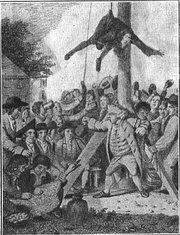
Crowd psychology is a branch of social psychology
Social psychology
Social psychology is the scientific study of how people's thoughts, feelings, and behaviors are influenced by the actual, imagined, or implied presence of others. By this definition, scientific refers to the empirical method of investigation. The terms thoughts, feelings, and behaviors include all...
. Ordinary people can typically gain direct power by acting collectively. Historically, because large groups of people
Group (sociology)
In the social sciences a social group can be defined as two or more humans who interact with one another, share similar characteristics and collectively have a sense of unity...
have been able to bring about dramatic and sudden social change in a manner that bypasses established due process
Due process
Due process is the legal code that the state must venerate all of the legal rights that are owed to a person under the principle. Due process balances the power of the state law of the land and thus protects individual persons from it...
, they have also provoked controversy. Social scientists have developed several different theories for explaining crowd
Crowd
A crowd is a large and definable group of people, while "the crowd" is referred to as the so-called lower orders of people in general...
psychology, and the ways in which the psychology
Psychology
Psychology is the study of the mind and behavior. Its immediate goal is to understand individuals and groups by both establishing general principles and researching specific cases. For many, the ultimate goal of psychology is to benefit society...
of the crowd differs significantly from the psychology of those individuals within it. Carl Jung
Carl Jung
Carl Gustav Jung was a Swiss psychiatrist and the founder of Analytical Psychology. Jung is considered the first modern psychiatrist to view the human psyche as "by nature religious" and make it the focus of exploration. Jung is one of the best known researchers in the field of dream analysis and...
coined the notion of the Collective unconscious
Collective unconscious
Collective unconscious is a term of analytical psychology, coined by Carl Jung. It is proposed to be a part of the unconscious mind, expressed in humanity and all life forms with nervous systems, and describes how the structure of the psyche autonomously organizes experience...
. Other major thinkers of crowd psychology include Rene Girard
René Girard
René Girard is a French historian, literary critic, and philosopher of social science. His work belongs to the tradition of anthropological philosophy...
, Gustave Le Bon
Gustave Le Bon
Gustave Le Bon was a French social psychologist, sociologist, and amateur physicist...
, Wilfred Trotter
Wilfred Trotter
Wilfred Batten Lewis Trotter, FRS was a British surgeon, a pioneer in neurosurgery. He was also known for his studies on social psychology, most notably for his concept of the herd instinct, which he first outlined in two published papers in 1908, and later in his famous popular work Instincts of...
, Gabriel Tarde
Gabriel Tarde
Jean-Gabriel De Tarde or Gabriel Tarde in short French sociologist, criminologist and social psychologist who conceived sociology as based on small psychological interactions among individuals , the fundamental forces being imitation and innovation.- Theory :Among the concepts...
, Sigmund Freud
Sigmund Freud
Sigmund Freud , born Sigismund Schlomo Freud , was an Austrian neurologist who founded the discipline of psychoanalysis...
, Elias Canetti
Elias Canetti
Elias Canetti was a Bulgarian-born modernist novelist, playwright, memoirist, and non-fiction writer. He wrote in German and won the Nobel Prize in Literature in 1981, "for writings marked by a broad outlook, a wealth of ideas and artistic power".-Life:...
, Steve Reicher
Steve Reicher
Stephen D Reicher is Professor of Social Psychology and former Head of the School of Psychology at the University of St Andrews....
and Julia Constintine. At a general level, crowd psychology is concerned with the behaviour and thought processes of individual crowd members and the crowd as a whole. Given the prevalence of crowd events, and the potential safety issues associated with such large gatherings of people, the topic is receiving increasing attention from agencies responsible for crowd management and also from governments.
Classical theories
The main idea of Sigmund Freud's crowd behavior theory is that people who are in a crowd act differently towards people from those who are thinking individually. The minds of the group would merge to form a way of thinking. Each member's enthusiasm would be increased as a result, and one becomes less aware of the true nature of one's actions.Le Bon’s idea that crowds foster anonymity and sometimes generate emotion has become something of a cliché. Yet it has been contested by some critics, such as Clark McPhail who points out that some studies show that "the madding crowd" does not take on a life of its own, apart from the thoughts and intentions of members. Norris Johnson, after investigating a panic at a 1979 Who concert concluded that the crowd was composed of many small groups of people mostly trying to help each other. However, leaders ultimately associate themselves with a specific idea.
Theodor Adorno criticized the belief in a spontaneity of the masses: according to him, the masses were an artificial product of "administrated" modern life. The Ego of the bourgeois subject dissolved itself, giving way to the Id
Id, ego, and super-ego
Id, ego and super-ego are the three parts of the psychic apparatus defined in Sigmund Freud's structural model of the psyche; they are the three theoretical constructs in terms of whose activity and interaction mental life is described...
and the "de-psychologized" subject. Furthermore, the bond linking the masses to the leader through the spectacle, as fascism displayed in its public representations, is feigned:
"When the leaders become conscious of mass psychology and take it into their own hands, it ceases to exist in a certain sense. [...] Just as little as people believe in the depth of their hearts that the Jews are the devil, do they completely believe in their leader. They do not really identify themselves with him but act this identification, perform their own enthusiasm, and thus participate in their leader's performance. [...] It is probably the suspicion of this fictitiousness of their own 'group psychology' which makes fascist crowds so merciless and unapproachable. If they would stop to reason for a second, the whole performance would go to pieces, and they would be left to panic."
Edward Bernays
Edward Bernays
Edward Louis Bernays , was an Austrian-American pioneer in the field of public relations and propaganda along with Ivy Lee, referred to in his obituary as "the father of public relations"...
(1891–1995), nephew of psychoanalyst Sigmund Freud, was considered the father of the field of public relations. Bernays was one of the first to attempt to manipulate public opinion using the psychology of the subconscious. He felt this manipulation was necessary in society, which he felt was irrational and dangerous.
Convergence theory
Convergence theory holds that crowd behavior is not a product of the crowd itself, but is carried into the crowd by particular individuals. Thus, crowds amount to a convergence of like-minded individuals. In other words, while contagion theory states that crowds cause people to act in a certain way, convergence theory says the opposite: that people who wish to act in a certain way come together to form crowds.An example of convergence theory states that there is no homogeneous activity within a repetitive practice, sometimes observed when an immigrant population becomes common in a previously homogeneous area, and members of the existing community (apparently spontaneously) band together to threaten those trying to move into their neighborhoods. In such cases, convergence theorists contend, the crowd itself does not generate racial hatred or violence; rather, the hostility has been simmering for some time among many local people. A crowd then arises from convergence of people who oppose the presence of these neighbors. Convergence theory claims that crowd behavior as such is not irrational; rather, people in crowds express existing beliefs and values so that the mob reaction is the rational product of widespread popular feeling.
See also
- Anonymous (group)Anonymous (group)Anonymous is an international hacking group, spread through the Internet, initiating active civil disobedience, while attempting to maintain anonymity. Originating in 2003 on the imageboard 4chan, the term refers to the concept of many online community users simultaneously existing as an anarchic,...
- Bread and circusesBread and circuses"Bread and Circuses" is a metaphor for a superficial means of appeasement...
- Bystander effectBystander effectThe bystander effect or Genovese syndrome is a social psychological phenomenon that refers to cases where individuals do not offer any means of help in an emergency situation to the victim when other people are present...
- CharismaCharismaThe term charisma has two senses: 1) compelling attractiveness or charm that can inspire devotion in others, 2) a divinely conferred power or talent. For some theological usages the term is rendered charism, with a meaning the same as sense 2...
- Collective behaviorCollective behaviorThe expression collective behaviour was first used by Robert E. Park, and employed definitively by Herbert Blumer, to refer to social processes and events which do not reflect existing social structure , but which emerge in a "spontaneous" way.Collective behavior might also be defined as action...
- Collective EffervescenceCollective EffervescenceCollective effervescence is a perceived energy formed by a gathering of people as might be experienced at a sporting event, a carnival, a rave, or a riot...
- Collective hysteriaCollective hysteriaMass hysteria—other names include collective hysteria, group hysteria, or collective obsessional behavior—is the manifestation of the same or similar hysterical symptoms by more than one person. A common manifestation of mass hysteria occurs when a group of people believe they are suffering from a...
- Collective consciousnessCollective consciousnessCollective consciousness was a term coined by the French sociologist Émile Durkheim to refer to the shared beliefs and moral attitudes which operate as a unifying force within society...
(and Georg LukácsGeorg LukácsGyörgy Lukács was a Hungarian Marxist philosopher and literary critic. He is a founder of the tradition of Western Marxism. He contributed the concept of reification to Marxist philosophy and theory and expanded Karl Marx's theory of class consciousness. Lukács' was also an influential literary...
' critique of Le Bon's crowd psychology, notably through the concept of class consciousnessClass consciousnessClass consciousness is consciousness of one's social class or economic rank in society. From the perspective of Marxist theory, it refers to the self-awareness, or lack thereof, of a particular class; its capacity to act in its own rational interests; or its awareness of the historical tasks...
) - Collective narcissismCollective narcissismCollective narcissism is a type of narcissism where an individual has an inflated self-love of his or her own ingroup, where an “ingroup” is a group in which an individual is personally involved...
- Collective unconsciousCollective unconsciousCollective unconscious is a term of analytical psychology, coined by Carl Jung. It is proposed to be a part of the unconscious mind, expressed in humanity and all life forms with nervous systems, and describes how the structure of the psyche autonomously organizes experience...
- Communal reinforcementCommunal reinforcementCommunal reinforcement is a social phenomenon in which a concept or idea is repeatedly asserted in a community, regardless of whether sufficient empirical evidence has been presented to support it. Over time, the concept or idea is reinforced to become a strong belief in many people's minds, and...
- Conformity (psychology)
- Crowd manipulationCrowd manipulationCrowd manipulation is the intentional use of techniques based on the principles of crowd psychology to engage, control, or influence the desires of a crowd in order to direct its behavior toward a specific action. This practice is common to politics and business and can facilitate the approval or...
- Crowds and PowerCrowds and PowerCrowds and Power is a 1960 book by Elias Canetti, dealing with the dynamics of crowds and "packs" and the question of how and why crowds obey rulers. Canetti draws a parallel between ruling and paranoia...
- The Wisdom of CrowdsThe Wisdom of CrowdsThe Wisdom of Crowds: Why the Many Are Smarter Than the Few and How Collective Wisdom Shapes Business, Economies, Societies and Nations, published in 2004, is a book written by James Surowiecki about the aggregation of information in groups, resulting in decisions that, he argues, are often better...
- Edward BernaysEdward BernaysEdward Louis Bernays , was an Austrian-American pioneer in the field of public relations and propaganda along with Ivy Lee, referred to in his obituary as "the father of public relations"...
- Elliott wave theory
- Extraordinary Popular Delusions and the Madness of CrowdsExtraordinary Popular Delusions and the Madness of CrowdsExtraordinary Popular Delusions and the Madness of Crowds is a history of popular folly by Scottish journalist Charles Mackay, first published in 1841. The book chronicles its subjects in three parts: "National Delusions", "Peculiar Follies", and "Philosophical Delusions"...
- Gabriel TardeGabriel TardeJean-Gabriel De Tarde or Gabriel Tarde in short French sociologist, criminologist and social psychologist who conceived sociology as based on small psychological interactions among individuals , the fundamental forces being imitation and innovation.- Theory :Among the concepts...
and Gustave Le BonGustave Le BonGustave Le Bon was a French social psychologist, sociologist, and amateur physicist...
, two early theorists of crowd and social psychologySocial psychologySocial psychology is the scientific study of how people's thoughts, feelings, and behaviors are influenced by the actual, imagined, or implied presence of others. By this definition, scientific refers to the empirical method of investigation. The terms thoughts, feelings, and behaviors include all... - Group behaviorGroup behaviourGroup behaviour in sociology refers to the situations where people interact in large or small groups. The field of group dynamics deals with small groups that may reach consensus and act in a coordinated way...
- GroupthinkGroupthinkGroupthink is a psychological phenomenon that occurs within groups of people. It is the mode of thinking that happens when the desire for harmony in a decision-making group overrides a realistic appraisal of alternatives. Group members try to minimize conflict and reach a consensus decision without...
- Herd behaviorHerd behaviorHerd behavior describes how individuals in a group can act together without planned direction. The term pertains to the behavior of animals in herds, flocks and schools, and to human conduct during activities such as stock market bubbles and crashes, street demonstrations, sporting events,...
- Herding instinct
- Hive mindCollective consciousnessCollective consciousness was a term coined by the French sociologist Émile Durkheim to refer to the shared beliefs and moral attitudes which operate as a unifying force within society...
- Kurt LewinKurt LewinKurt Zadek Lewin was a German-American psychologist, known as one of the modern pioneers of social, organizational, and applied psychology....
- LGATLarge Group Awareness TrainingLarge-group awareness training refers to activities usually offered by groups linked with the human potential movement which claim to increase self-awareness and bring about desirable transformations in individuals' personal lives...
- Macy ConferencesMacy conferencesThe Macy Conferences were a set of meetings of scholars from various disciplines held in New York by the initiative of Warren McCulloch and the Josiah Macy, Jr. Foundation from 1946 to 1953...
- Memory holeMemory holeA memory hole is any mechanism for the alteration or disappearance of inconvenient or embarrassing documents, photographs, transcripts, or other records, such as from a web site or other archive, particularly as part of an attempt to give the impression that something never happened...
- Herd mentalityHerd mentalityHerd mentality describes how people are influenced by their peers to adopt certain behaviors, follow trends, and/or purchase items. Examples of the herd mentality include stock market trends, fashions in apparel, cars, taste in music, home décor, etc...
- Over-soulOver-soul“The Oversoul” is an essay by Ralph Waldo Emerson, first published in 1841. The broad subject of the essay, considered one of Emerson's best, is the human soul...
- Religious paranoiaReligious paranoiaReligious paranoia is a condition which has been compared to extremism and intolerance. It has been cited as a possible contributor to political violence...
- RiotRiotA riot is a form of civil disorder characterized often by what is thought of as disorganized groups lashing out in a sudden and intense rash of violence against authority, property or people. While individuals may attempt to lead or control a riot, riots are thought to be typically chaotic and...
- Social proofSocial proofSocial proof, also known as informational social influence, is a psychological phenomenon where people assume the actions of others reflect correct behavior for a given situation...
- Psychoanalytic sociologyPsychoanalytic sociologyPsychoanalytic sociology is the research field that analyzes society using the same methods that psychoanalysis applied to analyze an individual....
- VolksgeistVolksgeistVolksgeist is a German loanword for a unique "spirit" possessed collectively by each people or nation. The idea has its origins in the Romantic era and was proposed by Johann Gottfried Herder.Herder used this to create cultural sentiments on the people of Germany....
("Spirit of the People") - Wilfred TrotterWilfred TrotterWilfred Batten Lewis Trotter, FRS was a British surgeon, a pioneer in neurosurgery. He was also known for his studies on social psychology, most notably for his concept of the herd instinct, which he first outlined in two published papers in 1908, and later in his famous popular work Instincts of...
Further reading
- Berk, Richard A. Collective Behavior. Dubuque, Iowa: Wm. C. Brown, 1974
- Buford, Bill. Among the ThugsAmong the ThugsAmong the Thugs: The Experience, and the Seduction, of Crowd Violence is a 1990 work of journalism by American writer Bill Buford documenting football hooliganism in the United Kingdom....
: The Experience, and the Seduction, of Crowd Violence. New York, NY: W. W. Norton & Co., Inc. (1990) - Challenger, R., Clegg, C. W., & Robinson, M. A. (2009). Understanding crowd behaviours. Multi-volume report for the UK Government’s Cabinet Office. London: Cabinet Office. http://www.cabinetoffice.gov.uk/resource-library/understanding-crowd-behaviours-documents
- Freud, Sigmund. Group Psychology and the Analysis of the Ego. (Translated from the German original Massenpsychologie und Ich-Analyse [1921] by James Strachey.) Standard Edition, vol. XVIII, pp. 67–143. The Hogarth Press, London. 1981. ISBN 0-7012-0067-7
- Johnson, Norris R. "Panic at 'The Who Concert Stampede': An Empirical Assessment." Social Problems. Vol. 34, No. 4 (October 1987): 362–373.
- La Boétie, EtienneÉtienne de La BoétieÉtienne de La Boétie was a French judge, writer, anarchist, and "a founder of modern political philosophy in France." He "has been best remembered as the great and close friend of the eminent essayist Michel de Montaigne, in one of history's most notable friendships."-Life:"La Boétie was born in...
, The Politics of Obedience: The Discourse of Voluntary Servitude (16th century) with an introduction by Murray RothbardMurray RothbardMurray Newton Rothbard was an American author and economist of the Austrian School who helped define capitalist libertarianism and popularized a form of free-market anarchism he termed "anarcho-capitalism." Rothbard wrote over twenty books and is considered a centrally important figure in the...
, Free Life Editions, 1975. ISBN 0-914156-11-X (etext freely available here, translated by Harry Kurz under the title "Anti-Dictator", Columbia Univ. Press, 1942, with an introduction) - Le Bon, Gustave (1895) Psychology of Crowds. [Improved edition www.sparklingbooks.com.]
- McDougall, WilliamWilliam McDougall (psychologist)William McDougall FRS was an early twentieth century psychologist who spent the first part of his career in the United Kingdom and the latter part in the United States...
, The Group Mind (1920) - Mc Phail, Clark, The Myth of the Madding Crowd, New York, Aldine de Gruyter, 1991.
- Moscovici, SergeSerge MoscoviciSerge Moscovici is a Romanian-born French social psychologist, currently the director of the Laboratoire Européen de Psychologie Sociale , which he co-founded in 1974 at the Maison des sciences de l'homme in Paris...
} Social influence and social change, Academic Press
Academic Press
Academic Press is an academic book publisher. Originally independent, it was acquired by Harcourt, Brace & World in 1969. Reed Elsevier bought Harcourt in 2000, and Academic Press is now an imprint of Elsevier....
, 1976.
-
- Psychologie des minorités actives, P.U.F., 1979
- L’Age des foules: un traité historique de psychologie des masses, FayardFayardFayard is a French Paris-based publishing house established in 1857. Fayard is controlled by Hachette Livre.-Works published:Works published by Editions Fayard include:...
, 1981 (about Gustave Le BonGustave Le BonGustave Le Bon was a French social psychologist, sociologist, and amateur physicist...
's invention of crowd psychology and Gabriel TardeGabriel TardeJean-Gabriel De Tarde or Gabriel Tarde in short French sociologist, criminologist and social psychologist who conceived sociology as based on small psychological interactions among individuals , the fundamental forces being imitation and innovation.- Theory :Among the concepts...
) - Social Representations: Explorations in Social Psychology, Polity Press, 2000
- Rheingold, HowardHoward Rheingold-See also:* Collective intelligence* Information society* The WELL* Virtual community-External links:***** at TED conference** a 48MB Quicktime movie, hosted by the Internet Archive...
, Smart Mobs: The Next Social RevolutionSmart mobA smart mob is a group that, contrary to the usual connotations of a mob, behaves intelligently or efficiently because of its exponentially increasing network links. This network enables people to connect to information and others, allowing a form of social coordination. Parallels are made to,...
, 2003 - Reich, WilhelmWilhelm ReichWilhelm Reich was an Austrian-American psychiatrist and psychoanalyst, known as one of the most radical figures in the history of psychiatry...
, The Mass Psychology of FascismThe Mass Psychology of FascismThe Mass Psychology of Fascism, originally Die Massenpsychologie des Faschismus in German, was a book written by Wilhelm Reich in 1933...
, (1933) 1946 revised and enlarged US edition - Surowiecki, JamesJames SurowieckiJames Michael Surowiecki is an American journalist. He is a staff writer at The New Yorker, where he writes a regular column on business and finance called "The Financial Page".-Background:...
, The Wisdom of Crowds: Why the Many Are Smarter Than the Few and How Collective Wisdom Shapes Business, Economies, Societies and NationsThe Wisdom of CrowdsThe Wisdom of Crowds: Why the Many Are Smarter Than the Few and How Collective Wisdom Shapes Business, Economies, Societies and Nations, published in 2004, is a book written by James Surowiecki about the aggregation of information in groups, resulting in decisions that, he argues, are often better...
, 2004 - Tarde, GabrielGabriel TardeJean-Gabriel De Tarde or Gabriel Tarde in short French sociologist, criminologist and social psychologist who conceived sociology as based on small psychological interactions among individuals , the fundamental forces being imitation and innovation.- Theory :Among the concepts...
. Les lois de l'imitation (1890), La logique sociale (1895), L'Opinion et la foule (1901), etc. - Trotter, WilfredWilfred TrotterWilfred Batten Lewis Trotter, FRS was a British surgeon, a pioneer in neurosurgery. He was also known for his studies on social psychology, most notably for his concept of the herd instinct, which he first outlined in two published papers in 1908, and later in his famous popular work Instincts of...
, Instincts of the Herd in Peace and WarInstincts of the Herd in Peace and WarInstincts of the Herd in Peace and War is the title of a famous book by Wilfred Trotter. Based on the ideas of Gustave LeBon it was very influential in the development of Group dynamics and Crowd psychology and the Propaganda of Edward Bernays.- Quotes :...
, 1914 - Turner, Ralph, and Lewis M. Killian. Collective Behavior 2d ed. Englewood Cliffs, NJ: Prentice Hall, 1972; 3d ed., 1987; 4th ed., 1993.
- Wells, H. G.H. G. WellsHerbert George Wells was an English author, now best known for his work in the science fiction genre. He was also a prolific writer in many other genres, including contemporary novels, history, politics and social commentary, even writing text books and rules for war games...
Men Like GodsMen Like GodsMen Like Gods is a novel written in 1923 by H. G. Wells. It features a utopian parallel universe.-Plot summary :The hero of the novel, Mr. Barnstaple, is a depressive journalist working for a newspaper called the Liberal. At the beginning of the story, Barnstaple, as well as a few other...
, 1923. (Wells describes a fictional utopian world in which crowds have been eliminated from society.)
External links
- Dr. J. P van de Sande (Dutch and English, see On Crowds)
- "Crowd Disasters" by Prof. Dr. G. Keith Still
- "Online Crowds" by Chris Russ - Mass phenomena and collective behavior on the Internet (Academic publications and PhD Thesis)
- A documented example
- Understanding crowd behaviours