All Topics  
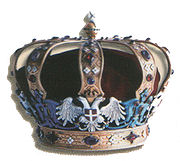
Coat of arms of the Kingdom of Yugoslavia


   Email Print
   Bookmark   Link


Coat of arms of the Kingdom of Yugoslavia


The coat of arms
Coat of arms

A coat of arms, more properly called an armorial achievement, armorial bearings or often just arms for short, in European tradition, is a design belonging to a particular person and used by them in a wide variety of ways....
 of the Kingdom of Yugoslavia
Kingdom of Yugoslavia

The Kingdom of Yugoslavia was a monarchy stretching from the Western Balkans to Central Europe which existed during the often-tumultuous interwar era of 1918?1941....
 (Kingdom of Serbs, Croats and Slovenes) incorporated Serb, Croat and Slovenia
Slovenia

Slovenia , officially the Republic of Slovenia , is a country in southern Central Europe bordering Italy to the west, the Adriatic Sea to the southwest, Croatia to the south and east, Hungary to the northeast, and Austria to the north....
n symbols to represent the recognized nations of Yugoslavia at the time which were Serbs
Serbs

Serbs are a South Slavs people living in the Balkans and Central Europe, mainly in Serbia, Montenegro, Bosnia-Herzegovina, and, to a lesser extent, in Croatia....
, Croats
Croats

Croats are a South Slavs nation mostly living in Croatia, Bosnia and Herzegovina and nearby countries. There are around 5 million Croats living in the southern Central Europe region, along the east bank of the Adriatic Sea and an estimated 9 million throughout the world....
, and Slovenes (Bosniaks
Bosniaks

group = BosniaksBo?njaci|image = ...
 were considered Muslim Croats or Muslim Serbs, Macedonians
Macedonians (ethnic group)

The Macedonians also referred to as Macedonian Slavs are a South Slavs people who are primarily associated with the Republic of Macedonia....
 were considered Serbs, and Montenegrins
Montenegrins

group=Montenegrins|pop=800,000|region1=|pop1=267,669 198,414 |ref1=|region2=|pop2=69,049 ca. 200,000 |ref2=|region3=|pop3=30,000:...
 were considered Serbs, Albanians were not considered a nation of Yugoslavia either). The Serbian cross
Serbian cross

The Serbian Cross is a Greek cross which has C-shapes on each of its four corners. It is the national, religious and ethnic symbol of Serbs and Serbia....
, the Croatian šahovnica, and the coat that represents Slovenia
Slovenia

Slovenia , officially the Republic of Slovenia , is a country in southern Central Europe bordering Italy to the west, the Adriatic Sea to the southwest, Croatia to the south and east, Hungary to the northeast, and Austria to the north....
 (first time created for this occasion - six-sided golden star above the silver crescent).

Graphically, the coat is similar, with practically the same robe and two headed eagle.

The main difference is found on the shield
Shield

A shield is a protective device, meant to intercept attacks. The term often refers to a device that is held in the hand, as opposed to armour or a bullet proof vest....
, which is now divided on three parts: the shield of the Coat of Arms of Serbia
Coat of arms of Serbia

The Coat of Arms of Serbia is the same as the coat of arms of the former House of Obrenovic dynasty and features the white bicephalic eagle of the House of Nemanjic ....
 (white cross
Cross

A cross is a geometrical figure consisting of two lines or bars perpendicular to each other, dividing one or two of the lines in half. The lines usually run vertically and horizontally; if they run diagonally, the design is technically termed a saltire....
 with four firesteels on the red field), coat of arms of Croatia
Coat of arms of Croatia

The Coat of arms of Croatia consists of one main shield and five smaller shields which form a crown over the main shield. The main coat of arms is a checkerboard that consists of 13 red and 12 silver fields....
 (red and white chequy) and the coat that represents Slovenia
Slovenia

Slovenia , officially the Republic of Slovenia , is a country in southern Central Europe bordering Italy to the west, the Adriatic Sea to the southwest, Croatia to the south and east, Hungary to the northeast, and Austria to the north....
 (first time created for this occasion - six-sided golden star above the silver ribbon).


Discussion
Ask a question about 'Coat of arms of the Kingdom of Yugoslavia'
Start a new discussion about 'Coat of arms of the Kingdom of Yugoslavia'
Answer questions from other users
Full Discussion Forum


Encyclopedia


The coat of arms
Coat of arms

A coat of arms, more properly called an armorial achievement, armorial bearings or often just arms for short, in European tradition, is a design belonging to a particular person and used by them in a wide variety of ways....
 of the Kingdom of Yugoslavia
Kingdom of Yugoslavia

The Kingdom of Yugoslavia was a monarchy stretching from the Western Balkans to Central Europe which existed during the often-tumultuous interwar era of 1918?1941....
 (Kingdom of Serbs, Croats and Slovenes) incorporated Serb, Croat and Slovenia
Slovenia

Slovenia , officially the Republic of Slovenia , is a country in southern Central Europe bordering Italy to the west, the Adriatic Sea to the southwest, Croatia to the south and east, Hungary to the northeast, and Austria to the north....
n symbols to represent the recognized nations of Yugoslavia at the time which were Serbs
Serbs

Serbs are a South Slavs people living in the Balkans and Central Europe, mainly in Serbia, Montenegro, Bosnia-Herzegovina, and, to a lesser extent, in Croatia....
, Croats
Croats

Croats are a South Slavs nation mostly living in Croatia, Bosnia and Herzegovina and nearby countries. There are around 5 million Croats living in the southern Central Europe region, along the east bank of the Adriatic Sea and an estimated 9 million throughout the world....
, and Slovenes (Bosniaks
Bosniaks

group = BosniaksBo?njaci|image = ...
 were considered Muslim Croats or Muslim Serbs, Macedonians
Macedonians (ethnic group)

The Macedonians also referred to as Macedonian Slavs are a South Slavs people who are primarily associated with the Republic of Macedonia....
 were considered Serbs, and Montenegrins
Montenegrins

group=Montenegrins|pop=800,000|region1=|pop1=267,669 198,414 |ref1=|region2=|pop2=69,049 ca. 200,000 |ref2=|region3=|pop3=30,000:...
 were considered Serbs, Albanians were not considered a nation of Yugoslavia either). The Serbian cross
Serbian cross

The Serbian Cross is a Greek cross which has C-shapes on each of its four corners. It is the national, religious and ethnic symbol of Serbs and Serbia....
, the Croatian šahovnica, and the coat that represents Slovenia
Slovenia

Slovenia , officially the Republic of Slovenia , is a country in southern Central Europe bordering Italy to the west, the Adriatic Sea to the southwest, Croatia to the south and east, Hungary to the northeast, and Austria to the north....
 (first time created for this occasion - six-sided golden star above the silver crescent).

Graphically, the coat is similar, with practically the same robe and two headed eagle.

The main difference is found on the shield
Shield

A shield is a protective device, meant to intercept attacks. The term often refers to a device that is held in the hand, as opposed to armour or a bullet proof vest....
, which is now divided on three parts: the shield of the Coat of Arms of Serbia
Coat of arms of Serbia

The Coat of Arms of Serbia is the same as the coat of arms of the former House of Obrenovic dynasty and features the white bicephalic eagle of the House of Nemanjic ....
 (white cross
Cross

A cross is a geometrical figure consisting of two lines or bars perpendicular to each other, dividing one or two of the lines in half. The lines usually run vertically and horizontally; if they run diagonally, the design is technically termed a saltire....
 with four firesteels on the red field), coat of arms of Croatia
Coat of arms of Croatia

The Coat of arms of Croatia consists of one main shield and five smaller shields which form a crown over the main shield. The main coat of arms is a checkerboard that consists of 13 red and 12 silver fields....
 (red and white chequy) and the coat that represents Slovenia
Slovenia

Slovenia , officially the Republic of Slovenia , is a country in southern Central Europe bordering Italy to the west, the Adriatic Sea to the southwest, Croatia to the south and east, Hungary to the northeast, and Austria to the north....
 (first time created for this occasion - six-sided golden star above the silver ribbon). It should also be noted that the official Coat of Arms of Serbia is different than that of Kingdom of Yugoslavia. The Crown/Shield/Robe are different from each other, As well the Serbian Coat of Arms also bears two golden fleurs-de-lys, While the CoA of Yugoslavia did not.