

Battle of Cyzicus

Encyclopedia
The naval Battle of Cyzicus took place in 410 BC
during the Peloponnesian War
. In the battle, an Athenian
fleet commanded by Alcibiades
, Thrasybulus
, and Theramenes
routed and completely destroyed a Sparta
n fleet commanded by Mindarus
. The victory allowed Athens to recover control over a number of cities in the Hellespont over the next year. In the wake of their defeat, the Spartans made a peace offer, which the Athenians rejected.
in November 411 BC
, the Spartan admiral Mindarus sent to Sparta for reinforcements and began working with the Persian satrap Pharnabazus to plan for a new offensive. The Athenians, meanwhile, were unable to follow through on their victory, since the depletion of the Athenian treasury precluded any major operations. Thus, by the spring of 410 BC, Mindarus had built a fleet of eighty ships, and with the support of Pharnabazus's troops, besieged and took the city of Cyzicus
. The Athenian fleet in the Hellespont withdrew from its base at Sestos
to Cardia
to avoid the superior Spartan force, and ships under Alcibiades, Theramenes, Thrasybulus that had been dispatched to raise money combined with this force, creating a fleet of 86 ships. This fleet, along with a force of land troops under Chaereas, set out to the Hellespont to challenge Mindarus.
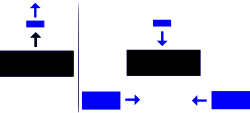
), just northwest of Cyzicus. The next day, they disembarked Chaereas's force near Cyzicus. The Athenian fleet then divided, with 20 ships under Alcibiades advancing towards Cyzicus while two other divisions under Thrasybulus and Theramenes lurked behind. Mindarus, seeing an opportunity to attack what appeared to be a vastly inferior force, set out towards them with his entire force. Alcibiades's force fled, and Mindarus's ships gave chase. When both forces had gotten well out from the harbor, however, Alcibiades turned to face Mindarus, and Thrasybulus and Theramenes appeared with their forces to cut off his retreat. Mindarus, seeing the trap, fled in the one open direction, towards a beach south of the city, where Pharnabazus was located with his troops. The Spartan fleet suffered losses in the flight, and reached the shore with the Athenians right behind them.
 Alcibiades's troops, leading the Athenian pursuit, landed and attempted to pull the Spartan ships back out to sea with grappling hooks. The Persian troops under Pharnabazus, however, entered the fighting on the shore and began to drive the Athenians, who were outnumbered and fighting against opponents on firmer ground, into the sea. Seeing this, Thrasybulus landed his force as a diversion and ordered Theramenes to combine his troops with those of Chaereas and join the battle. For a time, Thrasybulus and Alcibiades were both driven back by superior forces, but the arrival of Theramenes and Chaereas turned the tide; the Spartans and Persians were defeated, Mindarus was killed. All the Spartan ships were captured save for those of the Syracusan
allies, who burned their ships as they retreated.
At Athens, the oligarchic government that had ruled since 411 gave way to a restored democracy within a few months of the battle. An expeditionary force under Thrasyllus
was prepared to join the forces in the Hellespont. This force, however, did not depart until over a year after the battle, and although the Athenians eventually recaptured Byzantium
and resumed collecting tribute from Chalcedon
, they never truly pressed the advantage that Cyzicus had given them. Largely, this was a result of financial inability; even after the victory, the Athenian treasury was hard pressed to support large-scale offensive operations. Meanwhile, the Spartans, with Persian funding, quickly rebuilt their fleet, and would go on to undermine the Athenian advantage. Athens would win only one more naval battle in the war, at Arginusae
, and their defeat at Aegospotami
in 405 BC
would bring the war to a close. Cyzicus, although a dramatic victory, failed to bring any lasting advantage to the Athenian side, and only served to postpone the eventual outcome of the war.
410 BC
Year 410 BC was a year of the pre-Julian Roman calendar. At the time, it was known as the Year of the Consulship of Mamercinus and Volusus...
during the Peloponnesian War
Peloponnesian War
The Peloponnesian War, 431 to 404 BC, was an ancient Greek war fought by Athens and its empire against the Peloponnesian League led by Sparta. Historians have traditionally divided the war into three phases...
. In the battle, an Athenian
Athens
Athens , is the capital and largest city of Greece. Athens dominates the Attica region and is one of the world's oldest cities, as its recorded history spans around 3,400 years. Classical Athens was a powerful city-state...
fleet commanded by Alcibiades
Alcibiades
Alcibiades, son of Clinias, from the deme of Scambonidae , was a prominent Athenian statesman, orator, and general. He was the last famous member of his mother's aristocratic family, the Alcmaeonidae, which fell from prominence after the Peloponnesian War...
, Thrasybulus
Thrasybulus
Thrasybulus was an Athenian general and democratic leader. In 411 BC, in the wake of an oligarchic coup at Athens, the pro-democracy sailors at Samos elected him as a general, making him a primary leader of the successful democratic resistance to that coup...
, and Theramenes
Theramenes
Theramenes was an Athenian statesman, prominent in the final decade of the Peloponnesian War. He was particularly active during the two periods of oligarchic government at Athens, as well as in the trial of the generals who had commanded at Arginusae in 406 BC...
routed and completely destroyed a Sparta
Sparta
Sparta or Lacedaemon, was a prominent city-state in ancient Greece, situated on the banks of the River Eurotas in Laconia, in south-eastern Peloponnese. It emerged as a political entity around the 10th century BC, when the invading Dorians subjugated the local, non-Dorian population. From c...
n fleet commanded by Mindarus
Mindarus
Mindarus was a Spartan admiral who commanded the Peloponnesian fleet in 411 and 410 BC, during the Peloponnesian War. Successful in shifting the theater of war into the Hellespont, he then experienced a string of defeats; in the third and final of these, he himself was killed and the entire...
. The victory allowed Athens to recover control over a number of cities in the Hellespont over the next year. In the wake of their defeat, the Spartans made a peace offer, which the Athenians rejected.
Prelude
In the wake of the Athenian victory at AbydosBattle of Abydos
The Battle of Abydos was an Athenian naval victory in the Peloponnesian War. In the battle, the Spartan fleet under Mindarus attempted to rescue a small allied fleet that had been driven ashore at Dardanus, but was attacked by the Athenian fleet, under Thrasybulus...
in November 411 BC
411 BC
Year 411 BC was a year of the pre-Julian Roman calendar. At the time, it was known as the Year of the Consulship of Mugillanus and Rutilus...
, the Spartan admiral Mindarus sent to Sparta for reinforcements and began working with the Persian satrap Pharnabazus to plan for a new offensive. The Athenians, meanwhile, were unable to follow through on their victory, since the depletion of the Athenian treasury precluded any major operations. Thus, by the spring of 410 BC, Mindarus had built a fleet of eighty ships, and with the support of Pharnabazus's troops, besieged and took the city of Cyzicus
Cyzicus
Cyzicus was an ancient town of Mysia in Anatolia in the current Balıkesir Province of Turkey. It was located on the shoreward side of the present Kapıdağ Peninsula , a tombolo which is said to have originally been an island in the Sea of Marmara only to be connected to the mainland in historic...
. The Athenian fleet in the Hellespont withdrew from its base at Sestos
Sestos
200px|200px|thumb|The Ancient Map of Gallipoli PeninsulaSestos was an ancient Greek town of the Thracian Chersonese, the modern Gallipoli peninsula in European Turkey. Situated on the Hellespont opposite Abydos, it was the home of Hero in the legend of Hero and Leander, where according to legend...
to Cardia
Cardia
The cardia is the anatomical term for the part of the stomach attached to the esophagus. The cardia begins immediately distal to the z-line of the gastroesophageal junction, where the squamous epithelium of the esophagus gives way to the columnar epithelium of the gastrointestinal tract.Just...
to avoid the superior Spartan force, and ships under Alcibiades, Theramenes, Thrasybulus that had been dispatched to raise money combined with this force, creating a fleet of 86 ships. This fleet, along with a force of land troops under Chaereas, set out to the Hellespont to challenge Mindarus.
The battle
The Athenian force entered the Hellespont, and, passing the Spartan base at Abydos by night so as to conceal their numbers, established a base on the island of Proconnesus (modern-day MarmaraMarmara Island
Marmara is a Turkish island in the Sea of Marmara. It is the largest island in the Sea of Marmara that is the center of Marmara district in Balıkesir Province...
), just northwest of Cyzicus. The next day, they disembarked Chaereas's force near Cyzicus. The Athenian fleet then divided, with 20 ships under Alcibiades advancing towards Cyzicus while two other divisions under Thrasybulus and Theramenes lurked behind. Mindarus, seeing an opportunity to attack what appeared to be a vastly inferior force, set out towards them with his entire force. Alcibiades's force fled, and Mindarus's ships gave chase. When both forces had gotten well out from the harbor, however, Alcibiades turned to face Mindarus, and Thrasybulus and Theramenes appeared with their forces to cut off his retreat. Mindarus, seeing the trap, fled in the one open direction, towards a beach south of the city, where Pharnabazus was located with his troops. The Spartan fleet suffered losses in the flight, and reached the shore with the Athenians right behind them.
Syracuse, Italy
Syracuse is a historic city in Sicily, the capital of the province of Syracuse. The city is notable for its rich Greek history, culture, amphitheatres, architecture, and as the birthplace of the preeminent mathematician and engineer Archimedes. This 2,700-year-old city played a key role in...
allies, who burned their ships as they retreated.
Aftermath
In the wake of this dramatic victory, the Athenians had full control of the waters of the Hellespont. The next day, they took Cyzicus, which surrendered without a fight. An intercepted letter from the Spartan troops stranded near Cyzicus reads “The ships are gone. Mindarus is dead. The men are starving. We know not what to do." Demoralized by the devastation of their fleet, the Spartans sent an embassy to Athens seeking to make peace; the Athenians rejected it.At Athens, the oligarchic government that had ruled since 411 gave way to a restored democracy within a few months of the battle. An expeditionary force under Thrasyllus
Thrasyllus
Thrasyllus was an Athenian strategos and statesman who rose to prominence in the later years of the Peloponnesian War. First appearing in Athenian politics in 410 BC, in the wake of the Athenian coup of 411 BC, he played a role in organizing democratic resistance in an Athenian fleet at Samos...
was prepared to join the forces in the Hellespont. This force, however, did not depart until over a year after the battle, and although the Athenians eventually recaptured Byzantium
Byzantium
Byzantium was an ancient Greek city, founded by Greek colonists from Megara in 667 BC and named after their king Byzas . The name Byzantium is a Latinization of the original name Byzantion...
and resumed collecting tribute from Chalcedon
Chalcedon
Chalcedon , sometimes transliterated as Chalkedon) was an ancient maritime town of Bithynia, in Asia Minor, almost directly opposite Byzantium, south of Scutari . It is now a district of the city of Istanbul named Kadıköy...
, they never truly pressed the advantage that Cyzicus had given them. Largely, this was a result of financial inability; even after the victory, the Athenian treasury was hard pressed to support large-scale offensive operations. Meanwhile, the Spartans, with Persian funding, quickly rebuilt their fleet, and would go on to undermine the Athenian advantage. Athens would win only one more naval battle in the war, at Arginusae
Battle of Arginusae
The naval Battle of Arginusae took place in 406 BC during the Peloponnesian War near the Arginusae islands east of the island of Lesbos. In the battle, an Athenian fleet commanded by eight strategoi defeated a Spartan fleet under Callicratidas...
, and their defeat at Aegospotami
Battle of Aegospotami
The naval Battle of Aegospotami took place in 405 BC and was the last major battle of the Peloponnesian War. In the battle, a Spartan fleet under Lysander completely destroyed the Athenian navy...
in 405 BC
405 BC
Year 405 BC was a year of the pre-Julian Roman calendar. At the time, it was known as the Year of the Tribunate of Barbatus, Capitolinus, Cincinnatus, Medullinus, Iullus and Mamercinus...
would bring the war to a close. Cyzicus, although a dramatic victory, failed to bring any lasting advantage to the Athenian side, and only served to postpone the eventual outcome of the war.