

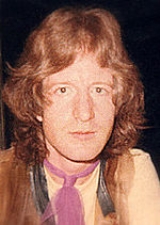
Badfinger

Encyclopedia
Badfinger were a British rock band
consisting originally of Pete Ham, Ron Griffiths, Mike Gibbins and Tom Evans
, active from 1968 to 1983, and evolving from The Iveys, formed by Ham, Griffiths and David "Dai" Jenkins in Swansea
, Wales
, in the early 1960s. Joey Molland
joined the group in 1969, following the departure of Griffiths. Signed by The Beatles'
Apple
label in 1968 as The Iveys, they adopted the name Badfinger in 1969. The band drew comparisons to the Beatles initially, due to the similarities of their music, and the mentorship of some members of the Beatles. Badfinger had four consecutive worldwide hits in 1970 and 1971: "Come and Get It" (written and produced by Paul McCartney
), "No Matter What", "Day After Day
", and "Baby Blue
". The Ham/Evans-penned Badfinger song, "Without You", became a Billboard
number one hit for Harry Nilsson
, and later a number three hit for Mariah Carey
.
In 1970, the band engaged American businessman Stan Polley
to manage their commercial affairs. Over the next five years while the band recorded several albums for Apple, they toured extensively, but became embroiled in the chaos of Apple Records' dissolution. They signed to Warner Bros.
, but Polley's financial machinations resulted in a lawsuit by Warner Bros. over missing escrow
account money. Warner's consequent withdrawal from market of the 1974 album, Wish You Were Here
(seven weeks after its release), cut off the band's income and plunged them into disarray and despair. Three days before his 28th birthday, on 24 April 1975, Ham committed suicide, leaving a note that included damning comments about Polley.
The next three years saw surviving members trying to rebuild their personal and professional lives against a backdrop of lawsuits. The albums Airwaves
(1978) and Say No More
(1981) floundered, as Molland, Gibbins and Evans see-sawed between cooperation and struggle in attempts to revive and capitalize on the Badfinger legacy. Having seen Ham's body after Ham's wife had called him, Evans reportedly never got over his friend's suicide, and was quoted as saying in darker moments, "I wanna be where he is." On 19 November 1983, Evans also took his own life by hanging.
) (b. Peter William Ham, 27 April 1947, Townhill, Swansea
, d. 23 April 1975), Griffiths (bass guitar) (b. Ronald Llewellyn Griffiths, 2 October 1946, in Swansea), Roy Anderson (drums), and David 'Dai' Jenkins (guitar), (b. David Owen Jenkins, 30 October 1945, Swansea). Playing under various names including The Black Velvets and the Wild Ones, by 1964 they settled on The Iveys, after a street in Swansea called Ivey Place. In March 1965, drummer Gibbins (b. Michael George Gibbins, 12 March 1949, Swansea, d. 4 October 2005) joined The Iveys. The group secured concerts around Swansea area, opening for prominent British groups such as the Spencer Davis Group
, The Who
, The Moody Blues
and The Yardbirds
.
By June 1966, Bill Collins (the father of actor Lewis Collins
), had started to manage the group. In December 1966 the entire group moved into Collins' home at 7 Park Avenue, Golders Green
, London, sharing space with an act called The Mojos
. The house was terminally overcrowded, so the only place to find any privacy was in a room equipped with a two-track recording machine.
The group performed a wide range of cover tunes on the London circuit, from Motown, blues
, soul
to Top 40, psychedelic pop, and Beatles' hits, which garnered interest from record labels. Ray Davies
of The Kinks
auditioned to produce them, recording three of their songs at a 4-track demo studio in London's Old Kent Road on 15 January 1967: "Taxi" and "Sausage And Eggs"; songs by Ham, and Griffiths', "I Believe In You Girl". On 8 December 1966, Collins and the group signed a five-year contract giving Collins a 20% share of net receipts; the same as the individual group members, but only after managerial expenses had been deducted. Collins said at the time: "Look, I can't promise you lads anything, except blood, sweat and tears". The group performed occasional concerts backing David Garrick
, while performing as The Iveys across the United Kingdom
throughout the rest of the decade. In 1967, Jenkins was asked to leave the group, and was replaced by Liverpudlian guitarist, Evans, of Them Calderstones (b. Thomas Evans Jr., 5 June 1947, Liverpool
, d. 19 November 1983). Jenkins' departure was remembered by Griffiths as being "politely asked if he would step down", as Jenkins seemed more interested in girls than the music.
After Collins' invitation, Mal Evans
(a Beatles' roadie/assistant) saw them playing at the Marquee Club
, London, on 25 January 1968, with Apple Records' A&R head, Peter Asher
. Evans consistently pushed their demo tapes to every Beatle until he gained approval to sign the group from all four: McCartney, George Harrison
, Ringo Starr
and John Lennon
. The demos were accomplished using a mono "sound-on-sound" tape recorder: two individual tracks bouncing each overdub on top of the last. Mal Evans' support ultimately led to their signing with Apple on 23 July 1968; becoming the first non-Beatle recording artists on the label. Each of The Iveys' members were also signed to Apple Corps
' publishing contracts.
The group's first single, "Maybe Tomorrow
", was released worldwide on 15 November 1968. It reached the Top Ten in several European countries and Japan, but only number 67 on the US Billboard Hot 100
, but failed to chart in the UK. The United States
manager of Apple Records, Ken Mansfield
, ordered 400,000 copies of the single—considered to be a bold move at the time in the music business—and pushed for automatic airplay and reviews from newspapers, which he secured. Nevertheless, Mansfield remembered the problems: "We had a great group. We had a great record. We were missing just one thing ... the ability to go out and pick up people, and convince them to put their money on the counter". A second Tom Evans' composition, "Storm in a Teacup", was included on an Apple EP promoting Wall's Ice Cream
, along with songs by Apple artists such as James Taylor
, Mary Hopkin
and Jackie Lomax
. The chart success of "Maybe Tomorrow" in Europe and Japan led to a follow-up single release in those markets in July 1969: Griffiths' "Dear Angie
". An LP entitled Maybe Tomorrow
was released only in Italy, Germany and Japan, but not in the UK or the US. This was thought to be the work of Apple Corps' president, Allen Klein
, as an Apple Corps' press officer, Tony Bramwell, remembered: "He [Klein] was saying, 'We're not going to issue any more records until I sort out this mess' [Apple Corps]."
Griffiths was interviewed for the Disc & Music Echo
magazine, complaining about the group's handling by Apple: "We do feel a bit neglected. We keep writing songs for a new single and submitting them to Apple, but they keep sending them back, saying they’re not good enough”. McCartney read the interview and offered the song, "Come And Get It", to the group, which he had written for the soundtrack of the film, The Magic Christian
. Before the recording on Saturday, 2 August 1969, Griffiths remembered the whole group being so excited they couldn't sleep. Producing the track in under one hour, McCartney made sure that they copied his own demo note-for-note: "They were a young band ... they said, 'We want to do it a bit different, wanna get our own thing in'. I said No, this has gotta be exactly like this, [McCartney's demo] 'cos this is the hit'." He also produced the group's original compositions of "Carry On Till Tomorrow" (commissioned as the main title theme for the film) and "Rock Of All Ages", with all three tracks appearing in the movie and its soundtrack album. As Griffiths was ill midway during these sessions, Evans played bass on "Rock Of All Ages".
Griffiths left the group in October 1969, being the only married occupant of the communal group's home, and raising a child, who was born in December 1968. His responsibilities created friction, mainly between Griffiths' wife, Evans, and manager Collins. Griffiths later said: "Tommy [Evans] created the bad blood. He'd convinced the others that [I was] not one of the boys anymore". Drummer Gibbins remembered that he wasn't even consulted about the decision: "I was considered a nothinghead at that point. I wasn't even worth conversing with".
", and the name was considered too trite for the prevailing music scene. Suggestions were put forward, like Lennon's "The Glass Onion," "The Prix", "The Cagneys", and "Home" from McCartney. Apple Corps' Neil Aspinall
proposed "Badfinger", in reference to "Bad Finger Boogie"; an early working title of Lennon/McCartney's "With a Little Help from My Friends
", as Lennon had hurt his forefinger on a piano by using only one finger.
As the release date of "Come and Get It" was approaching, Badfinger looked for a replacement for Griffiths. After auditioning a number of bassists, they hired guitarist Molland (b. Joseph Charles Molland, 21 June 1947, in Edge Hill, Liverpool), who was previously with Gary Walker & The Rain, The Masterminds, and The Fruit-Eating Bears. His addition required Evans to shift to bass guitar. "Come and Get It" was released in December 1969 in the UK, and January 1970 in the US. Selling over a million copies worldwide, it reached Top Ten throughout the world: number seven on the US Billboard chart on 7 February 1970, and number four in the UK. The track was also featured in The Magic Christian
film. For the band's initial LP release, their three songs from the soundtrack LP were remixed, combined with some older Iveys' tracks (including seven songs from the Maybe Tomorrow album), and released as Badfinger's first album Magic Christian Music
(1970). Even though the album was named after the film, only half of the songs on the album were actually used on the soundtrack. The album peaked at number 55 on the Billboard album chart in the US.
New recording sessions commenced in March 1970, with Mal Evans producing. Two songs were completed, including "No Matter What," but it was rejected by Apple as a potential single. Geoff Emerick
then took over as producer, and the band completed its second album in July 1970. During the recordings, the band were sent to Hawaii on 4 June, to appear at a Capitol/Apple Records convention, and then flew to Italy to play concerts in Rome. No Dice
was released in the US in late 1970, peaking at number 28 on the Billboard album chart. A re-mixed "No Matter What" was released as a single, reaching numerous Top Ten charts around the world, peaking at number eight in the US, and number five in the UK. The hit song from No Dice turned out to be "Without You", as Nilsson recorded the song in 1972, with his version becoming an international hit, reaching the Billboard number one, and spending five weeks at the top of the UK chart.. The verse lyrics were penned by Ham, with the chorus added by Evans. The song won Ham and Evans the 1972 Ivor Novello
award for "Song of the Year".
In April 1970, while in America scouting prospects for a tour, Collins was introduced to New York businessman, Polley, who signed Badfinger to a business management contract in November 1970. Polley established Badfinger Enterprises, Inc., with Stan Poses as vice president. This signed the band members to various contracts dictating that receipts of touring, recording, publishing and even songwriter performance royalties, which would then go into holding companies controlled by Polley. This led to a salary arrangement for the band, which various members later complained was inadequate in comparison to their gross earnings. Gibbins: "My first impression was, Stan [Polley] is a powerful guy", while Molland thought that Polley seemed more of a father-figure. At the same time, Polley was also managing Al Kooper
, of Blood, Sweat & Tears
, and Lou Christie
. Although Polley's professional reputation was admired, his dubious financial practices eventually contributed to the band's downfall. A financial statement prepared by Polley's accountants, Sigmund Balaban & Co., for the period from 8 December 1970 to 31 October 1971, showed Polley's income from the band: "Salaries and advances to client, $8,339 (Joey Molland), $6,861 (Mike Gibbins), $6,211 (Tom Evans), $5,959 (Pete Ham). Net corporation profit, $24,569. Management commission, $75,744 (Stan Polley)". Although it is not known if the band members saw the statement, Collins certainly had, as his handwriting was on the document.
Badfinger toured America for three months in late 1970, and were generally well received, although the band was already weary of persistent comparisons to The Beatles. "The thing that impressed me so much was how similar their voices were to The Beatles", Tony Visconti
(producer, "Maybe Tomorrow") said, "I sometimes had to look over the control board down into the studio to make sure John and Paul weren't singing lead vocals". Rolling Stone
critic Mike Saunders
opined in a rave review of No Dice in 1970: "It's as if John, Paul, George, and Ringo had been reincarnated as Joey, Pete, Tom, and Mike of Badfinger". Media comparisons between them and The Beatles would continue throughout Badfinger's career. During this time, various members of Badfinger also recorded on sessions for fellow Apple Records labelmates, most notably playing acoustic guitars on Harrison's All Things Must Pass
album (1970): "Isn't It a Pity
" and its title song, All Things Must Pass
. Ham and Evans also provided backing vocals on Ringo Starr
's single, "It Don't Come Easy
". Evans and Molland also performed on Lennon's album Imagine
(1971), although Molland has said their tracks were not used. On 26 July 1971, all four members of Badfinger arrived at New York's John F. Kennedy International Airport
, to rehearse for Harrison's Concert for Bangladesh, on 1 August 1971. Ham duetted with Harrison on "Here Comes the Sun
" during the concert.
Badfinger finished recording their third album, again with Emerick as producer, but the tapes were rejected by Apple. Harrison took over as producer in spring of 1971, but later pulled out of the project because of his Bangladesh
commitments; the album was then completed by Todd Rundgren
. Straight Up
was released in the US in December 1971, and spawned two successful singles: "Day After Day" (Billboard number four), which sold over a million worldwide, and "Baby Blue" (US number 14). The album reached number 31 on the US charts. It included uncredited special guest appearances from Harrison, Leon Russell
, and Klaus Voormann
. Commenting on the recording of the dual slide guitars on "Day After Day", Molland remembered: "Pete and I had done the backing track, and George came in the studio and asked if we'd mind if he played ... It took hours, and hours, and hours, to get those two guitars in sync". The band embarked on a US tour in 1972, but after problems with Evans, Gibbins left and was replaced for the tour by drummer Rob Stawinsky, who was described as Badfinger's "solid, new drummer". Gibbins would rejoin the band after the tour.
By 1972, the band were contracted for one last album with Apple Records. Despite Badfinger's success, Apple was facing troubled times and its operations were being cut back by Klein, informing Badfinger that the label would not be as generous as previously regarding a new contract. By this time, manager Polley was openly suspected of financial mismanagement by his other clients, Christie and music arranger Charlie Calello
. A series of allegations also represented Polley as a one-time "bagman" for the Mafia
.
Sessions for Badfinger's fourth and last album for Apple, Ass
, had begun as far back as early 1972 and would continue at five recording studios over the next year. Rundgren was originally hired to produce, but quit in a financial dispute during the first week. The band then produced itself, but Apple rejected their version of the album. Finally, Badfinger hired Chris Thomas
to co-produce and complete the project. In the meanwhile, Polley negotiated a deal with Warner Bros. Records
, that required a new album from the band every six months over a three-year period. By this time Evans had become suspicious of Polley's oversight, but the band nevertheless signed the deal. Released in 1973, the Ass front cover featured Evans' idea: a jackass staring at a huge dangling carrot. The Ass release was further stalled because of legal wrangling, with Polley using Molland's unsigned song publishing as a negotiating ploy. Attempting to sweep discrepancies under the carpet in order to secure the LP's release Apple attributed the songwriting credits to "Badfinger". But both Ass (US number 122), and its accompanying lead single, "Apple of My Eye
", fell short of reaching the Billboard Hot 100.
All four Badfinger albums on Apple have been re-issued twice; first in the early 1990s as part of a revival of the Apple catalogue and again in 2010, when the albums were available individually or as part of the 17 Apple Box Set. The sole Iveys' album Maybe Tomorrow was also issued in the early 1990s but was not part of the 2010 campaign.
Only six weeks after the Ass sessions had been completed, Badfinger re-entered the studio to begin recording material for its first Warner Bros. release, Badfinger
(the intended title, For Love or Money, was omitted from the album pressings). The album was produced by Thomas, even though the songs were being written in the studio as they recorded. Ass and Badfinger were released almost simultaneously, and the accompanying singles from Badfinger, "Love Is Easy" (UK) and "I Miss You" (US), were unsuccessful. Badfinger did manage to retain some US fan support as a result of their touring schedule. A March 1974 concert at the Cleveland Agora
was recorded on 16-track tape for a possible live album release, even though the performance was deemed unsatisfactory at the time.
Following the American tours, Badfinger recorded Wish You Were Here at the Caribou Ranch
recording studio in Colorado, and at George Martin's
AIR Studios
in London. The album was well received by Rolling Stone
and other periodicals upon its release in October 1974, but crises in band management, money and band leadership were creating growing frictions within Badfinger. Molland's wife, Kathie, had been taking a more assertive role in the band's politics, which did not endear her to the rest of the band, particularly Ham. She remembered complaining that even though the band had had hit records, they "still didn't have a fridge, and didn't have a TV". Just before the start of rehearsals for an October 1974 UK tour, Ham suddenly quit Badfinger during a management meeting, standing up and shouting “I don't want Kathie [Molland] managing the band! I'm leaving”. He found a cottage in Wales, where he hoped to build a studio. He was quickly replaced by guitarist/keyboardist Bob Jackson, who was then idle after previous involvement with The Fortunes
. During Ham's three-week hiatus from the band, Polley tried to interest record companies in Ham as a solo act, but under pressure from Warner Brothers, Ham rejoined the band in time for the tour, as the company made it clear that it would have little to no interest in promoting Badfinger if Ham was not a part of it. Jackson remained as full-time keyboardist, making the band a quintet. After the UK tour, Molland quit of his own accord to pursue a solo career in December 1974.
Over the previous year, Warner Brothers' publishing arm had become increasingly troubled by a lack of communication from Polley regarding the status of an escrow account of advance funds. Per their contract, Polley was to deposit $250,000 into a mutually accessible account for safekeeping, which both Warner Publishing and the band could potentially access. But Polley did not reveal the account's whereabouts to Warner Publishing, and he reportedly ignored warnings to do so. Unbeknownst to the band, threats of litigation had been going on behind the scenes. It has been claimed that the total sum lost from the account was in the region of $600,000.
With Molland gone and an increasingly unstable situation overall, Polley's next ploy was to press the band to pass up a US tour to go back into Apple Recording Studios to record its third album under the Warner Brothers' contract. Over only eleven days at the Apple studio, tracks were recorded for the Head First
album (eventually released in 2000), and rough mixes were distributed to the musicians and Warner Brothers Records in America. The album could not be formally accepted by Warner Bros., because their publishing arm had already filed a lawsuit against Polley and Badfinger in the L.A. Superior Court, on 10 December 1974. Polley had hoped submitting the Head First tapes would secure at least one more album cash advance before the litigation, but Warner Brothers refused to accept the tapes and never paid for the sessions. The legal action led to the company stopping the promotion of Wish You Were Here after seven weeks, and ending distribution worldwide, thus completely halting Badfinger's career. Warner Brothers filed a lawsuit against Polley that lasted four years, with Polley finally being forced to pay a "substantial sum" back to the company. In 1987, detective John Hansen, working for the Riverside
District Attorney's office, started an investigation into fraudulent bank dealings by Polley.
, Surrey
, and whose girlfriend was expecting a child. According to Jackson, the band tried to continue without Polley's involvement by contacting booking agents and prospective managers throughout London, but they were routinely declined because of their restrictive contracts with Polley and impending legal actions. Ham tried many times to contact Polley by telephone during the early months of 1975, but was never able to reach him.
After a night out at a pub together, where Ham had drunk ten whiskies, Evans drove him home at three o'clock in the morning. On 24 April 1975, Ham hanged himself in his garage studio in Woking. His suicide note—addressed to his girlfriend, Anne Herriot, and her son, Blair—blamed manager Polley for much of his internal despair and inability to cope with his disappointments in life. The note read: "Anne, I love you. Blair, I love you. I will not be allowed to love and trust everybody. This is better. Pete. P.S. Stan Polley is a soulless bastard. I will take him with me". Ham had shown growing signs of mental illness over the past months, with Gibbins remembering Ham putting out cigarettes on his hands and arms. He was cremated at the Morriston
Crematorium, Swansea; his ashes were spread in the memorial gardens. Ham's daughter, Petera, was born one month after his death.
After Ham's death, Badfinger dissolved. Gibbins joined the Flying Aces, and Evans and Jackson became part of a group called The Dodgers. They released three British singles on Island Records in 1976. "Don't Let Me Be Wrong" was the act's only US release, but failed to chart. Subsequently, the management of the Dodgers fired Evans for insubordination and deleted all his performances from the group's subsequent album recordings (later released as Love On The Rebound). Molland had started a band in 1975 with (Colosseum's
) Mark Clarke and (Humble Pie's
) Jerry Shirley called Natural Gas, performing a few concerts as the opening act for Peter Frampton
in 1976. They released a self-titled album and three singles, but none managed to chart. Gibbins performed session drumming for various Welsh acts, including Bonnie Tyler
's international hit "It's a Heartache
", and later released four solo albums.
By 1977, both Molland and Evans were out of the music business. Molland later described his dire economic circumstances: "Thank God I had guitars and I was able to sell some of that stuff. We were flat broke, and that's happened to me three times, where my wife and I have had to sell off everything and go and stay with her parents or do whatever. I installed carpeting for a while in Los Angeles and stuff like that. You do what you've got to do to survive." In London, Evans briefly had jobs insulating pipes, and driving a taxi. Collins was having trouble paying the lease on the group's two-room rehearsal studio at 6 Denmark Street
, London. After advertising for new occupants, he was contacted by Malcolm McLaren
, manager of The Sex Pistols, who gave Collins £650 and a Fender Rhodes piano as down payment.
Later in 1977, US-based drummer Kenny Harck and guitarist Joe Tansin recruited Molland to start a new band. When they needed a bass player, Molland suggested Evans, who joined after a visit to California in 1978. Encouragement from the Elektra
record company led to the decision to rename the new band Badfinger. Their “comeback” album, Airwaves, was released in 1979. Harck was fired from the band during the sessions and Tansin left the band immediately after the album was completed. To promote the album, Molland and Evans recruited Tony Kaye
(ex-Yes
) on keyboards, and Peter Clarke on drums, from Stealers Wheel
. The single "Love is Gonna Come At Last" from Airwaves reached #69 on the Billboard chart. With Glenn Sherba added on second guitar and Richard Bryans (Aviary) replacing Clarke on drums, Badfinger released their second album, Say No More, in 1981, with the album being distributed by Radio Records. The initial single, "Hold On," reached number 56 on the Billboard charts.
During 1982 and 1983, Molland and Evans operated rival touring bands, each using the name Badfinger, which created personal and professional conflict. In the summer of 1982, Evans teamed with pre-1975 Badfinger members Jackson, Gibbins and guitarist Adam Allen, and in the fall of 1982, Evans, Jackson and Gibbins were joined by guitarists Reed Kailing, of The Grass Roots
, and (Chicago's
) Donnie Dacus
. In 1983, Evans and Jackson were joined by post-1975 Badfinger members Kaye, guitarist Sherba and drummer Lenny Campanaro. Meanwhile, for his Badfinger concerts, Molland had teamed with post-1975 member Tansin. Evans and Jackson signed a management contract with Milwaukee businessman John Cass, which led to a disastrous tour and a $5 million lawsuit, which was finally settled on 21 October 1985, in Cass's favour, although both musicians argued that their responsibilities of the contract could not be enforced because certain management obligations had not been performed. Early in 1983, Evans and Jackson, with assistance from new member Al Wodtke, completed four demos in Minneapolis, under the name of "Badfinger". The demos included Jackson's "I Won't Forget You"; a tribute to Ham. The songs were briefly promoted but failed to generate strong interest, despite the involvement of David Bowie
/Stevie Wonder
manager Don Powell.
On 19 November 1983, Evans and Molland had an extensive and heated argument on the telephone regarding past Badfinger income still in escrow from the Apple era, and the "Without You" songwriting royalties Evans was now receiving, which Molland, former manager Collins and Gibbins all wanted a share of. Following this argument, Evans hanged himself in the garden at his home in Richmond, England. He was cremated at the Woking Crematorium, Surrey, on 25 November 1983. After Carey's recording of "Without You" in 1994, Molland and Gibbins collected an award from the American Society of Composers, Authors and Publishers (ASCAP) in 1995, incurring the anger of Ham and Evans' families, who were ignored by the society.
In 1984, Molland, Gibbins and Jackson reunited as Badfinger, along with Al Wodtke and Randy Anderson, playing thirty-one dates as part of a "20th Anniversary of the British Rock 'N' Roll tour", which included Gerry & The Pacemakers
, The Troggs
, Billy J. Kramer
and Herman's Hermits
. In 1986, Molland and Gibbins resumed sporadic touring as Badfinger, until Gibbins left for good in August 1989.
In 1990, Rykodisc
released Day After Day: Live
, billed as a Badfinger live recording from 1974. The album underwent substantial re-recording, and a rearranged track order by the album's producer, Molland, and had a mixed critical reaction. The album's release then sparked a lawsuit filed by Molland. The band's accounting firm, collecting for a 1985 court order settlement, had re-adjusted against Molland's Apple royalty income by deducting away the percentage amounts of that court order, then reimbursing those amounts to the other Badfinger parties. The Rykodisc contract did not include artist royalty payments, because Molland had advised Rykodisc he would take care of that distribution himself under another company name. Molland subsequently sued the other members and their estates to recoup his expenses plus a producer's royalty. He was awarded a partial settlement, as the judge stated the evidence against Molland was insufficient to justify a severe penalty, also noting that since both parties had conceded the original tapes were of a poor quality, Mollands' salvaging of them to a commercial level merited consideration.
While in a 1988 readers poll for Goldmine
magazine Straight Up ranked as the most-requested CD release among out-of-print albums, the album made it to CD only in 1993. In 1995, Molland was paid to re-record the ten most popular Badfinger songs. These recordings were variously packaged in the market, often showing the original 1970s lineup of the band with little or no disclaiming information, despite Molland being the only original member of Badfinger who performed. A detailed biography of Badfinger by Dan Matovina
was published in 1998, entitled Without You: The Tragic Story Of Badfinger. The 2000 update of the book was accompanied by a CD of rare material and interviews.
In 2000, a rough mix version of Head First
(prepared by Apple engineer Phil McDonald, in December 1974) was released on CD. Warner Brothers had refused access to the original master tapes for remixing, despite never having paid for the original sessions. In 2002, Gibbins released a two-disk set of a Badfinger performance recorded in Indiana, on 19 October 1982, which had been captured on a basic cassette recorder, which was initially (and inaccurately) entitled Live 83 — DBA-BFR. The band at that time had consisted of Evans, Gibbins, Jackson, Kailing and Dacus. In 2003 and 2006, two separate CDs of related Apple Publishing music, 94 Baker Street, and An Apple A Day, were released. The CDs contain nine songs by the pre-Badfinger Iveys. In 2008, another CD of Apple-related songs, Treacle Toffee World: Further Adventures Into the Pop Psych Sounds from the Apple Era 1967-1969, included two more Iveys demos.
In 1995, Jackson joined re-joined The Fortunes. Jackson sings lead and they consistently perform Badfinger songs in their set. In both 1997 and 1999, posthumous collections of Ham's home recordings were released: 7 Park Avenue
(1997), and Golders Green
(1999), with extra instruments added by Jackson and Griffiths. In 1995, a posthumous Evans album was released, Over You: The Final Tracks, which was produced by friend and post-Badfinger songwriting partner, Rod Roach. In 1996, Gibbins contributed two songs to the compilation album, Young Savage Florida
(1996). He then released four solo albums through Exile Music: A Place in Time in 1998, More Annoying Songs (featuring ex-Iveys member Griffiths singing on 2 tracks) in 2002, Archeology (Griffiths on 1 track) in 2005, and In the Meantime, also in 2005. The latter included different re-recordings of both the Badfinger hit "Come and Get It" and Gibbins' "In the Meantime", originally from the Wish You Were Here album in 1974.
Collins died in 2002, and on 4 October 2005, Gibbins died in his sleep at his home in Oviedo, Florida, of natural causes. He had been married twice and had three sons. In June 2006, a Badfinger convention took place in Swansea, featuring a performance by Jackson. The event brought together Jackson, Griffiths, and some members of the Ham, Evans and Gibbins families. On 1 January 2008, the BBC Wales
radio station broadcast an hour-long documentary about Badfinger. Kathie Molland died on 24 March 2009, and Polley died on 20 July 2009, in California.
Rock Band
Rock Band is a music video game developed by Harmonix Music Systems, published by MTV Games and Electronic Arts. It is the first title in the Rock Band series. The PlayStation 3 and Xbox 360 versions were released in the United States on November 20, 2007, while the PlayStation 2 version was...
consisting originally of Pete Ham, Ron Griffiths, Mike Gibbins and Tom Evans
Tom Evans (musician)
Thomas Evans Jr was a musician who was most notable for his work with the band Badfinger.- Badfinger :In 1969, The Iveys changed their name to Badfinger and Paul McCartney of The Beatles gave the group a boost by offering them his song "Come and Get It" which he produced for the band...
, active from 1968 to 1983, and evolving from The Iveys, formed by Ham, Griffiths and David "Dai" Jenkins in Swansea
Swansea
Swansea is a coastal city and county in Wales. Swansea is in the historic county boundaries of Glamorgan. Situated on the sandy South West Wales coast, the county area includes the Gower Peninsula and the Lliw uplands...
, Wales
Wales
Wales is a country that is part of the United Kingdom and the island of Great Britain, bordered by England to its east and the Atlantic Ocean and Irish Sea to its west. It has a population of three million, and a total area of 20,779 km²...
, in the early 1960s. Joey Molland
Joey Molland
Joseph "Joey" Charles Molland is an English composer and rock guitarist whose recording career spans four decades...
joined the group in 1969, following the departure of Griffiths. Signed by The Beatles'
The Beatles
The Beatles were an English rock band, active throughout the 1960s and one of the most commercially successful and critically acclaimed acts in the history of popular music. Formed in Liverpool, by 1962 the group consisted of John Lennon , Paul McCartney , George Harrison and Ringo Starr...
Apple
Apple Records
Apple Records is a record label founded by The Beatles in 1968, as a division of Apple Corps Ltd. It was initially intended as a creative outlet for the Beatles, both as a group and individually, plus a selection of other artists including Mary Hopkin, James Taylor, Badfinger, and Billy Preston...
label in 1968 as The Iveys, they adopted the name Badfinger in 1969. The band drew comparisons to the Beatles initially, due to the similarities of their music, and the mentorship of some members of the Beatles. Badfinger had four consecutive worldwide hits in 1970 and 1971: "Come and Get It" (written and produced by Paul McCartney
Paul McCartney
Sir James Paul McCartney, MBE, Hon RAM, FRCM is an English musician, singer-songwriter and composer. Formerly of The Beatles and Wings , McCartney is listed in Guinness World Records as the "most successful musician and composer in popular music history", with 60 gold discs and sales of 100...
), "No Matter What", "Day After Day
Day After Day (song)
"Day After Day" is a song recorded by the rock/pop band Badfinger for inclusion on their 1971 album, Straight Up.The song was written and sung by Pete Ham and produced by George Harrison, who plays some of the slide guitar parts of the song along with Ham. The record also features Leon Russell on...
", and "Baby Blue
Baby Blue (Badfinger song)
"Baby Blue" is a song recorded by the rock/pop band Badfinger for inclusion on their 1971 album, "Straight Up." The song was written by Pete Ham, produced by Todd Rundgren, and released on Apple Records....
". The Ham/Evans-penned Badfinger song, "Without You", became a Billboard
Billboard (magazine)
Billboard is a weekly American magazine devoted to the music industry, and is one of the oldest trade magazines in the world. It maintains several internationally recognized music charts that track the most popular songs and albums in various categories on a weekly basis...
number one hit for Harry Nilsson
Harry Nilsson
Harry Edward Nilsson III was an American singer-songwriter who achieved the peak of his commercial success in the early 1970s. On all but his earliest recordings he is credited as Nilsson...
, and later a number three hit for Mariah Carey
Mariah Carey
Mariah Carey is an American singer-songwriter, record producer, and actress. She made her recording debut with the release of her eponymous studio album in 1990, under the guidance of Columbia Records executive Tommy Mottola, whom she later married in 1993...
.
In 1970, the band engaged American businessman Stan Polley
Stan Polley
Stanley Herbert Polley was an entertainment manager from the 1960s and 1970s. His clients included rock band Badfinger, musician Al Kooper, singer Lou Christie, singer-producer Hank Medress, arranger Charles Calello, composer Sandy Linzer, WABC disc jockey Bob Lewis, among others.Polley served in...
to manage their commercial affairs. Over the next five years while the band recorded several albums for Apple, they toured extensively, but became embroiled in the chaos of Apple Records' dissolution. They signed to Warner Bros.
Warner Bros.
Warner Bros. Entertainment, Inc., also known as Warner Bros. Pictures or simply Warner Bros. , is an American producer of film and television entertainment.One of the major film studios, it is a subsidiary of Time Warner, with its headquarters in Burbank,...
, but Polley's financial machinations resulted in a lawsuit by Warner Bros. over missing escrow
Escrow
An escrow is:* an arrangement made under contractual provisions between transacting parties, whereby an independent trusted third party receives and disburses money and/or documents for the transacting parties, with the timing of such disbursement by the third party dependent on the fulfillment of...
account money. Warner's consequent withdrawal from market of the 1974 album, Wish You Were Here
Wish You Were Here (Badfinger album)
Wish You Were Here is the sixth album by rock band Badfinger and their third consecutive album produced by Chris Thomas. It was recorded in the spring of 1974 at Colorado's Caribou Ranch and released in November of that year on Warner Bros. Records...
(seven weeks after its release), cut off the band's income and plunged them into disarray and despair. Three days before his 28th birthday, on 24 April 1975, Ham committed suicide, leaving a note that included damning comments about Polley.
The next three years saw surviving members trying to rebuild their personal and professional lives against a backdrop of lawsuits. The albums Airwaves
Airwaves (album)
Airwaves is an album released by Badfinger in 1979 on the Elektra label , the seventh album released that was credited to Badfinger...
(1978) and Say No More
Say No More (Badfinger album)
Say No More is the last studio album recorded by Badfinger that contained new material. Issued in January 1981 on Radio Records, the LP was the second and last attempt by Tom Evans and Joey Molland to recapture Badfinger's earlier market success, which was lost after the death of band founder Pete...
(1981) floundered, as Molland, Gibbins and Evans see-sawed between cooperation and struggle in attempts to revive and capitalize on the Badfinger legacy. Having seen Ham's body after Ham's wife had called him, Evans reportedly never got over his friend's suicide, and was quoted as saying in darker moments, "I wanna be where he is." On 19 November 1983, Evans also took his own life by hanging.
The Iveys and Apple
The Iveys formed in 1961 in Swansea, from The Panthers, whose lineup comprised Ham (lead guitarLead guitar
Lead guitar is a guitar part which plays melody lines, instrumental fill passages, guitar solos, and occasionally, some riffs within a song structure...
) (b. Peter William Ham, 27 April 1947, Townhill, Swansea
Townhill, Swansea
Townhill is the name of a hill and residential district in Swansea, Wales, UK.-Townhill district:The suburb of Townhill falls within the Townhill ward. The district of Townhill consists of a council estate spread over a steep hill of the same name bordering Mayhill and visible from the Swansea...
, d. 23 April 1975), Griffiths (bass guitar) (b. Ronald Llewellyn Griffiths, 2 October 1946, in Swansea), Roy Anderson (drums), and David 'Dai' Jenkins (guitar), (b. David Owen Jenkins, 30 October 1945, Swansea). Playing under various names including The Black Velvets and the Wild Ones, by 1964 they settled on The Iveys, after a street in Swansea called Ivey Place. In March 1965, drummer Gibbins (b. Michael George Gibbins, 12 March 1949, Swansea, d. 4 October 2005) joined The Iveys. The group secured concerts around Swansea area, opening for prominent British groups such as the Spencer Davis Group
Spencer Davis Group
The Spencer Davis Group was a mid-1960s British beat group from Birmingham, England, formed by Spencer Davis with Steve Winwood and his brother Muff Winwood...
, The Who
The Who
The Who are an English rock band formed in 1964 by Roger Daltrey , Pete Townshend , John Entwistle and Keith Moon . They became known for energetic live performances which often included instrument destruction...
, The Moody Blues
The Moody Blues
The Moody Blues are an English rock band. Among their innovations was a fusion with classical music, most notably in their 1967 album Days of Future Passed....
and The Yardbirds
The Yardbirds
- Current :* Chris Dreja - rhythm guitar, backing vocals * Jim McCarty - drums, backing vocals * Ben King - lead guitar * David Smale - bass, backing vocals...
.
By June 1966, Bill Collins (the father of actor Lewis Collins
Lewis Collins
Lewis Collins is an English actor best known for his tough-guy role as Bodie in The Professionals. He was educated at Bidston Primary and Grange School in Birkenhead. He started out as a ladies' hairdresser before playing drums and guitar in pop groups. He had a number of other jobs before...
), had started to manage the group. In December 1966 the entire group moved into Collins' home at 7 Park Avenue, Golders Green
Golders Green
Golders Green is an area in the London Borough of Barnet in London, England. Although having some earlier history, it is essentially a 19th century suburban development situated about 5.3 miles north west of Charing Cross and centred on the crossroads of Golders Green Road and Finchley Road.In the...
, London, sharing space with an act called The Mojos
The Mojos
The Mojos are a British beat group from the 1960s, best known for their hit UK single, "Everything's Alright". In spite of having one of the best reputations among the Liverpool scene, "Everything's Alright" remained their only major hit, with only two other singles charting low in the UK Singles...
. The house was terminally overcrowded, so the only place to find any privacy was in a room equipped with a two-track recording machine.
The group performed a wide range of cover tunes on the London circuit, from Motown, blues
Blues
Blues is the name given to both a musical form and a music genre that originated in African-American communities of primarily the "Deep South" of the United States at the end of the 19th century from spirituals, work songs, field hollers, shouts and chants, and rhymed simple narrative ballads...
, soul
Soul music
Soul music is a music genre originating in the United States combining elements of gospel music and rhythm and blues. According to the Rock and Roll Hall of Fame, soul is "music that arose out of the black experience in America through the transmutation of gospel and rhythm & blues into a form of...
to Top 40, psychedelic pop, and Beatles' hits, which garnered interest from record labels. Ray Davies
Ray Davies
Ray Davies, CBE is an English rock musician. He is best known as lead singer and songwriter for the Kinks, which he led with his younger brother, Dave...
of The Kinks
The Kinks
The Kinks were an English rock band formed in Muswell Hill, North London, by brothers Ray and Dave Davies in 1964. Categorised in the United States as a British Invasion band, The Kinks are recognised as one of the most important and influential rock acts of the era. Their music was influenced by a...
auditioned to produce them, recording three of their songs at a 4-track demo studio in London's Old Kent Road on 15 January 1967: "Taxi" and "Sausage And Eggs"; songs by Ham, and Griffiths', "I Believe In You Girl". On 8 December 1966, Collins and the group signed a five-year contract giving Collins a 20% share of net receipts; the same as the individual group members, but only after managerial expenses had been deducted. Collins said at the time: "Look, I can't promise you lads anything, except blood, sweat and tears". The group performed occasional concerts backing David Garrick
David Garrick (singer)
David Garrick is an English singer, best known for his 1966 pop hit, "Dear Mrs. Applebee".-Biography:...
, while performing as The Iveys across the United Kingdom
United Kingdom
The United Kingdom of Great Britain and Northern IrelandIn the United Kingdom and Dependencies, other languages have been officially recognised as legitimate autochthonous languages under the European Charter for Regional or Minority Languages...
throughout the rest of the decade. In 1967, Jenkins was asked to leave the group, and was replaced by Liverpudlian guitarist, Evans, of Them Calderstones (b. Thomas Evans Jr., 5 June 1947, Liverpool
Liverpool
Liverpool is a city and metropolitan borough of Merseyside, England, along the eastern side of the Mersey Estuary. It was founded as a borough in 1207 and was granted city status in 1880...
, d. 19 November 1983). Jenkins' departure was remembered by Griffiths as being "politely asked if he would step down", as Jenkins seemed more interested in girls than the music.
After Collins' invitation, Mal Evans
Mal Evans
Malcolm Frederick 'Mal' Evans was best known as the road manager, assistant, and a friend of The Beatles: John Lennon, Paul McCartney, George Harrison, and Ringo Starr....
(a Beatles' roadie/assistant) saw them playing at the Marquee Club
Marquee Club
The Marquee was a music club first located at 165 Oxford Street, London, England when it opened in 1958 with a range of jazz and skiffle acts.It was also the location of the first ever live performance by The Rolling Stones on 12 July 1962....
, London, on 25 January 1968, with Apple Records' A&R head, Peter Asher
Peter Asher
Peter Asher is an English guitarist, singer, manager and record producer. He first came to prominence in the 1960s as a member of the vocal duo Peter and Gordon before going on to a successful career as a record producer.-Early life:He was born at the Central Middlesex Hospital, a child actor and...
. Evans consistently pushed their demo tapes to every Beatle until he gained approval to sign the group from all four: McCartney, George Harrison
George Harrison
George Harrison, MBE was an English musician, guitarist, singer-songwriter, actor and film producer who achieved international fame as lead guitarist of The Beatles. Often referred to as "the quiet Beatle", Harrison became over time an admirer of Indian mysticism, and introduced it to the other...
, Ringo Starr
Ringo Starr
Richard Starkey, MBE better known by his stage name Ringo Starr, is an English musician and actor who gained worldwide fame as the drummer for The Beatles. When the band formed in 1960, Starr was a member of another Liverpool band, Rory Storm and the Hurricanes. He became The Beatles' drummer in...
and John Lennon
John Lennon
John Winston Lennon, MBE was an English musician and singer-songwriter who rose to worldwide fame as one of the founding members of The Beatles, one of the most commercially successful and critically acclaimed acts in the history of popular music...
. The demos were accomplished using a mono "sound-on-sound" tape recorder: two individual tracks bouncing each overdub on top of the last. Mal Evans' support ultimately led to their signing with Apple on 23 July 1968; becoming the first non-Beatle recording artists on the label. Each of The Iveys' members were also signed to Apple Corps
Apple Corps
Apple Corps Ltd. is a multi-armed multimedia corporation founded in January 1968 by the members of The Beatles to replace their earlier company and to form a conglomerate. Its name is a pun. Its chief division is Apple Records, which was launched in the same year...
' publishing contracts.
The group's first single, "Maybe Tomorrow
Maybe Tomorrow (The Iveys song)
"Maybe Tomorrow" was the name of a song composed and sung by guitarist Tom Evans of The Iveys, which was released as the group's first worldwide single on Apple Records...
", was released worldwide on 15 November 1968. It reached the Top Ten in several European countries and Japan, but only number 67 on the US Billboard Hot 100
Billboard Hot 100
The Billboard Hot 100 is the United States music industry standard singles popularity chart issued weekly by Billboard magazine. Chart rankings are based on radio play and sales; the tracking-week for sales begins on Monday and ends on Sunday, while the radio play tracking-week runs from Wednesday...
, but failed to chart in the UK. The United States
United States
The United States of America is a federal constitutional republic comprising fifty states and a federal district...
manager of Apple Records, Ken Mansfield
Ken Mansfield
Ken Mansfield is a Grammy Award-winning record producer, former U.S. Manager of Apple Records, a high-ranking executive for several record labels, songwriter and the author of three books....
, ordered 400,000 copies of the single—considered to be a bold move at the time in the music business—and pushed for automatic airplay and reviews from newspapers, which he secured. Nevertheless, Mansfield remembered the problems: "We had a great group. We had a great record. We were missing just one thing ... the ability to go out and pick up people, and convince them to put their money on the counter". A second Tom Evans' composition, "Storm in a Teacup", was included on an Apple EP promoting Wall's Ice Cream
Wall's ice cream
Wall's is a United Kingdom-originated food brand, covering both meat products and ice cream, owned by Unilever. Founded in London in 1786 by butcher Richard Wall, it was acquired in 1922 by Lever Brothers, which became a part of Unilever in 1930. To avoid summer lay-offs due to the down turn in its...
, along with songs by Apple artists such as James Taylor
James Taylor
James Vernon Taylor is an American singer-songwriter and guitarist. A five-time Grammy Award winner, Taylor was inducted into the Rock & Roll Hall of Fame in 2000....
, Mary Hopkin
Mary Hopkin
Mary Hopkin , credited on some recordings as Mary Visconti, is a Welsh folk singer best known for her 1968 UK number one single "Those Were The Days". She was one of the first musicians to sign to The Beatles' Apple label....
and Jackie Lomax
Jackie Lomax
John Richard 'Jackie' Lomax is a British guitarist and singer/songwriter best known for his association with George Harrison and Eric Clapton...
. The chart success of "Maybe Tomorrow" in Europe and Japan led to a follow-up single release in those markets in July 1969: Griffiths' "Dear Angie
Dear Angie
"Dear Angie" was the name of a song composed and sung by bassist Ron Griffiths of The Iveys for the album Maybe Tomorrow. It was released as the group's second single in some European markets, and it was also included on the Badfinger album Magic Christian Music.-History:Although The Iveys' first...
". An LP entitled Maybe Tomorrow
Maybe Tomorrow (The Iveys album)
Maybe Tomorrow was the only album released by Badfinger under the name The Iveys. It was issued in 1969 on the Apple label in Japan, West Germany and Italy. Although the album was scheduled to be released worldwide, the release in the US and UK at that time was halted without explanation...
was released only in Italy, Germany and Japan, but not in the UK or the US. This was thought to be the work of Apple Corps' president, Allen Klein
Allen Klein
Allen Klein was an American businessman, talent agent and record label executive. His clients included The Beatles and The Rolling Stones.- The accountant :...
, as an Apple Corps' press officer, Tony Bramwell, remembered: "He [Klein] was saying, 'We're not going to issue any more records until I sort out this mess' [Apple Corps]."
Griffiths was interviewed for the Disc & Music Echo
Disc (magazine)
Disc was a weekly British popular music magazine, published between 1958 and 1975, when it was incorporated into Record Mirror. It was also known for periods as Disc Weekly and Disc and Music Echo ....
magazine, complaining about the group's handling by Apple: "We do feel a bit neglected. We keep writing songs for a new single and submitting them to Apple, but they keep sending them back, saying they’re not good enough”. McCartney read the interview and offered the song, "Come And Get It", to the group, which he had written for the soundtrack of the film, The Magic Christian
The Magic Christian (film)
The Magic Christian is a 1969 British comedy film directed by Joseph McGrath and starring Peter Sellers and Ringo Starr, with noteworthy appearances by John Cleese, Raquel Welch, Christopher Lee, Richard Attenborough and Roman Polanski. It was loosely adapted from the 1959 comic novel of the same...
. Before the recording on Saturday, 2 August 1969, Griffiths remembered the whole group being so excited they couldn't sleep. Producing the track in under one hour, McCartney made sure that they copied his own demo note-for-note: "They were a young band ... they said, 'We want to do it a bit different, wanna get our own thing in'. I said No, this has gotta be exactly like this, [McCartney's demo] 'cos this is the hit'." He also produced the group's original compositions of "Carry On Till Tomorrow" (commissioned as the main title theme for the film) and "Rock Of All Ages", with all three tracks appearing in the movie and its soundtrack album. As Griffiths was ill midway during these sessions, Evans played bass on "Rock Of All Ages".
Griffiths left the group in October 1969, being the only married occupant of the communal group's home, and raising a child, who was born in December 1968. His responsibilities created friction, mainly between Griffiths' wife, Evans, and manager Collins. Griffiths later said: "Tommy [Evans] created the bad blood. He'd convinced the others that [I was] not one of the boys anymore". Drummer Gibbins remembered that he wasn't even consulted about the decision: "I was considered a nothinghead at that point. I wasn't even worth conversing with".
Badfinger
In October 1969, pending release of "Come and Get It", the band and Apple agreed upon a name change, as The Iveys were sometimes confused with "The Ivy LeagueThe Ivy League (band)
The Ivy League are an English vocal trio, created in 1964, who enjoyed two Top 10 hit singles in the UK Singles Chart in 1965. The group's sound was characterised by rich, three-part vocal harmonies.-Career:...
", and the name was considered too trite for the prevailing music scene. Suggestions were put forward, like Lennon's "The Glass Onion," "The Prix", "The Cagneys", and "Home" from McCartney. Apple Corps' Neil Aspinall
Neil Aspinall
Neil Stanley Aspinall was a British music industry executive. A school friend of Paul McCartney and George Harrison, he went on to head The Beatles' company Apple Corps....
proposed "Badfinger", in reference to "Bad Finger Boogie"; an early working title of Lennon/McCartney's "With a Little Help from My Friends
With a Little Help from My Friends
-Joe Cocker version:Joe Cocker's version was a radical re-arrangement of the original, in a slower, 6/8 meter, using different chords in the middle eight, and a lengthy instrumental introduction...
", as Lennon had hurt his forefinger on a piano by using only one finger.
As the release date of "Come and Get It" was approaching, Badfinger looked for a replacement for Griffiths. After auditioning a number of bassists, they hired guitarist Molland (b. Joseph Charles Molland, 21 June 1947, in Edge Hill, Liverpool), who was previously with Gary Walker & The Rain, The Masterminds, and The Fruit-Eating Bears. His addition required Evans to shift to bass guitar. "Come and Get It" was released in December 1969 in the UK, and January 1970 in the US. Selling over a million copies worldwide, it reached Top Ten throughout the world: number seven on the US Billboard chart on 7 February 1970, and number four in the UK. The track was also featured in The Magic Christian
The Magic Christian (film)
The Magic Christian is a 1969 British comedy film directed by Joseph McGrath and starring Peter Sellers and Ringo Starr, with noteworthy appearances by John Cleese, Raquel Welch, Christopher Lee, Richard Attenborough and Roman Polanski. It was loosely adapted from the 1959 comic novel of the same...
film. For the band's initial LP release, their three songs from the soundtrack LP were remixed, combined with some older Iveys' tracks (including seven songs from the Maybe Tomorrow album), and released as Badfinger's first album Magic Christian Music
Magic Christian Music
Magic Christian Music is an album by band Badfinger, released in early 1970 on Apple Records. Three tracks from the LP are featured in the film The Magic Christian, which also gives the album its title...
(1970). Even though the album was named after the film, only half of the songs on the album were actually used on the soundtrack. The album peaked at number 55 on the Billboard album chart in the US.
New recording sessions commenced in March 1970, with Mal Evans producing. Two songs were completed, including "No Matter What," but it was rejected by Apple as a potential single. Geoff Emerick
Geoff Emerick
Geoffrey Emerick is an English recording studio audio engineer, who is best known for his work with The Beatles' albums Revolver, Sgt. Pepper's Lonely Hearts Club Band, The Beatles and Abbey Road...
then took over as producer, and the band completed its second album in July 1970. During the recordings, the band were sent to Hawaii on 4 June, to appear at a Capitol/Apple Records convention, and then flew to Italy to play concerts in Rome. No Dice
No Dice
No Dice is a pop album by Badfinger, issued by Apple Records and released on 9 November 1970. Their second album under the Badfinger name and third album overall, No Dice significantly expanded the British group's popularity, especially abroad...
was released in the US in late 1970, peaking at number 28 on the Billboard album chart. A re-mixed "No Matter What" was released as a single, reaching numerous Top Ten charts around the world, peaking at number eight in the US, and number five in the UK. The hit song from No Dice turned out to be "Without You", as Nilsson recorded the song in 1972, with his version becoming an international hit, reaching the Billboard number one, and spending five weeks at the top of the UK chart.. The verse lyrics were penned by Ham, with the chorus added by Evans. The song won Ham and Evans the 1972 Ivor Novello
Ivor Novello
David Ivor Davies , better known as Ivor Novello, was a Welsh composer, singer and actor who became one of the most popular British entertainers of the first half of the 20th century. Born into a musical family, his first successes were as a songwriter...
award for "Song of the Year".
In April 1970, while in America scouting prospects for a tour, Collins was introduced to New York businessman, Polley, who signed Badfinger to a business management contract in November 1970. Polley established Badfinger Enterprises, Inc., with Stan Poses as vice president. This signed the band members to various contracts dictating that receipts of touring, recording, publishing and even songwriter performance royalties, which would then go into holding companies controlled by Polley. This led to a salary arrangement for the band, which various members later complained was inadequate in comparison to their gross earnings. Gibbins: "My first impression was, Stan [Polley] is a powerful guy", while Molland thought that Polley seemed more of a father-figure. At the same time, Polley was also managing Al Kooper
Al Kooper
Al Kooper is an American songwriter, record producer and musician, known for organizing Blood, Sweat & Tears , providing studio support for Bob Dylan when he went electric in 1965, and also bringing together guitarists Mike Bloomfield and Stephen Stills to...
, of Blood, Sweat & Tears
Blood, Sweat & Tears
Blood, Sweat & Tears is an American music group, originally formed in 1967 in New York City. Since its beginnings in 1967, the band has gone through numerous iterations with varying personnel and has encompassed a multitude of musical styles...
, and Lou Christie
Lou Christie
Luigi Alfredo Giovanni Sacco , known professionally as Lou Christie, is an American singer-songwriter best known for three separate strings of pop hits in the 1960s , including his 1966 smash, "Lightnin' Strikes" and his incredible 3 octave vocal range.-Biography:Sacco was born in Glenwillard,...
. Although Polley's professional reputation was admired, his dubious financial practices eventually contributed to the band's downfall. A financial statement prepared by Polley's accountants, Sigmund Balaban & Co., for the period from 8 December 1970 to 31 October 1971, showed Polley's income from the band: "Salaries and advances to client, $8,339 (Joey Molland), $6,861 (Mike Gibbins), $6,211 (Tom Evans), $5,959 (Pete Ham). Net corporation profit, $24,569. Management commission, $75,744 (Stan Polley)". Although it is not known if the band members saw the statement, Collins certainly had, as his handwriting was on the document.
Badfinger toured America for three months in late 1970, and were generally well received, although the band was already weary of persistent comparisons to The Beatles. "The thing that impressed me so much was how similar their voices were to The Beatles", Tony Visconti
Tony Visconti
Anthony Edward Visconti is an American record producer and sometimes a musician or singer.Since the late 1960s, he has worked with an array of performers; his lengthiest involvement with any artist is with David Bowie: intermittently from Bowie's 1969 album Space Oddity to 2003's Reality, Visconti...
(producer, "Maybe Tomorrow") said, "I sometimes had to look over the control board down into the studio to make sure John and Paul weren't singing lead vocals". Rolling Stone
Rolling Stone
Rolling Stone is a US-based magazine devoted to music, liberal politics, and popular culture that is published every two weeks. Rolling Stone was founded in San Francisco in 1967 by Jann Wenner and music critic Ralph J...
critic Mike Saunders
Mike Saunders
Mike Saunders , better known as "Metal Mike" Saunders, is a rock critic and the singer of the Californian punk band Angry Samoans...
opined in a rave review of No Dice in 1970: "It's as if John, Paul, George, and Ringo had been reincarnated as Joey, Pete, Tom, and Mike of Badfinger". Media comparisons between them and The Beatles would continue throughout Badfinger's career. During this time, various members of Badfinger also recorded on sessions for fellow Apple Records labelmates, most notably playing acoustic guitars on Harrison's All Things Must Pass
All Things Must Pass
All Things Must Pass is a triple album by George Harrison, recorded and released in 1970. The original vinyl release featured two LPs of rock songs as well as Apple Jam, a third LP of informal jams...
album (1970): "Isn't It a Pity
Isn't It a Pity
"Isn't It a Pity" is a song by George Harrison from his 1970 solo album All Things Must Pass. It was written in 1966 but was rejected by John Lennon. It was released as the B-side of "My Sweet Lord" in the United States on November 23, 1970....
" and its title song, All Things Must Pass
All Things Must Pass (song)
"All Things Must Pass" is a song written by George Harrison. It is the title track to his triple album of the same name.During The Beatles' Get Back sessions in January 1969, this was one of many songs the group rehearsed to be part of their new album...
. Ham and Evans also provided backing vocals on Ringo Starr
Ringo Starr
Richard Starkey, MBE better known by his stage name Ringo Starr, is an English musician and actor who gained worldwide fame as the drummer for The Beatles. When the band formed in 1960, Starr was a member of another Liverpool band, Rory Storm and the Hurricanes. He became The Beatles' drummer in...
's single, "It Don't Come Easy
It Don't Come Easy
"It Don't Come Easy" is a song by Ringo Starr released as an Apple Records single in April 1971, reaching number four in both the U.S. and UK singles charts. It was Starr's first solo single in the UK, but his second in the US , following the breakup of the Beatles...
". Evans and Molland also performed on Lennon's album Imagine
Imagine (album)
Imagine is the second album by John Lennon. Recorded and released in 1971, the album tended toward songs that were gentler, more commercial and less avant-garde than those on his critically acclaimed previous album, John Lennon/Plastic Ono Band. The album is considered the most popular of his works...
(1971), although Molland has said their tracks were not used. On 26 July 1971, all four members of Badfinger arrived at New York's John F. Kennedy International Airport
John F. Kennedy International Airport
John F. Kennedy International Airport is an international airport located in the borough of Queens in New York City, about southeast of Lower Manhattan. It is the busiest international air passenger gateway to the United States, handling more international traffic than any other airport in North...
, to rehearse for Harrison's Concert for Bangladesh, on 1 August 1971. Ham duetted with Harrison on "Here Comes the Sun
Here Comes the Sun
"Here Comes the Sun" is a song by George Harrison from The Beatles' 1969 album Abbey Road. It is regarded as one of the most popular Beatles songs. The song was written while Harrison was away from all of these troubles...
" during the concert.
Badfinger finished recording their third album, again with Emerick as producer, but the tapes were rejected by Apple. Harrison took over as producer in spring of 1971, but later pulled out of the project because of his Bangladesh
Bangladesh
Bangladesh , officially the People's Republic of Bangladesh is a sovereign state located in South Asia. It is bordered by India on all sides except for a small border with Burma to the far southeast and by the Bay of Bengal to the south...
commitments; the album was then completed by Todd Rundgren
Todd Rundgren
Todd Harry Rundgren is an American multi-instrumentalist, songwriter and record producer. Hailed in the early stage of his career as a new pop-wunderkind, supported by the certified gold solo double LP Something/Anything? in 1972, Todd Rundgren's career has produced a diverse range of recordings...
. Straight Up
Straight Up (album)
Straight Up is the third album by power pop band Badfinger, released on December 13, 1971. It is widely regarded as Badfinger's best album, spawning two Top 20 singles in the U.S. and being commercially successful in its own right. The album was released on the The Beatles' Apple Records label and...
was released in the US in December 1971, and spawned two successful singles: "Day After Day" (Billboard number four), which sold over a million worldwide, and "Baby Blue" (US number 14). The album reached number 31 on the US charts. It included uncredited special guest appearances from Harrison, Leon Russell
Leon Russell
Claude Russell Bridges , known professionally as Leon Russell, is an American musician and songwriter, who has recorded as a session musician, sideman, and maintained a solo career in music....
, and Klaus Voormann
Klaus Voormann
Klaus Voormann is a German Grammy Award-winning artist, noted musician, and record producer. He designed artwork for many bands including The Beatles, The Bee Gees, Wet Wet Wet and Turbonegro. His most notable work as a producer was his work with the band Trio, including their worldwide hit "Da Da...
. Commenting on the recording of the dual slide guitars on "Day After Day", Molland remembered: "Pete and I had done the backing track, and George came in the studio and asked if we'd mind if he played ... It took hours, and hours, and hours, to get those two guitars in sync". The band embarked on a US tour in 1972, but after problems with Evans, Gibbins left and was replaced for the tour by drummer Rob Stawinsky, who was described as Badfinger's "solid, new drummer". Gibbins would rejoin the band after the tour.
By 1972, the band were contracted for one last album with Apple Records. Despite Badfinger's success, Apple was facing troubled times and its operations were being cut back by Klein, informing Badfinger that the label would not be as generous as previously regarding a new contract. By this time, manager Polley was openly suspected of financial mismanagement by his other clients, Christie and music arranger Charlie Calello
Charlie Calello
Charlie Calello is an American, singer, composer, conductor, arranger, accordionist and record producer born in Newark, New Jersey.Calello attended Newark Arts High School. and Manhattan School of Music, in New York City....
. A series of allegations also represented Polley as a one-time "bagman" for the Mafia
Mafia
The Mafia is a criminal syndicate that emerged in the mid-nineteenth century in Sicily, Italy. It is a loose association of criminal groups that share a common organizational structure and code of conduct, and whose common enterprise is protection racketeering...
.
Sessions for Badfinger's fourth and last album for Apple, Ass
Ass (album)
Ass is the fourth and last album released on Apple Records by power pop band Badfinger. The opening track, "Apple of My Eye", refers to the band leaving the label to begin its new contract with Warner Brothers Records. The cover artwork alludes to Badfinger's feelings that they had been misled by...
, had begun as far back as early 1972 and would continue at five recording studios over the next year. Rundgren was originally hired to produce, but quit in a financial dispute during the first week. The band then produced itself, but Apple rejected their version of the album. Finally, Badfinger hired Chris Thomas
Chris Thomas (record producer)
Chris Thomas is an English record producer who has worked extensively with The Beatles, Pink Floyd, Roxy Music, Badfinger, Elton John, Paul McCartney, Pulp and The Pretenders. He has also produced breakthrough albums for The Sex Pistols and INXS.Thomas is quoted as saying -Early life:Thomas was...
to co-produce and complete the project. In the meanwhile, Polley negotiated a deal with Warner Bros. Records
Warner Bros. Records
Warner Bros. Records Inc. is an American record label. It was the foundation label of the present-day Warner Music Group, and now operates as a wholly owned subsidiary of that corporation. It maintains a close relationship with its former parent, Warner Bros. Pictures, although the two companies...
, that required a new album from the band every six months over a three-year period. By this time Evans had become suspicious of Polley's oversight, but the band nevertheless signed the deal. Released in 1973, the Ass front cover featured Evans' idea: a jackass staring at a huge dangling carrot. The Ass release was further stalled because of legal wrangling, with Polley using Molland's unsigned song publishing as a negotiating ploy. Attempting to sweep discrepancies under the carpet in order to secure the LP's release Apple attributed the songwriting credits to "Badfinger". But both Ass (US number 122), and its accompanying lead single, "Apple of My Eye
Apple of My Eye (Badfinger song)
"Apple of My Eye" is a song recorded by the rock/pop band Badfinger for inclusion on their 1973 album, Ass. The song was written and sung by Pete Ham, produced by Chris Thomas and Badfinger, and released on Apple Records....
", fell short of reaching the Billboard Hot 100.
All four Badfinger albums on Apple have been re-issued twice; first in the early 1990s as part of a revival of the Apple catalogue and again in 2010, when the albums were available individually or as part of the 17 Apple Box Set. The sole Iveys' album Maybe Tomorrow was also issued in the early 1990s but was not part of the 2010 campaign.
Warner Bros.
After the Apple contract had been fulfilled, Polley signed the band to a management contract demanding two albums a year. Poses, as vice president of Badfinger Enterprises Inc., repeatedly told the band not to sign the contract. Polley then organised a $3 million recording contract with Warner Bros., telling the band, "You're all millionaires!" The deal gave the band 12% of retail in the US—the price Warner Brothers received from record outlets—and 8.5% for the rest of the world, with a $225,000 advance for every album delivered.Only six weeks after the Ass sessions had been completed, Badfinger re-entered the studio to begin recording material for its first Warner Bros. release, Badfinger
Badfinger (album)
Badfinger is the fifth album by rock band Badfinger. The album was recorded in autumn 1973 and released in 1974 on Warner Bros. Records. It was the first of two albums released by the band on the Warner label...
(the intended title, For Love or Money, was omitted from the album pressings). The album was produced by Thomas, even though the songs were being written in the studio as they recorded. Ass and Badfinger were released almost simultaneously, and the accompanying singles from Badfinger, "Love Is Easy" (UK) and "I Miss You" (US), were unsuccessful. Badfinger did manage to retain some US fan support as a result of their touring schedule. A March 1974 concert at the Cleveland Agora
Agora Theatre and Ballroom
The Agora Theatre and Ballroom is a concert club located in Cleveland, Ohio. The Agora name was previously used by two other Cleveland venues in succession, the latter of which was destroyed by fire in 1984...
was recorded on 16-track tape for a possible live album release, even though the performance was deemed unsatisfactory at the time.
Following the American tours, Badfinger recorded Wish You Were Here at the Caribou Ranch
Caribou Ranch
Caribou Ranch was a recording studio built by producer James William Guercio in 1972 in a converted barn on ranch property in the Rocky Mountains near Nederland, Colorado, on the road that leads to the ghost town of Caribou...
recording studio in Colorado, and at George Martin's
George Martin
Sir George Henry Martin CBE is an English record producer, arranger, composer and musician. He is sometimes referred to as "the Fifth Beatle"— a title that he often describes as "nonsense," but the fact remains that he served as producer on all but one of The Beatles' original albums...
AIR Studios
Associated Independent Recording
Associated Independent Recording , an independent recording company, was founded in London in 1965 by Beatles producer George Martin and his partner John Burgess after their departure from EMI....
in London. The album was well received by Rolling Stone
Rolling Stone
Rolling Stone is a US-based magazine devoted to music, liberal politics, and popular culture that is published every two weeks. Rolling Stone was founded in San Francisco in 1967 by Jann Wenner and music critic Ralph J...
and other periodicals upon its release in October 1974, but crises in band management, money and band leadership were creating growing frictions within Badfinger. Molland's wife, Kathie, had been taking a more assertive role in the band's politics, which did not endear her to the rest of the band, particularly Ham. She remembered complaining that even though the band had had hit records, they "still didn't have a fridge, and didn't have a TV". Just before the start of rehearsals for an October 1974 UK tour, Ham suddenly quit Badfinger during a management meeting, standing up and shouting “I don't want Kathie [Molland] managing the band! I'm leaving”. He found a cottage in Wales, where he hoped to build a studio. He was quickly replaced by guitarist/keyboardist Bob Jackson, who was then idle after previous involvement with The Fortunes
The Fortunes
The Fortunes are an English harmony beat group. Formed in Birmingham, The Fortunes first came to prominence and international acclaim in 1965, when "You've Got Your Troubles" broke into the US and UK Top 10s...
. During Ham's three-week hiatus from the band, Polley tried to interest record companies in Ham as a solo act, but under pressure from Warner Brothers, Ham rejoined the band in time for the tour, as the company made it clear that it would have little to no interest in promoting Badfinger if Ham was not a part of it. Jackson remained as full-time keyboardist, making the band a quintet. After the UK tour, Molland quit of his own accord to pursue a solo career in December 1974.
Over the previous year, Warner Brothers' publishing arm had become increasingly troubled by a lack of communication from Polley regarding the status of an escrow account of advance funds. Per their contract, Polley was to deposit $250,000 into a mutually accessible account for safekeeping, which both Warner Publishing and the band could potentially access. But Polley did not reveal the account's whereabouts to Warner Publishing, and he reportedly ignored warnings to do so. Unbeknownst to the band, threats of litigation had been going on behind the scenes. It has been claimed that the total sum lost from the account was in the region of $600,000.
With Molland gone and an increasingly unstable situation overall, Polley's next ploy was to press the band to pass up a US tour to go back into Apple Recording Studios to record its third album under the Warner Brothers' contract. Over only eleven days at the Apple studio, tracks were recorded for the Head First
Head First (Badfinger album)
Head First is the tenth and final album by rock band Badfinger, released on November 14, 2000. It is the last album to feature the original "Iveys" core of Pete Ham, Tom Evans and Mike Gibbins. It was recorded in December 1974 at The Beatles' Apple Studios in London and remained unreleased for 26...
album (eventually released in 2000), and rough mixes were distributed to the musicians and Warner Brothers Records in America. The album could not be formally accepted by Warner Bros., because their publishing arm had already filed a lawsuit against Polley and Badfinger in the L.A. Superior Court, on 10 December 1974. Polley had hoped submitting the Head First tapes would secure at least one more album cash advance before the litigation, but Warner Brothers refused to accept the tapes and never paid for the sessions. The legal action led to the company stopping the promotion of Wish You Were Here after seven weeks, and ending distribution worldwide, thus completely halting Badfinger's career. Warner Brothers filed a lawsuit against Polley that lasted four years, with Polley finally being forced to pay a "substantial sum" back to the company. In 1987, detective John Hansen, working for the Riverside
Riverside, California
Riverside is a city in Riverside County, California, United States, and the county seat of the eponymous county. Named for its location beside the Santa Ana River, it is the largest city in the Riverside-San Bernardino-Ontario metropolitan area of Southern California, 4th largest inland California...
District Attorney's office, started an investigation into fraudulent bank dealings by Polley.
A suicide, a reunion, and another suicide
With their current album suddenly withdrawn and their follow-up rejected, Badfinger spent the early months of 1975 trying to figure out how to proceed under the unclear legal situation. Salaries were no longer arriving and panic set in, especially for Ham, who had recently bought a £30,000 house in WokingWoking
Woking is a large town and civil parish that shares its name with the surrounding local government district, located in the west of Surrey, UK. It is part of the Greater London Urban Area and the London commuter belt, with frequent trains and a journey time of 24 minutes to Waterloo station....
, Surrey
Surrey
Surrey is a county in the South East of England and is one of the Home Counties. The county borders Greater London, Kent, East Sussex, West Sussex, Hampshire and Berkshire. The historic county town is Guildford. Surrey County Council sits at Kingston upon Thames, although this has been part of...
, and whose girlfriend was expecting a child. According to Jackson, the band tried to continue without Polley's involvement by contacting booking agents and prospective managers throughout London, but they were routinely declined because of their restrictive contracts with Polley and impending legal actions. Ham tried many times to contact Polley by telephone during the early months of 1975, but was never able to reach him.
After a night out at a pub together, where Ham had drunk ten whiskies, Evans drove him home at three o'clock in the morning. On 24 April 1975, Ham hanged himself in his garage studio in Woking. His suicide note—addressed to his girlfriend, Anne Herriot, and her son, Blair—blamed manager Polley for much of his internal despair and inability to cope with his disappointments in life. The note read: "Anne, I love you. Blair, I love you. I will not be allowed to love and trust everybody. This is better. Pete. P.S. Stan Polley is a soulless bastard. I will take him with me". Ham had shown growing signs of mental illness over the past months, with Gibbins remembering Ham putting out cigarettes on his hands and arms. He was cremated at the Morriston
Morriston
Morriston is a community in the City and County of Swansea, Wales and falls within the Morriston ward. Morriston is sometimes referred to as a distinct town , however Morriston never had a town charter, and is now part of the continuous urban area around Swansea, the centre of which lies three...
Crematorium, Swansea; his ashes were spread in the memorial gardens. Ham's daughter, Petera, was born one month after his death.
After Ham's death, Badfinger dissolved. Gibbins joined the Flying Aces, and Evans and Jackson became part of a group called The Dodgers. They released three British singles on Island Records in 1976. "Don't Let Me Be Wrong" was the act's only US release, but failed to chart. Subsequently, the management of the Dodgers fired Evans for insubordination and deleted all his performances from the group's subsequent album recordings (later released as Love On The Rebound). Molland had started a band in 1975 with (Colosseum's
Colosseum (band)
Colosseum is a pioneering British progressive jazz-rock band, mixing progressive rock and jazz-based improvisation.-History 1968 - 1971:The band was formed in September 1968 by drummer Jon Hiseman, tenor sax player Dick Heckstall-Smith and bass player Tony Reeves, who had previously worked together...
) Mark Clarke and (Humble Pie's
Humble Pie (band)
Humble Pie was a rock band from England, finding success both in the UK and the US. They are remembered for songs such as "Black Coffee" "30 Days in the Hole", "I Don't Need No Doctor", and "Natural Born Bugie"...
) Jerry Shirley called Natural Gas, performing a few concerts as the opening act for Peter Frampton
Peter Frampton
Peter Kenneth Frampton is an English musician, singer, producer, guitarist and multi-instrumentalist. He was previously associated with the bands Humble Pie and The Herd. Frampton's international breakthrough album was his live release, Frampton Comes Alive!. The album sold over 6 million copies...
in 1976. They released a self-titled album and three singles, but none managed to chart. Gibbins performed session drumming for various Welsh acts, including Bonnie Tyler
Bonnie Tyler
Bonnie Tyler is a Welsh singer, most notable for her hits in the 1970s and 1980s including "It's a Heartache", "Holding Out for a Hero" and "Total Eclipse of the Heart".-Early life:...
's international hit "It's a Heartache
It's a Heartache
"It's a Heartache" is a country rock song that was recorded separately by Bonnie Tyler and Juice Newton in 1977. Tyler's version charted in the UK in November 1977 and both versions charted in the United States in 1978. The song was also recorded by Ronnie Spector of the Ronettes in 1978, but it...
", and later released four solo albums.
By 1977, both Molland and Evans were out of the music business. Molland later described his dire economic circumstances: "Thank God I had guitars and I was able to sell some of that stuff. We were flat broke, and that's happened to me three times, where my wife and I have had to sell off everything and go and stay with her parents or do whatever. I installed carpeting for a while in Los Angeles and stuff like that. You do what you've got to do to survive." In London, Evans briefly had jobs insulating pipes, and driving a taxi. Collins was having trouble paying the lease on the group's two-room rehearsal studio at 6 Denmark Street
Denmark Street
Denmark Street is a short narrow road in central London, notable for its connections with British popular music, and is known as the British Tin Pan Alley. The road connects Charing Cross Road at its western end with St Giles High Street at its eastern end. Denmark Street is in the London Borough...
, London. After advertising for new occupants, he was contacted by Malcolm McLaren
Malcolm McLaren
Malcolm Robert Andrew McLaren was an English performer, impresario, self-publicist and manager of the Sex Pistols and the New York Dolls...
, manager of The Sex Pistols, who gave Collins £650 and a Fender Rhodes piano as down payment.
Later in 1977, US-based drummer Kenny Harck and guitarist Joe Tansin recruited Molland to start a new band. When they needed a bass player, Molland suggested Evans, who joined after a visit to California in 1978. Encouragement from the Elektra
Elektra Records
Elektra Records is an American record label owned by Warner Music Group. In 2004, it was consolidated into WMG's Atlantic Records Group. After five years of dormancy, the label was revived by Atlantic in 2009....
record company led to the decision to rename the new band Badfinger. Their “comeback” album, Airwaves, was released in 1979. Harck was fired from the band during the sessions and Tansin left the band immediately after the album was completed. To promote the album, Molland and Evans recruited Tony Kaye
Tony Kaye (musician)
Tony Kaye is a British musician.Kaye was the original keyboard player for the progressive rock group Yes from 1968 to 1971, and rejoined Yes from 1983 to 1995...
(ex-Yes
Yes (band)
Yes are an English rock band who achieved worldwide success with their progressive, art, and symphonic style of rock music. Regarded as one of the pioneers of the progressive genre, Yes are known for their lengthy songs, mystical lyrics, elaborate album art, and live stage sets...
) on keyboards, and Peter Clarke on drums, from Stealers Wheel
Stealers Wheel
Stealers Wheel are a Scottish folk rock/rock band formed in Paisley, Renfrewshire in 1972 by former school friends Joe Egan and Gerry Rafferty.The band broke up in 1975 and re-formed without Egan and Rafferty in 2008.-Biography:...
. The single "Love is Gonna Come At Last" from Airwaves reached #69 on the Billboard chart. With Glenn Sherba added on second guitar and Richard Bryans (Aviary) replacing Clarke on drums, Badfinger released their second album, Say No More, in 1981, with the album being distributed by Radio Records. The initial single, "Hold On," reached number 56 on the Billboard charts.
During 1982 and 1983, Molland and Evans operated rival touring bands, each using the name Badfinger, which created personal and professional conflict. In the summer of 1982, Evans teamed with pre-1975 Badfinger members Jackson, Gibbins and guitarist Adam Allen, and in the fall of 1982, Evans, Jackson and Gibbins were joined by guitarists Reed Kailing, of The Grass Roots
The Grass Roots
The Grass Roots is an American rock band that charted between 1966 and 1975 as the brainchild of songwriting duo P. F. Sloan and Steve Barri.In their career, The Grass Roots achieved two gold albums, one gold single and charted singles a total of 21 times. Among their charting singles, they...
, and (Chicago's
Chicago (band)
Chicago is an American rock band formed in 1967 in Chicago, Illinois. The self-described "rock and roll band with horns" began as a politically charged, sometimes experimental, rock band and later moved to a predominantly softer sound, becoming famous for producing a number of hit ballads. They had...
) Donnie Dacus
Donnie Dacus
Donnie Dacus is a musician best known for his work in the band Chicago and his role as Woof Daschund in the 1979 movie Hair.-Early life:Don Dacus was born in Galena Park, Texas on October 12, 1951....
. In 1983, Evans and Jackson were joined by post-1975 Badfinger members Kaye, guitarist Sherba and drummer Lenny Campanaro. Meanwhile, for his Badfinger concerts, Molland had teamed with post-1975 member Tansin. Evans and Jackson signed a management contract with Milwaukee businessman John Cass, which led to a disastrous tour and a $5 million lawsuit, which was finally settled on 21 October 1985, in Cass's favour, although both musicians argued that their responsibilities of the contract could not be enforced because certain management obligations had not been performed. Early in 1983, Evans and Jackson, with assistance from new member Al Wodtke, completed four demos in Minneapolis, under the name of "Badfinger". The demos included Jackson's "I Won't Forget You"; a tribute to Ham. The songs were briefly promoted but failed to generate strong interest, despite the involvement of David Bowie
David Bowie
David Bowie is an English musician, actor, record producer and arranger. A major figure for over four decades in the world of popular music, Bowie is widely regarded as an innovator, particularly for his work in the 1970s...
/Stevie Wonder
Stevie Wonder
Stevland Hardaway Morris , better known by his stage name Stevie Wonder, is an American singer-songwriter, multi-instrumentalist, record producer and activist...
manager Don Powell.
On 19 November 1983, Evans and Molland had an extensive and heated argument on the telephone regarding past Badfinger income still in escrow from the Apple era, and the "Without You" songwriting royalties Evans was now receiving, which Molland, former manager Collins and Gibbins all wanted a share of. Following this argument, Evans hanged himself in the garden at his home in Richmond, England. He was cremated at the Woking Crematorium, Surrey, on 25 November 1983. After Carey's recording of "Without You" in 1994, Molland and Gibbins collected an award from the American Society of Composers, Authors and Publishers (ASCAP) in 1995, incurring the anger of Ham and Evans' families, who were ignored by the society.
In 1984, Molland, Gibbins and Jackson reunited as Badfinger, along with Al Wodtke and Randy Anderson, playing thirty-one dates as part of a "20th Anniversary of the British Rock 'N' Roll tour", which included Gerry & The Pacemakers
Gerry & the Pacemakers
Gerry and the Pacemakers were a British beat music group prominent during the 1960s. In common with The Beatles, they came from Liverpool, were managed by Brian Epstein and recorded by George Martin. They are most remembered for being the first act to reach number one in the UK Singles Chart with...
, The Troggs
The Troggs
The Troggs are an English rock band from the 1960s that had a number of hits in UK and the US. Their most famous songs include, "Wild Thing", "With a Girl Like You", and "Love Is All Around"...
, Billy J. Kramer
Billy J. Kramer
Billy J. Kramer is a British Invasion/Merseybeat singer. In the 1960s he was managed by Brian Epstein, who also managed The Beatles, and he recorded several original Lennon and McCartney compositions.-Early life and career:He grew up as the youngest of seven siblings and attended the St George of...
and Herman's Hermits
Herman's Hermits
Herman's Hermits are an English beat band, formed in Manchester in 1963 as Herman & The Hermits. The group's record producer, Mickie Most , emphasized a simple, non-threatening, clean-cut image, although the band originally played R&B numbers...
. In 1986, Molland and Gibbins resumed sporadic touring as Badfinger, until Gibbins left for good in August 1989.
Subsequent Iveys and Badfinger releases and activities
Badfinger's first collection entitled Shine On, spanning their two Warner Brothers albums, was released in the UK in 1989. In 1990, Rhino Records released another Warner Brothers-era compilation, The Best of Badfinger, Vol. 2, including material from both Airwaves and the previously unreleased Head First. A greatest hits collection taken from Badfinger's four albums on Apple, Come And Get It: The Best Of Badfinger, appeared in 1995 on the EMI/Apple/Capitol, which was the band's first release since 1973's Ass to be assigned a standard Apple catalogue number: SAPCOR 28. A more comprehensive collection, with tracks from both record labels, was 2000s The Very Best Of Badfinger.In 1990, Rykodisc
Rykodisc
Rykodisc Records is an American record label. It is owned by Warner Music Group, operates as a unit of WMG's Independent Label Group and is distributed through Alternative Distribution Alliance.-Company history:...
released Day After Day: Live
Day After Day: Live
Day After Day: Live is a CD release by Rykodisc in 1990 of live recordings made by the group Badfinger in 1974.During a concert tour in the Midwestern United States in 1974, Badfinger learned that the Agora venue in Cleveland, Ohio, contained a 16-track studio capable of live recordings...
, billed as a Badfinger live recording from 1974. The album underwent substantial re-recording, and a rearranged track order by the album's producer, Molland, and had a mixed critical reaction. The album's release then sparked a lawsuit filed by Molland. The band's accounting firm, collecting for a 1985 court order settlement, had re-adjusted against Molland's Apple royalty income by deducting away the percentage amounts of that court order, then reimbursing those amounts to the other Badfinger parties. The Rykodisc contract did not include artist royalty payments, because Molland had advised Rykodisc he would take care of that distribution himself under another company name. Molland subsequently sued the other members and their estates to recoup his expenses plus a producer's royalty. He was awarded a partial settlement, as the judge stated the evidence against Molland was insufficient to justify a severe penalty, also noting that since both parties had conceded the original tapes were of a poor quality, Mollands' salvaging of them to a commercial level merited consideration.
While in a 1988 readers poll for Goldmine
Goldmine (magazine)
Goldmine, established in 1974, is an American magazine that focuses on the collectors' market for records, tapes, CDs, and music-related memorabilia. Each issue features news articles, interviews, discographies, histories, current reviews on recording stars of the past and present. Discographies...
magazine Straight Up ranked as the most-requested CD release among out-of-print albums, the album made it to CD only in 1993. In 1995, Molland was paid to re-record the ten most popular Badfinger songs. These recordings were variously packaged in the market, often showing the original 1970s lineup of the band with little or no disclaiming information, despite Molland being the only original member of Badfinger who performed. A detailed biography of Badfinger by Dan Matovina
Dan Matovina
Dan Matovina is known for his work as a recording engineer, record producer, author of a book on Badfinger and a music agent.Matovina was born in Cleveland, Ohio...
was published in 1998, entitled Without You: The Tragic Story Of Badfinger. The 2000 update of the book was accompanied by a CD of rare material and interviews.
In 2000, a rough mix version of Head First
Head First (Badfinger album)
Head First is the tenth and final album by rock band Badfinger, released on November 14, 2000. It is the last album to feature the original "Iveys" core of Pete Ham, Tom Evans and Mike Gibbins. It was recorded in December 1974 at The Beatles' Apple Studios in London and remained unreleased for 26...
(prepared by Apple engineer Phil McDonald, in December 1974) was released on CD. Warner Brothers had refused access to the original master tapes for remixing, despite never having paid for the original sessions. In 2002, Gibbins released a two-disk set of a Badfinger performance recorded in Indiana, on 19 October 1982, which had been captured on a basic cassette recorder, which was initially (and inaccurately) entitled Live 83 — DBA-BFR. The band at that time had consisted of Evans, Gibbins, Jackson, Kailing and Dacus. In 2003 and 2006, two separate CDs of related Apple Publishing music, 94 Baker Street, and An Apple A Day, were released. The CDs contain nine songs by the pre-Badfinger Iveys. In 2008, another CD of Apple-related songs, Treacle Toffee World: Further Adventures Into the Pop Psych Sounds from the Apple Era 1967-1969, included two more Iveys demos.
Post-Badfinger solo activities
Since 1990, Molland has occasionally performed in the US as "Badfinger" or "Badfinger featuring Joey Molland", and has released three solo albums, After The Pearl (1985), The Pilgrim (1992) and This Way Up (2001). He also released a collection of demos called Basil (1998) on his own label, Independent Artists.In 1995, Jackson joined re-joined The Fortunes. Jackson sings lead and they consistently perform Badfinger songs in their set. In both 1997 and 1999, posthumous collections of Ham's home recordings were released: 7 Park Avenue
7 Park Avenue
-External links:***...
(1997), and Golders Green
Golders Green (album)
Golders Green is the second posthumous CD release of demo material recorded by Badfinger frontman Pete Ham. The recordings are taken from various eras, beginning with compositions he wrote during his years with The Iveys in 1968 and 1969, and running throughout his tenure with Badfinger, ending...
(1999), with extra instruments added by Jackson and Griffiths. In 1995, a posthumous Evans album was released, Over You: The Final Tracks, which was produced by friend and post-Badfinger songwriting partner, Rod Roach. In 1996, Gibbins contributed two songs to the compilation album, Young Savage Florida
Young Savage Florida
Young Savage Florida is a compilation CD of various alternative musicians created in 1996. As the title implies, each band or musician was somehow connected to the U.S...
(1996). He then released four solo albums through Exile Music: A Place in Time in 1998, More Annoying Songs (featuring ex-Iveys member Griffiths singing on 2 tracks) in 2002, Archeology (Griffiths on 1 track) in 2005, and In the Meantime, also in 2005. The latter included different re-recordings of both the Badfinger hit "Come and Get It" and Gibbins' "In the Meantime", originally from the Wish You Were Here album in 1974.
Collins died in 2002, and on 4 October 2005, Gibbins died in his sleep at his home in Oviedo, Florida, of natural causes. He had been married twice and had three sons. In June 2006, a Badfinger convention took place in Swansea, featuring a performance by Jackson. The event brought together Jackson, Griffiths, and some members of the Ham, Evans and Gibbins families. On 1 January 2008, the BBC Wales
BBC Wales
BBC Cymru Wales is a division of the British Broadcasting Corporation for Wales. Based at Broadcasting House in the Llandaff area of Cardiff, it directly employs over 1200 people, and produces a broad range of television, radio and online services in both the Welsh and English languages.Outside...
radio station broadcast an hour-long documentary about Badfinger. Kathie Molland died on 24 March 2009, and Polley died on 20 July 2009, in California.
Personnel
Membership of The Iveys/Badfinger underwent numerous personnel changes and, at the end, none of the original members of The Iveys were still in Badfinger. Members of Badfinger before 1975 are in bold.| The Iveys 1965 - 1967 |
|
|---|---|
| The Iveys 1967 - 1969 |
|
| Badfinger 1969 |
|
| Badfinger 1969 - 1974 |
|
| Badfinger Oct./Nov. 1974 |
|
| Badfinger Nov. 1974 - April 1975 |
|
| May 1975 - 1978 |
|
| Badfinger 1978 |
|
| Badfinger 1978 |
|
| Badfinger 1979 |
|
| Badfinger 1979 |
|
| Badfinger 1979 - 1980 |
Ian Wallace (drummer) Ian Russell Wallace was a rock and jazz drummer, most visible as a member of progressive rock band, King Crimson from 1971 to 1972; but known best in the musical community with his contributions as a session musician on his drum kit.-Early years:Wallace formed his first band, The Jaguars, at... - drums |
| Badfinger 1980 |
|
| Badfinger 1980 - 1981 |
|
| Molland's Badfinger 1981 |
|
| Molland's Badfinger 1982 |
|
| Evans & Gibbins' Badfinger 1982 |
|
| Evans & Gibbins' Badfinger 1982 |
|
| Evans & Gibbins' Badfinger 1982 |
|
| Evans & Gibbins' Badfinger 1982 |
|
| Molland's Badfinger 1983 |
|
| Evans' Badfinger 1983 |
|
| Badfinger 1984 |
|
Original albums
| Year of Release | Title and Billboard position | Singles | Billboard position | Cashbox position | Melody Maker position | Boss Radio position |
|---|---|---|---|---|---|---|
| 1969 | Maybe Tomorrow Maybe Tomorrow (The Iveys album) Maybe Tomorrow was the only album released by Badfinger under the name The Iveys. It was issued in 1969 on the Apple label in Japan, West Germany and Italy. Although the album was scheduled to be released worldwide, the release in the US and UK at that time was halted without explanation... ("The Iveys") "Maybe Tomorrow" LP, unreleased in the US until Apple Records CD release in 1992 (Apple/Capitol CDP 7 98692 2). |
"Maybe Tomorrow Maybe Tomorrow (The Iveys song) "Maybe Tomorrow" was the name of a song composed and sung by guitarist Tom Evans of The Iveys, which was released as the group's first worldwide single on Apple Records... " |
67 | |||
| 1970 | Magic Christian Music Magic Christian Music Magic Christian Music is an album by band Badfinger, released in early 1970 on Apple Records. Three tracks from the LP are featured in the film The Magic Christian, which also gives the album its title... number 55 |
"Come and Get It" | 7 | 6 | 4 | 15 |
| No Dice No Dice No Dice is a pop album by Badfinger, issued by Apple Records and released on 9 November 1970. Their second album under the Badfinger name and third album overall, No Dice significantly expanded the British group's popularity, especially abroad... number 28 |
"No Matter What" | 8 | 3 | 5 | 4 | |
| 1971 | Straight Up Straight Up (album) Straight Up is the third album by power pop band Badfinger, released on December 13, 1971. It is widely regarded as Badfinger's best album, spawning two Top 20 singles in the U.S. and being commercially successful in its own right. The album was released on the The Beatles' Apple Records label and... number 31 |
"Day After Day Day After Day (song) "Day After Day" is a song recorded by the rock/pop band Badfinger for inclusion on their 1971 album, Straight Up.The song was written and sung by Pete Ham and produced by George Harrison, who plays some of the slide guitar parts of the song along with Ham. The record also features Leon Russell on... " |
4 | 3 | 10 | 3 |
| "Baby Blue Baby Blue (Badfinger song) "Baby Blue" is a song recorded by the rock/pop band Badfinger for inclusion on their 1971 album, "Straight Up." The song was written by Pete Ham, produced by Todd Rundgren, and released on Apple Records.... " |
14 | 10 | 16 | |||
| 1973 | Ass Ass (album) Ass is the fourth and last album released on Apple Records by power pop band Badfinger. The opening track, "Apple of My Eye", refers to the band leaving the label to begin its new contract with Warner Brothers Records. The cover artwork alludes to Badfinger's feelings that they had been misled by... number 122 |
"Apple of My Eye Apple of My Eye (Badfinger song) "Apple of My Eye" is a song recorded by the rock/pop band Badfinger for inclusion on their 1973 album, Ass. The song was written and sung by Pete Ham, produced by Chris Thomas and Badfinger, and released on Apple Records.... " |
102 | |||
| 1974 | Badfinger Badfinger (album) Badfinger is the fifth album by rock band Badfinger. The album was recorded in autumn 1973 and released in 1974 on Warner Bros. Records. It was the first of two albums released by the band on the Warner label... number 161 |
"Love Is Easy" "I Miss You" |
||||
| Wish You Were Here Wish You Were Here (Badfinger album) Wish You Were Here is the sixth album by rock band Badfinger and their third consecutive album produced by Chris Thomas. It was recorded in the spring of 1974 at Colorado's Caribou Ranch and released in November of that year on Warner Bros. Records... number 148 |
||||||
| 1979 | Airwaves Airwaves (album) Airwaves is an album released by Badfinger in 1979 on the Elektra label , the seventh album released that was credited to Badfinger... number 125 |
"Lost Inside Your Love" | ||||
| "Love Is Gonna Come at Last" | 69 | |||||
| 1981 | Say No More Say No More (Badfinger album) Say No More is the last studio album recorded by Badfinger that contained new material. Issued in January 1981 on Radio Records, the LP was the second and last attempt by Tom Evans and Joey Molland to recapture Badfinger's earlier market success, which was lost after the death of band founder Pete... number 155 |
"Hold On" | 56 | |||
| 1990 | Day After Day: Live Day After Day: Live Day After Day: Live is a CD release by Rykodisc in 1990 of live recordings made by the group Badfinger in 1974.During a concert tour in the Midwestern United States in 1974, Badfinger learned that the Agora venue in Cleveland, Ohio, contained a 16-track studio capable of live recordings... |
|||||
| 1997 | BBC in Concert 1972-1973 BBC In Concert 1972-1973 BBC in Concert 1972–1973 is a CD of live recordings by the group Badfinger released in 1997 by Strange Fruit Records and then re-released in 2000 by Fuel 2000 Records. The recordings were made for the BBC in 1972 and 1973, in two separate concerts at the Paris Theatre in London... |
|||||
| 2000 | Head First Head First (Badfinger album) Head First is the tenth and final album by rock band Badfinger, released on November 14, 2000. It is the last album to feature the original "Iveys" core of Pete Ham, Tom Evans and Mike Gibbins. It was recorded in December 1974 at The Beatles' Apple Studios in London and remained unreleased for 26... |
|||||
| 2002 | Live 83 — DBA-BFR |
Compilations
| Year of Release | Title |
|---|---|
| 1989 | Shine On (UK only) |
| 1990 | The Best of Badfinger, Vol. 2 |
| 1995 | The Best Of Badfinger |
| 2000 | The Very Best Of Badfinger |
| 2010 | Magic Christian Music; No Dice; Straight Up; Ass (remastered LPs w/bonus tracks) |
| 2010 | Apple Records Extra: Badfinger |