


Arthur Krebs

Encyclopedia
Vesoul
Vesoul is a commune in the Haute-Saône department in the region of Franche-Comté in eastern France.The town is the capital of the department, its inhabitants are known in French as Vésuliens.-Notable people:...
, France – 22 March 1935 in Quimperlé
Quimperlé
Quimperlé is a commune in the Finistère department of Brittany in northwestern France.-Geography:Quimperlé is in the southeast of Finistère, 20 km to the sest of Lorient and 44 km to the east of Quimper...
, France) was a French officer and pioneer in automotive engineering.
Collaborating with Charles Renard
Charles Renard
Charles Renard was a French military engineer. After the Franco-Prussian War of 1870/71 he started work on the design of air ships at the French army aeronautical department. Together with Arthur C...
, he piloted the first fully controlled free-flight
Timeline of aviation - 19th century
This is a list of aviation-related events during the 19th century :- 1800s :* 1803** British Rear Admiral Charles Henry Knowles proposes to the Admiralty that the Royal Navy loft an observation balloon from a ship in order to reconnoitre French preparations in Brest to invade Great Britain...
made in the French Army airship
Airship
An airship or dirigible is a type of aerostat or "lighter-than-air aircraft" that can be steered and propelled through the air using rudders and propellers or other thrust mechanisms...
La France
La France (airship)
The La France was a French Army airship launched by Charles Renard and Arthur Constantin Krebs in 1884. Collaborating with Charles Renard, Arthur Constantin Krebs piloted the first fully controlled free-flight with the La France. The long, airship, electric-powered with a 435 kg battery...
, which was designed in 1884. The electric-powered flight covered 8 km (5 mi) in 23 minutes. It was the first full round trip flight with a landing on the starting point. On its seven flights the La France dirigible returned five times to its starting point.
Krebs shared the 1886 Ponti prize of the French Académie des sciences, with Charles Renard, for their contribution to Aerostation.
Krebs inspired Jules Verne
Jules Verne
Jules Gabriel Verne was a French author who pioneered the science fiction genre. He is best known for his novels Twenty Thousand Leagues Under the Sea , A Journey to the Center of the Earth , and Around the World in Eighty Days...
, in Vernes novel Robur The Conqueror
Voyages Extraordinaires
Les Voyages Extraordinaires was a publishing title affixed to the novels and non-fictional writings of French author and science fiction pioneer Jules Verne...
written in 1886, he tells "the striking experiments of Captain Krebs and Captain Renard".
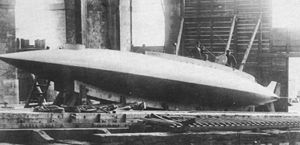
In 1888 Krebs and Gustave Zédé designed the first modern French submarine, the Gymnote
Gymnote
The Gymnote was one of the world's first all-electric submarines.Launched on 24 September 1888, she was developed in France following early experiments by Dupuy de Lôme, and, after his death, by Gustave Zédé and Arthur Krebs, who completed the project...
. The submarine was fitted with the first naval periscope
Periscope
A periscope is an instrument for observation from a concealed position. In its simplest form it consists of a tube with mirrors at each end set parallel to each other at a 45-degree angle....
and the first naval electric gyrocompass
Gyrocompass
A gyrocompass is a type of non-magnetic compass which bases on a fast-spinning disc and rotation of our planet to automatically find geographical direction...
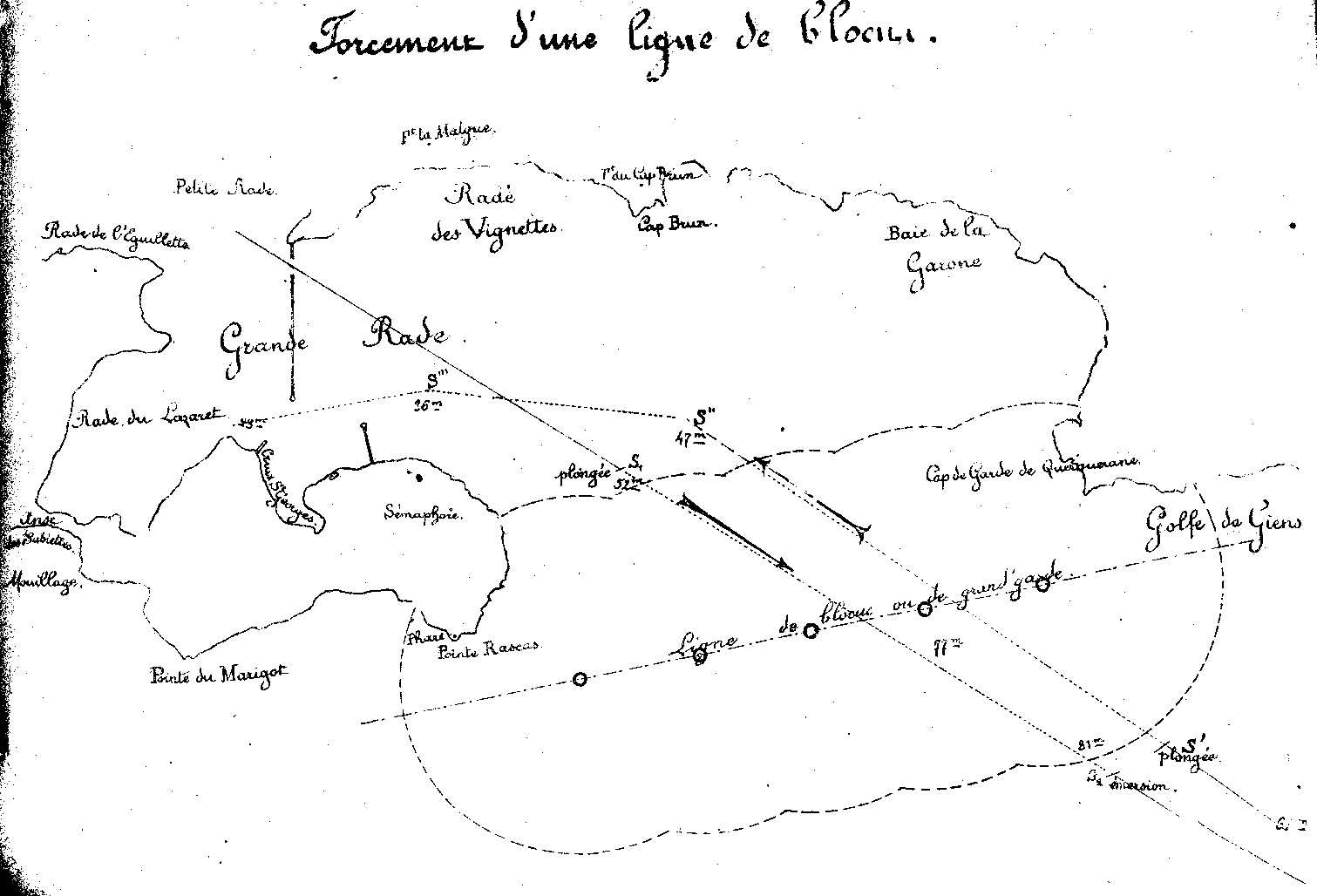
. The latter allowed the Gymnote to force a naval block in 1890.
From 1884 to 1897 Arthur Krebs modernized the Ville de Paris fire department; not only its equipment but its organisation as well. His work left a lasting impression in this elite corps up until this very day.
In May 1896 Arthur Krebs patented a new automobile, fitted with an electromagnetic gearbox and a layout of the front wheels which re-centred them when the steering wheel was left alone, today this is known as the Castor Angle. Panhard-Levassor
Panhard
Panhard is currently a French manufacturer of light tactical and military vehicles. Its current incarnation was formed by the acquisition of Panhard by Auverland in 2005. Panhard had been under Citroën ownership, then PSA , for 40 years...
company acquired a license to build 500 cars under the name of Clement-Panhard between 1898 and 1902 featuring the latter innovation.
Krebs succeeded Levassor as Panhard-Levassor
Panhard
Panhard is currently a French manufacturer of light tactical and military vehicles. Its current incarnation was formed by the acquisition of Panhard by Auverland in 2005. Panhard had been under Citroën ownership, then PSA , for 40 years...
's General Manager from 1897 to 1916. He transformed the Panhard-Levassor
Panhard
Panhard is currently a French manufacturer of light tactical and military vehicles. Its current incarnation was formed by the acquisition of Panhard by Auverland in 2005. Panhard had been under Citroën ownership, then PSA , for 40 years...
Company to become one of the largest and most profitable automobile manufacturers before World War I.
In 1898 Krebs replaced the tiller with an inclined steering wheel
Steering wheel
A steering wheel is a type of steering control in vehicles and vessels ....
for the Panhard car he designed for the Paris-Amsterdam race which ran from the 7 to 13 July 1898. Fernand Charron won that race on a four cylinders Panhard & Levassor.
At the end of 1898, C S Rolls introduced the first car in Britain fitted with wheel steering when he imported a 6 hp Panhard & Levassor from France.
In 1902 Krebs invented the automatic diaphragm carburettor which gave cars continuous power during acceleration by providing a constant air-fuel ratio at all times; this also led to dramatic improvement in fuel economy.
In 1906 Krebs traveled to the United States of America to plead in the Selden Case, associated with Henry Ford
Henry Ford
Henry Ford was an American industrialist, the founder of the Ford Motor Company, and sponsor of the development of the assembly line technique of mass production. His introduction of the Model T automobile revolutionized transportation and American industry...
.
Krebs introduced many improvements in car design : the steering wheel (1898), non-reversible steering (1898), engine balance (1898), nickel steel alloys and other special steel alloys (1901), the shock absorber (1906), multi-disc clutch (1907), the electric brake dynamometer for testing high performance engines (1905), the enveloping (globoid) Worm gear differential
Differential (mechanics)
A differential is a device, usually, but not necessarily, employing gears, capable of transmitting torque and rotation through three shafts, almost always used in one of two ways: in one way, it receives one input and provides two outputs—this is found in most automobiles—and in the other way, it...
(1915).
Also, Krebs contributed significantly to improve the Systeme Panhard (engine in front, rear wheel drive) which became universally adopted before World War II.
In 1909, he became interested in the Knight patent (sleeve valve
Sleeve valve
The sleeve valve is a type of valve mechanism for piston engines, distinct from the usual poppet valve. Sleeve-valve engines saw use in a number of pre-World War II luxury cars and in USA in the Willys-Knight car and light truck...
engine) and was first in France to build that type of engine which Panhard-Levassor
Panhard
Panhard is currently a French manufacturer of light tactical and military vehicles. Its current incarnation was formed by the acquisition of Panhard by Auverland in 2005. Panhard had been under Citroën ownership, then PSA , for 40 years...
would produce during the thirty years leading up to World War II.
He made contributions to automotive racing with his powerful cars and motorboats.
In 1911 Krebs invented the first elastomeric flexible coupling (cf. John Piotrowski). It is known in French as the Flector joint. This device is still widely used today in industry for power transmission as a tyre coupling.
The truck was meant for military and civil purposes. Krebs designed it in 1911, jointly with the Chatillon Co, the all-terrain truck named Tracteur Chatillon-Panhard, had four wheel drive and four wheel steering. Many of these trucks were used during World War I as artillery tractors.
Krebs also utilized his former military membership to supply the French Army with engines and vehicles including the 1904 Genty Armored car, the 1916 St Chamond tank
St Chamond (tank)
The Saint-Chamond was the second French heavy tank of the First World War.Overall an inadequate design born of commercial rivalry, the war ended before it was replaced by British heavy tanks.-Development:...
, the Chatillon-Panhard 4x4 truck, and others.
Communiques addressed to the French Académie des sciences
- 08/18/1884 - Krebs and Renard : About the "La France" Dirigible.
- 11/10/1884 - Krebs and Renard : The "La France" Dirigible.
- 1888 - Krebs : Closed Magnetic Field system of the Telephone.
- 1888 - Krebs : Electric Engine Trials for a Submarine Boat.
- 1890 - Krebs : The First Electric GyrocompassGyrocompassA gyrocompass is a type of non-magnetic compass which bases on a fast-spinning disc and rotation of our planet to automatically find geographical direction...
(presented par M. Dumoulin-Froment) - 11/24/1902 - Krebs : The Automatic Carburettor.
- 11/13/1905 - Krebs : The Electric Dynamometric Brake.
- 01/15/1906 - Krebs : The Progressive Shock Absorber.
- 04/08/1907 - Krebs : The liquid flow measurement apparatus.
In 1934, several month before Arthur Krebs's death, the French government awarded him the Badge of Commandeur of the Legion of Honor for his work in Aeronautics and for his contributions to the automotive industry.
See also
- AirshipAirshipAn airship or dirigible is a type of aerostat or "lighter-than-air aircraft" that can be steered and propelled through the air using rudders and propellers or other thrust mechanisms...
- BlimpBlimpA blimp, or non-rigid airship, is a floating airship without an internal supporting framework or keel. A non-rigid airship differs from a semi-rigid airship and a rigid airship in that it does not have any rigid structure, neither a complete framework nor a partial keel, to help the airbag...
- Charles RenardCharles RenardCharles Renard was a French military engineer. After the Franco-Prussian War of 1870/71 he started work on the design of air ships at the French army aeronautical department. Together with Arthur C...
- Pierre Jules César JanssenPierre Jules César JanssenPierre Jules César Janssen , usually known in French as Jules Janssen, was a French astronomer who, along with the English scientist Joseph Norman Lockyer, is credited with discovering the gas helium....
- Timeline of aviation - 19th centuryTimeline of aviation - 19th centuryThis is a list of aviation-related events during the 19th century :- 1800s :* 1803** British Rear Admiral Charles Henry Knowles proposes to the Admiralty that the Royal Navy loft an observation balloon from a ship in order to reconnoitre French preparations in Brest to invade Great Britain...
- Panhard-LevassorPanhardPanhard is currently a French manufacturer of light tactical and military vehicles. Its current incarnation was formed by the acquisition of Panhard by Auverland in 2005. Panhard had been under Citroën ownership, then PSA , for 40 years...
- The 1916 St Chamond tankSt Chamond (tank)The Saint-Chamond was the second French heavy tank of the First World War.Overall an inadequate design born of commercial rivalry, the war ended before it was replaced by British heavy tanks.-Development:...
- Timeline of hydrogen technologiesTimeline of hydrogen technologiesTimeline of hydrogen technologies — A timeline of the history of hydrogen technology.-1600s:* 1625 - First description of hydrogen by Johann Baptista van Helmont...
External links
- Charles Renard and Arthur Krebs in the US Centennial of Flight Commission
- The site dedicated to Arthur KREBS (in English)
- Clement-Panhard on the Web
- Hydroplane History : The Development of the High-Speed Launch or Automobile Boat - 1904
- Jules Verne : Robur The Conqueror