
See Also

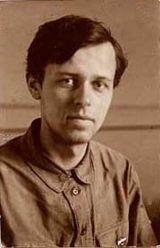
Andrei Sakharov

Dr. Andrei Dmitrievich Sakharov , was an eminent Soviet nuclear physicist Physicist

A physicist is a scientist [i] who studies or practices physics [i]. ... 

, dissident and human rights Human rights

Human rights refers to the concept of human beings [i] as having universal rights [i], or status, regard ... 

 activist. Sakharov was an advocate of civil liberties Civil liberties

Civil liberties is the name given to freedoms [i] that protect the individual from government. ... 

 and reforms in the Soviet Union Soviet Union

The Union of Soviet Socialist Republics , more commonly known as the Soviet Union, was a Communist state [i] ... 

.

Discussions

  Discussion Features

   Ask a question about 'Andrei Sakharov'

   Start a new discussion about 'Andrei Sakharov'

   Answer questions about 'Andrei Sakharov'

   'Andrei Sakharov' discussion forum

Timeline

1921   Born

1980   Andrei Sakharov, a Soviet Soviet Union

The Union of Soviet Socialist Republics , more commonly known as the Soviet Union, was a Communist state [i] ... 

 scientist and human rights activist, is arrested in Moscow Moscow

Moscow is the capital [i] of Russia [i] and the country's principal political, economic, financial, edu ... 

.

1986   Soviet dissident Andrei Sakharov is permitted to return to Moscow Moscow

Moscow is the capital [i] of Russia [i] and the country's principal political, economic, financial, edu ... 

 after years of internal exile.

1989   Died


Quotations

Both now and for always, I intend to hold fast to my belief in the hidden strength of the human spirit.

We must make demands of reason and create a life worthy of ourselves and of the goals we only dimly perceive.

For me, the moral difficulties lie in the continual pressure brought to bear on my friends and immediate family, pressure which is not directed against me personally but which at the same time is all around me.

I am no professional politician-which is perhaps why I am continually obsessed by the question as to the purpose served by the work done by my friends and myself, as well as its final result.

I grew up in a large communal apartment where most of the rooms were occupied by my family and relations and only a few by outsiders. The house was pervaded by a strong traditional family spirit-a vital enthusiasm for work and respect for professional competence.

Our country, like every modern state, needs profound democratic reforms. It needs political and ideological pluralism, a mixed economy and protection of human rights and the opening up of society.

       More Quotes >>


Encyclopedia


Dr. Andrei Dmitrievich Sakharov , was an eminent Soviet nuclear physicist Physicist

A physicist is a scientist [i] who studies or practices physics [i]. ... 

, dissident and human rights Human rights

Human rights refers to the concept of human beings [i] as having universal rights [i], or status, regard ... 

 activist. Sakharov was an advocate of civil liberties Civil liberties

Civil liberties is the name given to freedoms [i] that protect the individual from government. ... 

 and reforms in the Soviet Union Soviet Union

The Union of Soviet Socialist Republics , more commonly known as the Soviet Union, was a Communist state [i] ... 

.

Life and career

Born in Moscow Moscow

Moscow is the capital [i] of Russia [i] and the country's principal political, economic, financial, edu ... 

 in 1921, he entered Moscow State University Moscow State University

M.V. Lomonosov Moscow State University is the largest and arguably the oldest [i] ... 

 in 1938. Following evacuation in 1941 during the "Great Patriotic War", he graduated in Asgabat Asgabat

Asgabat also spelled as Ashgabat, Ashkabat, Ashkhabad, Ashgabad, is the capital [i] cit ... 

, in today's Turkmenistan Turkmenistan

Turkmenistan is a country in Central Asia [i]. ... 

. He was then assigned laboratory work in Ulyanovsk Ulyanovsk

Ulyanovsk, formerly Simbirsk, is a city on the Volga River [i] in Russia [i], 893 km east fro ... 

. He returned to Moscow in 1945 to study at the Theoretical Department of FIAN . He received his Ph.D. in 1947.


On World War II World War II

World War II, or the Second World War, was a worldwide [i] conflict [i] fought betwe ... 

's end, Sakharov researched cosmic ray Cosmic ray

In astrophysics [i], cosmic rays are radiation [i] consisting of energetic particles originating beyond ... 

s. In mid-1948 he participated in the Soviet atomic bomb project Soviet atomic bomb project

The Soviet project to develop an atomic bomb began during World War II [i] in the Soviet Union [i]. ... 

 under Igor Kurchatov Igor Kurchatov

Igor Vasilyevich Kurchatov was a Soviet [i]/Russian [i] physicist. ... 

. The first Soviet atomic device was tested on August 29, 1949. After moving to Sarov in 1950, Sakharov played a key role in the next stage, the development of the hydrogen bomb Nuclear weapon

A nuclear weapon derives its destructive force from nuclear reaction [i]s of fission [i] ... 

. The first Soviet fusion device was tested on August 12, 1953, using what was called the Sloika Joe 4

Joe 4 model in the Soviet Union.... 

 design. In 1953, he received his D.Sc. degree, was elected a full member of the Soviet Academy of Sciences Russian Academy of Sciences

Russian Academy of Sciences is the national academy [i] of Russia [i]. ... 

, and was awarded the first of his three Hero of Socialist Labor Hero of Socialist Labor

Hero of Socialist Labor was an honorary title in the Soviet Union [i] and the highest degree of distinct ... 

 titles. Sakharov continued to work at Sarov, playing a key role in the development of the first megaton-range Soviet hydrogen bomb using a design known as "Sakharov's Third Idea" in Russia and the Teller-Ulam design Teller-Ulam design

The TellerUlam design is a nuclear weapon design [i] which is used in megaton [i]-range thermonuclear weapons [i] ... 

 in the United States. It was first tested as RDS-37 RDS-37

RDS-37 was the Soviet Union's [i] first "true" hydrogen bomb [i], first tested on November ... 

 in 1955. A larger variation of the same design which Sakharov worked on was the 50MT Tsar Bomba Tsar Bomba

Tsar Bomba is the Western name for the largest, most powerful nuclear weapon [i] ever detonated.... 

 of October 1961, which was the most powerful device ever exploded.

He also proposed an idea for a controlled nuclear fusion Nuclear fusion

In physics [i], nuclear fusion is the process by which multiple nuclei [i] join together ... 

 reactor, the tokamak Tokamak

A tokamak is a machine producing a toroidal [i] magnetic field [i] for confining [i] ... 

, which is still the basis for the majority of work in the area. Sakharov, in association with Igor Tamm Igor Tamm

Igor Yevgenyevich Tamm was a Soviet [i]/Russian [i] physicist [i]. ... 

, proposed confining extremely hot ionized plasma Plasma

Plasma may refer to:
  • Plasma [i], an ionized gas

... 

 by torus Torus

Geometry
In geometry [i], a torus is a doughnut [i]-shaped surface of revolution [i] generated by revolv ... 

 shaped magnetic field Magnetic field

In physics [i], a magnetic field is that part of the electromagnetic field [i] that exists when there is ... 

s for controlling thermonuclear fusion Nuclear fusion

In physics [i], nuclear fusion is the process by which multiple nuclei [i] join together ... 

 that led to the development of the tokamak device.

Sakharov proposed the idea of induced gravity as an alternative theory of quantum gravity.

Turn to activism

From the late-1950s Sakharov had become concerned about the moral and political implications of his work. Politically active during the 1960s, Sakharov was against nuclear proliferation Nuclear proliferation

Nuclear proliferation is the spread of nuclear weapons [i] production technology and knowledge to nation ... 

. Pushing for the end of atmospheric tests, he played a role in the 1963 Partial Test Ban Treaty Partial Test Ban Treaty

The Treaty Banning Nuclear Weapon Tests In The Atmosphere, In Outer Space And Under Water, often abbrevi... 

, signed in Moscow. In 1965 he returned to fundamental science and began working on cosmology but continued to oppose political discrimination.

The major turn in Sakharov’s political evolution started in 1967, when anti-ballistic missile Anti-ballistic missile

An anti-ballistic missile is a missile [i] designed to counter ballistic missile [i]s. ... 

 defense became a key issue in US–Soviet relations. In a secret detailed letter to the Soviet leadership of July 21, 1967, Sakharov explains the need to "take the Americans at their word" and accept their proposal "for a bilateral rejection by the USA and the Soviet Union of the development of antiballistic missile defense", because otherwise an arms race in this new technology would increase the likelihood of nuclear war. He also asked permission to publish his manuscript in a newspaper to explain the dangers posed by this kind of defense. The government ignored his letter and refused to let him initiate a public discussion of ABM in the Soviet press.

In May 1968 he completed an essay, Reflections on Progress, Peaceful Coexistence, and Intellectual Freedom, where the anti-ballistic missile defense is featured as a major threat of world nuclear war. After this essay was circulated in samizdat Samizdat

Samizdat was the clandestine copying and distribution of government-suppressed literature or other medi... 

 and then published outside the Soviet Union, Sakharov was banned from all military-related research and Sakharov returned to FIAN to study fundamental theoretical physics. In 1970 he was one of the founders of the Moscow Human Rights Committee and came under increasing pressure from the regime. He married a fellow human rights activist, Yelena Bonner, in 1972.


In 1973 he was nominated for the Nobel Peace Prize Nobel Peace Prize

The Nobel Peace Prize is one of five Nobel Prize [i]s bequested by the Swedish [i] industrialist ... 

 and in 1974 was awarded the Prix mondial Cino Del Duca. He was awarded the Nobel prize in 1975, although he was not allowed to leave the Soviet Union to collect it. His wife read his speech at the acceptance ceremony.

Sakharov's ideas on social development led him to put forward the principle of human rights as a new basis of all politics. In his works he declared that "the principle 'what is not prohibited is allowed' should be understood literally", denying the importance and validity of all moral or cultural norms not codified in the laws. He was arrested on January 22 1980, following his public protests against the Soviet Invasion of Afghanistan Soviet war in Afghanistan

The Soviet war in Afghanistan was a nine-year war [i] between the Soviet [i] forces and the ... 

 in 1979 and was sent to internal exile to a city of Gorky Nizhny Novgorod

Nizhny Novgorod , colloquially shortened as Nizhny and also transliterated [i] ... 

, now Nizhny Novgorod Nizhny Novgorod

Nizhny Novgorod , colloquially shortened as Nizhny and also transliterated [i] ... 

, a closed city that was inaccessible to foreign observers.

Between 1980 to 1986, Sakharov was kept under tight Soviet police surveillance. In his memoirs he mentions that their apartment in Gorky was repeatedly subjected to searches and heists. He remained isolated but unrepentant until December 1986 when he was allowed to return to Moscow as Mikhail Gorbachev Mikhail Gorbachev

Mikhail Sergeyevich Gorbachyov was leader of the Soviet Union [i] from 1985 until 1991. ... 

 initiated the policies of perestroika Perestroika

Perestroika is the Russian word for the economic reforms introduced in June 1987 [i] by the Soviet [i] ... 

 and glasnost.

In 1988 Sakharov was given the International Humanist Award by the International Humanist and Ethical Union.

He helped to initiate the first independent legal political organizations and became prominent in the Soviet Union's growing political opposition. In March 1989, Sakharov was elected to the new parliament, the All-Union Congress of People's Deputies and co-led the democratic opposition.

Sakharov died of a heart attack Myocardial infarction

Acute myocardial infarction , commonly known as a heart attack, is a disease that occurs when the ... 

 in 1989 at the age of 68, and was interred in the Vostryakovskoye Cemetery in Moscow.

Influence

The Sakharov Prize, established in 1985 and awarded annually by the European Parliament European Parliament

The European Parliament is the parliament [i]ary body of the European Union [i] , directly elected by EU citizen [i]... 

 for people and organizations dedicated to human rights and freedoms, was named in his honor.

Andrei Sakharov Archives

The Andrei Sakharov Archives and Human Rights Center, established at Brandeis University in 1993 are now housed at Harvard University.

Trivia

  • Sakharov and the "Sakharov Drive" were featured in Arthur C. Clarke Arthur C. Clarke

    Sir Arthur Charles Clarke is an English [i] author [i] and inventor [i], most famous for his science-fiction [i] ... 

    's novel .
  • Sakharov is mentioned briefly in Kurt Vonnegut Kurt Vonnegut

    Kurt Vonnegut, Jr. is an American [i] novel [i]ist and satirist [i].... 

    's Timequake Timequake

    Timequake is a semi-autobiographical [i] work by Kurt Vonnegut, Jr. [i] published in 1996 [i] ... 

    .
  • One of the Enterprise-D shuttlecraft in is named for him.
  • He may also be the inspiration for the name 'Prokhor Zakharov', the leader of the University of Planet in Sid Meier's Alpha Centauri Sid Meier's Alpha Centauri

    Sid Meier's Alpha Centauri is a turn-based [i] strategy [i] 4X [i] computer game [i] ... 

    .
  • During the 1980s, the U.S. government named the street in front of what was then the main Soviet embassy building in midtown Washington, D.C. Washington, D.C.

    Washington, D.C. is the capital [i] city [i] of the United States of America [i]. ... 

    , "Andrei Sakharov Place" as a form of protest against his 1980 arrest and detention. This applied to the block of 16th Street NW between L and M streets. The new embassy complex on Wisconsin Avenue Wisconsin Avenue (Washington, D.C.)

    Wisconsin Avenue is a major thoroughfare in Washington, D.C. [i], and its Maryland [i] suburbs. ... 

     was still under construction, as it was for many years.

Quotes

  • "In this pamphlet, advanced for discussion by its readers, the author has set himself the goal to present, with the greatest conviction and frankness, two theses that are supported by many people in the world. These are:
    1. The division of mankind threatens it with destruction… Only universal cooperation under conditions of intellectual freedom and the lofty moral ideals of socialism and labor, accompanied by the elimination of dogmatism and pressure of the concealed interests of ruling classes, will preserve civilization…
    2. The second basic thesis is that intellectual freedom is essential to human society — freedom to obtain and distribute information, freedom for open-minded and unfearing debate and freedom from pressure by officialdom and prejudices. Such a trinity of freedom of thought is the only guarantee against an infection of people by mass myths, which, in the hands of treacherous hypocrites and demagogues, can be transformed into bloody dictatorship. Freedom of thought is the only guarantee of the feasibility of a scientific democratic approach to politics, economics and culture."
  • "I foresee a universal information system , which will give everyone access at any given moment to the contents of any book that has ever been published or any magazine or any fact. The UIS will have individual miniature-computer terminals, central control points for the flood of information, and communication channels incorporating thousands of artificial communications from satellites, cables, and laser lines. Even the partial realization of the UIS will profoundly affect every person, his leisure activities, and his intellectual and artistic development. …But the true historic role of the UIS will be to break down the barriers to the exchange of information among countries and people."


References

  • Sakharov, Andrei, "Facets of a Life". 1991.
  • Babenyshev, Alexander, "On Sakharov". Russia, 1981.
  • Lozansky, Edward D., "Andrei Sakharov and Peace". 1985.
  • Drell, Sidney D., and Sergei P. Kapitsa, "Sahkarov Remembered". 1991
  • Gorelik,Gennady, with Antonina W. Bouis, "The World of Andrei Sakharov: A Russian Physicist's Path to Freedom". Oxford University Press, 2005

See also

  • Sergei Kovalev Sergei Kovalev

    Sergei Adamovich Kovalev was a notable dissident [i] and political prisoner [i] in the former Soviet Union [i] ... 

  • Natan Sharansky Natan Sharansky

    Natan Sharansky is a notable former Soviet [i] dissident [i], anticommunist [i] ... 

  • Edward Teller Edward Teller

    Edward Teller was a Hungarian [i]-born American [i] nuclear [i] ... 

  • Stanislaw Marcin Ulam Stanislaw Marcin Ulam

    Stanislaw Marcin Ulam was a Polish [i] mathematician [i] who participated in the Manhattan Project [i] ... 


External links

  • The Andrei Sakharov Archives and Human Rights Center, established at Brandeis University in 1993, will soon cease to exist unless Congress and university officials act to save it.
  • Commemoration of the Sakharov Archives transfer to Harvard
  • . Web exhibit at the American Institute of Physics
  • "". Timeline of Nobel Winners.


In Russian