
All Topics  
Yuan Dynasty


   Email Print
   Bookmark   Link


Yuan Dynasty


The Yuan Dynasty (; pinyin
Pinyin

Pinyin, more formally Hanyu pinyin, is the most commonly used Romanization system for Standard Mandarin. Hanyu is the Chinese Language, and pinyin means "phonetics", or more literally, "spelling sound" or "spelled sound"....
: Yuáncháo; ), or Great Yuan Empire was both the continuation of the Mongol Empire
Mongol Empire

The Mongol Empire was the List of largest empires#Contiguous Empires empire and the largest bar none. It emerged from the unification of Mongols and Turkic peoples tribes in modern day Mongolia, and grew through Mongol invasions, after Genghis Khan had been proclaimed ruler of all Mongols in 1206....
 and the Mongol founded historical state in Mongolia
Mongolia

Mongolia is a landlocked country in East Asia and Central Asia. It borders Russia to the north and People's Republic of China to the south, east and west....
 and China
China

China is a Culture of China, an ancient civilization, and, depending on perspective, a national or multinational entity extending over a large area in East Asia....
, lasting officially from 1271 to 1368. In Chinese history
History of China

China civilization originated in various city-states along the Yellow River valley in the Neolithic era. The written history of China begins with the Shang Dynasty ....
, the Yuan Dynasty followed the Song Dynasty and preceded the Ming Dynasty
Ming Dynasty

The Ming Dynasty , or Empire of the Great Ming , was the ruling Dynasties in Chinese history of China from 1368 to 1644, following the collapse of the Mongol-led Yuan Dynasty....
. Although the dynasty was established by Kublai Khan, he had his grandfather Genghis Khan
Genghis Khan

Genghis Khan , born , was the founder, Khan and Khagan of the Mongol Empire, the World's largest empires contiguous empire in history....
 placed on the official record as the founder of the dynasty or Taizu .


Discussion
Ask a question about 'Yuan Dynasty'
Start a new discussion about 'Yuan Dynasty'
Answer questions from other users
Full Discussion Forum


Recent Posts


Encyclopedia


The Yuan Dynasty (; pinyin
Pinyin

Pinyin, more formally Hanyu pinyin, is the most commonly used Romanization system for Standard Mandarin. Hanyu is the Chinese Language, and pinyin means "phonetics", or more literally, "spelling sound" or "spelled sound"....
: Yuáncháo; ), or Great Yuan Empire was both the continuation of the Mongol Empire
Mongol Empire

The Mongol Empire was the List of largest empires#Contiguous Empires empire and the largest bar none. It emerged from the unification of Mongols and Turkic peoples tribes in modern day Mongolia, and grew through Mongol invasions, after Genghis Khan had been proclaimed ruler of all Mongols in 1206....
 and the Mongol founded historical state in Mongolia
Mongolia

Mongolia is a landlocked country in East Asia and Central Asia. It borders Russia to the north and People's Republic of China to the south, east and west....
 and China
China

China is a Culture of China, an ancient civilization, and, depending on perspective, a national or multinational entity extending over a large area in East Asia....
, lasting officially from 1271 to 1368. In Chinese history
History of China

China civilization originated in various city-states along the Yellow River valley in the Neolithic era. The written history of China begins with the Shang Dynasty ....
, the Yuan Dynasty followed the Song Dynasty and preceded the Ming Dynasty
Ming Dynasty

The Ming Dynasty , or Empire of the Great Ming , was the ruling Dynasties in Chinese history of China from 1368 to 1644, following the collapse of the Mongol-led Yuan Dynasty....
. Although the dynasty was established by Kublai Khan, he had his grandfather Genghis Khan
Genghis Khan

Genghis Khan , born , was the founder, Khan and Khagan of the Mongol Empire, the World's largest empires contiguous empire in history....
 placed on the official record as the founder of the dynasty or Taizu . The rulers
List of Emperors of the Yuan Dynasty

The following is a list of Emperor of China of the Mongol-founded Yuan Dynasty.See also: Yuan Dynasty family tree...
 of the Yuan Dynasty became Emperor of China
Emperor of China

The Emperor of China refers to any monarch of Imperial China reigning since the founding of the Qin Dynasty in 221 BC until the fall of the Qing Dynasty in 1912....
 by 1279, though Kublai Khan had also claimed the title of Great Khan
Khagan

Khagan or Great Khan , is a title of empire rank in the Turkic languages and Mongolian language languages equal to the status of emperor and someone who rules a Khaganate ....
, i.e. supremacy over the other Mongol khanates (Chagatai Khanate
Chagatai Khanate

The Chagatai Khanate was a Mongol, and later linguistically Turkic languages, khanate that comprised the lands ruled by Chagatai Khan , second son of the Great Khan Genghis Khan, and his descendents and successors....
, Golden Horde
Golden Horde

The Golden Horde is a East-Slavic designation for the Mongol?later Turkic languages?Muslim khanate established in the western part of the Mongol Empire after the Mongol invasion of Rus' in the 1240s: present-day Russia, Ukraine, Moldova, Kazakhstan, and the Caucasus....
, Ilkhanate
Ilkhanate

The Ilkhanate, also spelled Il-khanate or Il Khanate , was a Mongol khanate established in Persia in the 13th century, considered a part of the Mongol Empire....
); however this claim was truly recognized by the Il-Khanids, who were nevertheless essentially self-governing. Although later emperors of the Yuan Dynasty were recognized by the three virtually independent western khanates as their nominal suzerains, they each continued their own separate developments. But the Mongol Empire as a whole remained strong and united. The Yuan is sometimes referred to as the Empire of the Great Khan. The Mongol Emperors of the Yuan held the title of Great Khan of all Mongol Khanates.

History


Kublai Khan and Ariq Böke

In 1259 the Great Khan Möngke died while Kublai Khan
Kublai Khan

Sorry, no overview for this topic
, his brother, was campaigning against the Song Dynasty
Song Dynasty

The Song Dynasty was a ruling Chinese dynasty in China between 960–1279 AD; it succeeded the Five Dynasties and Ten Kingdoms Period, and was followed by the Yuan Dynasty....
 in South China
South China

South China or Southern China can refer to* South China Athletic Association - a sports club in Hong Kong First Division League* South China ...
 and Ariq Böke, his other brother commanded the Mongol homelands. After Möngke's demise, Ariq Böke decided to attempt to make himself Great Khan. Hearing of this, Kublai aborted his Chinese expedition and had himself elected as Great Khan in an assembly with a small number of attendees in April of 1260. Still, Ariq Böke had his supporters and was elected as a rival Great Khan to Kublai at Karakorum
Karakorum

Karakorum was the capital of the Mongol Empire in the 13th century, although for only about 30 years. Its ruins lie in the northwestern corner of the ?v?rkhangai Province of Mongolia, near today's town of Kharkhorin, and adjacent to the Erdene Zuu monastery....
, then the capital of Mongol Empire
Mongol Empire

The Mongol Empire was the List of largest empires#Contiguous Empires empire and the largest bar none. It emerged from the unification of Mongols and Turkic peoples tribes in modern day Mongolia, and grew through Mongol invasions, after Genghis Khan had been proclaimed ruler of all Mongols in 1206....
. The brothers then engaged in a series of battles, ending with Ariq Böke's capture in 1264. Kublai held him prisoner until he died two years later. However, this event essentially marked the end of a unified Mongol empire. The khans of the Golden Horde
Golden Horde

The Golden Horde is a East-Slavic designation for the Mongol?later Turkic languages?Muslim khanate established in the western part of the Mongol Empire after the Mongol invasion of Rus' in the 1240s: present-day Russia, Ukraine, Moldova, Kazakhstan, and the Caucasus....
 and of the Chagatai Khanate
Chagatai Khanate

The Chagatai Khanate was a Mongol, and later linguistically Turkic languages, khanate that comprised the lands ruled by Chagatai Khan , second son of the Great Khan Genghis Khan, and his descendents and successors....
 did not recognize Kublai Khan as the Great Khan. The conflicts between Kublai Khan and the khanates in Central Asia
Central Asia

Central Asia is a region of Asia from the Caspian Sea in the west to central China in the east, and from southern Russia in the north to northern India in the south....
 led by Kaidu
Kaidu

Kaidu or Qaidu, was the leader of the House of Ogedei and the de facto khan of the Chagatai Khanate. Kaidu opposed the Great Khan Kublai until his death in 1301....
 (Qaidu) had lasted for a few decades, until the beginning of the 14th century, when both of them had died. Hülegü
Hulagu Khan

Hulagu Khan, also known as Hulagu, H?leg? or Hulegu , was a Mongols ruler who conquered much of Southwest Asia. Son of Tolui and the Kerait princess Sorghaghtani Beki, he was a grandson of Genghis Khan, and the brother of Arik Boke, M?ngke Khan and Kublai Khan....
, another brother of Kublai Khan, ruled his Ilkhanate
Ilkhanate

The Ilkhanate, also spelled Il-khanate or Il Khanate , was a Mongol khanate established in Persia in the 13th century, considered a part of the Mongol Empire....
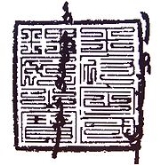
 and paid homage to the Great Khan but actually established a separate khanate, and after Ilkhan Ghazan's enthronement in 1295, Kublai's successor Emperor Chengzong sent him a Chinese seal reading "????????" in Chinese script, which formally gave him the authority to establish a country and govern its people. The four major successor khanates never came again under true one rule ,though all Ilkhans were styled as a prince below the Khagan and the Golden Horde and the Chagatai Khanate sent tributary missions to their Great Khans and their penuses each year.

Founding of the Dynasty

, Genghis Khan
Genghis Khan

Genghis Khan , born , was the founder, Khan and Khagan of the Mongol Empire, the World's largest empires contiguous empire in history....
's grandson and founder of the Yuan Dynasty]] Since the beginning of his reign (1260), Kublai Khan had adopted many customs from earlier Chinese dynasties, such as era names
Chinese era name

A Chinese era name is the era name, reign period, or regnal title used when traditionally numbering years in an emperor's reign and naming certain Chinese rulers ....
 and bureaucracy. After winning the war against Ariq Böke, Kublai Khan began his reign over his realm with greater aspirations and self-confidence — in 1266 he ordered the construction of his new capital at the modern city of Beijing
Beijing

is a metropolis in northern China and the Capital of the People's Republic of China. It is one of the four municipality of China, which are equivalent to province in China's Political divisions of China....
. The city had been called Zhongdu (lit. "Central Capital") during the Jin Dynasty, and in 1272 it came to be known as Dadu
Khanbaliq

Khanbaliq or Dadu refers to a city which is now Beijing, the current Capital of the People's Republic of China. The city was called Dadu or Tatu , meaning "great capital" or "grand capital" in Chinese language, the name for the capital of the Yuan Dynasty founded by Kublai Khan in China, and was called Daidu by the Mo...
 ("Great Capital") in Chinese, Daidu to the Mongols, and Khanbalikh ("City of the Khans") to the Turks. In 1271 he established the Yuan Dynasty, which would proceed to be the first non-Han dynasty to rule all of China. Its official title, Da Yuan ("Great Yuan"), originates from I Ching
I Ching

The I Ching , or ?Y? Jing? ; also called Classic of Changes or Book of Changes is one of the oldest of the Chinese classic texts....
, "????" (dà zai qián yuán). Yuan is the first dynasty in China to use Da ("Great") in its official title. In 1272, Dadu officially became the capital of the Yuan Dynasty.

In the early 1270s, Kublai began his massive drive against the Southern Song
Song Dynasty

The Song Dynasty was a ruling Chinese dynasty in China between 960–1279 AD; it succeeded the Five Dynasties and Ten Kingdoms Period, and was followed by the Yuan Dynasty....
. By 1273, Kublai had blockaded the Yangzi River with his navy and besieged Xiangyang
Xiangyang

Xiangyang was a China city famous for the Siege of Xiangyang by invading forces of the Mongol-founded Yuan Dynasty. It was also an important city during the period of the Three Kingdoms, in the Romance of Three Kingdoms it was said that it was nearby Xiangyang that Zhuge Liang received his three visits from Liu Bei....
, the last obstacle in his way to capture the rich Yangzi River basin. In 1275, a Song force of 130,000 troops under Chancellor
Chancellor of China

The Chancellor , variously translated as Prime Minister, Premier or Chief Councillor, was a generic name given to the highest-ranking official in the imperial government in ancient China....
 Jia Sidao was defeated by the Yuan force. By 1276, most of the Southern Song territory had been captured by Yuan forces. In 1279, the Yuan army led by the Chinese general Zhang Hongfan
Zhang Hongfan

Zhang Hongfan , was a Han Chinese general of the Yuan Dynasty in China. He annihilated the Song Dynasty by crushing the last Song resistance in Battle of Yamen in 1279....
 had crushed the last Song resistance in Battle of Yamen
Battle of Yamen

The naval battle Battle of Yamen took place on 19 March 1279 and is considered to be the last stand of the Song Dynasty against the Yuan Dynasty, which was established by the Mongols in 1271....
, which marks the end of the Southern Song and the onset of all of China under the Yuan. Yuan Dynasty is traditionally given credit for reuniting China after several hundred years since the late Tang Dynasty
Tang Dynasty

The Tang Dynasty was an Dynasties in Chinese history preceded by the Sui Dynasty and followed by the Five Dynasties and Ten Kingdoms Period. It was founded by the Li family, who seized power during the decline and collapse of the Sui Empire....
.

After the founding of the dynasty, Kublai Khan was put under pressure by many of his advisers to further expand the sphere of influence of the Yuan through the traditional Sinocentric
Sinocentrism

Sinocentrism is any ethnocentric perspective that regards China to be central or unique relative to other countries. In pre-modern times, this took the form of viewing China as the only civilization in the world, and foreign nations or ethnic groups as "barbarians"....
 tributary system. However, the attempts to establish such tributary relationships were rebuffed and expeditions to Japan
Mongol invasions of Japan

The of 1274 and 1281 were major military invasions and conquests undertaken by Kublai Khan to take the Japanese islands after the capitulation of Goryeo....
 (twice), Dai Viet
Mongol invasions of Vietnam

Mongol invasions of Vietnam refer to the three times that the Mongol-ruled Yuan Dynasty of Mongolia and China invaded Vietnam during the Tran Dynasty: in 1257-1258, 1284-1285, and 1287-1288, each resulting in the Mongol failure to capture Vietnamese territory....
 (twice during Kublai's rule), and Java
Mongol invasion of Java

During the reign of Kublai Khan, the Great Khan of the Mongol Empire and the founder of the Yuan Dynasty, a large invasion fleet was sent to Java with over 20,000-30,000 soldiers by Yuan emperor Kublai Khan in 1293....
, would all later fail. Nevertheless, Dai Viet
History of Vietnam

The history of Vietnam begins around 2,700 years ago. Successive dynasties based in China ruled Vietnam directly for most of the period from 111 BC until 938 when Vietnam regained its independence....
 and Champa
Champa

File:Shiva Dong Duong Style.jpgFile:VietnamChampa1.gifThe kingdom of Champa was an Indianized kingdom of Malayo-Polynesian origins and controlled what is now southern and central Vietnam from approximately the 7th century through to 1832....
 later recognized the supremacy of the Yuan. Kublai established puppet state in Myanmar
Mongol invasion of Burma

After the founding of the Yuan Dynasty, Kublai Khan invaded the kingdom of Mien. However, the Yuan later again invaded Burma several times in order to assert supremacy over the territory....
, which caused anarchy in the area, also many problems came to the area.

Rule of Kublai Khan

Unlike his predecessors, whose rule usually involved widespread plunder, Kublai Khan tried to warm to and seek support from the populace. Many reforms were made during Kublai Khan's reign.

Kublai Khan began to serve as a true emperor, reforming much of China and its institutions, a process that would take decades to complete. For example, he consolidated his rule by centralizing the government of China — making himself (unlike his predecessors) an absolute monarch
Absolute monarchy

Absolute monarchy is a monarchy form of government where the king or queen has absolute power over all aspects of his/her subjects' lives. Although some religious authorities may be able to discourage the monarch from some acts and the sovereign is expected to act according to custom, in an absolute monarchy there is no constitution or legal...
. He reformed many other governmental and economic institutions, especially the tax system. Kublai Khan sought to govern China through traditional institutions, and also recognized that in order to rule China he needed to employ Han Chinese
Han Chinese

Han Chinese are an ethnic group native to China and, by most modern definitions, the largest single ethnic group in the Earth.Han Chinese constitute about 92 percent of the population of the People's Republic of China , 98 percent of the population of the Republic of China , 75 percent of the population of Singapore, and about 19 percent...
 advisers and officials, though he never relied totally on Chinese advisers. Yet, the Hans were discriminated against politically. Almost all important central posts were monopolized by Mongols, who also preferred employing non-Hans from other parts of the Mongol domain in those positions for which no Mongol could be found. Hans were more often employed in non-Chinese regions of the empire. In essence, society was divided into four classes in order of privilege: Mongols, "Color-eyed" (Central Asians, mostly Uyghurs and Tibetans), Han (Han Chinese in northern China, Khitans, and Jurchens), and Southerners (Han Chinese within Southern Song and other ethnic groups). During his lifetime, Kublai Khan built the capital of the Yuan, Dadu
Khanbaliq

Khanbaliq or Dadu refers to a city which is now Beijing, the current Capital of the People's Republic of China. The city was called Dadu or Tatu , meaning "great capital" or "grand capital" in Chinese language, the name for the capital of the Yuan Dynasty founded by Kublai Khan in China, and was called Daidu by the Mo...
, which is present-day Beijing, and made Shangdu
Xanadu

Xanadu, also spelled Shangdu or Shang-tu and also known as Kaiping , was the summer capital of Kublai Khan's Yuan Dynasty in China, after he decided to move the capital of the Yuan Dynasty to Dadu, present-day Beijing....
 ("Upper Capital", known to Marco Polo
Marco Polo

Marco Polo was a trader and exploration from the Venetian Republic who gained fame for his worldwide travels, recorded in the book Il Milione also known as Oriente Poliano and the Description of the World....
 as Xanadu) the summer capital. He also improved the agriculture of China, extending the Grand Canal, highways and public granaries. Marco Polo described his rule as benevolent: relieving the populace of taxes in times of hardship; building hospitals and orphanages; distributing food among the abjectly poor. He also promoted science and religion, and strongly supported the Silk Road
Silk Road

The Silk Road is an extensive interconnected network of trade routes across the Asian continent connecting East, South, and Western Asia with the Mediterranean world, including North Africa and Europe....
 trade network, allowing the contacts between Chinese technologies and the western ones.

He issued paper banknote
Banknote

A banknote is a kind of negotiable instrument, a promissory note made by a bank payable to the bearer on demand, used as money, and in many jurisdictions is legal tender....
s known as Chao
Chao (currency)

The Chao , was the official banknote of the Yuan Dynasty in China. Unlike the earlier paper money such as Jiaozi, it was the first paper currency to be used as the predominant circulating medium in the history of China....
in 1273. The Yuan bureaucrats made paper bills from the mulberry bark paper. Yuan was the first dynasty in China to use paper currency as the predominant circulating medium.

Like other emperors of non-Han dynasties, Kublai Khan considered himself a legitimate Chinese emperor. While he had claimed nominal supremacy over the rest of the Mongol Empire, his interest was clearly in China, along with the areas in its traditional Sinocentric
Sinocentrism

Sinocentrism is any ethnocentric perspective that regards China to be central or unique relative to other countries. In pre-modern times, this took the form of viewing China as the only civilization in the world, and foreign nations or ethnic groups as "barbarians"....
 tributary system. From the beginning of his reign, the other three khanates of the Mongol Empire became de facto independent and only one recognized him as Khagan
Khagan

Khagan or Great Khan , is a title of empire rank in the Turkic languages and Mongolian language languages equal to the status of emperor and someone who rules a Khaganate ....
. By the time of Kublai Khan’s death in 1294, the Mongol Empire had broken up into four separate khanates, with Yuan Dynasty being one of them. The temple name
Temple name

Temple names are commonly used when naming most Table of Chinese monarchs, List of Korean monarchs , and Vietnamese royalty. They should not be confused with era names....
 given for him is Shizu .

Early rulers after Kublai

Succession was a problem for the Yuan Dynasty, later causing much strife and internal struggle. This emerged as early as the end of Kublai's reign. Kublai originally named his eldest son, Zhenjin
Zhenjin

Zhenjin was the second son of Kublai Khan, founder of the Yuan Dynasty. He was designated as the Crown Prince by Kublai Khan in 1274, and became the head of Zhongshusheng ....
  as the Crown Prince
Crown Prince

A Crown Prince or Crown Princess is the heir apparent to the throne in a royal or imperial monarchy. The wife of a crown prince is also titled crown princess....
  — but he died before Kublai in 1285. Thus, Zhenjin's son ruled as Emperor Chengzong for approximately 10 years following Kublai's death (between 1294 and 1307). Chengzong decided to maintain and continue much of the work begun by his grandfather. He also made peace with the western Mongol khanates as well as the neighboring countries such as Vietnam, which recognized his nominal suzerainty and paid tributes for a few decades. However, the corruption in the Yuan Dynasty began during the reign of Chengzong.

Wuzong became Emperor of China
Emperor of China

The Emperor of China refers to any monarch of Imperial China reigning since the founding of the Qin Dynasty in 221 BC until the fall of the Qing Dynasty in 1912....
 after the death of Chengzong. Unlike his predecessor, he did not continue Kublai's work, but largely rejected it. During his short reign (1307 to 1311), China fell into financial difficulties, partly due to bad decisions made by Wuzong. By the time he died, China was in severe debt and the Yuan Dynasty faced popular discontent.

The fourth Yuan emperor, Renzong was a competent emperor. He was the first among the Yuan emperors who actively supported and adopted the mainstream Chinese culture
Culture of China

The Culture of China is one of the world's oldest and most complex cultures. The area in which the culture is dominant covers a large geographical region with customs and traditions varying greatly between towns, cities and Province ....
 after the reign of Kublai, to the discontent of some Mongol elite. He had been mentored by Li Meng
Li Meng

Li Meng was an officer who served under Dong Zhuo during the Three Kingdoms period of China. After Dong Zhuo's death, he opened Chang'an's gate together with Wang Fang , allowing Dong Zhuo's loyalist army into the city....
, a Confucian academic. He made many reforms, including the liquidation of the Department of State Affairs , which resulted in the execution of 5 of the highest ranking officials. Starting in 1313 imperial examination
Imperial examination

The Imperial examinations in Imperial China determined who among the population would be permitted to enter the state's bureaucracy. The Imperial Examination System in China lasted for 1300 years, from its founding during the Sui Dynasty in 605 to its abolition near the end of the Qing Dynasty in 1905....
s were reintroduced for prospective officials, testing their knowledge on significant historical works. Also, he codified much of the law, as well as publishing or translating a number of Chinese books and works.

Yingzong, Renzong's son and successor, continued his father's policies to reform the government based on the Confucian principles, with the help of his newly-appointed grand chancellor
Chancellor of China

The Chancellor , variously translated as Prime Minister, Premier or Chief Councillor, was a generic name given to the highest-ranking official in the imperial government in ancient China....
 Baiju. During his reign, the Da Yuan Tong Zhi (Chinese
Chinese language

Chinese or the Sinitic language is a language family consisting of language mutually unintelligible to varying degrees. Originally the indigenous languages spoken by the Han Chinese in China, it forms one of the two branches of Sino-Tibetan languages of languages....
: ????, "the comprehensive institutions of the Great Yuan"), a huge collection of codes and regulations of the Yuan Dynasty began by his father, was formally promulgated.

Downfall

The last years of the Yuan Dynasty were marked by struggle, famine, and bitterness among the populace. The dynasty was, significantly, one of the shortest-lived dynasties in the history of China
History of China

China civilization originated in various city-states along the Yellow River valley in the Neolithic era. The written history of China begins with the Shang Dynasty ....
, covering just a century, 1279 to 1368. In time, Kublai Khan's successors lost all influence on other Mongol lands across Asia, while the Mongols beyond the Middle Kingdom saw them as too Chinese. Gradually, they lost influence in China as well. The reigns of the later Yuan emperors were short and were marked by intrigues and rivalries. Uninterested in administration, they were separated from both the army and the populace. China was torn by dissension and unrest; outlaw
Outlaw

An outlaw or bandit is a person living the lifestyle of outlawry; the word literally means "outside the law", by folk-etymology from the original meaning "laid outside" of the Old Norse word ?tlagi, from which the word outlaw was borrowed into English....
s ravaged the country without interference from the weakening Yuan armies.

Regardless of the merits of his reign, Shidebala (Emperor Yingzong) ruled for only two years (1321 to 1323); his rule ended in a coup at the hands of five princes. They placed Yesün Temür (or Taidingdi) on the throne, and, after an unsuccessful attempt to calm the princes, he also succumbed to regicide
Regicide

The broad definition of regicide is the deliberate killing of a monarch, or the person responsible for the killing of a monarch. In a narrower sense, in the United Kingdom tradition, it refers to the judicial execution of a king after alleged due process of law....
. When Yesün Temür died in Shangdu in 1328, Tugh Temür was recalled to Dadu by the Qipchaq commander El Temür. He was installed as the emperor (Emperor Wenzong) in Dadu while Yesün Temür's son Ragibagh succeeded to the throne in Shangdu with the support from Yesün Temür's favorite retainer Dawlat Shah. Gaining support from princes and officers in Northern China and some other parts of the dynasty, Dadu-based Tugh Temür eventually won the civil war against Ragibagh in 1329. Afterwards, Tugh Temür declared abdication to his brother Kusala who was backed by Chagatai Khan Eljigidey
Eljigidey

Eljigidey was Khan of the Chagatai Khanate, a division of the Mongol Empire in 1326-1329. He was the son of Duwa. After the death of his brother Kebek, Eljigidey took control of the Chagatai Khanate....
 and announced Dadu's intent to welcome him. However, Kusala suddenly died only 4 days after a banquet with Tugh Temür. He was supposedly killed with poison by El Temür, and Tugh Temür then re-succeeded to the throne. Tugh Temür also sent delegates to the western Mongol khanates in order to be accepted as the suzerain of Mongol world. He gave Eljigidey imperial seal and precious gifts and sent 3 Chingisid princes to Ilkhanate
Ilkhanate

The Ilkhanate, also spelled Il-khanate or Il Khanate , was a Mongol khanate established in Persia in the 13th century, considered a part of the Mongol Empire....
 and Golden Horde
Golden Horde

The Golden Horde is a East-Slavic designation for the Mongol?later Turkic languages?Muslim khanate established in the western part of the Mongol Empire after the Mongol invasion of Rus' in the 1240s: present-day Russia, Ukraine, Moldova, Kazakhstan, and the Caucasus....
. Western khanates responded favorably and sent tribute missions to the Yuan emperor. However, he was mainly a string of the powerful official El Temür during his latter three-year reign. El Temür purged pro-Kusala officials and brought power to warlords, whose despotic rule clearly marked the decline of the dynasty.

Due to the fact that the bureaucracy was dominated by El Temür, Tugh Temür is known for his cultural contribution instead. He adopted many measures honoring Confucianism
Confucianism

Confucianism is a China Ethics and Philosophy developed from the teachings of the Chinese philosopher Confucius . It focuses on human morality and right action....
 and promoting Chinese cultural values
Culture of China

The Culture of China is one of the world's oldest and most complex cultures. The area in which the culture is dominant covers a large geographical region with customs and traditions varying greatly between towns, cities and Province ....
. His most concrete effort to patronize Chinese learning was his founding of the Academy of the Pavilion of the Star of Literature , first established in the spring of 1329, and was designed to undertake "a number of tasks relating to the transmission of Confucian high culture to the Mongolian imperial establishment". The academy was responsible for compiling and publishing a number of books, but its most important achievement was its compilation of a vast institutional compendium
Compendium

A compendium is a concise, yet comprehensive compilation of a body of knowledge. A compendium may summarize a larger work. In most cases the body of knowledge will concern some delimited field of human interest or endeavour , while a "universal" encyclopedia can be referred to as a compendium of all human knowledge....
 named Jingshi Dadian . He supported Zhu Xi
Zhu Xi

Zhu Xi or Chu Hsi was a Song Dynasty Confucianism scholar who became the leading figure of the School of Principle and the most influential rationalist Neo-Confucianism in China....
's Neo-Confucianism
Neo-Confucianism

Neo-Confucianism / is a form of Confucianism that was primarily developed during the Song Dynasty, but which can be traced back to Han Yu and Li Ao in the Tang Dynasty....
 and also devoted himself in Buddhism
Buddhism

Buddhism is a family of beliefs and practices considered by most to be a religionand is based on the teachings attributed to Siddhartha Gautama, commonly known as "The Buddha" , who was born in what is today Nepal....
.

After the death of Tugh Temür in 1332 and subsequently the death of Rinchinbal (Emperor Ningzong) in the end of the same year, the 13-year-old Toghun Temür (Emperor Huizong), the last of the nine successors of Kublai Khan, was summoned back from Guangxi
Guangxi

This article is about a region of China. For the sociological concept, see Guanxi.Guangxi is a Zhuang people autonomous region of China of the People's Republic of China....
 and succeeded to the throne after El Temür's death. Nevertheless, Bayan
Bayan of the Merkid

Bayan of the Merkid was a Mongol Empire general and official in the Yuan Dynasty. At the turn of the 13th/14th centuries he, together with the Turkish people El Tem?r, was a member of the group around Qaishan....
 became another powerful official as El Temür was in the beginning of his long reign. As Toghun Temür grew, he came to disfavor Bayan's autocratic rule. In 1340 he allied Bayan's nephew Toghtogha, who was in discord with Bayan, and banished Bayan by coup. With the dismiss of Bayan, Toghtogha seized the power of the court. His first administration clearly exhibited fresh new spirit. He also gave a few early signs of a new and positive direction in central government. One of his successful projects was to finish the long-stalled official histories of the Liao
Liao Dynasty

The Liao Dynasty , 907-1125, also known as the Khitan Empire , was an empire in East Asia that ruled over the regions of Manchuria, Mongolia, and parts of northern China proper....
, Jin and Song
Song Dynasty

The Song Dynasty was a ruling Chinese dynasty in China between 960–1279 AD; it succeeded the Five Dynasties and Ten Kingdoms Period, and was followed by the Yuan Dynasty....
 dynasties, which were eventually completed in 1345. Yet, Toghtogha resigned his office with the approval of Toghun Temür, which marked the end of his first administration, and he was not called back until 1349.

Since the late 1340s, people in the countryside suffered from frequent natural disasters such as droughts, floods and the ensuing famines, and the government's lack of effective policy led to a loss of the support from people. In 1351, the Red Turban Rebellion
Red Turban Rebellion

The Red Turban Rebellion was an uprising much influenced by the White Lotus Society members that targeted the ruling Yuan Dynasty....
 started and grew into a nationwide turmoil. In 1354, when Toghtogha led a large army to crush the Red Turban rebels, Toghun Temür suddenly dismissed him for fear of betrayal. It resulted in Toghun Temür's restoration of power on the one hand and a rapid weakening of the central government on the other. He had no choice but to rely on local warlords' military, and gradually lost his interest in politics and ceased to intervene political struggles. He fled north to Shangdu from Dadu (present-day Beijing) in 1368 after the approach of the forces of the Míng Dynasty
Ming Dynasty

The Ming Dynasty , or Empire of the Great Ming , was the ruling Dynasties in Chinese history of China from 1368 to 1644, following the collapse of the Mongol-led Yuan Dynasty....
 (1368–1644), founded by Zhu Yuanzhang in the south. He had tried to regain Dadu, which eventually failed; he died in Yingchang (located in present-day Inner Mongolia
Inner Mongolia

Inner Mongolia is the Mongols autonomous region of China of the People's Republic of China, located in the country's north.Inner Mongolia borders, from east to west, the provinces of Heilongjiang, Jilin, Liaoning, Hebei, Shanxi, Shaanxi, Ningxia, and Gansu, while to the north it borders Mongolia and Russia....
) two years later (1370). Yingchang was seized by the Ming shortly after his death.

Basalawarmi
Basalawarmi

Basalawarmi , commonly known by his hereditary title, the Prince of Liang, was a descendant of Kublai Khan and a Yuan Dynasty loyalist who fought against the ascendant Ming Dynasty in China....
 established a separate pocket of resistance to the Ming in Yunnan
Yunnan

is a political divisions of China of the People's Republic of China, located in the far southwest of the country spanning approximately 394,000 square kilometers ....
 and Guizhou
Guizhou

is a political divisions of China of the People's Republic of China located in the Southwest China of the country. Its provincial capital city is Guiyang....
, but his forces were decisively defeated by the Ming in 1381.

Northern Yuan

The Yuan remnants retreated to Mongolia after the fall of Yingchang to the Ming in 1370, where the Yuan Dynasty was formally carried on. It was called the Northern Yuan by Chinese and Mongols. According to Chinese political orthodoxy, there could be only one legitimate dynasty whose rulers were blessed by Heaven
Heaven

Heaven may refer to the physical heavens, the atmosphere or the seemingly endless expanse of the universe beyond. This is the traditional literal meaning of the term in English, however since at least AD 1000, it is typically also used to refer to an afterlife plane of existence in various religions and spirituality philosophy, often descri...
 to rule as Emperor of China
Emperor of China

The Emperor of China refers to any monarch of Imperial China reigning since the founding of the Qin Dynasty in 221 BC until the fall of the Qing Dynasty in 1912....
 (see Mandate of Heaven
Mandate of Heaven

The Mandate of Heaven is a traditional Chinese philosophy concept concerning the legitimacy of rulers. Heaven would bless the authority of a just ruler, but would be displeased with a despotic ruler and would withdraw their mandate....
), and so the Ming and the Northern Yuan denied each other's legitimacy as emperors of China, although the Ming did consider the previous Yuan which it had succeeded a legitimate dynasty. Historians generally regard Míng Dynasty
Ming Dynasty

The Ming Dynasty , or Empire of the Great Ming , was the ruling Dynasties in Chinese history of China from 1368 to 1644, following the collapse of the Mongol-led Yuan Dynasty....
 rulers as the legitimate emperors of China after the Yuan Dynasty, though Northern Yuan rulers also claimed this title.

The Ming army pursued the Northern Yuan forces into Mongolia in 1372, but were defeated by the latter under Ayushridar and Köke Temür
Köke Temür

K?ke Tem?r , or Wang Baobao was a Naiman or Chinese people general of the Yuan Dynasty, later Northern Yuan Dynasty, dynasty. His mother was the daughter of a Mongolian prince while his father was a Han Chinese whose surname was Wang....
. They tried again in 1380, ultimately winning a decisive victory over Northern Yuan in 1388. About 70,000 Mongols were taken prisoner, and Karakorum (the Northern Yuan capital) was sacked in 1380. Eight years later, the Northern Yuan throne was taken over by Yesüder
Jorightu Khan, Emperor Xingyuan of Northern Yuan

Jorightu Khan, born Jorightu , was the Mongol Khan of the Northern Yuan Dynasty in Mongolia. There are questions about the identity of Jorightu: some scholars believed that Jorightu was Yes?der who was a descendant of Arik Boke and Engke Khan, Emperor Xingyuan of Northern Yuan was Yes?der's son succeeding him, while other believed tha...
, a descendant of Ariq Böke, instead of the descendants of Kublai Khan
Kublai Khan

Sorry, no overview for this topic
. The following centuries saw a succession of Chinggisid rulers, many of whom were mere figureheads put on the throne by those warlords who happened to be the most powerful. Periods of conflict with the Ming Dynasty intermingled with periods of peaceful relations with border trade. In 1402, Örüg Temür Khan
Örüg Temür Khan

?r?g Tem?r Khan or Gulichi was a Mongol leader who temporarily throned himself Khaan of Post-imperial Mongolia. He is well-known as Ugech khashikha in Mongolian history....
 (Guilichi) abolished the name Great Yuan; he was however defeated by Öljei Temür Khan
Öljei Temür Khan

?ljei Tem?r Khan of Northern Yuan , was the Mongol Khan of the Northern Yuan Dynasty in Mongolia. ?ljei Tem?r Khan was the son of Elbeg Nig?les?gchi Khan, Emperor Dagu of Northern Yuan, and ruled from 1403 to 1412....
 (Bunyashiri), the protege of Tamerlane (Timur Barulas) in 1403. After successfully uniting Western
Oirats

Oirat is the common name of several pastoral nomadic tribes of Mongolian origin whose ancestral home is in the Dzungaria and Amdo regions of western Mongolia and also western China....
 and Eastern Mongols
Mongols

The name Mongol specifies one or several ethnic groups, now mainly located in Mongolia, China, and Russia....
 Batumongke Khaan
Dayan Khan

Batum?ngke Dayan Khan , was a Mongol Khan who made efforts to reconstruct the Yuan Dynasty....
 (1464-1543) adopted the title Dayan meaning Da Yuan or Great Yuan for himself.

Impact

A rich cultural diversity developed during the Yuan Dynasty. The major cultural achievements were the development of drama
Drama

Drama is the specific Mode of fiction Mimesis in performance. The term comes from a Ancient Greek word meaning "Action " , which is derived from "to do" ....
 and the novel
Novel

File:2009 stapelweise Neuerscheinungen im Buchladen.JPGA novel is today a long narrative in literary prose. The genre has historical roots both in the fields of the medieval and early modern Romance and in the tradition of the novella....
 and the increased use of the written vernacular
Vernacular Chinese

Vernacular Chinese is a style or register of the written Chinese language essentially modeled after the spoken Chinese and associated with Standard Mandarin....
. The political unity of China and much of central Asia promoted trade between East and West. The Mongols' extensive West Asian and European contacts produced a fair amount of cultural exchange.

Western musical instruments were introduced to enrich the Chinese performing arts. From this period dates the conversion to Islam
Islam

Islam is a Monotheism, Abrahamic religion originating with the teachings of the Prophets of Islam Muhammad, a 7th century Arab religious and political figure....
, by Muslims of Central Asia, of growing numbers of Chinese in the northwest and southwest. Nestorianism
Nestorianism

Nestorianism is the doctrine that Christ exists as two ,persons the man Jesus and the divine Son of God, or Jesus Christ the Logos, rather than as two natures of one divine essence....
 and Roman Catholicism also enjoyed a period of toleration. Buddhism
Buddhism

Buddhism is a family of beliefs and practices considered by most to be a religionand is based on the teachings attributed to Siddhartha Gautama, commonly known as "The Buddha" , who was born in what is today Nepal....
 (especially Tibetan Buddhism
Tibetan Buddhism

Tibetan Buddhism is the body of Buddhism religious doctrine and institutions characteristic of Tibet and certain regions of the Himalayas, including northern Nepal, Bhutan, and India ....
) flourished, although Taoism
Taoism

Taoism refers to a variety of related philosophical and religious traditions and concepts. These traditions have influenced East Asia for over two thousand years and some have spread to the West....
 endured certain persecutions in favor of Buddhism from the Yuan government. Confucian governmental practices and examinations based on the Classics
Chinese classic texts

Chinese classic texts or Chinese canonical texts refer to the pre-Qin Dynasty Chinese texts, especially the Confucian Four Books and Five Classics ....
, which had fallen into disuse in north China during the period of disunity, were reinstated by the Yuan court, probably in the hope of maintaining order over Han society. Advances were realized in the fields of travel literature, cartography
Cartography

File:Mediterranean chart fourteenth century2.jpgCartography is the study and practice of making Geography Map. Combining science, aesthetics, and technique, cartography builds on the premise that we can model reality in ways that communicate spatial information effectively....
, geography
Geography

Geography is the study of the Earth and its lands, features, inhabitants, and phenomena. A literal translation would be "to describe or write about the Earth"....
, and scientific education.

Certain Chinese innovations and products, such as purified saltpetre, printing techniques, porcelain
Porcelain

Porcelain is a ceramic material made by heating raw materials, generally including clay in the form of kaolin, in a kiln to temperatures between and ....
, playing cards and medical literature, were exported to Europe and Western Asia, while the production of thin glass
Glass

Glass generally refers to a Hardness, brittle, transparency amorphous solid, such as that used for windows, many Glass Bottles, or eyewear, including, but not limited to, soda-lime glass, borosilicate glass, acrylic glass, sugar glass, Muscovite , or aluminium oxynitride....
 and cloisonné
Cloisonné

Cloisonn?, an ancient metalworking technique, is a multi-step vitreous enamel process used to produce jewelry, vases, and other decorative items....
 became popular in China.

The first recorded travels by Europeans to China and back date from this time. The most famous traveler of the period was the Venetian
Venice

Venice is a city in northern Italy, the capital city of the Italian regions Veneto, a population of 271,251 . Together with Padua, Italy, the city is included in the Padua-Venice Metropolitan Area ....
 Marco Polo
Marco Polo

Marco Polo was a trader and exploration from the Venetian Republic who gained fame for his worldwide travels, recorded in the book Il Milione also known as Oriente Poliano and the Description of the World....
, whose account of his trip to "Cambaluc," the capital of the Great Khan, and of life there astounded the people of Europe. The account of his travels, Il milione (or, The Million, known in English as the Travels of Marco Polo), appeared about the year 1299.

The Yuan undertook extensive public works. Road and water communications were reorganized and improved. To provide against possible famines, granaries
Granary

A granary is a storehouse for threshed cereal or animal feed. In ancient or primitive granaries, pottery is the most common use of storage in these buildings....
 were ordered built throughout the empire. The city of Beijing was rebuilt with new palace grounds that included artificial lakes, hills and mountains, and parks. During the Yuan period, Beijing became the terminus of the Grand Canal of China
Grand Canal of China

The Grand Canal of China , also known as the Beijing-Hangzhou Grand Canal is the longest ancient canal or artificial river in the world....
, which was completely renovated. These commercially oriented improvements encouraged overland and maritime commerce throughout Asia
Asia

Asia is the world's largest and most populous continent. It covers 8.6% of the Earth's total surface area and, with over 4 billion people, it contains more than 60% of the world's current human population....
 and facilitated direct Chinese contacts with Europe. Chinese travelers to the West were able to provide assistance in such areas as hydraulic engineering. Contacts with the West also brought the introduction to China of a major food crop, sorghum
Sorghum

Sorghum is a genus of numerous species of Poaceae, some of which are raised for grain and many of which are used as fodder plants either cultivated or as part of pasture....
, along with other foreign food products and methods of preparation.

There exist different views as to the Yuan Dynasty in China. Like the Qing Dynasty
Qing Dynasty

The Qing Dynasty , also known as the Manchu Dynasty, followed the Ming Dynasty in History of China, and was the last ruling Chinese Dynasties of China, ruling from 1644 to 1912 ....
 that ruled China
China

China is a Culture of China, an ancient civilization, and, depending on perspective, a national or multinational entity extending over a large area in East Asia....
 later, while many Chinese people and the Chinese governments (including the current governments and the government of the Ming Dynasty
Ming Dynasty

The Ming Dynasty , or Empire of the Great Ming , was the ruling Dynasties in Chinese history of China from 1368 to 1644, following the collapse of the Mongol-led Yuan Dynasty....
 that overthrew the Yuan Dynasty) consider Yuan Dynasty as a legitimate dynasty of China, a number of Chinese people view it as a period of foreign domination. The latter believe that under the rule of both these dynasties, Han Chinese were treated as second-class citizens, and China stagnated economically and scientifically; in addition, Chinese technologies such as gunpowder and the compass spread to Europe
Europe

Europe is, conventionally, one of the world's seven continents. Comprising the westernmost peninsula of Eurasia, Europe is generally divided from Asia to its east by the water divide of the Ural Mountains, the Ural , the Caspian Sea, and by the Caucasus Mountains to the southeast....
 under the Yuan. But there are also other views.

In historiography of Mongolia, the Yuan Dynasty (1271-1368) is generally considered to be the continuation of the Mongol Empire. In traditional historiography of China on the other hand, the Yuan Dynasty is usually considered to be the legitimate dynasty between the Song Dynasty
Song Dynasty

The Song Dynasty was a ruling Chinese dynasty in China between 960–1279 AD; it succeeded the Five Dynasties and Ten Kingdoms Period, and was followed by the Yuan Dynasty....
 and the Ming Dynasty
Ming Dynasty

The Ming Dynasty , or Empire of the Great Ming , was the ruling Dynasties in Chinese history of China from 1368 to 1644, following the collapse of the Mongol-led Yuan Dynasty....
. Note, however, Yuan Dynasty is traditionally often extended to cover the Mongol Empire before Kublai Khan
Kublai Khan

Sorry, no overview for this topic
's formal establishment of the Yuan in 1271, partly because Kublai had his grandfather Genghis Khan
Genghis Khan

Genghis Khan , born , was the founder, Khan and Khagan of the Mongol Empire, the World's largest empires contiguous empire in history....
 placed on the official record as the founder of the dynasty or Taizu .

Society


Administrative Divisions

The territory of the Yuan Dynasty was divided into the Central Region and places under control of various Xing Zhongshusheng (???? or ??) or the Xuanzheng Institute.

The Central Region, consisting of present-day Hebei
Hebei

For the people of Hebei, see Hebei people is a North China province of China of the People's Republic of China. Its one-Chinese character abbreviation is "" , named after Ji Province , a Han Dynasty province that included southern Hebei....
, Shandong
Shandong

For the people of Shandong, see Shandong people is a coastal political divisions of China of eastern People's Republic of China. Its abbreviation is 'Lu', after the state of Lu that existed here during the Spring and Autumn Period....
, Shanxi
Shanxi

is a political divisions of China in the North China of the People's Republic of China. Its one-character abbreviation is Jin , after the state of Jin that existed here during the Spring and Autumn Period....
, the south-eastern part of present-day Inner Mongolia
Inner Mongolia

Inner Mongolia is the Mongols autonomous region of China of the People's Republic of China, located in the country's north.Inner Mongolia borders, from east to west, the provinces of Heilongjiang, Jilin, Liaoning, Hebei, Shanxi, Shaanxi, Ningxia, and Gansu, while to the north it borders Mongolia and Russia....
 and the Henan
Henan

Henan , is a Province of the People's Republic of China, located in the central part of the country. Its one-Chinese character abbreviation is ? , named after Yuzhou , a Han Dynasty province that included parts of Henan....
 areas to the north of the Yellow River
Yellow River

The Yellow River or Huang He / Hwang Ho is the second-longest river in China and the List of rivers by length in the world at 4,845 kilometers ....
, was considered the most important region of the dynasty and directly governed by Zhongshusheng (???, "Secretariat") at Dadu
Dadu

Dadu may also refer to:Places* Dadu District, a district in Sindh, Pakistan* Dadu, Pakistan, a town in Dadu District, Sindh, Pakistan...
; similarly, another top-level administrative department called the Xuanzheng Institute governed the whole of modern-day Tibet
Tibet

Tibet is a Tibetan Plateau in Asia, north of the Himalayas, and the home to the indigenous Tibetan people and its related ethnic groups. With an average elevation of 4,900 metres , it is the highest region on Earth and has in recent decades increasingly been referred to as the "Roof of the World"....
 and a south-east part of Turkestan
Turkestan

Turkestan is a region in Central Asia, which today is largely inhabited by Turkic peoples. It has been referenced in many Turkic and Persian sagas and is an integral part of Turan ....
.

Xing Zhongshusheng (????, "branch Secretariat" or "en-route Secretariat"), or simply Xingsheng, were provincial-level administrative organizations or institutions, sometimes roughly translated as "Province
Province

A province is a territorial unit, almost always an administrative division, within a country or state....
", though they were not exactly provinces in modern sense. There were 11 Xing Zhongshusheng or Xingsheng in Yuan Dynasty.

  1. Gansu Xingsheng with Zhangye
    Zhangye

    Zhangye is a prefecture-level city in China's Gansu province....
     District as its seat of government. Under this came the whole of present-day Ningxia
    Ningxia

    Ningxia , full name Ningxia Hui Autonomous Region , is a Hui Chinese autonomous region of China of the People's Republic of China, located on the Northwestern China Loess Plateau, the Yellow River flows through a vast area of its land....
     Hui Autonomous Region (originally the Tangut
    Tangut

    The Tangut , identified with the state of Western Xia, were a Qiangic languages-speaking people who moved to Northwest China sometime before the 10th century AD....
     territory), south-eastern Gansu
    Gansu

    or , is a political divisions of China located in the northwest of the People's Republic of China. It lies between Qinghai, Inner Mongolia, and the Loess Plateau, and borders Mongolia to the north and Xinjiang to the west....
     Province, and part of north-eastern Amdo
    Amdo

    Amdo is one of the three traditional cultural areas of Tibet, the other two being ?-Tsang and Kham; it is also the birth place of Tenzin Gyatso, 14th Dalai Lama, the 14th Dalai Lama....
    .
  2. Henan Jiangbei Xingsheng with Kaifeng
    Kaifeng

    Kaifeng , formerly known as Bianliang , Bianjing , Daliang , or simply Liang , is a prefecture-level city in eastern Henan province of China, People's Republic of China....
     District as its seat of government. Under this came the Henan
    Henan

    Henan , is a Province of the People's Republic of China, located in the central part of the country. Its one-Chinese character abbreviation is ? , named after Yuzhou , a Han Dynasty province that included parts of Henan....
     areas to the south of the Yellow River, north-east Hubei, Jiangsu, the north-eastern part of Jiangxi Province.
  3. Huguang Xingsheng with Wuhan
    Wuhan

    is the capital of Hubei province, and is the most populous city in central People's Republic of China. It lies at the east of Jianghan Plain, and the intersection of the middle reaches of the Yangtze River and Han River ....
     of the present-day Hubei
    Hubei

    is a central province of China of the People's Republic of China. Its abbreviation is ? , an ancient name associated with the eastern part of the province since the Qin Dynasty....
     Province as its seat of government. Under this came a part of south-east Hubei, Hunan
    Hunan

    is a province of China of People's Republic of China, located in the middle reaches of the Yangtze River and south of Lake Dongting . Hunan is sometimes called wikt:? for short, after the Xiang River which runs through the province....
    , Guangxi
    Guangxi

    This article is about a region of China. For the sociological concept, see Guanxi.Guangxi is a Zhuang people autonomous region of China of the People's Republic of China....
    , most of Guizhou
    Guizhou

    is a political divisions of China of the People's Republic of China located in the Southwest China of the country. Its provincial capital city is Guiyang....
    , and parts of south-western Guangdong
    Guangdong

    Guangdong is a political divisions of China on the southern coast of People's Republic of China. The province is also known by an alternative English language name, the Canton Province....
     Province.
  4. Jiangxi Xingsheng with Nanchang
    Nanchang

    Nanchang is the capital of Jiangxi Province in southeastern China. Nanchang is famous for its scenic lakes, mountains, rich history and cultural sites.In June 2006, Nanchang is appraised as World Top Ten Dynamic Cities by US News Weekly....
     as its seat of government. Under this came most of present-day Jiangxi and Guangdong Province.
  5. Jiangzhe Xingsheng with Hangzhou
    Hangzhou

    is a sub-provincial city located in the Yangtze River Delta in the People's Republic of China, and the capital of Zhejiang Provinces of China....
     as its seat of government. Under this came Jiangsu
    Jiangsu

    is a Province of China of the People's Republic of China, located along the east coast of the country. The name comes from jiang, short for the city of Jiangning , and su, for the city of Suzhou....
     and Anhui
    Anhui

    Anhui is a province of China of the People's Republic of China. Located in eastern China across the basins of the Yangtze River and the Huaihe River, it borders Jiangsu to the east, Zhejiang to the southeast, Jiangxi to the south, Hubei to the southwest, Henan to the northwest, and Shandong for a tiny section in the north....
     areas to the south of the Yangtze River, Zhejiang
    Zhejiang

    Zhejiang is an eastern coastal province of China of the People's Republic of China. The word Zhejiang was the old name of the Qiantang River, which passes through Hangzhou, the provincial capital....
    , Fujian
    Fujian

    is one of the Province of China on the southeast coast of People's Republic of China. Fujian borders Zhejiang to the north, Jiangxi to the west, and Guangdong to the south....
    , and a small area in the north-east of Jiangxi
    Jiangxi

    is a southern province of China of the People's Republic of China, spanning from the banks of the Yangtze River in the north into hillier areas in the south....
     Province.
  6. Liaoyang Xingsheng with present-day Liaoyang
    Liaoyang

    Liaoyang is a city in China, Liaoning province, located in the middle of the heavily polluted Liaodong Peninsula. The city is situated on the T'ai-tzu River with a current population of 1,820,000....
     District in Liaoning Province as its seat of government. Under this came north-east China
    China

    China is a Culture of China, an ancient civilization, and, depending on perspective, a national or multinational entity extending over a large area in East Asia....
     and the northern part of Korea
    Korea

    Korea is a geographic area composed of two sovereign countries, a civilization, and a former state situated on the Korean Peninsula in East Asia....
    .
  7. Lingbei Xingsheng with Karakorum
    Karakorum

    Karakorum was the capital of the Mongol Empire in the 13th century, although for only about 30 years. Its ruins lie in the northwestern corner of the ?v?rkhangai Province of Mongolia, near today's town of Kharkhorin, and adjacent to the Erdene Zuu monastery....
     as its seat of government. Under this province came the present-day Mongolia
    Mongolia

    Mongolia is a landlocked country in East Asia and Central Asia. It borders Russia to the north and People's Republic of China to the south, east and west....
    , northern Inner Mongolia
    Inner Mongolia

    Inner Mongolia is the Mongols autonomous region of China of the People's Republic of China, located in the country's north.Inner Mongolia borders, from east to west, the provinces of Heilongjiang, Jilin, Liaoning, Hebei, Shanxi, Shaanxi, Ningxia, and Gansu, while to the north it borders Mongolia and Russia....
     and southern Siberia
    Siberia

    Siberia , is the name given to the vast region constituting almost all of North Asia and for the most part currently serving as the massive central and eastern portion of the Russian Federation, having served in the same capacity previously for the Soviet Union from its beginning, and the Russian Empire beginning in the 16th century....
    .
  8. Shaanxi Xingsheng with Xi'an
    Xi'an

    Xi'an , is the Capital of the Shaanxi Provinces of China in the People's Republic of China and a sub-provincial city. As one of the oldest cities in Chinese history, Xi'an is one of the Historical capitals of China because it has been the capital of some of the most important Dynasties in Chinese history in Chinese history, including the Zh...
     as its seat of government. Under this came the majority of present-day Shaanxi
    Shaanxi

    is a north-central political divisions of China of the People's Republic of China, and includes portions of the Loess Plateau on the middle reaches of the Yellow River as well as the Qinling Mountains across the southern part of the province....
     Province, the south-western part of Inner Mongolia
    Inner Mongolia

    Inner Mongolia is the Mongols autonomous region of China of the People's Republic of China, located in the country's north.Inner Mongolia borders, from east to west, the provinces of Heilongjiang, Jilin, Liaoning, Hebei, Shanxi, Shaanxi, Ningxia, and Gansu, while to the north it borders Mongolia and Russia....
    , south-eastern Gansu
    Gansu

    or , is a political divisions of China located in the northwest of the People's Republic of China. It lies between Qinghai, Inner Mongolia, and the Loess Plateau, and borders Mongolia to the north and Xinjiang to the west....
    , north-western Sichuan
    Sichuan

    is a Province in western China proper with its capital in Chengdu. The current name of the province, ?? , is an abbreviation of ??? , or "Four circuit #Circuits in East Asia of rivers", which is itself abbreviated from ???? , or "Four circuits of rivers and gorges", named after the division of the existing circuit into four during the Song...
    , and a small part of Amdo.
  9. Sichuan Xingsheng with Chengdu
    Chengdu

    Chengdu , located in southwest People's Republic of China, is the capital of Sichuan provinces of China and a sub-provincial city. Chengdu is also one of the most important economic centers and transportation and communication hubs in Southwestern China....
     at its seat of government. Under this came most of present-day Sichuan
    Sichuan

    is a Province in western China proper with its capital in Chengdu. The current name of the province, ?? , is an abbreviation of ??? , or "Four circuit #Circuits in East Asia of rivers", which is itself abbreviated from ???? , or "Four circuits of rivers and gorges", named after the division of the existing circuit into four during the Song...
     Province and parts of south-western Shaanxi
    Shaanxi

    is a north-central political divisions of China of the People's Republic of China, and includes portions of the Loess Plateau on the middle reaches of the Yellow River as well as the Qinling Mountains across the southern part of the province....
    .
  10. Yunnan Xingsheng with Kunming
    Kunming

    Kunming is a prefecture-level city and capital of Yunnan province, in southwestern China. Because of its year-round temperate climate, Kunming is often called the "Spring City" or "City of Eternal Spring" ....
     as its seat of government. Under this came present-day Yunnan
    Yunnan

    is a political divisions of China of the People's Republic of China, located in the far southwest of the country spanning approximately 394,000 square kilometers ....
     Province and parts of western Guizhou
    Guizhou

    is a political divisions of China of the People's Republic of China located in the Southwest China of the country. Its provincial capital city is Guiyang....
    .
  11. Zhendong Xingsheng with Kaesong
    Kaesong

    Kaesong is a city in North Hwanghae Province, southern North Korea , a former Special cities of Korea#North Korea, and the capital of Korea during the Goryeo....
     of present-day Korea
    Korea

    Korea is a geographic area composed of two sovereign countries, a civilization, and a former state situated on the Korean Peninsula in East Asia....
     as its seat. It was a special institution set up when Kublai Khan attempted to invade Japan
    Japan

    Japan is an island country in East Asia. Located in the Pacific Ocean, it lies to the east of the Sea of Japan, People's Republic of China, North Korea, South Korea and Russia, stretching from the Sea of Okhotsk in the north to the East China Sea and Taiwan in the south....
     in 1281, with the king of Goryeo
    Goryeo

    The Goryeo Dynasty was a sovereign state established in 918 by Taejo of Goryeo. It united the Later Three Kingdoms in 936 and ruled most of the Korean peninsula until it was removed by the Joseon dynasty in 1392....
     as its head. The setting of this Xingsheng was considerably different from all other Xingsheng, and unlike other Xingsheng, Zhendong, literally "Conquer East" or "Eastern Expedition", was not a geographic name, and this institution was also referred to as "Japanese Expedition Xingsheng" or just "Japan Xingsheng". It was abolished when the invasion of Japan had failed, though set up again later.


Below the level of Xing Zhongshusheng or Xingsheng, the largest political division was the circuit, followed by prefectures operating under a prefect and subprefectures under a subprefect. The lowest political division was the county overseen by a magistrate. This government structure at the provincial level was later copied by the Ming
Ming Dynasty

The Ming Dynasty , or Empire of the Great Ming , was the ruling Dynasties in Chinese history of China from 1368 to 1644, following the collapse of the Mongol-led Yuan Dynasty....
 and Qing
Qing Dynasty

The Qing Dynasty , also known as the Manchu Dynasty, followed the Ming Dynasty in History of China, and was the last ruling Chinese Dynasties of China, ruling from 1644 to 1912 ....
 dynasties.

See also

  • List of Emperors of the Yuan Dynasty
    List of Emperors of the Yuan Dynasty

    The following is a list of Emperor of China of the Mongol-founded Yuan Dynasty.See also: Yuan Dynasty family tree...
  • Yuan Dynasty family tree
    Yuan Dynasty family tree

    The following is the Yuan dynasty family tree.Genghis Khan founded the Mongol Empire in 1206. The empire became split beginning with the succession war of his grandsons Kublai Khan and Ariq Boke....
  • Jin Dynasty
    Jin Dynasty, 1115–1234

    The Jin Dynasty , also known as the Jurchen Dynasty, was founded by the Wanyan clan of the Jurchens, the ancestors of the Manchus who established the Qing Dynasty some 500 years later....
  • Song Dynasty
    Song Dynasty

    The Song Dynasty was a ruling Chinese dynasty in China between 960–1279 AD; it succeeded the Five Dynasties and Ten Kingdoms Period, and was followed by the Yuan Dynasty....
  • Ming Dynasty
    Ming Dynasty

    The Ming Dynasty , or Empire of the Great Ming , was the ruling Dynasties in Chinese history of China from 1368 to 1644, following the collapse of the Mongol-led Yuan Dynasty....
  • Western Xia
    Western Xia

    The Western Xia Dynasty or the Tangut Empire was a state that existed from 1038 up to 1227 in what are now the northwestern provinces of China of Gansu, Shaanxi, and Ningxia....
  • History of Mongolia
    History of Mongolia

    The area of what is now Mongolia has been ruled by various nomadic empires, including the Xiongnu, the Rouran, the Xianbei, the G?kturks, and others. The Mongol Empire was founded by Genghis Khan in 1206....
  • List of Mongol Khans
    List of Mongol Khans

    This is the list of Mongol Khan and Khagans....
  • Jun ware
    Jun ware

    Chinese Jun ware can be considered a variety of celadon. The use of straw ash in the glaze bestows on this ware its unique blue glaze suffused with white....
  • Mongol invasions
    Mongol invasions

    The Mongol invasions progressed throughout the 13th century, resulting in the vast Mongol Empire covering much of Asia by 1300.The Mongol Empire emerged in the course of the 13th century by a series of conquests and invasions throughout Central Asia and Western Asia, reaching Eastern Europe by the 1240s....
  • Europeans in Medieval China
    Europeans in Medieval China

    Numerous Europeans are known to have been in Medieval China during the second half of the 13th century and the first half of the 14th century , at a time when the Mongol Empire ruled over a large part of Eurasia and connected Europe with their Chinese dominion of the Yuan Dynasty....
  • Islam during the Yuan Dynasty
    Islam during the Yuan Dynasty

    The establishment of the Yuan Dynasty in China had dramatically benefited Islam in China in contrast to previous dynasties. Muslims in China were given an elevated status in the hierarchy of the new regime....
  • Qing and Yuan Dynasties debate
    Qing and Yuan Dynasties debate

    The Qing Dynasty and Yuan Dynasty dynasties in China were dynasties ruled by non-Han Chinese such as the Manchu and Mongols. Although traditional views accepted them as legitimate dynasties in China, this view has been challenged by those believe that the Manchu and Mongols were barbarians that retarded China's progress towards modernity and cause...


Further reading


External links