


Whakapapa

Encyclopedia
Whakapapa (ˈɸakaˌpapa), or genealogy
, is a fundamental principle that permeates the whole of Māori culture. However, it is more than just a genealogical 'device'. It is in fact a paradigm of cultural discourse and provides the basis for establishing, enhancing, and even challenging relationships between individuals, whanau
(families
), hapu
(local tribal entities) and iwi
(regional tribal bodies).
means 'descendants of Kahungunu ' (a famous chief who lived mostly in what is now called the Hawke's Bay region).
, named her best known novel as The Bone People: a title linked directly to the dual meaning of the word 'iwi as both 'bone' and '[tribal] people'.
Most formal orations (or whaikorero) begin with the "nasal" expression - Tihei Mauriora! This is translated as the 'Sneeze of Life'. In effect, the orator (whose 'sneeze' reminds us of a newborn clearing his or her airways to take the first breath of life) is announcing that 'his' speech has now begun, and that his 'airways' are clear enough to give a suitable oration.
s are believed to possess whakapapa, it is further defined as "a basis for the organisation of knowledge in the respect of the creation and development of all things" (p. 173).
Hence, whakapapa also implies a deep connection to land and the roots of one’s ancestry. In order to trace one’s whakapapa it is essential to identify the location where one’s ancestral heritage began; "you can’t trace it back any further". "Whakapapa links all people back to the land and sea and sky and outer universe, therefore, the obligations of whanaungatanga extend to the physical world and all being in it" (p. 14).
While some family and community health organisations may require details of whakapapa as part of client assessment, it is generally better if whakapapa is disclosed voluntarily by whanau, if they are comfortable with this.. Usually details of a client’s whakapapa are not required since sufficient information can be obtained through their iwi identification. Cases where whakapapa may be required include adoption
cases or situations where whakapapa information may be of benefit to the client’s health and well-being.
Whakapapa is also believed to determine an individual’s intrinsic tapu
. "Sharing whakapapa enables the identification of obligations...and gaining trust of participants" (p. 31). Additionally since whakapapa is believed to be "inextricably linked to the physical gene
" (p. 32) concepts of tapu would still apply. Therefore it is essential to ensure that appropriate cultural protocols are adhered to.
Misuse of such private and privileged information is of great concern to Māori.. While whakapapa information may be disclosed to a kaimatai hinengaro in confidence, this information may be stored in databases that could be accessed by others. While most health professions are embracing technological advances of data storage, this may be an area of further investigation so that confidential information pertaining to a client’s whakapapa cannot be disclosed to others.
Additionally, it may be beneficial to find out if the client is comfortable with whakapapa information being stored in ways that have the potential to be disclosed to others. To combat such issues, a Māori Code of Ethics
has been suggested. A Māori Code of Ethics may prevent "the mismanagement or manipulation of either the information or the informants" (p. 30).
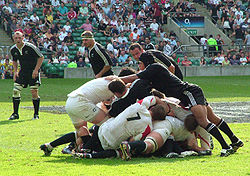 Although not rigorously applied in the past, people have to prove whakapaka to become members of the international New Zealand Māori rugby union team
, New Zealand Māori rugby league team
and New Zealand Māori cricket team
to qualify.
Genealogy
Genealogy is the study of families and the tracing of their lineages and history. Genealogists use oral traditions, historical records, genetic analysis, and other records to obtain information about a family and to demonstrate kinship and pedigrees of its members...
, is a fundamental principle that permeates the whole of Māori culture. However, it is more than just a genealogical 'device'. It is in fact a paradigm of cultural discourse and provides the basis for establishing, enhancing, and even challenging relationships between individuals, whanau
Whanau
Whānau , is a Māori-language word for extended family, now increasingly entering New Zealand English, particularly in official publications.In Māori society, the whānau is also a political unit, below the level of hapū and iwi, and the word itself also has other meanings: as a verb meaning to give...
(families
Family
In human context, a family is a group of people affiliated by consanguinity, affinity, or co-residence. In most societies it is the principal institution for the socialization of children...
), hapu
Hapu
A hapū is sometimes described as "the basic political unit within Maori society".A named division of a Māori iwi , membership is determined by genealogical descent; a hapū is made up of a number of whānau groups. Generally hapū range in size from 150-200 although there is no upper limit...
(local tribal entities) and iwi
Iwi
In New Zealand society, iwi form the largest everyday social units in Māori culture. The word iwi means "'peoples' or 'nations'. In "the work of European writers which treat iwi and hapū as parts of a hierarchical structure", it has been used to mean "tribe" , or confederation of tribes,...
(regional tribal bodies).
Identity statement
The recitation of whakapapa is a critical element in establishing identity - and the phrase 'Ko [enter name] au' (I am [enter name]') is in fact the personal statement that incorporates (by implication) over 25 generations of heritage. Experts in whakapapa are able to trace and recite a lineage not only through the many generations in a linear sense, but also between such generations in a lateral sense.Link with ancestry
Some scholars have attributed this type of genealogical 'activity' as being tantamount to ancestor worship. Most Māori would probably attribute this to ancestor reverence. Tribes and sub-tribes are mostly named after an ancestor (either male or female): for example, Ngati KahungunuNgati Kahungunu
Ngāti Kahungunu is a Māori iwi located along the eastern coast of the North Island of New Zealand. The iwi is traditionally centred in the Hawke’s Bay and Tararua and Wairārapa regions....
means 'descendants of Kahungunu ' (a famous chief who lived mostly in what is now called the Hawke's Bay region).
Word associations
Many physiological terms are also genealogical in 'nature'. For example the terms 'iwi', 'hapu', and 'whanau' (as noted above) can also be translated in order as 'bones', 'pregnant', and 'give birth'. The prize winning Māori author, Keri HulmeKeri Hulme
Keri Hulme is a New Zealand writer, best known for The Bone People, her only novel.-Early life:Hulme was born in Christchurch, in New Zealand's South Island. The daughter of a carpenter and a credit manager, she was the eldest of six children. Her parents were of English, Scottish, and Māori ...
, named her best known novel as The Bone People: a title linked directly to the dual meaning of the word 'iwi as both 'bone' and '[tribal] people'.
Most formal orations (or whaikorero) begin with the "nasal" expression - Tihei Mauriora! This is translated as the 'Sneeze of Life'. In effect, the orator (whose 'sneeze' reminds us of a newborn clearing his or her airways to take the first breath of life) is announcing that 'his' speech has now begun, and that his 'airways' are clear enough to give a suitable oration.
Whakapapa and its role in the mental health system
Whakapapa is defined as the "genealogical descent of all living things from the gods to the present time (p. 173). "Since all living things including rocks and mountainMountain
Image:Himalaya_annotated.jpg|thumb|right|The Himalayan mountain range with Mount Everestrect 58 14 160 49 Chomo Lonzorect 200 28 335 52 Makalurect 378 24 566 45 Mount Everestrect 188 581 920 656 Tibetan Plateaurect 250 406 340 427 Rong River...
s are believed to possess whakapapa, it is further defined as "a basis for the organisation of knowledge in the respect of the creation and development of all things" (p. 173).
Hence, whakapapa also implies a deep connection to land and the roots of one’s ancestry. In order to trace one’s whakapapa it is essential to identify the location where one’s ancestral heritage began; "you can’t trace it back any further". "Whakapapa links all people back to the land and sea and sky and outer universe, therefore, the obligations of whanaungatanga extend to the physical world and all being in it" (p. 14).
While some family and community health organisations may require details of whakapapa as part of client assessment, it is generally better if whakapapa is disclosed voluntarily by whanau, if they are comfortable with this.. Usually details of a client’s whakapapa are not required since sufficient information can be obtained through their iwi identification. Cases where whakapapa may be required include adoption
Adoption
Adoption is a process whereby a person assumes the parenting for another and, in so doing, permanently transfers all rights and responsibilities from the original parent or parents...
cases or situations where whakapapa information may be of benefit to the client’s health and well-being.
Whakapapa is also believed to determine an individual’s intrinsic tapu
Tapu
Tapu, tabu or kapu is a Polynesian traditional concept denoting something holy or sacred, with "spiritual restriction" or "implied prohibition"; it involves rules and prohibitions...
. "Sharing whakapapa enables the identification of obligations...and gaining trust of participants" (p. 31). Additionally since whakapapa is believed to be "inextricably linked to the physical gene
Gene
A gene is a molecular unit of heredity of a living organism. It is a name given to some stretches of DNA and RNA that code for a type of protein or for an RNA chain that has a function in the organism. Living beings depend on genes, as they specify all proteins and functional RNA chains...
" (p. 32) concepts of tapu would still apply. Therefore it is essential to ensure that appropriate cultural protocols are adhered to.
Misuse of such private and privileged information is of great concern to Māori.. While whakapapa information may be disclosed to a kaimatai hinengaro in confidence, this information may be stored in databases that could be accessed by others. While most health professions are embracing technological advances of data storage, this may be an area of further investigation so that confidential information pertaining to a client’s whakapapa cannot be disclosed to others.
Additionally, it may be beneficial to find out if the client is comfortable with whakapapa information being stored in ways that have the potential to be disclosed to others. To combat such issues, a Māori Code of Ethics
Ethics
Ethics, also known as moral philosophy, is a branch of philosophy that addresses questions about morality—that is, concepts such as good and evil, right and wrong, virtue and vice, justice and crime, etc.Major branches of ethics include:...
has been suggested. A Māori Code of Ethics may prevent "the mismanagement or manipulation of either the information or the informants" (p. 30).
Sport
New Zealand Maori rugby union team
New Zealand Māori is a rugby union team that traditionally plays teams touring New Zealand. A prerequisite for playing in this team is that the player is to have Māori whakapapa or genealogy. In the past this rule was not strictly applied. In the past non-Māori players who looked Māori were often...
, New Zealand Māori rugby league team
New Zealand Maori rugby league team
-See also:* New Zealand national rugby league team* New Zealand Māori rugby union team* New Zealand Māori cricket team-External links:* Google Books...
and New Zealand Māori cricket team
New Zealand Maori cricket team
The New Zealand Māori cricket team is a team that represented the Māori community of New Zealand in the 2001 Pacifica Cup cricket tournament. Whilst their rugby union and rugby league counterparts play often, this is the only appearance to date of the cricket team.-2001 Pacifica Cup:The New Zealand...
to qualify.