
Home      Discussion      Topics      Dictionary      Almanac
Signup       Login
Terrazzo

Terrazzo

Overview
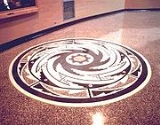
Terrazzo is a composite material poured in place or precast, which is used for floor and wall treatments. It consists of marble
Marble
Marble is a metamorphic rock composed of recrystallized carbonate minerals, most commonly calcite or dolomite.Geologists use the term "marble" to refer to metamorphosed limestone; however stonemasons use the term more broadly to encompass unmetamorphosed limestone.Marble is commonly used for...

, quartz
Quartz
Quartz is the second-most-abundant mineral in the Earth's continental crust, after feldspar. It is made up of a continuous framework of SiO4 silicon–oxygen tetrahedra, with each oxygen being shared between two tetrahedra, giving an overall formula SiO2. There are many different varieties of quartz,...

, granite
Granite
Granite is a common and widely occurring type of intrusive, felsic, igneous rock. Granite usually has a medium- to coarse-grained texture. Occasionally some individual crystals are larger than the groundmass, in which case the texture is known as porphyritic. A granitic rock with a porphyritic...

, glass
Glass
Glass is an amorphous solid material. Glasses are typically brittle and optically transparent.The most familiar type of glass, used for centuries in windows and drinking vessels, is soda-lime glass, composed of about 75% silica plus Na2O, CaO, and several minor additives...

 or other suitable chips, sprinkled or unsprinkled, and poured with a binder that is cementitious, chemical or a combination of both. Terrazzo is cured, ground and polished to a smooth surface or otherwise finished to produce a uniformly textured surface.
Discussion
Ask a question about 'Terrazzo'
Start a new discussion about 'Terrazzo'
Answer questions from other users
Full Discussion Forum
 
Recent Discussions
Encyclopedia
Terrazzo is a composite material poured in place or precast, which is used for floor and wall treatments. It consists of marble
Marble
Marble is a metamorphic rock composed of recrystallized carbonate minerals, most commonly calcite or dolomite.Geologists use the term "marble" to refer to metamorphosed limestone; however stonemasons use the term more broadly to encompass unmetamorphosed limestone.Marble is commonly used for...

, quartz
Quartz
Quartz is the second-most-abundant mineral in the Earth's continental crust, after feldspar. It is made up of a continuous framework of SiO4 silicon–oxygen tetrahedra, with each oxygen being shared between two tetrahedra, giving an overall formula SiO2. There are many different varieties of quartz,...

, granite
Granite
Granite is a common and widely occurring type of intrusive, felsic, igneous rock. Granite usually has a medium- to coarse-grained texture. Occasionally some individual crystals are larger than the groundmass, in which case the texture is known as porphyritic. A granitic rock with a porphyritic...

, glass
Glass
Glass is an amorphous solid material. Glasses are typically brittle and optically transparent.The most familiar type of glass, used for centuries in windows and drinking vessels, is soda-lime glass, composed of about 75% silica plus Na2O, CaO, and several minor additives...

 or other suitable chips, sprinkled or unsprinkled, and poured with a binder that is cementitious, chemical or a combination of both. Terrazzo is cured, ground and polished to a smooth surface or otherwise finished to produce a uniformly textured surface.

Production


Terrazzo artisans create walkways, floors, patios, and panels by exposing marble chips and other fine aggregates on the surface of finished concrete
Concrete
Concrete is a composite construction material, composed of cement and other cementitious materials such as fly ash and slag cement, aggregate , water and chemical admixtures.The word concrete comes from the Latin word...

 or epoxy
Epoxy
Epoxy, also known as polyepoxide, is a thermosetting polymer formed from reaction of an epoxide "resin" with polyamine "hardener". Epoxy has a wide range of applications, including fiber-reinforced plastic materials and general purpose adhesives....

-resin. Much of the preliminary work of terrazzo workers is similar to that of cement masons. Marble-chip, cementitious terrazzo requires three layers of materials. First, cement masons or terrazzo workers build a solid, level concrete foundation that is 3 to 4 inches deep. After the forms are removed from the foundation, workers add a 1-inch layer of sandy concrete. Before this layer sets, terrazzo workers partially embed metal divider strips in the concrete wherever there is to be a joint or change of color in the terrazzo. For the final layer, terrazzo workers blend and place into each of the panels a fine marble chip mixture that may be color-pigmented. While the mixture is still wet, workers toss additional marble chips of various colors into each panel and roll a lightweight roller over the entire surface.

In the 1970s, polymer
Polymer
A polymer is a large molecule composed of repeating structural units. These subunits are typically connected by covalent chemical bonds...

-based terrazzo was introduced and is called thin-set terrazzo. Initially polyester and vinyl ester resins were used as the binder resin. Today, most of the terrazzo installed is epoxy terrazzo. The advantages of this material over cementitious terrazzo include a wider selection of colors, 1/4 inch to 3/8 inch installation thickness, lighter weight, faster installation, impermeable finish, higher strength, and less susceptibility to cracking. The disadvantage of epoxy resin based terrazzo is that it can only be used for interior, not exterior, applications. Epoxy based terrazzo will lose its color and slightly peel when used outdoors, whereas cement based terrazzo will not. In addition to marble aggregate blends, other aggregates have been used such as mother of pearl and abalone
Abalone
Abalone , from aulón, are small to very large-sized edible sea snails, marine gastropod molluscs in the family Haliotidae and the genus Haliotis...

 shell. Recycled aggregates include: glass, porcelain, concrete and metal. Shapes and medallions can be fabricated on site by bending divider strips or off site by water-jet cutting.

When the terrazzo is thoroughly dry (or cured in the case of thin-set terrazzo), helpers grind it with a terrazzo grinder, which is somewhat like a floor polisher, only much heavier. Slight depressions left by the grinding are filled with a matching grout material and hand-troweled for a smooth, uniform surface. Terrazzo contractors then clean, polish, and seal the dry surface for a lustrous finish.

Historical


Terrazzo was originally invented by Venetian
Venice
Venice is a city in northern Italy which is renowned for the beauty of its setting, its architecture and its artworks. It is the capital of the Veneto region...

 construction workers as a low cost flooring material using marble chips from upscale jobs. The workers would usually set them in clay
Clay
Clay is a general term including many combinations of one or more clay minerals with traces of metal oxides and organic matter. Geologic clay deposits are mostly composed of phyllosilicate minerals containing variable amounts of water trapped in the mineral structure.- Formation :Clay minerals...

 to surface the patios around their living quarters. Consisting originally of marble chips, clay, and goat milk (as the sealer), production of terrazzo became much easier after the 1920s and the introduction of electric industrial grinders and other power equipment.

Newly-set terrazzo will not look like marble unless it is wet. That's where the goat's milk comes in, acting as a sealer and preserving the wet and marble-like look.

Archaeological


Archaeologists use the word terrazzo to describe the floors of early neolithic
Neolithic
The Neolithic Age, Era, or Period, or New Stone Age, was a period in the development of human technology, beginning about 9500 BC in some parts of the Middle East, and later in other parts of the world. It is traditionally considered as the last part of the Stone Age...

 buildings (PPN A and B, ca. 9,000–8,000 BC) in Western Asia, that are constructed of burnt lime
Lime (mineral)
Lime is a general term for calcium-containing inorganic materials, in which carbonates, oxides and hydroxides predominate. Strictly speaking, lime is calcium oxide or calcium hydroxide. It is also the name for a single mineral of the CaO composition, occurring very rarely...

 and clay, colored red with ochre
Ochre
Ochre is the term for both a golden-yellow or light yellow brown color and for a form of earth pigment which produces the color. The pigment can also be used to create a reddish tint known as "red ochre". The more rarely used terms "purple ochre" and "brown ochre" also exist for variant hues...

 and polished. The embedded crushed limestone gives it a slightly mottled appearance.
The use of fire to produce burnt lime, which was also used for the hafting
Hafting
Hafting is a process by which an artifact, often bone, metal, or stone, is attached to a handle or strap. This makes the artifact more useful by allowing it to be fired , thrown , or leveraged more effectively .Hafting is perhaps best known for its use by prehistoric man, but it is still practiced...

 of implements, predates the use of pottery by almost a thousand years.
In the early Neolithic settlement of Cayönü
Çayönü
Çayönü is a Neolithic settlement in southern Turkey inhabited around 7200 to 6600 BC. It is located forty kilometres north-west of Diyarbakır, at the foot of the Taurus mountains...

 in eastern Turkey
Turkey
Turkey , known officially as the Republic of Turkey , is a Eurasian country located in Western Asia and in East Thrace in Southeastern Europe...

 ca. 90 m² of terrazzo floors have been uncovered. The floors of the PPN B settlement of Nevali Cori measure about 80 m². They are 15 cm thick, and contain about 10-15 % lime.

These floors are almost impenetrable to moisture and very durable, but their construction involved a high input of energy. Gourdin and Kingery (1975) estimate that about 5 times the amount of wood is needed to produce the required amount of lime, but recent experiments by Affonso and Pernicka have shown that only the double amount is needed. But that would still amount to 4.5 metric tons of dry wood for the floors in Cayönü, in what is an only sparsely wooded environment today.

Other sites with terrazzo floors include Nevali Cori
Nevali Cori
Nevalı Çori was an early Neolithic settlement on the middle Euphrates, in the province of Şanlıurfa , eastern Turkey. The site is famous for having revealed some of the world's most ancient known temples and monumental sculpture...

, Göbekli Tepe
Göbekli Tepe
Göbekli Tepe [ɡøbe̞kli te̞pɛ] is a hilltop sanctuary erected on the highest point of an elongated mountain ridge in southeastern Turkey, some northeast of the town of Şanlıurfa . It is the oldest human-made religious structure yet discovered...

, Jericho
Jericho
Jericho ; is a city located near the Jordan River in the West Bank of the Palestinian territories. It is the capital of the Jericho Governorate and has a population of more than 20,000. Situated well below sea level on an east-west route north of the Dead Sea, Jericho is the lowest permanently...

, and Kastros
Kastros
Kastros is an early Neolithic settlement in Cyprus.-Location:It lies at the north-easternmost tip of the Karpasia Peninsula , about 4 km north of Apostolos Andreas Monastery...

 (Cyprus
History of Cyprus
-Prehistory:Cyprus was settled by humans in the Paleolithic period who coexisted with various dwarf animal species, such as dwarf elephants and pygmy hippos well into the Holocene...

).

Terrazzo and Sustainability


Terrazzo flooring is an original recycled product, created centuries ago by Venetian workers using the waste chips from slab marble processing. Today Terrazzo continues to provide environmentally friendly durability and low maintenance, typically lasting the life of the building. With no VOCs, it earns further point on indoor air quality ratings. Recycled content is still a standard feature of modern Terrazzo.

Terrazzo aggregates, binders and finished flooring systems can contribute to U.S. Green Building Council (USGBC) credits, under the LEED-NC rating system, version 2.2.

The evaluation of a construction product for its environmental impact considers the longevity of the material, the composition, recycled materials, maintenance requirements, embodied energy, and lifetime environmental impact.

Durability is at the core of green construction. Terrazzo flooring can be refinished repeatedly, reusing instead of replacing materials. It can be restored to its original luster at a fraction of the cost of replacement. Even century-old floors have generally proven need little more than minor repairs and refinishing to return them to their original beauty.

Terrazzo flooring (both cement and thin-set epoxy) also requires only minimal, low-cost maintenance. Routine maintenance should be no more than dry and damp mopping, with an occasional spray buffing. Waxing or chemical cleaners only serve to cloud or damage the finish. Annual stripping and resealing can be done with water-based products.

Terrazzo is composed of naturally occurring aggregates, recycled glass or plastic and processed cement or epoxy binders. The binders constitute 25-30 percent of the volume of a floor; the remainder is composed of aggregates, pigments and fillers.

Post-consumer recycled glass or post-industrial stone from slab granite and marble processing increase the amount of recycled content in Terrazzo, along with recycled aluminum divider strips.

Both cement-based and thin-set epoxy Terrazzo systems are made of zero VOC materials. Terrazzo produces little or no off-gassing over the life of a cured floor. The non-porous Terrazzo finish resists microbial growth and moisture.

The potential for local sourcing is another environmental strength of Terrazzo. Manufactured on site, Terrazzo installations generally produce minimal post-commercial waste and save on transportation costs.

On typical projects, Terrazzo can realistically contribute to five LEED credits: MRcr4 (2), MRcr5 (2) EQcr4 (1). Terrazzo may also potentially contribute to MRcr1 (1), and in extreme cases, ldcr1 (1), for a total of eight points, according to Michael A. Kawecki, LEEP AP, USGBC North Texas Chapter of the National Terrazzo & Mosaic Association.

See also

  • International Association of Marble, Slate and Stone Polishers, Rubbers and Sawyers, Tile and Marble setters' Helpers and Marble Mosaic and Terrazzo Workers' Helpers
  • Mosaic
    Mosaic
    Mosaic is the art of creating images with an assemblage of small pieces of colored glass, stone, or other materials. It may be a technique of decorative art, an aspect of interior decoration, or of cultural and spiritual significance as in a cathedral...


External links