
Home      Discussion      Topics      Dictionary      Almanac
Signup       Login
Taxation in the United Kingdom

Taxation in the United Kingdom

Overview
Taxation in the United Kingdom may involve payments to a minimum of two different levels of government: The central government (HM Revenue and Customs) and local government
Local government in the United Kingdom
The pattern of local government in England is complex, with the distribution of functions varying according to the local arrangements. Legislation concerning local government in England is decided by the Parliament and Government of the United Kingdom, because England does not have a devolved...

. Central government revenues come primarily from income tax
Income tax
An income tax is a tax levied on the income of individuals or businesses . Various income tax systems exist, with varying degrees of tax incidence. Income taxation can be progressive, proportional, or regressive. When the tax is levied on the income of companies, it is often called a corporate...

, National Insurance
National Insurance
National Insurance in the United Kingdom was initially a contributory system of insurance against illness and unemployment, and later also provided retirement pensions and other benefits...

 contributions, value added tax
Value added tax
A value added tax or value-added tax is a form of consumption tax. From the perspective of the buyer, it is a tax on the purchase price. From that of the seller, it is a tax only on the "value added" to a product, material or service, from an accounting point of view, by this stage of its...

, corporation tax
United Kingdom corporation tax
Corporation tax is a tax levied in the United Kingdom on the profits made by companies and on the profits of permanent establishments of non-UK resident companies and associations that trade in the EU. Prior to the tax's enactment on 1 April 1965, companies and individuals paid the same income tax,...

 and fuel duty
Hydrocarbon oil duty
Hydrocarbon oil duty is fuel tax levied on some fuels used by road vehicles in the United Kingdom. Between 1993 and 1999 the Government's Fuel Price Escalator led to significant rises in the cost of fuel which led to fuel tax protests in 2000, 2005 and 2007. In May 2008, UK fuel tax rates were one...

. Local government revenues come primarily from grants from central government funds, business rates in England and Wales, Council Tax
Council tax
Council Tax is the system of local taxation used in England, Scotland and Wales to part fund the services provided by local government in each country. It was introduced in 1993 by the Local Government Finance Act 1992, as a successor to the unpopular Community Charge...

 and increasingly from fees and charges such as those from on-street parking
Decriminalised parking enforcement
Decriminalised parking enforcement is the name given in the United Kingdom to the civil enforcement of car parking regulations, carried out by civil enforcement officers, operating on behalf of either a local authority or a private firm. The Road Traffic Act 1991 Decriminalised parking enforcement...

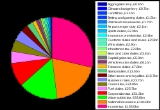
. In the fiscal year 2007-08, total government revenue was 39.2 per cent of GDP, with net taxes and National Insurance contributions standing at 36.9 per cent of GDP—approximately £600 billion (using 2008 nominal GDP measured in dollars, and converting using 2009 conversion rate).
Discussion
Ask a question about 'Taxation in the United Kingdom'
Start a new discussion about 'Taxation in the United Kingdom'
Answer questions from other users
Full Discussion Forum
 
Unanswered Questions
Encyclopedia
Taxation in the United Kingdom may involve payments to a minimum of two different levels of government: The central government (HM Revenue and Customs) and local government
Local government in the United Kingdom
The pattern of local government in England is complex, with the distribution of functions varying according to the local arrangements. Legislation concerning local government in England is decided by the Parliament and Government of the United Kingdom, because England does not have a devolved...

. Central government revenues come primarily from income tax
Income tax
An income tax is a tax levied on the income of individuals or businesses . Various income tax systems exist, with varying degrees of tax incidence. Income taxation can be progressive, proportional, or regressive. When the tax is levied on the income of companies, it is often called a corporate...

, National Insurance
National Insurance
National Insurance in the United Kingdom was initially a contributory system of insurance against illness and unemployment, and later also provided retirement pensions and other benefits...

 contributions, value added tax
Value added tax
A value added tax or value-added tax is a form of consumption tax. From the perspective of the buyer, it is a tax on the purchase price. From that of the seller, it is a tax only on the "value added" to a product, material or service, from an accounting point of view, by this stage of its...

, corporation tax
United Kingdom corporation tax
Corporation tax is a tax levied in the United Kingdom on the profits made by companies and on the profits of permanent establishments of non-UK resident companies and associations that trade in the EU. Prior to the tax's enactment on 1 April 1965, companies and individuals paid the same income tax,...

 and fuel duty
Hydrocarbon oil duty
Hydrocarbon oil duty is fuel tax levied on some fuels used by road vehicles in the United Kingdom. Between 1993 and 1999 the Government's Fuel Price Escalator led to significant rises in the cost of fuel which led to fuel tax protests in 2000, 2005 and 2007. In May 2008, UK fuel tax rates were one...

. Local government revenues come primarily from grants from central government funds, business rates in England and Wales, Council Tax
Council tax
Council Tax is the system of local taxation used in England, Scotland and Wales to part fund the services provided by local government in each country. It was introduced in 1993 by the Local Government Finance Act 1992, as a successor to the unpopular Community Charge...

 and increasingly from fees and charges such as those from on-street parking
Decriminalised parking enforcement
Decriminalised parking enforcement is the name given in the United Kingdom to the civil enforcement of car parking regulations, carried out by civil enforcement officers, operating on behalf of either a local authority or a private firm. The Road Traffic Act 1991 Decriminalised parking enforcement...

. In the fiscal year 2007-08, total government revenue was 39.2 per cent of GDP, with net taxes and National Insurance contributions standing at 36.9 per cent of GDP—approximately £600 billion (using 2008 nominal GDP measured in dollars, and converting using 2009 conversion rate).

History


A uniform Land tax
Land value tax
A land value tax is a levy on the unimproved value of land. It is an ad valorem tax on land that disregards the value of buildings, personal property and other improvements...

 was introduced in England during the late 17th century. This formed the main source of government revenue throughout the rest of the 17th century, the 18th century and the early 19th century.

Income tax was first implemented in Britain
Kingdom of Great Britain
The former Kingdom of Great Britain, sometimes described as the 'United Kingdom of Great Britain', That the Two Kingdoms of Scotland and England, shall upon the 1st May next ensuing the date hereof, and forever after, be United into One Kingdom by the Name of GREAT BRITAIN. was a sovereign...

 by William Pitt the Younger
William Pitt the Younger
William Pitt the Younger was a British politician of the late 18th and early 19th centuries. He became the youngest Prime Minister in 1783 at the age of 24 . He left office in 1801, but was Prime Minister again from 1804 until his death in 1806...

 in his budget of December 1798 to pay for weapons and equipment in preparation for the Napoleonic Wars
Napoleonic Wars
The Napoleonic Wars were a series of wars declared against Napoleon's French Empire by opposing coalitions that ran from 1803 to 1815. As a continuation of the wars sparked by the French Revolution of 1789, they revolutionised European armies and played out on an unprecedented scale, mainly due to...

. Pitt's new graduated (progressive) income tax
Progressive tax
A progressive tax is a tax by which the tax rate increases as the taxable base amount increases. "Progressive" describes a distribution effect on income or expenditure, referring to the way the rate progresses from low to high, where the average tax rate is less than the marginal tax rate...

 began at a levy of 2 old pence in the pound
Pound sterling
The pound sterling , commonly called the pound, is the official currency of the United Kingdom, its Crown Dependencies and the British Overseas Territories of South Georgia and the South Sandwich Islands, British Antarctic Territory and Tristan da Cunha. It is subdivided into 100 pence...

 (1/120) on incomes over £60 (£ as of ), and increased up to a maximum of 2 shilling
Shilling
The shilling is a unit of currency used in some current and former British Commonwealth countries. The word shilling comes from scilling, an accounting term that dates back to Anglo-Saxon times where it was deemed to be the value of a cow in Kent or a sheep elsewhere. The word is thought to derive...

s (10%) on incomes of over £200. Pitt hoped that the new income tax would raise £10 million, but actual receipts for 1799 totalled just over £6 million.

Income tax was levied under five schedules. Income not falling within those schedules was not taxed. The schedules were:
  • Schedule A (tax on income from UK land)
  • Schedule B (tax on commercial occupation of land)
  • Schedule C (tax on income from public securities)
  • Schedule D (tax on trading income, income from professions and vocations, interest, overseas income and casual income)
  • Schedule E (tax on employment income)


Later a sixth Schedule, Schedule F (tax on UK dividend income) was added.

Pitt's income tax was levied from 1799 to 1802, when it was abolished by Henry Addington during the Peace of Amiens. Addington had taken over as prime minister
Prime minister
A prime minister is the most senior minister of cabinet in the executive branch of government in a parliamentary system. In many systems, the prime minister selects and may dismiss other members of the cabinet, and allocates posts to members within the government. In most systems, the prime...

 in 1801, after Pitt's resignation over Catholic Emancipation
Catholic Emancipation
Catholic emancipation or Catholic relief was a process in Great Britain and Ireland in the late 18th century and early 19th century which involved reducing and removing many of the restrictions on Roman Catholics which had been introduced by the Act of Uniformity, the Test Acts and the penal laws...

. The income tax was reintroduced by Addington in 1803 when hostilities recommenced, but it was again abolished in 1816, one year after the Battle of Waterloo
Battle of Waterloo
The Battle of Waterloo was fought on Sunday 18 June 1815 near Waterloo in present-day Belgium, then part of the United Kingdom of the Netherlands...

. The UK income tax was reintroduced by Sir Robert Peel
Robert Peel
Sir Robert Peel, 2nd Baronet was a British Conservative statesman who served as Prime Minister of the United Kingdom from 10 December 1834 to 8 April 1835, and again from 30 August 1841 to 29 June 1846...

 in the Income Tax Act 1842
Income Tax Act 1842
The Income Tax Act 1842 was an Act of the Parliament of the United Kingdom, passed under the government of Robert Peel, which re-introduced an income tax in Britain, at the rate of 7 pence in the pound on all annual incomes greater than £150...

. Peel, as a Conservative
Conservative Party (UK)
The Conservative Party, formally the Conservative and Unionist Party, is a centre-right political party in the United Kingdom that adheres to the philosophies of conservatism and British unionism. It is the largest political party in the UK, and is currently the largest single party in the House...

, had opposed income tax in the 1841 general election
General election
In a parliamentary political system, a general election is an election in which all or most members of a given political body are chosen. The term is usually used to refer to elections held for a nation's primary legislative body, as distinguished from by-elections and local elections.The term...

, but a growing budget deficit required a new source of funds. The new income tax, based on Addington's model, was imposed on incomes above £150 (£ as of ),.

UK income tax has changed over the years. Originally it taxed a person's income regardless of who was beneficially entitled to that income, but now a person owes tax only on income to which he or she is beneficially entitled. Most companies were taken out of the income tax net in 1965 when corporation tax
United Kingdom corporation tax
Corporation tax is a tax levied in the United Kingdom on the profits made by companies and on the profits of permanent establishments of non-UK resident companies and associations that trade in the EU. Prior to the tax's enactment on 1 April 1965, companies and individuals paid the same income tax,...

 was introduced. These changes were consolidated by the Income and Corporation Taxes Act 1970
Income and Corporation Taxes Act 1970
The Income and Corporation Taxes Act 1970 was an Act of Parliament passed by the Parliament of the United Kingdom which was repealed in 1992.-Section 226 plans:...

. Also the schedules under which tax is levied have changed. Schedule B was abolished in 1988, Schedule C in 1996 and Schedule E in 2003. For income tax purposes, the remaining schedules were superseded by the Income Tax (Trading and Other Income) Act 2005
Income Tax (Trading and Other Income) Act 2005
The Income Tax Act 2005 is an Act of the Parliament of the United Kingdom.It restated certain legislation relating to income tax, with minor changes that were mainly intended "to clarify existing provisions, make them consistent or bring the law into line with well established practice." The Bill...

, which also repealed Schedule F completely. The Schedular system and Schedules A and D still remain in force for corporation tax. The highest rate peaked in the Second World War at 99.25% and remained at about 95% till the late 1970s.
In 1974 the top-rate of income tax increased to its highest rate since the war, 83%. This applied to incomes over £20,000 (£ as of ),, and combined with a 15% surcharge on 'un-earned' income (investments and dividends) could add to a 98% marginal rate of personal income tax. In 1974, as many as 750,000 people were liable to pay the top-rate of income tax. Margaret Thatcher
Margaret Thatcher
Margaret Hilda Thatcher, Baroness Thatcher, was Prime Minister of the United Kingdom from 1979 to 1990...

, who favoured indirect taxation, reduced personal income tax rates during the 1980s. In the first budget after her election victory in 1979, the top rate was reduced from 83% to 60% and the basic rate from 33% to 30%. The basic rate was also cut for three successive budgets - to 29% in the 1986 budget, 27% in 1987 and to 25% in 1988. The top rate of income tax was cut to 40% in the 1988 budget.

Business rates were introduced in England and Wales in 1990, and are a modernised version of a system of rating that dates back to the Elizabethan Poor Law of 1601
Elizabethan Poor Law (1601)
The Act for the Relief of the Poor 1601, popularly known as the "Elizabethan Poor Law", "43rd Elizabeth" or the "Old Poor Law" was an Act of Parliament passed in 1601 which created a national poor law system for England and Wales....

. As such, business rates retain many previous features from, and follow some case law of, older forms of rating. The Finance Act 2004
Finance Act 2004
The Finance Act 2004 is an Act of the Parliament of the United Kingdom. It prescribes changes to Excise Duties, Value Added Tax, Income Tax, Corporation Tax, and Capital Gains Tax...

 introduced an income tax regime known as "pre-owned asset tax
Pre-owned asset tax
In the United Kingdom, Her Majesty's Revenue and Customs acted against certain IHT schemes by imposing a standalone income tax charge from 6 April 2005. This has become known as pre-owned assets tax . POAT applies where an individual disposes of an asset but somehow retains the ability to use or...

" which aims to reduce the use of common methods of inheritance tax
Inheritance tax
An inheritance tax or estate tax is a levy paid by a person who inherits money or property or a tax on the estate of a person who has died...

 avoidance.

Overview


Income tax
Income tax
An income tax is a tax levied on the income of individuals or businesses . Various income tax systems exist, with varying degrees of tax incidence. Income taxation can be progressive, proportional, or regressive. When the tax is levied on the income of companies, it is often called a corporate...

 forms the bulk of revenues collected by the government. The second largest source of government revenue is National Insurance Contributions
National Insurance
National Insurance in the United Kingdom was initially a contributory system of insurance against illness and unemployment, and later also provided retirement pensions and other benefits...

. The third largest source of government revenues is value added tax
Value added tax
A value added tax or value-added tax is a form of consumption tax. From the perspective of the buyer, it is a tax on the purchase price. From that of the seller, it is a tax only on the "value added" to a product, material or service, from an accounting point of view, by this stage of its...

 (VAT), and the fourth-largest is corporation tax.

Residence and domicile


UK source income is generally subject to UK taxation no matter the citizenship
Citizenship
Citizenship is the state of being a citizen of a particular social, political, national, or human resource community. Citizenship status, under social contract theory, carries with it both rights and responsibilities...

 nor the place of residence of the individual nor the place of registration of the company.

For individuals this means the UK income tax liability of one who is neither resident nor ordinarily resident in the UK is limited to any tax deducted at source on UK income, together with tax on income from a trade or profession carried on through a permanent establishment in the UK and tax on rental income from UK real estate.

Individuals who are both resident and domiciled in the UK are additionally liable to taxation on their worldwide income and gains. For individuals resident but not domiciled in the UK (a "non-dom"), foreign income and gains have historically been taxed on the remittance basis, that is to say, only income and gains remitted to the UK are taxed (for such people the UK is sometimes called a tax haven
Tax haven
A tax haven is a state or a country or territory where certain taxes are levied at a low rate or not at all while offering due process, good governance and a low corruption rate....

). However from 6 April 2008, a (long term [resident 7 of previous 9 years]) non-dom wishing to retain the remittance basis is required to pay an annual tax of £30,000.

UK domiciled inviduals who are not resident for three consecutive tax years are not liable for UK taxation on their worldwide income, and those who are not resident for five consecutive tax years are not liable for UK taxation on their worldwide capital gains. Anyone who stays in the UK for 183 or more days per year is resident.

Domicile
Domicile (law)
In law, domicile is the status or attribution of being a permanent resident in a particular jurisdiction. A person can remain domiciled in a jurisdiction even after they have left it, if they have maintained sufficient links with that jurisdiction or have not displayed an intention to leave...

here is a term with a technical meaning. Very roughly (and this is a considerable simplification) an individual is domiciled in the UK if he was born in the UK or if the UK is his permanent home, and is not a UK domicile if he was born outside of the UK and does not intend to remain permanently.

A company is resident in the UK if it is UK-incorporated or if its central management and control are in the UK (although in the former case a company could be resident in another jurisdiction in certain circumstances where a tax treaty applies).

Double taxation of income and gains may be avoided by an applicable double tax treaty
Tax treaty
Many countries have agreed with other countries in treaties to mitigate the effects of double taxation . Tax treaties may cover income taxes, inheritance taxes, value added taxes, or other taxes...

 - the UK has one of the largest networks of treaties of any country.

Examples of non-dom status


Most migrant workers (including those from within the EEA) would classify as non-doms. However, since the non-dom exemption applies only to income sourced from outside of the UK, the majority of people making use of the tax exemption are wealthy individuals with substantial income from outside of the UK (e.g. from foreign savings). Typical such individuals include senior company executives, bankers, lawyers, business owners and international recording artists.

The tax year


The tax year in the UK, which applies to income tax and other personal taxes, runs from 6 April in one year to 5 April the next (for income tax purposes). Hence the 2010-11 tax year ran from 6 April 2010 to 5 April 2011.

The odd dates are due to events in the mid-18th century. The English quarter days
Quarter days
In British and Irish tradition, the quarter days were the four dates in each year on which servants were hired, and rents were due. They fell on four religious festivals roughly three months apart and close to the two solstices and two equinoxes....

 are traditionally used as the dates for collecting rents (on, for example, agricultural properties). The tax system was also based on a tax year ending on Lady Day
Lady Day
In the western Liturgical year, Lady Day is the traditional name of the Feast of the Annunciation of the Blessed Virgin in some English speaking countries. It is the first of the four traditional English quarter days. The "Lady" was the Virgin Mary. The term derives from Middle English, when some...

 (25 March). When the Gregorian calendar
Gregorian calendar
The Gregorian calendar, also known as the Western calendar, or Christian calendar, is the internationally accepted civil calendar. It was introduced by Pope Gregory XIII, after whom the calendar was named, by a decree signed on 24 February 1582, a papal bull known by its opening words Inter...

 was adopted in the UK in September 1752 in place of the Julian calendar
Julian calendar
The Julian calendar began in 45 BC as a reform of the Roman calendar by Julius Caesar. It was chosen after consultation with the astronomer Sosigenes of Alexandria and was probably designed to approximate the tropical year .The Julian calendar has a regular year of 365 days divided into 12 months...

, the two were out of step by 11 days. However, it was felt unacceptable for the tax authorities to lose out on 11 days' tax revenues, so the start of the tax year was moved, firstly to 5 April and then, in 1800, to 6 April.

The tax year is sometimes also called the Fiscal Year. The Financial Year, used mainly for corporation tax purposes, runs from 1 April to 31 March. Financial Year 2011 runs from 1 April 2010 to 31 March 2011, as Financial Years are named according to the calendar year in which they end.

Income tax


Income tax forms the single largest source of revenues collected by the government (followed by national insurance contributions, an additional levy on incomes at around 20%). Each person has an income tax personal allowance
Personal allowance
In the UK tax system, Personal Allowance is the level above which income tax is levied on an individual's annual income. A person who receives less than his/her personal allowance in taxable income in a given tax year does not pay income tax; otherwise, tax must be paid according to how much is...

, and income up to this amount in each tax year is free of tax for everyone. For 2010-11 the tax allowance for under 65s is £6,475. This reduces by £1 for every £2 of taxable income above £100,000. On 22 June 2010, the Chancellor (George Osborne
George Osborne
George Gideon Oliver Osborne, MP is a British Conservative politician. He is the Chancellor of the Exchequer of the United Kingdom, a role to which he was appointed in May 2010, and has been the Member of Parliament for Tatton since 2001.Osborne is part of the old Anglo-Irish aristocracy, known in...

) increased the personal allowance by £1000 in his emergency budget, bringing it to £7,475 for the tax year 2011-12.

Above this amount there are a number of tax bands — each taxed at a different rate (as of 2010-11):
Rate Dividend income Savings income Other income (inc employment) Band (above any personal allowance)
Lower rate N/A 10% N/A £0 - £7,445
applies only if total income falls in this band
Basic rate 10% 20% 20% £7,445 - £37,400
Higher rate 32.5% 40% 40% over £37,400
Additional rate 42.5% 50% 50% over £150,000


This table reflects the removal of the 10% starting rate from April 2008, which also saw the 22% income tax rate drop to 20%. Alistair Darling
Alistair Darling
Alistair Maclean Darling is a Scottish Labour Party politician who has been a Member of Parliament since 1987, currently for Edinburgh South West. He served as the Chancellor of the Exchequer from 2007 to 2010...

 announced in the 2009 budget (22 April 2009) that, from April 2010 there would be a new 50% income tax rate for those earning more than £150,000.

After consideration of employer and employee National Insurance contributions, the effective marginal top rate for 2011-12 is 58%: that is, to pay an employee £1,000 gross costs the employer £1,138 and the employee receives £480 after deductions.

The taxpayer's income is assessed for tax according to a prescribed order, with income from employment using up the personal allowance and being taxed first, followed by savings income (from interest or otherwise unearned) and then dividends.

Foreign income of UK residents is taxed as UK income, but to prevent double taxation
Double taxation
Double taxation is the systematic imposition of two or more taxes on the same income , asset , or financial transaction . It refers to taxation by two or more countries of the same income, asset or transaction, for example income paid by an entity of one country to a resident of a different country...

 the UK has agreements with many countries to allow offset against UK tax what is deemed paid abroad. These deemed amounts paid abroad are not necessarily as much as actually paid. Sometimes it is necessary to inform foreign authorities that tax should be withheld at the deemed rate.

Rental income on a property investment business (such as a buy to let
Buy to let
Buy-to-let is a British phrase referring to the purchase of a property specifically to let out. A buy to let mortgage is a mortgage specifically designed for this purpose....

 property) is taxed as other savings income, after allowing deductions including mortgage interest. The mortgage does not need to be secured against the property receiving the rent, subject to a maximum of the purchase prices of the property investment business properties (or the market value at the time they transferred into the business). Joint owners can decide how they divide income and expenses, as long as one does not make a profit and the other a loss. Losses can be brought forward to subsequent years.

Exemptions on Investment


Certain investments carry a tax favoured status including:
  • UK Government Bonds (Gilts)
    Gilts
    Gilts are bonds issued by certain national governments. The term is of British origin, and originally referred to the debt securities issued by the Bank of England, which had a gilt edge. Hence, they are called gilt-edged securities, or gilts for short. The term is also sometimes used in Ireland...


While all income is taxable, gains are exempt for income tax purposes.
  • National Savings and Investments
    National Savings and Investments
    National Savings and Investments , formerly called the Post Office Savings Bank and National Savings, is a state-owned savings bank in the United Kingdom. It is an executive agency of the Chancellor of the Exchequer...


Certain investments via the state owned National Savings scheme are not subject to tax including Index linked Certificates (up to £15,000 per issue) and Premium Bonds, a scheme that issues monthly prizes in place of interest on individual holdings up to £30,000.
  • Individual Savings Account
    Individual Savings Account
    An Individual Savings Account is a financial product available to residents in the United Kingdom. It is designed for the purpose of investment and savings with a favourable tax status. Money is contributed from after tax income and not subjected to income tax or capital gains tax within a holding...

    s

Interest is paid tax-free, while dividends are paid along with a tax credit to the investor which can then be offset against dividend tax due. For a basic rate tax payer this means they have no tax to pay on a dividend. There is no overall limit on how much a person can have invested in ISA accounts, but additional investments are currently limited to £10,680 per person per year: a maximum of £5,340 in cash funds, with the balance being allocated either to mutual fund
Mutual fund
A mutual fund is a professionally managed type of collective investment scheme that pools money from many investors to buy stocks, bonds, short-term money market instruments, and/or other securities.- Overview :...

s (Units Trusts and OEICs) or individual self-selected shares.
  • Pension
    Pension
    In general, a pension is an arrangement to provide people with an income when they are no longer earning a regular income from employment. Pensions should not be confused with severance pay; the former is paid in regular installments, while the latter is paid in one lump sum.The terms retirement...

     funds

These have the same tax treatment as ISAs
Individual Savings Account
An Individual Savings Account is a financial product available to residents in the United Kingdom. It is designed for the purpose of investment and savings with a favourable tax status. Money is contributed from after tax income and not subjected to income tax or capital gains tax within a holding...

 in terms of growth. Full tax relief is also given at the individual's marginal rate on contributions or, in the case of an employer contributions, it is treated as an expense and is not taxed on the employee as a benefit in kind. Aside from a tax free lump sum of 25% of the fund, benefits taken from pension funds are taxable.
  • Venture Capital Trust
    Venture Capital Trust
    A venture capital trust or VCT is a highly tax efficient UK closed-end collective investment scheme designed to provide private equity capital for small expanding companies and capital gains for investors...

    s

These are investments in smaller companies or funds of holdings in such companies over a minimum term of five years. These are not taxable and qualify for 30% tax relief against an individual's income.
  • Enterprise Investment Scheme
    Enterprise Investment Scheme
    The Enterprise Investment Scheme is a series of tax reliefs designed to encourage investments in small unquoted companies carrying on a qualifying trade in the United Kingdom.-Purpose:...

    s

A non taxable investment into smaller company shares over three years that qualifies for 20% tax relief. The facility also allows an indiviudal to defer capital gains liabilities (these gains can be stripped out in future years using the annual CGT allowance.)
  • Insurance bond
    Insurance bond
    An insurance bond is a single premium life assurance policy for the purposes of investment.Due to tax laws they are a common form of investment in the UK and some offshore centres....

    s

These include offshore and onshore investment bonds issued by insurance companies. The main difference between the two is that corporation tax paid by the onshore bond means that gains in the onshore bond are treated as if basic rate tax has been paid (this cannot be reclaimed by zero or starting rate tax payers). With both versions up to 5% for each complete year of investment can be taken without an immediate tax liability (subject to a maximum total of 100% of the original investment). On this basis, investors can plan an income stream while deferring any chargeable withdrawals until they are on a lower rate of tax, are no longer a UK resident, or their death.
  • Offshore trusts and companies

Trusts can be offshore if all trustees are non-resident. Such trusts can own foreign-operated companies. Corporation tax rates can be lower in some countries and where we still have double taxation treaties. However, since anti-avoidance rules have been introduced for taxation of trusts, these structures are not advantageous for someone who will remain resident.

Exceptions


Many holdings and income from them are exempt for "historical reasons". These include
  • Special, low tax arrangements for the monarchy, such as the arrangement used by the British Royal Family
    British Royal Family
    The British Royal Family is the group of close relatives of the monarch of the United Kingdom. The term is also commonly applied to the same group of people as the relations of the monarch in her or his role as sovereign of any of the other Commonwealth realms, thus sometimes at variance with...

     to avoid inheritance taxation.
  • Reduced income tax for special classes of person, such as non-doms, who claim to be resident in the UK but not "domiciled".
  • An Act of Parliament
    Act of Parliament
    An Act of Parliament is a statute enacted as primary legislation by a national or sub-national parliament. In the Republic of Ireland the term Act of the Oireachtas is used, and in the United States the term Act of Congress is used.In Commonwealth countries, the term is used both in a narrow...

     to protect the Earl of Abingdon
    Earl of Abingdon
    Earl of Abingdon is a title in the Peerage of England. It was created on 30 November 1682 for James Bertie, 5th Baron Norreys of Rycote. He was the eldest son of Montagu Bertie, 2nd Earl of Lindsey by his second marriage to Bridget, 4th Baroness Norreys de Rycote, and the younger half-brother of...

     and his “heirs and assignees” from paying income tax on the tolls on the Swinford Toll Bridge
    Swinford Toll Bridge
    Swinford Toll Bridge is a privately owned toll bridge south of Eynsham, England that crosses the River Thames just above Eynsham Lock. The bridge carries the road between Farmoor and Eynsham...

    .
  • The income of charities is usually exempt from UK income tax.

Inheritance tax


Inheritance tax
Inheritance tax
An inheritance tax or estate tax is a levy paid by a person who inherits money or property or a tax on the estate of a person who has died...

 is levied on "transfers of value", meaning:
  1. the estates of deceased persons;
  2. gifts made within seven years of death (known as Potentially Exempt Transfers or "PETs");
  3. "lifetime chargeable transfers", meaning transfers into certain types of trust. See Taxation of trusts (United Kingdom)
    Taxation of trusts (United Kingdom)
    The taxation of trusts in the United Kingdom is governed by a different set of principles to those tax laws which apply to individuals or companies.-Inheritance tax:...

    .

The first slice of cumulative transfers of value (known as the "nil rate band") is free of tax. This threshold is currently set at £325,000 (tax year 2009-10) and, although it is raised annually, it has recently failed to keep up with house price inflation with the result that some 6 million households currently fall within the scope of inheritance tax. Over this threshold the rate is 40% on death. Any inheritance tax must be paid by the executors or administrators of the estate (the burden falling upon the beneficiaries) before probate
Probate
Probate is the legal process of administering the estate of a deceased person by resolving all claims and distributing the deceased person's property under the valid will. A probate court decides the validity of a testator's will...

 is granted.

Transfers of value between UK-domiciled spouses are exempt from tax. Recent changes to the tax brought in by the Finance Act 2008 mean that nil-rate bands are transferable between spouses to reduce this burden - something which previously could only be done by setting up complex trusts.

Gifts made more than seven years prior to death are not taxed; if they are made between three and seven years before death a tapered inheritance tax rate applies. There are some important exceptions to this treatment: the most important is the "reservation of benefit rule", which says that a gift is ineffective for inheritance tax purposes if the giver benefits from the asset in any way after the gift (for example, by gifting a house but continuing to live in it).

Council Tax


Council tax is the system of local taxation used in England
England
England is a country that is part of the United Kingdom. It shares land borders with Scotland to the north and Wales to the west; the Irish Sea is to the north west, the Celtic Sea to the south west, with the North Sea to the east and the English Channel to the south separating it from continental...

, Scotland
Scotland
Scotland is a country that is part of the United Kingdom. Occupying the northern third of the island of Great Britain, it shares a border with England to the south and is bounded by the North Sea to the east, the Atlantic Ocean to the north and west, and the North Channel and Irish Sea to the...

 and Wales
Wales
Wales is a country that is part of the United Kingdom and the island of Great Britain, bordered by England to its east and the Atlantic Ocean and Irish Sea to its west. It has a population of three million, and a total area of 20,779 km²...

 to part fund the services provided by local government in each country. It was introduced in 1993 by the Local Government Finance Act 1992
Local Government Finance Act 1992
The Local Government Finance Act 1992 includes obligations of the occupants or the owners of properties in the United Kingdom to pay council tax.- External links :*...

, as a successor to the unpopular Community Charge
Community Charge
The Community Charge, popularly known as the "poll tax", was a system of taxation introduced in replacement of the rates to part fund local government in Scotland from 1989, and England and Wales from 1990. It provided for a single flat-rate per-capita tax on every adult, at a rate set by the...

 ("poll tax"), which had (briefly) replaced the Rates system. The basis for the tax is residential property, with discounts for single people.
As of 2008, the average annual levy on a property in England was £1,146. In 2006/2007 council tax in England amounted to £22.4 billion and an additional £10.8 billion in sales, fees and charges,

Value added tax


The third largest source of government revenues is value added tax
Value added tax
A value added tax or value-added tax is a form of consumption tax. From the perspective of the buyer, it is a tax on the purchase price. From that of the seller, it is a tax only on the "value added" to a product, material or service, from an accounting point of view, by this stage of its...

 (VAT), charged at 20% on supplies of goods and services. It is therefore a tax on consumer expenditure.

Certain goods and services are exempt from VAT, and others are subject to VAT at a lower rate of 5% (the reduced rate, such as domestic gas supplies) or 0% ("zero-rated", such as most food and children's clothing). Exemptions are intended to relieve the tax burden on essentials while placing the full tax on luxuries, but disputes based on fine distinctions arise, such as the notorious "Jaffa Cake Case" which hinged on whether Jaffa Cakes were classed as (zero-rated) cakes—as was eventually decided—or (fully taxed) chocolate-covered biscuits. Until 2001, VAT was charged at the full rate on sanitary towels
Feminine hygiene
Feminine hygiene is a general euphemism used to describe personal care products used by women during menstruation, vaginal discharge, and other bodily functions related to the vulva...

. http://customs.hmrc.gov.uk/channelsPortalWebApp/channelsPortalWebApp.portal?_nfpb=true&_pageLabel=pageLibrary_ShowContent&id=HMCE_CL_000098&propertyType=document

It was introduced in 1973, in consequence of Britain's entry to the European Economic Community
European Economic Community
The European Economic Community The European Economic Community (EEC) The European Economic Community (EEC) (also known as the Common Market in the English-speaking world, renamed the European Community (EC) in 1993The information in this article primarily covers the EEC's time as an independent...

, at a standard rate of 10%. In July 1974, the standard rate became 8%, and from October that year petrol was taxed at a new higher rate of 25% (reduced to 12.5% in 1976). In 1979, the higher rate was scrapped and VAT consolidated to a single rate of 15%. In 1991 this became 17.5%, though when domestic fuel and power was added to the scheme in 1994, it was charged at a new, lower rate of 8%.. In September 1997 this lower rate was reduced to 5%, and was extended to cover various energy-saving materials (from 1st July 1998), Sanitary Protection (from 1st January 2001), children's car seats (from 1st April 2001), conversion and renovation of certain residential properties (from 12th May 2001), contraceptives (from 1st July 2006) and smoking cessation products (from 1st July 2007).

On 1 December 2008, VAT was reduced to 15%, as a reaction to the late-2000s recession, by Labour
Labour Party (UK)
The Labour Party is a centre-left democratic socialist party in the United Kingdom. It surpassed the Liberal Party in general elections during the early 1920s, forming minority governments under Ramsay MacDonald in 1924 and 1929-1931. The party was in a wartime coalition from 1940 to 1945, after...

 Chancellor Alistair Darling
Alistair Darling
Alistair Maclean Darling is a Scottish Labour Party politician who has been a Member of Parliament since 1987, currently for Edinburgh South West. He served as the Chancellor of the Exchequer from 2007 to 2010...

.

On 1 January 2010 VAT returned to 17.5%, again by Labour.

On 4 January 2011 VAT was raised to 20% by Conservative
Conservative Party (UK)
The Conservative Party, formally the Conservative and Unionist Party, is a centre-right political party in the United Kingdom that adheres to the philosophies of conservatism and British unionism. It is the largest political party in the UK, and is currently the largest single party in the House...

 Chancellor George Osborne
George Osborne
George Gideon Oliver Osborne, MP is a British Conservative politician. He is the Chancellor of the Exchequer of the United Kingdom, a role to which he was appointed in May 2010, and has been the Member of Parliament for Tatton since 2001.Osborne is part of the old Anglo-Irish aristocracy, known in...

, where it remains.

Excise duties


Excise duties
Excise
Excise tax in the United States is a indirect tax on listed items. Excise taxes can be and are made by federal, state and local governments and are far from uniform throughout the United States...

 are charged on, amongst other things, motor fuel
Hydrocarbon oil duty
Hydrocarbon oil duty is fuel tax levied on some fuels used by road vehicles in the United Kingdom. Between 1993 and 1999 the Government's Fuel Price Escalator led to significant rises in the cost of fuel which led to fuel tax protests in 2000, 2005 and 2007. In May 2008, UK fuel tax rates were one...

, alcohol
Alcohol
In chemistry, an alcohol is an organic compound in which the hydroxy functional group is bound to a carbon atom. In particular, this carbon center should be saturated, having single bonds to three other atoms....

, tobacco
Tobacco
Tobacco is an agricultural product processed from the leaves of plants in the genus Nicotiana. It can be consumed, used as a pesticide and, in the form of nicotine tartrate, used in some medicines...

, betting and vehicles
Vehicle excise duty
Vehicle Excise Duty is a vehicle road use tax levied as an excise duty which must be paid for most types of vehicle which are to be used on the public roads in the United Kingdom...

.

Stamp duty


Stamp duty
Stamp duty
Stamp duty is a tax that is levied on documents. Historically, this included the majority of legal documents such as cheques, receipts, military commissions, marriage licences and land transactions. A physical stamp had to be attached to or impressed upon the document to denote that stamp duty...

 is charged on the transfer of share
Share (finance)
A joint stock company divides its capital into units of equal denomination. Each unit is called a share. These units are offered for sale to raise capital. This is termed as issuing shares. A person who buys share/shares of the company is called a shareholder, and by acquiring share or shares in...

s and certain securities
Security (finance)
A security is generally a fungible, negotiable financial instrument representing financial value. Securities are broadly categorized into:* debt securities ,* equity securities, e.g., common stocks; and,...

 at a rate of 0.5%. Modernised versions of stamp duty, stamp duty land tax and stamp duty reserve tax, are charged respectively on the transfer of real property
Real property
In English Common Law, real property, real estate, realty, or immovable property is any subset of land that has been legally defined and the improvements to it made by human efforts: any buildings, machinery, wells, dams, ponds, mines, canals, roads, various property rights, and so forth...

 and shares and securities, at rates of up to 4% and 0.5% respectively.

Motoring taxation


Motoring taxes include: fuel duty
Hydrocarbon oil duty
Hydrocarbon oil duty is fuel tax levied on some fuels used by road vehicles in the United Kingdom. Between 1993 and 1999 the Government's Fuel Price Escalator led to significant rises in the cost of fuel which led to fuel tax protests in 2000, 2005 and 2007. In May 2008, UK fuel tax rates were one...

 (which itself also attracts VAT), and vehicle excise duty
Vehicle excise duty
Vehicle Excise Duty is a vehicle road use tax levied as an excise duty which must be paid for most types of vehicle which are to be used on the public roads in the United Kingdom...

. Other fees and charges include the London congestion charge
London congestion charge
The London congestion charge is a fee charged for some categories of motor vehicle to travel at certain times within the Congestion Charge Zone , a traffic area in London. The charge aims to reduce congestion, and raise investment funds for London's transport system...

, various statutory fees including that for the compulsory vehicle test
MOT (test)
The Ministry of Transport test is an annual test of automobile safety, roadworthiness aspects and exhaust emissions required for most vehicles over three years old used on public roads in the United Kingdom....

 and that for vehicle registration
Vehicle first registration fee
The Vehicle first registration fee is the fee charged by the Government of the United Kingdom to register a vehicle for the first time with the DVLA.In 2006 the applicable fee was £38.00.In 2008 the applicable fee was £55.00-References:...

, and in some areas on-street parking (as well as associated charges for violations).

Corporate Tax


Corporation tax is a tax
Tax
To tax is to impose a financial charge or other levy upon a taxpayer by a state or the functional equivalent of a state such that failure to pay is punishable by law. Taxes are also imposed by many subnational entities...

 levied in the United Kingdom
United Kingdom
The United Kingdom of Great Britain and Northern IrelandIn the United Kingdom and Dependencies, other languages have been officially recognised as legitimate autochthonous languages under the European Charter for Regional or Minority Languages...

 on the profit
Profit (economics)
In economics, the term profit has two related but distinct meanings. Normal profit represents the total opportunity costs of a venture to an entrepreneur or investor, whilst economic profit In economics, the term profit has two related but distinct meanings. Normal profit represents the total...

s made by companies and on the profits of permanent establishment
Permanent establishment
A permanent establishment is a fixed place of business which generally gives rise to income or value added tax liability in a particular jurisdiction. The term is defined in many income tax treaties and most European Union Value Added Tax systems. The tax systems in some civil law countries...

s of non-UK resident companies and associations that trade in the EU.

Corporation tax forms the fourth-largest source of government revenue (after income, NIC, and VAT). Prior to the tax's enactment on 1 April 1965, companies and individuals paid the same income tax, with an additional profits tax levied on companies. The Finance Act 1965
Finance Act 1965
The Finance Act 1965 is an Act of the Parliament of the United Kingdom which introduced two major new UK taxes. Corporation tax created a separate system for taxing the income of corporations, where previously they had paid income tax in the same way as private individuals. Capital gains tax is...

 replaced this structure for companies and associations with a single corporate tax
Corporate tax
Many countries impose corporate tax or company tax on the income or capital of some types of legal entities. A similar tax may be imposed at state or lower levels. The taxes may also be referred to as income tax or capital tax. Entities treated as partnerships are generally not taxed at the...

, which borrowed its basic structure and rules from the income tax system. Since 1997, the UK's Tax Law Rewrite Project
Tax law rewrite project
The Tax Law Rewrite Project of HM Revenue and Customs was a major effort to re-write the entire tax legislation of the United Kingdom in a format which is both more consistent and more understandable...

 has been modernising the UK's tax legislation, starting with income tax, while the legislation imposing corporation tax has itself been amended; the rules governing income tax and corporation tax have thus diverged.

Business rates


Business rates is the commonly used name of non-domestic rates, a United Kingdom
United Kingdom
The United Kingdom of Great Britain and Northern IrelandIn the United Kingdom and Dependencies, other languages have been officially recognised as legitimate autochthonous languages under the European Charter for Regional or Minority Languages...

 rate
Rates (tax)
Rates are a type of property tax system in the United Kingdom, and in places with systems deriving from the British one, the proceeds of which are used to fund local government...

 or tax
Tax
To tax is to impose a financial charge or other levy upon a taxpayer by a state or the functional equivalent of a state such that failure to pay is punishable by law. Taxes are also imposed by many subnational entities...

 charged to occupiers of non-domestic property. Business rates form part of the funding for local government
Local government
Local government refers collectively to administrative authorities over areas that are smaller than a state.The term is used to contrast with offices at nation-state level, which are referred to as the central government, national government, or federal government...

, and are collected by them, but rather than receipts being retained directly they are pooled centrally and then redistributed. In 2005/06, £19.9 billion was collected in business rates, representing 4.35% of the total UK tax income.

Business rates are a property tax
Property tax
A property tax is an ad valorem levy on the value of property that the owner is required to pay. The tax is levied by the governing authority of the jurisdiction in which the property is located; it may be paid to a national government, a federated state or a municipality...

, where each non-domestic property is assessed with a rateable value, expressed in pounds
Pound sterling
The pound sterling , commonly called the pound, is the official currency of the United Kingdom, its Crown Dependencies and the British Overseas Territories of South Georgia and the South Sandwich Islands, British Antarctic Territory and Tristan da Cunha. It is subdivided into 100 pence...

. The rateable value broadly represents the annual rent the property could have been let for on a particular valuation date according to a set of assumptions. The actual bill payable is then calculated using a multiplier set by central government, and applying any reliefs.

Business and personal taxes


Some taxes are, depending on the circumstances, paid by both individuals and companies and government

National Insurance contributions


The second largest source of government revenues is National Insurance
National Insurance
National Insurance in the United Kingdom was initially a contributory system of insurance against illness and unemployment, and later also provided retirement pensions and other benefits...

 contributions (NICs). NICs are payable by employees, employers and the self-employed and in the 2010-2011 tax year £96.5 billion was raised, 21.5% of the total collected by HMRC.

Employees and employers pay contributions according to a complex classification based on employment type and income. Class 1 (employed persons) NIC is charged at several rates depending on various income thresholds and a number of other factors including age, the type of occupational pension scheme contributed to by the employee and/or employer and whether or not the employee is an ocean-going mariner. Certain married women who opted to pay reduced contributions (in return for reduced benefits) prior to 1977 retain this right for historical reasons.

Employers also pay contributions on many benefits in kind provided to employees (such as company cars), and on tax liabilities met on behalf of employees via a "PAYE Settlement Agreement".

There are separate arrangements for self-employed persons, who are normally liable to Class 2 flat rate NIC and Class 4 earnings-related NIC, and for some voluntary sector workers.

Capital gains tax


Capital gains
Capital gains tax
A capital gains tax is a tax charged on capital gains, the profit realized on the sale of a non-inventory asset that was purchased at a lower price. The most common capital gains are realized from the sale of stocks, bonds, precious metals and property...

 are subject to tax at 18-28% (for individuals) or at the applicable marginal rate of corporation tax (for companies).

The basic principle is the same for individuals and companies - the tax applies only on the disposal of a capital asset, and the amount of the gain is calculated as the difference between the disposal proceeds and the "base cost", being the original purchase price plus allowable related expenditure. However, from 6 April 2008, the rate and reliefs applicable to the chargeable gain differ between individuals and companies. Companies apply "indexation relief" to the base cost, increasing it in accordance with the Retail Prices Index
Retail Prices Index (United Kingdom)
In the United Kingdom, the Retail Prices Index or Retail Price Index is a measure of inflation published monthly by the Office for National Statistics. It measures the change in the cost of a basket of retail goods and services.-History:...

 so that (broadly speaking) the gain is calculated on a post-inflation basis (with different rules apply for gains accrued prior to March 1982). The gain is then subject to tax at the applicable marginal rate of corporation tax.

Individuals are taxed at a flat rate of 18% (or since 22 June 2010, 28% for higher rate taxpayers) with no indexation relief. However, if claiming Entrepreneurs' Relief
Entrepreneurs' Relief
In the United Kingdom, entrepreneurs selling their business can claim Entrepreneurs' Relief. This is a lifetime allowance of £10,000,000 of gain that will be taxed at a reduced rate of 10%. To be eligible, a shareholder must have a 5% or more shareholding, and have been involved for a year or more...

 the rate remains 10%. Capital losses from prior years can be brought forward.

Expenditure on a business (such as a property business) made by an individual can be claimed as an allowance against Capital Gains. Whether expenditure is claimable against income (potentially reducing income tax) or capital (potentially reducing capital gains tax) depends on whether there was improvement of the property: if there was none, it is against income; if there was some, then it is against capital.

Transfers between husband and wife or between civil partners do not crystallise a capital gain, but instead transfer the purchase price and allowances. Otherwise, transfers made as gifts are treated for CGT purposes as being made at the market value at the date of transfer.

See also


UK related
  • HM Revenue & Customs
  • Chartered Institute of Taxation
  • Government spending in the United Kingdom
    Government spending in the United Kingdom
    Central government spending in the United Kingdom, also called public expenditure, is the responsibility of the UK government, the Scottish Government, the Welsh Government and the Northern Ireland Executive...

  • Institute of Indirect Taxation
    Institute of Indirect Taxation
    The Institute of Indirect Taxation is a professional body in the United Kingdom. Its members specialise in the study and practice of indirect taxes. The body was formed in July 1991 and formally launched in October 1991. It gained permission to call itself an institute in December of the same year...

  • Income in the United Kingdom
    Income in the United Kingdom
    In terms of global poverty criteria, the United Kingdom is a wealthy country, with virtually no people living on less than £4 a day. There is both significant income redistribution and income inequality. Thus in 2008/09 income in the top and bottom fifth of households was £73,800 and £5,000...

  • Tax credit
    Tax credit
    A tax credit is a sum deducted from the total amount a taxpayer owes to the state. A tax credit may be granted for various types of taxes, such as an income tax, property tax, or VAT. It may be granted in recognition of taxes already paid, as a subsidy, or to encourage investment or other behaviors...

  • Starting rate of UK income tax
    Starting rate of UK income tax
    The starting rate of income tax, often known as the 10p rate, was the lowest rate of personal income taxation in the United Kingdom from 1999 to 2008...


Local taxation
  • Business rates
    Business rates
    Business rates is the commonly used name of non-domestic rates, a tax on the occupation of non-domestic property. Rates are a property tax with ancient roots that was formerly used to fund local services that was formalised with the Poor Law 1572 and superseded by the Poor Law of 1601...

  • Council tax
    Council tax
    Council Tax is the system of local taxation used in England, Scotland and Wales to part fund the services provided by local government in each country. It was introduced in 1993 by the Local Government Finance Act 1992, as a successor to the unpopular Community Charge...

  • Local income tax
    Local income tax
    The Scottish Government planned to bring forward legislation to replace the council tax with a local income tax , as part of the funding for Scottish local authorities....


General category
  • Tax
    Tax
    To tax is to impose a financial charge or other levy upon a taxpayer by a state or the functional equivalent of a state such that failure to pay is punishable by law. Taxes are also imposed by many subnational entities...

  • Tax haven
    Tax haven
    A tax haven is a state or a country or territory where certain taxes are levied at a low rate or not at all while offering due process, good governance and a low corruption rate....

  • Tax law
    Tax law
    Tax law is the codified system of laws that describes government levies on economic transactions, commonly called taxes.-Major issues:Primary taxation issues facing the governments world over include;* taxes on income and wealth...


External links