


South Walls

Encyclopedia
South Walls is an inhabited island adjacent to Hoy
in Orkney, Scotland
. The name is a corruption of "Sooth Was", which means the "southern voes" - as with Kirkwall
, it was assumed that it was a mispronunciation of "walls".
South Walls forms the southern side of the harbour of Longhope
. It was a tidal island until a narrow causeway, was constructed over the sandbank, which was known as the Ayre, although this name has become transferred to the causeway itself. Although sometimes considered to be a peninsula, it is an island in all but name.
South Walls is a popular stopping off place for Barnacle Geese
.
.gif) The island, like most of the Orkney archipelago, is made up of old red sandstone
The island, like most of the Orkney archipelago, is made up of old red sandstone
with the Rousay
Flagstone Group predominating.
The island is more or less oval in shape, but there is a small promontory, called Cantick Head in the south east, which is created by Kirk Hope (Church Bay). It is separated from Hoy by an arm of the sea, also called Longhope
. The area to the south of the causeway is known as Aith Hope.
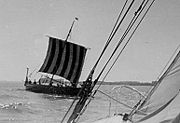

 South Walls features fairly prominently in the Norse period, partly because it was the first landfall when sailing from west Caithness
or Sutherland
. The Orkneyinga saga
mentions the island several times, such as in Chapter XCV:
South Walls also played a crucial role in the Christianisation of Orkney. Although Christianity in the islands predated the Norse by a number of years, the Norse often remained pagan. Olaf Tryggvasson
, King of Norway
forced the Earl of Orkney, Sigurd Hloðvisson to be baptised at South Walls. Earl Sigurd accepted, and remained a nominal Christian the rest of his life. However, he did so under duress - King Olaf had many valas
(Norse shamans) executed by being tied and left on a skerry at ebb. This was a long and terrible wait for death, and perhaps Earl Sigurd expected a similar fate.
. The tower, together with another on the north side at Crockness, was built in 1815 to protect British ships in the bay of Longhope against attack by American and French privateers, during the Napoleonic Wars
, while they waited for a Royal Navy escort on their journey to Baltic ports. The towers were rearmed for World War I
. There is a similar tower across the Bay in South East Hoy. Hackness Martello Tower and Battery is in the care of Historic Scotland
.
Cantick Head is well known for its lighthouse designed and built by David
and Thomas Stevenson
and first lit in July 1858 and automated in 1991.
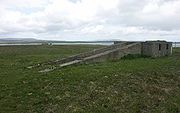
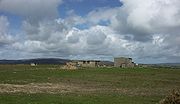
South Walls has substantial remains from the WWII period, when Scapa Flow
was used as a Royal Navy
base.
nature reserve.
Hoy
Hoy is an island in Orkney, Scotland. With an area of it is the second largest in the archipelago after the Mainland. It is connected by a causeway called The Ayre to South Walls...
in Orkney, Scotland
Scotland
Scotland is a country that is part of the United Kingdom. Occupying the northern third of the island of Great Britain, it shares a border with England to the south and is bounded by the North Sea to the east, the Atlantic Ocean to the north and west, and the North Channel and Irish Sea to the...
. The name is a corruption of "Sooth Was", which means the "southern voes" - as with Kirkwall
Kirkwall
Kirkwall is the biggest town and capital of Orkney, off the coast of northern mainland Scotland. The town is first mentioned in Orkneyinga saga in the year 1046 when it is recorded as the residence of Rögnvald Brusason the Earl of Orkney, who was killed by his uncle Thorfinn the Mighty...
, it was assumed that it was a mispronunciation of "walls".
South Walls forms the southern side of the harbour of Longhope
Longhope, Orkney
Longhope is a coastal settlement on the island of South Walls which is one of the Orkney Islands off the northern coast of Scotland. South Walls is linked to Hoy by causeway; Longhope is the largest settlement on the two islands....
. It was a tidal island until a narrow causeway, was constructed over the sandbank, which was known as the Ayre, although this name has become transferred to the causeway itself. Although sometimes considered to be a peninsula, it is an island in all but name.
South Walls is a popular stopping off place for Barnacle Geese
Barnacle Goose
The Barnacle Goose belongs to the genus Branta of black geese, which contains species with largely black plumage, distinguishing them from the grey Anser species...
.
Geography and geology
Old Red Sandstone
The Old Red Sandstone is a British rock formation of considerable importance to early paleontology. For convenience the short version of the term, 'ORS' is often used in literature on the subject.-Sedimentology:...
with the Rousay
Rousay
Rousay is a small, hilly island about north of Orkney's Mainland, off the north coast of Scotland, and has been nicknamed "the Egypt of the north", due to its tremendous archaeological diversity and importance....
Flagstone Group predominating.
The island is more or less oval in shape, but there is a small promontory, called Cantick Head in the south east, which is created by Kirk Hope (Church Bay). It is separated from Hoy by an arm of the sea, also called Longhope
Longhope, Orkney
Longhope is a coastal settlement on the island of South Walls which is one of the Orkney Islands off the northern coast of Scotland. South Walls is linked to Hoy by causeway; Longhope is the largest settlement on the two islands....
. The area to the south of the causeway is known as Aith Hope.
Norse period
Caithness
Caithness is a registration county, lieutenancy area and historic local government area of Scotland. The name was used also for the earldom of Caithness and the Caithness constituency of the Parliament of the United Kingdom . Boundaries are not identical in all contexts, but the Caithness area is...
or Sutherland
Sutherland
Sutherland is a registration county, lieutenancy area and historic administrative county of Scotland. It is now within the Highland local government area. In Gaelic the area is referred to according to its traditional areas: Dùthaich 'IcAoidh , Asainte , and Cataibh...
. The Orkneyinga saga
Orkneyinga saga
The Orkneyinga saga is a historical narrative of the history of the Orkney Islands, from their capture by the Norwegian king in the ninth century onwards until about 1200...
mentions the island several times, such as in Chapter XCV:
- "Early in the winter, Earl Erlend [Harald's Son] and SweinSweyn AsleifssonSweyn Asleifsson was twelfth century Viking who appeared in the Orkneyinga Saga.-Early career:Sweyn was born in Caithness in the early twelfth century, to Olaf Hrolfsson and his wife Åsleik. According to the Orkneyinga Saga, he came to prominence when he murdered Earl Paul of Orkney's cup-bearer c...
left ThórsáThurso-Facilities:Offices of the Highland Council are located in the town, as is the main campus of North Highland College, formerly Thurso College. This is one of several partner colleges which constitute the UHI Millennium Institute, and offers several certificate, diploma and degree courses from...
, and took their course by the west coast of Scotland. They had six long-ships, all well manned. They had to row, and when they had gone some distance from Caithness, Earl RögnvaldRognvald BrusasonRognvald Brusason , son of Brusi Sigurdsson, was Earl of Orkney jointly with Thorfinn Sigurdsson from about 1037 onwards. His life is recorded in the Orkneyinga Saga....
's spies went out to the islands, and told him the news. Then the Earls moved their ships to Skálpeid (ScapaScapaScapa is a small settlement and a Scotch whisky distillery situated on The Mainland of Orkney, Scotland on the shore of Scapa Flow near the town of Kirkwall. Scapa is the second most northern whisky distillery in Scotland, being a half-mile farther south than Highland Park Distillery.The...
), and Earl Rögnvald wished them to stay a while on board.
- "When Swein and Erlend came west off Stour ["Ru Stoer in AssyntAssyntAssynt is a civil parish in west Sutherland, Highland, Scotland – north of Ullapool.It is famous for its landscape and its remarkable mountains...
on the west coast of SutherlandSutherlandSutherland is a registration county, lieutenancy area and historic administrative county of Scotland. It is now within the Highland local government area. In Gaelic the area is referred to according to its traditional areas: Dùthaich 'IcAoidh , Asainte , and Cataibh...
shire"], the former said that they should not distress themselves by rowing any further, and asked his men to put the ships about and set the sails. This action on the part of Swein was thought foolish, yet his men did as he desired them, when they had been sailing for a while the ships began to speed, because there was a fine breeze, and nothing is said of their voyage until they reached Vagaland (South Walls) in Orkney. There they heard the Earls were lying at Skálpeid, off Knarrarstaðir (Knarston) with thirteen ships... It was four nights before Simon's-mas when Swein, Asleif's Son decided to attack the earls during the night, but it was thought rather hazardous, as their followers were so much more numerous. Yet Swein insisted on having his own way, and so he did, because the Earl wished to follow his advice."
South Walls also played a crucial role in the Christianisation of Orkney. Although Christianity in the islands predated the Norse by a number of years, the Norse often remained pagan. Olaf Tryggvasson
Olaf I of Norway
Olaf Tryggvason was King of Norway from 995 to 1000. He was the son of Tryggvi Olafsson, king of Viken , and, according to later sagas, the great-grandson of Harald Fairhair, first King of Norway.Olaf played an important part in the often forcible, on pain of torture or death, conversion of the...
, King of Norway
Norway
Norway , officially the Kingdom of Norway, is a Nordic unitary constitutional monarchy whose territory comprises the western portion of the Scandinavian Peninsula, Jan Mayen, and the Arctic archipelago of Svalbard and Bouvet Island. Norway has a total area of and a population of about 4.9 million...
forced the Earl of Orkney, Sigurd Hloðvisson to be baptised at South Walls. Earl Sigurd accepted, and remained a nominal Christian the rest of his life. However, he did so under duress - King Olaf had many valas
Völva
A vǫlva or völva is a shamanic seeress in Norse paganism, and a recurring motif in Norse mythology....
(Norse shamans) executed by being tied and left on a skerry at ebb. This was a long and terrible wait for death, and perhaps Earl Sigurd expected a similar fate.
Modern history
Overlooking Longhope in the north east is Hackness Martello Tower and BatteryHackness Martello Tower And Battery
Hackness Martello Tower and Battery is located on the island of South Walls, adjacent to Hoy in Orkney, Scotland. The Martello tower, together with another on the north side at Crockness, was built in 1815 to protect British ships in the bay of Longhope against attack by American and French...
. The tower, together with another on the north side at Crockness, was built in 1815 to protect British ships in the bay of Longhope against attack by American and French privateers, during the Napoleonic Wars
Napoleonic Wars
The Napoleonic Wars were a series of wars declared against Napoleon's French Empire by opposing coalitions that ran from 1803 to 1815. As a continuation of the wars sparked by the French Revolution of 1789, they revolutionised European armies and played out on an unprecedented scale, mainly due to...
, while they waited for a Royal Navy escort on their journey to Baltic ports. The towers were rearmed for World War I
World War I
World War I , which was predominantly called the World War or the Great War from its occurrence until 1939, and the First World War or World War I thereafter, was a major war centred in Europe that began on 28 July 1914 and lasted until 11 November 1918...
. There is a similar tower across the Bay in South East Hoy. Hackness Martello Tower and Battery is in the care of Historic Scotland
Historic Scotland
Historic Scotland is an executive agency of the Scottish Government, responsible for historic monuments in Scotland.-Role:As its website states:...
.
Cantick Head is well known for its lighthouse designed and built by David
David Stevenson (engineer)
David Stevenson FRSE FRSSA was a Scottish lighthouse designer, who designed over thirty lighthouses in and around Scotland, and helped found a great dynasty of lighthouse engineering.-Background:...
and Thomas Stevenson
Thomas Stevenson
Thomas Stevenson PRSE MInstCE FRSSA FSAScot was a pioneering Scottish lighthouse designer and meteorologist, who designed over thirty lighthouses in and around Scotland, as well as the Stevenson screen used in meteorology...
and first lit in July 1858 and automated in 1991.
South Walls has substantial remains from the WWII period, when Scapa Flow
Scapa Flow
right|thumb|Scapa Flow viewed from its eastern endScapa Flow is a body of water in the Orkney Islands, Scotland, United Kingdom, sheltered by the islands of Mainland, Graemsay, Burray, South Ronaldsay and Hoy. It is about...
was used as a Royal Navy
Royal Navy
The Royal Navy is the naval warfare service branch of the British Armed Forces. Founded in the 16th century, it is the oldest service branch and is known as the Senior Service...
base.
Nature reserve
The Hill of White Hamars hill farm is a Scottish Wildlife TrustScottish Wildlife Trust
The Scottish Wildlife Trust is a registered charity dedicated to conserving the wildlife and natural environment of Scotland.-Description:The Scottish Wildlife Trust has over 32,800 members...
nature reserve.
See also
- Geology of OrkneyGeology of OrkneyThe geology of the Orkney archipelago in northern Scotland is dominated by the Devonian age Old Red Sandstone . In the southwestern part of Mainland, this sequence can be seen to rest unconformably on a Moinian type metamorphic basement....
- GughGughGugh could be described as the sixth inhabited island of the Isles of Scilly, but is usually included with St Agnes with which it is joined by a sandy tombolo known as "The Bar" when exposed at low tide. The island is only one km long and about 0.5 km wide, with the highest point, Kittern...
one of the Isles of Scilly connected to St Agnes by a tombolo.