

Social issues of the 1920s

Encyclopedia
The 1920s was the rise of a variety of social issues amidst a rapidly changing world. Conflicts arose concerning what was considered acceptable and respectable and what ought to be proscribed or made illegal. The conflict quickly coalesced into one largely between the liberal urban area
s against the conservative rural areas.
became common and acceptable. Following a relatively conservative period following the First World War, a liberalism began to spread throughout urban areas during the years following 1925. Urban areas began to hold increasingly liberal
views of sex, alcohol, drugs
, and homosexuality
. The view that women and minorities were entitled to equality became increasingly prevalent in urban areas, especially among the educated. For example, the actor William Haines
, who was regularly named in newspapers and magazines as the #1 male box-office draw, openly lived in a gay relationship with his lover Jimmie Shields. Many people in rural areas became increasingly shocked at all the changes they saw occurring and many responded by becoming reactionary. The Volstead Act
, a law meant to uphold the Eighteenth Amendment
, was difficult due to lack of funding, short staffing and a disregard and disdain for a law that was deemed ridiculous. The fact that members of congress became drunk from toasts after passing the Eighteenth Amendment reveals that even those who were supposed to be setting an example did not take the law seriously. This lack of respect for the law enforcement eventually spread to other areas of culture, and many conservative members of the United States Congress
criticized this lack of order as stemming from the rampant use of alcohol.
Narrowly, the trial was about challenging a newly passed Tennessee state law against teaching evolution or any other theory denying the biblical account of the creation of man. Broadly, the case reflected a collision of traditional views and values with more modern ones: It was a time of evangelism by figures such as Aimee Semple McPherson
and Billy Sunday
against forces, including jazz, sexual permissiveness, and racy Hollywood movies, which they thought were undermining the authority of the Bible and Christian morals in society.
John Scopes, the 24-year-old defendant, taught in the public high school in Dayton, Tenn., and included evolution in his curriculum. He agreed to be the focus of a test case attacking the new law, and was arrested for teaching evolution and tried with the American Civil Liberties Union backing his defense. His lawyer was the legendary Clarence Darrow, who, besides being a renowned defense attorney for labor and radical figures, was an avowed agnostic in religious matters.
The state's attorney was [William Jennings Bryan], a Christian, pacifist, and former candidate for the U.S. presidency. He agreed to take the case because he believed that evolution theory led to dangerous social movements. And he believed the Bible should be interpreted literally.
The weather was stiflingly hot and the rhetoric equally heated in this "trial of the century" attended by hundreds of reporters and others who crowded the Rhea County Courthouse in July 1925. Rather than the validity of the law under which Scopes was being charged, the authority of the Bible versus the soundness of Darwin's theory became the focus of the arguments.
"Millions of guesses strung together," is how Bryan characterized evolutionary theory, adding that the theory made man "indistinguishable among the mammals." Darrow, in his attacks, tried to poke holes in the Genesis story according to modern thinking, calling them "fool ideas that no intelligent Christian on earth believes."
The jury found Scopes guilty of violating the law and fined him $100. Bryan and the anti-evolutionists claimed victory, and the Tennessee law would stand for another 42 years. But Clarence Darrow and the ACLU had succeeded in publicizing scientific evidence for evolution, and the press reported that though Bryan had won the case, he had lost the argument. The verdict did have a chilling effect on teaching evolution in the classroom, however, and not until the 1960s did it reappear in schoolbooks.
gave rise to a xenophobic
feeling across the nation. This was concentrated in rural areas and especially in the South where the Ku Klux Klan
gained widespread support and sought to persecute immigrants and minorities in the 1920s. At the same time, communism
was still a new philosophy in government, and much of the general American public held a hostile view toward it. The beginning of the 1920s saw the height and fall of First Red Scare
as exemplified in the trials of Sacco and Vanzetti
. This opposition to Communism was caused by the bloody terror of the Bolshevik Revolution.
Urban area
An urban area is characterized by higher population density and vast human features in comparison to areas surrounding it. Urban areas may be cities, towns or conurbations, but the term is not commonly extended to rural settlements such as villages and hamlets.Urban areas are created and further...
s against the conservative rural areas.
Prohibition of alcohol
During the 1920s the population in cities rapidly grew. Crime and political corruptionPolitical corruption
Political corruption is the use of legislated powers by government officials for illegitimate private gain. Misuse of government power for other purposes, such as repression of political opponents and general police brutality, is not considered political corruption. Neither are illegal acts by...
became common and acceptable. Following a relatively conservative period following the First World War, a liberalism began to spread throughout urban areas during the years following 1925. Urban areas began to hold increasingly liberal
Liberalism
Liberalism is the belief in the importance of liberty and equal rights. Liberals espouse a wide array of views depending on their understanding of these principles, but generally, liberals support ideas such as constitutionalism, liberal democracy, free and fair elections, human rights,...
views of sex, alcohol, drugs
DRUGS
Destroy Rebuild Until God Shows are an American post-hardcore band formed in 2010. They released their debut self-titled album on February 22, 2011.- Formation :...
, and homosexuality
Homosexuality
Homosexuality is romantic or sexual attraction or behavior between members of the same sex or gender. As a sexual orientation, homosexuality refers to "an enduring pattern of or disposition to experience sexual, affectional, or romantic attractions" primarily or exclusively to people of the same...
. The view that women and minorities were entitled to equality became increasingly prevalent in urban areas, especially among the educated. For example, the actor William Haines
William Haines
Charles William "Billy" Haines was an American film actor and interior designer. He was a star of the silent era until the 1930s, when Haines' career was cut short by MGM Studios due to his refusal to deny his homosexuality...
, who was regularly named in newspapers and magazines as the #1 male box-office draw, openly lived in a gay relationship with his lover Jimmie Shields. Many people in rural areas became increasingly shocked at all the changes they saw occurring and many responded by becoming reactionary. The Volstead Act
Volstead Act
The National Prohibition Act, known informally as the Volstead Act, was the enabling legislation for the Eighteenth Amendment which established prohibition in the United States...
, a law meant to uphold the Eighteenth Amendment
Eighteenth Amendment to the United States Constitution
The Eighteenth Amendment of the United States Constitution established Prohibition in the United States. The separate Volstead Act set down methods of enforcing the Eighteenth Amendment, and defined which "intoxicating liquors" were prohibited, and which were excluded from prohibition...
, was difficult due to lack of funding, short staffing and a disregard and disdain for a law that was deemed ridiculous. The fact that members of congress became drunk from toasts after passing the Eighteenth Amendment reveals that even those who were supposed to be setting an example did not take the law seriously. This lack of respect for the law enforcement eventually spread to other areas of culture, and many conservative members of the United States Congress
United States Congress
The United States Congress is the bicameral legislature of the federal government of the United States, consisting of the Senate and the House of Representatives. The Congress meets in the United States Capitol in Washington, D.C....
criticized this lack of order as stemming from the rampant use of alcohol.
Disputes over human origin and the Scopes trial
It made for great oratory between eminent rivals, and it put the debate over teaching evolution on front pages across the country. But one thing the Scopes "monkey trial" of 1925 did not do was settle the contentious issue of evolution in the schools, which continues to incite strong passions and court actions to this day.Narrowly, the trial was about challenging a newly passed Tennessee state law against teaching evolution or any other theory denying the biblical account of the creation of man. Broadly, the case reflected a collision of traditional views and values with more modern ones: It was a time of evangelism by figures such as Aimee Semple McPherson
Aimee Semple McPherson
Aimee Semple McPherson , also known as Sister Aimee, was a Canadian-American Los Angeles, California evangelist and media celebrity in the 1920s and 1930s. She founded the Foursquare Church...
and Billy Sunday
Billy Sunday
William Ashley "Billy" Sunday was an American athlete who, after being a popular outfielder in baseball's National League during the 1880s, became the most celebrated and influential American evangelist during the first two decades of the 20th century.Born into poverty in Iowa, Sunday spent some...
against forces, including jazz, sexual permissiveness, and racy Hollywood movies, which they thought were undermining the authority of the Bible and Christian morals in society.
John Scopes, the 24-year-old defendant, taught in the public high school in Dayton, Tenn., and included evolution in his curriculum. He agreed to be the focus of a test case attacking the new law, and was arrested for teaching evolution and tried with the American Civil Liberties Union backing his defense. His lawyer was the legendary Clarence Darrow, who, besides being a renowned defense attorney for labor and radical figures, was an avowed agnostic in religious matters.
The state's attorney was [William Jennings Bryan], a Christian, pacifist, and former candidate for the U.S. presidency. He agreed to take the case because he believed that evolution theory led to dangerous social movements. And he believed the Bible should be interpreted literally.
The weather was stiflingly hot and the rhetoric equally heated in this "trial of the century" attended by hundreds of reporters and others who crowded the Rhea County Courthouse in July 1925. Rather than the validity of the law under which Scopes was being charged, the authority of the Bible versus the soundness of Darwin's theory became the focus of the arguments.
"Millions of guesses strung together," is how Bryan characterized evolutionary theory, adding that the theory made man "indistinguishable among the mammals." Darrow, in his attacks, tried to poke holes in the Genesis story according to modern thinking, calling them "fool ideas that no intelligent Christian on earth believes."
The jury found Scopes guilty of violating the law and fined him $100. Bryan and the anti-evolutionists claimed victory, and the Tennessee law would stand for another 42 years. But Clarence Darrow and the ACLU had succeeded in publicizing scientific evidence for evolution, and the press reported that though Bryan had won the case, he had lost the argument. The verdict did have a chilling effect on teaching evolution in the classroom, however, and not until the 1960s did it reappear in schoolbooks.
Isolationism, immigration, and communism
America's isolationist philosophy after World War IWorld War I
World War I , which was predominantly called the World War or the Great War from its occurrence until 1939, and the First World War or World War I thereafter, was a major war centred in Europe that began on 28 July 1914 and lasted until 11 November 1918...
gave rise to a xenophobic
Xenophobia
Xenophobia is defined as "an unreasonable fear of foreigners or strangers or of that which is foreign or strange". It comes from the Greek words ξένος , meaning "stranger," "foreigner" and φόβος , meaning "fear."...
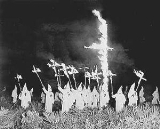
feeling across the nation. This was concentrated in rural areas and especially in the South where the Ku Klux Klan
Ku Klux Klan
Ku Klux Klan, often abbreviated KKK and informally known as the Klan, is the name of three distinct past and present far-right organizations in the United States, which have advocated extremist reactionary currents such as white supremacy, white nationalism, and anti-immigration, historically...
gained widespread support and sought to persecute immigrants and minorities in the 1920s. At the same time, communism
Communism
Communism is a social, political and economic ideology that aims at the establishment of a classless, moneyless, revolutionary and stateless socialist society structured upon common ownership of the means of production...
was still a new philosophy in government, and much of the general American public held a hostile view toward it. The beginning of the 1920s saw the height and fall of First Red Scare
First Red Scare
In American history, the First Red Scare of 1919–1920 was marked by a widespread fear of Bolshevism and anarchism. Concerns over the effects of radical political agitation in American society and alleged spread in the American labor movement fueled the paranoia that defined the period.The First Red...
as exemplified in the trials of Sacco and Vanzetti
Sacco and Vanzetti
Ferdinando Nicola Sacco and Bartolomeo Vanzetti were anarchists who were convicted of murdering two men during a 1920 armed robbery in South Braintree, Massachusetts, United States...
. This opposition to Communism was caused by the bloody terror of the Bolshevik Revolution.
See also
- Roaring TwentiesRoaring TwentiesThe Roaring Twenties is a phrase used to describe the 1920s, principally in North America, but also in London, Berlin and Paris for a period of sustained economic prosperity. The phrase was meant to emphasize the period's social, artistic, and cultural dynamism...
- The Jazz AgeJazz AgeThe Jazz Age was a movement that took place during the 1920s or the Roaring Twenties from which jazz music and dance emerged. The movement came about with the introduction of mainstream radio and the end of the war. This era ended in the 1930s with the beginning of The Great Depression but has...
- The Lost GenerationLost GenerationThe "Lost Generation" is a term used to refer to the generation, actually a cohort, that came of age during World War I. The term was popularized by Ernest Hemingway who used it as one of two contrasting epigraphs for his novel, The Sun Also Rises. In that volume Hemingway credits the phrase to...
- Prohibition in the United StatesProhibition in the United StatesProhibition in the United States was a national ban on the sale, manufacture, and transportation of alcohol, in place from 1920 to 1933. The ban was mandated by the Eighteenth Amendment to the Constitution, and the Volstead Act set down the rules for enforcing the ban, as well as defining which...