
|
|
|
|
Snuff
|
| |
|
| |
Snuff is a type of smokeless tobacco. There are several types, used in different ways, but traditionally it means Dry/European nasal snuff, which is inhaled or "snuffed" through the nose. TypesDry Dry snuff or European snuff is usually (but not always) scented or flavoured and is intended to be sniffed through the nose. Typical flavors are floral, mentholated (also called 'medicated'), fruit, and spice, either pure or in blends. Other common flavours include:
Modern Flavors
Apart from flavours, dry snuff also comes in a range of texture and moistness, from very fine to coarse, and from toast (very dry) to very moist. Often dryer snuffs are cut finer.
Brands of dry snuffGermany
United Kingdom
Netherlands
South Africa
Sweden
India
BrazilMoeda MoistMoist snuff is called American Snuff in the U.S.

Discussion
Ask a question about 'Snuff'
Start a new discussion about 'Snuff'
Answer questions from other users
|
Timeline
Encyclopedia
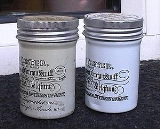
Snuff is a type of smokeless tobacco. There are several types, used in different ways, but traditionally it means Dry/European nasal snuff, which is inhaled or "snuffed" through the nose.
TypesDry Dry snuff or European snuff is usually (but not always) scented or flavoured and is intended to be sniffed through the nose. Typical flavors are floral, mentholated (also called 'medicated'), fruit, and spice, either pure or in blends. Other common flavours include:
Modern Flavors
Apart from flavours, dry snuff also comes in a range of texture and moistness, from very fine to coarse, and from toast (very dry) to very moist. Often dryer snuffs are cut finer.
Brands of dry snuffGermany- Bernard brothers - Founded in 1733
- Lotzbeck - Founded in 1774
- Sternecker - Founded in 1900
- Pöschl - Founded in 1902, makers of Gawith Apricot
- Wittmann - Founded in 1955
- Arnold Andre
- Dallmayr
- Gletscher Prise
United Kingdom- Fribourg & Treyer - Founded in 1720
- Wilsons of Sharrow - Founded in 1737
- Samuel Gawith - Founded in 1792
- Gawith Hoggarth - Founded in 1854
- Hedges
- McChrystal's - Founded in 1926
- - Founded in 2006
- - Founded in 2008
Netherlands
South Africa
Sweden
India
BrazilMoeda
MoistMoist snuff is called American Snuff in the U.S. and Canada, in contrast to the aforementioned Dry Snuff, which was perceived to be an European, particularly British and French, habit. In truth, it originates, and is still produced and used, in Europe. It tends to be applied to the gums, rather than sniffed. Called dipping tobacco, it is similar to Snus, a Swedish tobacco product, and it is possible that this type of snuff originated in Sweden or Scandinavia. American snuff comes in two varieties, 'sweet' and 'salty', but also has flavours including peach, mint, and licorice. Dipping tobacco is distinct from chewing tobacco.
In India, Creamy snuff is a paste consisting of tobacco, clove oil, glycerin, spearmint, menthol, and camphor sold in a toothpaste tube. It is marketed mainly to women in India and is known by the brand names Ipco (made by Asha Industries), Denobac, Tona, Ganesh.
Snuff accessoriesWhen snuff taking was fashionable, the manufacture of snuff accessories was a lucrative industry in several cultures. In Europe, snuff boxes ranged from those made in very basic materials, such as horn, to highly ornate designs featuring precious materials made using state of the art techniques. Large snuff containers, called mulls, were usually kept on the table. A famous silver communal snuff box at the British House of Commons was destroyed in World War II.
In China, snuff bottles were used, usually available in two forms. Glass bottles are decorated on the inside to protect the design. Another type used layered multi-coloured glass; parts of the layers were removed to create a picture.
HistorySnufftaking by the Native Americans was first described by a monk named Ramon Pane in 1493, during Columbus' second journey to the Americas.
In 1561 Jean Nicot, the French ambassador in Lisbon, Portugal, sent snuff to Catherine de' Medici to treat her son's persistent migraines, after which she became a fan of snuff.
By the 1600s some started to object to snuff being taken. Pope Urban VIII threatened to excommunicate snufftakers, and in Russia in 1643, Tsar Michael set the punishment of removal of the nose for snuff use. However, there were still some fans; King Louis XIII of France was a devout snufftaker, and by 1638, snuff use had been reported to be spreading in China.
By the 1700s, Snuff had become the tobacco product of choice, with fans including Napoleon, King George III's wife Queen Charlotte, and a new Pope, Benedict XIII. It is also during the 1700s that the first tobacco warnings were published, among these, John Hill, an English doctor warned of the overuse of snuff, causing vulnerability to nasal cancers. Snuff's image as an aristocratic luxury attracted the first U.S. federal tax on tobacco, created in 1794.
In Eighteenth-Century Britain, the Gentlewoman's Magazine advised readers with ailing sight to use the correct type of Portuguese snuff, "whereby many eminent people had cured themselves so that they could read without spectacles after having used them for many years."
Legal issuesOral snuff, in the form of dipping tobacco and snus is banned from all countries of the European Union, except Sweden, where the sale of snuff is legal. .
In spite of legal issues, snuff is readily available over the counter in most European tobacco shops. In Britain, snuff is much cheaper than cigarettes and other tobacco products as it is tax exempt, however for duty free reasons snuff still carries the same limitations as tobacco products.
See also
Further reading- Ursula Bourne, Snuff. Shire Publications, 1990.
- John D. Hinds, "The Use of Tobacco." 1882.
|
| |
|
|