

S60 platform

Encyclopedia
Platform (computing)
A computing platform includes some sort of hardware architecture and a software framework , where the combination allows software, particularly application software, to run...
for mobile phone
Mobile phone
A mobile phone is a device which can make and receive telephone calls over a radio link whilst moving around a wide geographic area. It does so by connecting to a cellular network provided by a mobile network operator...
s that runs on Symbian OS. It was created by Nokia
Nokia
Nokia Corporation is a Finnish multinational communications corporation that is headquartered in Keilaniemi, Espoo, a city neighbouring Finland's capital Helsinki...
, who made the platform open source and contributed it to the Symbian Foundation. S60 has been used by mobile device manufacturers including Siemens mobile, Lenovo, LG Electronics
LG Electronics
LG Electronics is a global electronics and telecommunications company headquartered in Yeouido, Seoul, South Korea. The company operates its business through five divisions: mobile communications, home entertainment, home appliance, air conditioning and business solution...
, Panasonic
Panasonic
Panasonic is an international brand name for Japanese electric products manufacturer Panasonic Corporation, which was formerly known as Matsushita Electric Industrial Co., Ltd...
and Samsung
Samsung
The Samsung Group is a South Korean multinational conglomerate corporation headquartered in Samsung Town, Seoul, South Korea...
. Sony co-created the software with Nokia.
Symbian (all Symbian products) is the most popular smartphone OS on the market by 37.6% of the sector’s total sales, with 111.6m handsets sold in year 2010.
In addition to the manufacturers the community includes:
- Software integration companies such as SaskenSasken Communication TechnologiesSasken Communication Technologies Limited is a publicly traded company based in Bangalore, India, and offers research and development consultancy, wireless software products, software services and network engineering services to semiconductor manufacturers, wireless handset developers, network...
, ElektrobitElektrobitElektrobit Corporation is a Finnish company headquartered in Oulu.Elektrobit, EB is an engineering company in Wireless and Automotive businesses...
, TelecaTelecaTeleca is a privately held company, wholly owned by STG , which supplies software services to the mobile communications industry. Teleca offers engineering solutions across the entire value chain of design, development, testing of mobile device services, applications, operating systems, and...
, DigiaDigiaDigia is a Finnish software company quoted on the Helsinki Stock Exchange, and is listed on NASDAQ OMX Helsinki .Digia, with more than 1,500 employees, operates in Asia, Europe and America with offices in Finland, China, Norway, Sweden, Russia and the USA.In 2011, Digia acquired Qt commercial...
, Mobica, Atelier.tm - Semiconductor companies Texas InstrumentsTexas InstrumentsTexas Instruments Inc. , widely known as TI, is an American company based in Dallas, Texas, United States, which develops and commercializes semiconductor and computer technology...
, STMicroelectronicsSTMicroelectronicsSTMicroelectronics is an Italian-French electronics and semiconductor manufacturer headquartered in Geneva, Switzerland.While STMicroelectronics corporate headquarters and the headquarters for EMEA region are based in Geneva, the holding company, STMicroelectronics N.V. is registered in Amsterdam,...
, BroadcomBroadcomBroadcom Corporation is a fabless semiconductor company in the wireless and broadband communication business. The company is headquartered in Irvine, California, USA. Broadcom was founded by a professor-student pair Henry Samueli and Henry T. Nicholas III from the University of California, Los...
, SonySony, commonly referred to as Sony, is a Japanese multinational conglomerate corporation headquartered in Minato, Tokyo, Japan and the world's fifth largest media conglomerate measured by revenues....
, Freescale SemiconductorFreescale SemiconductorFreescale Semiconductor, Inc. is a producer and designer of embedded hardware, with 17 billion semiconductor chips in use around the world. The company focuses on the automotive, consumer, industrial and networking markets with its product portfolio including microprocessors, microcontrollers,...
, Samsung ElectronicsSamsung ElectronicsSamsung Electronics is a South Korean multinational electronics and information technology company headquartered in Samsung Town, Seoul... - Operators such as VodafoneVodafoneVodafone Group Plc is a global telecommunications company headquartered in London, United Kingdom. It is the world's largest mobile telecommunications company measured by revenues and the world's second-largest measured by subscribers , with around 341 million proportionate subscribers as of...
and OrangeOrange SAOrange is the brand used by France Télécom for its mobile network operator and Internet service provider subsidiaries. It is the fifth largest telecom operator in the world, with 210 million customers . The brand was created in 1994 for Hutchison Telecom's UK mobile phone network, which was...
who develop and provide S60-based mobile applications and services - Software developers and independent software vendors (ISVs).
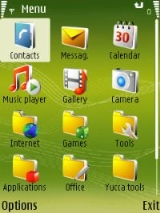
S60 consists of a suite of libraries and standard applications, such as telephony, personal information manager
Personal information manager
A personal information manager is a type of application software that functions as a personal organizer. The acronym PIM is now, more commonly, used in reference to Personal information management as a field of study...
(PIM) tools, and Helix
Helix project
Helix DNA is a project to produce software that can play audio and video media in various formats, aid in producing such media, and serve them over a network. It is intended as a largely free and open source digital media framework that runs on numerous operating systems and processors and was...
-based multimedia
Multimedia
Multimedia is media and content that uses a combination of different content forms. The term can be used as a noun or as an adjective describing a medium as having multiple content forms. The term is used in contrast to media which use only rudimentary computer display such as text-only, or...
players. It is intended to power fully featured modern phones with large colour screens, which are commonly known as smartphone
Smartphone
A smartphone is a high-end mobile phone built on a mobile computing platform, with more advanced computing ability and connectivity than a contemporary feature phone. The first smartphones were devices that mainly combined the functions of a personal digital assistant and a mobile phone or camera...
s.
The S60 software is a multivendor standard for smartphones that supports application development in Java
Java (programming language)
Java is a programming language originally developed by James Gosling at Sun Microsystems and released in 1995 as a core component of Sun Microsystems' Java platform. The language derives much of its syntax from C and C++ but has a simpler object model and fewer low-level facilities...
MIDP
Mobile Information Device Profile
Mobile Information Device Profile is a specification published for the use of Java on embedded devices such as mobile phones and PDAs. MIDP is part of the Java Platform, Micro Edition framework and sits on top of Connected Limited Device Configuration , a set of lower level programming...
, C++
C++
C++ is a statically typed, free-form, multi-paradigm, compiled, general-purpose programming language. It is regarded as an intermediate-level language, as it comprises a combination of both high-level and low-level language features. It was developed by Bjarne Stroustrup starting in 1979 at Bell...
, Python
Python (programming language)
Python is a general-purpose, high-level programming language whose design philosophy emphasizes code readability. Python claims to "[combine] remarkable power with very clear syntax", and its standard library is large and comprehensive...
and Adobe Flash
Adobe Flash
Adobe Flash is a multimedia platform used to add animation, video, and interactivity to web pages. Flash is frequently used for advertisements, games and flash animations for broadcast...
. Originally, the most distinguishing feature of S60 phones was that they allowed users to install new applications after purchase. Unlike a standard desktop platform, however, the built-in apps are rarely upgraded by the vendor beyond bug fixes. New features are only added to phones while they are being developed rather than after public release. Certain buttons are standardized, such as a menu key, a four way joystick or d-pad, left and right soft keys and a clear key.
S60 editions
S60 versions and supported devices
Many devices are capable of running the S60 software platform with the Symbian OS. Devices ranging from the early Nokia 7650Nokia 7650
The Nokia 7650 is a smartphone belonging to the fashion and experimental series. The phone was released on the second quarter of 2002 for around 600€. It was notable for a number of firsts: first Nokia smartphone with the Symbian OS ; first Series 60 ) platform device; first Nokia with built-in...
running S60 v0.9 on Symbian OS v6.1, to the latest Samsung i8910 Omnia HD
Samsung i8910
Samsung i8910 HD is a multimedia smartphone by Samsung, announced at MWC 2009 on February 18, 2009.This handset comes with a 3.7" AMOLED capacitive touchscreen having a resolution of 640 x 360 pixels, capable of displaying up to 16 million colors. It has an 8 megapixel camera with the...
running S60 v5.0 on Symbian OS v9.4. In Symbian^3 the version of the revised platform is v5.2.
The table lists devices carrying each version of S60 as well as the Symbian OS version it is based on.
| S60 edition | S60 version number |
Symbian OS version number |
Devices |
|---|---|---|---|
| S60 1st Edition | 0.9 | 6.1 |
|
| S60 1st Edition, Feature Pack 1 |
1.2 | 6.1 |
Sendo X2 The Sendo X2 was the second Series 60 mobile phone developed by Sendo. When announced, it was the smallest and lightest Series 60 mobile in the marketplace... Siemens SX1 The Siemens SX1 is a GSM mobile phone running version 1.2 of the Series 60 platform for the Symbian OS. It is the first such smartphone from the German phone manufacturer Siemens AG following their licensing agreement with Nokia for the use and development of Series 60... |
| S60 2nd Edition | 2.0 | 7.0s |
Nokia 6600 The Nokia 6600 is a mobile phone launched in Q2 2003, costing approximately €600. It was Nokia's high-end model of the 6xxx Classic Business Series of mobile phones. At the time of release, it was the most advanced product ever launched by Nokia, and it runs on the Symbian OS-based Nokia Series 60... |
| S60 2nd Edition, Feature Pack 1 |
2.1 | 7.0s |
Nokia 3230 The Nokia 3230 is a Symbian Series 60 smartphone announced on November 2, 2004. It was billed as the first Series 60 phone aimed at the mass-market rather than the higher-end Series 60 devices.... Nokia 6620 The 6620 is a smartphone created by Nokia in 2004, which uses the Series 60 user-interface and the Symbian operating system.It is a version of Nokia's 6600 smartphone for the North American market, featuring all the features of the 6600 such as the VGA camera, MultiMediaCard slot, Bluetooth and... Nokia 6670 The Nokia 6670 is a 2004 smartphone from Nokia. Based on the Series 60 platform, the phone is a tri-band business version of the consumer Nokia 7610, and features a 1.0 megapixel digital camera, 8MB of storage and a 65,536 colour 176x208 TFT screen... Nokia 7610 Nokia manufactured the 7610 smartphone, Nokia's first smartphone, featuring a 1 megapixel camera , in mid-2004. It was targeted at the "fashion conscious" individual. End-users can also use the 7610 with Lifeblog... |
| S60 2nd Edition, Feature Pack 2 |
2.6 | 8.0a |
Nokia 6630 The Nokia 6630 is a 3G smartphone made by Nokia, using the Series 60 platform with the Symbian operating system, released in November 2004. It is an evolution of the 6600 and 6620 smartphones, supporting tri-band GSM The Nokia 6630 is a 3G smartphone made by Nokia, using the Series 60 platform with... Nokia 6680 The Nokia 6680 is a 3G handset by Nokia, running Symbian operating system, with Series 60 version 2 user interface. The device features Bluetooth, a 1.3 megapixel fixed focus camera, front VGA video call camera, hot swappable Dual Voltage Reduced Size MMC memory expansion card support, stereo... |
| S60 2nd Edition, Feature Pack 3 |
2.8 | 8.1a |
Nokia N70 The Nokia N70 is a multimedia 3G smartphone made by Nokia and launched in Q3 2005. This phone is one of the first phones released for Nokia's line of Multimedia computers, the Nokia Nseries. Nokia N70 is released alongside with Nokia N90 and Nokia N91.... Nokia N72 The Nokia N72 is one of Nokia's high-end Nseries mobile phones, it is effectively a re-branded Nokia N70 with a reduced feature set. It was launched in May 2006.-Features:... Nokia N90 The Nokia N90 multimedia is a smartphone with two displays and Carl Zeiss optics . It has a 2 megapixel built-in digital camera with autofocus, 20× digital zoom, integrated flash, macro mode and the ability to record high quality video . The phone has no vibration feature... |
| S60 3rd Edition | 3.0 | 9.1 |
Nokia 3250 The Nokia 3250 is a cellular phone which features a unique 'twist' design that transforms the traditional phone keypad into a camera and dedicated music control keys . It can store up to 2 gigabytes of music and other data thanks to a microSD memory card slot, and features a two-megapixel camera... Nokia E50 The Nokia E50 Business Device is a bar-style monoblock quad-band smartphone from Nokia announced May 18, 2006 as part of the Eseries, intended primarily for the corporate business market... Nokia E60 The Nokia E60 is a traditional candybar style smartphone from the Eseries business phone range, a S60 platform third edition device.- Key Features :* Symbian OS v9.1, Series 60 3rd Edition* 64 MB internal memory* WLAN with SIP compliant VoIP client... Nokia E61 The Nokia E61 is a smartphone from the Eseries range, a Series 60 Third Edition device with a QWERTY keyboard targeting business users in the European market. As of Q4 2006 Cingular and Rogers Wireless have deployed a similar yet restricted version designated the Nokia E62 in the North American... Nokia E65 The Nokia E65 is a smartphone in the Eseries range, a S60 platform third edition device with slide action. It shared many of the features of the N95 released around the same time, but thinner, lighter and without the GPS.... Nokia E70 The Nokia E70 is a candybar/fold keyboard type smartphone from the Eseries range, announced in October 2005 and released in May 2006 at a cost of approximately $500 with prices in July 2007 around $345... Nokia N71 The Nokia N71 is a multimedia 3G clamshell smartphone by Nokia with a 2 megapixel camera, a built-in flash, a front camera to allow real-time video calling, FM radio, Bluetooth, digital music player functionality, comes standard with a full , and has support for 3D Java games.Other features... Nokia N73 The Nokia N73 is a smartphone by Nokia officially described as a "multimedia computer". In common with other Nokia 'Nseries' and 'Eseries' phones of its time , the N73 comes loaded with many software applications, including contacts, messaging, picture and video galleries, a music player, a Visual... Nokia N75 The Nokia N75 is a smartphone by Nokia. It uses Series 60 3rd Edition on Symbian OS. AT&T Mobility is a carrier of the N75 in the USA. It has been made specifically for the North American 3G market, supporting WCDMA 850/1900 frequencies, however it will still be available in other countries such as... Nokia N80 The Nokia N80 is a multimedia 3G smartphone made by Nokia with support for high-speed UMTS/WCDMA connections. Features include a 3.1 megapixel camera with built-in flash , another camera for videoconferencing, Wi-Fi , Universal Plug and Play , FM radio, Bluetooth 1.2, digital music player... Nokia N91 The Nokia N91 is a mobile phone that was released to the public in April of 2006. It is part of the Nokia Nseries range of mobile phones. At the time of release, it was the most advanced music phone ever launched by nokia. N91 also won the 'Most Innovative Product' award in recognition of its true... Nokia N92 The Nokia N92 mobile phone is one of the Nseries mobile phones from Nokia. It is Nokia's first ever dedicated mobile television device.- Specification :*Manufacturer: Nokia*Type: Smartphone... Nokia N93 The Nokia N93 is a smartphone by Nokia especially designed for multimedia use. It was introduced in April 2006 and released in July 2006.The N93 has improved camera capabilities compared with the earlier N90. The phone has a 3.2 megapixel camera, Carl Zeiss optics and 3x optical zoom as well as a... Nokia N93i The Nokia N93i is a smartphone produced by Nokia. It is part of the Nokia Nseries line of high-end smartphones and is a redesign of the Nokia N93. The N93i runs on Symbian OS version 9.1, with the Series 60 3rd Edition user interface. The phone is a clamshell design with a camera and landscape... |
| S60 3rd Edition, Feature Pack 1 |
3.1 | 9.2 |
Nokia 5700 Nokia 5700 XpressMusic is a music series mobile phone by Nokia. It is a Symbian S60 3rd Edition FP1 smartphone that was sold under the XpressMusic sub-brand, which emphasises music and multimedia playback. The Nokia 5700 XpressMusic is a monoblock twistable phone which weighs 115 g. It has a casing... Nokia 6110 Navigator The Nokia 6110 Navigator is a smartphone made by Nokia with HSDPA and integrated GPS and Bluetooth features. It has been available since June 2007. It is not to be confused with the 1998 Nokia 6110.... Nokia 6120 classic The Nokia 6120 classic is a Nokia-produced Symbian OS smartphone . It is the first Nokia UMTS / HSDPA dual band mobile which also features quad band GSM.-Interface Changes:... Nokia 6290 The Nokia 6290 is a multimedia 3G Smartphone made by Nokia and released in March 2007.- Features :The Nokia 6290 is the first device running off S60 3rd edition platform updated to Feature Pack 1... Nokia E51 Nokia E51 is a Symbian OS smartphone by Nokia. It's the second Nokia UMTS / HSDPA dual band mobile. The phone is available with a black, silver or bronze-coloured border and backplate.A version without the integrated camera also exists.-Specifications Sheet:... Nokia E63 Released late in 2008, the Nokia E63 is marketed as a budget business phone. It is based on Symbian's S60 platform. Although it looks very similar to E71, its body is made of plastic and not aluminium as in E71. Also its keypad is made from a different material and is laid out slightly different... Nokia E66 The Nokia E66 is a slider smartphone in the Nokia Eseries range, a S60 platform third edition device with slide action targeting business users. It is a successor to the Nokia E65 with which it shares many features.... Nokia E71 The Nokia E71 is a smartphone from the Eseries range with a QWERTY keyboard targeting business users worldwide. It runs on Symbian OS v9.2, with a Series 60 3rd Edition, second generation Feature Pack 1. The Nokia E71 succeeded the Nokia E61/61i models, building on the base design and form factor... Nokia E90 Communicator Nokia E90 Communicator is a 3G smartphone made by Nokia and the latest model of the Communicator series. It was announced in February 2007 at the 3GSM show in Barcelona.... Nokia N76 The Nokia N76 is a multimedia 3G Smartphone made by Nokia. It was introduced at the Las Vegas CES 2007 in January 2007 and was launched on 5 May 2007 with a sales price of 390 EUR. It is advertised as "The computer done beautifully" and as a "multimedia computer"... Nokia N81 The Nokia N81 is a smartphone announced by Nokia on August 29 2007. The phone is compatible with the N-Gage 2.0 mobile gaming service.- Problems :The Nokia N81 suffered from lower sound output due to the release of the new firmware version... Nokia N82 The Nokia N82 is a smartphone produced by Nokia. It is part of the company's Nseries line of smartphones which features the N-Gage gaming platform and the Nokia Music store... Nokia N95 The Nokia N95 is a smartphone produced by Nokia as part of their Nseries line of portable devices. It was released in 2007. The N95 runs Symbian OS v9.2, with a S60 3rd Edition user interface. The phone has a two-way sliding mechanism, which can be used to access either media playback buttons or... Samsung SGH-G810 The Samsung G810 is a recently announced handset by Samsung Mobile.The handset will be based around the company's previous G-model, the G800 with a Xenon Flash, 3x Optical Zoom, 5 Megapixel Camera; GPS; 3.5G capability and more.... Samsung SGH-i550w The Samsung SGH-i550w is a mobile phone from Samsung that belongs to their infotainment class. It has both Wi-Fi and 3.5G connectivity. It can play various multimedia formats. It has a 3.2 megapixel camera. It runs on S60 software, 3rd Edition, Feature Pack 1.... |
| S60 3rd Edition, Feature Pack 2 |
3.2 | 9.3 |
Nokia 5320 XpressMusic The Nokia 5320 Xpress Music is a Symbian OS S60 smartphone, released by Nokia in 2008 as a part of their XpressMusic line of portable devices. The phone has a rugged candybar body with outlined keypads. It emphasizes music and multimedia playback... Nokia 5630 XpressMusic The Nokia 5630 XpressMusic is a multimedia and music-dedicated smartphone announced in March and released in May 2009.-External links:* *... Nokia 5730 XpressMusic The Nokia 5730 XpressMusic is a multimedia and music-dedicated sliding smartphone announced in March and released in June 2009. Its features include a full backlit slide-out QWERTY keyboard, dedicated camera, volume, gaming and music keys as well as Wi-Fi connectivity and a basic accelerometer... Nokia 6210 Navigator The Nokia 6210 Navigator is a mobile phone made by Nokia that is a successor to Nokia 6110 Navigator. It has been available since July 2008.The Nokia 6210 Navigator is the third GPS Phone in the Navigator series to be released by Nokia... Nokia 6220 Classic Nokia 6220 classic is a Nokia-produced Symbian OS smartphone .-Features:* HSDPA-3.6M/384k / WCDMA-900/2100 / DTM EGPRS-850/900/1800/1900 Class 11A/32B* GPS navigation with Assisted GPS... Nokia 6650 fold The Nokia 6650 fold is a Hex-band unit using GSM 850, 900, 1,800, and 1,900 MHz networks and UMTS 850 and 2,100 Mhznetworks . Also noted as a quad-band clamshell 3G smartphone, it was announced March 2008 and released in June 2008. It is currently being sold through AT&T Mobility in the... Nokia 6730 The Nokia 6730 classic was announced to the public on 29 May 2009. Key features include an integrated A-GPS and 3.1 mega-pixel camera.- Specification :DisplayMemoryCameraOS/Platform* Stereo FM radio with RDS... Nokia 6760 Slide The Nokia 6760 slide is a Symbian Series 60 mobile phone. One of its main selling points is its SMS messaging capabilities.The phone is listed as a Messaging phone... Nokia E5-00 The Nokia E5-00 also called Nokia E5 is a qwerty smartphone that runs on the Symbian OS v9.3 operating system. Like all phones in the Nokia Eseries it is targeted at b2b and comes with business software applications, including Quickoffice . It was released in the third quarter of 2010. It comes in... Nokia E52 The Nokia E52 is a smartphone from the Nokia Eseries range, a Symbian OS v9.3 device with a 240x320 screen. It is available in Black, Black Aluminum, Metal Grey aluminium, White Aluminium and Gold. It comes with a 1GB MicroSD memory card, but it supports MicroSD cards with up to 16GB memory. It... Nokia E72 The Nokia E72 is a smartphone from the Nokia Eseries range that manufactured in Finland. It is the successor to the Nokia E71 and is based on a similar design and form factor, and offers a similar feature set... Nokia E75 The Nokia E75 is a smartphone from the Eseries range with a side sliding QWERTY keyboard and also front keypad. - Features:*Quad band GSM / GPRS / EDGE: GSM 850 / 900 / 1800 / 1900... Nokia N78 The Nokia N78 is a multimedia 3G Smartphone made by Nokia, designed by Joeske Schellen. It was first introduced at the Mobile World Congress in February 2008, and was launched on 26 May 2008 for €350 before taxes and subsidies... Nokia N79 Nokia N79 is a smartphone and a member of the Nokia Nseries multimedia smartphone family. It was officially announced by Nokia on 26 August 2008... Nokia N85 The Nokia N85 is a smartphone produced by Nokia. The N85's functions include those of a camera phone and portable media player, in addition to offering e-mail, web browsing, local Wi-Fi connectivity, text messaging and a built-in GPS receiver, allowing satellite navigation using no external... Nokia N86 8MP The Nokia N86 8MP is a Symbian Series 60 mobile phone. One of its main selling points is its photography features.It was Nokia's first camera phone to have an 8 megapixel sensor, and features both multiple aperture settings and a mechanical shutter , and a Carl Zeiss lens with a wide angle of view... Nokia N96 Nokia N96 is a Nokia smartphone in the Nseries range of products. It is the official successor to Nokia N95.The handset was publicly announced at Mobile World Congress in Barcelona, February 2008, and started shipping in September 2008. Europe, Middle East and Asia-Pacific are the first locations... Nokia X5 Nokia X5-00/01 are a pair of smartphones in the X-Series of Nokia's mobile phones. The original China model comes with Symbian OS 9.3, while the worldwide model uses S60 3rd Edition FP2.-Release history:... Samsung GT-i8510 The Samsung GT-i8510 is a smartphone produced by Samsung. The i8510's functions include those of a camera phone and portable media player. In addition to offering e-mail, web browsing, local Wi-Fi connectivity and text messaging, the i8510 uses Symbian OS v9.3, S60 3rd Edition platform with... |
| S60 5th Edition (Corresponds to Symbian^1) |
5.0 | 9.4 |
Nokia 5230 The Nokia 5230 Nuron is a low-cost smartphone from Nokia that is manufactured in South Korea and is famous and commonly used in India, Brazil, Indonesia, etc. It is a candybar style phone similar in shape to the 5800 but does not have a secondary camera, has less internal storage and is not... Nokia 5233 Nokia 5233 is a Symbian based smartphone launched by Nokia in 2010. It is said to be Nokia's cheapest touchscreen cellphone available presently... Nokia 5250 The Nokia 5250 is a budget Nokia resistive touchscreen smartphone running on the Symbian^1 operating system. Its price before tax and susbidies is €115. It was announced in August 2010. It will be available in China, Eurasia, Europe, India, Latin America, Middle East, and South East Asia and... Nokia C5-03 The Nokia C5-03 is a budget resistive touchscreen smartphone with WLAN from the Cseries that was released in December 2010. The phone has Shazam music identfication software and social networking software included or available for download... Nokia N97 Nokia N97 is a touch screen mobile phone in the Nseries of smartphones by Nokia, with a slide-out QWERTY keyboard... Nokia N97 Nokia N97 is a touch screen mobile phone in the Nseries of smartphones by Nokia, with a slide-out QWERTY keyboard... mini Nokia X6 The Nokia X6 is a music-oriented capacitive touchscreen smartphone and portable entertainment device by Nokia. It was announced in early September 2009 during Nokia World 2009 in Germany.The X6 replaces the Nokia 5800 as Nokia's flagship music-centred model... Samsung i8910 Samsung i8910 HD is a multimedia smartphone by Samsung, announced at MWC 2009 on February 18, 2009.This handset comes with a 3.7" AMOLED capacitive touchscreen having a resolution of 640 x 360 pixels, capable of displaying up to 16 million colors. It has an 8 megapixel camera with the... Sony Ericsson Vivaz The Sony Ericsson Vivaz is a smartphone, announced by Sony Ericsson on 21 January 2010. It was released on 5 March 2010 in the color schemes Moon Silver, Cosmic Black, Galaxy Blue and Venus Ruby.... |
| Symbian^2 |
|
||
| 'Symbian^3 (or PR1.0,1.1,1,2,Symbian Anna) |
5.2 | 9.5 |
Nokia E6 The Nokia E6-00 is a smartphone based on the Symbian^3 "Anna" operating system made by Nokia. It supersedes the Nokia E72 as the new Symbian business mobility solution from Nokia.... Nokia 500 The Nokia 500 is a Symbian Anna smartphone. It was made available in Q3 2011, with some models planned to be released in Q4.-References:*... Nokia C6-01 The Nokia C6-01 is a Symbian^3 smartphone from the Nokia Cseries. The C6-01 display features comes with a 3.2in AMOLED display with capacitive touchscreen capabilities and Nokia's ClearBlack technology for improved outdoor visibility... Nokia C7-00 The Nokia C7-00 is a Symbian^3 smartphone from the Nokia Cseries. The C7-00 features a , 640 x 360 pixel capacitive touchscreen... Nokia E7-00 The Nokia E7-00, also known as Nokia E7, is a business-oriented QWERTY smartphone by Nokia from the Nokia Eseries It was announced at Nokia world in September 2010 together with the Nokia C6-01 and Nokia C7 and started shipping in February 2011... Nokia N8 The Nokia N8 is a Symbian^3 smartphone of the Nokia Nseries and Nokia's flagship device of 2010. It was released on 23 September 2010 at the Nokia Online Store before being released in markets around the world on 1 October 2010. The N8 features a 12 megapixel camera, a pentaband 3.5G radio and... |
| 'Symbian^3 (or Symbian Belle) |
5.3 | 101 |
Nokia 700 The Nokia 700 is a Symbian Belle ultra slim smart phone, announced on 24 August 2011. It was released in September 2011.-References:... Nokia 701 The Nokia 701 is a multi-touch Symbian Belle smartphone released in Q4 2011. It has a very bright and robust 3.5" IPS-LCD display with 640 x 360 pixels. The brightness of the display is 1000 nits and the used Gorilla Glass makes the display very robust. Nokia announced the phone on 24 August... |
Symbian
Symbian
Symbian is a mobile operating system and computing platform designed for smartphones and currently maintained by Accenture. The Symbian platform is the successor to Symbian OS and Nokia Series 60; unlike Symbian OS, which needed an additional user interface system, Symbian includes a user...
is now progressing through a period of organisational change to metamorph into an open source
Open source
The term open source describes practices in production and development that promote access to the end product's source materials. Some consider open source a philosophy, others consider it a pragmatic methodology...
software platform project. As an OS, Symbian OS originally provided no user interface
User interface
The user interface, in the industrial design field of human–machine interaction, is the space where interaction between humans and machines occurs. The goal of interaction between a human and a machine at the user interface is effective operation and control of the machine, and feedback from the...
(UI), the visual layer that runs atop an operating system. This was implemented separately. Examples of Symbian UIs are MOAP
MOAP
MOAP is the software platform for NTT DoCoMo's FOMA service for mobile phones. -Versions:There are two versions of MOAP:...
; Series 60; Series 80; Series 90 and UIQ
UIQ
UIQ by UIQ Technology is a software platform based upon Symbian OS. Essentially this is a graphical user interface layer that provides additional components to the core OS, to enable the development of feature-rich mobile phones that are open to expanded capabilities through third-party...
. This separation of UI from underlying OS has created both flexibility and some confusion in the market place. The Nokia purchase of Symbian was brokered with the involvement of the other UI developers and all major user interface layers have been (or have been pledged to be) donated to the open source
Open source
The term open source describes practices in production and development that promote access to the end product's source materials. Some consider open source a philosophy, others consider it a pragmatic methodology...
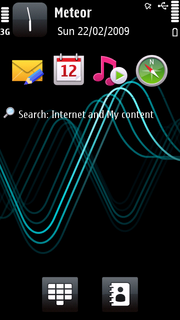
foundation who will independently own the Symbian operating system. The new Symbian Foundation has announced its intent to unify different Symbian UIs into a single UI based on the S60 platform. (Announcements made in March 2009 indicated this would be the S60 5th edition with feature pack 1).
Symbian Anna
On April 12 2011, Nokia announced Symbian Anna as a software update to the Symbian^3 release.Two new devices (X7 and E6) were announced which will have Symbian Anna pre-installed. Symbian Anna will be available as a Software Update for Symbian^3 based devices as well.
Most Significant updates that come with "Anna" are
- Portrait QWERTY with split-view data entry
- New Icon Set
- New internet browser with an improved user interface, search-integrated address field, faster navigation and page loading.
- Updated Ovi Maps (search public transport, download full country maps via WLAN or Nokia Ovi Suite, check-in to Facebook, Twitter and Foursquare).
- Java Runtime 2.2, Qt Mobility 1.1 and Qt4.7.
Symbian Belle
On August 24 2011, Nokia announced Symbian Belle as a software update to the Symbian Anna release.Three new devices (600, 700 and 701) were announced which will have Symbian Belle pre-installed. Symbian Belle will be available as a Software Update for Symbian Anna based devices as well.
Most Significant updates that come with "Belle" are
- Free-form, differently-sized, live widgets
- More homescreens
- Improved status bar
- Modernised navigation
- New apps
- Informative lock screen
- NFC devices
- Visual multitasking
Competitions and alternatives: possible ending
In February 2011, Nokia announced a partnership with Microsoft to integrate Windows Phone 7Windows Phone 7
Windows Phone is a mobile operating system developed by Microsoft, and is the successor to its Windows Mobile platform, although incompatible with it. Unlike its predecessor, it is primarily aimed at the consumer market rather than the enterprise market...
as their Primary OS, leaving further Symbian development in question.
As a part of this plan, Nokia announced on April 29 2011, to transfer symbian activities to Accenture along with 3000 employees.
Timelines for transitions are still not clear. For other alternatives to Symbian, see Symbian
Symbian
Symbian is a mobile operating system and computing platform designed for smartphones and currently maintained by Accenture. The Symbian platform is the successor to Symbian OS and Nokia Series 60; unlike Symbian OS, which needed an additional user interface system, Symbian includes a user...
.
For historical alternative user interfaces for Symbian (UIQ
UIQ
UIQ by UIQ Technology is a software platform based upon Symbian OS. Essentially this is a graphical user interface layer that provides additional components to the core OS, to enable the development of feature-rich mobile phones that are open to expanded capabilities through third-party...
, series 80, series 90), see history of Symbian
History of Symbian
Symbian OS was one of Nokia's mobile operating systems for mobile devices and smartphones, with associated libraries, user interface, frameworks and reference implementations of common tools, originally developed by Symbian Ltd...
.
See also
- Symbian OS
- Android (operating system), an open-source mobile platform by Google
- List of Nokia products
- Location-based services (LBS)
- MaemoMaemoMaemo is a software platform developed by the Maemo community for smartphones and Internet tablets. It is based on the Debian Linux distribution, but has no relation to it...
, Nokia's Debian Linux-based platform - MicrobrowserMicrobrowserA mobile browser, also called a microbrowser, minibrowser, or wireless internet browser , is a web browser designed for use on a mobile device such as a mobile phone or PDA. Mobile browsers are optimized so as to display Web content most effectively for small screens on portable devices...
- MOAPMOAPMOAP is the software platform for NTT DoCoMo's FOMA service for mobile phones. -Versions:There are two versions of MOAP:...
, another Symbian-based platform - Mobile DevelopmentMobile developmentMobile application development is the process by which application software is developed for small low-power handheld devices such as personal digital assistants, enterprise digital assistants or mobile phones...
- Mobile gameMobile gameA mobile game is a video game played on a mobile phone, smartphone, PDA, tablet computer or portable media player. This does not include games played on handheld video game systems such as Nintendo DS or PlayStation Portable....
- Series 40, Nokia's non-Symbian-based platform for mass-market devices.
- UIQUIQUIQ by UIQ Technology is a software platform based upon Symbian OS. Essentially this is a graphical user interface layer that provides additional components to the core OS, to enable the development of feature-rich mobile phones that are open to expanded capabilities through third-party...
, another Symbian-based platform - Web Browser for S60Web Browser for S60Web Browser for S60 or the S60 OSS Browser, is the default web browser for the S60 mobile phone platform. It is the default browser for many old phones running on the Symbian mobile operating system and all new phones running on Symbian. It was developed by Nokia...