


Revolutionary socialism

Encyclopedia
The term revolutionary socialism refers to Socialist
tendencies that advocate the need for fundamental social change through revolution
by mass movements of the working class, as a strategy to achieve a socialist society. The term is used by socialist and communist tendencies in contrast to reformism
, the advocacy of the possibility of gradual change as a means of achieving socialism or of ameliorating capitalism, and also in contrast to the concept of small revolutionary groups seizing power without active mass support, termed Blanquism
.
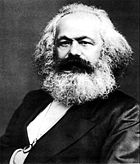 In the Communist Manifesto, Karl Marx
and Frederick Engels wrote:
Scholars have pointed out that the term 'revolution' as used by Marx, Engels and their followers tends to refer to complete change of a social and economic nature by a mass movement of the "immense majority" (as shown by the quote above). In addition, if this revolutionary change was not opposed by the existing ruling elite, Marx and Engels contended, it could be carried out peacefully. By contrast, the Blanquist view emphasised the overthrow by force of the ruling elite in government by an active minority of revolutionaries, who then proceed to implement socialist change, disregarding the state of readiness of society as a whole and the mass of the population in particular for revolutionary change.
The reformist viewpoint was introduced into Marxist thought by Eduard Bernstein
, one of the leaders of the Social Democratic Party of Germany
(SPD). From 1896 to 1898, Bernstein published a series of articles entitled "Probleme des Sozialismus" ("Problems of Socialism"). These articles led to a debate on revisionism in the SPD, and can be seen as the origins of a reformist trend within Marxism.
In 1900, Rosa Luxemburg
wrote Social Reform or Revolution
, a polemic
against Bernstein's position. The work of reforms, Luxemburg argued, could only be carried on, "in the framework of the social form created by the last revolution". In order to advance society to socialism from the capitalist 'social form', a social revolution will be necessary:
Vladimir Lenin
attacked Bernstein’s position in his What is to be Done. When Bernstein first put forward his ideas the majority of the SPD rejected them. The 1899 Congress of the SPD reaffirmed the Erfurt programme, as did the 1901 congress. The 1903 congress denounced "revisionist efforts".
, Leon Trotsky
, Karl Liebknecht
and Rosa Luxemburg
, together with a small number of other Marxists opposed to the war, came together in the Zimmerwald Conference
in September 1915. This conference saw the beginning of the end of the uneasy coexistence of revolutionary socialists and reformist
socialists in the Second International
. The conference adopted a proposal by Trotsky to avoid an immediate split with the Second International. At first opposed to it, in the end Lenin voted for Trotsky's resolution to avoid a split among anti-war socialists.
In December, 1915 and March, 1916, eighteen Social Democratic representatives, the Haase-Ledebour Group, voted against war credits, and were expelled from the Social Democratic Party. Liebknecht wrote Revolutionary Socialism in Germany in 1916, arguing that this group was not a revolutionary socialist group, despite their refusal to vote for war credits, further defining, in his view, what was meant by a revolutionary socialist.
follows the revolutionary socialist model of a revolutionary movement of the immense majority. By contrast, the October revolution is popularly portrayed as a putsch or coup d'état along the lines of Blanquism.
Revolutionary socialists, particularly Trotskyists, argue that the Bolsheviks only seized power as the expression of the mass of workers and peasants, whose desires are brought into being by an organised force - the revolutionary party. Marxists such as Trotskyists argue that Lenin did not advocate seizing of power until he felt that the majority of the population, represented in the soviets, demanded revolutionary change and no longer supported the reformist government of Alexander Kerensky
established in the earlier revolution of February 1917:
For these Marxists, the fact that the Bolsheviks won a majority (in alliance with the Left Socialist Revolutionaries) in the second all-Russian congress of Soviets - democratically elected bodies - which convened at the time of the October revolution, shows that they had popular support of the masses of workers, peasants and soldiers, the vast majority of Russian society.
In his pamphlet, The Lessons of October, published in 1923, Trotsky argued that military power lay in the hands of the Bolsheviks before the October revolution was carried out but this power was not used against the government until the Bolsheviks gained mass support.
The mass of the soldiers began to be led by the Bolshevik party after the 'July days' of 1917, and followed only the orders of the Military Revolutionary Committee
under the leadership of Trotsky in October (also termed the 'Revolutionary Military Committee' in Lenin's collected works).
Yet Trotsky only mobilised the Military Revolutionary Committee to seize power on the advent of the Second All-Russian Congress of Soviets of Workers' and Soldiers' Deputies, which began on 25 October 1917.
Following the Russian Revolution of 1917
the Third International was founded. This International became widely identified with Communism
, but also defined itself in terms of revolutionary socialism.
Emerging from the Communist International, but critical of the post-1924 Soviet Union, the Trotskyist tradition in Western Europe and elsewhere uses the term 'revolutionary socialism'. For instance, in 1932, the first issue of the first Canadian Trotskyist newspaper, The Vanguard, published an editorial, "Revolutionary Socialism vs Reformism". Today, many Trotskyist groups advocate "revolutionary socialism" as opposed to reformism, and are considered, and consider themselves, "revolutionary socialists".
Luxemburgism
is another revolutionary socialist tradition.
Some revolutionaries outside of the Marxist tradition, such as libertarian socialists
, have described themselves as revolutionary socialists.
Socialism
Socialism is an economic system characterized by social ownership of the means of production and cooperative management of the economy; or a political philosophy advocating such a system. "Social ownership" may refer to any one of, or a combination of, the following: cooperative enterprises,...
tendencies that advocate the need for fundamental social change through revolution
Revolution
A revolution is a fundamental change in power or organizational structures that takes place in a relatively short period of time.Aristotle described two types of political revolution:...
by mass movements of the working class, as a strategy to achieve a socialist society. The term is used by socialist and communist tendencies in contrast to reformism
Social democracy
Social democracy is a political ideology of the center-left on the political spectrum. Social democracy is officially a form of evolutionary reformist socialism. It supports class collaboration as the course to achieve socialism...
, the advocacy of the possibility of gradual change as a means of achieving socialism or of ameliorating capitalism, and also in contrast to the concept of small revolutionary groups seizing power without active mass support, termed Blanquism
Blanquism
In left-wing discourse, Blanquism refers to a conception of revolution generally attributed to Louis Auguste Blanqui which holds that socialist revolution should be carried out by a relatively small group of highly organised and secretive conspirators. Having taken power, the revolutionaries would...
.
Origins
Karl Marx
Karl Heinrich Marx was a German philosopher, economist, sociologist, historian, journalist, and revolutionary socialist. His ideas played a significant role in the development of social science and the socialist political movement...
and Frederick Engels wrote:
Scholars have pointed out that the term 'revolution' as used by Marx, Engels and their followers tends to refer to complete change of a social and economic nature by a mass movement of the "immense majority" (as shown by the quote above). In addition, if this revolutionary change was not opposed by the existing ruling elite, Marx and Engels contended, it could be carried out peacefully. By contrast, the Blanquist view emphasised the overthrow by force of the ruling elite in government by an active minority of revolutionaries, who then proceed to implement socialist change, disregarding the state of readiness of society as a whole and the mass of the population in particular for revolutionary change.
The reformist viewpoint was introduced into Marxist thought by Eduard Bernstein
Eduard Bernstein
Eduard Bernstein was a German social democratic theoretician and politician, a member of the SPD, and the founder of evolutionary socialism and revisionism.- Life :...
, one of the leaders of the Social Democratic Party of Germany
Social Democratic Party of Germany
The Social Democratic Party of Germany is a social-democratic political party in Germany...
(SPD). From 1896 to 1898, Bernstein published a series of articles entitled "Probleme des Sozialismus" ("Problems of Socialism"). These articles led to a debate on revisionism in the SPD, and can be seen as the origins of a reformist trend within Marxism.
In 1900, Rosa Luxemburg
Rosa Luxemburg
Rosa Luxemburg was a Marxist theorist, philosopher, economist and activist of Polish Jewish descent who became a naturalized German citizen...
wrote Social Reform or Revolution
Social Reform or Revolution
Reform or Revolution is the title of a pamphlet written by Rosa Luxemburg in 1900. It was published to confront the revisionist ideology beginning to emerge in Europe shortly after the internal conflicts amongst Marxists at the Second International....
, a polemic
Polemic
A polemic is a variety of arguments or controversies made against one opinion, doctrine, or person. Other variations of argument are debate and discussion...
against Bernstein's position. The work of reforms, Luxemburg argued, could only be carried on, "in the framework of the social form created by the last revolution". In order to advance society to socialism from the capitalist 'social form', a social revolution will be necessary:
Vladimir Lenin
Vladimir Lenin
Vladimir Ilyich Lenin was a Russian Marxist revolutionary and communist politician who led the October Revolution of 1917. As leader of the Bolsheviks, he headed the Soviet state during its initial years , as it fought to establish control of Russia in the Russian Civil War and worked to create a...
attacked Bernstein’s position in his What is to be Done. When Bernstein first put forward his ideas the majority of the SPD rejected them. The 1899 Congress of the SPD reaffirmed the Erfurt programme, as did the 1901 congress. The 1903 congress denounced "revisionist efforts".
The First World War and Zimmerwald
However on 4 August 1914 the SPD members of the Reichstag voted for the government’s war budget, while the French and Belgium socialists publicly supported their governments. Vladimir LeninVladimir Lenin
Vladimir Ilyich Lenin was a Russian Marxist revolutionary and communist politician who led the October Revolution of 1917. As leader of the Bolsheviks, he headed the Soviet state during its initial years , as it fought to establish control of Russia in the Russian Civil War and worked to create a...
, Leon Trotsky
Leon Trotsky
Leon Trotsky , born Lev Davidovich Bronshtein, was a Russian Marxist revolutionary and theorist, Soviet politician, and the founder and first leader of the Red Army....
, Karl Liebknecht
Karl Liebknecht
was a German socialist and a co-founder with Rosa Luxemburg of the Spartacist League and the Communist Party of Germany. He is best known for his opposition to World War I in the Reichstag and his role in the Spartacist uprising of 1919...
and Rosa Luxemburg
Rosa Luxemburg
Rosa Luxemburg was a Marxist theorist, philosopher, economist and activist of Polish Jewish descent who became a naturalized German citizen...
, together with a small number of other Marxists opposed to the war, came together in the Zimmerwald Conference
Zimmerwald Conference
The Zimmerwald Conference was held in Zimmerwald, Switzerland, from September 5 through September 8, 1915. It was an international socialist conference, which saw the beginning of the end of the coalition between revolutionary socialists and reformist socialists in the Second International.-...
in September 1915. This conference saw the beginning of the end of the uneasy coexistence of revolutionary socialists and reformist
Reformism
Reformism is the belief that gradual democratic changes in a society can ultimately change a society's fundamental economic relations and political structures...
socialists in the Second International
Second International
The Second International , the original Socialist International, was an organization of socialist and labour parties formed in Paris on July 14, 1889. At the Paris meeting delegations from 20 countries participated...
. The conference adopted a proposal by Trotsky to avoid an immediate split with the Second International. At first opposed to it, in the end Lenin voted for Trotsky's resolution to avoid a split among anti-war socialists.
In December, 1915 and March, 1916, eighteen Social Democratic representatives, the Haase-Ledebour Group, voted against war credits, and were expelled from the Social Democratic Party. Liebknecht wrote Revolutionary Socialism in Germany in 1916, arguing that this group was not a revolutionary socialist group, despite their refusal to vote for war credits, further defining, in his view, what was meant by a revolutionary socialist.
The Russian revolution of 1917 and after
Many revolutionary socialists argue that the Russian revolution of October 1917 led by Lenin and Leon TrotskyLeon Trotsky
Leon Trotsky , born Lev Davidovich Bronshtein, was a Russian Marxist revolutionary and theorist, Soviet politician, and the founder and first leader of the Red Army....
follows the revolutionary socialist model of a revolutionary movement of the immense majority. By contrast, the October revolution is popularly portrayed as a putsch or coup d'état along the lines of Blanquism.
Revolutionary socialists, particularly Trotskyists, argue that the Bolsheviks only seized power as the expression of the mass of workers and peasants, whose desires are brought into being by an organised force - the revolutionary party. Marxists such as Trotskyists argue that Lenin did not advocate seizing of power until he felt that the majority of the population, represented in the soviets, demanded revolutionary change and no longer supported the reformist government of Alexander Kerensky
Alexander Kerensky
Alexander Fyodorovich Kerensky was a major political leader before and during the Russian Revolutions of 1917.Kerensky served as the second Prime Minister of the Russian Provisional Government until Vladimir Lenin was elected by the All-Russian Congress of Soviets following the October Revolution...
established in the earlier revolution of February 1917:
For these Marxists, the fact that the Bolsheviks won a majority (in alliance with the Left Socialist Revolutionaries) in the second all-Russian congress of Soviets - democratically elected bodies - which convened at the time of the October revolution, shows that they had popular support of the masses of workers, peasants and soldiers, the vast majority of Russian society.
In his pamphlet, The Lessons of October, published in 1923, Trotsky argued that military power lay in the hands of the Bolsheviks before the October revolution was carried out but this power was not used against the government until the Bolsheviks gained mass support.
The mass of the soldiers began to be led by the Bolshevik party after the 'July days' of 1917, and followed only the orders of the Military Revolutionary Committee
Military Revolutionary Committee
The Military Revolutionary Committee also known as the Milrevcom was the name for military organs under the soviets during the period of the Russian Revolution and Russian Civil War. The most notable ones were those of the Petrograd Soviet, the Moscow Soviet, and at Stavka.These committees were...
under the leadership of Trotsky in October (also termed the 'Revolutionary Military Committee' in Lenin's collected works).
Yet Trotsky only mobilised the Military Revolutionary Committee to seize power on the advent of the Second All-Russian Congress of Soviets of Workers' and Soldiers' Deputies, which began on 25 October 1917.
Following the Russian Revolution of 1917
October Revolution
The October Revolution , also known as the Great October Socialist Revolution , Red October, the October Uprising or the Bolshevik Revolution, was a political revolution and a part of the Russian Revolution of 1917...
the Third International was founded. This International became widely identified with Communism
Communism
Communism is a social, political and economic ideology that aims at the establishment of a classless, moneyless, revolutionary and stateless socialist society structured upon common ownership of the means of production...
, but also defined itself in terms of revolutionary socialism.
Emerging from the Communist International, but critical of the post-1924 Soviet Union, the Trotskyist tradition in Western Europe and elsewhere uses the term 'revolutionary socialism'. For instance, in 1932, the first issue of the first Canadian Trotskyist newspaper, The Vanguard, published an editorial, "Revolutionary Socialism vs Reformism". Today, many Trotskyist groups advocate "revolutionary socialism" as opposed to reformism, and are considered, and consider themselves, "revolutionary socialists".
Luxemburgism
Luxemburgism
Luxemburgism is a specific revolutionary theory within Marxism, based on the writings of Rosa Luxemburg. According to M. K...
is another revolutionary socialist tradition.
Some revolutionaries outside of the Marxist tradition, such as libertarian socialists
Libertarian socialism
Libertarian socialism is a group of political philosophies that promote a non-hierarchical, non-bureaucratic, stateless society without private property in the means of production...
, have described themselves as revolutionary socialists.