
All Topics  
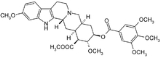
Reserpine


   Email Print
   Bookmark   Link


Reserpine


Reserpine is an indole
Indole

Indole is an aromatic Heterocyclic compound organic compound. It has a bicyclic structure, consisting of a six-membered benzene ring fused to a five-membered nitrogen-containing pyrrole ring....
 alkaloid
Alkaloid

Alkaloids are naturally occurring chemical compounds containing base nitrogen atoms. The name derives from the word alkaline and was used to describe any nitrogen-containing base....
 antipsychotic
Antipsychotic

Antipsychotics are a group of psychoactive drugs commonly but not exclusively used to treat psychosis, which is typified by schizophrenia. Over time a wide range of antipsychotics have been developed....
 and antihypertensive
Antihypertensive

Antihypertensives are a class of medication that are used in medicine and pharmacology to treat hypertension . There are many classes of antihypertensives, which?by varying means?act by lowering blood pressure....
 drug that has been used for the control of high blood pressure
Hypertension

Hypertension, also referred to as high blood pressure, HTN or HPN, is a medical condition in which the blood pressure is chronically elevated....
 and for the relief of psychotic behaviors, although because of the development of better drugs for these purposes and because of its numerous side-effects, it is rarely used today. The antihypertensive actions of Reserpine are a result of its ability to deplete catecholamine
Catecholamine

Catecholamines are chemical compounds derived from the amino acid tyrosine. Their name is derived from the fact that they contain catechol and amine moieties....
s (among the others) from peripheral sympathetic nerve endings.


Discussion
Ask a question about 'Reserpine'
Start a new discussion about 'Reserpine'
Answer questions from other users
Full Discussion Forum


Encyclopedia


Reserpine is an indole
Indole

Indole is an aromatic Heterocyclic compound organic compound. It has a bicyclic structure, consisting of a six-membered benzene ring fused to a five-membered nitrogen-containing pyrrole ring....
 alkaloid
Alkaloid

Alkaloids are naturally occurring chemical compounds containing base nitrogen atoms. The name derives from the word alkaline and was used to describe any nitrogen-containing base....
 antipsychotic
Antipsychotic

Antipsychotics are a group of psychoactive drugs commonly but not exclusively used to treat psychosis, which is typified by schizophrenia. Over time a wide range of antipsychotics have been developed....
 and antihypertensive
Antihypertensive

Antihypertensives are a class of medication that are used in medicine and pharmacology to treat hypertension . There are many classes of antihypertensives, which?by varying means?act by lowering blood pressure....
 drug that has been used for the control of high blood pressure
Hypertension

Hypertension, also referred to as high blood pressure, HTN or HPN, is a medical condition in which the blood pressure is chronically elevated....
 and for the relief of psychotic behaviors, although because of the development of better drugs for these purposes and because of its numerous side-effects, it is rarely used today. The antihypertensive actions of Reserpine are a result of its ability to deplete catecholamine
Catecholamine

Catecholamines are chemical compounds derived from the amino acid tyrosine. Their name is derived from the fact that they contain catechol and amine moieties....
s (among the others) from peripheral sympathetic nerve endings. These substances are normally involved in controlling heart rate, force of cardiac contraction and peripheral resistance. . Reserpine depletion of monoamine neurotransmitter
Neurotransmitter

Neurotransmitters are chemistry which relay, amplify and modulate signals between a neuron and another cell . Neurotransmitters are packaged into vesicles that cluster beneath the membrane on the presynaptic side of a synapse, and are released into the synaptic cleft, where they bind to receptors in the membrane on the postsynaptic side of...
s in the synapses is often cited as evidence to the theory that depletion of the neurotransmitters causes subsequent depression
Clinical depression

Major depressive disorder is a mental disorder characterized by a pervasive depression , low self-esteem, and anhedonia in normally enjoyable activities....
 in humans. Moreover, reserpine has a peripheral action in many parts of the body, resulting in a preponderance of the cholinergic part of the nervous system (GI-Tract, smooth muscles vessels).

Mode of action

Reserpine acts by blocking the vesicular monoamine transporter VMAT, which normally transports free norepinephrine
Norepinephrine

Norepinephrine or noradrenaline is a catecholamine with dual roles as a hormone and a neurotransmitter.As a stress hormone, norepinephrine affects parts of the brain where attention and responding actions are controlled....
, serotonin
Serotonin

Serotonin is a monoamine neurotransmitter synthesized in serotonergic neurons in the central nervous system and enterochromaffin cells in the gastrointestinal tract of animals including humans....
, and dopamine
Dopamine

Dopamine is a neurotransmitter occurring in a wide variety of animals, including both vertebrates and invertebrates. In the human brain, this phenethylamine functions as a neurotransmitter, activating the five types of dopamine receptors ? D1, D2, D3, D4 and D5, and their variants....
 from the cytoplasm of the presynaptic nerve into vesicles for subsequent release into the synaptic cleft. The unprotected neurotransmitters are then metabolized by MAO
Mao

, is a Japanese remake of the Korean suspense drama series titled Ma Wang which aired on Korean Broadcasting System in 2007. The drama stars Satoshi Ohno of Arashi and Toma Ikuta, both under the talent agency Johnny & Associates....
 and therefore never reach the synapse.

History

Reserpine was isolated in 1952 from the dried root of Rauwolfia serpentina
Rauwolfia serpentina

Rauwolfia serpentina, or 'snakeroot' is a species of flowering plant in the family Apocynaceae....
(Indian snakeroot
Snakeroot

Snakeroot is a genus of about 250?290 Perennial plants and rounded shrubs from the Sunflower family .These plants grow mainly in the warmer regions of the Americas....
), (which had been known as
Sarpaganda and had been used for centuries there for the treatment of insanity, as well as fever and snakebites — even Mahatma Gandhi
Mahatma Gandhi

Mohandas Karamchand Gandhi was a major political and spiritual leader of India and the Indian independence movement. He was the pioneer of satyagraha?resistance to tyranny through mass civil disobedience, firmly founded upon ahimsa or total non-violence?which led India to Indian independence movement and inspired movements for civi...
 used it as a tranquilizer
Tranquilizer

A tranquilizer is a drug that induces tranquillity in an individual.The term "tranquilizer" is imprecise, and is usually qualified, or replaced with more precise terms:...
 during his lifetime.) and introduced in 1954, two years after chlorpromazine
Chlorpromazine

Chlorpromazine is a phenothiazine antipsychotic, and the oldest in the antipsychotic family of drugs. It is a typical antipsychotic. It is principally used in the treatment of schizophrenia, though it has also been used to treat severe manic episodes in people with bipolar disorder....
. Reserpine almost irreversibly blocks the uptake (and storage) of norepinephrine
Norepinephrine

Norepinephrine or noradrenaline is a catecholamine with dual roles as a hormone and a neurotransmitter.As a stress hormone, norepinephrine affects parts of the brain where attention and responding actions are controlled....
 (i.e. noradrenaline) and dopamine
Dopamine

Dopamine is a neurotransmitter occurring in a wide variety of animals, including both vertebrates and invertebrates. In the human brain, this phenethylamine functions as a neurotransmitter, activating the five types of dopamine receptors ? D1, D2, D3, D4 and D5, and their variants....
 into synaptic vesicles by inhibiting the Vesicular Monoamine Transporters (VMAT).

Reserpine has been discontinued in the UK for some years due to its vast interactions and side effects.

Reserpine was also highly influential in promoting the thought of a biogenic-amine hypothesis of depression - see Everett & Tolman, 1959.

Uses today

Reserpine is one of the few antihypertensive medications that have been shown in randomized controlled trials to reduce mortality: The Hypertension Detection and Follow-up Program, the Veterans Administration Cooperative Study Group in Anti-hypertensive Agents, and the Systolic Hypertension in the Elderly Program.

Reserpine is listed as a second line choice by the JNC 7. Reserpine is a second-line adjunct agent for patients who are uncontrolled on a diuretic when cost is an issue.

It is also used to treat symptoms of dyskinesia
Dyskinesia

Dyskinesia refers to involuntary movements, similar to a tic or chorea. Dyskinesia is a symptom of several medical disorders and is distinguished by the underlying cause....
 in patients suffering from Huntington's disease
Huntington's disease

Huntington's disease, also called Huntington's Chorea , chorea major, or HD, is a genetics Neurodegenerative disease characterized after onset by uncoordinated, jerky body movements and a decline in some mental abilities....
.

In some countries reserpine is still available as part of combination drugs for the treatment of hypertension, in most cases they contain also a diuretic and/or a vasodilator like hydralazine
Hydralazine

Hydralazine hydrochloride is a direct-acting smooth muscle relaxant used to treat hypertension by acting as a vasodilator primarily in arteries and arterioles....
. These combinations are currently regarded as second choice drugs. The daily dose of reserpine in antihypertensive treatment is as low as 0.1 to 0.25mg. The use of reserpine as an antipsychotic drug has been nearly completely abandoned. Originally, doses of 0.5mg to 40mg daily were used to treat psychotic diseases. Doses in excess of 3mg daily often required use of an anticholinergic drug to combat excessive cholinergic activity in many parts of the body as well as parkinsonism. Reserpine may be used as a sedative for horses.

Side effects

At doses of less than 0.2 mg/day, reserpine has few side effects, most commonly is nasal congestion.

There has been much concern about reserpine causing depression leading to suicide. However, this was reported in uncontrolled studies using doses averaging 0.5 mg per day.

Reserpine can cause: nasal congestion, nausea, vomiting, weight gain, gastric intolerance, gastric ulceration (due to increased cholinergic activity in gastric tissue and impaired mucosal quality), stomach cramps and diarrhea are noted. The drug causes hypotension and bradycardia and may worsen asthma. Congested nose and erectile dysfunction are other consequences of alpha-blockade. Depression can occur at any dose and may be severe enough to lead to suicide. Other central effects are a high incidence of drowsiness, dizziness, and nightmares. Parkinsonism occurs in a dose dependent manner. General weakness or fatigue is quite often encountered. High dose studies in rodents found reserpine to cause fibroadenoma of the breast and malignant tumors of the seminal vesicles among others. Early suggestions that reserpine causes breast cancer in women (risk approximately doubled) were not confirmed. It may also cause hyperprolactinemia.

Footnotes

  1. . 2004.
  2. Major Types Of Chemical Compounds In Plants & Animals Part II: Phenolic Compounds, Glycosides & Alkaloids. Wayne's Word: An On-Line Textbook of Natural History. 2005.
  3. Forney, Barbara. Wedgewood Pharmacy. 2001-2002.
  4. Dorlands Medical Dictionary. Merck Source. 2002.
  5. Lopez-Munoz F, Bhatara VS, Alamo C, Cuenca E. (2004): "[Historical approach to reserpine discovery and its introduction in psychiatry]" [Article in Spanish] Actas Esp Psiquiatr. 32(6):387-95. PMID 15529229
  6. Schuldiner, S. et al. (1993): J. Biol. Chem. 268(1) 29-34. PMID 8416935


External links

  • National Center for Biotechnology Information.