


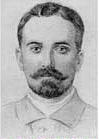
Prokopius Dzhaparidze

Encyclopedia
Georgian people
The Georgians are an ethnic group that have originated in Georgia, where they constitute a majority of the population. Large Georgian communities are also present throughout Russia, European Union, United States, and South America....
Communist
Communism
Communism is a social, political and economic ideology that aims at the establishment of a classless, moneyless, revolutionary and stateless socialist society structured upon common ownership of the means of production...
activist, one of the Red Army
Red Army
The Workers' and Peasants' Red Army started out as the Soviet Union's revolutionary communist combat groups during the Russian Civil War of 1918-1922. It grew into the national army of the Soviet Union. By the 1930s the Red Army was among the largest armies in history.The "Red Army" name refers to...
and Bolshevik Party leaders in Azerbaijan
Azerbaijan
Azerbaijan , officially the Republic of Azerbaijan is the largest country in the Caucasus region of Eurasia. Located at the crossroads of Western Asia and Eastern Europe, it is bounded by the Caspian Sea to the east, Russia to the north, Georgia to the northwest, Armenia to the west, and Iran to...
during the Russian Revolution
Russian Revolution of 1917
The Russian Revolution is the collective term for a series of revolutions in Russia in 1917, which destroyed the Tsarist autocracy and led to the creation of the Soviet Union. The Tsar was deposed and replaced by a provisional government in the first revolution of February 1917...
.
Educated at the Alexandrovsk Teachers Institute in Tbilisi
Tbilisi
Tbilisi is the capital and the largest city of Georgia, lying on the banks of the Mt'k'vari River. The name is derived from an early Georgian form T'pilisi and it was officially known as Tiflis until 1936...
, Dzhaparidze joined the Russian Social Democratic Labour Party
Russian Social Democratic Labour Party
The Russian Social Democratic Labour Party , also known as Russian Social Democratic Workers' Party or Russian Social Democratic Party, was a revolutionary socialist Russian political party formed in 1898 in Minsk to unite the various revolutionary organizations into one party...
in 1898. He was one of the founders of Gummet organization, set up to do political work amongst Muslims, which grew into a mass organisation, drawing large masses of Muslim people behind the Bolsheviks.
After the February Revolution
February Revolution
The February Revolution of 1917 was the first of two revolutions in Russia in 1917. Centered around the then capital Petrograd in March . Its immediate result was the abdication of Tsar Nicholas II, the end of the Romanov dynasty, and the end of the Russian Empire...
of 1917, Dzhaparidze was a member of the Baku
Baku
Baku , sometimes spelled as Baki or Bakou, is the capital and largest city of Azerbaijan, as well as the largest city on the Caspian Sea and of the Caucasus region. It is located on the southern shore of the Absheron Peninsula, which projects into the Caspian Sea. The city consists of two principal...
Committee of the Bolshevik Party (see Baku Commune); as a delegate to the 6th congress of the Bolshevik Party, he was selected as a candidate member of its Central Committee
Central Committee
Central Committee was the common designation of a standing administrative body of communist parties, analogous to a board of directors, whether ruling or non-ruling in the twentieth century and of the surviving, mostly Trotskyist, states in the early twenty first. In such party organizations the...
, and became a member of Caucasian Border Committee. From December 1917 Deputy Chairman, during January–July 1918 the chairman of the Executive Committee of the Baku Soviet
Soviet (council)
Soviet was a name used for several Russian political organizations. Examples include the Czar's Council of Ministers, which was called the “Soviet of Ministers”; a workers' local council in late Imperial Russia; and the Supreme Soviet of the Soviet Union....
.
During March, Dzhaparidze was the member of the Committee of Revolutionary Defence which suppressed a mutiny in Baku; from April, he was the Commissar for Internal Affairs in Baku, and, from June, he also served as Commissar for Food.
On September 20, 1918, he was one of the 26 Baku Commissars
26 Baku Commissars
The 26 Baku Commissars were Bolshevik and Left Socialist Revolutionary members of the Baku Soviet Commune. The commune was established in the city of Baku...
shot by the White Army of the Central Caspian Dictatorship.