
All Topics  
Politeness


   Email Print
   Bookmark   Link


Politeness


Politeness is best expressed as the practical application of good manners
Manners

In sociology, manners are the unenforced standards of conduct which show the actor to be cultured, polite, and refined....
 or etiquette
Etiquette

Etiquette is a code that influences expectations for social behavior according to contemporary Convention Norm s within a society, social class, or Group ....
. It is a culturally defined phenomenon, and what is considered polite in one culture
Culture

Culture is difficult to define. For example, in 1952, Alfred Kroeber and Clyde Kluckhohn compiled a list of 164 definitions of "culture" in Culture: A Critical Review of Concepts and Definitions....
 can often be quite rude or simply strange in another.

While the goal of politeness is to make all of the parties relaxed and comfortable with one another, these culturally defined standards at times may be manipulated to inflict shame
Shame

Shame is, variously, an Affect_, emotion, cognition, state_of_being. The roots of the word shame are thought to derive from an older word meaning to cover; as such, covering oneself, literally or figuratively, is a natural expression of shame....
 on a designated party.

The British social anthropologists Penelope Brown and Stephen Levinson
Stephen C. Levinson

Stephen C. Levinson is director of the Language and Cognition group at the Max Planck Institute for Psycholinguistics in Nijmegen, The Netherlands....
 identified two kinds of politeness, deriving from Erving Goffman
Erving Goffman

'Erving Goffman' , was a Canada and American sociology and writer. The List of American Sociological Association presidents of American Sociological Association, Goffman's greatest contribution to social theory is his study of symbolic interaction in the form of dramaturgical perspective that began with his 1956 book The Presentation of Self...
's concept of face
Face (self image)

Face refers to someone's public self image.The concept of face as the presentation of the self which they would like to project for others was researched by Margaret Thatcher, and is used in sociolinguistics, particularly politeness theory....
:


Some cultures seem to prefer one of these kinds of politeness over the other.


Discussion
Ask a question about 'Politeness'
Start a new discussion about 'Politeness'
Answer questions from other users
Full Discussion Forum


Quotations


I have forgotten thy name is better than I know thee not.

As charity covers a multitude of sins before God, so does politeness before men.

Avoid all haste; calmness is an essential ingredient of politeness.

Bowing to a dwarf will not prevent your standing erect again.

Fine manners are like personal beauty,—a letter of credit everywhere.

Please is the magic word. Thank you is the spellbreaker.


Encyclopedia


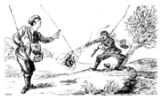
Politeness   Punch Cartoon   Project Gutenberg Etext 16619
Politeness is best expressed as the practical application of good manners
Manners

In sociology, manners are the unenforced standards of conduct which show the actor to be cultured, polite, and refined....
 or etiquette
Etiquette

Etiquette is a code that influences expectations for social behavior according to contemporary Convention Norm s within a society, social class, or Group ....
. It is a culturally defined phenomenon, and what is considered polite in one culture
Culture

Culture is difficult to define. For example, in 1952, Alfred Kroeber and Clyde Kluckhohn compiled a list of 164 definitions of "culture" in Culture: A Critical Review of Concepts and Definitions....
 can often be quite rude or simply strange in another.

While the goal of politeness is to make all of the parties relaxed and comfortable with one another, these culturally defined standards at times may be manipulated to inflict shame
Shame

Shame is, variously, an Affect_, emotion, cognition, state_of_being. The roots of the word shame are thought to derive from an older word meaning to cover; as such, covering oneself, literally or figuratively, is a natural expression of shame....
 on a designated party.

The British social anthropologists Penelope Brown and Stephen Levinson
Stephen C. Levinson

Stephen C. Levinson is director of the Language and Cognition group at the Max Planck Institute for Psycholinguistics in Nijmegen, The Netherlands....
 identified two kinds of politeness, deriving from Erving Goffman
Erving Goffman

'Erving Goffman' , was a Canada and American sociology and writer. The List of American Sociological Association presidents of American Sociological Association, Goffman's greatest contribution to social theory is his study of symbolic interaction in the form of dramaturgical perspective that began with his 1956 book The Presentation of Self...
's concept of face
Face (self image)

Face refers to someone's public self image.The concept of face as the presentation of the self which they would like to project for others was researched by Margaret Thatcher, and is used in sociolinguistics, particularly politeness theory....
:

  • Negative politeness: Making a request less infringing, such as "If you don't mind..." or "If it isn't too much trouble..."; respects a person's right to act freely. In other words, deference. There is a greater use of indirect speech acts.
  • Positive politeness: Seeks to establish a positive relationship between parties; respects a person's need to be liked and understood. Direct speech acts, swearing
    Swearing

    To swear may mean:*to utter an oath, or to promise*to utter profanity...
     and flouting Grice's maxims can be considered aspects of positive politeness because:
    • they show an awareness that the relationship is strong enough to cope with what would normally be considered impolite (in the popular understanding of the term);
    • they articulate an awareness of the other person's values, which fulfils the person's desire to be accepted.


Some cultures seem to prefer one of these kinds of politeness over the other. In this way politeness is culturally-bound.

Techniques to show politeness

  • Expressing uncertainty and ambiguity through hedging
    Hedge (linguistics)

    A hedge is a mitigating device used to lessen the impact of an utterance. Typically, they are adjectives or adverbs, but can also consist of clauses....
     and indirectness.
  • Polite lying
    Polite lie

    A polite lie is a lie that a politeness standard requires, and which is usually known to be untrue by both parties. It is heavily dependent on culture if such lies are acceptable....
  • Use of euphemism
    Euphemism

    A euphemism is a substitution of an agreeable or less offensive expression in place of one that may offend or suggest something unpleasant to the listener, or in the case of #Doublespeak, to make it less troublesome for the speaker....
     (which make use of ambiguity as well as connotation
    Connotation

    Connotation is a Subjectivity culture and/or emotional coloration in addition to the explicit or denotation Meaning of any specific word or phrase in a...
    )
  • Preferring tag question
    Tag question

    A Tag question is a grammar structure in which a Sentence #Classification by purpose statement or an imperative mood is turned into a question by adding an interrogative fragment ....
    s to direct statements, such as "You were at the store, weren't you?
    • modal tags request information of which the speaker is uncertain. "You didn't go to the store yet, did you?"
    • affective tags indicate concern for the listener. "You haven't been here long, have you?"
      • softeners reduce the force of what would be a brusque demand. "Hand me that thing, could you?"
      • facilitative tags invite the addressee to comment on the request being made. "You can do that, can't you?"
Some studies (Lakoff, 1976; Beeching, 2002) have shown that women are more likely to use politeness formulas than men, though the exact differences are not clear. Most current research has shown that gender differences in politeness use are complex, ( since there is a clear association between politeness norms and the stereotypical speech of middle class white women, at least in the UK and US. It is therefore unsurprising that women tend to be associated with politeness more and their linguistic behaviour judged in relation to these politeness norms. Thus, if a woman is seen to be impolite, this might be seen as a greater offence than if a male were seen to be impolite.

Linguistic devices

Besides and additionally to the above, many languages have specific means to show politeness, deference, respect, or a recognition of the social status of the speaker and the hearer. There are two main ways in which a given language shows politeness: in its lexicon
Lexicon

In linguistics, the lexicon of a language is its vocabulary, including its words and expressions. More formally, it is a language's inventory of lexemes....
 (for example, employing certain words in formal occasions, and colloquial forms in informal contexts), and in its morphology
Morphology (linguistics)

Morphology is the identification, analysis and description of structure of words . While words are generally accepted as being the smallest units of syntax, it is clear that in most languages, words can be related to other words by rules....
 (for example, using special verb forms for polite discourse).

Criticism of the theory


Brown and Levinson's theory of politeness has been criticized as not being universally valid, by linguists working with East-Asian languages, including Japanese. Matsumoto (1988) and Ide (1989) claim that Brown and Levinson assume the speaker's volitional use of language, which allows the speaker's creative use of face-maintaining strategies toward the addressee. In East Asian cultures like Japan, politeness is achieved not so much on the basis of volition as on discernment (wakimae, finding one's place), or prescribed social norms. Wakimae is oriented towards the need for acknowledgment of the positions or roles of all the participants as well as adherence to formality norms appropriate to the particular situation.

Japanese
Japanese language

IPA: [n?iho?go] is a language spoken by over 130 million people in Japan and in Japanese emigrant communities. It is related to the Ryukyuan languages....
 is perhaps the most widely known example of a language that encodes politeness at its very core. Japanese has two main levels of politeness, one for intimate acquaintances, family and friends, and one for other groups, and verb morphology reflects these levels. Besides that, some verbs have special hyper-polite suppletive
Suppletion

In linguistics and etymology, suppletion is traditionally understood as the use of one word as the inflection form of another word when the two words are not cognate....
 forms. This happens also with some nouns and interrogative pronouns. Japanese also employs different personal pronouns for each person according to gender, age, rank, degree of acquaintance, and other cultural factors. See Honorific speech in Japanese, for further information.

See also

  • Formality
    Formality

    A formality is an established procedure or set of specific behaviors and utterances, conceptually similar to a ritual although typically secular and less involved....
  • Politeness theory
    Politeness theory

    Politeness is the expression of the speakers? intention to mitigate Face threats carried by certain face threatening acts toward another . Being polite therefore consists of attempting to Face for another....
  • Leech's Politeness maxims
    Politeness maxims

    According to Geoffrey Leech, there is a politeness principle with gricean_maxims similar to those formulated by Paul Grice. He lists six maxims: tact, generosity, approbation, modesty, agreement, and sympathy....
  • Intercultural competence
    Intercultural competence

    Intercultural competence is the ability of successful communication with people of other cultures.A person who is interculturally competent captures and understands, in interaction with people from foreign cultures, their specific concepts in perception, thinking, feeling and acting....
  • Polite fiction
    Polite fiction

    Polite fiction refers to a social scenario in which all participants are aware of a truth, but pretend to believe in some alternate version of events to avoid conflict or embarrassment....


External links

  • Real-life Examples of Civil Politeness
  • wiki project in comparative politeness: (directed by Joachim Grzega)