
Home      Discussion      Topics      Dictionary      Almanac
Signup       Login
Phenol formaldehyde resin

Phenol formaldehyde resin

Overview
Phenol formaldehyde resins (PF) include synthetic thermosetting resin
Resin
Resin in the most specific use of the term is a hydrocarbon secretion of many plants, particularly coniferous trees. Resins are valued for their chemical properties and associated uses, such as the production of varnishes, adhesives, and food glazing agents; as an important source of raw materials...

s such as obtained by the reaction of phenols
Phenols
In organic chemistry, phenols, sometimes called phenolics, are a class of chemical compounds consisting of a hydroxyl group bonded directly to an aromatic hydrocarbon group...

 with formaldehyde
Formaldehyde
Formaldehyde is an organic compound with the formula CH2O. It is the simplest aldehyde, hence its systematic name methanal.Formaldehyde is a colorless gas with a characteristic pungent odor. It is an important precursor to many other chemical compounds, especially for polymers...

. Sometimes the precursors include other aldehydes or other phenol. Phenolic resins are mainly used in the production of circuit boards. They are better known however for the production of molded products including pool
Billiards
Cue sports , also known as billiard sports, are a wide variety of games of skill generally played with a cue stick which is used to strike billiard balls, moving them around a cloth-covered billiards table bounded by rubber .Historically, the umbrella term was billiards...

 balls, laboratory countertops, and as coatings and adhesive
Adhesive
An adhesive, or glue, is a mixture in a liquid or semi-liquid state that adheres or bonds items together. Adhesives may come from either natural or synthetic sources. The types of materials that can be bonded are vast but they are especially useful for bonding thin materials...

s. In the form of Bakelite, they are the earliest commercial synthetic resin.
Discussion
Ask a question about 'Phenol formaldehyde resin'
Start a new discussion about 'Phenol formaldehyde resin'
Answer questions from other users
Full Discussion Forum
 
Unanswered Questions
Encyclopedia
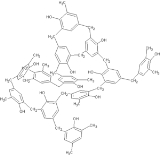
Phenol formaldehyde resins (PF) include synthetic thermosetting resin
Resin
Resin in the most specific use of the term is a hydrocarbon secretion of many plants, particularly coniferous trees. Resins are valued for their chemical properties and associated uses, such as the production of varnishes, adhesives, and food glazing agents; as an important source of raw materials...

s such as obtained by the reaction of phenols
Phenols
In organic chemistry, phenols, sometimes called phenolics, are a class of chemical compounds consisting of a hydroxyl group bonded directly to an aromatic hydrocarbon group...

 with formaldehyde
Formaldehyde
Formaldehyde is an organic compound with the formula CH2O. It is the simplest aldehyde, hence its systematic name methanal.Formaldehyde is a colorless gas with a characteristic pungent odor. It is an important precursor to many other chemical compounds, especially for polymers...

. Sometimes the precursors include other aldehydes or other phenol. Phenolic resins are mainly used in the production of circuit boards. They are better known however for the production of molded products including pool
Billiards
Cue sports , also known as billiard sports, are a wide variety of games of skill generally played with a cue stick which is used to strike billiard balls, moving them around a cloth-covered billiards table bounded by rubber .Historically, the umbrella term was billiards...

 balls, laboratory countertops, and as coatings and adhesive
Adhesive
An adhesive, or glue, is a mixture in a liquid or semi-liquid state that adheres or bonds items together. Adhesives may come from either natural or synthetic sources. The types of materials that can be bonded are vast but they are especially useful for bonding thin materials...

s. In the form of Bakelite, they are the earliest commercial synthetic resin.

Formation and structure


Phenol-formaldehyde resins, as a group, are formed by a step-growth polymerization
Step-growth polymerization
Step-growth polymerization refers to a type of polymerization mechanism in which bi-functional or multifunctional monomers react to form first dimers, then trimers, longer oligomers and eventually long chain polymers. Many naturally occurring and some synthetic polymers are produced by step-growth...

 reaction that can be either acid
Acid
An acid is a substance which reacts with a base. Commonly, acids can be identified as tasting sour, reacting with metals such as calcium, and bases like sodium carbonate. Aqueous acids have a pH of less than 7, where an acid of lower pH is typically stronger, and turn blue litmus paper red...

- or base
Base (chemistry)
For the term in genetics, see base A base in chemistry is a substance that can accept hydrogen ions or more generally, donate electron pairs. A soluble base is referred to as an alkali if it contains and releases hydroxide ions quantitatively...

-catalysed. Since formaldehyde exists predominantly in solution as a dynamic equilibrium of methylene glycol oligomers, the concentration of the reactive form of formaldehyde depends on temperature and pH.

Phenol is reactive towards formaldehyde at the ortho
Arene substitution patterns
Arene substitution patterns are part of organic chemistry IUPAC nomenclature and pinpoint the position of substituents other than hydrogen in relation to each other on an aromatic hydrocarbon.- Ortho, meta, and para substitution :...

 and para
Arene substitution patterns
Arene substitution patterns are part of organic chemistry IUPAC nomenclature and pinpoint the position of substituents other than hydrogen in relation to each other on an aromatic hydrocarbon.- Ortho, meta, and para substitution :...

 sites (sites 2, 4 and 6) allowing up to 3 units of formaldehyde to attach to the ring. The initial reaction in all cases involves the formation of a hydroxymethyl phenol:
HOC6H5 + CH2O → HOC6H4CH2OH

The hydroxymethyl group is capable of reacting with either another free ortho or para site, or with another hydroxymethyl group. The first reaction gives a methylene bridge, and the second forms an ether
Ether
Ethers are a class of organic compounds that contain an ether group — an oxygen atom connected to two alkyl or aryl groups — of general formula R–O–R'. A typical example is the solvent and anesthetic diethyl ether, commonly referred to simply as "ether"...

 bridge:
HOC6H4CH2OH + HOC6H5 → (HOC6H4)2CH2 + H2O

The diphenol (HOC6H4)2CH2 (sometimes called a "dimer") is called bisphenol F
Bisphenol
The bisphenols are a group of chemical compounds with two hydroxyphenyl functionalities. Most of them based on diphenylmethane. The exceptions are Bisphenol S, P, and M ....

, which is itself an important monomer in the production of epoxy resins. Bisphenol-F can further link generating tri- and tetra-and higher phenol oligomers.
2 HOC6H4CH2OH → (HOC6H4CH2)2O + H2O

Novolac


Novolacs (originally Novolak, the name given by Leo Baekeland
Leo Baekeland
Leo Hendrik Baekeland was a Belgian chemist who invented Velox photographic paper and Bakelite , an inexpensive, nonflammable, versatile, and popular plastic, which marks the beginning of the modern plastics industry.-Career:Leo Baekeland was born in Sint-Martens-Latem near Ghent, Belgium,...

),are phenol-formaldehyde resins made where the molar ratio of formaldehyde to phenol of less than one. The polymerization is brought to completion using acid-catalysis. The phenol units are mainly linked by methylene groups. Novolacs are commonly used as photoresist
Photoresist
A photoresist is a light-sensitive material used in several industrial processes, such as photolithography and photoengraving to form a patterned coating on a surface.-Tone:Photoresists are classified into two groups: positive resists and negative resists....

s. See also photolithography
Photolithography
Photolithography is a process used in microfabrication to selectively remove parts of a thin film or the bulk of a substrate. It uses light to transfer a geometric pattern from a photomask to a light-sensitive chemical "photoresist", or simply "resist," on the substrate...

. The molecular weights are in the low thousands, corresponding to about 10-20 phenol units.

Hexamethylene tetramine or "hexamine
Hexamine
Hexamethylenetetramine is a heterocyclic organic compound with the formula 6N4. This white crystalline compound is highly soluble in water and polar organic solvents. It has a cage-like structure similar to adamantane. It is useful in the synthesis of other chemical compounds, e.g. plastics,...

" is a hardener that is added to crosslink novolac. At ≥180 °C, the hexamine forms crosslinks to form methylene and dimethylene amino bridges.

Resols


Base-catalysed phenol-formaldehyde resins are made with a formaldehyde to phenol ratio of greater than one (usually around 1.5). These resins are called resols. Phenol, formaldehyde, water and catalyst are mixed in the desired amount, depending on the resin to be formed, and are then heated. The first part of the reaction, at around 70 °C, forms a thick reddish-brown tacky material, which is rich in hydroxymethyl and benzylic ether groups.

The rate of the base-catalysed reaction initially increases with pH
PH
In chemistry, pH is a measure of the acidity or basicity of an aqueous solution. Pure water is said to be neutral, with a pH close to 7.0 at . Solutions with a pH less than 7 are said to be acidic and solutions with a pH greater than 7 are basic or alkaline...

, and reaches a maximum at about pH = 10. The reactive species is the phenoxide anion (C6H5O-) formed by deprotonation of phenol. The negative charge is delocalised over the aromatic ring, activating sites 2, 4 and 6, which then react with the formaldehyde.

Being thermosets
Thermosetting plastic
A thermosetting plastic, also known as a thermoset, is polymer material that irreversibly cures. The cure may be done through heat , through a chemical reaction , or irradiation such as electron beam processing.Thermoset materials are usually liquid or malleable prior to curing and designed to be...

, hydroxymethyl phenols will crosslink on heating to around 120 °C to form methylene and methyl ether bridges. At this point the resin is a 3-dimensional network, which is typical of polymerised phenolic resins. The high crosslinking gives this type of phenolic resin its hardness, good thermal stability, and chemical imperviousness.

Crosslinking and the phenol/formaldehyde ratio


When the molar ratio of formaldehyde:phenol reaches one, in theory every phenol is linked together via methylene bridges, generating one single molecule, and the system is entirely crosslinked. This is why bakelites (F:P <1) don't harden without the addition of a crosslinking agent, and why resins with the formula F:P >1 will.

Applications


Phenolic resins are found in myriad industrial products. Phenolic laminate
Laminate
A laminate is a material that can be constructed by uniting two or more layers of material together. The process of creating a laminate is lamination, which in common parlance refers to the placing of something between layers of plastic and gluing them with heat and/or pressure, usually with an...

s are made by impregnating one or more layers of a base material such as paper
Paper
Paper is a thin material mainly used for writing upon, printing upon, drawing or for packaging. It is produced by pressing together moist fibers, typically cellulose pulp derived from wood, rags or grasses, and drying them into flexible sheets....

, fiberglass
Fiberglass
Glass fiber is a material consisting of numerous extremely fine fibers of glass.Glassmakers throughout history have experimented with glass fibers, but mass manufacture of glass fiber was only made possible with the invention of finer machine tooling...

 or cotton
Cotton
Cotton is a soft, fluffy staple fiber that grows in a boll, or protective capsule, around the seeds of cotton plants of the genus Gossypium. The fiber is almost pure cellulose. The botanical purpose of cotton fiber is to aid in seed dispersal....

 with phenolic resin and laminating the resin-saturated base material under heat and pressure. The resin fully polymerizes (cures) during this process. The base material choice depends on the intended application of the finished product. Paper phenolics are used in manufacturing electrical components such as punch-through boards and household laminates. Glass phenolics are particularly well suited for use in the high speed bearing
Bearing (mechanical)
A bearing is a device to allow constrained relative motion between two or more parts, typically rotation or linear movement. Bearings may be classified broadly according to the motions they allow and according to their principle of operation as well as by the directions of applied loads they can...

 market. Phenolic micro-balloons are used for density control. Snooker balls as well as balls from many table-based ball games are also made from Phenol formaldehyde resin.

The Dutch forger Han van Meegeren
Han van Meegeren
Han van Meegeren , born Henricus Antonius van Meegeren, was a Dutch painter and portraitist, and is considered to be one of the most ingenious art forgers of the 20th century....

 mixed phenol formaldehyde with his oil paints before baking the finished canvas in order to fake the drying out of the paint over the centuries.

Trade names

  • Bakelaque is a rigid laminate or tube made from phenolic resin on a substrate cotton fabric, paper or glass.
  • Bakelite is made from Phenol resin and wood flour
    Wood flour
    Wood flour is finely pulverized wood that has a consistency fairly equal to sand or sawdust, but can vary considerably, with particles ranging in size from a fine powder to roughly the size of a grain of rice. Most wood flour manufacturers are able to create batches of wood flour that have the...

    .
  • Novotext
    Novotext
    Novotext is a trade name for cotton textile-phenolic resin, essentially cotton-reinforced Bakelite. It was often used in car engines for gear wheels used to provide a direct drive to the camshaft as it is flexible and quiet-running. The material is known under various other names such as Turbax,...

     is cotton fibre-reinforced phenolic, using randomly oriented fibres.
  • Oasis
    Oasis (horticulture)
    Smithers-Oasis is a company specializing in floristry products. The company created water-absorbing foam in 1954 and leads manufacturing and marketing of various products in the global florist industry.- Wet floral foam :...

     is "[a]n open-celled phenolic foam that readily absorbs water and is used as a base for flower arrangements."
  • Paxolin Paperstone] and Richlite
    Richlite
    Richlite is a dense material made from partially recycled paper and phenolic resin. Phenolic resin is made of formeldahyde and phenol. Individually, these are potent chemicals, but create a harmless, inert substance when combined...

    are made from phenolic resin and paper.
  • Trymer Green is a rigid cellular phenolic thermal insulation.
  • Tufnol is made from phenolic resin and woven cotton or linen fabric.

External links