
All Topics  
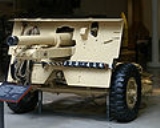
Ordnance QF 25 pounder

 
Ordnance QF 25 Pounder

   Email Print
   Bookmark   Link


Ordnance QF 25 pounder


The Ordnance QF 25 pounder (3.45" / 87.6mm bore), or more simply, 25-pounder or 25-pdr, was introduced into service just before World War II
World War II

World War II, or the Second World War , was a global military conflict which involved a Participants in World War II, including all of the great powers, organised into two opposing military alliances: the Allies of World War II and the Axis powers....
, during which it served as the major British
United Kingdom

The United Kingdom of Great Britain and Northern Ireland, commonly known as the United Kingdom , the UK or Britain,is a sovereign state located off the northwestern coast of continental Europe....
 field gun
Field gun

A field gun is an artillery piece.Originally the term referred to smaller guns that could accompany a field army on the march and when in combat could be moved about the battlefield in response to changing circumstances....
/howitzer
Howitzer

A howitzer is a type of artillery piece that is characterized by a relatively short Barrel and the use of comparatively small explosive charges to propel projectiles at trajectories with a steep angle of descent....
. It was considered by many to be the best field artillery piece of the war, combining high rates of fire with a reasonably lethal shell in a highly mobile piece. It was the British Army
British Army

The British Army is the Army branch of the British Armed Forces. It came into being with the unification of the Kingdoms of Kingdom of England and Kingdom of Scotland into the Kingdom of Great Britain in 1707....
's primary artillery
Artillery

Artillery is a military Combat Arms which employs any apparatus, machine, an assortment of tools or instruments, a system or systems used as weapons for the discharge of large projectiles in combat as a major contribution of fire power within the overall military capability of an armed force....
 field piece well into the 1960s, with smaller numbers served in training units until the 1980s.


Discussion
Ask a question about 'Ordnance QF 25 pounder'
Start a new discussion about 'Ordnance QF 25 pounder'
Answer questions from other users
Full Discussion Forum


Recent Posts


Encyclopedia


The Ordnance QF 25 pounder (3.45" / 87.6mm bore), or more simply, 25-pounder or 25-pdr, was introduced into service just before World War II
World War II

World War II, or the Second World War , was a global military conflict which involved a Participants in World War II, including all of the great powers, organised into two opposing military alliances: the Allies of World War II and the Axis powers....
, during which it served as the major British
United Kingdom

The United Kingdom of Great Britain and Northern Ireland, commonly known as the United Kingdom , the UK or Britain,is a sovereign state located off the northwestern coast of continental Europe....
 field gun
Field gun

A field gun is an artillery piece.Originally the term referred to smaller guns that could accompany a field army on the march and when in combat could be moved about the battlefield in response to changing circumstances....
/howitzer
Howitzer

A howitzer is a type of artillery piece that is characterized by a relatively short Barrel and the use of comparatively small explosive charges to propel projectiles at trajectories with a steep angle of descent....
. It was considered by many to be the best field artillery piece of the war, combining high rates of fire with a reasonably lethal shell in a highly mobile piece. It was the British Army
British Army

The British Army is the Army branch of the British Armed Forces. It came into being with the unification of the Kingdoms of Kingdom of England and Kingdom of Scotland into the Kingdom of Great Britain in 1707....
's primary artillery
Artillery

Artillery is a military Combat Arms which employs any apparatus, machine, an assortment of tools or instruments, a system or systems used as weapons for the discharge of large projectiles in combat as a major contribution of fire power within the overall military capability of an armed force....
 field piece well into the 1960s, with smaller numbers served in training units until the 1980s. Many Commonwealth of Nations
Commonwealth of Nations

The Commonwealth of Nations, also known as the Commonwealth or the British Commonwealth, is an intergovernmental organization of fifty-three independent member states....
 countries used theirs in active or reserve service until about the 1970s and ammunition for the weapon is currently being produced by Pakistan Ordnance Factories
Pakistan Ordnance Factories

Pakistan Ordnance Factories or POF was founded in 1951 with the primary objective of producing arms and ammunition for the armed forces of Pakistan....
.

Design

The design was the result of extended studies looking to replace both the 18 pounder
Ordnance QF 18 pounder

The 18-pounder Gun was the larger of the standard British Army field guns of the World War I era. It remained in service through the interwar period but was replaced during the Second World War....
 (3.3" / 84 mm bore) field gun and the 4.5-inch howitzer
QF 4.5 inch Howitzer

The Ordnance QF 4.5 inch Howitzer was the standard British Empire field howitzer of The First World War.QF stands for "Quick Firing". In British use this referred to the usage of a brass cartridge case to hold and load the propellant charge, hence facilitating loading, with the cartridge case providing obturation, or sealing the chamber,...
 (114.3 mm bore), which had been the main field artillery equipments during the First World War. The basic idea was to build a single weapon with the direct-fire capability of the 18 pounder and the high-angle fire of the howitzer, firing a shell about half way between the two in size, around 3.5 to 4 in (90 to 100 mm) of about 30 pounds (14 kg).

Development during the inter-war period was severely hampered by a lack of money, and it was eventually decided to build a "new" design from existing 18 pounders by converting barrels, but designing a new barrel and carriage for production when funds were available. The result was a 3.45 in (87.6 mm) weapon firing a 25 pound (11 kg) HE shell. It was mounted on late model 18 pounder carriages. One of these used a firing platform and this configuration was adopted for the new build guns. The firing platform was lowered and the gun pulled onto it, providing a flat surface that allowed the gunners to quickly turn the weapon in any direction.

Iwm H 20971 Morris C8 Slaght Bridge 19420626
Unlike the 18 pounder, the 25 pounder used howitzer type variable charge ammunition. For the Mk 1 Ordnance on 18 pounder carriage this was limited to three different "charges", Charge 1, 2 and 3 in a single cartridge. The 'proper' 25-pdr, Mk 2 Ordnance on Mk 1 Carriage, also had charge super in a separate cartridge. An increment for charge super was introduced in 1942 to provide higher velocity for anti-tank shot. Subsequently these increments were added to charges 2 and 3 to give an additional three combinations charges for use with upper register (high angle) fire. The introduction of the increment to charge super necessitated the addition of the muzzle-brake. 25-pdr was separate loading, the shell was loaded and rammed then the cartridge in its brass case was loaded and the breech closed. In British terminology the 25 pounder was called "QF"
British ordnance terms

This article explains terms used to describe the British Armed Forces' ordnance used in World War I and World War II. Note that the terms may have slightly different meanings in the military of other countries....
 because the cartridge case provided obturation (it provided the gas seal in the breech).

In common with all British guns of the period the indirect fire sight was 'calibrating'. This meant that the range, not elevation angle, was set on the sight. The sight compensated for the difference in the gun's muzzle velocities from standard. The gun was also fitted with a direct fire telescope for use with armour piercing shot. It also used 'one-man laying' in accordance with normal British practice.

An important part of the gun was the ammunition limber
Caisson (military)

A limber is a two-wheeled cart designed to support the trail of an artillery piece, allowing it to be towed. A caisson is a two-wheeled cart designed to carry ammunition; it was frequently towed before the limber....
 (trailer). The gun was hitched to it and the trailer hitched to the tractor when on tow. However, the gun did not need a limber and could be hooked directly to a tractor. The trailer carried ammunition (thirty-two rounds). Ammunition was also carried in the gun tractor along with the detachment and various gun stores. Some stores, such as sights, were carried cased on the gun. Each section (two guns) had a third tractor that carried ammunition and towed two ammunition trailers.

The gun detachment comprised the following: No 1 - detachment commander (a sergeant), No 2 - operated the breech and rammed the shell, No 3 - layer, No 4 - loader, No 5 - ammunition, No 6 - ammunition, normally the 'coverer' - second in command and responsible for ammunition preparation and operating the fuze indicator.

The official 'reduced detachment' was 4 men.

Ammunition

The 25 pounder's main ammunition was the High Explosive (HE) shell, but it could fire base ejection smoke, star and flare shells, chemical shells
Shell (projectile)

A shell is a payload-carrying projectile, which, as opposed to Round shot, contains an explosive or other filling, though modern usage includes large solid projectiles previously termed shot ....
, and smoke shells were sometimes reloaded with propaganda leaflets. In the direct fire role, the 25 pdr was also supplied with a limited amount of 20 pound (9 kg) solid armour piercing (AP
Armor-piercing shot and shell

An armor-piercing shell is a type of ammunition designed to penetrate armor. From the 1860s to 1950s, a major application of armor-piercing projectiles was to defeat the thick armor carried on many warships....
) shot, later replaced with a more potent version with a ballistic cap. A shaped charge
Shaped charge

A shaped charge is an explosive charge shaped to focus the effect of the explosive's energy. Various types are used to cut and form metal, initiate nuclear weapons, and penetrate armour....
 anti-tank shell was under development in Canada, but the introduction of the 17 Pounder dedicated anti-tank gun ended its development. After the Second World War UK replaced AP shot with a HESH
High explosive squash head

High explosive squash head is a type of explosive ammunition that is effective against buildings and is also used against tank vehicle armour....
 shell.

British Service

The 25 pounder was the main field artillery gun used by British Commonwealth
Commonwealth of Nations

The Commonwealth of Nations, also known as the Commonwealth or the British Commonwealth, is an intergovernmental organization of fifty-three independent member states....
 infantry and armoured divisions of all types during the Second World War. Throughout the war each British-pattern infantry division was established with seventy two 25 pounders. After mid 1940 each of the division's three field Regiments being issued with 24 guns organised into three 8 gun batteries, before mid 1940 each regiment had two batteries of 12 guns. Armoured divisions had two regiments, from 1944 one of these was equipped with the self-propelled 25-pdr nicknamed Sexton.

Normally the gun was towed, with its limber, usually behind a Morris C8
Morris C8

The Morris Commercial C8 FAT commonly known as a Quad was an artillery tractor of the British and Commonwealth forces during World War II....
 4x4 Field Artillery Tractor called a "Quad". The early 18/25 pdrs had been towed in the field by the Dragon Medium Mark IV
Vickers 6-Ton

The Vickers 6-Ton Tank or Vickers Mark E was a United Kingdom tank designed as a private project at Vickers. It was not purchased by the British Army, but was picked up by a large number of foreign armed forces and was copied almost exactly by the Soviets as the T-26....
 a tracked vehicle derived from a light tank. After seeing the utility of the M7 Priest
M7 Priest

The 105mm Howitzer Motor Carriage M7 was an United States self-propelled artillery vehicle produced during World War II. It was given the official nickname Priest in British service, due to the pulpit-like machine gun ring and following on from the Bishop self propelled gun, the full designation when in British service was 105mm SP...
, the British introduced the similar Canadian-designed and -built Sexton
Sexton (artillery)

The 25pdr SP, tracked, Sexton was a self-propelled artillery vehicle of World War II, based on an United States tank hull design, built by Canada for the British Army, and associated Commonwealth forces, and some of the other Allies....
, mounting the 25 pdr on a Ram tank
Ram tank

The Tank Cruiser, Ram was a Cruiser tank designed and built by Canada in the Second World War, based on the U.S. M3 Lee tank....
 chassis (itself based on the M3 Lee
M3 Lee

The Medium Tank M3 was an United States tank used during World War II. In United Kingdom the tank was called "General Lee" named after General Robert E....
). Before Sexton the Bishop
Bishop (artillery)

The Bishop was a United Kingdom self-propelled artillery vehicle based on the Valentine tank. A result of a rushed attempt to create a self-propelled gun armed with the Ordnance QF 25 pounder gun-howitzer, the vehicle had numerous problems, was produced in limited numbers and was soon replaced by better designs....
 had been introduced using the Valentine tank
Valentine tank

The most numerous United Kingdom manufactured tank of World War II, the Tank, Infantry, Mk III, Valentine was known mainly for its low cost and high reliability....
 chassis.

Even by WWII standards, the 25 pdr was at the smaller-end of the scale although it had longer range than most other field equipments. However, it was designed to support the proven British doctrine of suppressive (neutralising) fire, not the concept of destructive fire that had proved illusory in the early years of World War I. Most forces had entered the war with even smaller 75 mm designs, but had quickly moved to 105 mm and larger weapons. Nevertheless the 25 pdr was considered by all to be one of the best artillery pieces in use. The devastation caused by the gun (and the speed at which the British artillery control system could respond) in Normandy and the rest of North-West Europe made many German soldiers believe that the British had secretly deployed an automatic 25 pounder. The introduction of NATO
NATO

The North Atlantic Treaty Organization , also called the Atlantic Alliance, is a military alliance established by the signing of the North Atlantic Treaty on 4 April 1949....
 standardization led to the replacement of the gun with the 105 mm. The last British military unit to fire the gun in its field role (as opposed to in a ceremonial role) was the Gun Troop of the Honourable Artillery Company
Honourable Artillery Company

The Honourable Artillery Company is the oldest surviving regiment in the British Army, and the second most senior in the Territorial Army....
 on Salisbury Plain
Salisbury Plain

Salisbury Plain is a chalk plateau in central southern England covering . It is part of the Southern England Chalk Formation and largely lies within the county of Wiltshire, with a little in Hampshire....
 in 1992.

Service With Other Nations

The gun was designated as the G1 by the South African Defence Force
South African Defence Force

The South African Defence Force was the South African armed forces from 1957 until 1994. The former Union Defence Force was renamed to the South African Defence Force in the Defence Act of 1957....
. It was extensively used in the early stages of the South African Border War
South African Border War

The South African Border War, also known as the Namibian War of Independence, refers to the conflict that took place from 1966 to 1989 in South-West Africa and Angola between South Africa and its allied forces on the one side and the Angolan government, South-West Africa People's Organisation , and their allies mainly the Soviet Unio...
, including Operation Savannah
Operation Savannah (Angola)

Operation Savannah was the name given to the South African Defence Force's 1975?1976 covert intervention in the Angolan War of Independence....
. The G1 is still used in the ceremonial role. The Rhodesian Army used the weapon during the Bush War, but by this stage the round couldn't penetrate enemy bunkers.

The 25-pounder was extensively used by the Sri Lankan Army
Sri Lankan Army

The Sri Lanka Army is the oldest and largest of the Sri Lanka Armed Forces and is responsible for army and humanitarian operations. Established as the Ceylon Army in 1949, it was renamed when Sri Lanka became an independent republic in 1972....
 during the early years of the Sri Lankan civil war
Sri Lankan civil war

The Sri Lankan Civil War is the name given to the ongoing conflict on the island-nation of Sri Lanka. Since 23 July 1983, there has been on-and-off civil war, predominantly between the Government of Sri Lanka and the Liberation Tigers of Tamil Eelam , a Separatism armed organization which fights for the creation of an Independence state named...
. It still remains in service, although only in a ceremonial role.

The Mk.III is still in service in the Irish Reserve Defence Forces (RDF) and a significant number are held in active reserve by the Cypriot National Guard
Cypriot National Guard

The Cypriot National Guard , also known as the Greek Cypriot National Guard, is the combined arms military force of the Cyprus comprising land, air, and naval elements....
. The Irish Army also maintain a 6 gun ceremonial 25pdr battery for use in state occasions. The 25pdr is the longest serving weapon in the Irish Army, having been introduced in 1949, and continuing to be popular with gun crews today.

Since leaving UK service, the last users of the 25-pounder in combat have been the Special Air Service
Special Air Service

The Special Air Service is a special forces regiment within the British Army which has served as a model for the special forces of other countries....
 advisors to the Omani Army during the 1972 Battle of Mirbat
Battle of Mirbat

The Battle of Mirbat took place on 19 July 1972 during the Dhofar Rebellion in Oman, which was supported by Communist Guerrilla warfares from South Yemen....
 in Oman
Oman

Oman , officially the Sultanate of Oman , is an Arab country in southwest Asia on the southeast coast of the Arabian Peninsula. It borders the United Arab Emirates on the northwest, Saudi Arabia on the west and Yemen on the southwest....
, the Cypriot National Guard
Cypriot National Guard

The Cypriot National Guard , also known as the Greek Cypriot National Guard, is the combined arms military force of the Cyprus comprising land, air, and naval elements....
 during the 1974 Turkish invasion of Cyprus
Turkish invasion of Cyprus

The Turkish invasion of Cyprus, launched on 20 July 1974, was a Turkey military operation against a coup which had been staged by the Cypriot National Guard against president Makarios III with the intention of annexing the island to Greece, but the invasion ended up with Turkey occupying a considerable area on the north part of it and establi...
, and by Kurdish militias in northern Iraq in 2003.

Variants


Mark I

Known officially as the Ordnance, Quick Firing 25 pounder Mark I on Carriage 18-pr Mark IV, or Ordnance, Quick Firing 25 pounder Mark I on Carriage 18-pr Mark V and commonly called the 18/25-pr. The Mark IV carriage was a box trail, Mark V was a split trail. These conversions of the 18 pdr first entered British service in the late 1930s. A few were lost in the Norwegian campaign
Norwegian Campaign

The Norwegian Campaign, was the name used by the Allies of World War II United Kingdom and France for their first direct land confrontation with the military forces of Nazi Germany in World War II....
 and 704 in France, leaving about the same number in UK's global stocks. They served in North Africa (until about late 1941) and Malaya. This mark of 25 pdr was limited to charge 3 due to its 18 pdr carriage.

Mark II

Qf 25 Pounder Beyt Hatotchan 2
The Mark II, fitted to the Mark 1 carriage was the standard gun during World War 2. They were built in Australia and Canada but mostly in UK. Deliveries (from UK production) started at the beginning of 1940 and first entered service with a Canadian regiment stationed in UK during May 1940. No Ordnance 25-pr Mk 2 on Carriage 25-pr Mark 1 were lost in France. This gun fired all charges, 1 - 3 and Super. A later addition were charge increments. These were added to Charge Super for direct fire anti-tank and necessitated the adoption of a muzzle brake
Muzzle brake

Muzzle brakes and recoil compensators are devices that are fitted to the firearm muzzle of a firearm or cannon to redirect propellant gases with the effect of countering both recoil of the gun and unwanted rising of the barrel during rapid fire....
 to reduce recoil. Guns with this modification were known as the Mark 2/1. The distinctive brake is a well-known feature of the gun that makes it easily recognized.

Mark III

The Mark III ordnance was a Mk. II with a modified receiver to prevent the rounds from slipping back out when loading at high angles. With the muzzle brake they became the Mark III/1, while the Mark IV were identical new-build versions which all featured the brake.

In Burma a local modification produced a narrower wheelbase (by about 20-inches) called the Jury Axle. This was suitable for towing by Jeep and could be loaded into a Dakota
C-47 Skytrain

The Douglas C-47 Skytrain or Dakota is a military transport that was developed from the Douglas DC-3 airliner. It was used extensively by the Allies during World War II and remained in front line operations through the 1950s with a few remaining in operation to this day....
 aircraft. It was subsequently adopted officially with other minor modifications and a new platform for the narrow wheelbase as the Carriage 25 pdr Mark 2. The Mark 3 Carriage, also narrow, included a hinge to make it easier to fire the gun in the upper register (high angle). High angle fire had been introduced in Italy and used the increments originally introduced for anti-tank fire, adding them to charges 2 and 3 to give 25-pdr 7 charges.

Short, Mark I

Short 25pdr
The 25 pounder Short Mark I, or Baby 25 pr, was an Australia
Australia

Australia, officially the Commonwealth of Australia, is a country in the southern hemisphere comprising the Australia of the world's smallest continent, the major island of Tasmania, and numerous list of islands of Australia in the Indian Ocean and Pacific Oceans....
n pack gun version of the 25 pounder, first produced in 1943. This was a shortened version of the standard 25 pounder, mounted on the Carriage 25 pr Light, Mark 1. The Baby was intended for jungle combat
Combat

Combat, or fighting, is purposeful violence conflict intended to establish dominance over the opposition.The term "combat" typically refers to armed conflict between military forces in warfare, whereas the more general term "fighting" can refer to any violent conflict....
 and was used by only Australian units in the South West Pacific
Pacific War

The Pacific War was the part of World War II?and preceding conflicts?that took place in the Pacific Ocean, its islands, and in East Asia, between July 7, 1937 and August 14, 1945....
 Theatre, during World War II
World War II

World War II, or the Second World War , was a global military conflict which involved a Participants in World War II, including all of the great powers, organised into two opposing military alliances: the Allies of World War II and the Axis powers....
. The gun could be towed by a light vehicle or broken down into 13 sections. During the campaign in New Guinea the gun could be manhandled up steep jungle tracks where trucks could not operate.

External links