
Home      Discussion      Topics      Dictionary      Almanac
Signup       Login
Nyingma

Nyingma

Overview

Discussion
Ask a question about 'Nyingma'
Start a new discussion about 'Nyingma'
Answer questions from other users
Full Discussion Forum
 
Unanswered Questions
Encyclopedia

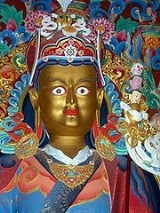
The Nyingma tradition is the oldest of the four major schools of Tibetan Buddhism
Tibetan Buddhism
Tibetan Buddhism is the body of Buddhist religious doctrine and institutions characteristic of Tibet and certain regions of the Himalayas, including northern Nepal, Bhutan, and India . It is the state religion of Bhutan...

 (the other three being the Kagyu
Kagyu
The Kagyu, Kagyupa, or Kagyud school, also known as the "Oral Lineage" or Whispered Transmission school, is today regarded as one of six main schools of Himalayan or Tibetan Buddhism, the other five being the Nyingma, Sakya, Jonang, Bon and Gelug...

, Sakya
Sakya
The Sakya school is one of four major schools of Tibetan Buddhism, the others being the Nyingma, Kagyu, and Gelug...

 and Gelug
Gelug
The Gelug or Gelug-pa , also known as the Yellow Hat sect, is a school of Buddhism founded by Je Tsongkhapa , a philosopher and Tibetan religious leader...

). "Nyingma" literally means "ancient," and is often referred to as Nga'gyur or the "old school" because it is founded on the first translations of Buddhist scriptures from Sanskrit
Sanskrit
Sanskrit , is a historical Indo-Aryan language and the primary liturgical language of Hinduism, Jainism and Buddhism.Buddhism: besides Pali, see Buddhist Hybrid Sanskrit Today, it is listed as one of the 22 scheduled languages of India and is an official language of the state of Uttarakhand...

 into Tibetan
Tibetan language
The Tibetan languages are a cluster of mutually-unintelligible Tibeto-Burman languages spoken primarily by Tibetan peoples who live across a wide area of eastern Central Asia bordering the Indian subcontinent, including the Tibetan Plateau and the northern Indian subcontinent in Baltistan, Ladakh,...

, in the eighth century. The Tibetan script
Tibetan script
The Tibetan alphabet is an abugida of Indic origin used to write the Tibetan language as well as the Dzongkha language, Denzongkha, Ladakhi language and sometimes the Balti language. The printed form of the alphabet is called uchen script while the hand-written cursive form used in everyday...

 and grammar was actually created for this endeavour. In modern times the Nyingma lineage has been centered in Kham
Kham
Kham , is a historical region covering a land area largely divided between present-day Tibetan Autonomous Region and Sichuan province, with smaller portions located within Qinghai, Gansu and Yunnan provinces of China. During the Republic of China's rule over mainland China , most of the region was...

 in eastern Tibet.

Early lineage and traditions


The Nyingma tradition actually comprises several distinct lineages that all trace their origins to the India
India
India , officially the Republic of India , is a country in South Asia. It is the seventh-largest country by geographical area, the second-most populous country with over 1.2 billion people, and the most populous democracy in the world...

n master Padmasambhava
Padmasambhava
Padmasambhava ; Mongolian ловон Бадмажунай, lovon Badmajunai, , Means The Lotus-Born, was a sage guru from Oddiyāna who is said to have transmitted Vajrayana Buddhism to Bhutan and Tibet and neighbouring countries in the 8th century...

, who is lauded in the popular canon as the founder of Tibetan Buddhism and is still propitiated in the discipline of reciprocity that is guru yoga sadhana
Sadhana
Sādhanā literally "a means of accomplishing something" is ego-transcending spiritual practice. It includes a variety of disciplines in Hindu, Sikh , Buddhist and Muslim traditions that are followed in order to achieve various spiritual or ritual objectives.The historian N...

, the staple of the tradition(s).

Historically, Nyingmapa are categorised into Red Sangha and White Sangha. Red Sangha denotes a celibate, monastic practitioner; whereas White Sangha denotes a non-celibate practitioner who abstains from vows of celibacy. At different times in one's life, due to changing circumstances and proclivities, individuals historically moved between these two Sanghas. Rarely was either determination of Red or White for the duration of one's life.

Nyingma maintains the earliest tantric
Vajrayana
Vajrayāna Buddhism is also known as Tantric Buddhism, Tantrayāna, Mantrayāna, Secret Mantra, Esoteric Buddhism and the Diamond Vehicle...

 teachings which have been given the popular nomenclature of Vajrayana
Vajrayana
Vajrayāna Buddhism is also known as Tantric Buddhism, Tantrayāna, Mantrayāna, Secret Mantra, Esoteric Buddhism and the Diamond Vehicle...

. Early Vajrayana that was transmitted from India to Tibet may be differentiated by the specific term 'Mantrayana' . 'Mantrayana' is the Sanskrit of what became rendered in Tibetan as "Secret Mantra" : gsang sngags is the self-identifying term employed in the earliest literature, whereas Nyingma became associated in differentiation from the "New Schools" Sarma
Sarma (Tibetan Buddhism)
Sarma In Tibetan Buddhism, the Sarma schools include the three newest of the four main schools, comprising:*Kagyu*Sakya*Kadam/Gelukand their sub-branches.The Nyingma school is the sole Ngagyur or "old translation," school....

.

Geographical dissemination of Buddhism into the Tibetan plateau


Dargyay (1998: p. 5) provides a sound case that:

...at least in Eastern Tibet, there existed during and after the time of Lha-tho-tho-ri [Fl.173(?)-300(?) CE] a solid knowledge of Buddhism and that the upper classes of the people were faithfully devoted to it. But the border regions in the north and west probably had also come into contact with Buddhism long before the time of Srong-btsan-sgam-po. Buddhist teachings reached China via a route along the western and northern borders of the Tibetan culture and language zone; the same route was travelled by Indian Pandits and Chinese pilgrims in their endeavour to bring this Indian religion to China. There used to be contacts with the Tibetan population in these border regions. It is possible that the knowledge gained from these encounters was spread by merchants over large areas of Tibet. Thus, when Srong-btsan-sgam-po succeeded to the throne of Tibet in the year 627, the country was ready for a systematic missionary drive under royal patronage.

Origins


Germano (2002: unpaginated) states:
While Buddhist figures and movements surely were active on the Tibetan plateau long before, Tibetan religious histories concentrate on events in the latter half of the eighth century as marking a watershed during which Buddhism definitively established itself within Tibetan culture. With the official sponsorship of the emperor Trisong Detsen (khri srong lde btsan), the first major monastery was established at Samye (bsam yas), a broad scale translation project of the Buddhist canon into a newly minted Tibetan literary language was initiated, and a variety of lineages began to take hold. The explosive developments were interrupted in the mid-ninth century as the Empire began to disintegrate, leading to a century-long interim of civil war and decentralization about which we know relatively little.


Around 760, King Trisong Detsen invited Padmasambhava
Padmasambhava
Padmasambhava ; Mongolian ловон Бадмажунай, lovon Badmajunai, , Means The Lotus-Born, was a sage guru from Oddiyāna who is said to have transmitted Vajrayana Buddhism to Bhutan and Tibet and neighbouring countries in the 8th century...

 and the Nalanda
Nalanda
Nālandā is the name of an ancient center of higher learning in Bihar, India.The site of Nalanda is located in the Indian state of Bihar, about 55 miles south east of Patna, and was a Buddhist center of learning from the fifth or sixth century CE to 1197 CE. It has been called "one of the...

 University abbot Śāntarakṣita (Tibetan Shiwatso) to Tibet to introduce Buddhism in the "Land of Snows." King Trisong Detsen ordered the translation of all Buddhist Dharma
Dharma
Dharma means Law or Natural Law and is a concept of central importance in Indian philosophy and religion. In the context of Hinduism, it refers to one's personal obligations, calling and duties, and a Hindu's dharma is affected by the person's age, caste, class, occupation, and gender...

 Texts into Tibetan. Padmasambhava, Shantarakṣita, 108 translators, and 25 of Padmasambhava's nearest disciples worked for many years in a gigantic translation-project. The translations from this period formed the base for the large scriptural transmission of Dharma teachings into Tibet. Padmasambhava supervised mainly the translation of Tantra
Tantra
Tantra , anglicised tantricism or tantrism or tantram, is the name scholars give to an inter-religious spiritual movement that arose in medieval India, expressed in scriptures ....

; Shantarakshita concentrated on the Sutra
Sutra
Sūtra is an aphorism or a collection of such aphorisms in the form of a manual. Literally it means a thread or line that holds things together and is derived from the verbal root siv-, meaning to sew , as does the medical term...

-teachings. Padmasambhava and Shantarakshita also founded the first Buddhist monastery Samye
Samye
The Samye Monastery or Samye Gompa is the first Buddhist monastery built in Tibet, was most probably first constructed between 775 and 779 CE under the patronage of King Trisong Detsen of Tibet who sought to revitalize Buddhism, which had declined since its introduction by King Songtsen Gampo in...

 on Tibetan ground. It was the main center for dharma transmission in Tibet during this age.

Chinese influence


Chinese Ch'an Buddhism was introduced during the Eighth Century to the Nyingmapa or 'Ancient School' of Tibetan Buddhism
Tibetan Buddhism
Tibetan Buddhism is the body of Buddhist religious doctrine and institutions characteristic of Tibet and certain regions of the Himalayas, including northern Nepal, Bhutan, and India . It is the state religion of Bhutan...

 in three principal streams of teachings. The lineages concerned were: Master Kim, Kim Ho-shang
Kim Ho-shang
Musang, Wu-hsiang, Master Kim, Kim Ho-shang, Chin ho shang, 金和尚 was a Korean Ch'an master whose teachings were amongst the first streams of Ch'an Buddhist transmitted to Tibet.Solonin links Tangut, Helanshan and Bao-tang Wu-zhu:...

, (Jin he shang) 金和尚 transmitted by Sang Shi who later became an abbot of Samye
Samye
The Samye Monastery or Samye Gompa is the first Buddhist monastery built in Tibet, was most probably first constructed between 775 and 779 CE under the patronage of King Trisong Detsen of Tibet who sought to revitalize Buddhism, which had declined since its introduction by King Songtsen Gampo in...

 Monastery in c750 CE; the lineage of Master Wu Zhu, 無住 of the Pao T'ang School was transmitted within Tibet by Ye shes dbang po; and the teachings from Mo Ho Yen, 和尚摩訶衍 that were a synthesis of the Northern School of Ch'an and the Pao T'ang School.

The Tibetan Dharma King Trisong Detsen
Trisong Detsen
Trisong Detsän or Trisong Detsen ཁྲི་སྲོང་ལྡེ་བཙན , was the son of Me Agtsom and one of the emperors of Tibet and ruled...

  hosted a famous two-year dharma debate, called Council of Lhasa
Council of Lhasa
The Council of Lhasa, also called the Council of Samye or the Great Debate, was a debate from 792 to 794 at the Samye Monastery in Tibet....

, from 792-794CE, known in Western scholarship as the "Council of Lhasa
Lhasa
Lhasa is the administrative capital of the Tibet Autonomous Region in the People's Republic of China and the second most populous city on the Tibetan Plateau, after Xining. At an altitude of , Lhasa is one of the highest cities in the world...

" (although it took place at Samye
Samye
The Samye Monastery or Samye Gompa is the first Buddhist monastery built in Tibet, was most probably first constructed between 775 and 779 CE under the patronage of King Trisong Detsen of Tibet who sought to revitalize Buddhism, which had declined since its introduction by King Songtsen Gampo in...

) outside the capital. As part of this debate Trisong Detsen invited the Ch'an master Mo-ho-yen (whose name consists of the same Chinese characters used to transliterate "Mahayana
Mahayana
Mahāyāna is one of the two main existing branches of Buddhism and a term for classification of Buddhist philosophies and practice...

") to debate with Kamalshila. Mo-ho-yen had been disseminating Dharma in the Tun-huang locale at the time. Moheyan lost the important philosophical debate on the nature of emptiness
Emptiness
Emptiness as a human condition is a sense of generalized boredom, social alienation and apathy. Feelings of emptiness often accompany dysthymia, depression, loneliness, despair, or other mental/emotional disorders such as borderline personality disorder...

 to the Indian master Kamalashila, and the king declared that Kamalashila's philosophy should form the basis for Tibetan Buddhism. As a result, the Mahayana tradition of Tibetan Buddhism has primarily been founded on the madhyamaka
Madhyamaka
Madhyamaka refers primarily to a Mahāyāna Buddhist school of Buddhist philosophy systematized by Nāgārjuna. Nāgārjuna may have arrived at his positions from a desire to achieve a consistent exegesis of the Buddha's doctrine as recorded in the āgamas...

 philosophy introduced by Kamalashila from India. In Tibet this is generally combined with the Vajrayana
Vajrayana
Vajrayāna Buddhism is also known as Tantric Buddhism, Tantrayāna, Mantrayāna, Secret Mantra, Esoteric Buddhism and the Diamond Vehicle...

 practice path introduced by Padmasambhava
Padmasambhava
Padmasambhava ; Mongolian ловон Бадмажунай, lovon Badmajunai, , Means The Lotus-Born, was a sage guru from Oddiyāna who is said to have transmitted Vajrayana Buddhism to Bhutan and Tibet and neighbouring countries in the 8th century...

, also during the Eighth Century.

However, a Chinese source states that Hwashang won the debate, and some scholars have concluded that the entire episode is fictitious. Pioneering Buddhologist Giuseppe Tucci
Giuseppe Tucci
Giuseppe Tucci was an Italian scholar of oriental cultures, specialising in Tibet and history of Buddhism. During its zenith, Tucci was a supporter of Italian Fascism, and he used idealized portrayals of Asian traditions to support Italian ideological campaigns...

 has speculated that Hwashang's ideas were preserved by the Nyingmapas in the form of the Dzogchen
Dzogchen
According to Tibetan Buddhism and Bön, Dzogchen is the natural, primordial state or natural condition of the mind, and a body of teachings and meditation practices aimed at realizing that condition. Dzogchen, or "Great Perfection", is a central teaching of the Nyingma school also practiced by...

 teachings. John Myrdhin Reynolds holds a very different point of view stating "Except for a brief flirtation with Ch'an in the early days of Buddhism in Tibet in the eighth century, the Tibetans exhibited almost no interest at all in Chinese Buddhism, except for translating a few Sutras from Chinese for which they did not possess Indian originals."

25 disciples


The miracle-powers of the 25 disciples of Padmasambhava are widely accepted among Tibetan Buddhists. These disciples were: King Trisong Detsen
Trisong Detsen
Trisong Detsän or Trisong Detsen ཁྲི་སྲོང་ལྡེ་བཙན , was the son of Me Agtsom and one of the emperors of Tibet and ruled...

, Namkhai Nyingpo
Namkhai Nyingpo
Namkhai Nyingpo is counted amongst the principal 'twenty-five disciples' of Padmasambhava...

, Nub Chen Sangye Yeshe
Nub Chen Sangye Yeshe
Nubchen Sangye Yeshe was one of the twenty-five principal students of Guru Padmasambhava, founder of the Nyingma school of Tibetan Buddhism...

, Gyalwa Choyang, the princess of Karchen Khandro Yeshe Tsogyal
Yeshe Tsogyal
Yeshe Tsogyal , was the consort of the great Indian tantric teacher Padmasambhava, the founder-figure of the Nyingma tradition of Tibetan Buddhism. Nyingma tradition considers her equal in realization to Padmasambhava himself. The meditational practices related to her, stress her enlightened...

, Palgyi Yeshe, Palgyi Senge, the great translator Vairotsana
Vairotsana
This article is about the Tibetan translator. For the primordial Buddha Vairocana, please see VairocanaVairotsana of 'Pagor' was a Tibetan translator living during the reign of King Trisong Detsen...

, Nyak Jnanakumara, Gyalmo Yudra Nyingpo, Nanam Dorje Dudjom, Yeshe Yang, Sokpo Lhapal, Nanam Zhang Yeshe De, Palgyi Wangchuk, Denma Tsémang, Kawa Paltsek, Shupu Palgyi Senge, Dré Gyalwe Lodro, Drokben Khyenchung Lotsawa, Otren Palgyi Wangchuk, Ma Rinchen Chok, Lhalung Palgyi Dorje, Langdro Konchog Jungné and Lasum Gyalwa Changchup.

Early period


From this basis, Tantric Buddhism was established in its entirety in Tibet. From the 8th until the 11th century, the Nyingma was the only school of Buddhism in Tibet. With the reign of King Langdarma
Langdarma
Langdarma was the last emperor of the unified Tibetan empire, who most likely reigned from 838 to 841 CE. Early sources named him Tri Darma meaning "King Darma"; "Lang" is a nickname meaning "ox". He was also called tsenpo or lhase Au Dunten...

 (836–842) a time of political instability ensued which continued over the next 300 years, during which time Buddhism was persecuted and largely forced underground. From the 11th century onwards, the Nyingma tradition flourished along with the newer Sarma schools, and it was at that time that Nyingmapas began to see themselves as a distinct group and the term "Nyingma" came into usage.

Political ethos


Historically, the Nyingma tradition is unique amongst the four schools in that its supporters never held political power, and therefore its practitioners were mostly removed from the political machinations of Tibet. Indeed, the Nyingma traditionally had no centralized authority and drew significant power from not having one. Only since the Tibetan diaspora following the Chinese annexure of Tibet have the Nyingma had a head of the Tradition and this seat was only invested at the polite request of the Dalai Lama. Even so, the Nyingma tradition is still politically decentralized and often decisions are made in an oligarchy
Oligarchy
Oligarchy is a form of power structure in which power effectively rests with an elite class distinguished by royalty, wealth, family ties, commercial, and/or military legitimacy...

 or community of the senior sangha within a given jurisdiction or locale. Nyingmapa are also historically characterized and distinguished by decentralization and by their general wider political disinterest, with a lesser emphasis on monasticism relative to the other schools, with a correspondingly greater preponderance of ngakpas, uncelibate householders and yogins.

There was never a single "head of the lineage" in the manner of either the Ganden Tripa
Ganden Tripa
The Ganden Tripa or Gaden Tripa is the title of the spiritual leader of the Gelug school of Tibetan Buddhism, the school which controlled central Tibet from the mid-17th century until 1950s. He is identical with the respective abbot of Ganden Monastery...

 or Dalai Lama
Dalai Lama
The Dalai Lama is a high lama in the Gelug or "Yellow Hat" branch of Tibetan Buddhism. The name is a combination of the Mongolian word далай meaning "Ocean" and the Tibetan word bla-ma meaning "teacher"...

 of the Gelugpa, the Karmapa
Karmapa
The Karmapa is the head of the Karma Kagyu, the largest sub-school of the Kagyupa , itself one of the four major schools of Tibetan Buddhism....

 of the Karma Kagyu
Karma Kagyu
Karma Kagyu , or Kamtsang Kagyu, is probably the largest and certainly the most widely practiced lineage within the Kagyu school, one of the four major schools of Tibetan Buddhism. The lineage has long-standing monasteries in Tibet, China, Russia, Mongolia, India, Nepal, and Bhutan, and current...

, or the Sakya Trizin
Sakya Trizin
Sakya Trizin or Sa'gya Gongma Rinboqê is the traditional title of the head of the Sakya Order of Tibetan Buddhism.The Sakya Order of Tibetan Buddhism was founded in 1073, when Khon Konchog Gyalpo , a member of Tibet’s noble Khön family, established a monastery in the region of Sakya, Tibet,...

 of the Sakya
Sakya
The Sakya school is one of four major schools of Tibetan Buddhism, the others being the Nyingma, Kagyu, and Gelug...

. It was only recently in exile in India that this role was created at the request of the Tibetan Government in Exile, and it is largely administrative. Nevertheless, the lamas who have served in this role are among the most universally highly regarded. They are:
  • Dudjom Rinpoche
    Dudjom Rinpoche
    Dudjom Rinpoche is the title of a prominent line of tulkus of the Nyingmapa order of Tibetan Buddhism. Dudjom Rinpoche was born in 1904 on the tenth day of the sixth month in the year of the wood dragon in Southern Tibet in a region called the "hidden land" of Pema Ko. He died on January 17, 1987...

    (c. 1904–1987), served from the 1960s until his death.
  • Dilgo Khyentse Rinpoche (c. 1910–1991), served from 1987 until his death.
  • Penor (Pema Norbu) Rinpoche
    Penor rinpoche
    Kyabjé Drubwang Pema Norbu Rinpoche was the 11th throne holder of the Palyul Lineage of the Nyingma school of Tibetan Buddhism, and said to be an incarnation of Vimalamitra. He was widely renowned in the Tibetan Buddhist world as a master of Dzogchen...

    (1932–2009) served from 1991 until retirement in 2003.
  • Mindroling Trichen Rinpoche (c. 1930–2008), served from 2003 until his death.
  • Trulshik Rinpoche
    Trulshik Rinpoche
    Trulshik Rinpoche Ngawang Chökyi Lodrö born in Yardrok Taklung, Central Tibet was one of the main teachers of HH the 14th Dalai Lama and of many of the younger generation of Nyingma lamas today including Sogyal Rinpoche...

    (1923–2011), served from 2010 until his death on September 2, 2011. Selected after Chatral Rinpoche
    Chatral Rinpoche
    Chatral Rinpoche, Sangye Dorje is a Dzogchen master in his mid-90s. He is a reclusive yogi known for his great realization and strict discipline. Rinpoche is one of the few living disciples of Khenpo Ngagchung and is widely regarded as one of the most highly realized Dzogchen yogis...

     declined the position.

Rise of scholasticism and monasticism


In 1848, Dzogchen Shri Sengha (rdzogs chen srwi sengha), was founded by a charismatic teacher, Zhanphan Thaye (gzhan phan mtha' yas, 1800-), in association with the active participation of Do Kyentse (rndo mkhyen rtse). As scholar Georges Dreyfuss reports,

The purpose of this school was not . . . the study of the great Indian treatises . . . but the development of Nyingma monasticism in Kham, a particularly important task at that time. Up to then, the Nyingma tradition had mostly relied on non-ordained tantric practitioners to transmit its teachings through authorized lineages. The move toward monasticism changed this situation, putting a greater emphasis on the respect of exoteric moral norms of behavior as a sign of spiritual authority. This move participated in the logic animating the nonsectarian movement, the revitalization of non-Geluk traditions so that they could compete with the dominant Geluk school. Since the Geluk hegemony was based on a widespread monastic practice, it was important for the other schools to develop their own monasticism to rival the dominant Geluk tradition. This seems to have been one the goals of Zhanphan Thaye in creating the Dzokchen commentarial school. . . .A further and equally important step was taken a few decades later with the transformation by [Khenpo] Zhenga of this institution into a center devoted to the study of the exoteric tradition. This step was decisive in creating a scholastic model that could provide an alternative to the dominant model of the Geluk seats and could train scholars who could hold their own against the intellectual firing power of Geluk scholars.


For Zhenga and his followers, the way to return to this past was the exegetical study of commentaries, the proper object of scholarship. By downplaying the role of debate emphasized by the Geluk monastic seats and stressing exegetical skills, they accentuated the differences between these two traditions and provided a clear articulation of a non-Geluk scholastic tradition. In this way, they started the process of reversal of the damage inflicted on the non-Geluk scholarly traditions and created an alternative to the dominance of Geluk scholasticism, which had often tended to present itself in Tibet as the sole inheritor
and legitimate interpreter of the classical Indian Buddhist tradition.


This scholastic movement led by Khenpo Shenga came on the heels of the work of Mipham, who "completely revolutionised rNying ma pa scholasticism in the late 19th century, raising its status after many centuries as a comparative intellectual backwater, to arguably the most dynamic and expansive of philosophical traditions in all of Tibetan Buddhism, with an influence and impact far beyond the rNying ma pa themselves."

Nine Yanas


The doxography employed by the Nyingma tradition to categorize the whole of the Buddhist path is unique. Nyingmapas divide the Buddhist path into nine yanas
Yana (Buddhism)
Yāna refers to a mode or method of spiritual practice in Buddhism, and in particular to divisions of various schools of Buddhism according to their type of practice.-Nomenclature, etymology and orthography:...

, as follows:
The Sutra System
  • Shravakayana
    Shravakayana
    Śrāvakayāna is one of the three yānas known to Mahāyāna Buddhism. It translates literally as the "vehicle of listeners [i.e. disciples]". Historically it was the most common term is used by Mahayana Buddhist texts to describe one hypothetical path to enlightenment...

     (Hinayana) the Vehicle of the Listeners or disciples.
  • Pratyekayana (Hinayana) the Vehicle of the Solitary Buddhas, the way of solitary meditation.
  • Bodhisattvayāna
    Mahayana
    Mahāyāna is one of the two main existing branches of Buddhism and a term for classification of Buddhist philosophies and practice...

     (Mahayana) the Great or Causal Vehicle, the Vehicle of Enlightened Beings, is the way of those who seek or attain enlightenment for the sake or intention of liberating not just oneself, but all sentient beings from Saṃsāra
    Samsara
    thumb|right|200px|Traditional Tibetan painting or [[Thanka]] showing the [[wheel of life]] and realms of saṃsāraSaṅsāra or Saṃsāra , , literally meaning "continuous flow", is the cycle of birth, life, death, rebirth or reincarnation within Hinduism, Buddhism, Bön, Jainism, Sikhism, and other...

    .

Outer/Lower Tantra
  • Kriya
    Kriya
    Kriya most commonly refers to a "completed action", technique or practice within a yoga discipline meant to achieve a specific result. Types of kriya may vary widely between different schools of yoga. Another meaning of Kriya is the outward physical manifestations of awakened kundalini...

      Tantra of Action
  • Carya or Ubhaya ( or spyod pa'i rgyud) Tantra of Conduct
  • Yogatantra
    Yogatantra
    The 'Yogatantra' 'conveyance' is the most sublime of the three Outer Tantras. It includes a class of Buddhist tantric literature as well as 'praxis' associated with this class...

      Tantra of Union

Inner/Higher Tantra
  • Mahayoga
    Mahayoga
    Mahayoga is the designation of the first of the three Inner Tantras according to the ninefold division of practice used by the Nyingma school of Tibetan Buddhism....

      Great Yoga
  • Anuyoga
    Anuyoga
    Anuyoga is the designation of the second of the three Inner Tantras according to the ninefold division of practice used by the Nyingma school of Tibetan Buddhism...

      Subsequent Yoga
  • Atiyoga/Dzogchen
    Dzogchen
    According to Tibetan Buddhism and Bön, Dzogchen is the natural, primordial state or natural condition of the mind, and a body of teachings and meditation practices aimed at realizing that condition. Dzogchen, or "Great Perfection", is a central teaching of the Nyingma school also practiced by...

     ( or rdzogs chen) Ultimate Yoga; The Great Perfection

In the later schools the inner tantric teachings are known as Anuttarayogatantra, which corresponds to Mahayoga in the Nyingma system, while the Mahamudra
Mahamudra
Mahāmudrā literally means "great seal" or "great symbol." It "is a multivalent term of great importance in later Indian Buddhism and Tibetan Buddhism" which "also occurs occasionally in Hindu and East Asian Buddhist esotericism."The name refers to the way one who...

 teachings of the later schools are said to lead to similar results as the Dzogchen teachings.

Dzogchen Rinpoche
Dzogchen Rinpoche
Dzogchen Rinpoche is the head lama of Dzogchen Monastery, one of the largest monasteries in eastern Tibet which was destroyed in 1959 and rebuilt in the 1980s....

 (2007: p. 89) holds that:

When we study and practice the so-called lower and higher yanas, we might hear that the most sublime, or the pinnacle of all teachings are those of dzogchen, and this is true. The "lower" yanas of the shravaka and bodhisattva paths, the "higher" paths of the tantras, and the "pinnacle" path of dzogchen are distinguished from one another in this way. This gradation shows the various ways in which it is appropriate for beings of differing propensities to proceed upon the path. Ideally, a practitioner proceeds from the lower levels of practice to the higher levels, and then to the summit. This does not mean that the lower levels of practice are to be disparaged or ignored. We should not focus on the higher paths at the expense of the lower paths...".

Philosophy and doctrinal tenets


Capriles (2003: p. 100) elucidates the Nyingma Dzogchenpa view which qualifies the doctrinal position of the Madhyamaka
Madhyamaka
Madhyamaka refers primarily to a Mahāyāna Buddhist school of Buddhist philosophy systematized by Nāgārjuna. Nāgārjuna may have arrived at his positions from a desire to achieve a consistent exegesis of the Buddha's doctrine as recorded in the āgamas...

 Rangtongpa (Prasangika and Svatantrika
Svatantrika
In the philosophy of Mahayana Buddhism, specifically in the Madhyamaka view, Svātantrika is a category of Madhyamaka viewpoints attributed primarily to the 6th century Indian scholar Bhavaviveka...

) in relation to the 'absence of self-nature' (Sanskrit: swabhava shunyata
Shunyata
Śūnyatā, शून्यता , Suññatā , stong-pa nyid , Kòng/Kū, 空 , Gong-seong, 공성 , qoγusun is frequently translated into English as emptiness...

):

Though the teachings of the Nyingmapa agree that all phenomena lack a self-nature and a substance, according to many Nyingma teachings reducing voidness to a mere absence would be an instance of nihilism, and identifying absolute truth with such an absence would imply that this truth cannot account for the manifestation of Awakening, or even for the manifestation of phenomena; therefore, they explain voidness as lying in the recognition of the absence of mental constructs that is inherent in the essence of mind in which space and awareness are indivisible, and define absolute truth as consisting in the indivisibility of emptiness and appearances, or of emptiness and awareness.


The following sentence is from Mipham's famed exegesis of Shantarakshita
Shantarakshita
' was a renowned 8th century Indian Buddhist Brahmin and abbot of Nalanda University. Śāntarakṣita founded the philosophical school known as Yogacara-Svatantrika-Madhyamaka, which united the Madhyamaka tradition of Nagarjuna, the Yogacara tradition of Asanga and the logical and epistemological...

's Madhyamakalamkara and it foregrounds the relationship between the absence of the 'four extremes' (mtha' bzhi) and the nondual or 'indivisible Two Truths' (bden pa dbyer med), the Wylie is a transcription from Doctor  (2004: p.126), the first English rendering is by Doctor (2004: p.127) and the second is by Blankleder and Fletcher of the Padmakara Translation Group
Padmakara Translation Group
Padmakara was founded in 1987, in Dordogne, France and is directed by Tsetul Pema Wangyal Rinpoche and Jigme Khyentse Rinpoche. As a department of SONGTSEN, Padmakara is responsible for the preservation, translation and publication of Tibetan texts...

 (2005: p.137):
"The learned and accomplished [masters] of the Early Translations considered this simplicity beyond the four extremes, this abiding way in which the two truths are indivisible, as their own immaculate way" (Doctor, 2004: p.127).
de lta bu'i mtha' bzhi'i spros bral bden pa dbyer med kyi gnas lugs 'di la snga 'gyur gyi mkhas grub rnams kyis rang lugs dri ma med par bzung nas (Doctor, 2004: p.126).
"The learned and accomplished masters of the Old Translation school take as their stainless view the freedom from all conceptual constructs of the four extremes, the ultimate reality of the two truths inseparably united" (Padmakara Translation Group, 2005: p.137).

Tantra and Dzogchen texts and praxis in the Nyingma tradition


With the advent of the transmission of Sarma
Sarma
Sarma may refer to:*Sarma , Brahmin surname in India*Sarma , a dish found primarily in the cuisines of the Middle East and eastern Europe*Sarma , three newest schools of Tibetan Buddhism...

 traditions into Tibet, various proponents of the new systems cast aspersions on the Indic origins of much of the Nyingma esoteric corpus. Indic origin was an important component of perceived legitimacy at the time. As a result, much of the Nyingma esoteric corpus was excluded from the Tengyur
Tengyur
The Tengyur or Tanjur is the Tibetan collection of commentaries to the Buddhist teachings, or "Translated Treatises"...

, a compilation of texts by Buton Rinchen Drub that became the established canon for the Sarma traditions.

In response, the Nyingmapas organized their esoteric corpus, comprising mostly Mahayoga
Mahayoga
Mahayoga is the designation of the first of the three Inner Tantras according to the ninefold division of practice used by the Nyingma school of Tibetan Buddhism....

, Atiyoga (Dzogchen) Mind class Semde
Semde
Semde translated as "mind division", "mind class" or "mind series" is the name of one of three scriptural and lineage divisions within Atiyoga, Dzogchen or the Great Perfection which is itself the pinnacle of the ninefold division of practice according to the Nyingma school of Tibetan...

 and Space Class (Longde) texts, into an alternate collection, called the Nyingma Gyubum
Nyingma Gyubum
'Nyingma Gyubum' is the 'Collected Tantras of the Ancients', that is the Mahayoga, Anuyoga and Atiyoga Tantras of the Nyingma.-Canonization:The Nyingma Gyubum of the Nyingma was a dependent arising resulting from the 'normalization' of the Kangyur and Tengyur by the Sarma traditions which for the...

(the Hundred Thousand Tantras of the Ancient School).http://www.rangjung.com/gl/Nyingma_Gyubum.htm Generally, the Gyubum contains Kahma and very little terma
Terma (religion)
Terma are key Tibetan Buddhist and Bön teachings, which the tradition holds were originally esoterically hidden by various adepts such as Padmasambhava and his consorts in the 8th century for future discovery at auspicious times by other adepts, known as tertöns. As such, they represent a...

 . The third class of Atiyoga, the Secret Oral Instructions (Menngagde), are mostly terma texts.

Various editions of the Gyubum are extant, but one typical version is the thirty-six Tibetan-language folio volumes published by Dilgo Khyentse Rinpoche in New Delhi, 1974. It contains:
  • 10 volumes of Ati Yoga (Dzogchen)
  • 3 volumes of Anu Yoga
  • 6 volumes of the tantra Section of Mahayoga
  • 13 volumes of the sadhana Section of Mahayoga
  • 1 volume of protector tantras
  • 3 volumes of catalogues and historical background

Mahayoga


There are 'eighteen great tantras' at the heart of the 'Mahayoga
Mahayoga
Mahayoga is the designation of the first of the three Inner Tantras according to the ninefold division of practice used by the Nyingma school of Tibetan Buddhism....

' tradition, grouped into 'five root tantras' , 'five practice tantras' , and 'five activity tantras' , and the 'two supplementary tantras' . Together they are known as the Māyājāla. The Guhyagarbha Tantra
Guhyagarbha tantra
The Guhyagarbha Tantra is the main tantra of the Mahayoga class and the primary Tantric text studied in the Nyingma tradition as a key to understanding empowerment, samaya, mantras, mandalas and other Vajrayana topics....

  is the foremost of all of these and it abridges the content of the seventeen others.

"Eighteen" Texts of the Mind Division (Semde)


The mind class (semde) of Dzogchen was also said to comprise eighteen tantras, although the formulation eventually came to include slightly more. The Kunjed Gyalpo (Sanskrit: Kulayarāja Tantra; The All-Creating King)
Tantras
Vajrayana
Vajrayāna Buddhism is also known as Tantric Buddhism, Tantrayāna, Mantrayāna, Secret Mantra, Esoteric Buddhism and the Diamond Vehicle...

 is the most significant of the group and is taken to be the primary or root tantra of the Mind Series. The first five are the "Five Earlier Translated Tantras", translated by Vairotsana
Vairotsana
This article is about the Tibetan translator. For the primordial Buddha Vairocana, please see VairocanaVairotsana of 'Pagor' was a Tibetan translator living during the reign of King Trisong Detsen...

. The next thirteen were translated primarily by Vimalamitra.

Yidam practice & protectors


The foremost deities practiced by the Nyingma masters are Vajrakīla (Tib. Dorje Phurba) and Vajra Heruka (also Vishuddha Heruka; Tib. Yangdak Tratung), the third of the Eight Herukas who closely resembles Śrī Heruka of the Chakrasamvara tantra. The three principle protectors of the Nyingma lineage are said to be Ekajaṭī
Ekajati
Ekajaṭī or Ekajaṭā, , also known as Māhacīna-tārā, one of the 21 Taras, is one of the most powerful and fierce goddesses of Indo-Tibetan mythology...

 , Rāhula
Rahula
Rāhula was the only son of Siddhartha Gautama , later known as the Buddha, and his wife Princess Yasodharā.Accounts of his life differ in certain points. The following is that given in the Pāli Canon.- Life :...

  and Dorje Legpa .

Termas and tertons


The appearance of terma
Terma (Buddhism)
Terma are key Tibetan Buddhist and Bön teachings, which the tradition holds were originally esoterically hidden by various adepts such as Padmasambhava and his consorts in the 8th century for future discovery at auspicious times by other adepts, known as tertöns. As such, they represent a...

("hidden treasures") is of particular significance to the Nyingma tradition. Although there have been a few Kagyupa "terton
Tertön
A tertön is a discoverer of ancient texts or "terma". Many tertöns are considered incarnations of the 25 main disciples of Padmasambhava. A vast system of transmission lineages developed...

s" (treasure revealers) and the practice is endemic to the Bönpo as well, the vast majority of Tibetan Buddhist tertons have been Nyingmapas. It is held that past masters, principally Padmasambhava, secreted objects and hid teachings for discovery by later tertons at appropriate and auspicious times such that the teaching would be beneficial. These teachings may be physically discovered, often in rocks and caves, or they may be "mind terma," appearing directly within the mindstream
Mindstream
Mindstream in Buddhist philosophy is the moment-to-moment "continuum" of awareness. There are a number of terms in the Buddhist literature that may well be rendered "mindstream"...

 of the terton
Tertön
A tertön is a discoverer of ancient texts or "terma". Many tertöns are considered incarnations of the 25 main disciples of Padmasambhava. A vast system of transmission lineages developed...

.

Terma


Padmasambhava and his main disciples hid hundreds of scriptures, ritual objects and relics in secret places to protect Buddhism during the time of decline under King Langdarma. These termas
Terma (Buddhism)
Terma are key Tibetan Buddhist and Bön teachings, which the tradition holds were originally esoterically hidden by various adepts such as Padmasambhava and his consorts in the 8th century for future discovery at auspicious times by other adepts, known as tertöns. As such, they represent a...

 were later rediscovered and special terma lineages were established throughout Tibet. Out of this activity developed, especially within the Nyingma tradition, two ways of dharma transmission: the so called "long" oral transmission from teacher to student in unbroken lineages and the "short" transmission of "hidden treasures". The foremost revealers of these termas were the five terton kings and the eight Lingpas
Eight Lingpas
The Eight Great Lingpas were eight important tertons or revealers of hidden religious treasures in the Nyingma lineage of Tibetan Buddhism.They are listed as:*Rinchen Lingpa *Sangye Lingpa *Dorje Lingpa...

.

The terma tradition had antecedents in India; Nagarjuna
Nagarjuna
Nāgārjuna was an important Buddhist teacher and philosopher. Along with his disciple Āryadeva, he is credited with founding the Mādhyamaka school of Mahāyāna Buddhism...

, for example, rediscovered the last part of the "Prajnaparamita-Sutra in one hundred thousand verses" in the realm of Naga, where it had been kept since the time of Buddha Shakyamuni
Gautama Buddha
Siddhārtha Gautama was a spiritual teacher from the Indian subcontinent, on whose teachings Buddhism was founded. In most Buddhist traditions, he is regarded as the Supreme Buddha Siddhārtha Gautama (Sanskrit: सिद्धार्थ गौतम; Pali: Siddhattha Gotama) was a spiritual teacher from the Indian...

.

Tertons


According to Nyingma tradition, tertons are often mindstream
Mindstream
Mindstream in Buddhist philosophy is the moment-to-moment "continuum" of awareness. There are a number of terms in the Buddhist literature that may well be rendered "mindstream"...

 emanations of the 25 main disciples of Padmasambhava. A vast system of transmission lineages developed through the ages. Nyingma scriptures were updated when the time was appropriate. Terma teachings guided many Buddhist practitioners to realisation and enlightenment.

The rediscovering of terma began with the first terton, Sangye Lama (1000–1080). Tertons of outstanding importance were Nyangral Nyima Oser (1124–1192), Guru Chowang (1212–1270), Rigdzin Godem (1307–1408), Pema Lingpa
Pema Lingpa
Pema Lingpa or Padma Lingpa was a famous saint and siddha of the Nyingma school of Tibetan Buddhism. He was a preeminent terton , and is considered to be foremost of the Five Terton Kings...

 (1450–1521), Migyur Dorje
Migyur Dorje
Migyur Dorje is the Terton who recognized Kunzang Sherab as the Lineage Holder of Nam Cho terma in the Palyul Lineage. Born in the Ngom To Rola region of Tibet...

 (1645–1667), Jamyang Khyentse Wangpo
Jamyang Khyentse Wangpo
Jamyang Khyentse Wangpo , also known as Pema Ösal Do-ngak Lingpa, was a renowned teacher, scholar and tertön of 19th century Tibet. He was a leading figure in the nonsectarian Rime movement.-Biography:...

 (1820–1892) and Orgyen Chokyur Lingpa (1829–1870). In the 19th century some of the most famous were the Khen Kong Chok Sum referring to Jamyang Khyentse, Jamgon Kongtrul
Jamgon Kongtrul
Jamgön Kongtrül is a name of a prominent line of Tibetan Buddhist teachers , primarily identified with the first Jamgon Kongtrul, but also the name shared by members of a lineage held by tradition to be his subsequent reincarnations , to date....

 and Chokgyur Lingpa.

Various traditions and important historical figures


It is generally agreed that Rongzom Pandita, Longchenpa
Longchenpa
Longchen Rabjampa, Drimé Özer "Longchenpa" was a major teacher in the Nyingma school of Tibetan Buddhism. Along with Sakya Pandita and Je Tsongkhapa, he is commonly recognized as one of the three main manifestations of Manjushri to have taught in Central Tibet...

 and Ju Mipham are three of the greatest scholars in the history of the Nyingma lineage. Also important in establishing the modern curriculum was Khenpo Shenga
Khenpo Shenga
Khenpo Shenga Rinpoche was a prominent scholar in the Nyingma and Sakya traditions of Tibetan Buddhism.-Life:...

.

Longchenpa (1308-1363)


During the ages, many great scholars and tantric Masters appeared within the Nyingma lineage. Most famous of all is the master and scholar Longchenpa (Longchen Rabjam), who, along with Rongzom Pandita, and Jigme Lingpa
Jigme Lingpa
Jigme Lingpa was one of the most important tertöns of Tibet. He was the promulgator of the Longchen Nyingthik, the Heart Essence teachings of Longchenpa, from whom, according to tradition, he received a vision in which the teachings were revealed...

 are known as kun kyen or "omniscient ones" - a rare title denoting doctrinal infallibility. He wrote many scriptures on the whole Nyingma-dharma. He is especially known for his presentation of the Nyingma philosophical view, that of Dzogchen
Dzogchen
According to Tibetan Buddhism and Bön, Dzogchen is the natural, primordial state or natural condition of the mind, and a body of teachings and meditation practices aimed at realizing that condition. Dzogchen, or "Great Perfection", is a central teaching of the Nyingma school also practiced by...

 in particular. His main works are the "seven treasuries" (Dzö dün), "three cycles of relaxation" (Ngalso Korsum), "three cycles of natural liberation" (Rangdröl Korsum) and the three "inner essences" (Yangtig Namsum). Longchen Rabjam also systematized the transmission of Dzogchen, the Great Perfection, in a collection of texts called "The Four-fold Heart Essence" (Nyingthig Yabzhi).

Jigme Lingpa (1730-1798) and the Longchen Nyingthig


Jigme Lingpa
Jigme Lingpa
Jigme Lingpa was one of the most important tertöns of Tibet. He was the promulgator of the Longchen Nyingthik, the Heart Essence teachings of Longchenpa, from whom, according to tradition, he received a vision in which the teachings were revealed...

 further condensed the Nyingthig Yabzhi of Longchenpa
Longchenpa
Longchen Rabjampa, Drimé Özer "Longchenpa" was a major teacher in the Nyingma school of Tibetan Buddhism. Along with Sakya Pandita and Je Tsongkhapa, he is commonly recognized as one of the three main manifestations of Manjushri to have taught in Central Tibet...

 into a cycle of termas called the Longchen Nyingthig
Longchen Nyingthig
Longchen Nyingthig is a systematic explanation of Dzogchen within the Nyingma school of Tibetan Buddhism. Like the world famous Bardo Thodol, the Longchen Nyingthig is a seminal example of the terma tradition...

, or "Heart Essence of the Vast Expanse". The Nyingthig Yabshi and the Longchen Nyingthig are known, respectively, as the earlier and later "heart essence." The Longchen Nyingthig became both the foundation of the main Dzogchen teachings in the contemporary period and of the Rime movement
Rime movement
Rimé is a Tibetan word which means "no sides", "non-partisan" or "non-sectarian". In a religious context, the word ri-mé is usually used to refer to the "Eclectic Movement" between the Buddhist Nyingma, Sakya, and Kagyu traditions, along with the non-Buddhist Bön religion, wherein practitioners...

. Jigme Lingpa's teaching lineage flourished in Kham
Kham
Kham , is a historical region covering a land area largely divided between present-day Tibetan Autonomous Region and Sichuan province, with smaller portions located within Qinghai, Gansu and Yunnan provinces of China. During the Republic of China's rule over mainland China , most of the region was...

 (eastern Tibet) around Dege
Dêgê
Derge is a town in Dêgê County in Garzê Tibetan Autonomous Prefecture in China's Sichuan province. It was once the center of the Derge Kingdom of Eastern Tibet.-History:...

, and after his death three incarnations were recognised as being his emanations: Do Khyentse (1800?-1859?), Jamyang Khyentse Wangpo
Jamyang Khyentse Wangpo
Jamyang Khyentse Wangpo , also known as Pema Ösal Do-ngak Lingpa, was a renowned teacher, scholar and tertön of 19th century Tibet. He was a leading figure in the nonsectarian Rime movement.-Biography:...

, (1820–1892) and Patrul Rinpoche
Patrul Rinpoche
Patrul Rinpoche was a prominent teacher and author of the Nyingma school of Tibetan Buddhism.-Biography:...

, (1808–1887), all of whom were central to the Rime movement.
In Bhutan popularly known as Lhoman, the teaching have been flourished by Jigme kundrel (the first Yongla Lama) and successive incarnation of Padtshaling Trulku. Both the first Padtshaling Trulku Drubtob Namgyel Lhundrub (1716-1786) and second Padtshaling Trulku Jigme Tenpai Gyaltshen( 1788-1850) were student of Ringzin Jigme Lingpa.

Rinchen Terdzod


The Rinchen Terdzod  is the most important collection of terma treasure to Nyingmapas today. This collection is the assemblage of thousands of the most important terma texts from all across Tibet made by Jamgon Kongtrul Lodro Thaye, at the behest of Jamyang Khyentse Wangpo
Jamyang Khyentse Wangpo
Jamyang Khyentse Wangpo , also known as Pema Ösal Do-ngak Lingpa, was a renowned teacher, scholar and tertön of 19th century Tibet. He was a leading figure in the nonsectarian Rime movement.-Biography:...

 in the 19th century.

Jamgon Ju Mipham Gyatso (1846–1912)


Jamgon Ju Mipham Gyatso (“Mipham the Great”) was born into an aristocratic family in 1846 in Kham
Kham
Kham , is a historical region covering a land area largely divided between present-day Tibetan Autonomous Region and Sichuan province, with smaller portions located within Qinghai, Gansu and Yunnan provinces of China. During the Republic of China's rule over mainland China , most of the region was...

, a province of eastern Tibet. His name, Mipham Gyatso, means “Unconquerable Ocean,” and as a scholar and meditator he was so accomplished that he was enthroned as an emanation of the Manjushri, the bodhisattva of wisdom. As such, he was asked to compose a definitive articulation of the philosophical outlook of the Nyingma lineage. This had never been systematized in the manner of the other four lineages and, as a result, was vulnerable to attack by hostile scholars.

As requested, Mipham Rinpoche composed authoritative works on both the Sutra
Sutra
Sūtra is an aphorism or a collection of such aphorisms in the form of a manual. Literally it means a thread or line that holds things together and is derived from the verbal root siv-, meaning to sew , as does the medical term...

 and Vajrayana
Vajrayana
Vajrayāna Buddhism is also known as Tantric Buddhism, Tantrayāna, Mantrayāna, Secret Mantra, Esoteric Buddhism and the Diamond Vehicle...

 teachings as understood in the Nyingma tradition, writing particularly extensively on dzogchen. He is said to have composed these vast works effortlessly. They reinvigorated and revitalized the Nyingma lineage enormously, and he soon became one of the most renowned lama
Lama
Lama is a title for a Tibetan teacher of the Dharma. The name is similar to the Sanskrit term guru .Historically, the term was used for venerated spiritual masters or heads of monasteries...

s in Tibet, attracting disciples from all traditions, many of whom became lineage holders. Mipham's works have become the foundation of study for not only the Nyingma lineage, but the Kagyu
Kagyu
The Kagyu, Kagyupa, or Kagyud school, also known as the "Oral Lineage" or Whispered Transmission school, is today regarded as one of six main schools of Himalayan or Tibetan Buddhism, the other five being the Nyingma, Sakya, Jonang, Bon and Gelug...

 lineage as well. They hold a central position in all Nyingma monasteries and monastic colleges. Along with Longchenpa
Longchenpa
Longchen Rabjampa, Drimé Özer "Longchenpa" was a major teacher in the Nyingma school of Tibetan Buddhism. Along with Sakya Pandita and Je Tsongkhapa, he is commonly recognized as one of the three main manifestations of Manjushri to have taught in Central Tibet...

, he is considered the source of the Nyingma doctrine.

Six mother monasteries


Tradition has held that there are six monasteries known as "mother monasteries" of the Nyingma lineage, although there have been slightly different formulations of the six. At one time they included Dorje Drak
Dorje Drak
Dorje Drak monastery is a Nyingma monastery in Shimla, India. It is run by Tibetan exiles, and modeled after a similar monastery that was destroyed in Tibet. The current throneholder is H.H. Taglung Kyabgon Tsetrul Thupten Gyaltsen Rinpoche.-External links:*...

, Mindrolling monastery and Palri monastery in Upper Tibet; and Kathok, Palyul
Palyul
Palyul is one of the six mother monasteries of the Nyingma tradition of Tibetan Buddhism. Founded in 1665 by Rigdzen Kunzang Sherab, the monastery is the seat of the Nam Cho Terma of Terton Migyur Dorje. His Holiness Penor Rinpoche was the 11th throne holder of the Palyul lineage...

 and Dzogchen
Dzogchen Monastery
Dzogchen Monastery is one of the six great monasteries of the Nyingma tradition of Tibetan Buddhism. It is located in Sichuan province, China, and marks part of the Tibetan cultural region of Kham. It was founded by Dzogchen Pema Rigdzin in 1675, 1684 or 1685...

 monasteries in Lower Tibet. After the decline of Chongye Palri Thegchog Ling monastery and the flourishing of Shechen
Shechen Monastery
The Shechen Monastery is one of the primary monasteries of the Nyingma tradition of Tibetan Buddhism, in Tibet. It is located in Derge between Nangdo and Dzogchen Monastery...

, the mother monasteries became Dorje Drak and Mindrolling in the upper region, Shechen and Dzogchen in the center, and Kathok and Palyul
Palyul
Palyul is one of the six mother monasteries of the Nyingma tradition of Tibetan Buddhism. Founded in 1665 by Rigdzen Kunzang Sherab, the monastery is the seat of the Nam Cho Terma of Terton Migyur Dorje. His Holiness Penor Rinpoche was the 11th throne holder of the Palyul lineage...

 in the lower part of Tibet. Dodrubchen is often substituted for Kathok in the list. Out of these "main seats of the Nyingma" developed a large number of Nyingma monasteries throughout Tibet
Tibet
Tibet is a plateau region in Asia, north-east of the Himalayas. It is the traditional homeland of the Tibetan people as well as some other ethnic groups such as Monpas, Qiang, and Lhobas, and is now also inhabited by considerable numbers of Han and Hui people...

, Bhutan
Bhutan
Bhutan , officially the Kingdom of Bhutan, is a landlocked state in South Asia, located at the eastern end of the Himalayas and bordered to the south, east and west by the Republic of India and to the north by the People's Republic of China...

 and Nepal
Nepal
Nepal , officially the Federal Democratic Republic of Nepal, is a landlocked sovereign state located in South Asia. It is located in the Himalayas and bordered to the north by the People's Republic of China, and to the south, east, and west by the Republic of India...

.

Also of great importance to the Nyingma lineage is Samye, the first Tibetan monastery, founded by Shantarakshita
Shantarakshita
' was a renowned 8th century Indian Buddhist Brahmin and abbot of Nalanda University. Śāntarakṣita founded the philosophical school known as Yogacara-Svatantrika-Madhyamaka, which united the Madhyamaka tradition of Nagarjuna, the Yogacara tradition of Asanga and the logical and epistemological...

.

Contemporary lineage teachers


Authentic contemporary Nyingma teachers include His Holiness Trulshik Rinpoche
Trulshik Rinpoche
Trulshik Rinpoche Ngawang Chökyi Lodrö born in Yardrok Taklung, Central Tibet was one of the main teachers of HH the 14th Dalai Lama and of many of the younger generation of Nyingma lamas today including Sogyal Rinpoche...

, His Holiness Chatral Rinpoche
Chatral Rinpoche
Chatral Rinpoche, Sangye Dorje is a Dzogchen master in his mid-90s. He is a reclusive yogi known for his great realization and strict discipline. Rinpoche is one of the few living disciples of Khenpo Ngagchung and is widely regarded as one of the most highly realized Dzogchen yogis...

, His Holiness Taklung Tsetrul Rinpoche, Kyabje Shechen Rabjam Rinpoche, Kyabje Dodrupchen Rinpoche, Kyabje Thinley Norbu Rinpoche
Thinley Norbu Rinpoche
Thinley Norbu Rinpoche , a major modern teacher in the Nyingma lineage of Tibetan Buddhism is the eldest son of H.H. Dudjom Rinpoche, former head of the Nyingma lineages. He is considered to be an emanation of Longchen Rabjam, the great Nyingma Scholar and siddha. He is a pre-eminent teacher of the...

, Tulku Urgyen Rinpoche
Tulku Urgyen Rinpoche
Tulku Urgyen Rinpoche . A contemporary Buddhist master of the Kagyü and Nyingma lineages, who lived at Nagi Gompa hermitage in Nepal, Urgyen Rinpoche was considered one of the greatest Dzogchen masters of our time.-Life:...

, Yangthang Rinpoche, Chogyal Namkhai Norbu
Chogyal Namkhai Norbu
Chögyal Namkhai Norbu is a Dzogchen teacher who was born in Derge, Kham district on 8 December 1938. When he was two years old, Namkhai Norbu was recognized as the 'mindstream emanation', a tulku, of the great Dzogchen teacher, Adzom Drugpa , at five he was also recognized as a mindstream...

, filmmaker Dzongsar Jamyang Khyentse Rinpoche
Dzongsar Jamyang Khyentse Rinpoche
Dzongsar Jamyang Khyentse Rinpoche , also known as Khyentse Norbu, is a Bhutanese lama, filmmaker, and writer. His two major films are The Cup and Travellers and Magicians . He is the author of the book What Makes You Not a Buddhist...

 (son of H.H. Thinley Norbu Rinpoche), Chagdud Tulku Rinpoche
Chagdud Tulku Rinpoche
Chagdud Tulku Rinpoche was a teacher of the Nyingma school of Tibetan Vajrayana Buddhism. He was known and respected in the West for his teachings, his melodic chanting voice, his artistry as a sculptor and painter, and his skill as a physician...

, Dzigar Kongtrul Rinpoche
Dzigar Kongtrul Rinpoche
Dzigar Kongtrul Rinpoche is the title of a tulku lineage of Tibetan Buddhist lamas. They originate with Jamgon Kongtrul Lodro Thaye, one of the most illustrious lamas of recent history, known for his central role in the rimé or non-sectarian movement in 19th Century Tibet. Jigme Namgyel is the...

, Lama Gonpo Tseten
Lama Gonpo Tseten
Gonpo Tseten Rinpoche, , Dzogchen master, author, painter, sculptor, and teacher of the Nyingma school of Tibetan Buddhism.-Biography:...

, Tarthang Tulku Rinpoche, Jigme Lodro Rinpoche
Jigme Lodro Rinpoche
Jigme Lodro Rinpoche was born in 1969 in Golok-Dhome of Tibet. He was recognized as the reincarnation of Genyen Dharmata. It is said that Genyen Dharmata was the server of the sixteen arhat principal disciples of Buddha Shakyamuni and was himself realized master from the Alasha Monastery at Five...

, Terton Orgyen Kusum Lingpa
Orgyen Kusum Lingpa
Orgyen Kusum Lingpa was a terton and Nyingma lineage holder within Tibetan Buddhism. His name means "Holder of the Sanctuary of the Trikaya of Oddiyana Padmasambhava."...

, Sogyal Rinpoche
Sogyal Rinpoche
Sogyal Rinpoche is a Tibetan Dzogchen Lama of the Nyingma tradition. He has been teaching for over 30 years and continues to travel widely in Europe, America, Australia and Asia...

, The Fifth Padtshaling Trulku Pema kunzang Tenzin Jamtsho (1960), Palden Sherab Rinpoche, Khenpo Sherab Sangpo
Khenpo Sherab Sangpo
Khenpo Sherab Sangpo Khenpo Sherab Sangpo was trained by Khenpo Petse Rinpoche and Jigme Phuntsok Rinpoche, two of the greatest masters of the Nyingma tradition in recent history...

, Garab Dorje Rinpoche (son of H.H. Thinley Norbu Rinpoche), Khentrul Lodro Thaye Rinpoche
Khentrul Lodro Thaye Rinpoche
Khentrul Lodrö Thayé Rinpoche is the abbot of Mardo Tashi Choling* in Eastern Tibet where he established a retreat center. He created the shedra which is a formal Buddhist Monastic teaching, under the direct guidance of his teacher His Holiness Khenpo Jigmed Phuntsok Rinpoche...

, Chamtrul Rinpoche
Chamtrul Rinpoche
Chamtrul Lobsang Gyatso is a rinpoche and teacher of Tibetan Buddhist philosophy. Trained by many High Masters of different Tibetan Buddhist traditions, his main Root Guru was His Holiness Jigme Phuntsok Rinpoche from the Nyingmapa School...

 and Tsewang Dongyal Rinpoche, among others.

See also


Organizations
  • Rigpa
    Rigpa
    Rigpa is the knowledge that ensues from recognizing one's nature i.e. one knows that there is a primordial freedom from grasping his or her mind . The opposite of rigpa is marigpa ....


Teachings
  • Chokling Tersar
    Chokling Tersar
    In Tibetan Buddhism the Chokling Tersar are a collection of formerly hidden teachings or termas revealed by Chokgyur Lingpa. These teachings were often revealed in combination with Jamyang Khyentse and Jamgon Kongtrul.-External links:...

  • Longchen Nyingthig
    Longchen Nyingthig
    Longchen Nyingthig is a systematic explanation of Dzogchen within the Nyingma school of Tibetan Buddhism. Like the world famous Bardo Thodol, the Longchen Nyingthig is a seminal example of the terma tradition...

  • Nam Cho
    Nam Cho
    Nam Cho translates as the "sky/space dharma", a terma cycle especially popular among the Tibetan Buddhist Nyingma Palyul Lineage as revealed by Terton Namcho Migyur Dorje and transmitted to Rigdzin Kunzang Sherab and compiled by Kagyu master Karma Chagme Raga Asya.The Nam Cho comprises an entire...


Traditions
  • Ngagpa
    Ngagpa
    In Tibetan Buddhism and Bon, a Ngakpa is a non-monastic practitioner of Vajrayana, shamanism, Tibetan medicine, Tantra and Dzogchen amongst other traditions, disciplines and arts....


Further reading


Introduction
  • Jamyang Khyentse Rinpoche. The Opening of the Dharma. Library of Tibetan Works and Archives, Dharamsala 1974
  • Keith Dowman. Skydancer - The Secret Life and Songs of the Lady Yeshe Tsogyal. Snow Lion Publ., Ithaca-New York 1996, ISBN 1-55939-065-4
  • Ngawang Zangpo. Guru Rinpoché - His Life and Times. Snow Lion Publications, Ithaca-New York 2002, ISBN 1-55939-174-X
  • Sogyal Rinpoche
    Sogyal Rinpoche
    Sogyal Rinpoche is a Tibetan Dzogchen Lama of the Nyingma tradition. He has been teaching for over 30 years and continues to travel widely in Europe, America, Australia and Asia...

    . The Tibetan Book of Living and Dying
    The Tibetan Book of Living and Dying
    The Tibetan Book of Living and Dying, written by Sogyal Rinpoche, gives a comprehensive presentation of the teachings of Tibetan Buddhism, exploring: the message of impermanence; evolution, karma and rebirth; the nature of mind and how to train the mind through meditation; how to follow a spiritual...

    , ISBN 0-06-250834-2

Dzogchen
  • Dudjom Lingpa. Buddhahood Without Meditation, A Visionary Account known as Refining Apparent Phenomena. Padma Publishing, Junction City 1994, ISBN 1-881847-07-1
  • Reynolds, John Myrdhin
    John Myrdhin Reynolds
    John Myrdhin Reynolds, whose initiated name is Vajranatha was born in 1942 and is a scholar, linguist, author, translator, mystic and initiated ngagpa of the Nyingmapa....

    , Self-Liberation through seeing with naked awareness. Snow Lion Publications, Ithaca-New York 2000, ISBN 1-55939-144-8
  • Longchen Rabjam. A Treasure Trove of Scriptural Transmission, a Commentary on The Precious Treasury of the Basic Space of Phenomena. Padma Publishing, Junction City 2001, ISBN 1-881847-30-6
  • Longchen Ragjam. The Practice of Dzogchen. Snow Lion Publications, Ithaca-New York 1996, ISBN 1-55939-054-9
  • Longchen Rabjam. The Precious Treasury of the Basic Space of Phenomena. Padma Publishing, Junction City 2001, ISBN 1-881847-32-2
  • Longchen Rabjam. The Precious Treasury of the Way of Abiding. Padma Publishing, Junction City 1998, ISBN 1-881847-09-8
  • Longchenpa. You Are the Eyes of the World. Snow Lion Publications, Ithaca-New York 2000, ISBN 1-55939-140-5
  • Manjushrimitra. Primordial Experience, An Introduction to Dzogchen Meditation. Shambhala Publications, Boston & London 2001, ISBN 1-57062-898-X
  • Nudan Dorje, James Low. Being Right Here - A Dzogchen Treasure Text of Nuden Dorje entitled The Mirror of Clear Meaning. Snow Lion Publications, Ithaca-New York 2004, ISBN 1-55939-208-8
  • Padmasambhava. Advice from the Lotus-Born. Rangjung Yeshe Publications, Hong-Kong 1994, ISBN 962-7341-20-7
  • Padmasambhava. Natural Liberation - Padmasambhava's Teachings on the Six Bardos. Wisdom Publications, Boston 1998, ISBN 0-86171-131-9
  • Reynolds, John Myrdhin
    John Myrdhin Reynolds
    John Myrdhin Reynolds, whose initiated name is Vajranatha was born in 1942 and is a scholar, linguist, author, translator, mystic and initiated ngagpa of the Nyingmapa....

    . The Golden Letters. Snow Lion Publications, Ithaca New York 1996, ISBN 1-55939-050-6

External links