

Muraenosaurus

Encyclopedia
Muraenosaurus is an extinct genus
of sauropterygia
n reptile
, from the Middle Jurassic
of Europe. Fossils have been found in England and France.
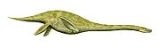
Muraenosaurus grew to around 6 metres (19.7 ft) long, with around half of that length being taken up by the animal's neck, which possessed 44 vertebrae. Behind the neck, Muraenosaurus had a short, relatively inflexible body and powerful flippers. The head was remarkably small compared to the overall size of the animal, being only around 37 centimetres (14.6 in) long.
Genus
In biology, a genus is a low-level taxonomic rank used in the biological classification of living and fossil organisms, which is an example of definition by genus and differentia...
of sauropterygia
Sauropterygia
Sauropterygia were a group of very successful aquatic reptiles that flourished during the Mesozoic before they became extinct at the end of the era. They were united by a radical adaptation of their shoulder, designed to support powerful flipper strokes...
n reptile
Reptile
Reptiles are members of a class of air-breathing, ectothermic vertebrates which are characterized by laying shelled eggs , and having skin covered in scales and/or scutes. They are tetrapods, either having four limbs or being descended from four-limbed ancestors...
, from the Middle Jurassic
Middle Jurassic
The Middle Jurassic is the second epoch of the Jurassic Period. It lasted from 176-161 million years ago. In European lithostratigraphy, rocks of this Middle Jurassic age are called the Dogger....
of Europe. Fossils have been found in England and France.
Muraenosaurus grew to around 6 metres (19.7 ft) long, with around half of that length being taken up by the animal's neck, which possessed 44 vertebrae. Behind the neck, Muraenosaurus had a short, relatively inflexible body and powerful flippers. The head was remarkably small compared to the overall size of the animal, being only around 37 centimetres (14.6 in) long.