
All Topics  
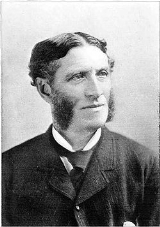
Matthew Arnold

 
Matthew Arnold

   Email Print
   Bookmark   Link


Matthew Arnold


Matthew Arnold (24 December 1822 – 15 April 1888) was an English
England

native_name =|conventional_long_name = England|common_name = England|image_flag = Flag of England.svg|image_coat = England COA.svg|symbol_type = Royal Coat of Arms...
 poet
Poet

A poet is a person who writes poetry....
, and cultural critic
Cultural critic

A cultural critic is a critic of a given culture, usually as a whole and typically on a radical basis. There is significant overlap with social criticism and social philosophy....
 who worked as an inspector of schools.


Discussion
Ask a question about 'Matthew Arnold'
Start a new discussion about 'Matthew Arnold'
Answer questions from other users
Full Discussion Forum


Quotations


A beautiful and ineffectual angel Shelley, beating in the void his luminous wings in vain.

Byron

And amongst us one,Who most has sufferd, takes dejectedlyHis seat upon the intellectual throne.

St. 19

And long we try in vain to speak and actOur hidden self, and what we say and doIs eloquent, is well — but tis not true!

The Buried Life, st. 6

And that sweet city with her dreaming spires,She needs not June for beautys heightening.

St. 2

Charge once more, then, and be dumb!Let the victors, when they come,When the forts of folly fall,Find thy body by the wall.

St. 4

Coleridge, poet and philosopher wrecked in a mist of opium.

Byron


Encyclopedia


Matthew Arnold Cartoon
Huxley Arnold Family Tree
Matthew Arnold (24 December 1822 – 15 April 1888) was an English
England

native_name =|conventional_long_name = England|common_name = England|image_flag = Flag of England.svg|image_coat = England COA.svg|symbol_type = Royal Coat of Arms...
 poet
Poet

A poet is a person who writes poetry....
, and cultural critic
Cultural critic

A cultural critic is a critic of a given culture, usually as a whole and typically on a radical basis. There is significant overlap with social criticism and social philosophy....
 who worked as an inspector of schools. He was the son of Thomas Arnold
Thomas Arnold

Thomas Arnold was a United Kingdom educator and historian. Arnold was an early supporter of the Broad Church Anglican movement. He was headmaster of Rugby School from 1828 to 1841, where he introduced a number of reforms....
, the famed headmaster of Rugby School
Rugby School

Rugby School, located in the town of Rugby, Warwickshire, Warwickshire, is regarded as one of the UK's leading co-educational boarding school and is one of the oldest public school in England....
, and brother to both Tom Arnold
Tom Arnold (academic)

Tom Arnold , also known as Thomas Arnold the Younger, was a British literary scholar....
, literary professor, and William Delafield Arnold
William Delafield Arnold

William Delafield Arnold was a British author and colonial administrator.He was the fourth son of Thomas Arnold, the headmaster of Rugby School....
, novelist and colonial administrator. Matthew Arnold has been characterized as a sage writer
Sage writing

Sage writing is term used to describe a genre of creative nonfiction popular in the Victorian era. The concept originates with John Holloway's 1953 book The Victorian Sage: Studies in Argument....
, a type of writer who chastises and instructs the reader on contemporary social issues.

Early years

The Reverend John Keble
John Keble

John Keble was an England churchman, one of the leaders of the Oxford Movement, and gave his name to Keble College, Oxford....
, who would become one of the leaders of the Oxford Movement
Oxford Movement

The Oxford Movement or Tractarianism was an affiliation of High Church Anglicans, most of whom were members of the University of Oxford, who sought to demonstrate that the Church of England was a direct descendant of the Church established by the Twelve apostles....
, stood as godfather to Matthew. "Thomas Arnold admired Keble's 'hymns' in The Christian Year
The Christian Year

The Christian Year is a series of poems for every day of the year for Christianity written by John Keble in 1827. The book is the source for several hymns, and the work was extremely popular in the 19th century....
, only reversing himself with exasperation when this old friend became a Romeward-tending 'High Church
High church

"High Church" relates to ecclesiology and liturgy in Anglican theology and practice. Although used by several Protestant Christian denominations, the term has traditionally been associated with the Anglican tradition in particular....
' reactionary in the 1830s." In 1828, Arnold's father was appointed Headmaster of Rugby School and his young family took up residence, that year, in the Headmaster's house. In 1831, Arnold was tutored by his uncle, the Reverend John Buckland, at Laleham, Middlesex. In 1834, the Arnolds occupied a holiday home, Fox How, in the Lake District. William Wordsworth
William Wordsworth

William Wordsworth was a major England Romantic poetry poet who, with Samuel Taylor Coleridge, helped to launch the Romanticism in English literature with the 1798 joint publication Lyrical Ballads....
 was a neighbor and close friend. Fox How became the family home after Dr. Arnold's untimely death in 1842.

In 1836, Arnold was sent to Winchester College
Winchester College

Winchester College is a famous boys' independent school, set in the city of Winchester, Hampshire in Hampshire, England, once the ancient capital....
, but in 1837 he returned to Rugby School where he was enrolled in the fifth form. He moved to the sixth form in 1838 and thus came under the direct tutelage of his father. He wrote verse for the manuscript Fox How Magazine produced by Matthew and his brother Tom for the family's enjoyment from 1838 to 1843. During his years as a Rugby student, he won school prizes for English essay writing, and Latin and English poetry. His prize poem, "Alaric at Rome," was printed at Rugby.

In 1841, he won an open scholarship to Balliol College, Oxford. During his residence at Oxford, his friendship ripened with Arthur Hugh Clough
Arthur Hugh Clough

Arthur Hugh Clough was an England poet, and the brother of Anne Clough....
, another graduate of Rugby who had been one of his father's favourites. Arnold attended John Henry Newman's sermons at St. Mary's
University Church of St Mary the Virgin

The University Church of St Mary the Virgin is the largest of Oxford parish churches and the centre from which the University of Oxford grew....
, but did not join the Oxford Movement. His father died suddenly of heart disease in 1842. Arnold's poem "Cromwell" won the 1843 Newdigate prize
Newdigate prize

Sir Roger Newdigate's Prize is awarded to students of the University of Oxford for Best Composition in English language verse by an undergraduate who has been admitted to Oxford within the previous four years....
. He graduated in the following year with a 2nd Class Honours degree in "Greats."

In 1845, after a short interlude of teaching at Rugby, he was elected Fellow of Oriel College
Oriel College

Oriel College, located in Oriel Square, Oxford, is the fifth oldest of the Colleges of the University of Oxford of the University of Oxford in England....
, Oxford. In 1847, he became Private Secretary to Lord Lansdowne
Marquess of Lansdowne

Marquess of Lansdowne, in the County of Somerset, is a title in the Peerage of Great Britain held by the head of the Petty-Fitzmaurice family. This branch of the family descends from the Hon....
, Lord President of the Council
Lord President of the Council

The Lord President of the Council is the fourth of the Great Officers of State of the United Kingdom, ranking beneath the Lord High Treasurer and above the Lord Privy Seal....
. In 1849, he published his first book of poetry, The Strayed Reveller. In 1850 Wordsworth died; Arnold published his "Memorial Verses" on the older poet in Fraser's Magazine.

Marriage and a career

Wishing to marry, but unable to support a family on the wages of a private secretary, Arnold sought the position of, and was appointed, in April 1851, one of Her Majesty's Inspector of Schools. Two months later, he married Frances Lucy, daughter of Sir William Wightman, Justice of the Queen's Bench. The Arnolds had six children: Thomas (1852-1868); Trevenen William (1853-1872); Richard Penrose (1855-1908), an inspector of factories; Lucy Charlotte (1858-1934) who married Frederick W. Whitridge of New York, whom she had met during Arnold's American lecture tour; Eleanore Mary Caroline (1861-1936) married (1) Hon. Armine Wodehouse in 1889, (2) William Masefield, Baron Sandhurst, in 1909; Basil Francis (1866-1868).

Arnold often described his duties as a school inspector as "drudgery," although "at other times he acknowledged the benefit of regular work." The inspectorship required him, at least at first, to travel constantly and across much of England. "Initially, Arnold was responsible for inspecting Nonconformist schools across a broad swath of central England. He spent many dreary hours during the 1850s in railway waiting-rooms and small-town hotels, and longer hours still in listening to children reciting their lessons and parents reciting their grievances. But that also meant that he, among the first generation of the railway age, travelled across more of England than any man of letters had ever done. Although his duties were later confined to a smaller area, Arnold knew the society of provincial England better than most of the metropolitan authors and politicians of the day."

Literary career

In 1852, Arnold published his second volume of poems, Empedocles on Etna, and Other Poems. In 1853, he published Poems: A New Edition, a selection from the two earlier volumes famously excluding "Empedocles on Etna", but adding new poems, "Sohrab and Rustum" and "The Scholar-Gipsy". In 1854, Poems: Second Series appeared; also a selection, it included the new poem, "Balder Dead".

Arnold was elected Professor of Poetry
Oxford Professor of Poetry

The chair of Professor of Poetry at the University of Oxford is an unusual academic appointment, now held for a term of five years, and chosen through an election open to all "members of Convocation" ....
 at Oxford in 1857. He was the first to deliver his lectures in English rather than Latin. He was re-elected in 1862. On Translating Homer
On Translating Homer

On Translating Homer, published in January 1861, was a printed version of the series of public lectures given by Matthew Arnold as Professor of Poetry at University of Oxford from 3 November 1860 to 18 December 1860....
 (1861) and the initial thoughts that Arnold would transform into Culture and Anarchy were among the fruits of the Oxford lectures. In 1859, he conducted the first of three trips to the continent at the behest of parliament to study European educational practices. He self-published The Popular Education of France (1861), the introduction to which was later published under the title "Democracy" (1879).

In 1865, Arnold published Essays in Criticism: First Series. Essays in Criticism: Second Series would not appear until November 1888, shortly after his untimely death. In 1866, he published Thyrsis
Thyrsis

Thyrsis is the title of a poem written by Matthew Arnold in December 1865 to commemorate his friend, the poet Arthur Hugh Clough, who had died in November 1861 aged only 42....
, his elegy to Clough who had died in 1861. Culture and Anarchy, Arnold's major work in social criticism (and one of the few pieces of his prose work currently in print) was published in 1869. Literature and Dogma, Arnold's major work in religious criticism appeared in 1873. In 1883 and 1884, Arnold toured the United States delivering lectures on education, democracy and Ralph Waldo Emerson
Ralph Waldo Emerson

Ralph Waldo Emerson was an American essayist, philosopher, poet, and leader of the transcendentalism movement in the early 19th century. His teachings directly influenced the growing New Thought movement of the mid 1800s....
.

In 1886, he retired from school inspection and made another trip to America. Arnold died suddenly in 1888 of heart failure, when running to meet a tram that would have taken him to the Liverpool Landing Stage to see his daughter, who was visiting from the United States where she had moved after marrying an American.

Arnold's character

Matthew Arnold "was indeed the most delightful of companions," wrote G. W. E. Russell in Portraits of the Seventies; "a man of the world entirely free from worldliness and a man of letters without the faintest trace of pedantry." A familiar figure at the Athenaeum Club
Athenaeum Club

Athenaeum Club may refer to:*Athenaeum Club, London, a private gentlemen's club situated in London, England.*Athenaeum Club, Melbourne, a private gentlemen's club situated in Melbourne, Australia....
, a frequent diner-out and guest at great country houses, fond of fishing and shooting, a lively conversationalist, affecting a combination of foppishness and Olympian grandeur, he read constantly, widely, and deeply, and in the intervals of supporting himself and his family by the quiet drudgery of school inspecting, filled notebook after notebook with meditations of an almost monastic tone. In his writings, he often baffled and sometimes annoyed his contemporaries by the apparent contradiction between his urbane, even frivolous manner in controversy, and the "high seriousness" of his critical views and the melancholy, almost plaintive note of much of his poetry. "A voice poking fun in the wilderness" was T. H. Warren's description of him.

An Oxford Elegy
An Oxford Elegy

An Oxford Elegy is a work for narrator, small mixed chorus and small orchestra, written by Ralph Vaughan Williams between 1947 and 1949. It uses portions of two poems by Matthew Arnold, The Scholar Gipsy and Thyrsis....
 by Vaughan Williams
Ralph Vaughan Williams

Ralph Vaughan Williams Order of Merit was an England composer of symphony, chamber music, opera, choral music, and film Film score. He was also a collector of England folk music and folk song; this also influenced his editorial approach to the English Hymnal, which began in 1904, many folk song arrangements being set as hymn tunes,...
, a piece for narrator, mixed chorus and small orchestra (1949), is based on extracts from The Scholar Gypsy and Thyrsis.

= Writings =

Poetry


Arnold is sometimes called the third great Victorian poet, along with Alfred Tennyson, 1st Baron Tennyson
Alfred Tennyson, 1st Baron Tennyson

Alfred Tennyson, 1st Baron Tennyson was Poet Laureate of the United Kingdom and remains one of the most popular English poets.Tennyson excelled at penning short lyrics, including "In the valley of Cauteretz", "Break, break, break", "The Charge of the Light Brigade ", "Tears, Idle Tears" and "Crossing the Bar"....
 and Robert Browning
Robert Browning

Robert Browning was an English poet and playwright whose mastery of dramatic verse, especially dramatic monologues, made him one of the foremost Victorian literature poets....
. Arnold was keenly aware of his place in poetry. In an 1869 letter to his mother, he wrote:

Collini regards this as "an exceptionally frank, but not unjust, self-assessment." "Arnold's poetry continues to have scholarly attention lavished upon it, in part because it seems to furnish such striking evidence for several central aspects of the intellectual history of the nineteenth century, especially the corrosion of 'Faith' by 'Doubt'. No poet, presumably, would wish to be summoned by later ages merely as an historical witness, but the sheer intellectual grasp of Arnold's verse renders it peculiarly liable to this treatment."

Harold Bloom echoes Arnold's self reference in his introduction (as series editor) to the Modern Critical Views volume on Arnold: "Arnold got into his poetry what Tennyson and Browning scarcely needed (but absorbed anyway), the main march of mind of his time." Of his poetry, Bloom says, "Whatever his achievement as a critic of literature, society, or religion, his work as a poet may not merit the reputation it has continued to hold in the twentieth century. Arnold is, at his best, a very good but highly derivative poet... As with Tennyson, Hopkins, and Rossetti, Arnold's dominant precursor was Keats, but this is an unhappy puzzle, since Arnold (unlike the others) professed not to admire Keats greatly, while writing his own elegiac poems in a diction, meter, imagistic procedure, that are embarrassingly close to Keats."

Sir Edmund Chambers noted, however, that "in a comparison between the best works of Matthew Arnold and that of his six greatest contemporaries... the proportion of work which endures is greater in the case of Matthew Arnold than in any one of them." Chambers judged Arnold's poetic vision by "its simplicity, lucidity, and straightforwardness; its literalness...; the sparing use of aureate words, or of far-fetched words, which are all the more effective when they come; the avoidance of inversions, and the general directness of syntax, which gives full value to the delicacies of a varied rhythm, and makes it, of all verse that I know, the easiest to read aloud."

His literary career — leaving out the two prize poems — had begun in 1849 with the publication of The Strayed Reveller and Other Poems by A., which attracted little notice — although it contained perhaps Arnold's most purely poetical poem "The Forsaken Merman" — and was soon withdrawn. Empedocles on Etna and Other Poems (among them "Tristram and Iseult"), published in 1852, had a similar fate. In 1858 he brought out his tragedy of "Merope," calculated, he wrote to a friend, "rather to inaugurate my Professorship with dignity than to move deeply the present race of humans," and chiefly remarkable for some experiments in unusual — and unsuccessful — metres.

His 1867 poem "Dover Beach
Dover Beach

"Dover Beach" is a short lyric poetry by England poet Matthew Arnold. It was first published in 1867 in the collection New Poems, but surviving notes indicate its composition may have begun as early as 1849....
" depicted a nightmarish world from which the old religious verities have receded. It is sometimes held up as an early, if not the first, example of the modern sensibility. In a famous preface to a selection of the poems of William Wordsworth
William Wordsworth

William Wordsworth was a major England Romantic poetry poet who, with Samuel Taylor Coleridge, helped to launch the Romanticism in English literature with the 1798 joint publication Lyrical Ballads....
, Arnold identified himself, a little ironically, as a "Wordsworthian." The influence of Wordsworth, both in ideas and in diction, is unmistakable in Arnold's best poetry. Arnold's poem, "Dover Beach" appears in Ray Bradbury's Fahrenheit 451
Fahrenheit 451

Fahrenheit 451 is a dystopian speculative fiction novel authored by Ray Bradbury and first published in 1953.The novel presents a future American society in which the masses are Hedonism, and critical thought through reading is outlawed....
 and is also featured prominently in Saturday
Saturday (novel)

Saturday is a novel by the British author Ian McEwan that charts the day of a 48-year-old London neurosurgeon called Henry Perowne. It won the James Tait Black Memorial Prize for 2005....
 by Ian McEwan
Ian McEwan

Ian Russell McEwan, CBE, Royal Society of Arts, Royal Society of Literature, is a Booker Prize-winning England novelist and screenwriter....
. It has also been quoted or alluded to in a variety of other contexts (see Dover Beach
Dover Beach

"Dover Beach" is a short lyric poetry by England poet Matthew Arnold. It was first published in 1867 in the collection New Poems, but surviving notes indicate its composition may have begun as early as 1849....
).

Some consider Arnold to be the bridge between Romanticism
Romanticism

Romanticism is a complex artistic, literary, and intellectual movement that originated in the second half of the 18th century in Western Europe, and gained strength during the Industrial Revolution....
 and Modernism
Modernism

Modernism, in its broadest definition, is modern thought, character, or practice. More specifically, the term describes both a set of cultural tendencies and an array of associated cultural movements, originally arising from wide-scale and far-reaching changes to Western culture in the late nineteenth and early twentieth century....
. His use of symbolic landscapes was typical of the Romantic era, while his skeptical and pessimistic perspective was typical of the Modern era. The rationalistic
Rationalism

In epistemology and in its modern sense, rationalism is "any view appealing to reason as a source of knowledge or justification" . In more technical terms it is a method or a theory "in which the criterion of the truth is not sensory but intellectual and deductive" ....
 tendency of certain of his writings gave offence to many readers, and the sufficiency of his equipment in scholarship for dealing with some of the subjects which he handled was called in question, but he undoubtedly exercised a stimulating influence on his time. His writings are characterised by the finest culture, high purpose, sincerity, and a style of great distinction, and much of his poetry has an exquisite and subtle beauty, though here also it has been doubted whether high culture
High culture

High culture is a term, now used in a number of different ways in academic discourse, whose most common meaning is the set of culture products, mainly in the arts, held in the highest esteem by a culture....
 and wide knowledge of poetry did not sometimes take the place of true poetic fire. Henry James
Henry James

Henry James, Order of Merit , son of theologian Henry James Sr., brother of the philosopher and psychologist William James and diarist Alice James, was an United States author....
 wrote that Matthew Arnold's poetry will appeal to those who "like their pleasures rare" and who like to hear the poet "taking breath."

The mood of Arnold’s poetry tends to be of plaintive reflection, and he is restrained in expressing emotion. He felt that poetry should be the ‘criticism of life’ and express a philosophy. Arnold’s philosophy is that true happiness comes from within, and that people should seek within themselves for good, while being resigned in acceptance of outward things and avoiding the pointless turmoil of the world. However, he argues that we should not live in the belief that we shall one day inherit eternal bliss. If we are not happy on earth, we should moderate our desires rather than live in dreams of something that may never be attained. This philosophy is clearly expressed in such poems as "Dover Beach" and in these lines from "Stanzas from the Grande Chartreuse":

Wandering between two worlds, one dead The other powerless to be born, With nowhere yet to rest my head Like these, on earth I wait forlorn.

Arnold valued natural scenery for its peace and permanence in contrast with the ceaseless change of human things. His descriptions are often picturesque, and marked by striking similes. However, at the same time he liked subdued colours, mist and moonlight. He seems to prefer the ‘spent lights’ of the sea-depths in "The Forsaken Merman" to the village life preferred by the merman’s lost wife.

In his poetry he derived not only the subject matter of his narrative poems from various traditional or literary sources but even much of the romantic melancholy of his earlier poems from Senancour's "Obermann". His greatest defects as a poet stem from his lack of ear and his frequent failure to distinguish between poetry and prose.

Prose


Assessing the importance of Arnold's prose work in 1988, Stefan Collini stated, "for reasons to do with our own cultural preoccupations as much as with the merits of his writing, the best of his prose has a claim on us today that cannot be matched by his poetry." "Certainly there may still be some readers who, vaguely recalling 'Dover Beach' or 'The Scholar Gypsy' from school anthologies, are surprised to find he 'also' wrote prose."

George Watson follows George Saintsbury in dividing Arnold's career as a prose writer into three phases: 1) early literary criticism that begins with his preface to the 1853 edition of his poems and ends with the first series of Essays in Criticism (1865); 2) a prolonged middle period (overlapping the first and third phases) characterized by social, political and religious writing (roughly 1860-1875); 3) a return to literary criticism with the selecting and editing of collections of Wordsworth's and Byron's poetry and the second series of Essays in Criticism. Both Watson and Saintsbury declare their preference for Arnold's literary criticism over his social or religious criticism. More recent writers, such as Collini, have shown a greater interest in his social writing, while over the years a significant second tier of criticism has focused on Arnold's religious writing. His writing on education has not drawn a significant critical endeavor separable from the criticism of his social writings.

Literary criticism

Arnold's work as a literary critic began with the 1853 "Preface to the Poems". In it, he attempted to explain his extreme act of self-censorship in excluding the dramatic poem "Empedocles on Etna". With its emphasis on the importance of subject in poetry, on "clearness of arrangement, rigor of development, simplicity of style" learned from the Greeks, and in the strong imprint of Goethe and Wordsworth, may be observed nearly all the essential elements in his critical theory. George Watson described the preface, written by the thirty-one year old Arnold, as "oddly stiff and graceless when we think of the elegance of his later prose."

Criticism began to take first place in Arnold's writing with his appointment in 1857 to the professorship of poetry at Oxford, which he held for two successive terms of five years. In 1861 his lectures On Translating Homer
On Translating Homer

On Translating Homer, published in January 1861, was a printed version of the series of public lectures given by Matthew Arnold as Professor of Poetry at University of Oxford from 3 November 1860 to 18 December 1860....
 were published, to be followed in 1862 by Last Words on Translating Homer, both volumes admirable in style and full of striking judgments and suggestive remarks, but built on rather arbitrary assumptions and reaching no well-established conclusions. Especially characteristic, both of his defects and his qualities, are on the one hand, Arnold's unconvincing advocacy of English hexameter
Hexameter

Hexameter is a literature and poetry form, a Line consisting of six metrical foot, as in the Iliad. It was the standard epic metre in Greek and became standard for Latin too....
s and his creation of a kind of literary absolute in the "grand style," and, on the other, his keen feeling of the need for a disinterested and intelligent criticism in England.

Although Arnold's poetry received only mixed reviews and attention during his lifetime, his forays into literary criticism were more successful. Arnold is famous for introducing a methodology of literary criticism
Literary criticism

Literary criticism is the study, discussion, evaluation, and interpretation of literature. Modern literary criticism is often informed by literary theory, which is the philosophical discussion of its methods and goals....
 somewhere between the historicist approach common to many critics at the time and the personal essay; he often moved quickly and easily from literary subjects to political and social issues. His Essays in Criticism (1865, 1888), remains a significant influence on critics to this day. In one of his most famous essays on the topic, “The Study of Poetry”, Arnold wrote that, “Without poetry, our science will appear incomplete; and most of what now passes with us for religion and philosophy will be replaced by poetry”. He considered the most important criteria used to judge the value of a poem were “high truth” and “high seriousness”. By this standard, Chaucer’s Canterbury Tales did not merit Arnold’s approval. Further, Arnold thought the works that had been proven to possess both “high truth” and “high seriousness”, such as those of Shakespeare and Milton, could be used as a basis of comparison to determine the merit of other works of poetry. He also sought for literary criticism to remain disinterested, and said that the appreciation should be of “the object as in itself it really is.”

Social criticism

He was led on from literary criticism to a more general critique of the spirit of his age
Zeitgeist

Zeitgeist is a German language expression literally translated: Zeit, time; Geist, spirit, meaning "the spirit of the age and its society"....
. Between 1867 and 1869 he wrote Culture and Anarchy
Culture and Anarchy

Culture and Anarchy is a series of periodical essays by Matthew Arnold, first published in Cornhill Magazine 1867-68 and collected as a book in 1869 in literature....
, famous for the term he popularised for the middle class of the English Victorian era
Victorian era

The Victorian Era of the United Kingdom of Great Britain and Ireland was the period of Victoria of the United Kingdom reign from June 1837 to January 1901....
 population: "Philistines
Philistines

The Philistines were a ethnic group who occupied the southern coast of Canaan, their territory being named Philistia in later contexts....
", a word which derives its modern cultural meaning
Philistinism

Philistinism is a pejorative term used to describe a particular attitude or set of values. A person called a Philistine , is said to despise or undervalue art, beauty, intellectual content, and/or spiritual values....
 (in English - the German-language usage was well established) from him. Culture and Anarchy is also famous for its popularization of the phrase "sweetness and light," first coined by Jonathan Swift
Jonathan Swift

Jonathan Swift was an Anglo-Irish satire, essayist, political pamphleteer , poet and cleric who became Dean of St. Patrick's Cathedral, Dublin, Dublin....
.

Arnold's "want of logic and thoroughness of thought" as noted by J. M. Robertson in Modern Humanists was an aspect of the inconsistency of which Arnold was accused. Few of his ideas were his own, and he failed to reconcile the conflicting influences which moved him so strongly. "There are four people, in especial," he once wrote to Cardinal Newman, "from whom I am conscious of having learnt — a very different thing from merely receiving a strong impression — learnt habits, methods, ruling ideas, which are constantly with me; and the four are — Goethe, Wordsworth, Sainte-Beuve, and yourself." Dr. Arnold must be added; the son's fundamental likeness to the father was early pointed out by Swinburne
Algernon Charles Swinburne

Algernon Charles Swinburne was an English poet, controversial in his own day....
, and was later attested by Matthew Arnold's grandson, Mr. Arnold Whitridge. Brought up in the tenets of the Philistinism which, as a professed cosmopolitan and the Apostle of Culture he attacked, he remained something of a Philistine to the end.