
All Topics  
Le Corbusier


Le Corbusier


Charles-Édouard Jeanneret-Gris, who chose to be known as Le Corbusier, was a SwissSwitzerland

Switzerland , officially the Swiss Confederation, is a landlocked Alpine country in Central Europe....
-born architectArchitect

An architect is a person involved in the planning, designing and oversight of a building's construction....
, designerDesigner

Designer is a broad term for a person who designs any of a variety of things....
, urbanist, writerWriter

The term writer can apply to anyone who creates a written work, but the word more usually designates those who write c...
 and also painterPainting

Painting taken literally is the practice of applying pigment suspended in a liquid vehicle to a surface such as paper, can...
, who is famous for his contributions to what now is called Modern architectureModern architecture

Modern architecture is a term given to a number of building styles with similar characteristics, primarily the simplificatio...
. In his 30s he became a French citizen.

He was a pioneer in studies of modern high design and was dedicated to providing better living conditions for the residents of crowded cities. His career spanned five decades, with his buildings constructed throughout central Europe, IndiaFacts About India

India , officially the Republic of India, is a country in South Asia....
, Russia, and one each in North and South America. He was also an urban plannerUrban planner

Urban planners work with local governments to formulate plans for the short- and long-term growth and renewal of urban and s...
, painter, sculptor, writer, and modern furnitureModern furniture Summary

Modern furniture was a tremendous departure from all furniture design that had gone before it....
 designDesign

Design, usually considered in the context of the applied arts, engineering, architecture, and other such creative endeavours...
er.
Life
Early life and education, 1887-1913 He was born as Charles-Édouard Jeanneret-Gris in La Chaux-de-FondsLa Chaux-de-Fonds

La Chaux-de-Fonds is a city located in the Jura mountains in Switzerland....
, a small town of Neuchâtel cantonCanton of Neuchâtel Overview

Neuchtel is a canton of Switzerland....
 in north-western SwitzerlandSwitzerland

Switzerland , officially the Swiss Confederation, is a landlocked Alpine country in Central Europe....
, in the Jura mountainsJura mountains

The Jura folds are located north of the main Alpine orogenic front and are being continually deformed, accommodating the nor...
, which is just five kilometres across the border from FranceFrance

France, officially the French Republic, is a country whose metropolitan territory is located in Western Europe and whi...
.


Discussion
Ask a question about 'Le Corbusier'
Start a new discussion about 'Le Corbusier'
Answer questions from other users
Full Discussion Forum


Timeline

1887   Born

1965   Died


Quotations


It is a question of building which is at the root of the social unrest of today: architecture or revolution.

Vers une architecture (1923)

Modern life demands, and is waiting for, a new kind of plan, both for the house and the city.

Vers une architecture (1923)

The styles are a lie.

Vers une architecture (1923)

Une maison est une machine-à-habiter.

Translation: A house is a machine for living in., Vers une architecture (1923)

You employ stone, wood and concrete, and with these materials you build houses and palaces. That is construction. Ingenuity is at work.But suddenly you touch my heart, you do me good, I am happy and I say: This is beautiful. That is Architecture. Art enters in.

Vehicular traffic is completely forbidden in the green strips, where tranquility shall reign and the curse of noise shall not penetrate.

"The Edict of Chandigarh" from The Establishment Statute of the Land (17 December 1959)


Encyclopedia


Charles-Édouard Jeanneret-Gris, who chose to be known as Le Corbusier, was a SwissSwitzerland

Switzerland , officially the Swiss Confederation, is a landlocked Alpine country in Central Europe....
-born architectArchitect

An architect is a person involved in the planning, designing and oversight of a building's construction....
, designerDesigner

Designer is a broad term for a person who designs any of a variety of things....
, urbanist, writerWriter

The term writer can apply to anyone who creates a written work, but the word more usually designates those who write c...
 and also painterPainting

Painting taken literally is the practice of applying pigment suspended in a liquid vehicle to a surface such as paper, can...
, who is famous for his contributions to what now is called Modern architectureModern architecture

Modern architecture is a term given to a number of building styles with similar characteristics, primarily the simplificatio...
. In his 30s he became a French citizen.

He was a pioneer in studies of modern high design and was dedicated to providing better living conditions for the residents of crowded cities. His career spanned five decades, with his buildings constructed throughout central Europe, IndiaFacts About India

India , officially the Republic of India, is a country in South Asia....
, Russia, and one each in North and South America. He was also an urban plannerUrban planner

Urban planners work with local governments to formulate plans for the short- and long-term growth and renewal of urban and s...
, painter, sculptor, writer, and modern furnitureModern furniture Summary

Modern furniture was a tremendous departure from all furniture design that had gone before it....
 designDesign

Design, usually considered in the context of the applied arts, engineering, architecture, and other such creative endeavours...
er.

Life


Early life and education, 1887-1913

He was born as Charles-Édouard Jeanneret-Gris in La Chaux-de-FondsLa Chaux-de-Fonds

La Chaux-de-Fonds is a city located in the Jura mountains in Switzerland....
, a small town of Neuchâtel cantonCanton of Neuchâtel Overview

Neuchtel is a canton of Switzerland....
 in north-western SwitzerlandSwitzerland

Switzerland , officially the Swiss Confederation, is a landlocked Alpine country in Central Europe....
, in the Jura mountainsJura mountains

The Jura folds are located north of the main Alpine orogenic front and are being continually deformed, accommodating the nor...
, which is just five kilometres across the border from FranceFrance

France, officially the French Republic, is a country whose metropolitan territory is located in Western Europe and whi...
. He attended a kindergarten that used Froebelian methods.

Le Corbusier was attracted to the visual arts and studied at the La-Chaux-de-Fonds Art School under Charles L'Eplattenier, who had studied in BudapestBudapest

Budapest is the capital city of Hungary and the country's principal political, cultural, commercial, industrial and transpo...
 and ParisParis

native_name = Ville de Paris|common_name = Paris...
. His architecture teacher in the Art School was the architect René Chapallaz, who had a large influence on Le Corbusier's earliest houses.

In his early years he would frequently escape the somewhat provincial atmosphere of his hometown by travelling around EuropeEurope

Europe is one of the seven traditional continents of the Earth....
. About 1907, he travelled to Paris, where he found work in the office of Auguste Perret, the French pioneer of reinforced concreteReinforced concrete

Reinforced concrete, also called ferroconcrete in some countries, is concrete in which reinforcement bars or fibers h...
. Between October 1910 and March 1911, he worked near BerlinBerlin Overview

Berlin is the capital city and a state of Germany....
 for the renowned architect Peter BehrensPeter Behrens

Peter Behrens was a German architect and designer. ...
, where he might have met Ludwig Mies van der RoheLudwig Mies van der Rohe

Ludwig Mies van der Rohe was a German architect....
 and Walter GropiusWalter Gropius

Walter Adolph Georg Gropius was a German architect and founder of Bauhaus. ...
. He became fluent in GermanGerman language

German is a West Germanic language....
. Both of these experiences proved influential in his later career.

Later in 1911, he journeyed to the BalkansBalkans

The Balkans is the historic and geographic name used to describe a region of southeastern Europe....
 and visited GreeceGreece

GreeceGreece lies at the juncture of Europe, Asia, and Africa....
 and TurkeyTurkey

Turkey, officially the Republic of Turkey, is a Eurasian country that stretches across the Anatolian peninsula in Sou...
, filling sketchbooks with renderings of what he saw, including many famous sketches of the ParthenonParthenon

he Parthenon was a temple of Athena, built in the 5th century BC on the Acropolis of Athens....
, whose forms he would later praise in his work Vers une architectureToward an Architecture

Vers une architecture, translated into English as Toward an Architecture and commonly known as Towards a New...
.

Early career: the villas, 1914-1930

Le Corbusier taught at his old school in La-Chaux-de-Fonds during World War IWorld War I

World War I, also known as the First World War, the Great War and "The War to End All Wars" was a global m...
, not returning to Paris until the war was over. During these four years in Switzerland, he worked on theoretical architectural studies using modern techniques. Among these was his project for the "Dom-ino" House. This model proposed an open floor plan consisting of concrete slabs supported by a minimal number of thin, reinforced concrete columns around the edges, with a stairway providing access to each level on one side of the floor plan.

This design became the foundation for most of his architecture for the next ten years. Soon he would begin his own architectural practice with his cousin, Pierre JeanneretPierre Jeanneret

Pierre Jeanneret was a Swiss architect who collaborated with his more famous cousin Charles Edouard Jeanneret for about twen...
, a partnership that would last until 1940.

In 1918, Le Corbusier met the disillusioned CubistCubism

Cubism was an early 20th century avant-garde art movement that revolutionized European painting and sculpture, and inspired ...
 painter, Amédée OzenfantAmédée Ozenfant

Amde Ozenfant was a French cubist painter....
, in whom he recognised a kindred spirit. Ozenfant encouraged him to paint, and the two began a period of collaboration. Rejecting Cubism as irrational and "romantic," the pair jointly published their manifesto, Après le Cubisme and established a new artistic movement, PurismPurism

Purism was a form of Cubism advocated by the French painter Amde Ozenfant and the architect Charles-Edouard Jeanneret. ...
. Ozenfant and Jeanneret established the Purist journal L'Esprit Nouveau. He was good friends with the Cubist artist Fernand LégerFacts About Fernand Léger

Joseph Fernand Henri Lger was a French artist and filmmaker....
.

Pseudonym Adopted, 1920

In the first issue of the journal, in 1920, Charles-Edouard Jeanneret adopted Le Corbusier, an altered form of his maternal grandfather's name, "Lecorbésier", as a pseudonymPseudonym Overview

A pseudonym is an artificial, fictitious name, also known as an alias, used by an individual as an alternative to his...
, reflecting his belief that anyone could reinvent oneself. Some architectural historians claim that this pseudonym translates as "the crowCrow

The true crows are in the genus Corvus....
-like one." Adopting a single name to identify oneself was in vogue by artists in many fields during that era, especially among those in Paris.

Between 1918 and 1922, Le Corbusier built nothing, concentrating his efforts on Purist theory and painting. In 1922, Le Corbusier and Jeanneret opened a studio in Paris at 35 rue de Sèvres.

His theoretical studies soon advanced into several different single-family house models. Among these was the Maison "Citrohan", a pun on the name of the French CitroënCitroën

Citron is a French automobile manufacturer, started in 1919 by Andr Citron....
 automaker, for the modern industrial methods and materials Le Corbusier advocated using for the house. Here, Le Corbusier proposed a three-floor structure, with a double-height living room, bedrooms on the second floor, and a kitchen on the third floor. The roof would be occupied by a sun terrace. On the exterior Le Corbusier installed a stairway to provide second-floor access from ground level. Here, as in other projects from this period, he also designed the façades to include large expanses of uninterrupted banks of windows. The house used a rectangular plan, with exterior walls that were not filled by windows, left as white, stuccoed spaces. Le Corbusier and Jeanneret left the interior aesthetically spare, with any movable furniture made of tubular metal frames. Light fixtures usually comprised single, bare bulbs. Interior walls also were left white. Between 1922 and 1927, Le Corbusier and Pierre Jeanneret designed many of these private houses for clients around ParisParis

native_name = Ville de Paris|common_name = Paris...
. In Boulogne-sur-Seine and the 16th arrondissement of ParisParis

native_name = Ville de Paris|common_name = Paris...
, Le Corbusier and Pierre Jeanneret designed and built the Villa LipschitzJacques Lipchitz

Jacques Lipchitz was a Cubist sculptor....
, Maison Cook (see William Edwards CookWilliam Edwards Cook

William Edwards Cook was an American-born expatriate artist, architectural patron, and long-time friend of American writer G...
), Maison Planeix, and the Maison La Roche/Albert Jeanneret, which now houses the Fondation Le CorbusierFondation Le Corbusier

The Fondation Le Corbusier is a private foundation and archive honoring the work of architect Le Corbusier It operates Mais...
.

Le Corbusier took French citizenship in 1930.


Forays into urbanism

For a number of years French officials had been unsuccessful in dealing with the squalor of the growing Parisian slums, and Le Corbusier sought efficient ways to house large numbers of people in response to the urban housing crisis. He believed that his new, modern architectural forms would provide a new organisational solution that would raise the quality of life of the lower classes. His Immeubles Villas (1922) was such a project that called for large blocks of cell-like individual apartments stacked one on top of the other, with plans that included a living room, bedrooms, and kitchen, as well as a garden terrace.

Not merely content with designs for a few housing blocks, soon Le Corbusier moved into studies for entire cities. In 1922, he also presented his scheme for a "Contemporary City" for three million inhabitants. The centrepiece of this plan was the group of sixty-storey, cruciform skyscrapers built on steel frames and encased in huge curtain walls of glass. They housed both offices and the apartments of the most wealthy inhabitants. These skyscrapers were set within large, rectangular park-like green spaces. At the very middle was a huge transportation centre, that on different levels included depots for buses and trains, as well as highway intersections, and at the top, an airport. He had the fanciful notion that commercial airliners would land between the huge skyscrapers. Le Corbusier segregated the pedestrian circulation paths from the roadways, and glorified the use of the automobile as a means of transportation. As one moved out from the central skyscrapers, smaller multi-storey, zigzag blocks set in green space and set far back from the street, housed the proletarian workers. Le Corbusier hoped that politically-minded industrialists in France would lead the way with their efficient TayloristScientific management

Scientific management or Taylorism is the name of the approach to management and industrial and organizational psychol...
 and FordistFordism

Frodism is a "form of production" or "production paradigm" that prevailed in post-war decades in western industrial countrie...
 strategies adopted from American models to reorganise society.

In this new industrialist spirit, Le Corbusier began a new journal called L'Esprit Nouveau that advocated the use of modern industrial techniques and strategies to transform society into a more efficient environment with a higher standard of living on all socioeconomic levels. He forcefully argued that this transformation was necessary to avoid the spectre of revolution, that would otherwise shake society. His dictum "Architecture or Revolution", developed in his articles in this journal, became his rallying cry for the book Vers une architecture (Toward an ArchitectureToward an Architecture

Vers une architecture, translated into English as Toward an Architecture and commonly known as Towards a New...
, previously mistranslated into English as Towards a New Architecture), which comprised selected articles from L'Esprit Nouveau between 1920 and 1923.

Theoretical urban schemes continued to occupy Le Corbusier. He exhibited his Plan Voisin, sponsored by another famous automobile manufacturer, in 1925. In it, he proposed to bulldoze most of central Paris, north of the Seine, and replace it with his sixty-story cruciform towers from the Contemporary City, placed in an orthogonal street grid and park-like green space. His scheme was met with only criticism and scorn from French politicians and industrialists, although they were favourable to the ideas of Taylorism and Fordism underlying Le Corbusier designs. Nonetheless, it did provoke discussion concerning how to deal with the cramped, dirty conditions that enveloped much of the city.

In the 1930s, Le Corbusier expanded and reformulated his ideas on urbanism, eventually publishing them in La Ville radieuse (The Radiant City) of 1935. Perhaps the most significant difference between the Contemporary City and the Radiant City is that the latter abandons the class-based stratification of the former; housing is now assigned according to family size, not economic position. La Ville radieuse also marks Le Corbusier's increasing dissatisfaction with capitalism and his turn to the right-wing syndicalismSyndicalism

Syndicalism refers to a set of ideas, movements, and tendencies which share the avowed aim of transforming capitalist societ...
 of Hubert LagardelleHubert Lagardelle

Hubert Lagardelle was a French syndicalist thinker, influenced by Proudhon....
. During the VichyVichy

Vichy is a French commune, situated in the dpartement of Allier and the rgion of Auvergne....
 regime, Le Corbusier received a position on a planning committee and made designs for Algiers and other cities. The central government ultimately rejected his plans, and after 1942 Le Corbusier withdrew from political activity.

After World War IIWorld War II

World War II, or the Second World War, was a worldwide conflict fought between the Allied Powers and the Axis Powers ,...
, Le Corbusier attempted to realize his urban planning schemes on a small scale by constructing a series of "unités" (the housing block unit of the Radiant City) around France. The most famous of these was the Unité d'HabitationUnité d'Habitation

The Unit d'Habitation is the name of a modernist residential housing design principle developed by Le Corbusier, which forme...
 of Marseilles (1946-1952). In the 1950s, a unique opportunity to translate the Radiant City on a grand scale presented itself in the construction of ChandigarhChandigarh

Chandigarh also called The City Beautiful, is a city in India that serves as the capital of two states: Punjab and Haryana....
, the new capital of the Indian state of (what was then) Punjab. Le Corbusier was originally brought on to redesign parts of Albert Mayer's master plan, but eventually took over the entire project.

Death

Against his doctor's orders, on August 27, 1965, Le Corbusier went for a swim in the Mediterranean SeaMediterranean Sea Summary

The Mediterranean Sea is a part of the Atlantic Ocean almost completely enclosed by land: on the north by Europe, on the sou...
 at Roquebrune-Cap-MartinRoquebrune-Cap-Martin

Roquebrune-Cap-Martin is a commune in the Alpes-Maritimes dpartement in southeastern France....
, FranceFrance

France, officially the French Republic, is a country whose metropolitan territory is located in Western Europe and whi...
. His body was found by bathers and he was pronounced dead at 11 a.m. It was assumed that he suffered a heart attack, at the age of seventy-seven. His death rites took place at the courtyard of the LouvreFacts About Louvre

The Louvre Museum in Paris, France, is one of the largest, oldest, most important and famous art galleries and museum in th...
 Palace on September 1, 1965 under the direction of writer and thinker André MalrauxAndré Malraux

Andr Malraux was a French author, adventurer and statesman preeminent in the world of French politics and culture during hi...
, who was at the time France's Minister of Culture.

Le Corbusier's death had a strong impact on the cultural and political world. Homages were paid world-wide and even some of Le Corbusier's worst artistic enemies, such as the painter Salvador DalíSalvador Dalí Summary

Salvador Felip Jacint Dal Domnech, Marquess of Pubol , known popularly as Salvador Dal, was a Catalan-Spanish artist ...
, recognised his importance (Dalí sent a floral tribute). Then-President of the United StatesPresident of the United States Summary

The President of the United States of America is the head of state of the United States....
 Lyndon B. JohnsonFacts About Lyndon B. Johnson

Lyndon Baines Johnson , often referred to as LBJ, was the 36th President of the United States ....
 said: "His influence was universal and his works are invested with a permanent quality possessed by those of very few artists in our history". The Soviet UnionSoviet Union

The Union of Soviet Socialist Republics , more commonly known as the Soviet Union, was a Communist state that existed...
 added, "Modern architecture has lost its greatest master". Japanese TV channels decided to broadcast, simultaneously to the ceremony, his MuseumThe National Museum of Western Art

The is the premier public art gallery in Japan specializing in art from the Western tradition....
 in TokyoTokyo

listen is one of the 47 prefectures of Japan and is the location of its capital....
, in what was at the time a unique media homage.

Visitors may find his grave site in the cemetery above Roquebrune-Cap-Martin in between Menton and Monaco in southern France.

The Fondation Le Corbusier (or FLC) functions as his official Estate.. The U.S. copyright representative for the Fondation Le Corbusier is the Artists Rights SocietyArtists Rights Society

Artists Rights Society is a copyright, licensing, and monitoring organization for visual artists in the United States....
.

Ideas


Five points of architecture

It was Le Corbusier's Villa SavoyeVilla Savoye

The Villa Savoye is considered by many to be the seminal work of the Swiss architect Le Corbusier....
 (1929-1931) that most succinctly summed up his five points of architecture that he had elucidated in the journal L'Esprit Nouveau and his book Vers une architectureToward an Architecture

Vers une architecture, translated into English as Toward an Architecture and commonly known as Towards a New...
, which he had been developing throughout the 1920s. First, Le Corbusier lifted the bulk of the structure off the ground, supporting it by pilotiPiloti

Pilotis are special architectural supports, like columns, pillars, stilts, by which a building is lifted above what is under...
s
– reinforced concrete stilts. These pilotis, in providing the structural support for the house, allowed him to elucidate his next two points: a free façadeFacade

A facade is generally the exterior of a building, especially the front, but also sometimes the sides and rear....
, meaning non-supporting walls that could be designed as the architect wished, and an open floor plan, meaning that the floor space was free to be configured into rooms without concern for supporting walls. The second floor of the Villa Savoye includes long strips of ribbon windows that allow unencumbered views of the large surrounding yard, and which constitute the fourth point of his system. The fifth point was the Roof gardenRoof garden

A roof garden is any garden on the roof of a building....
 to compensate the green area consumed by the building and replacing it on the roof. A ramp rising from the ground level to the third floor roof terrace, allows for an architectural promenade through the structure. The white tubular railing recalls the industrial "ocean-liner" aesthetic that Le Corbusier much admired. As if to put an exclamation point on Le Corbusier's homage to modern industry, the driveway around the ground floor, with its semicircular path, measures the exact turning radius of a 1927 CitroënCitroën

Citron is a French automobile manufacturer, started in 1919 by Andr Citron....
 automobile.

The Modulor


Le Corbusier explicitly used the golden ratioGolden ratio

The golden ratio, usually denoted , expresses the relationship that the sum of two quantities is to the larger quantity as t...
 in his ModulorModulor

The Modulor is a scale of proportions devised by the French architect Le Corbusier....
 system for the scaleScale (ratio)

The concept of scale is applicable if a system is represented proportionally by another system....
 of architectural proportionProportion (architecture)

Architectural practice has often used proportional systems to generate or constrain the forms considered suitable for inclusion in...
. He saw this system as a continuation of the long tradition of VitruviusVitruvius

Marcus Vitruvius Pollio was a Roman writer, architect and engineer, active in the 1st century BC....
, Leonardo da VinciLeonardo da Vinci

Leonardo di ser Piero da Vinci was a talented Italian Renaissance Roman Catholic polymath: architect, anatomist, sculptor,...
's "Vitruvian ManVitruvian Man

The 'Vitruvian Man' is a famous drawing with accompanying notes by Leonardo da Vinci made around the year 1492 in one of...
", the work of Leon Battista Alberti, and others who used the proportions of the human body to improve the appearance and function of architectureArchitecture

* Architectural history* Architectural mythology...
. In addition to the golden ratioGolden ratio

The golden ratio, usually denoted , expresses the relationship that the sum of two quantities is to the larger quantity as t...
, Le Corbusier based the system on human measurementsAnthropometry

Anthropometry, in physical anthropology, refers to the measurement of living human individuals for the purposes of understan...
, Fibonacci numberFibonacci number

In mathematics, the Fibonacci numbers form a sequence defined recursively by:...
s, and the double unit.

He took Leonardo's suggestion of the golden ratio in human proportions to an extreme: he sectioned his model human body's height at the navel with the two sections in golden ratio, then subdivided those sections in golden ratio at the knees and throat; he used these golden ratio proportions in the ModulorModulor Summary

The Modulor is a scale of proportions devised by the French architect Le Corbusier....
 system.

Le Corbusier's 1927 Villa Stein in GarchesGarches

Garches is a commune in the western suburbs of Paris, France....
 exemplified the Modulor system's application. The villa's rectangular ground plan, elevation, and inner structure closely approximate golden rectangles.

Le Corbusier placed systems of harmony and proportion at the centre of his design philosophy, and his faith in the mathematical order of the universe was closely bound to golden section and Fibonacci the series, which he described as "[...] rhythms apparent to the eye and clear in their relations with one another. And these rhythms are at the very root of human activities. They resound in Man by an organic inevitability, the same fine inevitability which causes the tracing out of the Golden Section by children, old men, savages, and the learned."

Furniture

Le Corbusier began experimenting with furniture design in 1928 after inviting the architect, Charlotte PerriandCharlotte Perriand

Charlotte Perriand...
, to join his studio. His cousin, Pierre JeanneretPierre Jeanneret Summary

Pierre Jeanneret was a Swiss architect who collaborated with his more famous cousin Charles Edouard Jeanneret for about twen...
, also collaborated on many of the designs. Before the arrival of Perriand, Le Corbusier relied on ready-made furniture to furnish his projects, such as the simple pieces manufactured by Thonet.

In 1928, Le Corbusier and Perriand began to put the expectations for furniture Le Corbusier outlined in his 1925 book L'Art Décoratif d'aujourd'hui into practice. In the book he defined three different furniture types: type-needs, type-furniture, and human-limb objects. He defined human-limb objects as: "Extensions of our limbs and adapted to human functions that are. Type-needs, type-functions, therefore type-objects and type-furniture. The human-limb object is a docile servant. A good servant is discreet and self-effacing in order to leave his master free. Certainly, works of art are tools, beautiful tools. And long live the good taste manifested by choice, subtlety, proportion, and harmony".

The first results of the collaboration were three chrome-plated tubular steel chairs designed for two of his projects, The Maison la Roche in Paris and a pavilion for Barbara and Henry Church. The line of furniture was expanded for Le Corbusier's 1929 Salon d'AutomneSalon d'Automne

In 1903, the first Salon d'Automne was organized by Georges Rouault, Andr Derain, Henri Matisse and Albert Marquet as a reac...
 installation, Equipment for the Home.

In the year 1964, while Le Corbusier was still alive, Cassina S.p.A.Cassina S.p.A.

Cassina S.p. A. is an Italian manufacturing company specialised in the creation of high end designer furniture....
 of Milan acquired the exclusive worldwide rights to manufacture his furniture designs. Today many copies exist, but Cassina is still the only manufacturer authorised by the Fondation Le Corbusier.

Politics

Le Corbusier moved increasingly to the far right of French politics in the 1930s. He associated with Georges ValoisGeorges Valois

Georges Valois was a French journalist and politician....
 and Hubert LagardelleHubert Lagardelle

Hubert Lagardelle was a French syndicalist thinker, influenced by Proudhon....
 and briefly edited the syndicalist journal Prélude. In 1934, he lectured on architecture in Rome by invitation of Mussolini. He sought out a position in urban planning in the VichyVichy

Vichy is a French commune, situated in the dpartement of Allier and the rgion of Auvergne....
 regime and received an appointment on a committee studying urbanism, only to have his plans for the redesign of Algiers and other cities completely ignored. After this defeat, Le Corbusier largely eschewed politics.

Although the politics of Lagardelle and Valois included elements of fascism, anti-semitism, and ultra-nationalism, Le Corbusier's own affiliation with these movements remains uncertain. In La Ville radieuse, he conceives an essentially apolitical society, in which the bureaucracy of economic administration effectively replaces the state.

Le Corbusier was heavily indebted to the thought of the nineteenth-century French utopians Saint-SimonSaint-Simon Summary

Saint-Simon can refer to various things:...
 and Charles FourierCharles Fourier

This article is about the French utopian socialist philosopher....
. There is a noteworthy resemblance between the concept of the unité and Saint-Simon's phalanstery. From Fourier, Le Corbusier adopted at least in part his notion of administrative, rather than political, government.

Criticisms

Since his death, Le Corbusier's contribution has been hotly contested, as the architecture valuesArchitectural design values

Architectural design values make up an important part of what influences an architect and designer when they make their desi...
 and its accompanying aspects within modern architecture vary, both between different schools of thought and among practising architects. At the level of building, his later works expressed a complex understanding of modernity's impact, yet his urban designs have drawn scorn from critics.

and architecture critic Lewis MumfordFacts About Lewis Mumford

Lewis Mumford was an American historian of technology and science....
 wrote in Yesterday's City of Tomorrow,

James Howard KunstlerJames Howard Kunstler

James Howard Kunstler is an American author, social critic, and who is perhaps best known for his book The Geography of N...
, a member of the New UrbanismNew urbanism

About new urbanismNew urbanism is an urban design movement whose popularity increased beginning in the 1980s and early 1990...
 movement, has criticised Le Corbusier's approach to urban planning as destructive and wasteful:

The public housing projects influenced by his ideas are seen by some as having had the effect of isolating poor communities in monolithic high-rises and breaking the social ties integral to a community's development. One of his most influential detractors has been Jane JacobsJane Jacobs

Jane Jacobs, OC , O.Ont was an American-born Canadian writer and activist....
, who delivered a scathing critique of Le Corbusier's urban design theories in her seminal work The Death and Life of Great American Cities.

Influence

Le Corbusier was at his most influential in the sphere of urban planningUrban planning

Urban, city, or town planning is the discipline of land use planning which deals with the physical, social, and economi...
, and was a founding member of the Congrès International d'Architecture ModerneCongrès International d'Architecture Moderne

The Congrs International d'Architecture Moderne, founded in 1928 and disbanded in 1959, was the think tank of the modern...
(CIAM).

One of the first to realise how the automobileAutomobile

An automobile is a wheeled passenger vehicle that carries its own motor....
 would change human agglomerations, Le Corbusier described the city of the future as consisting of large apartment buildingApartment building

An apartment building, block of flats or tenement is a multi-unit dwelling made up of several apartments or flat...
s isolated in a parkFacts About Park

A park is any of a number of geographic features....
-like setting on pilotiPiloti

Pilotis are special architectural supports, like columns, pillars, stilts, by which a building is lifted above what is under...
s. Le Corbusier's theories were adopted by the builders of public housingPublic housing

Public housing or project homes is a form of housing tenure in which the property is owned by a government authority, which ...
 in Western Europe and the United StatesUnited States

The United States of America, also known as the United States, the U.S., the U.S.A., and America, is...
. For the design of the buildings themselves, Le Corbusier criticised any effort at ornamentation. The large spartan structures, in cities, but not of cities, have been widely criticised for being boring and unfriendly to pedestrianPedestrian

A pedestrian is a person travelling on foot, whether walking or running....
s.

Throughout the years, many architects worked for Le Corbusier in his studio, and a number of them became notable in their own right, including painter-architect Nadir AfonsoNadir Afonso

Nadir Afonso, OSE is a geometric abstractionist painter....
, who absorbed Le Corbusier's ideas into his own aesthetics theory. Lúcio CostaLúcio Costa

Lcio Costa was a Brazilian architect and urban planner....
's city planUrban planning

Urban, city, or town planning is the discipline of land use planning which deals with the physical, social, and economi...
 of BrasíliaBrasília

Braslia is the capital of Brazil with a population of 2,282,049 cation...
 and the industrial city of ZlínZlín

colspan="2" align="center" bgcolor="#E0922E">Statistics...
 planned by František Lydie GahuraFrantišek Lydie Gahura

Franti?ek Lydie Gahura was a Czech architect who became famous for his collaboration on the architectural and urban design o...
 in the Czech Republic are notable plans based on his ideas, while the architect himself produced the plan for ChandigarhChandigarh

Chandigarh also called The City Beautiful, is a city in India that serves as the capital of two states: Punjab and Haryana....
 in India. Le Corbusier's thinking also had profound effects on the philosophy of city planning and architecture in the Soviet UnionSoviet Union

The Union of Soviet Socialist Republics , more commonly known as the Soviet Union, was a Communist state that existed...
, particularly in the ConstructivistFacts About Constructivist architecture

Constructivist architecture was a form of modern architecture that flourished in the Soviet Union in the 1920s and early 193...
 era.

Le Corbusier was heavily influenced by the problems he saw in the industrial city of the turn of the century. He thought that industrial housing techniques led to crowding, dirtiness, and a lack of a moral landscape. He was a leader of the modernistModernism

Modernism is a trend of thought which affirms the power of human beings to make, improve and reshape their environment, with...
 movement to create better living conditions and a better society through housing concepts. Ebenezer HowardEbenezer Howard Overview

Ebenezer Howard was a prominent British urban planner. ...
's Garden Cities of Tomorrow heavily influenced Le Corbusier and his contemporaries.

Le Corbusier also harmonized and lent credence to the idea of space as a set of destinations which mankind moved between, more or less continuously. He was therefore able to give credence and credibility to the automobile (as a transporter); and most importantly to freeways in urban spaces. His philosophies were useful to urban real estate development interests in the American Post World War II period because they justified and lent architectural and intellectual support to the desire to destroy traditional urban space for high density high profit urban concentration; both commercial and residential. Le Corbusier’s ideas also sanctioned the further destruction of traditional urban spaces for the freeways that connected this new urbanism to the low density; low cost (and highly profitable), suburban and rural locales; which were free to be developed as middle class single family (dormitory) housing.

Notably missing from this scheme of movement were connectivity between the isolated urban villages created for the lower middle and working classes and the other destination points in the Le Corbusier plan; the suburban and rural areas, and the urban commercial centers. This was because as designed, the freeways traveled over, at, or beneath the grade levels of the urban working and lower middle class living spaces, such as the Cabrini Green housing project. Such projects and their areas, having no freeway exit ramps, and being cut-off by the freeways rights-of-way, became isolated from jobs and the services that came to be concentrated at Le Corbusier’s nodal transportation end points. And as jobs increasingly moved to the suburban end points of the freeways; urban village dwellers found themselves without convenient freeway access points in their communities; and without public mass transit connectivity that could economically reach suburban job centers.

Very late in the Post War period suburban job centers found this to be such a critical problem (labor shortages) that they on their own, began sponsoring urban to suburban shuttle bus services, between the urban villages and the suburban job centers, to fill the working class and lower-middle class jobs which had gone wanting; and which did not normally pay the wages that car ownership required.

The gradually increasing costs of transportation (of which fuel in only one element), and the decline in middle and upper class taste for the suburban and rural lifestyle has resulted in the repudiation Le Corbusier’s ideas. Urban centers are now the most desirable real estate areas. Condominium living is being rediscovered as the preferred form of living in urban spaces from Nashville, TN and Columbus, IN to South Miami Beach, FL and Atlanta, GA. Most central business districts of cities now hum with residential activity after working hours, or are on the way to doing so.

Le Corbusier deliberately created a myth about himself and was revered in his lifetime, and after death, by a generation of followers who believed Le Corbusier was a prophet who could do no wrong. But in the 1950s the first doubts began to appear, notably in some essays by his greatest admirers such as James StirlingJames Stirling Summary

James Stirling may refer to:*James Stirling...
 and Colin RoweColin Rowe

Colin Rowe was a British architect, architectural critic and teacher....
, who denounced as catastrophic his ideas on the city. Later critics revealed his technical incompetence as an architect, such as Brian Brace Taylor, whose book Armée du Salut went into great detail about Le Corbusier's Machiavellian activities to create this commission for himself, his many ill-judged design decisions about the building's technologies, and the sometimes absurd solutions he then proposed.

Major buildings and projects


  • 1905 - Villa Fallet, La Chaux-de-FondsLa Chaux-de-Fonds

    La Chaux-de-Fonds is a city located in the Jura mountains in Switzerland....
    , SwitzerlandSwitzerland

    Switzerland , officially the Swiss Confederation, is a landlocked Alpine country in Central Europe....
  • 1912 - Villa Jeanneret-PerretVilla Jeanneret-Perret

    Sorry, no overview for this topic
    , La Chaux-de-FondsLa Chaux-de-Fonds

    La Chaux-de-Fonds is a city located in the Jura mountains in Switzerland....
     
  • 1916 - Villa Schwob, La Chaux-de-FondsLa Chaux-de-Fonds

    La Chaux-de-Fonds is a city located in the Jura mountains in Switzerland....
  • 1923 - Villa La Roche/Villa JeanneretVilla Jeanneret Summary

    Villa Jeanneret is a building designed by Le Corbusier and Pierre Jeanneret in 1925....
    , Paris
  • 1924 - Pavillon de L'Esprit Nouveau, Paris (destroyed)
  • 1924 - Quartiers Modernes Frugès, PessacPessac

    Pessac is a commune in the dpartement of Gironde and the Aquitaine region of France....
    , France
  • 1925 - Villa JeanneretVilla Jeanneret

    Villa Jeanneret is a building designed by Le Corbusier and Pierre Jeanneret in 1925....
    , Paris
  • 1926 - Villa Cook, Boulogne-sur-Seine, France


  • 1927 - Villas at Weissenhof EstateWeissenhof Estate

    The Weissenhof Estate is a estate of working class housing which was built in Stuttgart in 1927....
    , StuttgartStuttgart

    Stuttgart [], a city located in southern Germany, is the capital of the state of Baden-Wrttemberg with a population of appro...
    , GermanyGermany

    Germany , officially the Federal Republic of Germany , is a country in central Europe....
  • 1928 - Villa SavoyeVilla Savoye

    The Villa Savoye is considered by many to be the seminal work of the Swiss architect Le Corbusier....
    , Poissy-sur-Seine, France
  • 1929 - Armée du Salut, Cité de Refuge, Paris
  • 1930 - Pavillon SuissePavillon Suisse

    The Pavillon Suisse or Swiss pavilion was built in 1930 at the Cit International Universitaire, Paris....
    , Cité UniversitaireCité Internationale Universitaire de Paris

    The Cit? Internationale Universitaire de Paris , also known under its abbreviation of CIUP or often as Cit? U a...
    , Paris
  • 1930 - Maison Errazuriz, Chile
  • 1931 - Palace of the Soviets, MoscowMoscow

    Moscow is the capital of Russia and the country's principal political, economic, financial, educational, and transportation...
    , USSRSoviet Union

    The Union of Soviet Socialist Republics , more commonly known as the Soviet Union, was a Communist state that existed...
     (project)
  • 1931 - Immeuble Clarté, GenevaGeneva

    Geneva is the second most populous city in Switzerland , and is the most populous city of Romandy ....
    , SwitzerlandSwitzerland

    Switzerland , officially the Swiss Confederation, is a landlocked Alpine country in Central Europe....
  • 1933 - Tsentrosoyuz, Moscow, USSR
  • 1936 - Palace of Ministry of National Education and Public Health, Rio de JaneiroRio de Janeiro Summary

    Rio de Janeiro pron. IPA ) is the name of both a state and a city in south-eastern Brazil....
  • 1938 - The "Cartesian" sky-scraper (project)


  • 1945 - Usine Claude et Duval, Saint-Dié-des-VosgesSaint-Dié-des-Vosges

    Saint-Di?-des-Vosges, commonly referred to as Saint-Di?, is a commune of northeastern France....
    , France
  • 1947-1952 - Unité d'HabitationUnité d'Habitation Overview

    The Unit d'Habitation is the name of a modernist residential housing design principle developed by Le Corbusier, which forme...
    , MarseilleMarseille

    Marseille, is the second largest city in France and the third metropolitan area, with 1,516,340 inhabitants at the 1999 cens...
    , France
  • 1948 - Curutchet HouseCurutchet House Summary

    The Curutchet House, La Plata, Argentina, is one of the two buildings in the Americas by Le Corbusier ....
    , La PlataLa Plata

    La Plata is the capital city of the province of Buenos Aires, Argentina, as well as of the partido of La Plata....
    , ArgentinaArgentina

    Argentina is a country in southern South America....
  • 1949-1952 - United Nations headquartersUnited Nations headquarters

    The United Nations headquarters is a distinctive complex in New York City that has served as the headquarters of the United ...
    , New York CityNew York City

    New York City is the largest city in the United States and the twelfth largest city in the world, making it a major global c...
     (project)
  • 1950-1954 - Chapelle Notre Dame du HautNotre Dame du Haut

    Informally known as Ronchamp, the chapel of Notre Dame du Haut in Ronchamp, France completed in 1954 is considered one o...
    , RonchampRonchamp

    Ronchamp is a town and commune in the Haute-Sane dpartement of northeastern France. ...
    , France
  • 1951 - Cabanon Le Corbusier, Roquebrune-Cap-MartinRoquebrune-Cap-Martin

    Roquebrune-Cap-Martin is a commune in the Alpes-Maritimes dpartement in southeastern France....
  • 1951 - Maisons JaoulMaisons Jaoul

    Maisons Jaoul is a celebrated pair of houses in the upmarket Paris suburb of Neuilly-sur-Seine, designed by Le Corbusier and...
    , Neuilly-sur-SeineNeuilly-sur-Seine

    Neuilly-sur-Seine is a commune in the western suburbs of Paris, France....
    , France
  • 1951 - Mill Owners' Association BuildingMill Owners' Association Building

    The Mill Owners' Association Building is a Le Corbusier building in Ahmedabad, India....
    , villa Sarabhai and villa Shodan, AhmedabadAhmedabad

    Ahmedabad or is the largest city in the state of Gujarat and the seventh largest city in India, with a population of more t...
    , India
  • 1952 - Unité d'Habitation of Nantes-Rezé, NantesNantes

    Nantes is a city in western France, near the Atlantic coast, with 711,120 inhabitants in the metropolitan area at the 1999 ...
    , France
  • 1952-1959 - Buildings in ChandigarhChandigarh

    Chandigarh also called The City Beautiful, is a city in India that serves as the capital of two states: Punjab and Haryana....
    , IndiaIndia

    India , officially the Republic of India, is a country in South Asia....
     (with Iannis XenakisIannis Xenakis

    Iannis Xenakis was a Greek composer and architect who spent much of his life in Paris....
    )
    • 1952 - Palace of Justice (Chandigarh)Punjab and Haryana High Court

      Punjab and Haryana High Court is a common High Court for both the States of Punjab and Haryana and Union territory of Chandi...
    • 1952 - Museum and Gallery of Art (Chandigarh)Chandigarh

      Chandigarh also called The City Beautiful, is a city in India that serves as the capital of two states: Punjab and Haryana....
    • 1953 - Secretariat Building (Chandigarh)
    • 1953 - Governor's Palace (Chandigarh)
    • 1955 - Palace of Assembly (Chandigarh)
    • 1959 - Government College of Arts(GCA) and the Chandigarh College of Architecture(CCA)Chandigarh College of Architecture

      The Chandigarh College of Architecture was established on 7 August 1961 in Chandigarh, India, and was set up to impart educ...
      (Chandigarh)
  • 1956 - Museum at Ahmedabad, AhmedabadAhmedabad

    Ahmedabad or is the largest city in the state of Gujarat and the seventh largest city in India, with a population of more t...
    , India
  • 1956 - Saddam Hussein GymnasiumSaddam Hussein Gymnasium

    Saddam Hussein Gymnasium is a sports complex in Baghdad, Iraq....
    , BaghdadBaghdad

    Baghdad is the capital of Iraq and of Baghdad Governorate....
    , Iraq
  • 1957 - Unité d'Habitation of Briey en Forêt, France


  • 1957 - National Museum of Western Art, TokyoTokyo Overview

    listen is one of the 47 prefectures of Japan and is the location of its capital....
  • 1957 - Maison du Brésil, Cité UniversitaireCité Internationale Universitaire de Paris

    The Cit? Internationale Universitaire de Paris , also known under its abbreviation of CIUP or often as Cit? U a...
    , Paris
  • 1957-1960 - Sainte Marie de La TouretteSainte Marie de La Tourette

    Sainte Marie de La Tourette is a Dominican priory in a valley near Lyon, France designed by the architect Le Corbusier and c...
    , near LyonLyon

    Lyon is a city in east central France....
    , France (with Iannis Xenakis)
  • 1957 - Unité d'Habitation of Berlin-Charlottenburg, Flatowallee 16, BerlinBerlin

    Berlin is the capital city and a state of Germany....
  • 1957 - Unité d'Habitation of MeauxMeaux

    Meaux is a commune in the metropolitan area of Paris, France....
    , France
  • 1958 - Philips PavillonPoème électronique

    Po?me ?lectronique is a piece of electronic music by composer Edgard Var?se....
    , BrusselsBrussels

    Brussels is the capital of Belgium, the French Community of Belgium, the Flemish Community, the Flemish Region and the main...
    , BelgiumBelgium

    The Kingdom of Belgium is a country in northwest Europe bordered by the Netherlands, Germany, Luxembourg and France and is...
     (with Iannis Xenakis) (destroyed) at the 1958 World ExpositonExpo '58

    Expo 58, also known as the Brussels Worlds Fair, Brusselse Wereldtentoonstelling or Exposition Universelle et...
  • 1961 - Center for Electronic Calculus, Olivetti, Milan, Italy
  • 1961 - Carpenter Center for the Visual ArtsCarpenter Center for the Visual Arts

    ...
    , Harvard UniversityHarvard University

    "Harvard" redirects here. For other uses of the name Harvard, see Harvard ....
    , Cambridge, MassachusettsCambridge, Massachusetts

    Cambridge is a city in the Greater Boston area of Massachusetts, United States....
    , United States
  • 1964 -1969 Firminy-Vert
    • 1964 : Unité d'Habitation of Firminy, France
    • 1966 : Stadium Firminy-Vert
    • 1965 : Maison de la culture de Firminy-Vert
    • 1969 : Church of Saint-Pierre, FirminySaint-Pierre, Firminy

      Saint-Pierre is a concrete building in the commune of Firminy, France....
      , France, constructed posthumously and completed in 2006

Major written works

  • 1918 - Après le cubisme (After Cubism), with Amédée OzenfantAmédée Ozenfant

    Amde Ozenfant was a French cubist painter....
  • 1923 - Vers une architectureToward an Architecture

    Vers une architecture, translated into English as Toward an Architecture and commonly known as Towards a New...
    (Towards a New Architecture)
  • 1925 - Urbanisme (Urbanism)
  • 1925 - La Peinture moderne (Modern Painting), with Amédée Ozenfant
  • 1925 - L'Art décoratif d'aujourd'hui (The Decorative Arts of Today)
  • 1931 - Premier clavier de couleurs (First Color Keyboard)
  • 1935 - Aircraft
  • 1935 - La Ville radieuse (The Radiant City)
  • 1942 - Charte d'AthènesAthens Charter

    In architecture the Athens Charter was the result of the 1933 Congrs International d'Architecture Moderne....
    (Athens Charter)
  • 1943 - Entretien avec les étudiants des écoles d'architecture (A Conversation with Architecture Students)
  • 1948 - Le ModulorModulor

    The Modulor is a scale of proportions devised by the French architect Le Corbusier....
    (The Modulor)
  • 1953 - Le Poeme de l'Angle Droit (The Poem of the Right AnglePoem of the Right Angle

    The Poem of the Right Angle is a series of 19 paintings and corresponding writings composed by the influential Swiss archit...
    )
  • 1955 - Le Modulor 2 (The Modulor 2)
  • 1959 - Deuxième clavier de couleurs (Second Colour Keyboard)
  • 1966 - Le Voyage d'Orient

Quotations


  • "You employ stone, wood, and concrete, and with these materials you build houses and palaces: that is construction. Ingenuity is at work. But suddenly you touch my heart, you do me good. I am happy and I say: "This is beautiful. That is Architecture. Art enters in..." (Vers une architectureToward an Architecture

    Vers une architecture, translated into English as Toward an Architecture and commonly known as Towards a New...
    , 1923)
  • "Architecture is the masterly, correct, and magnificent play of form in light."
  • "Space and light and order. Those are the things that men need just as much as they need bread or a place to sleep."
  • "The house is a machine for living in." (Vers une architecture, 1923)
  • "It is a question of building which is at the root of the social unrest of today: architecture or revolution." (Vers une architecture, 1923)
  • "Modern life demands, and is waiting for, a new kind of plan, both for the house and the city." (Vers une architecture, 1923)
  • "The 'Styles' are a lie." (Vers une architecture, 1923)

Memorials

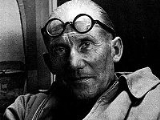
Le Corbusier's portrait was featured on the Swiss ten francs banknote, pictured with his distinctive eyeglasses. There is a Le Corbusier Boulevard in Laval, QuebecLaval, Quebec

Ville de Laval, Qubec, Canada|-| style="background:#efefef;" align="center" colspan="2" |...
, CanadaCanada

Canada is the world's second-largest country by total area, occupying most of northern North America....
 and a Le Corbusier square exists in his hometown of La Chaux-de-FondsLa Chaux-de-Fonds

La Chaux-de-Fonds is a city located in the Jura mountains in Switzerland....
, SwitzerlandSwitzerland

Switzerland , officially the Swiss Confederation, is a landlocked Alpine country in Central Europe....
. There is a Le Corbusier street in the partido of MalvinasMalvinas

Islas Malvinas are the name of two groups of islands:...
 Argentinas, Province of Buenos AiresBuenos Aires

|-| || AR-C|-| Chief of govt. || Jorge Telerman...
, ArgentinaArgentina

Argentina is a country in southern South America....
.

See also

– thumbnail images of buildings and articles
  • ModernismModernism

    Modernism is a trend of thought which affirms the power of human beings to make, improve and reshape their environment, with...


Further reading

  • Weber, Nicholas Fox, forthcoming Le Corbusier biography, Alfred A. Knopf, 2008
  • Marco Venturi, Le Corbusier Algiers Plans,
  • Behrens, Roy R. (2005). COOK BOOK: Gertrude Stein, William Cook and Le Corbusier. Dysart, Iowa: Bobolink Books. ISBN 0-9713244-1-7.
  • Eliel, Carol S. (2002). L'Esprit Nouveau: Purism in Paris, 1918 - 1925. New York: Harry N. Abrams, Inc. ISBN 0-8109-6727-8.
  • Naïma Jornod and Jean-Pierre Jornod, Le Corbusier (Charles Edouard Jeanneret), catalogue raisonné de l’oeuvre peint, Skira, 2005, ISBN 8876242031

External links

  • - Official website