
Home      Discussion      Topics      Dictionary      Almanac
Signup       Login
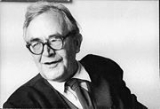
Karl Barth

Karl Barth

Overview
Karl Barth was a Swiss
Switzerland
Switzerland name of one of the Swiss cantons. ; ; ; or ), in its full name the Swiss Confederation , is a federal republic consisting of 26 cantons, with Bern as the seat of the federal authorities. The country is situated in Western Europe,Or Central Europe depending on the definition....

 Reformed
Reformed churches
The Reformed churches are a group of Protestant denominations characterized by Calvinist doctrines. They are descended from the Swiss Reformation inaugurated by Huldrych Zwingli but developed more coherently by Martin Bucer, Heinrich Bullinger and especially John Calvin...

 theologian whom critics hold to be among the most important Christian thinkers of the 20th century; Pope Pius XII
Pope Pius XII
The Venerable Pope Pius XII , born Eugenio Maria Giuseppe Giovanni Pacelli , reigned as Pope, head of the Catholic Church and sovereign of Vatican City State, from 2 March 1939 until his death in 1958....

 described him as the most important theologian since Thomas Aquinas
Thomas Aquinas
Thomas Aquinas, O.P. , also Thomas of Aquin or Aquino, was an Italian Dominican priest of the Catholic Church, and an immensely influential philosopher and theologian in the tradition of scholasticism, known as Doctor Angelicus, Doctor Communis, or Doctor Universalis...

. Beginning with his experience as a pastor, he rejected his training in the predominant liberal
Liberal Christianity
Liberal Christianity, sometimes called liberal theology, is an umbrella term covering diverse, philosophically and biblically informed religious movements and ideas within Christianity from the late 18th century and onward...

 theology typical of 19th-century European Protestantism
Protestantism
Protestantism is one of the three major groupings within Christianity. It is a movement that began in Germany in the early 16th century as a reaction against medieval Roman Catholic doctrines and practices, especially in regards to salvation, justification, and ecclesiology.The doctrines of the...

.
Discussion
Ask a question about 'Karl Barth'
Start a new discussion about 'Karl Barth'
Answer questions from other users
Full Discussion Forum
 
Quotations

The Gospel is not a religious message to inform mankind of their divinity or to tell them how they may become divine. The Gospel proclaims a God utterly distinct from men.

The power of God can be detected neither in the world of nature nor in the souls of men. It must not be confounded with any high, exalted, force, known or knowable.

We know that God is He whom we do not know, and that our ignorance is precisely the problem and the source of our knowledge. The Epistle to the Romans is a revelation of the unknown God; God chooses to come to man, not man to God. Even after the revelation man cannot know God, for he is ever the unknown God. In manifesting himself to man he is farther away than before.

The revelation in Jesus, just because it is the revelation of the righteousness of God is at the same time the strongest conceivable veiling and unknowableness of God. In Jesus, God really becomes a mystery, makes himself known as the unknown, speaks as the eternally Silent One.

Man as man can never know God: His wishing, seeking, and striving are all in vain.

It is evident that the relation to God with which the Bible is concerned does not have its source in the purple depths of the subconscious, and cannot be identical with what the deep-sea psychical research of our day describes in the narrower or broader sense as libido fulfilment.

Encyclopedia
Karl Barth was a Swiss
Switzerland
Switzerland name of one of the Swiss cantons. ; ; ; or ), in its full name the Swiss Confederation , is a federal republic consisting of 26 cantons, with Bern as the seat of the federal authorities. The country is situated in Western Europe,Or Central Europe depending on the definition....

 Reformed
Reformed churches
The Reformed churches are a group of Protestant denominations characterized by Calvinist doctrines. They are descended from the Swiss Reformation inaugurated by Huldrych Zwingli but developed more coherently by Martin Bucer, Heinrich Bullinger and especially John Calvin...

 theologian whom critics hold to be among the most important Christian thinkers of the 20th century; Pope Pius XII
Pope Pius XII
The Venerable Pope Pius XII , born Eugenio Maria Giuseppe Giovanni Pacelli , reigned as Pope, head of the Catholic Church and sovereign of Vatican City State, from 2 March 1939 until his death in 1958....

 described him as the most important theologian since Thomas Aquinas
Thomas Aquinas
Thomas Aquinas, O.P. , also Thomas of Aquin or Aquino, was an Italian Dominican priest of the Catholic Church, and an immensely influential philosopher and theologian in the tradition of scholasticism, known as Doctor Angelicus, Doctor Communis, or Doctor Universalis...

. Beginning with his experience as a pastor, he rejected his training in the predominant liberal
Liberal Christianity
Liberal Christianity, sometimes called liberal theology, is an umbrella term covering diverse, philosophically and biblically informed religious movements and ideas within Christianity from the late 18th century and onward...

 theology typical of 19th-century European Protestantism
Protestantism
Protestantism is one of the three major groupings within Christianity. It is a movement that began in Germany in the early 16th century as a reaction against medieval Roman Catholic doctrines and practices, especially in regards to salvation, justification, and ecclesiology.The doctrines of the...

.

Instead he embarked on a new theological path initially called dialectical theology, due to its stress on the paradoxical nature of divine truth (e.g., God's relationship to humanity embodies both grace and judgment). Other critics have referred to Barth as the father of neo-orthodoxy
Neo-orthodoxy
Neo-orthodoxy, in Europe also known as theology of crisis and dialectical theology,is an approach to theology in Protestantism that was developed in the aftermath of the First World War...

 — a term emphatically rejected by Barth himself. The most accurate description of his work might be "a theology of the Word." Barth's theological thought emphasized the sovereignty of God, particularly through his interpretation of the Calvinistic doctrine of election
Predestination
Predestination, in theology is the doctrine that all events have been willed by God. John Calvin interpreted biblical predestination to mean that God willed eternal damnation for some people and salvation for others...

.

Early life and education


Born in Basel
Basel
Basel or Basle In the national languages of Switzerland the city is also known as Bâle , Basilea and Basilea is Switzerland's third most populous city with about 166,000 inhabitants. Located where the Swiss, French and German borders meet, Basel also has suburbs in France and Germany...

, Barth spent his childhood years in Bern. From 1911 to 1921 he served as a Reformed
Reformed churches
The Reformed churches are a group of Protestant denominations characterized by Calvinist doctrines. They are descended from the Swiss Reformation inaugurated by Huldrych Zwingli but developed more coherently by Martin Bucer, Heinrich Bullinger and especially John Calvin...

 pastor in the village of Safenwil
Safenwil
Safenwil is a municipality in the district of Zofingen in the canton of Aargau in Switzerland.-History:The first settlement in the area was a Roman era estate on a mule track from the Wigger valley toward Vindonissa. This was followed by a small Alamanni camp or settlement...

 in the canton
Cantons of Switzerland
The 26 cantons of Switzerland are the member states of the federal state of Switzerland. Each canton was a fully sovereign state with its own borders, army and currency from the Treaty of Westphalia until the establishment of the Swiss federal state in 1848...

 Aargau
Aargau
Aargau is one of the more northerly cantons of Switzerland. It comprises the lower course of the river Aare, which is why the canton is called Aar-gau .-History:...

. In 1913 he married Nelly Hoffmann, a talented violinist. They had a daughter and four sons, one of whom was the New Testament scholar Markus Barth (October 6, 1915 – July 1, 1994). Later he was professor of theology
Theology
Theology is the systematic and rational study of religion and its influences and of the nature of religious truths, or the learned profession acquired by completing specialized training in religious studies, usually at a university or school of divinity or seminary.-Definition:Augustine of Hippo...

 in Göttingen
Göttingen
Göttingen is a university town in Lower Saxony, Germany. It is the capital of the district of Göttingen. The Leine river runs through the town. In 2006 the population was 129,686.-General information:...

 (1921–1925), Münster
Münster
Münster is an independent city in North Rhine-Westphalia, Germany. It is located in the northern part of the state and is considered to be the cultural centre of the Westphalia region. It is also capital of the local government region Münsterland...

 (1925–1930) and Bonn
Bonn
Bonn is the 19th largest city in Germany. Located in the Cologne/Bonn Region, about 25 kilometres south of Cologne on the river Rhine in the State of North Rhine-Westphalia, it was the capital of West Germany from 1949 to 1990 and the official seat of government of united Germany from 1990 to 1999....

 (1930–1935) (Germany
Germany
Germany , officially the Federal Republic of Germany , is a federal parliamentary republic in Europe. The country consists of 16 states while the capital and largest city is Berlin. Germany covers an area of 357,021 km2 and has a largely temperate seasonal climate...

). While serving at Göttingen he met Charlotte von Kirschbaum
Charlotte von Kirschbaum
Charlotte von Kirschbaum was a German theologian, and pupil of Karl Barth.Charlotte von Kirschbaum was born in Ingolstadt. In 1916 her father died in the war. This induced her to be trained as a nurse...

, who became his long-time secretary and assistant; she played a large role in the writing of his epic the Church Dogmatics. He had to leave Germany in 1935 after he refused to swear allegiance to Adolf Hitler
Adolf Hitler
Adolf Hitler was an Austrian-born German politician and the leader of the National Socialist German Workers Party , commonly referred to as the Nazi Party). He was Chancellor of Germany from 1933 to 1945, and head of state from 1934 to 1945...

. Barth went back to Switzerland
Switzerland
Switzerland name of one of the Swiss cantons. ; ; ; or ), in its full name the Swiss Confederation , is a federal republic consisting of 26 cantons, with Bern as the seat of the federal authorities. The country is situated in Western Europe,Or Central Europe depending on the definition....

 and became professor in Basel (1935–1962).

Barth was originally trained in German Protestant
Protestantism
Protestantism is one of the three major groupings within Christianity. It is a movement that began in Germany in the early 16th century as a reaction against medieval Roman Catholic doctrines and practices, especially in regards to salvation, justification, and ecclesiology.The doctrines of the...

 Liberalism
Liberal Christianity
Liberal Christianity, sometimes called liberal theology, is an umbrella term covering diverse, philosophically and biblically informed religious movements and ideas within Christianity from the late 18th century and onward...

 under such teachers as Wilhelm Herrmann
Wilhelm Herrmann
Johann Wilhelm Herrmann was a Reformed German theologian.Hermann taught at Halle before becoming professor at Marburg. Influenced by Kant and Ritschl, his theology was in the idealist tradition, seeing God as the power of goodness. Jesus was to be seen as an exemplary man. Even if Jesus never...

, but reacted against this theology at the time of the First World War
World War I
World War I , which was predominantly called the World War or the Great War from its occurrence until 1939, and the First World War or World War I thereafter, was a major war centred in Europe that began on 28 July 1914 and lasted until 11 November 1918...

. His reaction was fed by several factors, including his commitment to the German and Swiss Religious Socialist
International League of Religious Socialists
The International League of Religious Socialists is an umbrella organization of religious socialist movements in political parties throughout the world. Founded in the 1920s, it has member groups in 21 countries totalling 200,000 members...

 movement surrounding men like Hermann Kutter
Hermann Kutter
Hermann Kutter was a Swiss Lutheran theologian. Together with Leonhard Ragaz, he was one of the founders of Christian Socialism in Switzerland. He was heavily influenced by Christoph Blumhardt. He combined Blumhardt's expectation of a coming Kingdom of God with a belief in socialist progress...

, the influence of the Biblical Realism movement surrounding men like Christoph Blumhardt
Christoph Blumhardt
Christoph Blumhardt was a German Lutheran theologian and one of the founders of Christian Socialism in Germany and Switzerland. He was a well-known preacher. In 1899 he announced his support for socialism and joined the Social Democratic Party of Germany; for this, he lost his position as minister...

 and Søren Kierkegaard
Søren Kierkegaard
Søren Aabye Kierkegaard was a Danish Christian philosopher, theologian and religious author. He was a critic of idealist intellectuals and philosophers of his time, such as Georg Wilhelm Friedrich Hegel, Friedrich Wilhelm Joseph Schelling and Karl Wilhelm Friedrich Schlegel...

, and the effect of the skeptical philosophy
Skepticism
Skepticism has many definitions, but generally refers to any questioning attitude towards knowledge, facts, or opinions/beliefs stated as facts, or doubt regarding claims that are taken for granted elsewhere...

 of Franz Overbeck
Franz Overbeck
Franz Camille Overbeck was a German Protestant theologian. In Anglo-American discourse, he is perhaps best known in regard to his friendship with Friedrich Nietzsche; while in German theological circles, Overbeck remains discussed for his own contributions.- Youth :Franz Overbeck was born in Saint...

.

The most important catalyst was, however, his reaction to the support most of his liberal teachers had for German war aims. The 1914 "Manifesto of the Ninety-Three German Intellectuals to the Civilized World
Manifesto of the Ninety-Three
The "Manifesto of the Ninety-Three" is the name commonly given to a 1914 proclamation endorsed by 93 prominent German scientists, scholars and artists, declaring their unequivocal support of German military actions in the early period of World War I. These actions were elsewhere called the Rape of...

" carried the signature of his former teacher Adolf von Harnack
Adolf von Harnack
Adolf von Harnack , was a German theologian and prominent church historian.He produced many religious publications from 1873-1912....

. Barth believed that his teachers had been misled by a theology which tied God too closely to the finest, deepest expressions and experiences of culture
Culture
Culture is a term that has many different inter-related meanings. For example, in 1952, Alfred Kroeber and Clyde Kluckhohn compiled a list of 164 definitions of "culture" in Culture: A Critical Review of Concepts and Definitions...

d human beings, into claiming divine support for a war which they believed was waged in support of that culture–the initial experience of which appeared to increase people's love of and commitment to that culture. Much of Barth's early theology can be seen as a reaction to the theology of Friedrich Schleiermacher.

The Epistle to the Romans


In his commentary The Epistle to the Romans (Ger. Der Römerbrief), particularly in the thoroughly re-written second edition of 1922, Barth argued that the God who is revealed in the cross of Jesus
Jesus
Jesus of Nazareth , commonly referred to as Jesus Christ or simply as Jesus or Christ, is the central figure of Christianity...

 challenges and overthrows any attempt to ally God with human cultures, achievements, or possessions. Many theologians and religious historians believe this work to be the most important theological treatise since Friedrich Schleiermacher's On Religion: Speeches to its Cultured Despisers.

In the decade following the First World War, Barth was linked with a number of other theologians–actually very diverse in outlook–who had reacted against their teachers' liberalism, in a movement known as "Dialectical Theology" (Ger. Dialektische Theologie). The members of the movement included Rudolf Bultmann
Rudolf Bultmann
Rudolf Karl Bultmann was a German theologian of Lutheran background, who was for three decades professor of New Testament studies at the University of Marburg...

, Eduard Thurneysen, Emil Brunner
Emil Brunner
Heinrich Emil Brunner was a Swiss Protestant theologian. Along with Karl Barth , he is commonly associated with neo-orthodoxy or the dialectical theology movement....

, and Friedrich Gogarten
Friedrich Gogarten
Friedrich Gogarten was a Lutheran theologian, co-founder of dialectical theology in Germany in the early 20th Century. He was born in Dortmund.-Career:...

.

Barmen Declaration


In 1934, as the Protestant Church attempted to come to terms with the Third Reich, Barth was largely responsible for the writing of the Barmen declaration
Barmen Declaration
The Barmen Declaration or The Theological Declaration of Barmen 1934 is a statement of the Confessing Church opposing the Nazi-supported "German Christians" movement known for its anti-Semitism and extreme nationalism...

 (Ger. Barmer Erklärung) which rejected the influence of Nazism
Nazism
Nazism, the common short form name of National Socialism was the ideology and practice of the Nazi Party and of Nazi Germany...

 on German Christianity–arguing that the Church
Christian Church
The Christian Church is the assembly or association of followers of Jesus Christ. The Greek term ἐκκλησία that in its appearances in the New Testament is usually translated as "church" basically means "assembly"...

's allegiance to the God of Jesus Christ should give it the impetus and resources to resist the influence of other 'lords'–such as the German Führer, Adolf Hitler
Adolf Hitler
Adolf Hitler was an Austrian-born German politician and the leader of the National Socialist German Workers Party , commonly referred to as the Nazi Party). He was Chancellor of Germany from 1933 to 1945, and head of state from 1934 to 1945...

. Barth mailed this declaration to Hitler personally. This was one of the founding documents of the Confessing Church
Confessing Church
The Confessing Church was a Protestant schismatic church in Nazi Germany that arose in opposition to government-sponsored efforts to nazify the German Protestant church.-Demographics:...

 and Barth was elected a member of its leadership council, the Bruderrat.

He was forced to resign from his professorship at the University of Bonn for refusing to swear an oath to Hitler. Barth then returned to his native Switzerland, where he assumed a chair in systematic theology at the University of Basel. In the course of his appointment he was required to answer a routine question asked of all Swiss civil servants: whether he supported the national defense. His answer was, "Yes, especially on the northern border!" In 1938 he wrote a letter to a Czech colleague, Josef Hromádka, in which he declared that soldiers who fought against the Third Reich were serving a Christian cause.

Church Dogmatics


Barth's theology found its most sustained and compelling expression through his thirteen-volume magnum opus, the Church Dogmatics
Church Dogmatics
Church Dogmatics is the thirteen-volume magnum opus of Swiss Protestant theologian Karl Barth, which was published in stages from 1932 to 1967.-Academic significance:...

(Ger. "Kirchliche Dogmatik"). Widely regarded as one of the most important theological works of the century, the Church Dogmatics represents the pinnacle of Barth's achievement as a theologian.

The Church Dogmatics address four major doctrines: Revelation, God, Creation, and Atonement or Reconciliation. Barth had initially also intended to complete his dogmatics addressing the doctrine of Redemption, but decided not to complete the project in the later years of his life.

Later life


After the end of the Second World War, Barth became an important voice in support both of German penitence and of reconciliation with churches abroad. Together with Hans-Joachim Iwand, he authored the Darmstadt Statement in 1947–a more concrete statement of German guilt and responsibility for the Third Reich and Second World War than the Stuttgart Declaration of Guilt
Stuttgart Declaration of Guilt
The Stuttgarter Schuldbekenntnis, known in English as the Stuttgart Declaration of Guilt, was a declaration issued on October 19, 1945 by the Council of the Evangelical Church in Germany , in which it confessed guilt for its inadequacies in opposition to the Nazis and the Third Reich.-Text:The...

 of 1945. In it, he made the point that the Church's willingness to side with anti-socialist and conservative forces had led to its susceptibility for National Socialist ideology. In the context of the developing Cold War
Cold War
The Cold War was the continuing state from roughly 1946 to 1991 of political conflict, military tension, proxy wars, and economic competition between the Communist World—primarily the Soviet Union and its satellite states and allies—and the powers of the Western world, primarily the United States...

, that controversial statement was rejected by anti-Communists in the West who supported the CDU
Christian Democratic Union (Germany)
The Christian Democratic Union of Germany is a Christian democratic and conservative political party in Germany. It is regarded as on the centre-right of the German political spectrum...

 course of re-militarization, as well as by East German dissidents, who believed that it did not sufficiently depict the dangers of Communism
Communism
Communism is a social, political and economic ideology that aims at the establishment of a classless, moneyless, revolutionary and stateless socialist society structured upon common ownership of the means of production...

. He was elected a Foreign Honorary Member of the American Academy of Arts and Sciences
American Academy of Arts and Sciences
The American Academy of Arts and Sciences is an independent policy research center that conducts multidisciplinary studies of complex and emerging problems. The Academy’s elected members are leaders in the academic disciplines, the arts, business, and public affairs.James Bowdoin, John Adams, and...

 in 1950. In the 1950s, Barth sympathized with the peace movement
Peace movement
A peace movement is a social movement that seeks to achieve ideals such as the ending of a particular war , minimize inter-human violence in a particular place or type of situation, often linked to the goal of achieving world peace...

 and opposed German rearmament.

Barth wrote a 1960 article for The Christian Century
The Christian Century
The Christian Century is a Christian magazine based in Chicago, Illinois. Considered the flagship magazine of U.S. mainline Protestantism, the biweekly reports on religious news; comments on theological, moral, and cultural issues; and reviews books, movies, and music...

regarding the "East-West question", in which he denied any inclination toward Eastern communism and stated he did not wish to live under Communism or wish anyone to be forced to do so; he acknowledged a fundamental disagreement with most of those around him, writing: "I do not comprehend how either politics or Christianity require or even permit such a disinclination to lead to the conclusions which the West has drawn with increasing sharpness in the past 15 years. I regard anticommunism as a matter of principle an evil even greater than communism itself."

In 1962, Barth visited the US and lectured at Princeton Theological Seminary
Princeton Theological Seminary
Princeton Theological Seminary is a theological seminary of the Presbyterian Church located in the Borough of Princeton, New Jersey in the United States...

; University of Chicago
University of Chicago
The University of Chicago is a private research university in Chicago, Illinois, USA. It was founded by the American Baptist Education Society with a donation from oil magnate and philanthropist John D. Rockefeller and incorporated in 1890...

; Union Theological Seminary
Union Theological Seminary & Presbyterian School of Christian Education
Union Presbyterian Seminary, located on the near north side of the city of Richmond, Virginia, is a theological seminary of the Presbyterian Church...

; and San Francisco Theological Seminary
San Francisco Theological Seminary
San Francisco Theological Seminary is a graduate school affiliated with Presbyterian Church located in San Anselmo, California. Founded in 1871, SFTS is a graduate theological institution that is focused on graduate theological education in the Reformed tradition...

. He was invited to be a guest at the Second Vatican Council
Second Vatican Council
The Second Vatican Council addressed relations between the Roman Catholic Church and the modern world. It was the twenty-first Ecumenical Council of the Catholic Church and the second to be held at St. Peter's Basilica in the Vatican. It opened under Pope John XXIII on 11 October 1962 and closed...

, after which he wrote a small volume, Ad Limina Apostolorum [At the Threshold of the Apostles] (Karl Barth, a Theological Legacy, page 26). Also in 1962, Barth was featured on the cover of the April 20 issue of Time, showing that his influence reached out of academic and ecclesiastical circles and into mainstream American religious culture.

Theology


Barth tries to recover the Doctrine of the Trinity in theology from its putative loss in liberalism
Liberal Christianity
Liberal Christianity, sometimes called liberal theology, is an umbrella term covering diverse, philosophically and biblically informed religious movements and ideas within Christianity from the late 18th century and onward...

. His argument follows from the idea that God is the object of God’s own self-knowledge, and revelation
Revelation
In religion and theology, revelation is the revealing or disclosing, through active or passive communication with a supernatural or a divine entity...

 in the Bible
Bible
The Bible refers to any one of the collections of the primary religious texts of Judaism and Christianity. There is no common version of the Bible, as the individual books , their contents and their order vary among denominations...

 means the self-unveiling to humanity
Human nature
Human nature refers to the distinguishing characteristics, including ways of thinking, feeling and acting, that humans tend to have naturally....

 of the God who cannot be discovered by humanity simply through its own intuition.

Election


One of the most influential and controversial features of Barth's Dogmatics was his doctrine of election
Predestination
Predestination, in theology is the doctrine that all events have been willed by God. John Calvin interpreted biblical predestination to mean that God willed eternal damnation for some people and salvation for others...

 (Church Dogmatics II/2). God chose each person to either be saved or damned based on purposes of the Divine will, and it was impossible to know why God chose some and not others. The Puritan
Puritan
The Puritans were a significant grouping of English Protestants in the 16th and 17th centuries. Puritanism in this sense was founded by some Marian exiles from the clergy shortly after the accession of Elizabeth I of England in 1558, as an activist movement within the Church of England...

s generally believed it was only after a long time of introspection that one could come to know whether God had elected or rejected oneself.

Barth's doctrine of election involves a firm rejection of the notion of an eternal, hidden decree. In keeping with his Christo-centric methodology, Barth argues that to ascribe the salvation or damnation of humanity to an abstract absolute decree is to make some part of God more final and definitive than God's saving act in Jesus Christ. God's absolute decree, if one may speak of such a thing, is God's gracious decision to be for humanity in the person of Jesus Christ. Drawing from the earlier Reformed tradition, Barth retains the notion of double predestination but makes Jesus himself the object of both divine election and reprobation simultaneously; Jesus embodies both God's election of humanity and God's rejection of human sin
Sin
In religion, sin is the violation or deviation of an eternal divine law or standard. The term sin may also refer to the state of having committed such a violation. Christians believe the moral code of conduct is decreed by God In religion, sin (also called peccancy) is the violation or deviation...

. While some regard this revision of the doctrine of election as an improvement on the Augustinian-Calvinist doctrine of the predestination of individuals, critics, namely Brunner, have charged that Barth's view amounts to a soft universalism
Christian Universalism
Christian Universalism is a school of Christian theology which includes the belief in the doctrine of universal reconciliation, the view that all human beings or all fallen creatures will ultimately be restored to right relationship with God....

.

Barth, Liberals and Fundamentalists


Although Barth's theology rejected German Protestant liberalism, his theology has usually not found favour with those at the other end of the theological spectrum: confessionalists
Confessionalism (religion)
Confessionalism, in a religious sense, is a belief in the importance of full and unambiguous assent to the whole of a religious teaching...

 and fundamentalists
Fundamentalism
Fundamentalism is strict adherence to specific theological doctrines usually understood as a reaction against Modernist theology. The term "fundamentalism" was originally coined by its supporters to describe a specific package of theological beliefs that developed into a movement within the...

. His doctrine of the Word of God, for instance, holds that Christ is the Word of God, and does not proceed by arguing or proclaiming that the Bible
Bible
The Bible refers to any one of the collections of the primary religious texts of Judaism and Christianity. There is no common version of the Bible, as the individual books , their contents and their order vary among denominations...

 must be uniformly historically and scientifically accurate, and then establishing other theological claims on that foundation.

Some fundamentalist critics have joined liberal
Liberal Christianity
Liberal Christianity, sometimes called liberal theology, is an umbrella term covering diverse, philosophically and biblically informed religious movements and ideas within Christianity from the late 18th century and onward...

 counterparts in referring to Barth as "neo-orthodox
Neo-orthodoxy
Neo-orthodoxy, in Europe also known as theology of crisis and dialectical theology,is an approach to theology in Protestantism that was developed in the aftermath of the First World War...

" because, while his theology retains most or all of the tenets of their understanding of Christianity
Christianity
Christianity is a monotheistic religion based on the life and teachings of Jesus as presented in canonical gospels and other New Testament writings...

, he is seen as rejecting the belief which is a linchpin of their theological system: biblical inerrancy
Biblical inerrancy
Biblical inerrancy is the doctrinal position that the Bible is accurate and totally free of error, that "Scripture in the original manuscripts does not affirm anything that is contrary to fact." Some equate inerrancy with infallibility; others do not.Conservative Christians generally believe that...

. Such critics believe the written text must be considered to be historically accurate and verifiable and see Barth's view as a separation of theological truth from historical truth. Barth could respond by saying that the claim that the foundation of theology is biblical inerrancy is to use a foundation other than Jesus Christ, and that our understanding of Scripture's accuracy and worth can only properly emerge from consideration of what it means for it to be a true witness to the incarnate Word, Jesus
Jesus
Jesus of Nazareth , commonly referred to as Jesus Christ or simply as Jesus or Christ, is the central figure of Christianity...

.

The relationship between Barth, liberalism, and fundamentalism goes far beyond the issue of inerrancy, however. From Barth's perspective, liberalism, as understood in the sense of the 19th century with Friedrich Schleiermacher and Hegel as its leading exponents and not necessarily expressed in any particular political ideology, is the divinization of human thinking. This, to him, inevitably leads one or more philosophical concepts to become the false God, thus attempting to block the true voice of the living God. This, in turn, leads to the captivity of theology by human ideology. In Barth's theology, he emphasizes again and again that human concepts of any kind, breadth or narrowness quite beside the point, can never be considered as identical to God's revelation. In this aspect, Scripture is also written human language, which bears witness to the self-revelation of God in Jesus Christ. Scripture cannot be considered as identical to God's self-revelation, which is properly only Jesus Christ. However, in his freedom and love, God truly reveals himself through human language and concepts, with a view toward their necessity in reaching fallen humanity. Thus Barth claims that Christ is truly presented in Scripture and the preaching of the church, echoing a stand expressed in his native Swiss Reformed Church's Helvetic Confession of the 16th century.

He opposes any attempts to closely relate theology and philosophy. His approach in that respect is predominately Christocentric, and is thus termed "kerygma
Kerygma
Kerygma is the Greek word used in the New Testament for preaching . It is related to the Greek verb κηρύσσω , to cry or proclaim as a herald, and means proclamation, announcement, or preaching.The New Testament teaches that as Jesus launched his public ministry he entered the synagogue and read from...

tic," as opposed to "apologetic".

Relationship with Charlotte von Kirschbaum


When Barth first met Charlotte von Kirschbaum
Charlotte von Kirschbaum
Charlotte von Kirschbaum was a German theologian, and pupil of Karl Barth.Charlotte von Kirschbaum was born in Ingolstadt. In 1916 her father died in the war. This induced her to be trained as a nurse...

 in 1924 he had already been married for 12 years to his wife, Nelly, with whom he had also had five children. In 1929, von Kirschbaum, with Barth's consent, moved into the Barth family household. This arrangement–described by one scholar as "convoluted, extremely painful for all concerned, yet not without integrity and joys"–lasted for 35 years.

A kind of household of three
Ménage à trois
Ménage à trois is a French term which originally described a domestic arrangement in which three people having sexual relations occupy the same household – the phrase literally translates as "household of three"...

 relationship developed between Barth, von Kirschbaum and Barth's wife, Nelly. The long-standing situation was not without its difficulties. "Lollo", as Barth called the 13-year-younger von Kirschbaum, once wrote to Barth's sister Gertrud Lindt in 1935, where she expressed her concern about the precarious situation:

"The alienation between Karl and Nelly has reached a degree which could hardly increase. This has certainly become accentuated by my existence."

The relationship caused great offence among many of Barth's friends, as well as his own mother. Barth's children suffered from the stress of the relationship. Barth and von Kirschbaum took semester break vacations together. While Nelly supplied the household and the children, von Kirschbaum and Barth shared an academic relationship. Barth has fallen victim to criticism for his relationship with Charlotte von Kirschbaum. One critic has written: "Part of any realistic response to the subject of Barth and von Kirschbaum must be anger." Hunsinger summarizes the influence of von Kirschbaum on Barth's work: "As his unique student, critic, researcher, adviser, collaborator, companion, assistant, spokesperson, and confidant, Charlotte von Kirschbaum was indispensable to him. He could not have been what he was, or have done what he did, without her."

In literature


In John Updike
John Updike
John Hoyer Updike was an American novelist, poet, short story writer, art critic, and literary critic....

's Roger's Version
Roger's Version
Roger's Version is a 1986 novel by John Updike about Roger Lambert, a theology professor in his fifties, whose rather complacent faith is challenged by Dale, an evangelical graduate student who believes he can prove that God exists with computer science...

, Roger Lambert is a professor of religion. Lambert is influenced by the works of Karl Barth. That is the primary reason that he rejects his student's attempt to use computational methods to understand God. Harry Mulisch's
Harry Mulisch
Harry Kurt Victor Mulisch was a Dutch author. He wrote more than 80 novels, plays, essays, poems and philosophical reflections. These have been translated into more than 20 languages....

 The Discovery of Heaven makes mentions of Barth's Church Dogmatics, as does David Markson's
David Markson
David Markson was an American novelist, born David Merrill Markson in Albany, New York. He is the author of several postmodern novels, including Springer's Progress, Wittgenstein's Mistress, and Reader's Block...

 The Last Novel. In the case of Mulisch and Markson, it is the ambitious nature of the Church Dogmatics that seems to be of significance. In the case of Updike, it is the emphasis on the idea of God as "Wholly Other" that is emphasized.

In Marilynne Robinson
Marilynne Robinson
-Biography:Robinson was born and grew up in Sandpoint, Idaho, and did her undergraduate work at Pembroke College, the former women's college at Brown University, receiving her B.A., magna cum laude in 1966, where she was elected to Phi Beta Kappa. She received her Ph.D...

's Gilead, the preacher John Ames reveres Barth's "Epistle to the Romans" and refers to it as his favorite book other than the Bible.

Whittaker Chambers
Whittaker Chambers
Whittaker Chambers was born Jay Vivian Chambers and also known as David Whittaker Chambers , was an American writer and editor. After being a Communist Party USA member and Soviet spy, he later renounced communism and became an outspoken opponent later testifying in the perjury and espionage trial...

 cites Barth in nearly all his books: Witness (p. 507), Cold Friday (p. 194), and Odyssey of a Friend (pp. 201, 231).

Quotations


  • Jesus does not give recipes that show the way to God as other teachers of religion do. He is Himself the way.

  • The best theology would need no advocates: it would prove itself.

  • Belief cannot argue with unbelief, it can only preach to it.

  • There is a notion that complete impartiality is the most fitting and indeed the normal disposition for true exegesis, because it guarantees complete absence of prejudice. For a short time, around 1910, this idea threatened to achieve almost a canonical status in Protestant theology. But now, we can quite calmly describe it as merely comical.
    • Church Dogmatics 1:2, 469

  • The center is not something which is under our control, but something that controls us.
    • Church Dogmatics

  • Barth’s dedication to the sole authority and power of the Word of God was illustrated for us… while we were in Basel. Barth was engaged in a dispute over the stained glass windows in the Basel Münster. The windows had been removed during World War II for fear they would be destroyed by bombs, and Barth was resisting the attempt to restore them to the church. His contention was that the church did not need portrayals of the gospel story given by stained glass windows. The gospel came to the church only through the Word proclaimed. …the incident was typical of Barth’s sole dedication to the Word.
    • Elizabeth Achtemeier, writing about Barth

  • To clasp the hands in prayer is the beginning of an uprising against the disorder of the world.

  • In the Resurrection the new world of the Holy Spirit touches the old world of the flesh, but touches it as a tangent touches a circle, that is, without touching it.
    • Barth 1933, p. 30

  • What expressions we used — in part taken over and in part newly invented! — above all, the famous ‘wholly other’ breaking in upon us ‘perpendicularly from above,’ the not less famous ‘infinite qualitative distinction’ between God and man, the vacuum, the mathematical point, and the tangent in which alone they must meet.
    • Barth 1960, p. 42

  • It may be that when the angels go about their task of praising God, they play only Bach. I am sure, however, that when they are together en famille they play Mozart and that then too our dear Lord listens with special pleasure.

  • His groundbreaking 1919 commentary commentary on Romans “fell like a bombshell on the playground of the theologians."
    • Karl Adam (in Das Hochland (June 1926), 276-7)

  • I haven't even read everything I wrote.
    • (possibly apocryphal response to a student who claimed to have read everything Professor Barth had written)

Writings

  • The epistle to the Romans By Karl Barth, E. C. Hoskyns, 1933, 1968 ISBN 0-19-500294-6
  • Karl Barth: centenary essays By Karl Barth, Stephen Sykes, 1989
  • Prayer and Preaching
  • Preaching Through the Christian Year ISBN 0-8028-1725-4
  • God Here and Now
  • Fides Quaerens Intellectum: Anselm's Proof of the Existence of God in the Context of His Theological Scheme, John Knox (1960); reprinted by Pickwick Publications (1985) ISBN 0-915138-75-1
  • Evangelical Theology: An Introduction
  • Church and State
  • The Humanity of God, 1960, John Knox Press, ISBN 0-8042-0612-0
  • The Christian Life , posthumous lecture fragments, ISBN 0-567-09320-4, ISBN 0-8028-3523-6
  • The Word in this World: Two Sermons by Karl Barth. Edited by Kurt I. Johanson. Regent Publishing (Vancouver, BC, Canada): 2007
  • "No Angels of Darkness and Light", The Christian Century, 20 January 1960, p. 72 (reprinted in Contemporary Moral Issues, Second Edition, Harry K. Girvetz, editor. Wadsworth Publishing Company, Inc., 1968)
  • The Göttingen Dogmatics: Instruction in the Christian Religion, Vol 1: ISBN 0-8028-2421-8: Text of Barth's Lectures in Göttingen

The Church Dogmatics in English translation

  • Volume I Part 1: Doctrine of the Word of God: Prolegomena to Church Dogmatics, hardcover: ISBN 0-567-09013-2, softcover: ISBN 0-567-05059-9
  • Volume I Part 2: Doctrine of the Word of God, hardcover: ISBN 0-567-09012-4, softcover: ISBN 0-567-05069-6
  • Volume II Part 1: The Doctrine of God: The Knowledge of God; The Reality of God, hardcover: ISBN 0-567-09021-3, softcover: ISBN 0-567-05169-2
  • Volume II Part 2: The Doctrine of God: The Election of God; The Command of God, hardcover: ISBN 0-567-09022-1, softcover: ISBN 0-567-05179-X
  • Volume III Part 1: The Doctrine of Creation: The Work of Creation, hardcover: ISBN 0-567-09031-0, softcover: ISBN 0-567-05079-3
  • Volume III Part 2: The Doctrine of Creation: The Creature, hardcover: ISBN 0-567-09032-9, softcover: ISBN 0-567-05089-0
  • Volume III Part 3: The Doctrine of Creation: The Creator and His Creature, hardcover: ISBN 0-567-09033-7, softcover: ISBN 0-567-05099-8
  • Volume III Part 4: The Doctrine of Creation: : The Command of God the Creator, hardcover: ISBN 0-567-09034-5, softcover: ISBN 0-567-05109-9
  • Volume IV Part 1: The Doctrine of Reconciliation, hardcover: ISBN 0-567-09041-8, softcover: ISBN 0-567-05129-3
  • Volume IV Part 2: Doctrine of Reconciliation: Jesus Christ the Servant As Lord, hardcover: ISBN 0-567-09042-6, softcover: ISBN 0-567-05139-0
  • Volume IV Part 3, 1st half: Doctrine of Reconciliation: Jesus Christ the True Witness, hardcover: ISBN 0-567-09043-4, softcover: ISBN 0-567-05189-7
  • Volume IV Part 3, 2nd half: Doctrine of Reconciliation: Jesus Christ the True Witness, hardcover: ISBN 0-567-09044-2, softcover: ISBN 0-567-05149-8
  • Volume IV Part 4 (unfinished): Doctrine of Reconciliation: The Foundation of the Christian Life (Baptism), hardcover: ISBN 0-567-09045-0, softcover: ISBN 0-567-05159-5
  • Volume V: Church Dogmatics: Contents and Indexes, hardcover: ISBN 0-567-09046-9, softcover: ISBN 0-567-05119-6
  • Church Dogmatics, 14 volume set, softcover, ISBN 0-567-05809-3
  • Dogmatics in Outline, (1947 lectures), Harper Perennial, 1959, ISBN 0-06-130056-X
  • Church Dogmatics: A Selection, with intro. by H. Gollwitzer, 1961, Westminster John Knox Press 1994 edition, ISBN 0-664-25550-7
  • Church Dogmatics, dual language German and English, books with CDROM, ISBN 0-567-08374-8
  • Church Dogmatics, dual language German and English, CDROM only, ISBN 0-567-08364-0

  • On Religion. Edited and translated by Garrett Green. London: T & T Clark, 2006.

Audio

  • Evangelical Theology, American lectures 1962 - given by Barth in Chicago, Illinois and Princeton, New Jersey
    Princeton, New Jersey
    Princeton is a community located in Mercer County, New Jersey, United States. It is best known as the location of Princeton University, which has been sited in the community since 1756...

    , ISBN 978-0-9785738-0-5 and ISBN 0-9785738-0-3

Secondary bibliography

  • Bradshaw, Timothy. 1988. Trinity and ontology: a comparative study of the theologies of Karl Barth and Wolfhart Pannenberg
    Wolfhart Pannenberg
    Wolfhart Pannenberg is a German Christian theologian. His emphasis on history as revelation, centred on the Resurrection of Christ, has proved important in stimulating debate in both Protestant and Catholic theology, as well as with non-Christian thinkers.-Life and views:Pannenberg was baptized as...

    . Rutherford House
    Rutherford House
    Rutherford House was the home of the first Premier of Alberta, Alexander Cameron Rutherford from 1911 to 1941. It is now an Alberta Provincial Historic Site.-Overview:...

     Books (reprint edn. Lewiston; Lampeter: Edwin Mellen Press for Rutherford House, Edinburgh, 1992).
  • Bromiley, Geoffrey William. 1979. An introduction to the theology of Karl Barth. Grand Rapids, Mich. : William B. Eerdmans Pub. Co.,
  • Busch, Eberhard. Karl Barth: His Life from Letters and Autobiographical Texts. Fortress Press, 1976
  • __________. The Great Passion: An Introduction to Karl Barth's Theology. Eerdmans, 2004.
  • Chung, Paul S., Karl Barth: God's Word in Action. James Clarke & Co, Cambridge (2008), ISBN 978-0-227-17266-7
  • Clark, Gordon
    Gordon Clark
    Gordon Haddon Clark was an American philosopher and Calvinist theologian. He was a primary advocate for the idea of presuppositional apologetics and was chairman of the Philosophy Department at Butler University for 28 years...

    . 1963. Karl Barth's Theological Method., Trinity Foundation, (1997), ISBN 0-940931-51-6.
  • Fiddes, Paul
    Paul Fiddes
    Paul Stuart Fiddes is a British Baptist theologian. He is Professor of Systematic Theology in the University of Oxford and was formerly Principal of Regent's Park College and Chairman of the Theology Faculty...

    . 1990. 'The status of women in the thought of Karl Barth', in Janet Martin Soskice, ed., After Eve [alternative title After Eve: women, theology and the Christian tradition], pp. 138–55. Marshall Pickering
  • Mark Galli (2000). "Neo-Orthodoxy: Karl Barth". Christianity Today
    Christianity Today
    Christianity Today is an Evangelical Christian periodical based in Carol Stream, Illinois. It is the flagship publication of its parent company Christianity Today International, claiming circulation figures of 140,000 and readership of 290,000...

    .
  • Gorringe, Timothy
    Timothy Gorringe
    The Reverend Professor Timothy Jervis Gorringe is St Luke's Professor of Theological Studies in the University of Exeter, England.Born in 1946, Timothy Gorringe was educated at St Edmund Hall, Oxford and Sarum Theological College...

     Karl Barth: Against Hegemony, (Oxford: OUP, 1999)
  • Hunsinger, George. How to Read Karl Barth: The Shape of His Theology‎. Oxford University Press, 1993.
  • Jae Jin Kim, Die Universalitaet der Versoehnung im Gottesbund. Zur biblischen Begruendung der Bundestheologie in der kirchlichen Dogmatik Karl Barths, Lit Verlag, 1992.
  • McCormack, Bruce Karl Barth’s Critically Realistic Dialectical Theology: Its Genesis and Development, 1909–1936 : Oxford University Press, USA (March 27, 1997), ISBN 978-0-19-826956-4
  • McKenny, Gerald. "The Analogy of Grace: Karl Barth's Moral Theology." Oxford: OUP, 2010. ISBN 0-19-958267-X.
  • Mangina, Joseph L., Karl Barth: Theologian of Christian Witness. Louisville
    Louisville, Kentucky
    Louisville is the largest city in the U.S. state of Kentucky, and the county seat of Jefferson County. Since 2003, the city's borders have been coterminous with those of the county because of a city-county merger. The city's population at the 2010 census was 741,096...

    : Westminster John Knox, 2004.
  • Webster, John, ed. The Cambridge Companion to Karl Barth. Cambridge University Press, 2000.
  • _________. Barth. 2nd ed., Continuum, 2004.

External links