All Topics  
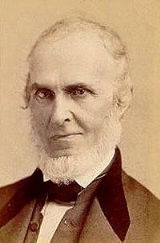
John Greenleaf Whittier

 
John Greenleaf Whittier

   Email Print
   Bookmark   Link


John Greenleaf Whittier


John Greenleaf Whittier (December 17, 1807 – September 7, 1892) was an influential American Quaker poet
Poet

A poet is a person who writes poetry....
 and ardent advocate of the abolition of slavery
Slavery

Slavery is a form of forced labor where a person is compelled to Labor for another . Slaves are held against their will from the time of their capture, purchase, or birth, and are deprived of the right to leave, to refuse to work, or to receive Remuneration in return for their labor....
 in the United States
United States

The United States of America is a Federal government constitutional republic comprising U.S. state and a federal district. The country is situated mostly in central North America, where its Contiguous United States and Washington, D.C., the Capital districts and territories, lie between the Pacific Ocean and Atlantic Oceans, Borders of the U...
. He is usually listed as one of the Fireside Poets
Fireside Poets

The Fireside Poets were a group of 19th-century American poets from New England....
.

Greenleaf Whittier was born to John and Abigail (Hussey) at their rural homestead
John Greenleaf Whittier Homestead

The John Greenleaf Whittier Homestead is the birthplace and home of American Quaker poet and abolitionism John Greenleaf Whittier. It currently serves as a museum....
 near Haverhill, Massachusetts
Haverhill, Massachusetts

Haverhill is a city in Essex County, Massachusetts, Massachusetts, United States. The population was 58,969 at the 2000 census. Haverhill is home to Northern Essex Community College....
 on December 17, 1807. He grew up on the farm
Farm

A farm is an area of land, including various structures, devoted primarily to the practice of producing and managing food , fibers and, increasingly, fuel....
 in a household with his parents, a brother and two sisters, a maternal aunt and paternal uncle, and a constant flow of visitors and hired hands for the farm.


Discussion
Ask a question about 'John Greenleaf Whittier'
Start a new discussion about 'John Greenleaf Whittier'
Answer questions from other users
Full Discussion Forum


Quotations


A manly form at her side she saw, And joy was duty and love was law. Then she took up her burden of life again, Saying only, It might have been.

Maud Muller, on a summer's day, Raked the meadows sweet with hay. Beneath her torn hat glowed the wealth Of simple beauty and rustic health.

So, closing his heart, the Judge rode on, And Maud was left in the field alone. But the lawyers smiled that afternoon, When he hummed in court an old love-tune

He wedded a wife of richest dower, Who lived for fashion, as he for power. Yet oft, in his marble hearth's bright glow, He watched a picture come and go: And sweet Maud Muller's hazel eyes Looked out in their innocent surprise.


Encyclopedia


John Greenleaf Whittier (December 17, 1807 – September 7, 1892) was an influential American Quaker poet
Poet

A poet is a person who writes poetry....
 and ardent advocate of the abolition of slavery
Slavery

Slavery is a form of forced labor where a person is compelled to Labor for another . Slaves are held against their will from the time of their capture, purchase, or birth, and are deprived of the right to leave, to refuse to work, or to receive Remuneration in return for their labor....
 in the United States
United States

The United States of America is a Federal government constitutional republic comprising U.S. state and a federal district. The country is situated mostly in central North America, where its Contiguous United States and Washington, D.C., the Capital districts and territories, lie between the Pacific Ocean and Atlantic Oceans, Borders of the U...
. He is usually listed as one of the Fireside Poets
Fireside Poets

The Fireside Poets were a group of 19th-century American poets from New England....
.

Biography


Early life and work

John Greenleaf Whittier was born to John and Abigail (Hussey) at their rural homestead
John Greenleaf Whittier Homestead

The John Greenleaf Whittier Homestead is the birthplace and home of American Quaker poet and abolitionism John Greenleaf Whittier. It currently serves as a museum....
 near Haverhill, Massachusetts
Haverhill, Massachusetts

Haverhill is a city in Essex County, Massachusetts, Massachusetts, United States. The population was 58,969 at the 2000 census. Haverhill is home to Northern Essex Community College....
 on December 17, 1807. He grew up on the farm
Farm

A farm is an area of land, including various structures, devoted primarily to the practice of producing and managing food , fibers and, increasingly, fuel....
 in a household with his parents, a brother and two sisters, a maternal aunt and paternal uncle, and a constant flow of visitors and hired hands for the farm. Their farm was not very profitable. There was only enough money to get by. John himself was not cut out for hard farm labor and suffered from bad health and physical frailty his whole life. Although he received little formal education, he was an avid reader who studied his father’s six books on Quakerism until their teachings became the foundation of his ideology. Whittier was heavily influenced by the doctrines of his religion, particularly its stress on humanitarianism, compassion, and social responsibility.

Whittier was first introduced to poetry by a teacher. His sister sent his first poem, "The Exile's Departure", to the Newburyport
Newburyport, Massachusetts

Newburyport is a small coastal city in Essex County, Massachusetts, Massachusetts, United States, 38 miles northeast of Boston, Massachusetts. The population was 17,189 at the United States Census, 2000....
 Free Press without his permission and its editor, William Lloyd Garrison
William Lloyd Garrison

William Lloyd Garrison was a prominent United States abolitionism, journalist, and social reformer. He is best known as the editor of the radical abolitionist newspaper, The Liberator, and as one of the founders of the American Anti-Slavery Society, he promoted "immediate emancipation" of slaves in the United States....
, published it on June 8, 1826. As a boy, it was discovered that Whittier was color-blind
Color blindness

Color blindness, a color vision deficiency, is the inability to perceive differences between some of the colors that others can distinguish. It is most often of genetic nature, but may also occur because of eye, nerve, or brain damage, or due to exposure to certain chemicals....
 when he was unable to see a difference between ripe and unripe strawberries
Strawberry

Fragaria is the name of a genus of flowering plants in the rose family, Rosaceae, commonly known as strawberries for their edible fruits....
. Garrison as well as another local editor encouraged Whittier to attend the recently-opened Haverhill Academy. To raise money to attend the school, Whittier became a shoemaker for a time, and a deal was made to pay part of his tuition with food from the family farm. Before his second term, he earned money to cover tuition by serving as a teacher in a one-room schoolhouse in what is now Merrimac, Massachusetts
Merrimac, Massachusetts

Merrimac is a New England town in Essex County, Massachusetts, Massachusetts, in the United States, and on the southeastern border of New Hampshire....
. He attended Haverhill Academy from 1827 to 1828 and completed a high school education in only two terms.

Garrison gave Whittier the job of editor of the National Philanthropist, a Boston-based temperance
Temperance movement

A temperance movement attempts to reduce the amount of alcohol consumed within a community or society in general -- and even to prohibit its production and consumption entirely....
 weekly. Shortly after a change in management, Garrison reassigned him as editor of the weekly American Manufacturer in Boston. Whittier became an out-spoken critic of President Andrew Jackson
Andrew Jackson

Andrew Jackson was the List of Presidents of the United States President of the United States . He was List of governors of Florida of Florida , commander of the American forces at the Battle of New Orleans , and eponym of the era of Jacksonian democracy....
, and by 1830 was editor of the prominent New England Weekly Review in Hartford, Connecticut
Hartford, Connecticut

Hartford is the Capital of the Connecticut. It is located in Hartford County, Connecticut on the Connecticut River, north of the center of the state, south of Springfield, Massachusetts....
, the most influential Whig journal in New England
New England

New England is a region of the United States located in the northeastern corner of the country, bounded by the Atlantic Ocean, Canada and New York State, and consisting of the modern U.S....
. In 1833 he published The Song of the Vermonters, 1779
The Song of the Vermonters, 1779

"The Song of the Vermonters, 1779 " is a poem by the American Quaker poet John Greenleaf Whittier about the U.S. state of Vermont during its years of independence , sometimes called the Vermont Republic....
,
which he had anonymously inserted in The New England Magazine. The poem was erroneously attributed to Ethan Allen
Ethan Allen

Ethan Allen was an early American revolutionary and guerrilla warfare leader who fought against the Province of New York's settlement of Vermont, and later for Vermont's independence during the American Revolutionary War....
 for nearly sixty years.

Abolitionist activity

During the 1830s, Whittier became interested in politics, but after losing a Congressional election in 1832, he suffered a nervous breakdown and returned home at age twenty-five. The year 1833 was a turning point for Whittier; he resurrected his correspondence with Garrison, and the passionate abolitionist began to encourage the young Quaker to join his cause.

In 1833, Whittier published the antislavery pamphlet Justice and Expediency, and from there dedicated the next twenty years of his life to the abolitionist cause. The controversial pamphlet destroyed all of his political hopes—as his demand for immediate emancipation alienated both northern businessmen and southern slaveholders—but it also sealed his commitment to a cause that he deemed morally correct and socially necessary. He was a founding member of the American Anti-Slavery Society
American Anti-Slavery Society

The American Anti-Slavery Society was an Abolitionism society founded by William Lloyd Garrison and Arthur Tappan. Frederick Douglass was a key leader of the society and often spoke at its meetings....
 and signed the Anti-Slavery Declaration of 1833, which he often considered the most significant action of his life.

Whittier's political skill made him useful as a lobbyist, and his willingness to badger anti-slavery congressional leaders into joining the abolitionist cause was invaluable. From 1835 to 1838, he traveled widely in the North, attending conventions, securing votes, speaking to the public, and lobbying politicians. As he did so, Whittier received his fair share of violent responses, being several times mobbed, stoned, and run out of town. From 1838 to 1840, he was editor of The Pennsylvania Freeman in Philadelphia
Philadelphia, Pennsylvania

Philadelphia is the largest city in Pennsylvania and the List of United States cities by population city in the United States. It is the fifth-largest metropolitan area and fourth-largest urban area by population in the United States, the nation's fourth-largest consumer media market as ranked by the Nielsen Media Research, and the 49th-most...
, one of the leading antislavery papers in the North, formerly known as the National Enquirer
National Enquirer (1836)

The National Enquirer was an abolitionist newspaper founded by Quaker Benjamin Lundy in 1836.. It was renamed the Pennsylvania Freeman after John Greenleaf Whittier took over as editor in 1838....
. In May 1838, the publication moved its offices to the newly-opened Pennsylvania Hall on North Sixth Street, which was shortly after burned by a pro-slavery mob. Whittier also continued to write poetry and nearly all of his poems in this period dealt with the problem of slavery.

By the end of the 1830s, the unity of the abolitionist movement had begun to fracture. Whittier stuck to his belief that moral action apart from political effort was futile. He knew that success required legislative change, not merely moral suasion. This opinion alone engendered a bitter split from Garrison, and Whittier went on to become a founding member of the Liberty Party
Liberty Party

Liberty Party may refer to:* Liberty Party * Liberty Party , United States* Liberty Party * Liberty of United Kingdom * Liberty Party , United States...
 in 1839. By 1843, he was announcing the triumph of the fledgling party: "Liberty party is no longer an experiment. It is vigorous reality, exerting... a powerful influence". Whittier also unsuccessfully encouraged Ralph Waldo Emerson
Ralph Waldo Emerson

Ralph Waldo Emerson was an American essayist, philosopher, poet, and leader of the transcendentalism movement in the early 19th century. His teachings directly influenced the growing New Thought movement of the mid 1800s....
 and Henry Wadsworth Longfellow
Henry Wadsworth Longfellow

Henry Wadsworth Longfellow was an United States educator and poet whose works include "Paul Revere's Ride ", The Song of Hiawatha, and "Evangeline"....
 to join the party. He took editing jobs with the Middlesex Standard in Lowell, Massachusetts
Lowell, Massachusetts

Lowell is a city in Middlesex County, Massachusetts, Massachusetts, United States. As of the 2000 census, the city had a total population of 105,167....
 and the Essex Transcript in Amesbury until 1844. While in Lowell, he met Lucy Larcom
Lucy Larcom

Lucy Larcom was an American poet....
, who became a lifelong friend.

In 1845, he began writing his essay "The Black Man" which included an anecdote about John Fountain, a free black who was jailed in Virginia for helping slaves escape. After his release, Fountain went on a speaking tour and thanked Whittier for writing his story.

Around this time, the stresses of editorial duties, worsening health, and dangerous mob violence caused him to have a physical breakdown. Whittier went home to Amesbury, and remained there for the rest of his life, ending his active participation in abolition. Even so, he continued to believe that the best way to gain abolitionist support was to broaden the Liberty Party’s political appeal, and Whittier persisted in advocating the addition of other issues to their platform. He eventually participated in the evolution of the Liberty Party into the Free Soil Party
Free Soil Party

The Free Soil Party was a short-lived political party in the United States active in the 1848 and 1852 presidential elections, and in some state elections....
, and some say his greatest political feat was convincing Charles Sumner
Charles Sumner

Charles Sumner was an United States and statesman from Massachusetts. An academic lawyer and a powerful orator, Sumner was the leader of the antislavery forces in Massachusetts and a leader of the Radical Republican in the United States Senate during the American Civil War and Reconstruction era of the United States along with Thaddeus Stev...
 to run on the Free-Soil ticket for the U.S. Senate in 1850.

Beginning in 1847, Whittier was editor of Gamaliel Bailey's
Gamaliel Bailey

Gamaliel Bailey was an American journalist and abolitionist....
 The National Era, one of the most influential abolitionist newspapers in the North. For the next ten years it featured the best of his writing, both as prose and poetry. Being confined to his home and away from the action offered Whittier a chance to write better abolitionist poetry; he was even poet laureate for his party. Whittier's poems often used slavery to symbolize all kinds of oppression (physical, spiritual, economic), and his poems stirred up popular response because they appealed to feelings rather than logic.

Whittier produced two collections of antislavery poetry: Poems Written during the Progress of the Abolition Question in the United States, between 1830 and 1838 and Voices of Freedom (1846). He was an elector
Elector

An elector can be anyone who has a Voting in an election.* The prince-electors of the Holy Roman Empire were the highest college in the Imperial diet....
 in the presidential election of 1860
United States presidential election, 1860

The United States presidential election of 1860 set the stage for the American Civil War. The nation had been divided throughout most of the 1850s on questions of states' rights and slavery in the territories....
 and of 1864
United States presidential election, 1864

In the United States Presidential election of 1864, Abraham Lincoln was re-elected as president. Lincoln ran under the Republican Party banner against his former top Civil War general, the Democratic Party candidate, George B....
, voting for Abraham Lincoln
Abraham Lincoln

Abraham Lincoln was the List of Presidents of the United States President of the United States. He successfully led the country through its greatest internal crisis, the American Civil War, preserving the Union and ending slavery....
 both times.

The passage of the Thirteenth Amendment in 1865 ended both slavery and his public cause, so Whittier turned to other forms of poetry for the remainder of his life.

Later life

One of his most enduring works, Snow-Bound, was first published in 1866. Whittier was surprised by its financial success, earning some $10,000 from the first edition. In 1867, Whittier asked James Thomas Fields
James Thomas Fields

James Thomas Fields was an United States publisher and author....
 to get him a ticket to a reading by Charles Dickens
Charles Dickens

Charles John Huffam Dickens, Royal Society of Arts , pen-name "Boz", was the most popular English people novelist of the Victorian era, as well as a vigorous Reform movement....
 during the British author's visit to the United States. After the event, he wrote a letter describing his experience:

Whittier spent the last few winters of his life, from 1876 to 1892, at Oak Knoll, the home of his cousins in Danvers, Massachusetts
Danvers, Massachusetts

Danvers is a New England town in Essex County, Massachusetts, Massachusetts, United States. Located on the Danvers River near the northeastern coast of Massachusetts, Danvers is most widely known for its association with the 1692 Salem witch trials....
. Whittier died on September 7, 1892, at a friend's home in Hampton Falls, New Hampshire
Hampton Falls, New Hampshire

Hampton Falls is a New England town in Rockingham County, New Hampshire, New Hampshire, United States. The town was settled in 1638, was a part of Norfolk County, Massachusetts Colony from 1643 to 1679, and became a town in 1726....
. He is buried in Amesbury, Massachusetts
Amesbury, Massachusetts

The Town of Amesbury is a city in Essex County, Massachusetts, Massachusetts, United States. In 1890, 9798 people lived in Amesbury; in 1900, 9473; in 1910, 9894; in 1920, 10,036; and in 1940, 10,862....
.

Poetry

His first two published books were Legends of New England (1831) and the poem Moll Pitcher
Moll Pitcher

Moll Pitcher, born Mary Diamond was a clairvoyant and fortune-teller from Lynn, Massachusetts....
 (1832). In 1833 he published The Song of the Vermonters, 1779
The Song of the Vermonters, 1779

"The Song of the Vermonters, 1779 " is a poem by the American Quaker poet John Greenleaf Whittier about the U.S. state of Vermont during its years of independence , sometimes called the Vermont Republic....
,
which he had anonymously inserted in The New England Magazine. The poem was erroneously attributed to Ethan Allen
Ethan Allen

Ethan Allen was an early American revolutionary and guerrilla warfare leader who fought against the Province of New York's settlement of Vermont, and later for Vermont's independence during the American Revolutionary War....
 for nearly sixty years. In 1838, a mob burned Whittier out of his offices in the antislavery center of Pennsylvania Hall
Pennsylvania Hall

Pennsylvania Hall may be:*Pennsylvania Hall *Pennsylvania Hall *Pennsylvania Hall ...
 in Philadelphia.

Highly regarded in his lifetime and for a period thereafter, he is now largely remembered for his patriotic poem Barbara Frietchie, Snow-Bound, and a number of poems turned into hymn
Hymn

A hymn is a type of song, usually religious, specifically written for the purpose of praise, adoration or prayer, and typically addressed to a deity/deities, a prominent figure or an epic tale....
s. Although Victorian
Victorian era

The Victorian Era of the United Kingdom of Great Britain and Ireland was the period of Victoria of the United Kingdom reign from June 1837 to January 1901....
 in style, his hymns exhibit sentimentality, imagination and universalism
Universalism

Universalism refers to theological religion, theology and philosophy concepts with universal application or applicability. It is a term used to identify particular doctrines as considering of all people in their formation....
 which differ from other 19th century hymns. Another widely known piece is Dear Lord and Father of Mankind
Dear Lord and Father of Mankind

"Dear Lord and Father of Mankind" is a hymn with words taken from a prayer contained in the poem The Brewing of Soma by Quaker poet John Greenleaf Whittier....
,
taken from his poem The Brewing of Soma
Dear Lord and Father of Mankind

"Dear Lord and Father of Mankind" is a hymn with words taken from a prayer contained in the poem The Brewing of Soma by Quaker poet John Greenleaf Whittier....
. He also wrote a book speaking out against slavery in Poems Written during the Progress of the Abolition Question. Whittier's Quaker beliefs are illustrated by the hymn that begins:

Our Countrymen in Chains
O Brother Man, fold to thy heart thy brother:
Where pity dwells, the peace of God is there;
To worship rightly is to love each other,
Each smile a hymn, each kindly word a prayer.


Also shown in his poem "To Rönge" in honour of Johannes Ronge, the German religious figure and rebel leader of the 1848 rebellion in Germany:

Thy work is to hew down. In God's name then:
Put nerve into thy task. Let other men;
Plant, as they may, that better tree whose fruit,
The wounded bosom of the Church shall heal.


Whittier's poem "At Port Royal 1861" describes the experience of Northern abolitionists arriving at Port Royal, South Carolina
Battle of Port Royal

The Battle of Port Royal was one of the earliest amphibious operations of the American Civil War, in which a United States Navy fleet and United States Army expeditionary force captured Port Royal Sound, South Carolina, between Savannah, Georgia and Charleston, South Carolina, on 7 November 1861....
, as teachers and missionaries for the slaves who had been left behind when their owners fled because the Union Navy
Union Navy

File:USSMonitor1862.1.ws.jpgThe Union Navy is the label applied to the United States Navy during the American Civil War, to contrast it from its direct opponent, the Confederate States Navy ....
 would arrive to blockade the coast. The poem includes the "Song of the Negro Boatmen," written in dialect:

Oh, praise an' tanks! De Lord he come
To set de people free;
An' massa tink it day ob doom,
An' we ob jubilee.
De Lord dat heap de Red Sea waves
He jus' as 'trong as den;


He say de word: we las' night slaves;
To-day, de Lord's freemen.
De yam will grow, de cotton blow,
We'll hab de rice an' corn:
Oh, nebber you fear, if nebber you hear
De driver blow his horn!


Of all the poetry inspired by the Civil War
American Civil War

The American Civil War , also known as the War Between the States and several Naming the American Civil War, was a civil war in the United States....
, the "Song of the Negro Boatmen" was one of the most widely printed, and though Whittier never actually visited Port Royal, an abolitionist working there described his "Song of the Negro Boatmen" as "wonderfully applicable as we were being rowed across Hilton Head Harbor among United States gunboats."

Criticism

Nathaniel Hawthorne
Nathaniel Hawthorne

Nathaniel Hawthorne was an American novelist and short story writer.Nathaniel Hathorne was born in 1804 in the city of Salem, Massachusetts to Nathaniel Hathorne and Elizabeth Clarke Manning Hathorne....
 dismissed Whittier's Literary Recreations and Miscellanies (1854): "Whittier's book is poor stuff! I like the man, but have no high opinion either of his poetry or his prose". Editor George Ripley, however, found Whittier's poetry refreshing and said it had a "stately movement of versification, grandeur of imagery, a vein of tender and solemn pathos, cheerful trust" and a "pure and ennobling character".

Legacy

John Greenleaf Whittier Home   Amesbury, Massachusetts
Whittier's family farm, John Greenleaf Whittier Homestead
John Greenleaf Whittier Homestead

The John Greenleaf Whittier Homestead is the birthplace and home of American Quaker poet and abolitionism John Greenleaf Whittier. It currently serves as a museum....
 also called "Whittier's Birthplace" is now a historic site open to the public. His later residence in Amesbury, where he lived for 56 years, is also open to the public, now known as the John Greenleaf Whittier Home
John Greenleaf Whittier Home

The John Greenleaf Whittier Home is a historic house located at 86 Friend Street, Amesbury, Massachusetts, Massachusetts. It was the home of American poet and abolitionism John Greenleaf Whittier from 1836 until his death in 1892, and is now a nonprofit museum open to the public May 1 through October 31; an admission fee is charged....
. Whittier's hometown of Haverhill has named many buildings and landmarks in his honor including J.G. Whittier Middle School, Greenleaf Elementary, and Whittier Regional Vocational Technical High School
Whittier Regional Vocational Technical High School

Whittier Regional Vocational Technical High School aka Whittier Tech is located in the city of Haverhill, Massachusetts, and was founded in 1972....
. There is also an elementary school in Philadelphia, John Greenleaf Whittier Elementary School at 27th and Clearfield Streets; Greenleaf Elementary in Oakland, CA; and Whittier Elementary School in Kenosha, Wisconsin
Wisconsin

Wisconsin is one of the fifty U.S. state in the United States of America, located in the north central part of the United States. It borders two of the five Great Lakes and four U.S....
 named in his honor.

The alternate history story "P.'s Correspondence
P.'s Correspondence

"P.'s Correspondence" is a 1845 short story by the 19th century United States writer Nathaniel Hawthorne, constituting a pioneering work of alternate history....
" (1846) by Nathaniel Hawthorne
Nathaniel Hawthorne

Nathaniel Hawthorne was an American novelist and short story writer.Nathaniel Hathorne was born in 1804 in the city of Salem, Massachusetts to Nathaniel Hathorne and Elizabeth Clarke Manning Hathorne....
, considered the first such story ever published in English, includes the notice "Whittier, a fiery Quaker youth, to whom the muse had perversely assigned a battle-trumpet, got himself lynched, in South Carolina". The date of that event in Hawthorne's invented timeline was 1835.

A bridge named for Whittier, built in the style of the Sagamore
Sagamore Bridge

The Sagamore Bridge in Sagamore, Massachusetts carries U.S. Route 6 across the Cape Cod Canal, connecting Cape Cod with the rest of Massachusetts, United States....
 and Bourne Bridge
Bourne Bridge

The Bourne Bridge in Bourne, Massachusetts carries Massachusetts Route 28 across the Cape Cod Canal, connecting Cape Cod with the rest of Massachusetts, United States....
s spanning Cape Cod Canal
Cape Cod Canal

The Cape Cod Canal is a man-made waterway traversing the narrow neck of land that joins Cape Cod to mainland Massachusetts.Part of the Atlantic Intracoastal Waterway, the canal is roughly 17.4 miles long and connects Cape Cod Bay in the north to Buzzards Bay in the south....
, carries Interstate 95
Interstate 95 in Massachusetts

Interstate 95 is a highway in length in the state of Massachusetts. The highway enters from the state of Rhode Island in Attleboro, Massachusetts and travels in a northeasterly direction to the junction with Route 128 in Canton, Massachusetts....
 from Amesbury to Newburyport
Newburyport, Massachusetts

Newburyport is a small coastal city in Essex County, Massachusetts, Massachusetts, United States, 38 miles northeast of Boston, Massachusetts. The population was 17,189 at the United States Census, 2000....
 over the Merrimack River
Merrimack River

The Merrimack River is a -long river in the northeastern United States. It rises at the confluence of the Pemigewasset River and Winnipesaukee River rivers in Franklin, New Hampshire, flows southward into Massachusetts, and then flows northeast until it empties into the Atlantic Ocean at Newburyport, Massachusetts....
. The city of Whittier, California
Whittier, California

Whittier is a city in Los Angeles County, California about southeast of Los Angeles, California. As of the 2000 census, the city had a total population of 83,680....
 is named after the poet, as is the community of Whittier, Alaska, the Minneapolis neighborhood of Whittier
Whittier, Minneapolis

Whittier is a neighborhood in the United States cities of Minneapolis, Minnesota, bounded by Franklin Avenue on the north, Interstate 35W on the east, Lake Street on the south, and Lyndale Avenue on the west....
 and the town of Greenleaf, Idaho
Greenleaf, Idaho

Greenleaf is a city in Canyon County, Idaho, Idaho, United States. The population was 862 at the 2000 United States Census. Named after Religious Society of Friends poet and Abolitionism John Greenleaf Whittier....
. Both Whittier College
Whittier College

Whittier College is a Private university Liberal arts colleges in the United States in Whittier, California. As of January 2009, the college has approximately 1,300 enrolled students....
 and Whittier Law School
Whittier Law School

Whittier Law School has been the law school of Whittier College since 1975. Located on a satellite campus in Costa Mesa, California, Whittier Law School received accreditation from the American Bar Association in 1978, and has been a member of the American Association of Law Schools since 1987....
 are also named after him. A covered bridge
Covered bridge

A covered bridge is a bridge, often single-lane, with enclosed sides and a roof. They have typically been wooden, although some newer ones are concrete or metal with glass sides....
 spanning the Bearcamp River in Ossipee, New Hampshire
Ossipee, New Hampshire

Ossipee is a New England town in Carroll County, New Hampshire, New Hampshire, United States. The population was 4,211 at the 2000 census. It is the county seat of Carroll County, New Hampshire....
 is also named for Whittier.

List of works

Poetry collections
  • Lays of My Home (1843)
  • Voices of Freedom (1846)
  • Songs of Labor (1850)
  • The Chapel of the Hermits (1853)
  • Home Ballads (1860)
  • The Furnace Blast (1862)
  • In War Time (1864)
  • Snow-Bound (1866)
  • The Tent on the Beach (1867)
  • Among the Hills (1869)
  • The Pennsylvania Pilgrim (1872)
  • The Vision of Echard (1878)
  • The King's Missive (1881)
  • Saint Gregory's Guest (1886)
  • At Sundown (1890)


Prose
  • The Stranger in Lowell (1845)
  • The Supernaturalism of New England (1847)
  • Leaves from Margaret Smith's Journal (1849)
  • Old Portraits and Modern Sketches (1850)
  • Literary Recreations and Miscellanies (1854)


Further reading

  • Pickard, John B. John Greenleaf Whittier: An Introduction and Interpretation. New York: Barnes & Noble, Inc., 1961.


Sources

  • Wagenknecht, Edward. John Greenleaf Whittier: A Portrait in Paradox. New York: Oxford University Press, 1967.
  • Woodwell, Roland H. John Greenleaf Whittier: A Biography. Haverhill, Massachusetts: Trustees of the John Greenleaf Whittier Homestead, 1985.


External links

  • , featuring the poem "Snow-Bound" read by Michael Maglaras
Sites