
All Topics  
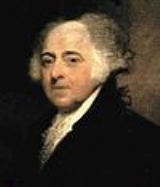
John Adams


   Email Print
   Bookmark   Link


John Adams


John Adams (October 30, 1735 July 4, 1826) was an American politician
Politics of the United States

Politics of the United States takes place in the framework of a presidential system, federal republic where the President of the United States , United States Congress, and United States federal courts share federal Separation of powers, and the Federal government of the United States shares sovereignty with the U.S....
 and the second
List of Presidents of the United States

File:WhiteHouseSouthFacade.JPGThe President of the United States is the head of state and the head of government of the United States. As chief of the executive branch and head of the Federal government of the United States as a whole, the presidency is the highest political office in the United States by influence and recognition....
 President of the United States
President of the United States

The President of the United States is the head of state and head of government of the United States and is the highest political official in the United States by influence and recognition....
 (1797–1801), after being the first
List of Vice Presidents of the United States

This List of Vice Presidents of the United States from John Adams to Joe Biden. It includes the home state of each Vice President of the United States as well as when he took office, left office and the political party to which he belonged....
 Vice President
Vice President of the United States

The Vice President of the United States is the holder of a public office in the United States of America created by the Constitution of the United States....
 (1789–1797) for two terms. He is regarded as one of the most influential Founding Fathers of the United States
Founding Fathers of the United States

The Founding Fathers of the United States were the political leaders who signed the United States Declaration of Independence or otherwise participated in the American Revolution as leaders of the Patriot s, or who participated in drafting the United States Constitution eleven years later....
.

Adams came to prominence in the early stages of the American Revolution
American Revolution

The American Revolution refers to the political upheaval during the last half of the 18th century in which the Thirteen Colonies of North America overthrew the governance of the British Empire and then rejected the British monarchy to become the sovereign United States of America....
. As a delegate from Massachusetts
Massachusetts Bay Colony

The Massachusetts Bay Colony was an English settlement on the east coast of North America in the 17th century, in New England, centered around the present-day cities of Salem, Massachusetts and Boston, Massachusetts....
 to the Continental Congress
Continental Congress

The Continental Congress was a convention of delegates from the Thirteen Colonies that became the governing body of the United States during the American Revolution....
, he played a leading role in persuading Congress to adopt the United States Declaration of Independence
United States Declaration of Independence

The United States Declaration of Independence is a statement adopted by the Second Continental Congress on July 4, 1776, which announced that the Thirteen Colonies then at war with Kingdom of Great Britain were now independent states, and thus no longer a part of the British Empire....
 in 1776. As a representative of Congress in Europe, he was a major negotiator of the eventual peace treaty
Treaty of Paris (1783)

The Treaty of Paris, signed on September 3, 1783, ratified by the Congress of the Confederation on January 14, 1784 and by the King of Great Britain on April 9, 1784 , formally ended the American Revolutionary War between the Kingdom of Great Britain and United States, which had rebelled against British rule starting in 1775....
 with Great Britain
Kingdom of Great Britain

The Kingdom of Great Britain, also known as the United Kingdom of Great Britain, was a country in North-West Europe, in existence from 1707 to 1801....
, and chiefly responsible for obtaining important loans from Amsterdam
Amsterdam

Amsterdam is the Capital of the Netherlands and List of cities in the Netherlands with over 100,000 people of the Netherlands, located in the Provinces of the Netherlands of North Holland in the west of the country....
.

Adams's revolutionary credentials secured him two terms as George Washington
George Washington

George Washington was the leader of the Continental Army in the American Revolutionary War and served as the List of Presidents of the United States President of the United States of the United States of Americas ....
's vice president and his own election as the second president.


Discussion
Ask a question about 'John Adams'
Start a new discussion about 'John Adams'
Answer questions from other users
Full Discussion Forum


Recent Posts


Quotations


A pen is certainly an excellent instrument to fix a man's attention and to inflame his ambition.

Diary (1760-11-14)

I agree with you that in politics the middle way is none at all.

Letter to Horatio Gates (1776-03-23)

I had heard my father say that he never knew a piece of land to run away or break.

Autobiography (1802-1807)

Let every sluice of knowledge be opened and set a-flowing.

A Dissertation on the Canon and Feudal Law (1765)

Our obligations to our country never cease but with our lives.

Virtue is not always amiable.

Diary (1779-02-09)


Encyclopedia


John Adams (October 30, 1735 July 4, 1826) was an American politician
Politics of the United States

Politics of the United States takes place in the framework of a presidential system, federal republic where the President of the United States , United States Congress, and United States federal courts share federal Separation of powers, and the Federal government of the United States shares sovereignty with the U.S....
 and the second
List of Presidents of the United States

File:WhiteHouseSouthFacade.JPGThe President of the United States is the head of state and the head of government of the United States. As chief of the executive branch and head of the Federal government of the United States as a whole, the presidency is the highest political office in the United States by influence and recognition....
 President of the United States
President of the United States

The President of the United States is the head of state and head of government of the United States and is the highest political official in the United States by influence and recognition....
 (1797–1801), after being the first
List of Vice Presidents of the United States

This List of Vice Presidents of the United States from John Adams to Joe Biden. It includes the home state of each Vice President of the United States as well as when he took office, left office and the political party to which he belonged....
 Vice President
Vice President of the United States

The Vice President of the United States is the holder of a public office in the United States of America created by the Constitution of the United States....
 (1789–1797) for two terms. He is regarded as one of the most influential Founding Fathers of the United States
Founding Fathers of the United States

The Founding Fathers of the United States were the political leaders who signed the United States Declaration of Independence or otherwise participated in the American Revolution as leaders of the Patriot s, or who participated in drafting the United States Constitution eleven years later....
.

Adams came to prominence in the early stages of the American Revolution
American Revolution

The American Revolution refers to the political upheaval during the last half of the 18th century in which the Thirteen Colonies of North America overthrew the governance of the British Empire and then rejected the British monarchy to become the sovereign United States of America....
. As a delegate from Massachusetts
Massachusetts Bay Colony

The Massachusetts Bay Colony was an English settlement on the east coast of North America in the 17th century, in New England, centered around the present-day cities of Salem, Massachusetts and Boston, Massachusetts....
 to the Continental Congress
Continental Congress

The Continental Congress was a convention of delegates from the Thirteen Colonies that became the governing body of the United States during the American Revolution....
, he played a leading role in persuading Congress to adopt the United States Declaration of Independence
United States Declaration of Independence

The United States Declaration of Independence is a statement adopted by the Second Continental Congress on July 4, 1776, which announced that the Thirteen Colonies then at war with Kingdom of Great Britain were now independent states, and thus no longer a part of the British Empire....
 in 1776. As a representative of Congress in Europe, he was a major negotiator of the eventual peace treaty
Treaty of Paris (1783)

The Treaty of Paris, signed on September 3, 1783, ratified by the Congress of the Confederation on January 14, 1784 and by the King of Great Britain on April 9, 1784 , formally ended the American Revolutionary War between the Kingdom of Great Britain and United States, which had rebelled against British rule starting in 1775....
 with Great Britain
Kingdom of Great Britain

The Kingdom of Great Britain, also known as the United Kingdom of Great Britain, was a country in North-West Europe, in existence from 1707 to 1801....
, and chiefly responsible for obtaining important loans from Amsterdam
Amsterdam

Amsterdam is the Capital of the Netherlands and List of cities in the Netherlands with over 100,000 people of the Netherlands, located in the Provinces of the Netherlands of North Holland in the west of the country....
.

Adams's revolutionary credentials secured him two terms as George Washington
George Washington

George Washington was the leader of the Continental Army in the American Revolutionary War and served as the List of Presidents of the United States President of the United States of the United States of Americas ....
's vice president and his own election as the second president. During his one term as president, he was frustrated by battles inside his own Federalist party against a faction led by Alexander Hamilton
Alexander Hamilton

Alexander Hamilton was the first Secretary of the Treasury, a Founding Fathers of the United States, economist, and political philosopher. He led calls for the Philadelphia Convention, was one of America's first Constitutional lawyers, and cowrote the Federalist Papers, a primary source for Constitutional interpretation....
, and he signed the controversial Alien and Sedition Acts
Alien and Sedition Acts

The Alien and Sedition Acts were four bills passed in 1798. They were signed into law by President John Adams, and the Federalist Party in the United States Congress?who were waging an undeclared naval war with France, later known as the Quasi-War....
. The major accomplishment of his presidency was his peaceful resolution of the Quasi-War
Quasi-War

The Quasi-War was an undeclared war fought entirely at sea between the United States and France from 1798 to 1800. In the United States, the conflict is sometimes also referred to as the Undeclared War with France, The Pirate Wars, or the Half-War....
 crisis with France
France

France , officially the French Republic , is a country whose Metropolitan France is located in Western Europe and that also comprises various Overseas departments and territories of France....
 in 1798.

After Adams was defeated for reelection by Thomas Jefferson
Thomas Jefferson

Thomas Jefferson was the List of Presidents of the United States President of the United States , the principal author of the United States Declaration of Independence , and one of the most influential Founding Fathers of the United States for his promotion of the ideals of republicanism in the United States....
, he retired to Massachusetts. He and his wife Abigail Adams
Abigail Adams

Abigail Adams was the wife of John Adams, the second President of the United States, and mother of John Quincy Adams, the sixth. She was the first Second Lady of the United States and the second First Lady of the United States although the terms were not coined until after her death....
 founded an accomplished family line of politicians, diplomats, and historians now referred to as the Adams political family
Adams political family

The Adams family was a prominent political family in the United States during the late eighteenth century through early twentieth century....
. His achievements have received greater recognition
Historical rankings of United States Presidents

In political science, historical rankings of United States Presidents are surveys conducted in order to construct rankings of the success of individuals who have served as President of the United States....
 in modern times, though his contributions were not initially as celebrated as other Founders'.

Early life

John Adams, Jr., the eldest of three sons, was born on October 30, 1735 (October 19, 1735 Old Style, Julian calendar
Julian calendar

The Julian calendar, a reform of the Roman calendar, was introduced by Julius Caesar in 46 BC, and came into force in 45 BC . It was chosen after consultation with the astronomer Sosigenes of Alexandria and was probably designed to approximate the tropical year, known at least since Hipparchus....
), in Braintree, Massachusetts
Braintree, Massachusetts

The Town of Braintree is a city in Norfolk County, Massachusetts, Massachusetts, United States. The population was 33,828 at the 2000 census. It is part of the Metro Boston area with access to the MBTA Red Line but is considered by some to be part of the South Shore as a member of the Metropolitan Area Planning Commission's South Shore Coali...
, to John and Susanna Boylston
Susanna Boylston

Susanna Boylston Adams was a prominent early-American socialite, mother of the second U.S. President, John Adams and grandmother of the sixth President, John Quincy Adams....
 Adams. The location of Adams's birth, North Braintree, became the town of Quincy, Massachusetts
Quincy, Massachusetts

Quincy is a city in Norfolk County, Massachusetts, Massachusetts, United States. Its nicknames are "The City of Presidents", "City of Legends", and "Birthplace of the American Dream"....
 in 1792 and is now part of Adams National Historical Park
Adams National Historical Park

Adams National Historical Park in Quincy, Massachusetts, preserves the home of President of the United States John Adams and John Quincy Adams, of U.S....
. His father, also named John (1690–1761), was a fourth-generation descendant of Henry Adams, who emigrated from Braintree, England to Massachusetts Bay Colony
Massachusetts Bay Colony

The Massachusetts Bay Colony was an English settlement on the east coast of North America in the 17th century, in New England, centered around the present-day cities of Salem, Massachusetts and Boston, Massachusetts....
 in about 1636. The town was named Braintree after the town from which they had emigrated. He is descended from a Welsh
Welsh people

The Welsh people are an ethnic group and nation associated with Wales and the Welsh language. John Davies argues that the origin of the "Welsh nation" can be traced to the late 4th and early 5th centuries, following the Roman withdrawal from Britain, although Celtic languages seem to have been spoken in Wales far longer....
 male line called Ap Adam. His father was a farmer, a Congregationalist (that is, Puritan
Puritan

A Puritan of 16th and 17th century England was an associate of any number of religious groups advocating for more "purity" of worship and doctrine, as well as personal and group pietism....
) deacon
Deacon

Deacon is a role in the Christianity that is generally associated with service of some kind, but which varies among theological and denominational traditions....
, a lieutenant in the militia and a selectman, or town councilman, who supervised schools and roads. His mother, Susanna Boylston Adams, was a descendant of the Boylstons of Brookline.

Adams was born to a modest family, but he felt acutely the responsibility of living up to his family heritage: the founding generation of Puritans, who came to the American wilderness in the 1630s and established colonial presence in America. The Puritans of the great migration “believed they lived in the Bible
Bible

The Bible is the central religious text of Judaism and Christianity. The exact Books of the Bible is dependent on the religious traditions of specific denominations....
. England under the Stuarts
House of Stuart

The House of Stuart, also known as the House of Stewart is an important European royal house. Founded by Robert II of Scotland, the Stewarts first became monarchs of the Kingdom of Scotland during the late 14th century....
 was Egypt; they were Israel fleeing …to establish a refuge for godliness, a city upon a hill.” By the time of John Adams's birth in 1735, Puritan tenets such as predestination were no longer as widely accepted, and many of their stricter practices had mellowed with time, but John Adams “considered them bearers of freedom, a cause that still had a holy urgency.” It was a value system he believed in, and a heroic model he wished to live up to.

Young Adams went to Harvard College
Harvard College

Harvard College is the undergraduate section and oldest school of Harvard University, a private university in the United States founded in 1636 by the Massachusetts legislature....
 at age sixteen (in 1751). His father expected him to become a minister, but Adams had doubts. After graduating in 1755, he taught school for a few years in Worcester
Worcester, Massachusetts

Worcester is a city in the U.S. state of Massachusetts in the United States. A 2006 estimate put the population at 175,898, making it the estimated second-largest city in New England, after Boston, Massachusetts....
, allowing himself time to think about his career choice. After much reflection, he decided to become a lawyer and studied law in the office of James Putnam
James Putnam (judge)

James Putnam was a judge and political figure in New Brunswick. He served as a member of New Brunswick's first Council.Putnam was born in Salem, Massachusetts, was educated at Harvard University and studied law with chief justice Edmund Trowbridge....
, a prominent lawyer in Worcester. In 1758, Adams was admitted to the bar. From an early age, he developed the habit of writing descriptions of events and impressions of men which are scattered through his diary. He put the skill to good use as a lawyer, often recording cases he observed so that he could study and reflect upon them. His report of the 1761 argument of James Otis in the superior court of Massachusetts as to the legality of Writs of Assistance
Writ of Assistance

A writ of assistance is a legal document that serves as a general search warrant to British officers.Unlike the warrant, the writ is generally open-ended, and requires all parties to support the officer to whom it was issued....
 is a good example. Otis’s argument inspired Adams with zeal for the cause of the American colonies.

In 1764, Adams married Abigail Smith
Abigail Adams

Abigail Adams was the wife of John Adams, the second President of the United States, and mother of John Quincy Adams, the sixth. She was the first Second Lady of the United States and the second First Lady of the United States although the terms were not coined until after her death....
 (1744–1818), the daughter of a Congregational minister, Rev. William Smith, at Weymouth, Massachusetts
Weymouth, Massachusetts

Weymouth is a city in Norfolk County, Massachusetts, Massachusetts, United States. As of the 2000 census, Weymouth had a total population of 53,988....
. Their children were Abigail (1765–1813), future president John Quincy
John Quincy Adams

John Quincy Adams was an Foreign relations of the United States and Politics of the United States who served as the List of Presidents of the United States President of the United States from March 4, 1825 to March 4, 1829....
 (1767–1848), Susanna (1768–1770); Charles
Charles Adams (1770–1800)

Charles Adams was the second son of President John Adams and his wife, Abigail_Adams. He died of alcoholism in 1800.At the age of nine he traveled with his father and older brother John_Quincy_Adams to Europe, studied briefly in Passy, Amsterdam, and Leyden....
 (1770–1800), Thomas Boylston
Thomas Boylston Adams

Thomas Boylston Adams was the third and youngest son of John Adams and Abigail Adams.Adams lived with relatives in Haverhill, Massachusetts during his father?s diplomatic missions in Europe, after Abigail Adams joined him in 1784....
 (1772–1832), and the stillborn
Stillbirth

A stillbirth occurs when a fetus which has death in the uterus or during labor or childbirth, while exiting a woman's human body. The term is often used in distinction to live birth or miscarriage....
 Elizabeth (1775).

Adams was not a popular leader like his second cousin, Samuel Adams
Samuel Adams

Samuel Adams was a statesman, Political philosophy, and one of the Founding Fathers of the United States. As a politician in Province of Massachusetts Bay, Adams was a leader of the movement that became the American Revolution, and was one of the architects of the principles of Republicanism in the United States that shaped the political cul...
. Instead, his influence emerged through his work as a constitutional lawyer and his intense analysis of historical examples, together with his thorough knowledge of the law and his dedication to the principles of republicanism
Republicanism

Republicanism is the ideology of governing a nation as a republic, where the head of state is appointed by other means than hereditary, often elections....
. Adams often found his inborn contentiousness to be a constraint in his political career.

Career before the Revolution


Opponent of Stamp Act 1765

Adams first rose to prominence as an opponent of the Stamp Act of 1765, which was imposed by the British Parliament to assuage British war debts as well as the expense of keeping a standing army in the American colonies. Popular resistance, he later observed, was sparked by an oft-reprinted sermon of the Boston minister, Jonathan Mayhew, interpreting Romans 13
Epistle to the Romans

The Epistle of St. Paul the Apostle to the Romans is one of the letters of the New Testament canon of Scripture of the Christianity Bible. Often referred to simply as Romans, it is one of the seven currently undisputed letters of Paul the Apostle....
 so as to elucidate the principle of just insurrection.

In 1765, Adams drafted the instructions which were sent by the inhabitants of Braintree
Braintree, Massachusetts

The Town of Braintree is a city in Norfolk County, Massachusetts, Massachusetts, United States. The population was 33,828 at the 2000 census. It is part of the Metro Boston area with access to the MBTA Red Line but is considered by some to be part of the South Shore as a member of the Metropolitan Area Planning Commission's South Shore Coali...
 to its representatives in the Massachusetts legislature, and which served as a model for other towns to draw up instructions to their representatives. In August 1765, he anonymously contributed four notable articles to the Boston Gazette
Boston Gazette

The Boston Gazette was an early newspaper printed in the British North American colonies; it began publication December 12, 1719 and appeared weekly....
 (republished in The London Chronicle in 1768 as True Sentiments of America and also known as A Dissertation on the Canon and Feudal Law). In the letter he suggested that there was a connection between the Protestant ideas that Adams's Puritan ancestors brought to New England and the ideas behind their resistance to the Stamp Act. In the former he explained that the opposition of the colonies to the Stamp Act
Stamp Act

A stamp act is a law enacted by a government that requires a tax to be paid on the transfer of certain documents. Those that pay the tax receive an official stamp on their documents....
 was because the Stamp Act deprived the American colonists of two basic rights guaranteed to all Englishmen, and which all free men deserved: rights to be taxed only by consent and to be tried only by a jury of one's peers.

The "Braintree Instructions" were a succinct and forthright defense of colonial rights and liberties, while the Dissertation was an essay in political education.

In December 1765, he delivered a speech before the governor and council in which he pronounced the Stamp Act invalid on the ground that Massachusetts, being without representation in Parliament, had not assented to it.

Boston Massacre

In 1770, a street confrontation resulted in British soldiers
29th Regiment of Foot

The 29th Regiment of Foot was an infantry regiment of the British ArmyThe regiment was raised in 1694 by Colonel Thomas Farrington, an officer of the Coldstream Guards during War of the Grand Alliance known in America as King William's War....
 killing five civilians in what became known as the Boston Massacre
Boston Massacre

The Boston Massacre refers to an incident involving the deaths of five civilians at the hands of British Army on March 5, 1770, the legal aftermath of which helped spark the rebellion in some of the British colonies in America, which culminated in the American Revolution....
. The soldiers involved, who were arrested on criminal charges, had trouble finding legal counsel. Finally, they asked Adams to defend them. Although he feared it would hurt his reputation, he agreed. Six of the soldiers were acquitted. Two who had fired directly into the crowd were charged with murder
Murder

Murder as defined in common law countries, is the unlawful killing of another human being with intent , and generally this state of mind distinguishes murder from other forms of unlawful homicide....
 but were convicted only of manslaughter
Manslaughter

Manslaughter is a legal term for the killing of a human being, in a manner considered by law as less culpable than murder.The law generally differentiates between levels of criminal culpability based on the mens rea, or state of mind....
.

As for Adams's payment, Chinard alleges that one of the soldiers, Captain Thomas Preston, gave Adams a symbolic "single guinea
Guinea (British coin)

The guinea is an obsolete coin that was minted in the Kingdom of England between 1663 and 1813. It was the first English machine-struck gold coin....
" as a retaining fee, the only fee he received in the case. However, David McCullough
David McCullough

David Gaub McCullough is an United States author, narrator, and lecturer. He is a two-time winner of the Pulitzer Prize and the National Book Award, and a recipient of the Presidential Medal of Freedom, the United States' highest civilian award....
 states in his biography of Adams that he received nothing more than a retainer of eighteen guineas. Adams's own diary confirms that Preston paid an initial ten guineas and a subsequent payment of eight, "all the pecuniary Reward I ever had for fourteen or fifteen days labour, in the most exhausting and fatiguing Causes I ever tried."

Despite his previous misgivings, Adams was elected to the Massachusetts General Court
Massachusetts General Court

The Massachusetts General Court is the State legislature of the Commonwealth of Massachusetts. The name "General Court" is a hold-over from the Colonialism Era, when this body also sat in judgment of judicial appeals cases....
 (the colonial legislature) in June 1770, while still in preparation for the trial.

Dispute concerning Parliament's authority

In 1772, Massachusetts Governor Thomas Hutchinson announced that he and his judges would no longer need their salaries paid by the Massachusetts legislature, because the Crown would henceforth assume payment drawn from customs revenues. Boston radicals protested and asked Adams to explain their objections. In "Two Replies of the Massachusetts House of Representatives to Governor Hutchinson" Adams argued that the colonists had never been under the sovereignty of Parliament. Their original charter was with the person of the king and their allegiance was only to him. If a workable line could not be drawn between parliamentary sovereignty and the total independence of the colonies, he continued, the colonies would have no other choice but to choose independence.

In Novanglus; or, A History of the Dispute with America, From Its Origin, in 1754, to the Present Time Adams attacked some essays by Daniel Leonard
Daniel Leonard

Daniel Leonard was a lawyer from Province of Massachusetts Bay and a Loyalist in the American Revolution.Born in Norton, Massachusetts, Leonard was a member of a prominent family who made their fortune from their iron works in Taunton, Massachusetts....
 that defended Hutchinson's arguments for the absolute authority of Parliament over the colonies. In Novanglus Adams gave a point-by-point refutation of Leonard's essays, and then provided one of the most extensive and learned arguments made by the colonists against British imperial policy.

It was a systematic attempt by Adams to describe the origins, nature, and jurisdiction of the unwritten British constitution. Adams used his wide knowledge of English and colonial legal history to show the provincial legislatures were fully sovereign over their own internal affairs, and that the colonies were connected to Great Britain only through the King.

Continental Congress

Massachusetts sent Adams to the first and second Continental Congress
Continental Congress

The Continental Congress was a convention of delegates from the Thirteen Colonies that became the governing body of the United States during the American Revolution....
es in 1774 and from 1775 to 1778. In June 1775, with a view of promoting the union of the colonies, he nominated George Washington
George Washington

George Washington was the leader of the Continental Army in the American Revolutionary War and served as the List of Presidents of the United States President of the United States of the United States of Americas ....
 of Virginia as commander-in-chief of the army
Continental Army

The American Continental Army was an army formed after the outbreak of the American Revolutionary War by the colonies that became the United States. Established by a resolution of the Continental Congress on June 15, 1775, the army was created to coordinate the military efforts of the Thirteen Colonies in their struggle against the rule of Kingdom...
 then assembled around Boston. His influence in Congress was great, and almost from the beginning, he sought permanent separation from Britain.

John Adams Stamp
On May 15, 1776 the Continental Congress, in response to escalating hostilities which had commenced thirteen months earlier at the battles of Lexington and Concord
Battles of Lexington and Concord

The Battles of Lexington and Concord were the first military engagements of the American Revolutionary War. They were fought on April 19, 1775, in Middlesex County, Massachusetts, Province of Massachusetts Bay, within the towns of Lexington, Massachusetts, Concord, Massachusetts, Lincoln, Massachusetts, Arlington, Massachusetts, and Cambridge...
, urged that the colonies begin constructing their own constitutions, a precursor to becoming independent states. The resolution to draft independent constitutions was, as Adams put it, "independence itself."

Over the next decade, Americans from every state gathered and deliberated on new governing documents. As radical as it was to actually write constitutions (prior convention suggested that a society's form of government needn't be codified, nor should its organic law be written down in a single document), what was equally radical was the nature of American political thought as the summer of 1776 dawned.

Thoughts on Government

At that time several Congressmen turned to Adams for advice about framing new governments. Adams got tired of repeating the same thing, and published the pamphlet Thoughts on Government
Thoughts on Government

Thoughts on Government, or in full Thoughts on Government, Applicable to the Present State of the American Colonies, was written by John Adams during the spring of 1776 in response to a resolution of the North Carolina Provincial Congress which requested Adams's suggestions on the establishment of a new government and the drafting of...
 (1776), which was subsequently influential in the writing of many state constitutions. Many historians argue that Thoughts on Government should be read as an articulation of the classical republican
Classical republicanism

Classical republicanism is a form of republicanism originating from and inspired by the governmental forms and writings of classical antiquity....
 theory of mixed government
Mixed government

Mixed government, also known as a mixed constitution, is a form of government that integrated facets of government by democracy, oligarchy, and monarchy....
. Adams contended that social classes exist in every political society, and that a good government must accept that reality. For centuries, dating back to Aristotle, a mixed regime balancing monarchy, aristocracy, and democracy, or the monarch, nobles, and people was required to preserve order and liberty.

Using the tools of Republicanism in the United States
Republicanism in the United States

Republicanism is the value system of governance that has been a major part of United States civic thought since the American Revolution. It stresses liberty and inalienable rights as central values, makes the people as a whole sovereign, rejects inherited political power, expects citizens to be independent in their performance of civ...
, the patriots believed it was corrupt and nefarious aristocrats, in the British Parliament and stationed in America, who were guilty of the British assault on American liberty. Unlike others, Adams thought that the definition of a republic had to do with its ends, rather than its means. He wrote in Thoughts on Government, "there is no good government but what is republican. That the only valuable part of the British constitution
Constitution of the United Kingdom

The constitution of the United Kingdom is the set of laws and principles under which the United Kingdom is governed.The UK has no single constitutional document comparable to those of other nations, such as the Constitution of the United States....
 is so; because the very definition of a republic is 'an empire of laws, and not of men.'" Thoughts on Government defended bicameralism
Bicameralism

In government, bicameralism is the practice of having two legislative or parliamentary chambers. Thus, a bicameral parliament or bicameral legislature is a legislature which consists of two chambers or houses....
, for "a single assembly is liable to all the vices, follies, and frailties of an individual." He also suggested that the executive should be independent, as should the judiciary. Thoughts on Government was enormously influential and was referenced as an authority in every state-constitution writing hall.
Declaration Independence

Declaration of Independence

On June 7, 1776, Adams seconded the resolution of independence introduced by Richard Henry Lee
Richard Henry Lee

Richard Henry Lee was an United States statesman from Virginia best known for the motion in the Second Continental Congress calling for the colonies' independence from Great Britain....
 that "these colonies are, and of a right ought to be, free and independent states," and championed the resolution until it was adopted by Congress on July 2, 1776.

He was appointed to a committee
Committee of Five

The Committee of Five was the Committee delegated by the Second Continental Congress on June 11, 1776, to draft the United States United States Declaration of Independence....
 with Thomas Jefferson
Thomas Jefferson

Thomas Jefferson was the List of Presidents of the United States President of the United States , the principal author of the United States Declaration of Independence , and one of the most influential Founding Fathers of the United States for his promotion of the ideals of republicanism in the United States....
, Benjamin Franklin
Benjamin Franklin

Benjamin Franklin was one of the Founding Fathers of the United States of the United States. A noted polymath, Franklin was a leading author and Printer , Satire, list of political philosophers, politician, scientist, inventor, activism, statesman, and diplomacy....
, Robert R. Livingston
Robert Livingston (1746-1813)

Robert R Livingston , was an American lawyer, politician and diplomat from New York....
 and Roger Sherman
Roger Sherman

Roger Sherman was an early United States lawyer and politician. He served as the first mayor of New Haven, Connecticut, Connecticut, and served on the Committee of Five that drafted the United States Declaration of Independence, and was also a representative and senator in the new republic....
, to draft a Declaration of Independence
United States Declaration of Independence

The United States Declaration of Independence is a statement adopted by the Second Continental Congress on July 4, 1776, which announced that the Thirteen Colonies then at war with Kingdom of Great Britain were now independent states, and thus no longer a part of the British Empire....
. Although that document was written primarily by Jefferson, Adams occupied the foremost place in the debate on its adoption. Many years later, Jefferson hailed Adams as "the pillar of [the Declaration's] support on the floor of Congress, its ablest advocate and defender against the multifarious assaults it encountered."

In 1777, Adams resigned his seat on the Massachusetts Superior Court to serve as the head of the Board of War and Ordnance, as well as many other important committees.

In Europe

Congress twice dispatched Adams to represent the fledgling union in Europe, first in 1777, and again in 1779. Accompanied by his ten-year-old eldest son, John Quincy
John Quincy Adams

John Quincy Adams was an Foreign relations of the United States and Politics of the United States who served as the List of Presidents of the United States President of the United States from March 4, 1825 to March 4, 1829....
, Adams sailed for France aboard the Continental Navy
Continental Navy

The Continental Navy was formed during the American Revolution in 1775. Through the efforts of the Continental Navy's apparent patron, John Adams and vigorous Congressional support in the face of stiff opposition, the fleet cumulatively became relatively substantial when considering the limitations imposed upon the Patriot supply pool....
 frigate
Frigate

A frigate is a warship. The term has been used for warships of many sizes and roles over the past few centuries.In the 18th century, the term referred to ships which were as long as a ship-of-the-line and were square rig on all three masts , but were faster and with lighter armament, used for patrolling and escort....
 Boston on February 15, 1778. Although chased several times by British warships, the only action seen during the voyage was the bloodless capture of a British privateer. Adams was in some regards an unlikely choice in as much as he did not speak French, the international language of diplomacy at the time.

His first stay in Europe, between April 1, 1778, and June 17, 1779, was largely unproductive, and he returned to his home in Braintree in early August 1779.

Between September 1 and October 30, 1779, he drafted the Massachusetts Constitution
Massachusetts Constitution

The Constitution of the Commonwealth of Massachusetts is the fundamental governing document of the United States Commonwealth of Massachusetts. It was drafted by John Adams, Samuel Adams, and James Bowdoin during the Massachusetts Constitutional Convention between September 1 and October 30, 1779....
 together with Samuel Adams
Samuel Adams

Samuel Adams was a statesman, Political philosophy, and one of the Founding Fathers of the United States. As a politician in Province of Massachusetts Bay, Adams was a leader of the movement that became the American Revolution, and was one of the architects of the principles of Republicanism in the United States that shaped the political cul...
 and James Bowdoin
James Bowdoin

James Bowdoin was an American political and intellectual leader from Boston, Massachusetts, Massachusetts during the American Revolution. He served in both branches of the Massachusetts General Court in the colonial era and was president of the state's constitutional convention ....
. He was selected in September 1779 to return to France and, following the conclusion of the Massachusetts constitutional convention, left on November 15 aboard the French frigate Sensible.

On the second trip, Adams was appointed as Minister Plenipotentiary charged with the mission of negotiating a treaty of peace and a treaty of commerce with France. The French government, however, did not approve of Adams's appointment and subsequently, on the insistence of the French foreign minister, the Comte de Vergennes
Charles Gravier, comte de Vergennes

Charles Gravier, Count de Vergennes was a France statesman and diplomat. He served as Foreign Minister during the reign of Louis XVI, notbably during the American War of Independence....
, Benjamin Franklin
Benjamin Franklin

Benjamin Franklin was one of the Founding Fathers of the United States of the United States. A noted polymath, Franklin was a leading author and Printer , Satire, list of political philosophers, politician, scientist, inventor, activism, statesman, and diplomacy....
, Thomas Jefferson
Thomas Jefferson

Thomas Jefferson was the List of Presidents of the United States President of the United States , the principal author of the United States Declaration of Independence , and one of the most influential Founding Fathers of the United States for his promotion of the ideals of republicanism in the United States....
, John Jay
John Jay

John Jay was an United States politician, statesman, Patriot , diplomat, a Founding Fathers of the United States, President of the Continental Congress from 1778 to 1779 and, from 1789 to 1795, the first Chief Justice of the United States....
 and Henry Laurens
Henry Laurens

Henry Laurens was an United States merchant and rice planter from South Carolina who became a political leader during the American Revolutionary War....
 were appointed to cooperate with Adams, although Jefferson did not go to Europe and Laurens was posted to Holland (the Netherlands
Netherlands

The Netherlands is a country that is part of the Kingdom of the Netherlands. It is a parliamentary democratic constitutional monarchy. The Netherlands is located in North-West Europe, and bordered by the North Sea to the north and west, Belgium to the south, and Germany to the east....
). In the event Jay, Adams, and Franklin played the major part in the negotiations. Overruling Franklin and distrustful of Vergennes, Jay and Adams decided not to consult with France. Instead, they dealt directly with the British commissioners.

Throughout the negotiations, Adams was especially determined that the right of the United States to the fisheries along the Atlantic coast should be recognized. The American negotiators were able to secure a favorable treaty, which gave Americans ownership of all lands east of the Mississippi, except Florida
Florida

Florida is a U.S. state located in the Southeastern United States of the United States, bordering Alabama to the northwest and Georgia to the northeast....
, which was transferred to Spain as its reward. The treaty was signed on November 30, 1782.

After these negotiations began, Adams had spent some time as the ambassador
Ambassador

An ambassador is the highest ranking diplomat who represents their country. They are usually accredited to a Sovereignty or government, or to an international organization, to serve as the official representative of their country....
 in the Netherlands, then the only other well-functioning Republic in the world. In July 1780, he had been authorized to execute the duties previously assigned to Laurens. With the aid of the Dutch patriot leader Joan van der Capellen tot den Pol
Joan van der Capellen tot den Pol

Joan Derk, Baron van der Capellen tot den Pol was a Netherlands nobleman who played a prominent role in the formation of the Batavian Republic and the revolutionary events that preceded its formation....
, Adams secured the recognition of the United States as an independent government at The Hague
The Hague

The Hague is the third largest city in the Netherlands after Amsterdam and Rotterdam, with a population of 475,904 and an area of approximately 100 km?....
 on April 19, 1782. During this visit, he also negotiated a loan of five million guilders financed by Nicolaas van Staphorst
Nicolaas van Staphorst

Nicolaas van Staphorst was a Dutch banker and a conservative republican. Up till 1794 he was involved in a total of eleven loans that were granted in Amsterdam to the United States with a value of 29 million guilders, and in the Holland Land Company....
 and Wilhelm Willink. In October 1782, he negotiated with the Dutch a treaty of amity and commerce, the first such treaty between the United States and a foreign power following the 1778 treaty with France. The house that Adams purchased during this stay in The Netherlands became the first American embassy on foreign soil anywhere in the world. For two months during 1783, Adams lodged in London with radical publisher John Stockdale
John Stockdale

John Stockdale was an England publisher whose London shop became a salon for the politics classes and who had to face two actions for defamation....
.

In 1784 and 1785, he was one of the architects of far-going trade relations between the US and Prussia
Prussia

Prussia was, most recently, a historic state originating out of the Duchy of Prussia and the Margraviate of Brandenburg. This state had for centuries substantial influence on Germany and European history....
. The Prussian ambassador in The Hague, Friedrich Wilhelm von Thulemeyer
Friedrich Wilhelm von Thulemeyer

Friedrich Wilhelm von Thulemeyer or Frederick William von Thulemeier was born or baptized on November 9th, 1735. He died July 6, 1811, also in Berlin....
, was involved, as were Jefferson and Franklin, who were in Paris.

In 1785, John Adams was appointed the first American minister to the Court of St. James's
Court of St. James's

The Court of St. James's is the name of the royal court of the United Kingdom....
 (ambassador to Great Britain
Great Britain

Great Britain is an island lying to the northwest of Continental Europe. It is the List of islands by area, and the largest in Europe. With a population of 58.9 million people it is List of islands by population....
). When he was presented to his former sovereign, George III
George III of the United Kingdom

George III was Kingdom of Great Britain and Kingdom of Ireland from 25 October 1760 until the union of these two countries on 1 January 1801, after which he was King of the United Kingdom of Great Britain and Ireland until his death....
, the King intimated that he was aware of Adams's lack of confidence in the French government. Adams admitted this, stating: "I must avow to your Majesty that I have no attachment but to my own country.”

Queen Elizabeth II of the United Kingdom
United Kingdom

The United Kingdom of Great Britain and Northern Ireland, commonly known as the United Kingdom , the UK or Britain,is a sovereign state located off the northwestern coast of continental Europe....
 referred to this episode on July 7, 1976 at the White House
White House

The White House is the official residence and principal workplace of the President of the United States. Located at 1600 Pennsylvania Avenue in Washington, D.C., it was built between 1792 and 1800 of white-painted Aquia sandstone in the late Georgian architecture and has been the executive residence of every U.S....
. She said:

John Adams, America's first Ambassador, said to my ancestor, King George III, that it was his desire to help with the restoration of 'the old good nature and the old good humor between our peoples.' That restoration has long been made, and the links of language, tradition, and personal contact have maintained it.


Adams's British residence, a house off London's Grosvenor Square, still stands and is commemorated by a plaque. He returned to the United States in 1788 to continue his domestic political life.

Constitutional ideas

Massachusetts's new constitution
Massachusetts Constitution

The Constitution of the Commonwealth of Massachusetts is the fundamental governing document of the United States Commonwealth of Massachusetts. It was drafted by John Adams, Samuel Adams, and James Bowdoin during the Massachusetts Constitutional Convention between September 1 and October 30, 1779....
, ratified in 1780 and written largely by Adams himself, structured its government most closely on his views of politics and society. It was the first constitution written by a special committee and ratified by the people. It was also the first to feature a bicameral legislature, a clear and distinct executive with a partial (2/3) veto (although he was restrained by an executive council), and a distinct judicial branch.

While in London, Adams published a work entitled A Defence of the Constitutions of Government of the United States (1787). In it he repudiated the views of Turgot
Anne Robert Jacques Turgot, Baron de Laune

Anne-Robert-Jacques Turgot, Baron de Laune, often referred to as Turgot , was a France economist and statesman....
 and other European writers as to the viciousness of the framework of state governments. Turgot argued that countries that lacked aristocracies needn't have bicameral legislatures. He thought that republican governments feature “all authorities into one center, that of the nation.” In the book, Adams suggested that "the rich, the well-born and the able" should be set apart from other men in a senate—that would prevent them from dominating the lower house. Wood (2006) has maintained that Adams had become intellectually irrelevant by the time the Federal Constitution was ratified. By then, American political thought, transformed by more than a decade of vigorous and searching debate as well as shaping experiential pressures, had abandoned the classical conception of politics which understood government as a mirror of social estates. Americans' new conception of popular sovereignty
Popular sovereignty

Popular sovereignty or the sovereignty of the people is the belief that the legitimacy of the state is created by the will or Consent of the governed, who are the source of all political power....
 now saw the people-at-large as the sole possessors of power in the realm. All agents of the government enjoyed mere portions of the people's power and only for a limited period of time. Adams had completely missed this concept and revealed his continued attachment to the older version of politics. Yet Wood overlooks Adams's peculiar definition of the term "republic," and his support for a constitution ratified by the people. He also underplays Adams's belief in checks and balances. "Power must be opposed to power, and interest to interest,” Adams wrote; this sentiment would later be echoed by James Madison
James Madison

James Madison was an American politician and political philosopher who served as the List of Presidents of the United States President of the United States , and one of the Founding Fathers of the United States....
's famous statement that "[a]mbition must be made to counteract ambition" in The Federalist No. 51
Federalist No. 51

Federalist No. 51 is an essay by James Madison, the fifty-first of the Federalist Papers. It was published on February 6, 1788 under the pseudonym Federalist Papers#Publication, the name under which all the Federalist Papers were published....
, in explaining the powers of the branches of the United States federal government under the new Constitution. Adams did as much as anyone to put the idea of "checks and balances" on the intellectual map.

Adams never bought a slave and declined on principle to employ slave labor. Abigail Adams opposed slavery and employed free blacks in preference to her father's two domestic slaves. However he spoke out against a bill to emancipate slaves in Massachusetts, opposed use of black soldiers in the Revolution, and tried to keep the issue out of national politics.

Vice Presidency

While Washington won unanimously in the popular vote and won 69 votes in the electoral college, Adams came in second in the electoral college
United States Electoral College

The Electoral College consists of the popularly elected representatives who formally elect the President of the United States and Vice President of the United States....
 with 34 votes and became Vice President in the presidential election of 1789. He played a minor role in the politics of the early 1790s and was re-elected in 1792. Washington seldom asked Adams for input on policy and legal issues during his tenure as vice president.

Adams's main task while in office was presiding over the Senate. Subsequent Vice Presidents were also generally not powerful or significant members of their President's administrations until after the Second World War.

In the first year of Washington's administration, Adams became deeply involved in a month-long Senate controversy over what the official title of the President would be. Adams favored grandiose titles such as "His Majesty the President" or "His High Mightiness" over the simple "President of the United States" that eventually won the debate. The pomposity of his stance, along with his being overweight, led to Adams earning the nickname "His Rotundity."

As president of the Senate
President of the Senate

The President of the Senate is a title often given to the Speaker of a senate.In countries with a Argentine Senate or the Senate of Uruguay. The Senate President is often a very high-ranking figure in the order of presidential succession order: for example, the President of the Senate of Nigeria is second in line for succession to the pres...
, Adams cast 29 tie-breaking votes—a record that only John C. Calhoun
John C. Calhoun

John Caldwell Calhoun was the List of Vice Presidents of the United States Vice President of the United States. He was a leading United States Southern politician from South Carolina during the first half of the 19th century....
 came close to tying, with 28. His votes protected the president's sole authority over the removal of appointees and influenced the location of the national capital. On at least one occasion, he persuaded senators to vote against legislation that he opposed, and he frequently lectured the Senate on procedural and policy matters. Adams's political views and his active role in the Senate made him a natural target for critics of the Washington
George Washington

George Washington was the leader of the Continental Army in the American Revolutionary War and served as the List of Presidents of the United States President of the United States of the United States of Americas ....
 administration. Toward the end of his first term, as a result of a threatened resolution that would have silenced him except for procedural and policy matters, he began to exercise more restraint. When the two political parties formed, he joined the Federalist Party
Federalist Party (United States)

The Federalist Party was an American political party in the period 1792 to 1816, with remnants lasting into the 1820s. The Federalists controlled the federal government until 1801....
, but never got on well with its dominant leader Alexander Hamilton
Alexander Hamilton

Alexander Hamilton was the first Secretary of the Treasury, a Founding Fathers of the United States, economist, and political philosopher. He led calls for the Philadelphia Convention, was one of America's first Constitutional lawyers, and cowrote the Federalist Papers, a primary source for Constitutional interpretation....
. Because of Adams's seniority and the need for a northern president, he was elected as the Federalist nominee for president in 1796, over Thomas Jefferson
Thomas Jefferson

Thomas Jefferson was the List of Presidents of the United States President of the United States , the principal author of the United States Declaration of Independence , and one of the most influential Founding Fathers of the United States for his promotion of the ideals of republicanism in the United States....
, the leader of the opposition Democratic-Republican Party
Democratic-Republican Party (United States)

The Democratic-Republican Party was founded by Thomas Jefferson and James Madison around 1792. Supporters usually identified themselves as Republicans, but sometimes as Democrats....
. His success was due to peace and prosperity; Washington and Hamilton had averted war with Britain with the Jay Treaty
Jay Treaty

The Jay Treaty, also known as Jay's Treaty and the Treaty of London of 1794, between the United States and Kingdom of Great Britain averted war, solved many issues left over from the American Revolution, and opened ten years of largely peaceful trade in the midst of the French Revolutionary Wars....
 of 1795.

Adams's two terms as Vice President were frustrating experiences for a man of his vigor, intellect, and vanity. He complained to his wife Abigail, "My country has in its wisdom contrived for me the most insignificant office that ever the invention of man contrived or his imagination conceived."

Election of 1796


During the presidential campaign of 1796 Adams was the presidential candidate of the Federalist Party and Thomas Pinckney
Thomas Pinckney

Thomas Pinckney was an early American statesman, diplomat and veteran of both the American Revolutionary War and the War of 1812....
, the Governor
Governor of South Carolina

The Governor of the State of South Carolina is the head of state for the South Carolina. Under the South Carolina Constitution, the Governor is also the head of government, serving as the chief executive of the South Carolina executive branch....
 of South Carolina
South Carolina

South Carolina is a U.S. state in the Southern United States of the United States. It borders Georgia to the south and North Carolina to the north....
, was also running as a Federalist (at this point, the vice president was whoever came in second, so no running mates existed in the modern sense). The Federalists wanted Adams as their presidential candidate to crush Thomas Jefferson's bid. Most Federalists would have preferred Hamilton to be a candidate. Although Hamilton and his followers supported Adams, they also held a grudge against him. They did consider him to be the lesser of the two evils. However, they thought Adams lacked the seriousness and popularity that had caused Washington to be successful, and also feared that Adams was too vain, opinionated, unpredictable, and stubborn to follow their directions.

Adams's opponents were former Secretary of State
United States Secretary of State

The United States Secretary of State is the head of the United States Department of State, concerned with foreign affairs. The Secretary is a member of the President's United States Cabinet and the highest-ranking cabinet secretary both in United States presidential line of succession and United States order of precedence....
 Thomas Jefferson
Thomas Jefferson

Thomas Jefferson was the List of Presidents of the United States President of the United States , the principal author of the United States Declaration of Independence , and one of the most influential Founding Fathers of the United States for his promotion of the ideals of republicanism in the United States....
 of Virginia
Virginia

The Commonwealth of Virginia is an United States U.S. state on the East Coast of the United States of the Southern United States. The state is known as the "Old Dominion" and sometimes as "Mother of Presidents", because it is the birthplace of Lists of United States Presidents by place of birth#By state....
, who was joined by Senator
United States Senate

The United States Senate is the upper house of the Bicameralism United States Congress, the lower house being the United States House of Representatives....
 Aaron Burr
Aaron Burr

Aaron Burr, Jr. was an United States politician, American Revolutionary War hero, and adventurer. He served as the List of Vice Presidents of the United States Vice President of the United States , under Thomas Jefferson....
 of New York
New York

The State of New York is a U.S. state in the Mid-Atlantic States and Northeastern United States regions of the United States and is the nation's List of U.S....
 on the Democratic-Republican
Democratic-Republican Party (United States)

The Democratic-Republican Party was founded by Thomas Jefferson and James Madison around 1792. Supporters usually identified themselves as Republicans, but sometimes as Democrats....
 ticket.

As was customary, Adams stayed in his home town of Quincy
Quincy, Massachusetts

Quincy is a city in Norfolk County, Massachusetts, Massachusetts, United States. Its nicknames are "The City of Presidents", "City of Legends", and "Birthplace of the American Dream"....
 rather than actively campaign for the Presidency. He wanted to stay out of what he called the silly and wicked game. His party, however, campaigned for him, while the Democratic-Republicans
Democratic-Republican Party (United States)

The Democratic-Republican Party was founded by Thomas Jefferson and James Madison around 1792. Supporters usually identified themselves as Republicans, but sometimes as Democrats....
 campaigned for Jefferson.

It was expected that Adams would dominate the votes in New England, while Jefferson was expected to win in the Southern states. In the end, Adams won the election by a narrow margin of 71 electoral votes to 68 for Jefferson (who became the vice president).

Presidency: 1797–1801


Foreign policy

When Adams entered office
John Adams 1797 presidential inauguration

File:Johnadamsvp.flipped.jpgThe United States presidential inauguration of John Adams as President of the United States of the United States took place on Saturday, March 4th, 1797 when Chief Justice of the United States of the Supreme Court, Oliver Ellsworth swore him in....
, he realized that he needed to protect Washington’s policy of staying out of the French and British war. Because the French helped secure American independence from Britain, they had greater popularity with America. After the Jay Treaty
Jay Treaty

The Jay Treaty, also known as Jay's Treaty and the Treaty of London of 1794, between the United States and Kingdom of Great Britain averted war, solved many issues left over from the American Revolution, and opened ten years of largely peaceful trade in the midst of the French Revolutionary Wars....
, the French became angry and began seizing American merchant ships
Quasi-War

The Quasi-War was an undeclared war fought entirely at sea between the United States and France from 1798 to 1800. In the United States, the conflict is sometimes also referred to as the Undeclared War with France, The Pirate Wars, or the Half-War....
 that were trading with the British in what became known as the "Quasi-War
Quasi-War

The Quasi-War was an undeclared war fought entirely at sea between the United States and France from 1798 to 1800. In the United States, the conflict is sometimes also referred to as the Undeclared War with France, The Pirate Wars, or the Half-War....
." Adams sent a commission to negotiate an understanding with France. However, Adams urged the Congress to augment the navy and army in case of diplomatic failure.

Domestic policies

As President Adams followed Washington's lead in making the presidency the example of republican values, and stressing civic virtue
Civic virtue

Civic virtue is the cultivation of habit s of personal living that are claimed to be important for the success of the community. The identification of the character traits that constitute civic virtue has been a major concern of political philosophy....
, he was never implicated in any scandal. Some historians consider his worst mistake to be keeping the old cabinet, which was controlled by Hamilton, instead of installing his own people, confirming Adams's own admission he was a poor politician because he "was unpractised in intrigues for power." Yet, there are those historians who feel that Adams's retention of Washington's cabinet was a statesman-like step to soothe worries about an orderly succession. As Adams himself explained, "I had then no particular object of any of them." That would soon change. Adams's combative spirit did not always lend itself to presidential decorum, as Adams himself admitted in his old age: "[As president] I refused to suffer in silence. I sighed, sobbed, and groaned, and sometimes screeched and screamed. And I must confess to my shame and sorrow that I sometimes swore."

Adams's four years as president (1797–1801) were marked by intense disputes over foreign policy. Britain and France were at war
Napoleonic Wars

The Napoleonic Wars were a series of conflicts involving Napoleon I of France First French Empire and changing sets of European allies and opposing coalitions that ran from 1803 to 1815....
; Hamilton and the Federalists favored Britain, while Jefferson and the Democratic-Republicans favored France. An undeclared naval war between the U.S. and France, called the Quasi-War
Quasi-War

The Quasi-War was an undeclared war fought entirely at sea between the United States and France from 1798 to 1800. In the United States, the conflict is sometimes also referred to as the Undeclared War with France, The Pirate Wars, or the Half-War....
, broke out in 1798. The humiliation of the XYZ Affair
XYZ Affair

The XYZ Affair was a diplomatic incident that almost led to war between the United States and France. The scandal inflamed U.S. public opinion and led to the passage of the ALIEN AND SEDITION ACTS of 1798 ....
, in which the French demanded huge bribes before any discussions could begin, led to serious threats of full-scale war with France and embarrassed the Jeffersonians, who were friends to France. The Federalists built up the army under George Washington
George Washington

George Washington was the leader of the Continental Army in the American Revolutionary War and served as the List of Presidents of the United States President of the United States of the United States of Americas ....
 and Alexander Hamilton
Alexander Hamilton

Alexander Hamilton was the first Secretary of the Treasury, a Founding Fathers of the United States, economist, and political philosopher. He led calls for the Philadelphia Convention, was one of America's first Constitutional lawyers, and cowrote the Federalist Papers, a primary source for Constitutional interpretation....
, built warships
Six original United States frigates

The original six frigates of the United States Navy were authorized by the United States Congress with the Naval Act of 1794 on 27 March 1794 at a cost of $688,888.82....
, such as USS Constitution
USS Constitution

USS Constitution is a wooden-hull ed, three-Mast heavy frigate of the United States Navy. Named after the United States Constitution by President George Washington, she is the oldest commissioned naval vessel afloat in the world. is the oldest commissioned vessel by three decades; however, Victory is permanently drydo...
, and raised taxes. They cracked down on political immigrants and domestic opponents with the Alien and Sedition Acts
Alien and Sedition Acts

The Alien and Sedition Acts were four bills passed in 1798. They were signed into law by President John Adams, and the Federalist Party in the United States Congress?who were waging an undeclared naval war with France, later known as the Quasi-War....
, which were signed by Adams in 1798.

These Acts were composed of four separate and distinct units:
  • The Naturalization Act
    Naturalization Act of 1798

    The Naturalization Act, passed by United States Congress on June 18, 1798, increased the amount of time necessary for immigrants to become naturalized citizens in the United States from five to fourteen years....
    , passed on June 18
  • The Alien Act
    Alien and Sedition Acts

    The Alien and Sedition Acts were four bills passed in 1798. They were signed into law by President John Adams, and the Federalist Party in the United States Congress?who were waging an undeclared naval war with France, later known as the Quasi-War....
    , passed on June 24
  • The Alien Enemies Act
    Alien and Sedition Acts

    The Alien and Sedition Acts were four bills passed in 1798. They were signed into law by President John Adams, and the Federalist Party in the United States Congress?who were waging an undeclared naval war with France, later known as the Quasi-War....
    , passed on July 6
  • The Sedition Act
    Alien and Sedition Acts

    The Alien and Sedition Acts were four bills passed in 1798. They were signed into law by President John Adams, and the Federalist Party in the United States Congress?who were waging an undeclared naval war with France, later known as the Quasi-War....
    , passed on July 14


These four acts were brought about to suppress Republican opposition. The Naturalization Act changed the period required to naturalize the foreign born to American citizenship to 14 years. Since most immigrants voted republican they thought by initiating this act it would decrease the proportion of people who voted republican. The Alien Friends Act and the Alien Enemies Act allowed the president to deport any foreigner that he thought was dangerous to the country.

The Sedition Act criminalized anyone who publicly criticized the federal government. Some of the punishments included 2–5 years in prison and fines of $2,000 to $5,000. Adams had not designed or promoted any of these acts but he did sign them into law.

Those acts, and the high-profile prosecution of a number of newspaper editors and one Congressman by the Federalists, became highly controversial. Some historians have noted that the Alien and Sedition Acts were relatively rarely enforced, as only 10 convictions under the Sedition Act
Sedition Act

Sedition Act may refer to:*Alien and Sedition Acts, including the Sedition Act of 1798, laws passed by the United States Congress*Sedition Act 1661, an English statute that largely relates to treason...
 have been identified and as Adams never signed a deportation order, and that the furor over the Alien and Sedition Acts was mainly stirred up by the Democratic-Republicans. However, other historians emphasize that the Acts were highly controversial from the outset, resulted in many aliens leaving the country voluntarily, and created an atmosphere where opposing the Federalists, even on the floor of Congress, could and did result in prosecution. The election of 1800 became a bitter and volatile battle, with each side expressing extraordinary fear of the other party and its policies.

The deep division in the Federalist party came on the army issue. Adams was forced to name Washington as commander of the new army, and Washington demanded that Hamilton be given the second position. Adams reluctantly gave in. Major General Hamilton virtually took control of the War department. The rift between Adams and the High Federalists (as Adams's opponents were called) grew wider. The High Federalists refused to consult Adams over the key legislation of 1798; they changed the defense measures which he had called for, demanded that Hamilton control the army, and refused to recognize the necessity of giving key Democratic-Republicans (like Aaron Burr
Aaron Burr

Aaron Burr, Jr. was an United States politician, American Revolutionary War hero, and adventurer. He served as the List of Vice Presidents of the United States Vice President of the United States , under Thomas Jefferson....
) senior positions in the army (which Adams wanted to do in order to gain some Democratic-Republican support). By building a large standing army
Standing army

A standing army is an army composed of full-time career soldiers who 'stand over', in other words, who do not disband during times of peace. They differ from army reserves who are activated only during such times as war or natural disasters....
 the High Federalists raised popular alarms and played into the hands of the Democratic-Republicans. They also alienated Adams and his large personal following. They shortsightedly viewed the Federalist party as their own tool and ignored the need to pull together the entire nation in the face of war with France.

For long stretches, Adams withdrew to his home in Massachusetts. In February 1799, Adams stunned the country by sending diplomat William Vans Murray
William Vans Murray

William Vans Murray was an United States lawyer, politician, and statesman from Cambridge, Maryland. He served in the Maryland House of Delegates and represented the United States House of Representatives, Maryland District 5 of Maryland in the United States House of Representatives from 1791 until 1793, and the United States House of Repre...
 on a peace mission to France. Napoleon, realizing the animosity of the United States was doing no good, signaled his readiness for friendly relations. The Treaty of Alliance of 1778
Treaty of Alliance (1778)

The Franco-American Alliance was a Military alliance between France and the Second Continental Congress, representing the United States government, signed in Paris by French and U.S....
 was superseded and the United States could now be free of foreign entanglements, as Washington advised in his own Farewell Letter. Adams avoided war, but deeply split his own party in the process. He brought in John Marshall
John Marshall

John Marshall was an American statesman and jurist who shaped American constitutional law and made the Supreme Court a center of power. Marshall was Chief Justice of the United States, serving from February 4, 1801, until his death in 1835....
 as Secretary of State and demobilized the emergency army.

Re-election campaign 1800

The death of Washington, in 1799, weakened the Federalists, as they lost the one man who symbolized and united the party. In the presidential election of 1800, Adams and his fellow Federalist candidate, Charles Cotesworth Pinckney, went against the Republican duo of Jefferson and Burr. Hamilton tried his hardest to sabotage Adams's campaign in hopes of boosting Pinckney's chances of winning the presidency. In the end, Adams lost narrowly to Jefferson by 65 to 73 electoral votes. Just before his loss, he became the first President to occupy the new, but unfinished President's Mansion
White House

The White House is the official residence and principal workplace of the President of the United States. Located at 1600 Pennsylvania Avenue in Washington, D.C., it was built between 1792 and 1800 of white-painted Aquia sandstone in the late Georgian architecture and has been the executive residence of every U.S....
 on November 1, 1800.

Among the causes of his defeat were distrust of him by "High Federalists" led by Hamilton, the popular disapproval of the Alien and Sedition Acts, the popularity of his opponent, Thomas Jefferson
Thomas Jefferson

Thomas Jefferson was the List of Presidents of the United States President of the United States , the principal author of the United States Declaration of Independence , and one of the most influential Founding Fathers of the United States for his promotion of the ideals of republicanism in the United States....
, and the effective politicking of Aaron Burr
Aaron Burr

Aaron Burr, Jr. was an United States politician, American Revolutionary War hero, and adventurer. He served as the List of Vice Presidents of the United States Vice President of the United States , under Thomas Jefferson....
 in New York State
New York

The State of New York is a U.S. state in the Mid-Atlantic States and Northeastern United States regions of the United States and is the nation's List of U.S....
, where the legislature (which selected the electoral college) shifted from Federalist to Democratic-Republican on the basis of a few wards in New York City
New York City

The City of New York is the List of United States cities by population in the United States, while the New York metropolitan area ranks among the List of urban areas by population....
 controlled by Burr's machine.

Midnight Judges

As his term was expiring, Adams appointed a series of judges, called the "Midnight Judges
Midnight Judges

The Midnight Judges Act represented an effort to solve an issue in the Supreme Court of the United States during the late 18th century. There was concern, beginning in 1789, about the system that required the justices of the Supreme Court to ?ride circuit? and reiterate decisions made in the appellate level courts....
" because most of them were formally appointed days before the presidential term expired. Most of the judges were eventually unseated when the Jeffersonians abolished their offices. But John Marshall
John Marshall

John Marshall was an American statesman and jurist who shaped American constitutional law and made the Supreme Court a center of power. Marshall was Chief Justice of the United States, serving from February 4, 1801, until his death in 1835....
 remained, and his long tenure as Chief Justice of the United States
Chief Justice of the United States

The Chief Justice of the United States is the head of the United States federal courts and the chief judge of the Supreme Court of the United States....
 represents the most lasting influence of the Federalists, as Marshall refashioned the Constitution into a nationalizing force and established the Judicial Branch as the equal of the Executive and Legislative branches.

Major presidential actions

  • Built up the U.S. Navy
    United States Navy

    The United States Navy is the navy of the United States Armed Forces. It is one of the seven uniformed services of the United States. The U.S. Navy currently has approximately 331,682 personnel on active duty as of 31 December 2008 and 124,000 in the United States Navy Reserve....
  • Fought the Quasi War with France
  • Signed Alien and Sedition Acts
    Alien and Sedition Acts

    The Alien and Sedition Acts were four bills passed in 1798. They were signed into law by President John Adams, and the Federalist Party in the United States Congress?who were waging an undeclared naval war with France, later known as the Quasi-War....
     of 1798
  • Ended war with France through diplomacy


Speeches


Inaugural Addresses
  • Inaugural Address (March 4, 1797)

State of the Union Address
  • First State of the Union Address (November 22, 1797)
  • Second State of the Union Address, (December 8, 1798)
  • Third State of the Union Address, (December 3, 1799)
  • Fourth State of the Union Address, (November 22, 1800)


Administration, Cabinet and Supreme Court Appointments 1797-1801


Chief Justice
Chief Justice of the United States

The Chief Justice of the United States is the head of the United States federal courts and the chief judge of the Supreme Court of the United States....
  • John Jay
    John Jay

    John Jay was an United States politician, statesman, Patriot , diplomat, a Founding Fathers of the United States, President of the Continental Congress from 1778 to 1779 and, from 1789 to 1795, the first Chief Justice of the United States....
     - 1800; declined
  • John Marshall
    John Marshall

    John Marshall was an American statesman and jurist who shaped American constitutional law and made the Supreme Court a center of power. Marshall was Chief Justice of the United States, serving from February 4, 1801, until his death in 1835....
     - 1801


Associate Justice
Associate Justice of the Supreme Court of the United States

Associate Justices of the Supreme Court of the United States are the members of the Supreme Court of the United States other than the Chief Justice of the United States....
  • Bushrod Washington
    Bushrod Washington

    'Bushrod Washington' was a Supreme Court of the United States associate justice and the nephew of George Washington. While serving on the Marshall Court, he authored the opinion of Corfield v....
     - 1799
  • Alfred Moore
    Alfred Moore

    Alfred Moore was a distinguished North Carolina judge who became a justice of the Supreme Court of the United States. Moore Square, a park located in the Moore Square Historic District in Raleigh, North Carolina, North Carolina was named in his honor....
     - 1800


States admitted to the Union:
None.

Adamstrumbull


Post presidency

Olderjohnadams
Following his 1800 defeat, Adams retired into private life. Depressed when he left office, he did not attend Jefferson's inauguration, making him one of only three surviving presidents (i.e., those who did not die in office) not to attend his successor's inauguration. He went back to farming at his farm, Peacefield
Peacefield

Peacefield, also called Old House, is a historic home formerly owned by second President of the United States, John Adams, and other members of the Adams family, located in Quincy, Massachusetts, Massachusetts near Boston, Massachusetts....
, in the Quincy area.

In 1812, Adams reconciled with Jefferson. Their mutual friend Benjamin Rush
Benjamin Rush

Benjamin Rush was a Founding Fathers of the United States of the United States. Rush lived in the U.S. state of Pennsylvania and was a physician, writer, Education in the United States, Humanitarianism and a devout Christian, as well as the founder of Dickinson College in Carlisle, Pennsylvania....
, who had been corresponding with both, encouraged Adams to reach out to Jefferson. Adams sent a brief note to Jefferson, which resulted in a resumption of their friendship, and initiated a correspondence that lasted the rest of their lives.

Their letters are rich in insight into both the period and the minds of the two Presidents and revolutionary leaders. Their correspondence lasted fourteen years, and consisted of 158 letters. It was in these years that the two men discussed "natural aristocracy." Jefferson said that "The natural aristocracy I consider as the most precious gift of nature for the instruction, the trusts, and government of society. And indeed it would have been inconsistent in creation to have formed man for the social state, and not to have provided virtue and wisdom enough to manage the concerns of society. May we not even say that the form of government is best which provides most effectually for a pure selection of these natural aristoi into the offices of government?" Adams wondered if it ever would be so clear who these people were, "Your distinction between natural and artificial aristocracy does not appear to me well founded. Birth and wealth are conferred on some men as imperiously by nature, as genius, strength, or beauty. . . . When aristocracies are established by human laws and honour, wealth, and power are made hereditary by municipal laws and political institutions, then I acknowledge artificial aristocracy to commence." It would always be true, Adams argued, that fate would bestow influence on some men for reasons other than true wisdom and virtue. That being the way of nature, he thought such "talents" were natural. A good government, therefore, had to account for that reality.

Sixteen months before his death, his son, John Quincy Adams
John Quincy Adams

John Quincy Adams was an Foreign relations of the United States and Politics of the United States who served as the List of Presidents of the United States President of the United States from March 4, 1825 to March 4, 1829....
, became the sixth President of the United States (1825–1829), the only son of a former President to hold the office until George W. Bush
George W. Bush

George Walker Bush served as the List of Presidents of the United States President of the United States from 2001 to 2009. He was the 46th List of Governors of Texas from 1995 to 2000 before being United States presidential inauguration as President on January 20, 2001....
 in 2001.

His daughter Abigail ("Nabby")
Abigail “Nabby” Adams Smith

Abigail "Nabby" Adams Smith was the firstborn of Abigail Adams and John Adams, Founding Fathers of the United States and second President of the United States....
 was married to Congressman William Stephens Smith. She died of cancer in 1813. His son Charles died as an alcoholic in 1800. Abigail, his wife, died of typhoid on October 28, 1818. His son Thomas and his family lived with Adams and Louisa Smith (Abigail's niece by her brother William) to the end of Adams's life.

Death

Graves of the Adams, Quincy, Massachusetts
On July 4, 1826, the 50th anniversary of the adoption of the Declaration of Independence, Adams died at his home in Quincy. His last words are often quoted as "Jefferson still lives." Only the word "Jefferson" was clearly intelligible, however. Adams was unaware that Jefferson, his compatriot in their quest for independence, then great political rival, then later friend and correspondent, had died a few hours earlier on the very same day.

His crypt lies at United First Parish Church (also known as the Church of the Presidents) in Quincy. Until his record was broken by Ronald Reagan
Ronald Reagan

Ronald Wilson Reagan was the List of Presidents of the United States President of the United States and the 33rd Governor of California . Born in Illinois, Reagan moved to Los Angeles, California in the 1930s, where he was an actor, president of the Screen Actors Guild , and a spokesman for General Electric ....
 in 2001, he was the nation's longest-living President (90 years, 247 days) maintaining that record for 175 years. The record is currently held by former President Gerald Ford
Gerald Ford

Gerald Rudolph Ford, Jr. was the List of Presidents of the United States President of the United States, serving from 1974 to 1977, and the List of Vice Presidents of the United States Vice President of the United States serving from 1973 to 1974....
, who served less than one term, and who died December 26, 2006 at 93 years, 165 days.

John Adams remains the longest-lived person ever elected to both of the highest offices in the United States.

Religious views

Adams was raised a Congregationalist
Congregational church

Congregational churches are Protestantism Christianity churches practicing congregationalist church governance, in which each Wiktionary:congregation independently and autonomously runs its own affairs....
, becoming a Unitarian
Unitarianism

Unitarianism as a theology is the belief in the single personality of God, in contrast to the doctrine of the Trinity . It is the philosophy upon which the modern Unitarian movement was based, and, according to its proponents, is the Early Christianity of Christianity....
 at a time when most of the Congregational churches around Boston were turning to Unitarianism
Unitarianism

Unitarianism as a theology is the belief in the single personality of God, in contrast to the doctrine of the Trinity . It is the philosophy upon which the modern Unitarian movement was based, and, according to its proponents, is the Early Christianity of Christianity....
. Everett (1966) argues that Adams was not a deist
Deism

Deism is a religious and philosophical belief that a supreme natural God exists and created the physical universe, and that religious truths can be arrived at by the application of reason and observation of the natural world....
, but he used deistic terms in his speeches and writing. He believed in the essential goodness of the creation, but did not believe in the divinity of Christ or that God intervened in the affairs of individuals. He also believed that regular church service was beneficial to man's moral sense. Everett concludes that "Adams strove for a religion based on a common sense sort of reasonableness" and maintained that religion must change and evolve toward perfection.

In common with many of his contemporaries, Adams criticized the claims to universal authority made by the Roman Catholic church.

In 1796, Adams denounced political opponent Thomas Paine
Thomas Paine

Thomas Paine was a UK pamphleteer, revolutionary, Radicalism , inventor, and intellectual. He lived and worked in Britain until age 37, when he emigrated to the British American colonies, in time to participate in the American Revolution....
's criticisms of Christianity, saying, "The Christian religion is, above all the religions that ever prevailed or existed in ancient or modern times, the religion of wisdom, virtue, equity and humanity, let the Blackguard Paine say what he will."

The Unitarian Universalist Historical Society sheds some light on Adams’s religious beliefs. They quote from his letter to Benjamin Rush
Benjamin Rush

Benjamin Rush was a Founding Fathers of the United States of the United States. Rush lived in the U.S. state of Pennsylvania and was a physician, writer, Education in the United States, Humanitarianism and a devout Christian, as well as the founder of Dickinson College in Carlisle, Pennsylvania....
, an early promoter of Universalist thought, “I have attended public worship in all countries and with all sects and believe them all much better than no religion, though I have not thought myself obliged to believe all I heard.” The Society also relates how Rush reconciled Adams to his former friend Thomas Jefferson
Thomas Jefferson

Thomas Jefferson was the List of Presidents of the United States President of the United States , the principal author of the United States Declaration of Independence , and one of the most influential Founding Fathers of the United States for his promotion of the ideals of republicanism in the United States....
 in 1812, after many bitter political battles. This resulted in correspondence between Adams and Jefferson about many topics, including philosophy and religion. In one of these communications, Adams told Jefferson, "The Ten Commandments and the Sermon on the Mount contain my religion." In another letter, Adams reveals his sincere devotion to God, “My Adoration of the Author of the Universe is too profound and too sincere. The Love of God and his Creation; delight, Joy, Tryumph, Exaltation in my own existence, tho' but an Atom, a molecule Organique, in the Universe, are my religion.” He continues by revealing his Universalist sympathies, rejection of orthodox Christian dogma, and his personal belief that he was a true Christian for not accepting such dogma, “Howl, Snarl, bite, Ye Calvinistick! Ye Athanasian Divines, if You will. Ye will say, I am no Christian: I say Ye are no Christians: and there the Account is ballanced. Yet I believe all the honest men among you, are Christians in my Sense of the Word." The Society also demonstrates that Adams rejected orthodox Christian doctrines of the trinity, predestination, yet equated human understanding and the human conscience to “celestial communication” or personal revelation from God. It is also shown that Adams held a strong conviction in life after death or otherwise, as he explained, “you might be ashamed of your Maker.”

John Adams in Popular Culture

In 2008 HBO released John Adams
John Adams (TV miniseries)

John Adams is an Emmy and Golden Globe winning 2008 in television United States television miniseries, chronicling most of President of the United States John Adams's adult life and his role in the founding of the United States....
, a 7 part miniseries spanning most of Adams' adult life, based on the Pulitzer Prize
Pulitzer Prize

The Pulitzer Prize is an United States award regarded as the highest national honor in newspaper journalism, literary achievements and musical composition....
-winning book John Adams
John Adams (book)

John Adams is a 2001 biography of Founding Fathers of the United States and U.S. President John Adams written by popular historian David McCullough....
 by David McCullough
David McCullough

David Gaub McCullough is an United States author, narrator, and lecturer. He is a two-time winner of the Pulitzer Prize and the National Book Award, and a recipient of the Presidential Medal of Freedom, the United States' highest civilian award....
. Paul Giamatti
Paul Giamatti

'Paul Edward Valentine Giamatti' is an Emmy_Award, Golden_Globe_Award-winning and Academy Award-nominated United States actor. He began his career as a supporting actor in several films produced during the 1990s including Private Parts , before earning lead roles in several critically acclaimed projects in the 2000s including American Splend...
 portrayed Adams in the series.

Primary sources

  • Adams, C.F. The Works of John Adams, with Life (10 vols., Boston, 1850–1856)
  • Butterfield, L. H. et al., eds., The Adams Papers (1961– ). Multivolume letterpress edition of all letters to and from major members of the Adams family, plus their diaries; still incomplete .
  • Cappon, Lester J. ed. The Adams-Jefferson Letters: The Complete Correspondence Between Thomas Jefferson and Abigail and John Adams (1988).
  • Carey, George W., ed. The Political Writings of John Adams. (2001). Compilation of extracts from Adams's major political writings.
  • Diggins, John P., ed. The Portable John Adams. (2004)
  • John A. Schutz and Douglass Adair, eds. Spur of Fame, The Dialogues of John Adams and Benjamin Rush, 1805–1813 (1966) ISBN 978-0-86597-287-2
  • C. Bradley Thompson, ed. Revolutionary Writings of John Adams, (2001) ISBN 978-0-86597-285-8
  • John Adams, Novanglus; or, A History of the Dispute with America (1774)
  • Brinkley, Alan, and Davis Dyer. The American Presidency. Boston: Houghton Mifflin company, 2004.
  • Hogan, Margaret and C. James Taylor, eds. Cambridge: Harvard University Press, 2007.
  • Taylor, Robert J. et al, eds. Cambridge: Harvard University Press
  • Wroth, L. Kinvin and Hiller B. Zobel, eds. Cambridge: Harvard University Press
  • Butterfield, L. H., ed. Cambridge: Harvard University Press


External links

  • Official NPS website:
  • as well as quotes, gallery and speeches
  • @ the Jewish Encyclopedia
    Jewish Encyclopedia

    The Jewish Encyclopedia was an encyclopedia originally published between 1901 and 1906 by Funk and Wagnalls. It contained over 15,000 articles in 12 volumes on the history and then-current state of Judaism and the Jews as of 1901....
  • State of the Union Addresses: , , ,
  • ,
  • at Liberty-Tree.ca
  • from the Avalon Project (includes Inaugural Address, State of the Union Addresses, and other materials)
  • Captured December 16, 2004.
  • Quotes on the preservation of freedom:
  • The , housed at the Boston Public Library, contains Adams's personal collection of more than 3,500 volumes in eight languages, many of which are extensively annotated by Adams.
  • at Our Republic* from the Library of Congress