
All Topics  
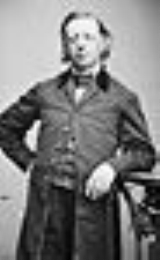
Henry Ward Beecher

 
Henry Ward Beecher

   Email Print
   Bookmark   Link


Henry Ward Beecher


This is an article about Henry Beecher, the American clergyman. For the medical doctor, see Henry K. Beecher
Henry K. Beecher

Henry Knowles Beecher was an important figure in the history of anesthesiology and medicine, receiving awards and honors during his career. His 1966 article on unethical practices in medical experimentation within the New England Journal of Medicine was instrumental in the implementation of federal rules on human experimentation and informed...
.


Henry Ward Beecher (June 24, 1813 – March 8, 1887) was a prominent, Congregationalist
Congregational church

Congregational churches are Protestantism Christianity churches practicing congregationalist church governance, in which each Wiktionary:congregation independently and autonomously runs its own affairs....
 clergyman, social reformer, abolitionist, and speaker
Orator

An orator, or oratist, is a speaker.An orator may also be called an oratarian - literally, "he who orates".Etymology...
 in the mid to late 19th century.

An 1875 adultery
Adultery

Adultery is the voluntary sexual intercourse between a marriage and another person who is not his or her spouse, though in many places it is only considered adultery when a married woman has sexual relations with someone who is not her husband and in others it is only considered adultery when a married woman has sexual relations with someon...
 trial in which he was accused of having an affair with a married woman was one of the most famous American trials of the 19th century.

in Litchfield, Connecticut
Litchfield, Connecticut

Litchfield is a New England town in and former county seat of Litchfield County, Connecticut, Connecticut, United States, and is known as an affluent summer resort....
, he was the son of Lyman Beecher
Lyman Beecher

Lyman Beecher was a Presbyterian clergyman, temperance movement leader, and the father of many noted leaders, including Harriet Beecher Stowe, Henry Ward Beecher, Charles Beecher, Edward Beecher, Isabella Beecher Hooker, and Catharine Beecher, and a leader of the Second Great Awakening of the United States....
, an abolitionist Congregationalist
Congregational church

Congregational churches are Protestantism Christianity churches practicing congregationalist church governance, in which each Wiktionary:congregation independently and autonomously runs its own affairs....
 preacher from Boston, and Roxana Foote.


Discussion
Ask a question about 'Henry Ward Beecher'
Start a new discussion about 'Henry Ward Beecher'
Answer questions from other users
Full Discussion Forum


Quotations


It is not well for a man to pray, cream; and live skim milk.

Life Thoughts

Never forget what a man says to you when he is angry.

Life Thoughts (1858)

The one great poem of New England is her Sunday.

Proverbs from Plymouth Pulpit (1887)

When a nations young men are conservative, its funeral bell is already rung.

Proverbs from Plymouth Pulpit

Humor is, however, nearer right than any emotion we have. Humor is the atmosphere in which grace most flourishes.

Sermon titled Unjust Judgments (1874)

Any law that takes hold of a mans daily life cannot prevail in a community, unless the vast majority of the community are actively in favor of it. The laws that are the most operative are the laws which protect life.

“Civil Law and the Sabbath,” sermon (December 3, 1882)


Encyclopedia


This is an article about Henry Beecher, the American clergyman. For the medical doctor, see Henry K. Beecher
Henry K. Beecher

Henry Knowles Beecher was an important figure in the history of anesthesiology and medicine, receiving awards and honors during his career. His 1966 article on unethical practices in medical experimentation within the New England Journal of Medicine was instrumental in the implementation of federal rules on human experimentation and informed...
.


Henry Ward Beecher (June 24, 1813 – March 8, 1887) was a prominent, Congregationalist
Congregational church

Congregational churches are Protestantism Christianity churches practicing congregationalist church governance, in which each Wiktionary:congregation independently and autonomously runs its own affairs....
 clergyman, social reformer, abolitionist, and speaker
Orator

An orator, or oratist, is a speaker.An orator may also be called an oratarian - literally, "he who orates".Etymology...
 in the mid to late 19th century.

An 1875 adultery
Adultery

Adultery is the voluntary sexual intercourse between a marriage and another person who is not his or her spouse, though in many places it is only considered adultery when a married woman has sexual relations with someone who is not her husband and in others it is only considered adultery when a married woman has sexual relations with someon...
 trial in which he was accused of having an affair with a married woman was one of the most famous American trials of the 19th century.

Early life

Born in Litchfield, Connecticut
Litchfield, Connecticut

Litchfield is a New England town in and former county seat of Litchfield County, Connecticut, Connecticut, United States, and is known as an affluent summer resort....
, he was the son of Lyman Beecher
Lyman Beecher

Lyman Beecher was a Presbyterian clergyman, temperance movement leader, and the father of many noted leaders, including Harriet Beecher Stowe, Henry Ward Beecher, Charles Beecher, Edward Beecher, Isabella Beecher Hooker, and Catharine Beecher, and a leader of the Second Great Awakening of the United States....
, an abolitionist Congregationalist
Congregational church

Congregational churches are Protestantism Christianity churches practicing congregationalist church governance, in which each Wiktionary:congregation independently and autonomously runs its own affairs....
 preacher from Boston, and Roxana Foote. Roxana died when Henry was three. Henry was the seventh of 13 siblings, some of whom were famous in their own right: Harriet Beecher Stowe
Harriet Beecher Stowe

Harriet Beecher Stowe was an abolitionist, whose novel Uncle Tom's Cabin depicted life for African-Americans under slavery; it reached millions as a novel and play, and became influential in the U.S....
 who wrote Uncle Tom's Cabin
Uncle Tom's Cabin

Uncle Tom's Cabin; or, Life Among the Lowly is an anti-slavery novel by American author Harriet Beecher Stowe. Published in 1852, the novel had a profound effect on attitudes toward African Americans and History of slavery in the United States, so much in the latter case that the novel intensified the Origins of the American Civil War lea...
; noted educator Catharine Beecher
Catharine Beecher

Catharine Esther Beecher was an American educator known for her forthright opinions on women?s education as well as her vehement support of the many benefits of the incorporation of kindergarten into children's education....
; activists Charles Beecher
Charles Beecher

Charles Beecher was an United States minister of religion, composer of religious hymns, and prolific author.Beecher was born in Litchfield, Connecticut, the son of Lyman Beecher, an abolitionist Congregationalist preacher from Boston and Roxana Foote Beecher....
 and Isabella Beecher Hooker
Isabella Beecher Hooker

Isabella Beecher Hooker was a leader in the women's suffrage movement and an author.Born in Litchfield, Connecticut, she was a daughter of Reverend Lyman Beecher, a noted abolitionist....
. In addition Henry was the uncle of Edgar Beecher Bronson
Edgar Beecher Bronson

Edgar Beecher Bronson was a Nebraska rancher, a West Texas cattleman, an African big-game hunter, a serious photographer and starting late in life, an author of fiction and personal memoirs....
.

The Beecher household was exemplary of the orthodox ministry that Lyman Beecher preached. His family not only prayed at the beginning and end of each day but also sang hymns and prepared for other rigorous church obligations. The family members were expected to participate in prayer meetings, attend lectures and other church functions. "Undue frivolity was discouraged, so they did not celebrate Christmas
Christmas

Christmas , also referred to as Christmas Day, is an annual holiday celebrated on December 25 that commemorates the birth of Jesus. The day marks the beginning of the larger season of Christmastide, which lasts Twelve Days of Christmas....
 or birthdays. Dancing, theater, and all but the most high-toned fiction were forbidden."

Henry was especially close to his sister Harriet, two years his senior, according to the web site of the Plymouth Church in Brooklyn Heights, New York City. "This friendship with Harriet continued throughout their lives, and she was still listed on the membership rolls of Plymouth Church when she died in 1896."

"Henry, bashful and mumbling as a child, began his oratorical training at Mt. Pleasant Institution, a boarding school in Amherst
Amherst

Amherst may refer to:...
, Massachusetts
Massachusetts

The Commonwealth of Massachusetts is a U.S. state located in the New England region of the Northeastern United States United States. It borders Rhode Island and Connecticut to the south, New York to the west, and Vermont and New Hampshire to the north....
."

Beecher also attended Boston Latin School
Boston Latin School

The Boston Latin School is a public education Magnet school founded on April 23, 1635, in Boston, Massachusetts, making it the List of the oldest public high schools in the United States existing school in the United States....
, graduated from Amherst College
Amherst College

Amherst College is a private university Liberal arts colleges in the United States in Amherst, Massachusetts, Massachusetts, United States. Founded in 1821, it is the third oldest college in List of colleges and universities in Massachusetts, and has been coeducational since 1975....
 in 1834 and in 1837 received a degree from Lane Theological Seminary
Lane Theological Seminary

Lane Theological Seminary was established in the Walnut Hills section of Cincinnati, Ohio, in 1829 to educate Presbyterian Religious minister. It was named in honor of Ebenezer and William Lane, who pledged $4,000 for the new school, which was seen as a forward outpost of the Presbyterianism in the western territories of the United States....
 outside Cincinnati, Ohio
Cincinnati, Ohio

Cincinnati is a city in the U.S. state of Ohio and the county seat of Hamilton County, Ohio. The municipality is located in southwestern Ohio and is situated on the Ohio River at the Ohio-Kentucky border....
, which his father then headed. First becoming a minister in Lawrenceburg (1837-39) he was then pastor of the Second Presbyterian Church in Indianapolis, Indiana
Indianapolis, Indiana

Indianapolis is the Capital of the U.S. state of Indiana, and the county seat of Marion County, Indiana. The United States Census estimated the city's population, Indianapolis , Indiana the Unigov, at 795,458 in 2006....
 (1839-47).

In 1847, he was appointed the first minister of the new Plymouth Congregational Church
Plymouth Church of the Pilgrims

Plymouth Church of the Pilgrims is a church in Brooklyn Heights, Brooklyn, Brooklyn, New York City. It was a station of the Underground Railroad, and the pulpit of Henry Ward Beecher, its first pastor....
 in Brooklyn, New York. That fall, Beecher and his wife, the former Eunice Bullard, and their three surviving children moved to Brooklyn.

Beecher's fame on the lecture circuit led to his becoming editor of several religious magazines, and he received large advances for a novel and for a biography of Jesus.

Beecher-Tilton Scandal

"His career took place during what one scholar has called the Protestant Century," according to Kazin, "when an eloquent preacher could be a celebrity, the leader of one or more reform movements and a popular philosopher — all at the same time."

Muscular and long-haired, the preacher was close to a series of attractive young women, but his wife, Eunice, the mother of his 10 children, was "unloved."

In the highly publicized scandal known as the Beecher-Tilton Affair he was tried on charges that he had committed adultery with a friend's wife, Elizabeth Tilton. In 1870, Elizabeth had confessed to her husband, Theodore Tilton
Theodore Tilton

Theodore Tilton was a United States newspaper editing, Poet and Abolitionist. He was born in New York City to Silas Tilton and Eusebia Tilton ....
, that she had had a relationship with Henry Ward Beecher. Tilton was then fired from his job at the Independent because of his editor's fears of adverse publicity. Theodore and Henry both pressured Elizabeth to recant her story, which she did, in writing.

The charges became public when Theodore Tilton told Elizabeth Cady Stanton
Elizabeth Cady Stanton

Elizabeth Cady Stanton was an American social activism and leading figure of the early women's rights movement. Her Declaration of Sentiments, presented at the Seneca Falls Convention held in 1848 in Seneca Falls , New York, New York, is often credited with initiating the first organized woman's rights and woman's suffrage movements in th...
 of his wife's confession. Stanton repeated the story to fellow women's rights leaders Victoria Woodhull
Victoria Woodhull

Victoria Claflin Woodhull was an United States Suffragette who was described by Gilded Age newspapers as a leader of the American woman's suffrage movement in the 19th century....
 and Isabella Beecher Hooker.

Henry Ward Beecher had publicly denounced Woodhull's advocacy of free love. She published a story in her paper (Woodhull and Claflin's Weekly) on November 2, 1872, claiming that America's most renowned clergyman was secretly practicing the free-love doctrines which he denounced from the pulpit. The story created a national sensation. As a result, Woodhull was arrested in New York City and imprisoned for sending obscene material through the mail. The Plymouth Church held a board of inquiry and exonerated Beecher, but excommunicated Mr. Tilton in 1873.

Tilton then sued Beecher: the trial began in January 1875, and ended in July when the jurors deliberated for six days but were unable to reach a verdict. His wife loyally supported him throughout the ordeal.

A second board of enquiry was held at Plymouth Church and this body also exonerated Beecher. Two years later, Elizabeth Tilton once again confessed to the affair and the church excommunicated her. Despite this Beecher continued to be a popular national figure. However, the debacle split his family. While most of his siblings supported him, Isabella Beecher Hooker openly supported one of his accusers.

Death

Henry Ward Beecher died of a cerebral hemorrhage in March 1887. Brooklyn
Brooklyn

Brooklyn is one of the five Borough of New York City, located at the western end of Long Island. An independent city until its consolidation with New York in 1898, Brooklyn is New York City's most populous borough, with 2.5 million residents, and second largest in area....
, still an independent city, declared a day of mourning. The state legislature recessed, and telegrams of condolence were sent by national figures, including President Cleveland
Grover Cleveland

Stephen Grover Cleveland was both the List of Presidents of the United States President of the United States. Cleveland is the only President to serve two non-consecutive terms and therefore is the only individual to be counted twice in the numbering of the presidents....
. His funeral procession to Plymouth Church - led by a Black commander of the William Lloyd Garrison
William Lloyd Garrison

William Lloyd Garrison was a prominent United States abolitionism, journalist, and social reformer. He is best known as the editor of the radical abolitionist newspaper, The Liberator, and as one of the founders of the American Anti-Slavery Society, he promoted "immediate emancipation" of slaves in the United States....
 Post in Massachusetts and a Virginia Confederate general and former slaveholder, marching arm in arm - paid tribute to what Beecher helped accomplish. Henry Ward Beecher was laid to rest in Brooklyn's Green-Wood Cemetery
Green-Wood Cemetery

Green-Wood Cemetery was founded in 1838 as a rural cemetery in Kings County, New York, now in Brooklyn. It was granted National Historic Landmark status in 2006 by the U.S....
 on March 11, 1887, survived by his wife Eunice, and four of the nine children born to them: Harriet, Henry, William and Herbert.

Social and political views

An advocate of women's suffrage
Suffrage

Suffrage is the civil right to vote, or the exercise of that right. In that context, it is also called political franchise or simply the franchise....
, temperance
Temperance movement

A temperance movement attempts to reduce the amount of alcohol consumed within a community or society in general -- and even to prohibit its production and consumption entirely....
 and Darwin's
Charles Darwin

Charles Robert Darwin Royal Society was an English people natural history who realised and presented compelling evidence that all species of life have evolution over time from common descent, through the process he called natural selection....
 theory of evolution
Evolution

In biology, evolution is change in the heritability trait of a population of organisms from one generation to the next. These changes are caused by a combination of three main processes: variation, reproduction, and selection....
, and a foe of slavery
Slavery

Slavery is a form of forced labor where a person is compelled to Labor for another . Slaves are held against their will from the time of their capture, purchase, or birth, and are deprived of the right to leave, to refuse to work, or to receive Remuneration in return for their labor....
 and bigotry of all kinds, religious, racial and social, Beecher held that Christianity should adapt itself to the changing culture of the times. Later, in the 1870s and 1880s, Beecher became a prominent advocate for allowing Chinese immigration to continue to the United States, and is credited for delaying the passage of the Chinese Exclusion Act
Chinese Exclusion Act (United States)

The Chinese Exclusion Act was a United States federal law passed on May 6, 1882, following revisions made in 1880 to the Burlingame Treaty of 1868....
 until 1882. Beecher compared Chinese immigrants favorably to Irish immigrants, and argued that excluding the former from entering the country while allowing the latter was an unjust practice.

During the antebellum period, he raised funds to buy weapons for those willing to oppose slavery in Kansas
Kansas

The State of Kansas is a Midwestern U.S. state in the Central United States of the United States of America, an area often referred to as the United States "Heartland"....
 and Nebraska
Nebraska

Nebraska is a U.S. state located on the Great Plains of the Midwestern United States and Western United States.Nebraska probably gets its name from the archaic Chiwere language words ?? Br?sge or the Omaha-Ponca language N? Bth?ska meaning "flat water," after the Platte River that flows through the state....
, and the rifles bought with this money became known as "Beecher's Bibles
Beecher's Bibles

"Beecher's Bibles" was the name given to the breech loading Sharps rifles that were supplied to the abolitionist immigrants in Kansas.The name came from the eminent New England minister Henry Ward Beecher, of the New England Emigrant Aid Society, of whom it was written in a February 8, 1856, article in the New York Tribune:...
". Politically active, he supported first the Free Soil Party and later the Republican Party.

During the American Civil War
American Civil War

The American Civil War , also known as the War Between the States and several Naming the American Civil War, was a civil war in the United States....
, his church raised and equipped a volunteer infantry
Infantry

Infantry are soldiers who are primarily trained for the role of fighting on foot. A soldier in the infantry is known as an infantryman. Infantry units have more physically demanding training than other branches of armies, and place a greater emphasis on fitness, physical strength and aggression....
 regiment
Regiment

A regiment is a military unit, composed of variable numbers of battalions, commanded by a Colonel. Depending on the nation, military branch, mission, and organization, a modern regiment resembles a brigade, in that both range in size from a few hundred to 5,000 soldiers ....
. Early in the war, Beecher pressed Lincoln
Abraham Lincoln

Abraham Lincoln was the List of Presidents of the United States President of the United States. He successfully led the country through its greatest internal crisis, the American Civil War, preserving the Union and ending slavery....
 to emancipate the slaves through a proclamation. The preacher later went on a speaking tour in England
England

native_name =|conventional_long_name = England|common_name = England|image_flag = Flag of England.svg|image_coat = England COA.svg|symbol_type = Royal Coat of Arms...
 to undermine support for the South by explaining the North's war aims. Near the end of the war, when the Stars and Stripes were again raised at Fort Sumter
Fort Sumter

Fort Sumter is a Seacoast Defense #Third system masonry coastal fortification located in Charleston, South Carolina harbor, South Carolina. The fort is best known as the site upon which the shots initiating the American Civil War were fired, at the Battle of Fort Sumter....
 in South Carolina
South Carolina

South Carolina is a U.S. state in the Southern United States of the United States. It borders Georgia to the south and North Carolina to the north....
, Beecher was the main speaker.

Beecher's liberalism did not extend to the working class. During the Great Railroad Strike of 1877
Great railroad strike of 1877

The Great Railroad Strike of 1877 began on July 14 in Martinsburg, West Virginia, United States and ended some 45 days later after it was put down by local and state militias....
 he preached strongly against the strikers whose wages had been cut to starvation levels. His notorious "bread and water" sermon included "Man cannot live by bread alone but the man who cannot live on bread and water is not fit to live". The following Sunday heard "If you are being reduced, go down boldly into poverty". He then left for a two month vacation in Europe.

Preaching style

Henry Ward Beecher   Project Gutenberg Etext 15394
Thousands of worshipers flocked to Beecher's enormous Plymouth Church in Brooklyn
Brooklyn

Brooklyn is one of the five Borough of New York City, located at the western end of Long Island. An independent city until its consolidation with New York in 1898, Brooklyn is New York City's most populous borough, with 2.5 million residents, and second largest in area....
. Abraham Lincoln
Abraham Lincoln

Abraham Lincoln was the List of Presidents of the United States President of the United States. He successfully led the country through its greatest internal crisis, the American Civil War, preserving the Union and ending slavery....
 (who said of Beecher that no one in history had "so productive a mind") was in the audience at one point, and Walt Whitman
Walt Whitman

Walter Whitman was an United States Poetry of the United States, essayist, journalism, and humanism. He was a part of the transition between Transcendentalism and literary realism, incorporating both views in his works....
 visited him. Mark Twain
Mark Twain

Samuel Langhorne Clemens , better known by the pen name Mark Twain, was an United Statesmerican author and humorist. Twain is most noted for his novels Adventures of Huckleberry Finn, which has since been called the Great American Novel, and The Adventures of Tom Sawyer....
 went to see Beecher in the pulpit and described the pastor "sawing his arms in the air, howling sarcasms this way and that, discharging rockets of poetry and exploding mines of eloquence, halting now and then to stamp his foot three times in succession to emphasize a point."

Beecher himself had this to say of his preaching style: "From the beginning, I educated myself to speak along the line and in the current of my moral convictions; and though, in later days, it has carried me through places where there were some batterings and bruisings, yet I have been supremely grateful that I was led to adopt this course. I would rather speak the truth to ten men than blandishments and lying to a million. Try it, ye who think there is nothing in it! try what it is to speak with God behind you,--to speak so as to be only the arrow in the bow which the Almighty draws."

"He obtained the chains with which John Brown
John Brown

John Brown may refer to:*John Brown , American who led an anti-slavery revolt in Harper's Ferry, Virginia in 1859*John Brown , Scottish physician who taught that disease was caused by either excessive or inadequate stimulation....
 had been bound, trampling them in the pulpit, and he also held mock 'auctions' at which the congregation purchased the freedom of real slaves," according to the Web site of the still-existing Plymouth Church. The most famous of these former slaves was a young girl named Pinky, auctioned during a regular Sunday worship service at Plymouth on February 5, 1860. A collection taken up that day raised $900 to buy Pinky from her owner. A gold ring was also placed in the collection plate, and Beecher presented it to the girl to commemorate her day of liberation. Pinky returned to Plymouth in 1927 at the time of the Church's 80th Anniversary to give the ring back to the Church with her thanks. Today, Pinky's ring and bill of sale can still be viewed at Plymouth."

Theology

Henry's father preached a form of Calvinist theology that "combined the old belief that 'human fate was preordained by God's plan' with a faith in the capacity of rational men and women to purge society of its sinful ways," according to historian Michael Kazin.

"For (Henry) Beecher, sinfulness was a temporary malady, which the love of God could burn away as a fierce noonday sun dries up a noxious mold," according to Kazin.

Legacy

  • "He developed a passion for jewels, which he carried, unset, in his pockets, taking them out for comfort when he was tired or in low spirits."
  • Beecher, Illinois
    Beecher, Illinois

    Beecher is a village in Will County, Illinois, Illinois, United States. The population was 2,033 at the 2000 census. It was founded in 1870 and was named for Henry Ward Beecher....
    , was named after him.
  • Gutzon Borglum
    Gutzon Borglum

    Gutzon de la Mothe Borglum was an American Painting and sculpture famous for creating the monumental President of the United Statess' heads at Mount Rushmore National Memorial, as well as other public works of art....
     who created the Mount Rushmore memorial, sculpted a statue of Beecher that stands in the garden of Plymouth Church in Brooklyn Heights.
  • Oliver Wendell Holmes, Sr.
    Oliver Wendell Holmes, Sr.

    Oliver Wendell Holmes Sr., was an American physician and professor who also achieved fame as a writer. During his lifetime, he was one of the best regarded poets of the 19th century and is considered a member of the Fireside Poets....
     wrote the following limerick
    Limerick (poetry)

    A limerick is a five-line poem with a strict form, originally popularized in English by Edward Lear. Limericks are witty or humorous, and sometimes obscene with humorous intent....
    :
The Reverend Henry Ward Beecher
called a hen a most elegant creature.
The hen, pleased with that,
laid an egg in his hat,
and thus did the hen reward Beecher.
  • In The Adventure of the Cardboard Box
    The Adventure of the Cardboard Box

    "The Adventure of the Cardboard Box" is one of the 56 short Sherlock Holmes stories written by British author Sir Arthur Conan Doyle. It is the second of the twelve The Memoirs of Sherlock Holmes in most British editions of the canon, and second of the eight stories from His Last Bow in most American versions....
    , a Sherlock Holmes
    Sherlock Holmes

    Sherlock Holmes is a fictional character of the late nineteenth and early twentieth centuries, who first appeared in publication in 1887. He is the creation of Scotland-born author and physician Sir Arthur Conan Doyle....
     mystery, Holmes' companion Dr. Watson is mentioned as being an avid admirer of Henry Ward Beecher, keeping a portrait of him (beside a portrait of General Gordon
    Charles George Gordon

    Major-General , Order of the Bath , known as Chinese Gordon, Gordon Pasha, and Gordon of Khartoum, was a United Kingdom of Great Britain and Ireland army officer and administrator....
    ) and feeling strongly indignant about the way that Beecher was received during his visit to Britain at the time of the Civil War by "the more turbulent of our people" (see).


Published works

  • Seven Lectures to Young Men (1844) (a pamphlet)
  • The Independent (1861-63) (periodical, as editor)
  • Christian Union (1870-78) (periodical, as editor)
  • Summer in the Soul (1858)
  • Prayers from the Plymouth Pulpit (1867)
  • Norwood, or Village Life in New England (1868) (novel)
  • Life of Jesus Christ (1871)
  • Yale Lectures on Preaching (1872)
  • Evolution and Religion (1885)


External links

  • from the Brooklyn Eagle
  • from the Brooklyn Eagle
  • from the Brooklyn Eagle
  • by Lymon Abbott (1904)
  • at Find A Grave
    Find A Grave

    Find A Grave is a website providing access and input to an online database of cemetery records....
  • by Debby Applegate (Chapter 1)