
All Topics  
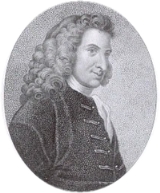
Henry Fielding

 
Henry Fielding

   Email Print
   Bookmark   Link


Henry Fielding


Henry Fielding (22 April 1707 – 8 October 1754) was an English
England

native_name =|conventional_long_name = England|common_name = England|image_flag = Flag of England.svg|image_coat = England COA.svg|symbol_type = Royal Coat of Arms...
 novelist and dramatist known for his rich earthy humour and satirical
Satire

Satire is often strictly defined as a literary genre; although, in practice, it is also found in the graphic arts and performing arts. In satire, human or individual vices, follies, abuses, or shortcomings are held up to censure by means of ridicule, derision, burlesque, irony, or other methods, ideally with the intent to bring about improv...
 prowess, and as the author of the novel
Novel

File:2009 stapelweise Neuerscheinungen im Buchladen.JPGA novel is today a long narrative in literary prose. The genre has historical roots both in the fields of the medieval and early modern Romance and in the tradition of the novella....
 Tom Jones
The History of Tom Jones, a Foundling

The History of Tom Jones, a Foundling, often known simply as Tom Jones, is a comic novel by the England playwright and novelist Henry Fielding....
.

Aside from his literary achievements, he has a significant place in the history of law-enforcement, having founded (with his half-brother John) what some have called London's first police
Police

Police are agents or agencies, usually of the executive , empowered to enforce the law and to ensure public and social order through the legitimized use of force....
 force, the Bow Street Runners
Bow Street Runners

The Bow Street Runners have been called London's first professional police force. They were founded in 1749 by the author Henry Fielding and originally numbered just eight....
, using his authority as a magistrate.

Biography
Fielding was educated at Eton College
Eton College

Eton College, also known as Eton, is a world-famous British independent school for boys, founded in 1440 by Henry VI of England. It was founded as the King's College of Our Lady of Eton beside Windsor....
, where he established a lifelong friendship with William Pitt the Elder.


Discussion
Ask a question about 'Henry Fielding'
Start a new discussion about 'Henry Fielding'
Answer questions from other users
Full Discussion Forum


Quotations


...the excellence of the mental entertainment consists less in the subject than in the author's skill in well dressing it up.

Book I, Chapter 1

All Nature wears one universal grin.

Act I, sc. i

Dancing begets warmth, which is the parent of wantonness. It is, Sir, the great grandfather of cuckoldom.

Act III, sc. vii

Distinction without a difference.

Book VI, Ch. 13

Every physician almost hath his favorite disease.

Book II, Ch. 9

Guilt has very quick ears to an accusation.

Book III, ch. 11


Encyclopedia


Henry Fielding (22 April 1707 – 8 October 1754) was an English
England

native_name =|conventional_long_name = England|common_name = England|image_flag = Flag of England.svg|image_coat = England COA.svg|symbol_type = Royal Coat of Arms...
 novelist and dramatist known for his rich earthy humour and satirical
Satire

Satire is often strictly defined as a literary genre; although, in practice, it is also found in the graphic arts and performing arts. In satire, human or individual vices, follies, abuses, or shortcomings are held up to censure by means of ridicule, derision, burlesque, irony, or other methods, ideally with the intent to bring about improv...
 prowess, and as the author of the novel
Novel

File:2009 stapelweise Neuerscheinungen im Buchladen.JPGA novel is today a long narrative in literary prose. The genre has historical roots both in the fields of the medieval and early modern Romance and in the tradition of the novella....
 Tom Jones
The History of Tom Jones, a Foundling

The History of Tom Jones, a Foundling, often known simply as Tom Jones, is a comic novel by the England playwright and novelist Henry Fielding....
.

Aside from his literary achievements, he has a significant place in the history of law-enforcement, having founded (with his half-brother John) what some have called London's first police
Police

Police are agents or agencies, usually of the executive , empowered to enforce the law and to ensure public and social order through the legitimized use of force....
 force, the Bow Street Runners
Bow Street Runners

The Bow Street Runners have been called London's first professional police force. They were founded in 1749 by the author Henry Fielding and originally numbered just eight....
, using his authority as a magistrate.

Biography


Fielding was educated at Eton College
Eton College

Eton College, also known as Eton, is a world-famous British independent school for boys, founded in 1440 by Henry VI of England. It was founded as the King's College of Our Lady of Eton beside Windsor....
, where he established a lifelong friendship with William Pitt the Elder. His younger sister, Sarah
Sarah Fielding

Sarah Fielding was a United Kingdom author and sister of the novelist Henry Fielding. She was the author of The Governess, or The Little Female Academy , which was the first novel in English written especially for children , and had earlier achieved success with her novel The Adventures of David Simple ....
, also became a successful writer. After a romantic episode with a young woman that ended in his getting into trouble with the law, he went to London
London

London is the capital of both England and the United Kingdom, and the most populous municipality in the European Union. An important settlement for two millennia, History of London goes back to its founding by the Roman Empire....
 where his literary career began. In 1728, he traveled to Leiden
Leiden

Media:Nl-Leiden.ogg is a city and municipality in the province of South Holland in the Netherlands and has 118,000 inhabitants. It forms a single urban area with Oegstgeest, Leiderdorp, Voorschoten, Valkenburg, Rijnsburg and Katwijk, with 254,000 inhabitants....
 to study classics and law at the University. However, due to lack of money he was obliged to return to London and he began writing for the theatre
Theatre

Theatre is the branch of the performing arts defined by Bernard Beckerman as what "occurs when one or more actor, isolated in time and/or Theater , present themselves to Audience." By this broad definition, theatre has existed since the dawn of man, as a result of human tendency for story telling....
, some of his work being savagely critical of the contemporary government under Sir Robert Walpole
Robert Walpole

Robert Walpole, 1st Earl of Orford, Order of the Garter, Order of the Bath, Privy Council of Great Britain , known before 1742 as Sir Robert Walpole, was a Kingdom of Great Britain statesman who is generally regarded as having been the first Prime Minister of the United Kingdom....
.

The Theatrical Licensing Act
Licensing Act 1737

The Licensing Act or Theatrical Licensing Act of 21 June 1737 was a landmark act of censorship of the United Kingdom stage and one of the most determining factors in the development of Augustan drama....
 of 1737 is alleged to be a direct result of his activities. The particular play that triggered the Licensing Act was The Vision of the Golden Rump, but Fielding's satires had set the tone. Once the Licensing Act passed, political satire on the stage was virtually impossible, and playwrights whose works were staged were viewed as suspect. Fielding therefore retired from the theatre and resumed his career in law and, in order to support his wife Charlotte Cradock and two children, he became a barrister.

His lack of money sense meant that he and his family often endured periods of poverty, but he was also helped by Ralph Allen
Ralph Allen

Ralph Allen was baptised at St Columb Major, Cornwall on July 24, 1693. As a teenager he worked at the Post Office. He moved in 1710 to Bath, Somerset, where he became a post office clerk, and at the age of 19, in 1712, became the Postmaster of Bath....
, a wealthy benefactor who later formed the basis of Squire Allworthy in Tom Jones
The History of Tom Jones, a Foundling

The History of Tom Jones, a Foundling, often known simply as Tom Jones, is a comic novel by the England playwright and novelist Henry Fielding....
. After Fielding's death, Allen provided for the education and support of his children.

Fielding never stopped writing political satire and satires of current arts and letters. His Tragedy of Tragedies of Tom Thumb
Tom Thumb

Tom Thumb is a traditional hero in English folklore who is no bigger than his father's thumb.Various allusions to Tom Thumb are included in sixteenth century works; in his Discovery of Witchcraft, Reginald Scot includes Tom Thumbe in a list of folkloric creatures such as witches and satyrs that nursemaids told their charges about u...
 (for which Hogarth
Hogarth

Hogarth may refer to:* Burne Hogarth, American cartoonist, illustrator, educator and author.* David George Hogarth, British archaeologist.* Donald Hogarth, Ontario politician and mining financier....
 designed the frontispiece) was, for example, quite successful as a printed play. He also contributed a number of works to journals of the day. He wrote for Tory
Tory

In the political tradition of some List of countries where English is an official language, the term Tory may refer to a variety of Political party and creeds since it was originally used in the late 17th century to describe opponents to the Whig Party ....
 periodicals, usually under the name of "Captain Hercules Vinegar". As Justice of the Peace he issued a warrant for the arrest of Colley Cibber
Colley Cibber

Colley Cibber was a British actor-manager, playwright, and Poet laureate#British_Poets_Laureate. His colourful memoir Apology for the Life of Colley Cibber started a British tradition of personal, anecdotal, and even rambling autobiography....
 for "murder of the English language".

During the late 1730s and early 1740s Fielding continued to air his liberal and anti-Jacobite
Jacobitism

Jacobitism was the political movement dedicated to the restoration of the House of Stuart kings to the thrones of Kingdom of England, Kingdom of Scotland, and Kingdom of Ireland....
 views in satirical articles and newspapers. Almost by accident, in anger at the success of Richardson's Pamela
PAMELA

PAMELA , launched on 15 June 2006, is the first satellite-based experiment dedicated to detecting cosmic rays and also antimatter from space, in the form of positrons and antiprotons....
, Fielding took to writing novels in 1741 and his first major success was Shamela
An Apology for the Life of Mrs. Shamela Andrews

An Apology for the Life of Mrs. Shamela Andrews, or Shamela, as it is more commonly known, is a satire novel written by Henry Fielding and first published in April 1741 under the name of Mr....
, an anonymous parody
Parody

A parody , in contemporary usage, is a work created to mock, comment on, or poke fun at an original work, its subject, or author, or some other target, by means of humorous, satiric or ironic imitation....
 of Samuel Richardson
Samuel Richardson

Samuel Richardson was an 18th-century England writer and Printer . He is best known for his three epistolary novels: Pamela , Clarissa and The History of Sir Charles Grandison ....
's melodramatic novel. It is a satire that follows the model of the famous Tory satirists of the previous generation (Jonathan Swift
Jonathan Swift

Jonathan Swift was an Anglo-Irish satire, essayist, political pamphleteer , poet and cleric who became Dean of St. Patrick's Cathedral, Dublin, Dublin....
 and John Gay
John Gay

John Gay was an English people poet and dramatist. He is best remembered for The Beggar's Opera , set to music by Johann Christoph Pepusch....
, in particular).

He followed this up with Joseph Andrews
Joseph Andrews

Joseph Andrews, or The History of the Adventures of Joseph Andrews and of his Friend Mr. Abraham Adams, was the first published full-length novel of the England author and magistrate Henry Fielding, and indeed among the first novels in the English language....
 (1742), an original work supposedly dealing with Pamela's brother, Joseph. Although also begun as a parody, this work developed into an accomplished novel in its own right and is considered to mark Fielding's debut as a serious novelist. In 1743, he published a novel in the Miscellanies volume III (which was the first volume of the Miscellanies). This was The History of the Life of the Late Mr Jonathan Wild the Great. This novel is sometimes thought of as his first because he almost certainly began composing it before he wrote Shamela and Joseph Andrews. It is a satire of Walpole that draws a parallel between Walpole and Jonathan Wild
Jonathan Wild

Jonathan Wild was perhaps the most famous crime of London — and possibly Great Britain — during the 18th century, both because of his own actions and the uses novelists, playwrights, and political satire made of them....
, the infamous gang leader and highwayman. He implicitly compares the Whig
British Whig Party

The Whigs are often described as one of two political party in Kingdom of England and later the United Kingdom from the late 17th to the mid-19th centuries....
 party in Parliament
Parliament of Great Britain

The Parliament of Great Britain was formed in 1707 following the ratification of the Act of Union 1707 by both the Parliament of England and Parliament of Scotland....
 with a gang of thieves being run by Walpole, whose constant desire to be a "Great Man" (a common epithet for Walpole) should culminate only in the antithesis of greatness: being hanged.

His anonymously-published The Female Husband of 1746 is a fictionalized account of a notorious case in which a female transvestite was tried for duping another woman into marriage. Though a minor item in Fielding's total oeuvre, the subject is consistent with his ongoing preoccupation with fraud, sham, and masks. His greatest work was Tom Jones
The History of Tom Jones, a Foundling

The History of Tom Jones, a Foundling, often known simply as Tom Jones, is a comic novel by the England playwright and novelist Henry Fielding....
 (1749), a meticulously constructed picaresque novel
Picaresque novel

The picaresque novel is a popular sub-genre of prose fiction which is usually satire and depicts in realism and often humorous detail the adventures of a roguish hero of low social class who lives by his or her wits in a corrupt society....
 telling the convoluted and hilarious tale of how a foundling came into a fortune. Charlotte, on whom he later modeled the heroines of both Tom Jones and Amelia, died in 1744. Three years later Fielding - disregarding public opinion - married Charlotte's former maid, Mary, who was pregnant.

Despite this, his consistent anti-Jacobitism and support for the Church of England
Church of England

The Church of England is the State religion Christianity Ecclesia in England, the Mother Church of the worldwide Anglican Communion and the oldest among the communion's thirty-eight independent national and regional churches....
 led to him being rewarded a year later with the position of London's Chief Magistrate, and his literary career went from strength to strength. Joined by his younger half-brother John
John Fielding

This article is about the London magistrate. For the soldier, see John Williams .Sir John Fielding was a notable England magistrate and social reformer of the 18th century....
, he helped found what some have called London's first police
Police

Police are agents or agencies, usually of the executive , empowered to enforce the law and to ensure public and social order through the legitimized use of force....
 force, the Bow Street Runners
Bow Street Runners

The Bow Street Runners have been called London's first professional police force. They were founded in 1749 by the author Henry Fielding and originally numbered just eight....
 in 1749. According to the historian G.M. Trevelyan, they were two of the best magistrates in eighteenth-century London, and did a great deal to enhance the cause of judicial reform and improve prison conditions. His influential pamphlets and enquiries included a proposal for the abolition of public hangings. This did not, however, imply opposition to capital punishment as such—as evident, for example, in his presiding in 1751 over the trial of the notorious criminal James Field, finding him guilty in a robbery and sentencing him to hang. Despite being now blind
Blindness

Blindness is the condition of lacking visual perception due to physiological or neurological factors.Various scales have been developed to describe the extent of vision loss and define "blindness." Total blindness is the complete lack of form and visual light perception and is clinically recorded as "NLP," an abbreviation for "no ligh...
, John Fielding succeeded his older brother as Chief Magistrate and became known as the 'Blind Beak' of Bow Street for his ability to recognise criminals by their voice alone.

Fielding's ardent commitment to the cause of justice as a great humanitarian in the 1750s, coincided with a rapid deterioration in his health to such an extent that he went abroad to Portugal
Portugal

Portugal , officially the Portuguese Republic , is a country on the Iberian Peninsula. Located in southwestern Europe, Portugal is the westernmost country of mainland Europe and is bordered by the Atlantic Ocean to the west and south and by Spain to the north and east....
 in 1754 in search of a cure. Gout, asthma and other afflictions meant that he had to use crutches. He died in Lisbon
Lisbon

Lisbon is the Capital and largest city of Portugal. It is also the seat of the Lisbon and capital of the Lisbon region. Its municipalities of Portugal, which matches the city proper excluding the larger continuous conurbation, has a municipal population of 564,477 in , while the Lisbon Metropolitan Area in total has around 2.8 million inha...
 two months later and his tomb in the city English Cemetery (a.k.a. "Os Cyprestes") may be visited, which also has the St. George's Church (Anglican church for Lisbon) inside the cemetery. Fielding called Lisbon "the nastiest city in the world."

Literary style

Whereas Defoe and Richardson both attempt to hide the fictional nature of their work under the guise of 'memoirs' and 'letters' respectively, Henry Fielding adopted a position which represented a new departure in terms of prose fiction—in no way do his novels constitute an effort to disguise literary devices. In fact, he was the first major novelist to openly admit that his prose fiction was pure artefact. Also, in comparison with his arch rival and contemporary, Richardson, Fielding presents his reader with a much wider range of characters taken from all social classes.

Fielding's lack of psychological realism (i.e. the feelings and emotions of his characters are rarely explored in any depth) can perhaps be put down to his overriding concern to reveal the universal order of things. It can be argued that his novel Tom Jones reflects its author's essentially neoclassical outlook—character is something the individual is blessed with at birth, a part of life's natural order or pattern. Characters within Fielding's novels also correspond largely to types; e.g. Squire Western is a typically boorish and uncultivated Tory squire, obsessed with fox hunting, drinking and acquiring more property.

So Fielding's comic epic contains a range of wonderful—but essentially static—characters whose motives and behaviour are largely predetermined. There is little emotional depth to his portrayal of them, and the complex realities of interactive human relationships that are so much a part of the modern novel are of negligible importance to him. Perhaps the character we come to know best is the figure of the omniscient narrator himself (i.e. Fielding) whose company some of his readers come to enjoy.

In popular culture

  • Fielding, played by John Sessions
    John Sessions

    John Gibb Marshall , better known by the stage name John Sessions, is a Scotland actor and comedian. He is known for comedy improvisation in television shows such as Whose Line Is It Anyway?; as a panelist on QI and as a character actor in numerous films, both in Britain and Hollywood....
    , satirically narrates the 1997 television adaptation of his own work The History of Tom Jones, a Foundling
    The History of Tom Jones, a Foundling

    The History of Tom Jones, a Foundling, often known simply as Tom Jones, is a comic novel by the England playwright and novelist Henry Fielding....
    . His brother John Fielding
    John Fielding

    This article is about the London magistrate. For the soldier, see John Williams .Sir John Fielding was a notable England magistrate and social reformer of the 18th century....
     also appears as the magistrate at Jones' trial.
  • Fielding is the central character in the 2008 Channel 4 historical drama City of Vice
    City of Vice

    City of Vice is a British historical crime drama television series set in Georgian era London and was first screened on 14 January 2008 on Channel 4....
    , an account on the early cases of the Bow Street runners, which used Fielding's diaries as a source. Fielding was played by character actor Ian McDiarmid
    Ian McDiarmid

    Ian McDiarmid is a Scotland Tony Award-winning theatre actor and theatre director, who has also made sporadic appearances on film and television....
    .
  • Fielding is portrayed in the 2006 BBC drama by David Warner
    David Warner (actor)

    David Warner is an Emmy Award-winning List of English people actor, who is known for playing sinister or villainous characters.Biography...
    , Sweeney Todd starring Ray Winstone
    Ray Winstone

    Raymond Andrew "Ray" Winstone, Jr. is an Emmy Award-winning English people film and television actor. He is mostly known for his "tough guy" roles, beginning with that of Carlin in the 1979 film Scum , and is also known as a voice over actor....
     as Sweeney Todd
    Sweeney Todd

    Sweeney Todd is a character who first appeared as the protagonist and main villain of a penny dreadful serial entitled The String of Pearls ....
     and Essie Davis
    Essie Davis

    Essie Davis is an Australian actress. Born and raised in Tasmania, she is the daughter of locally famed artist George Davis.She emerged from the Old Nick Company at the University of Tasmania in the late 1980s and has gone on to appear in Hollywood movies....
    .


In Joe Wright's 2007 film adaptation of "Atonement" (novel by Ian Mcewan), Cecilia admits to Robbie that she "prefers Fielding anyday; he's much more passionate" as opposed to the other 18th century Romantic writers."

Partial list of works

  • Love in Several Masques
    Love in Several Masques

    File:LoveSeveralMasquesTitle.pngLove in Several Masques, a play by Henry Fielding, was first performed on 16 February 1728 at the Theatre Royal, Drury Lane....
     - play, 1728
  • Rape upon Rape
    Rape upon Rape

    File:RapeUponRape.pngRape upon Rape, also known as Rape upon Rape; or, The Justice Caught in His Own Trap and The Coffee-House Politician, is a play authored by Henry Fielding....
     - play, 1730. Adapted by Bernard Miles
    Bernard Miles

    Bernard James Miles, Baron Miles, Order of the British Empire was an England character actor, lover, writer and director.Miles was born in Uxbridge, Middlesex and attended Bishopshalt School in Hillingdon....
     as Lock Up Your Daughters! in 1959, filmed in 1974
  • The Temple Beau
    The Temple Beau

    File:TempleBeau.pngThe Temple Beau is a play by Henry Fielding. It was first performed on January 26, 1730 at Goodman's Fields Theatre after it was rejected by the Theatre Royal, Drury Lane....
     - novel, 1730
  • The Author's Farce
    The Author's Farce

    File:AuthorsFarce.pngThe Author's Farce and the Pleasures of the Town, a play by Henry Fielding, was first performed on 30 March 1730 at the Haymarket Theatre....
     - play, 1730
  • The Tragedy of Tragedies; or, The Life and Death of Tom Thumb - play, 1731
  • Grub-Street Opera - play, 1731
  • The Modern Husband
    The Modern Husband

    File:ModernHusbandFielding.pngThe Modern Husband is a play by Henry Fielding. It first ran on 14 February 1732 at the Royal Theatre, Drury Lane. The plot focuses on a man who sells his wife for money, but then sues for damages by adultery when the money is insufficient....
     - play, 1732
  • The Covent Garden Tragedy
    The Covent Garden Tragedy

    File:CoventGardenTragedy.pngThe Covent-Garden Tragedy is a play by Henry Fielding that first appeared on 1 June 1732 at the Theatre Royal, Drury Lane alongside The Old Debauchees....
     - play, 1732
  • Pasquin - play, 1736
  • The Historical Register for the Year 1736
    The Historical Register for the Year 1736

    The Historical Register for the Year 1736 is a 1737 play by Henry Fielding. A satire, it contained thinly veiled attacks on British politicians and led to the passage of the Licensing Act of 1737, which placed drama under the control of the government....
     - play, 1737
  • An Apology for the Life of Mrs. Shamela Andrews
    An Apology for the Life of Mrs. Shamela Andrews

    An Apology for the Life of Mrs. Shamela Andrews, or Shamela, as it is more commonly known, is a satire novel written by Henry Fielding and first published in April 1741 under the name of Mr....
     - novel, 1741
  • The History of the Adventures of Joseph Andrews and his Friend, Mr. Abraham Abrams
    Joseph Andrews

    Joseph Andrews, or The History of the Adventures of Joseph Andrews and of his Friend Mr. Abraham Adams, was the first published full-length novel of the England author and magistrate Henry Fielding, and indeed among the first novels in the English language....
     - novel, 1742
  • The Life and Death of Jonathan Wild, the Great
    The Life and Death of Jonathan Wild, the Great

    The Life and Death of Jonathan Wild, the Great is a 1743 novel. It is a mock-heroic satire by the writer Henry Fielding, of political opportunism and ruthless morality....
     - novel, 1743, ironic treatment of Jonathan Wild
    Jonathan Wild

    Jonathan Wild was perhaps the most famous crime of London — and possibly Great Britain — during the 18th century, both because of his own actions and the uses novelists, playwrights, and political satire made of them....
    , the most notorious underworld figure of the time.
  • Miscellanies - collection of works, 1743, contained the poem Part of Juvenal's Sixth Satire, Modernized in Burlesque Verse
  • The Female Husband or the Surprising History of Mrs Mary alias Mr George Hamilton, who was convicted of having married a young woman of Wells and lived with her as her husband, taken from her own mouth since her confinement - pamphlet, fictionalized report, 1746
  • The History of Tom Jones, a Foundling
    The History of Tom Jones, a Foundling

    The History of Tom Jones, a Foundling, often known simply as Tom Jones, is a comic novel by the England playwright and novelist Henry Fielding....
     - novel, 1749
  • A Journey from this World to the Next - 1749
  • Amelia
    Amelia (novel)

    Amelia, published in December 1751 is a sentimental novel by Henry Fielding. It was the fourth and final novel written by Fielding. The novel follows the life of Amelia and Captain William Booth after they get married....
     - novel, 1751
  • The Covent Garden Journal - 1752
  • Journal of a Voyage to Lisbon - travel narrative, 1755
  • Tom Thumb N.D.


Bibliography

The first collected edition of Fielding was Works (London, 1762); other editions are those edited respectively by Scott and Roscoe (Edinburgh, 1840), by Browne (London, 1871), by Gosse
Edmund Gosse

Sir Edmund William Gosse Order of the Bath was an English poet, author and critic, the son of Philip Henry Gosse and Emily Bowes....
 (New York, 1898), and by Saintbury (New York and London, 1902). Fielding's first biographer was Arthur Murray, whose essay on Fielding's life and genius was introduced in the first collected series. (See above). The best life is that of Martin Battestin and Ruthe Battestin, Henry Fielding: A Life (London & New York: Routledge, 1989).
  • Lawrence, Life and Times of Fielding (London, 1855)
  • Leslie Stephen
    Leslie Stephen

    Sir Leslie Stephen, Order of the Bath was an England author, critic and mountaineer, and the father of Virginia Woolf and Vanessa Bell....
    's admirable essay on Fielding in Hours in a Library (London, 1874-79)
  • Linder, Henry Fielding's Dramatische Werke (Dresden, 1895)


The best survey of Fielding scholarship and criticism is by H. George Hahn, "Henry Fielding: An Annotated Bibliography" (Metuchen, NJ and London: Scarecrow Press, 1979). Full and excellent critical introductions to each of Fielding's important works will be found in G. E. Saintbury's edition of the Works (ten volumes, London, 1898).

External links

  • in e-book