
Home      Discussion      Topics      Dictionary      Almanac
Signup       Login
Hattori Hanzo

Hattori Hanzo

Overview
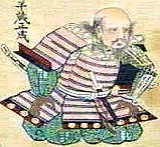
, also known as , was a famous samurai
Samurai
is the term for the military nobility of pre-industrial Japan. According to translator William Scott Wilson: "In Chinese, the character 侍 was originally a verb meaning to wait upon or accompany a person in the upper ranks of society, and this is also true of the original term in Japanese, saburau...

 and ninja
Ninja
A or was a covert agent or mercenary of feudal Japan specializing in unorthodox arts of war. The functions of the ninja included espionage, sabotage, infiltration, and assassination, as well as open combat in certain situations...

 master of the Sengoku era, credited with saving the life of Tokugawa Ieyasu
Tokugawa Ieyasu
 was the founder and first shogun of the Tokugawa shogunate of Japan , which ruled from the Battle of Sekigahara  in 1600 until the Meiji Restoration in 1868. Ieyasu seized power in 1600, received appointment as shogun in 1603, abdicated from office in 1605, but...

 and then helping him to become the ruler of united Japan
Japan
Japan is an island nation in East Asia. Located in the Pacific Ocean, it lies to the east of the Sea of Japan, China, North Korea, South Korea and Russia, stretching from the Sea of Okhotsk in the north to the East China Sea and Taiwan in the south...

. Today, he is often a subject of modern popular culture
Popular culture
Popular culture is the totality of ideas, perspectives, attitudes, memes, images and other phenomena that are deemed preferred per an informal consensus within the mainstream of a given culture, especially Western culture of the early to mid 20th century and the emerging global mainstream of the...

.
Discussion
Ask a question about 'Hattori Hanzo'
Start a new discussion about 'Hattori Hanzo'
Answer questions from other users
Full Discussion Forum
 
Recent Discussions
Encyclopedia
, also known as , was a famous samurai
Samurai
is the term for the military nobility of pre-industrial Japan. According to translator William Scott Wilson: "In Chinese, the character 侍 was originally a verb meaning to wait upon or accompany a person in the upper ranks of society, and this is also true of the original term in Japanese, saburau...

 and ninja
Ninja
A or was a covert agent or mercenary of feudal Japan specializing in unorthodox arts of war. The functions of the ninja included espionage, sabotage, infiltration, and assassination, as well as open combat in certain situations...

 master of the Sengoku era, credited with saving the life of Tokugawa Ieyasu
Tokugawa Ieyasu
 was the founder and first shogun of the Tokugawa shogunate of Japan , which ruled from the Battle of Sekigahara  in 1600 until the Meiji Restoration in 1868. Ieyasu seized power in 1600, received appointment as shogun in 1603, abdicated from office in 1605, but...

 and then helping him to become the ruler of united Japan
Japan
Japan is an island nation in East Asia. Located in the Pacific Ocean, it lies to the east of the Sea of Japan, China, North Korea, South Korea and Russia, stretching from the Sea of Okhotsk in the north to the East China Sea and Taiwan in the south...

. Today, he is often a subject of modern popular culture
Popular culture
Popular culture is the totality of ideas, perspectives, attitudes, memes, images and other phenomena that are deemed preferred per an informal consensus within the mainstream of a given culture, especially Western culture of the early to mid 20th century and the emerging global mainstream of the...

.

Biography


Hanzō was born as the son of Hattori Yasunaga, a minor samurai in the service of the Matsudaira
Matsudaira clan
The was a Japanese samurai clan that claimed descent from the Minamoto clan. It first originated in and took its name from Matsudaira village, in Mikawa Province . Over the course of its history, the clan produced many branches, most of which also centered around Mikawa Province...

 (later Tokugawa
Tokugawa clan
The was a powerful daimyo family of Japan. They nominally descended from Emperor Seiwa and were a branch of the Minamoto clan by the Nitta clan. However, the early history of this clan remains a mystery.-History:...

) clan. He would later earn the nickname because of the fearless tactics he displayed in his operations; this is to distinguish him from Watanabe Hanzo (Watanabe Moritsuna
Watanabe Moritsuna
was a Japanese samurai of the Watanabe clan, who served the Tokugawa clan. He submitted to Ieyasu in 1557 and fought in such famous battles as the battles of Anegawa , Mikatagahara and Nagashino , he was nicknamed yari no Hanzo because of his skill with the spear, it was also to distinguish him...

), who is nicknamed .

Though Hanzō was born and raised in Mikawa Province
Mikawa Province
is an old province in the area that today forms the eastern half of Aichi Prefecture. It was sometimes called . Mikawa bordered on Owari, Mino, Shinano, and Tōtōmi Provinces....

, he often returned to Iga Province
Iga Province
was an old province of Japan in the area that is today western Mie Prefecture. It was sometimes called . Iga bordered on Ise, Ōmi, Yamato, and Yamashiro Provinces.-Geography:...

, home of the Hattori family. He fought his first battle at the age of 16 (a night-time attack on Udo castle) and went on to serve with distinction at the battles of Anegawa
Battle of Anegawa
The 1570 came as a reaction to Oda Nobunaga's sieges of the castles of Odani and Yokoyama, which belonged to the Azai and Asakura clans. It was also referred to as the Battle of Nomura by the Oda and Azai clans and the Battle of Mitamura by the Asakura clan.As warriors sallied forth from the...

 (1570) and Mikatagahara
Battle of Mikatagahara
The ' was one of the most famous battles of Takeda Shingen's campaigns, and one of the best demonstrations of his cavalry-based tactics.-Background:...

 (1572). His most valuable contribution came in 1582 following Oda Nobunaga
Oda Nobunaga
was the initiator of the unification of Japan under the shogunate in the late 16th century, which ruled Japan until the Meiji Restoration in 1868. He was also a major daimyo during the Sengoku period of Japanese history. His opus was continued, completed and finalized by his successors Toyotomi...

's death, when he led the future shogun
Shogun
A was one of the hereditary military dictators of Japan from 1192 to 1867. In this period, the shoguns, or their shikken regents , were the de facto rulers of Japan though they were nominally appointed by the emperor...

 Tokugawa Ieyasu
Tokugawa Ieyasu
 was the founder and first shogun of the Tokugawa shogunate of Japan , which ruled from the Battle of Sekigahara  in 1600 until the Meiji Restoration in 1868. Ieyasu seized power in 1600, received appointment as shogun in 1603, abdicated from office in 1605, but...

 to safety in Mikawa Province
Mikawa Province
is an old province in the area that today forms the eastern half of Aichi Prefecture. It was sometimes called . Mikawa bordered on Owari, Mino, Shinano, and Tōtōmi Provinces....

 across Iga territory with the help of remnants of the local Iga ninja
Iga-ryu
Iga-ryū 伊賀流 is a historical school of ninjutsu. It became one of the two most well-known ninja schools in Japan, along with the Kōga-ryū. The Iga-ryū originated in the Iga Province in the area around the towns of Iga and Ueno...

 clans as well as their one-time rivals in Koga
Koga-ryu
Kōka-ryū is a historical school of ninjutsu. It originated from the region of Kōka...

. According to some sources, Hanzō also helped in rescuing the captured family of Ieyasu.

Hanzō was known as an expert tactician and a master of spear fighting
Sojutsu
, meaning "art of the spear" is the Japanese martial art of fighting with the Japanese .-Origins:Although the spear had a profound role in early Japanese mythology, where the islands of Japan themselves were said to be created by salt water dripping from the tip of a spear, as a weapon the first...

. Various magical tricks, such as disappearing and appearing elsewhere, psychokinesis
Psychokinesis
The term psychokinesis , also referred to as telekinesis with respect to strictly describing movement of matter, sometimes abbreviated PK and TK respectively, is a term...

 and precognition
Precognition
In parapsychology, precognition , also called future sight, and second sight, is a type of extrasensory perception that would involve the acquisition or effect of future information that cannot be deduced from presently available and normally acquired sense-based information or laws of physics...

, were also attributed to him. Historical sources say he died in Edo
Edo
, also romanized as Yedo or Yeddo, is the former name of the Japanese capital Tokyo, and was the seat of power for the Tokugawa shogunate which ruled Japan from 1603 to 1868...

 in 1596 at the age of 55.

Legacy


After his death in the fourth day of the eleventh month of 1596, Hattori Hanzō was succeeded by his son
Hattori Masanari
was a retainer under the Tokugawa clan during the late Sengoku period of Japanese history. He was the eldest son of Hattori Hanzō.The eldest son of Hattori Hanzō, Masanari began to fight alongside his father by the mid 1590s, and succeeded him in 1596, when he was 31 years old...

, whose name was also Masanari, though written with different kanji
Kanji
Kanji are the adopted logographic Chinese characters hanzi that are used in the modern Japanese writing system along with hiragana , katakana , Indo Arabic numerals, and the occasional use of the Latin alphabet...

. He was given the title of Iwami no Kami and his men would act as guards of Edo Castle
Edo Castle
, also known as , is a flatland castle that was built in 1457 by Ōta Dōkan. It is located in Chiyoda in Tokyo, then known as Edo, Toshima District, Musashi Province. Tokugawa Ieyasu established the Tokugawa shogunate here. It was the residence of the shogun and location of the shogunate, and also...

, the headquarters of the government of united Japan. There have been also as many as three other Hattori Hanzōs leading his clan at one point or another (including one before him).
To this day, artifacts of Hanzō's legacy remain. The Tokyo Imperial Palace (formerly the shogun's palace) still has a gate called Hanzō's Gate (Hanzōmon), and the Hanzōmon subway line
Tokyo Metro Hanzomon Line
The is a subway line owned and operated by Tokyo Metro located in Tokyo, Japan.-Overview:The 16.8 km line serves the wards of Shibuya, Minato, Chiyoda, Chūō, Kōtō and Sumida. Hanzōmon Line trains run through onto the Tōkyū Den-en-toshi Line from Shibuya Station and the Tōbu Isesaki Line from...

 which runs from Hanzōmon Station
Hanzomon Station
is a station on the Tokyo Metro Hanzōmon Line in Chiyoda, Tokyo, Japan, located near the Hanzōmon Gate of the Imperial Palace.The station was the eastern terminal of the Hanzōmon Line from 1982 to 1989 and is still used as a terminal for some morning rush hour trains.-Station layout:...

 in central Tokyo
Tokyo
, ; officially , is one of the 47 prefectures of Japan. Tokyo is the capital of Japan, the center of the Greater Tokyo Area, and the largest metropolitan area of Japan. It is the seat of the Japanese government and the Imperial Palace, and the home of the Japanese Imperial Family...

 to the southwestern suburbs is named after the gate, where his house was once located. Hanzō’s remains now rest in the Sainen-ji temple cemetery in Yotsuya, Tokyo
Yotsuya, Tokyo
is a neighborhood in Shinjuku, Tokyo, Japan.-Geography:Yotsuya is located in the southeastern part of Shinjuku. Prior to 1943, when Tokyo was still a city, Yotsuya was one of its wards and had definite boundaries, but it is less clearly defined today...

. The temple also holds his favorite spear and his ceremonial battle helmet. The spear, originally 14-feet long donated to the temple by Hanzō as a votive offering
Votive offering
A votive deposit or votive offering is one or more objects displayed or deposited, without the intention of recovery or use, in a sacred place for broadly religious purposes. Such items are a feature of modern and ancient societies and are generally made in order to gain favor with supernatural...

, had been given to him by Ieyasu and suffered damage during the bombing of Tokyo in 1945.

In popular culture


As a famous historical figure in one of Japan's greatest periods of samurai culture, Hattori Hanzō has significant cultural resonance among admirers of that culture, both within Japan and abroad. In the modern popular culture he is most often portrayed as involved with the Iga ninja clansmen. According to a legend, the ninja Fūma Kotarō killed Hanzō in sea combat during their raid against the Tokugawa forces in the Inland Sea.

Many films, specials and series on the life and times of Tokugawa Ieyasu depict the events mentioned above. For example, Hattori Hanzō appears in the novel Fukurō no Shiro
Fukuro no Shiro
Fukurō no Shiro is a 1959 ninja-themed novel by the debuting Japanese author Ryōtarō Shiba, which won him the Naoki Prize in 1960 after the story was published by Kodansha...

(Owl's Castle), later made into two feature films (including Owls' Castle
Owls' Castle
Owl's Castle is a 1999 Japanese ninja-themed film written by Masahiro Shinoda and Katsuo Naruse and directed by Masahiro Shinoda. It is a remake of the 1963 film Castle of Owls, based on Ryotaro Shiba's 1959 novel under the same name.The film starred Kiichi Nakai, Takaya Kamikawa, Mayu Tsuruta and...

, played by Jinpachi Nezu
Jinpachi Nezu
is a Japanese actor. He has appeared in 56 films and television shows since 1974. He starred in the 1982 film Farewell to the Land, which was entered into the 32nd Berlin International Film Festival.-Selected filmography:* Kagemusha...

). The actor Sonny Chiba
Sonny Chiba
, also known as Sonny Chiba, is a Japanese actor, singer, film producer, film director and martial artist.Chiba was one of the first actors to achieve stardom through his skills in martial arts, initially in Japan and later before an international audience.- Early life :Born in Fukuoka, Fukuoka,...

 played his role in the series Kage no Gundan (Shadow Warriors). In the film Goemon
Goemon (film)
Goemon is a 2009 Japanese historical fantasy film written and directed by Kazuaki Kiriya. It is loosely based on the story of Ishikawa Goemon, a legendary outlaw hero who stole valuables from the rich and gave them to the poor...

, Hanzō appears as a legendary shinobi
Shinobi
Shinobi is the Japanese word for male ninja. It may also refer to:*Shinobi , a series of video games**Shinobi , the original video game in the series developed by Sega**Shinobi , the PlayStation 2 sequel...

 and has a significant supporting role (played by Susumu Terajima
Susumu Terajima
is a Japanese actor who has appeared in over 100 films, 15 television commercials, three PVs, and numerous television dramas in a career spanning over 20 years. He rarely is the star of the films he is in but he is widely respected for taking every job seriously and diving into his work,...

). The life of Hanzō and his service to Tokugawa Ieyasu is fictionalised in the manga series Path of the Assassin
Path of the Assassin
is a gekiga manga created by the writer Kazuo Koike and the artist Goseki Kojima and published in Weekly Gendai magazine . Unlike their previous collaborations on Lone Wolf and Cub and Samurai Executioner, this story focuses on two historical figures from 16th-century Japan.Path of the Assassin is...

. Hanzō also appears in the manga and anime series Gin Tama, Samurai Deeper Kyo
Samurai Deeper Kyo
is a manga series written and illustrated by Akimine Kamijyo. The manga was serialized from October 15, 1999 to May 10, 2006 in Kodansha's Weekly Shōnen Magazine, and collected over 38 volumes....

and, together with his clan, in Tail of the Moon
Tail of the Moon
is a Japanese shōjo manga series written and illustrated by Rinko Ueda. The series began serialization in Margaret magazine in 2002 and ran until 2007. The individual chapters have been collected into fifteen tankōbon volumes by Shueisha; the first on March 25, 2003 and the last on August 24, 2007...

. In the manga Tenka Musō, the young Hanzō is the main character. He was also featured as Ninja Master Hattori Hanzo in the American TV show Deadliest Warrior
Deadliest Warrior
Deadliest Warrior is a television program in which information on historical or modern warriors and their weapons are used to determine which of them is the "deadliest" based upon tests performed during each episode...

.

Hattori Hanzō appears as a recurring character in the Samurai Shodown
Samurai Shodown
Samurai Shodown, known as in Japan, is a competitive fighting game produced by SNK for their Neo Geo arcade and home platform. In contrast to other fighting games at the time which were set in modern times and focused primarily on hand-to-hand combat, Samurai Shodown is set in feudal-era Japan ...

video game series, appearing in every game in the series (along with the anime film and some guest apparances in the KOF series). In World Heroes
World Heroes
is a series of fighting games created by ADK originally created for the Neo Geo MVS arcade cabinets with the assistance of SNK, though some of the games in the series were also ported to the Neo Geo AES and Neo-Geo CD platforms, as well as some non-SNK platforms such as the Super NES and the Sega...

, another SNK
SNK Playmore
SNK Playmore Corporation is a Japanese video game hardware and software company. SNK is an acronym of , which was SNK's original name. The company's legal and trading name became SNK in 1986....

 video game series, Hanzō serves as one of the main characters, and is portrayed as rivals with Fūma Kotarō, also featured in the games. In video game series Samurai Warriors
Samurai Warriors
is the first title in the series of video games created by Koei's Omega Force team based loosely around the Sengoku period of Japanese history and it is a spinoff of the Dynasty Warriors series...

, he is portrayed as a highly skilled ninja, highly loyal to Tokugawa Ieyasu and attributed to the death of many of Ieyasu's rivals, including Imagawa Yoshimoto
Imagawa Yoshimoto
was one of the leading daimyo in the Sengoku period Japan. Based in Suruga Province, he was one of the three daimyo that dominated the Tōkaidō region. He was one of the dominant daimyo in Japan for a time, until his death in 1560....

, Takeda Shingen
Takeda Shingen
, of Kai Province, was a preeminent daimyo in feudal Japan with exceptional military prestige in the late stage of the Sengoku period.-Name:Shingen was called "Tarō" or "Katsuchiyo" during his childhood...

, Toyotomi Hideyoshi
Toyotomi Hideyoshi
was a daimyo warrior, general and politician of the Sengoku period. He unified the political factions of Japan. He succeeded his former liege lord, Oda Nobunaga, and brought an end to the Sengoku period. The period of his rule is often called the Momoyama period, named after Hideyoshi's castle...

 and Sanada Yukimura
Sanada Yukimura
was a Japanese samurai, second son of the Sengoku period daimyo Sanada Masayuki . His proper name was Sanada Nobushige , named after Takeda Shingen's younger brother Takeda Nobushige, who was a brave and respected warrior. He and his father were known as being excellent military tacticians...

, and having an extremely fierce rivalry with Fūma Kotarō. Hanzō is also featured in the video games such as Taikou Risshiden V (as one of the main characters), Kessen III
Kessen III
is a PlayStation 2 video-game produced by Koei and is based on the life of Oda Nobunaga.-Historical background:The game's time frame is roughly between the years 1550 to 1590...

, Civilization IV: Beyond the Sword
Civilization IV: Beyond the Sword
Civilization IV: Beyond the Sword is the second official expansion pack of the turn-based strategy video game Civilization IV. The expansion focuses on adding content to the in-game time periods following the invention of gunpowder, and includes more general content such as 11 new scenarios, 10 new...

(as one of the Great Spies) and Sengoku Basara: Samurai Heroes
Sengoku Basara: Samurai Heroes
Sengoku Basara: Samurai Heroes, known in Japan as , is a 2010 action-adventure video game developed and published by Capcom for the PlayStation 3 and Wii. The game is the sequel to Sengoku Basara 2 and was released on July 29, 2010 in Japan...

. In the limited edition of Total War: Shogun 2, he is daimyo
Daimyo
is a generic term referring to the powerful territorial lords in pre-modern Japan who ruled most of the country from their vast, hereditary land holdings...

 of the Hattori Clan, one of the factions fighting for supremacy in this game.

In the light novel and anime series Hyakka Ryōran Samurai Girls
Hyakka Ryōran Samurai Girls
, simply known as Samurai Girls, is a light novel series written by Akira Suzuki with illustrations by Niθ to commemorate Hobby Japan's 40th anniversary. The first volume was released by Hobby Japan on February 28, 2009, with a total of nine volumes available in Japan as of September 1, 2011 under...

, taking place in an alternate-history Japan, Hanzō Hattori is a female ninja character. The anime series Sengoku Otome: Momoiro Paradox
Sengoku Otome: Momoiro Paradox
, also known as Battle Girls: Time Paradox, is a 2011 Japanese anime television series based on a Pachinko game developed by Heiwa. Produced by TMS Entertainment under the direction of Hideki Okamoto, the anime series aired on TV Tokyo between April 4, 2011 and June 27, 2011.- Plot :Yoshino Hide,...

also features him as a female ninja.

In the film Kill Bill
Kill Bill
Kill Bill Volume 1 is a 2003 action thriller film written and directed by Quentin Tarantino. It is the first of two volumes that were theatrically released several months apart, the second volume being Kill Bill Volume 2....

, Sonny Chiba (Hanzō in Shadow Warriors) returns to reprise his role through playing Hattori Hanzō, a master swordsmith who is called upon to create a special katana
Katana
A Japanese sword, or , is one of the traditional bladed weapons of Japan. There are several types of Japanese swords, according to size, field of application and method of manufacture.-Description:...

 sword for the film's protagonist. In the film The Machine Girl
The Machine Girl
is a 2008 Japanese action shock/gore film written and directed by Noboru Iguchi with special effects by Yoshihiro Nishimura . The film stars Minase Yashiro in the lead role as Ami, Asami in the role of Miki, Kentarō Shimazu as the yakuza leader Ryūgi Kimura and Honoka as his wife, Mrs. Kimura...

, the yakuza
Yakuza
, also known as , are members of traditional organized crime syndicates in Japan. The Japanese police, and media by request of the police, call them bōryokudan , literally "violence group", while the yakuza call themselves "ninkyō dantai" , "chivalrous organizations". The yakuza are notoriously...

 villains state that Hattori Hanzō is their family's name. The novel The Kouga Ninja Scrolls
The Kouga Ninja Scrolls
is a historical fantasy novel written in 1958-1959 by the Japanese author Futaro Yamada. The novel was adapted into several comics, a live-acion film and an animated series. It been translated into English by Geoff Sant, and was published by Del Rey in December 2006....

as well as its adaptations (the manga and anime series Basilisk and the live-action film Shinobi: Heart Under Blade) feature the four Hattori Hanzos serving as ninja leaders under the rule of Tokugawa Ieyasu. Another Hanzō clan's descendant, private investigator Hanpei "Hanpen" Hattori, appears in Android Kikaider. In the video games Kessen
Kessen
is a PlayStation 2 launch title produced by Koei and published by Electronic Arts. This was the first DVD-ROM format game for the PS2. It was initially the only real-time wargame game available for the PlayStation 2....

and Kessen III, the ninja girl Okatsu is also rumoured to be his descendant.

There are also many indirect references. For example, in the franchise Ninja Hattori-kun
Ninja Hattori-kun
' is a manga series by Fujiko Fujio, later adapted into a TV drama, an anime series, a video game and eventually a live-action movie, along with a 2009 revival of the show.- Plot :...

, the main character Kanzo Hattori's name is a pun
Pun
The pun, also called paronomasia, is a form of word play which suggests two or more meanings, by exploiting multiple meanings of words, or of similar-sounding words, for an intended humorous or rhetorical effect. These ambiguities can arise from the intentional use and abuse of homophonic,...

 on Hanzō (his younger brother's name is Shinzo Hattori); in the video game series Fatal Fury and The King of Fighters, Mai Shiranui
Mai Shiranui
is a player character in both the Fatal Fury and The King of Fighters series of fighting games by SNK and in related media, also appearing in a large number of other games...

's grandfather is the ninja master Hanzo Shiranui; and in the Mortal Kombat series, Scorpion
Scorpion (Mortal Kombat)
Scorpion is a recurring player and boss character in the Mortal Kombat fighting game series. He has been a playable character in all the games, with the exception of the original version of Mortal Kombat 3.-In video games:...

's real name is Hanzo Hasashi; in the 2011 Thundercats
ThunderCats (2011 TV series)
ThunderCats is an American animated television series executive produced by Sam Register, and produced by Ethan Spaulding and Michael Jelenic and is a reboot of the original series by Tobin "Ted" Wolf. It is produced by Warner Bros. Animation with animation provided by the Japanese Studio 4°C.The...

episode "The Duelist and the Drifter", Lion-O is told about the Sword of Hittanzo, created by sword master Hittanzo (another pun on Hanzō and a tribute to the character in Kill Bill). In the third season of Leverage
Leverage (TV series)
Leverage is an American television drama series on TNT that premiered in December 2008. The series is produced by director/executive producer Dean Devlin's production company Electric Television...

, Nate Ford gives Elliot a Hanzo sword for Christmas.

External links