
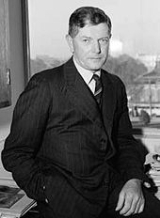
Sir Frank Macfarlane Burnet, (3 September 1899 – 31 August 1985), usually known as
Macfarlane or
Mac Burnet, was an Australian
virologistVirology is the study of viruses and virus-like agents: their structure, classification and evolution, their ways to infect and exploit cells for virus reproduction, the diseases they cause, the techniques to isolate and culture them, and their use in research and therapy...
best known for his contributions to
immunologyImmunology is a broad branch of biomedical science that covers the study of all aspects of the immune system in all organisms. It deals with the physiological functioning of the immune system in states of both health and diseases; malfunctions of the immune system in immunological disorders ; the...
.
Burnet received his
Doctor of MedicineDoctor of Medicine is a doctoral degree for physicians. The degree is granted by medical schools...
degree from the
University of MelbourneThe University of Melbourne is a public university located in Melbourne, Victoria. Founded in 1853, it is the second oldest university in Australia and the oldest in Victoria...
in 1924, and his PhD from the
University of London-20th century:Shortly after 6 Burlington Gardens was vacated, the University went through a period of rapid expansion. Bedford College, Royal Holloway and the London School of Economics all joined in 1900, Regent's Park College, which had affiliated in 1841 became an official divinity school of the...
in 1928. He went on to conduct pioneering research in
microbiologyMicrobiology is the study of microorganisms, which are defined as any microscopic organism that comprises either a single cell , cell clusters or no cell at all . This includes eukaryotes, such as fungi and protists, and prokaryotes...
and
immunologyImmunology is a broad branch of biomedical science that covers the study of all aspects of the immune system in all organisms. It deals with the physiological functioning of the immune system in states of both health and diseases; malfunctions of the immune system in immunological disorders ; the...
at the
Walter and Eliza Hall Institute of Medical ResearchThe Walter and Eliza Hall Institute of Medical Research is Australia's oldest medical research institute.In 2011, the institute is home to more than 650 researchers who are working to understand, prevent and treat diseases including blood, breast and ovarian cancers; inflammatory diseases such as...
, Melbourne, and served as director of the Institute from 1944 to 1965. From 1965 until his retirement in 1978, Burnet worked at the
University of MelbourneThe University of Melbourne is a public university located in Melbourne, Victoria. Founded in 1853, it is the second oldest university in Australia and the oldest in Victoria...
. Throughout his career he played an active role in the development of public policy for the medical sciences in Australia and was a founding member of the
Australian Academy of ScienceThe Australian Academy of Science was founded in 1954 by a group of distinguished Australians, including Australian Fellows of the Royal Society of London. The first president was Sir Mark Oliphant. The Academy is modelled after the Royal Society and operates under a Royal Charter; as such it is...
(AAS), and served as its president from 1965 to 1969.
Burnet's major achievements in microbiology included:
- improving experimental systems for growing viruses in hen’s eggs. Modern methods for growing virus for influenza vaccines are still based on Burnet’s work.
- discovering the causative agents of Q-fever and psittacosis
- developing assays for the isolation, culture and detection of influenza virus
- describing the recombination of influenza strains
- demonstrating that the myxomatosis virus does not cause disease in humans
Burnet's microbiology studies frequently verged into immunology. By the mid-1950s, he had decided that immunology research was an area of huge importance, and in 1957 he rapidly shifted the Walter and Eliza Hall Institute’s focus to immunology, providing an immense boost to Australia's immunology research efforts. Burnet's own achievements in immunology included
- postulating that the mammalian immune system can distinguish ‘self’ from ‘non-self’. This resulted in Burnet and Sir Peter Medawar
Sir Peter Brian Medawar OM CBE FRS was a British biologist, whose work on graft rejection and the discovery of acquired immune tolerance was fundamental to the practice of tissue and organ transplants...
being jointly awarded the 1960 Nobel Prize in Physiology or MedicineThe Nobel Prize in Physiology or Medicine administered by the Nobel Foundation, is awarded once a year for outstanding discoveries in the field of life science and medicine. It is one of five Nobel Prizes established in 1895 by Swedish chemist Alfred Nobel, the inventor of dynamite, in his will...
for demonstrating acquired immune toleranceImmune tolerance or immunological tolerance is the process by which the immune system does not attack an antigen. It can be either 'natural' or 'self tolerance', in which the body does not mount an immune response to self antigens, or 'induced tolerance', in which tolerance to external antigens can...
.
- developing the theory of clonal selection
The clonal selection hypothesis has become a widely accepted model for how the immune system responds to infection and how certain types of B and T lymphocytes are selected for destruction of specific antigens invading the body....
, which explains how the immune system can develop responses to almost any foreign antigenAn antigen is a foreign molecule that, when introduced into the body, triggers the production of an antibody by the immune system. The immune system will then kill or neutralize the antigen that is recognized as a foreign and potentially harmful invader. These invaders can be molecules such as...
Burnet was the most highly decorated and honoured scientist to have worked in Australia. For his contributions to Australian science, he was made the first
Australian of the YearSince 1960 the Australian of the Year Award has been part of the celebrations surrounding Australia Day , during which time the award has grown steadily in significance to become Australia’s pre-eminent award. The Australian of the Year announcement has become a very prominent part of the annual...
in 1960, and in 1978 a Knight of the
Order of AustraliaThe Order of Australia is an order of chivalry established on 14 February 1975 by Elizabeth II, Queen of Australia, "for the purpose of according recognition to Australian citizens and other persons for achievement or for meritorious service"...
. He was recognised internationally for his achievements: in addition to the Nobel, he received the
Lasker AwardThe Albert Lasker Award for Basic Medical Research is one of the prizes awarded by the Lasker Foundation for the understanding, diagnosis, prevention, treatment, and cure of disease...
and the
RoyalThe Royal Medal, also known as The Queen's Medal, is a silver-gilt medal awarded each year by the Royal Society, two for "the most important contributions to the advancement of natural knowledge" and one for "distinguished contributions in the applied sciences" made within the Commonwealth of...
and
Copley MedalThe Copley Medal is an award given by the Royal Society of London for "outstanding achievements in research in any branch of science, and alternates between the physical sciences and the biological sciences"...
from the
Royal SocietyThe Royal Society of London for Improving Natural Knowledge, known simply as the Royal Society, is a learned society for science, and is possibly the oldest such society in existence. Founded in November 1660, it was granted a Royal Charter by King Charles II as the "Royal Society of London"...
, honorary doctorates, and distinguished service honours from the
Commonwealth of NationsThe Commonwealth of Nations, normally referred to as the Commonwealth and formerly known as the British Commonwealth, is an intergovernmental organisation of fifty-four independent member states...
and Japan.
After a series of increasing health problems in his final years, Burnet died of cancer.
Early life
Burnet was born in
Traralgon, VictoriaTraralgon is a regional city located in the Latrobe Valley in the Gippsland region of Victoria, Australia. Traralgon is a city within the City of Latrobe....
; his father, Frank Burnet, a Scottish emigrant to Australia, was the manager of the Traralgon branch of the Colonial Bank. His mother Hadassah Burnet (née Mackay) was the daughter of a middle-class Scottish immigrant, and met his father when Frank was working in the town of Koroit. Frank was 36, and 14 years older than Hadassah when they married in 1893. The family was socially conservative Anglo-Saxon Protestant. Frank Macfarlane Burnet was the second of seven children and from childhood was known as "Mac". He had an older sister, two younger sisters and three younger brothers. The eldest daughter Doris had a mental disability that consumed most of Hadassah's time and the family saw Doris's condition as an unspoken stigma, discouraging the other children from inviting friends home, lest they come across the eldest daughter. From his early years in Traralgon, Mac enjoyed exploring the environment around him, particularly Traralgon Creek. He first attended a private school run by a single teacher before starting at the government primary school at the age of 7. Mac was distant from his father—who liked to spend his free time fishing and playing golf—from a young age. He preferred bookish pursuits from a young age and was not enamoured of sport, and by the age of eight was old enough to analyse his father's character; Mac disapproved of Frank and saw him as a hypocrite who espoused moral principles and put on a facade of uprightedness, while associating with businessmen of dubious ethics. Hadassah was preoccupied with Doris, so Mac developed a rather solitary personality.
The Burnets moved to
TerangTerang is a small Australian town situated in Corangamite Shire in the Western District of Victoria, Australia, on the Princes Highway 212 km south-west of the state's capital, Melbourne. At the 2006 census, Terang had a population of 2256...
in 1909, when Frank was posted to be the bank manager there, having declined a post in London. Burnet was interested in the wildlife around the nearby
lakeLake Terang was a lake near Terang, Victoria. Following European settlement of the area surrounding the lake in the 19th century the lake began to dry out...
; he joined the
ScoutsScouts Australia is an organisation for children and young adults from 6 to 26 years of age. Scouts Australia is part of the global Scouting movement and has been a national member of the World Organization of the Scout Movement since 1953...
in 1910 and enjoyed all outdoor activities. While living in Terang, he began to collect
beetleColeoptera is an order of insects commonly called beetles. The word "coleoptera" is from the Greek , koleos, "sheath"; and , pteron, "wing", thus "sheathed wing". Coleoptera contains more species than any other order, constituting almost 25% of all known life-forms...
s and study biology. He read biology articles in the
Chambers's EncyclopaediaChambers's Encyclopaedia was founded in 1860 by W. & R. Chambers. It has no relationship with the Chambers' Cyclopaedia, or Universal Dictionary of Arts and Sciences of Ephraim Chambers in the 18th century, except that the latter shared the same name as the publisher of this.-History:The first...
, which introduced him to the work of
Charles DarwinCharles Robert Darwin FRS was an English naturalist. He established that all species of life have descended over time from common ancestry, and proposed the scientific theory that this branching pattern of evolution resulted from a process that he called natural selection.He published his theory...
. During his early teens, the family took annual holidays to Port Fairy, where Burnet spent his time observing and recording the behaviour of the wildlife. He was educated at Terang State School and attended Sunday school at the local church, where the priest encouraged him to pursue scholastic studies and awarded him a book on ants as a reward for his academic performance. He advised Frank to invest in Mac's education and he won a full scholarship to board and study at
Geelong CollegeThe Geelong College is an independent, co-educational, day and boarding school, located in Newtown, an inner-western suburb of Geelong, Victoria, Australia....
, one of Victoria's most exclusive private schools. Starting there in 1913, Burnet was the only boarder with a full scholarship. He did not enjoy his time there among the scions of the ruling upper class; while most of his peers were brash and sports-oriented, Burnet was bookish and not athletically inclined, and found his fellow students to be arrogant and boorish. During this period he kept his beetle-collecting and disapproval of his peers a secret and mixed with his schoolmates out of necessity. Nevertheless, his academic prowess gained him privileges, and he graduated in 1916, placing first in his school overall, and in history, English, chemistry and physics. The typical university path for a person of his social background was to pursue studies in theology, law or medicine. By this time, he was becoming disillusioned with religion and chose medicine. Due to World War I, military service was a possibility and he felt that a medical background would increase his chances of being given a non-combat post.
Academic foundations
From 1917, Burnet attended the
University of MelbourneThe University of Melbourne is a public university located in Melbourne, Victoria. Founded in 1853, it is the second oldest university in Australia and the oldest in Victoria...
, where he lived in
Ormond CollegeOrmond College is the largest of the residential colleges of the University of Melbourne. It is home to 332 undergraduates, 30 postgraduates and 27 professorial/academic residents.-Establishment:...
on a residential scholarship. There, he read more of Darwin's work and was influenced by the ideas of science and society in the writings of
H.G. WellsHerbert George Wells was an English author, now best known for his work in the science fiction genre. He was also a prolific writer in many other genres, including contemporary novels, history, politics and social commentary, even writing text books and rules for war games...
. He enjoyed his time at university and spent much of his free time reading biology books in the library to feed his passion for scientific knowledge. He also had fleeting sporting success, holding down a position in Ormond's First VIII rowing squad for a brief period. He continued to pursue his study of beetles in private, although his classmates found out and there was no loss in this as they viewed his hobby positively. Despite an ongoing shyness, Burnet got on well with staff and students at university. Burnet was self-motivated and often skipped lectures to study at his own faster pace and pursue further knowledge in the library, and he came equal first in physics and chemistry in first year. The following year, 1918, he became increasingly immersed in laboratory work, but he was also dogged by peer pressure to enlist in the
militaryThe Australian Defence Force is the military organisation responsible for the defence of Australia. It consists of the Royal Australian Navy , Australian Army, Royal Australian Air Force and a number of 'tri-service' units...
, which he saw as a distasteful prospect. However, this was averted by the end of the
warWorld War I , which was predominantly called the World War or the Great War from its occurrence until 1939, and the First World War or World War I thereafter, was a major war centred in Europe that began on 28 July 1914 and lasted until 11 November 1918...
. In 1919, he was one of 12 high-performing students selected for extra tuition, and he came equal first in third year physiology. He began clinical work in the same year, but found it somewhat unpleasant as he was interested in diagnosing the patient and had little interest in showing empathy towards them.
While at university, he became an agnostic; he was sceptical of religious faith, which he regarded as "an effort to believe what common sense tells you isn't true." He was also disgusted by what he regarded as hypocritical conduct by religious adherents. Towards the later years of his undergraduate years, his unhappiness with religion began to dog him to a greater extent. He tried to become involved with
communismCommunism is a social, political and economic ideology that aims at the establishment of a classless, moneyless, revolutionary and stateless socialist society structured upon common ownership of the means of production...
for brief period but then resolved to devote himself to scientific research. The length of time required to study medicine had been reduced to five years to train doctors faster following the outbreak of
World War IWorld War I , which was predominantly called the World War or the Great War from its occurrence until 1939, and the First World War or World War I thereafter, was a major war centred in Europe that began on 28 July 1914 and lasted until 11 November 1918...
, and Burnet graduated with a Bachelor of Medicine and a Bachelor of Surgery in 1922, ranking second in the final exams despite the death of his father a few weeks earlier. His fellow graduates included Ian Wark, Kate Campbell,
Jean MacnamaraDame Jean Macnamara, DBE was an Australian medical doctor and scientist, best-known for her contributions to children's health and welfare.-Early life:...
, Rupert Willis and
Roy CameronGordon Roy Cameron FRCP FRS was an Australian pathologist.-Childhood and education:Cameron was born in 1899 in Echuca, Victoria to George Cameron and his wife Emily Pascoe...
, who became distinguished scientists in their own right.
He then did a ten-month residency at Melbourne Hospital to gain experience before going into practice. The new graduates spent four months in the medicine ward, another four in surgery, and the remaining two in casualty. In the surgery ward he worked under
John Gordon-Noblemen:*John Gordon, 11th Earl of Sutherland , Earl of Sutherland*John Gordon, 13th Earl of Sutherland , Earl of Sutherland*John Gordon, 1st Viscount of Melgum , father of Scottish courtier Henrietta Gordon...
and
Alan NewtonAlan Newton is a retired track cyclist from Great Britain, who represented his native country at the 1952 Summer Olympics in Helsinki, Finland. There he won the bronze medal in the men's 4.000 metres team pursuit, alongside Donald Burgess, George Newberry, and Ronald Stretton.-References:*...
, both well known surgeons. He enjoyed this period immensely and was disappointed when he had to do his medicine residency. However, he was soon engrossed in his work, having been inspired by the neurologist Richard Stawell, whom Burnet came to idolise. As a result of this he became intent on a career clinical neurology, and he wrote a theoretical paper about testing sensory losses following peripheral nerve lesions, but his submission to the
Clinical Report of the Melbourne Hospital was rejected. Burnet applied to be medical registrar as part of his clinical career path, but the medical superintendent of Melbourne Hospital, who was in charge of such appointments, deemed Burnet's character and personality more suited to a laboratory research career, and asked Burnet to withdraw his application in return for the post of senior resident pathologist, which would become vacant in the following months. Burnet complied.
During the transition period he worked as a pathological registrar at the
Walter and Eliza Hall Institute of Medical ResearchThe Walter and Eliza Hall Institute of Medical Research is Australia's oldest medical research institute.In 2011, the institute is home to more than 650 researchers who are working to understand, prevent and treat diseases including blood, breast and ovarian cancers; inflammatory diseases such as...
and also prepared for his Doctor of Medicine examinations, late in 1923. In 1923 he took up the post of senior resident pathologist at the Melbourne Hospital; the laboratories were a part of the Walter and Eliza Hall Institute. He conducted research into the
agglutininAgglutination is the clumping of particles. The word agglutination comes from the Latin agglutinare, meaning "to glue."This occurs in biology in three main examples:...
reactions in
typhoid feverTyphoid fever, also known as Typhoid, is a common worldwide bacterial disease, transmitted by the ingestion of food or water contaminated with the feces of an infected person, which contain the bacterium Salmonella enterica, serovar Typhi...
, leading to his first scientific publications. He decided to work full-time on the
antibodyAn antibody, also known as an immunoglobulin, is a large Y-shaped protein used by the immune system to identify and neutralize foreign objects such as bacteria and viruses. The antibody recognizes a unique part of the foreign target, termed an antigen...
response in typhoid, even though he was technically supposed to pursuing
pathologyPathology is the precise study and diagnosis of disease. The word pathology is from Ancient Greek , pathos, "feeling, suffering"; and , -logia, "the study of". Pathologization, to pathologize, refers to the process of defining a condition or behavior as pathological, e.g. pathological gambling....
as part of his obligations to the hospital. Burnet came first in the Doctor of Medicine exams by a long distance, and his score was excluded from the scaling process so that the other students would not fail for being so far behind.
At the time, the Hall Institute was in the early stages of rapid expansion. The new director of the Institute,
Charles KellawayCharles Halliley Kellaway, MB, BS, MD, MS, MC, FRS, was an Australian medical researcher and science administrator.-Early years and education:...
, wanted to increase the activities of the organisation to not only support hospital operations but have separate research groups in
physiologyPhysiology is the science of the function of living systems. This includes how organisms, organ systems, organs, cells, and bio-molecules carry out the chemical or physical functions that exist in a living system. The highest honor awarded in physiology is the Nobel Prize in Physiology or...
,
microbiologyMicrobiology is the study of microorganisms, which are defined as any microscopic organism that comprises either a single cell , cell clusters or no cell at all . This includes eukaryotes, such as fungi and protists, and prokaryotes...
and
biochemistryBiochemistry, sometimes called biological chemistry, is the study of chemical processes in living organisms, including, but not limited to, living matter. Biochemistry governs all living organisms and living processes...
that would also do independent studies. He also hoped to raise the standards to make the Institute comparable to the world-class operations in Europe and America. Kellaway took a liking to Burnet and saw him as the best young talent in the Institute with the ability to help raise it to world leading standards. However, he thought that Burnet would need experience working in a laboratory in England before he could lead his own research group on
bacteriologyBacteriology is the study of bacteria. This subdivision of microbiology involves the identification, classification, and characterization of bacterial species...
in Australia. Burnet left Australia for England in 1925 and served as ship's surgeon during his journey in exchange for a free fare. On arrival, he took a paid position assisting the curator of the National Collection of Type Cultures at the
Lister InstituteThe Lister Institute of Preventive Medicine, informally known as the Lister Institute was established as a research institute in 1891, with bacteriologist Marc Armand Ruffer as its first director, using a grant from the Guinness family. It had premises in Sudbury, Chelsea and Elstree, England. It...
in
LondonLondon is the capital city of :England and the :United Kingdom, the largest metropolitan area in the United Kingdom, and the largest urban zone in the European Union by most measures. Located on the River Thames, London has been a major settlement for two millennia, its history going back to its...
. Burnet prepared or maintained bacteria cultures for other researchers in the morning and was free to do his own experiments in the afternoon. During the latter half of 1926, he experimented to see if Salmonella typhimurium was affected by
bacteriophageA bacteriophage is any one of a number of viruses that infect bacteria. They do this by injecting genetic material, which they carry enclosed in an outer protein capsid...
.
He was awarded the Beit Memorial Fellowship by the Lister Institute in 1926; this gave him enough money for him to resign his curator position and he began full-time research on bacteriophages. He injected mice with bacteriophage and observed their immunological reactions and believed bacteriophages to be viruses. For this work he received a Ph.D. from the
University of London-20th century:Shortly after 6 Burlington Gardens was vacated, the University went through a period of rapid expansion. Bedford College, Royal Holloway and the London School of Economics all joined in 1900, Regent's Park College, which had affiliated in 1841 became an official divinity school of the...
in 1928 under the direction of Professor J. D. Ledingham and was invited to write a chapter on bacteriophages for the
Medical Research Council'sThe Medical Research Council is a publicly-funded agency responsible for co-ordinating and funding medical research in the United Kingdom. It is one of seven Research Councils in the UK and is answerable to, although politically independent from, the Department for Business, Innovation and Skills...
System of Bacteriology. He was also given an invitation to deliver a paper at the
Royal Society of MedicineThe Royal Society of Medicine is a British charitable organisation whose main purpose is as a provider of medical education, running over 350 meetings and conferences each year.- History and overview :...
in 1927 on the link between O-agglutinins and bacteriophage. Burnet began attending the
Fabian SocietyThe Fabian Society is a British socialist movement, whose purpose is to advance the principles of democratic socialism via gradualist and reformist, rather than revolutionary, means. It is best known for its initial ground-breaking work beginning late in the 19th century and continuing up to World...
functions and befriended some communists, although he refrained from joining them in overt left-wing activism. He also spent his free time enjoying theatre, engaging in amateur
archaeologyArchaeology, or archeology , is the study of human society, primarily through the recovery and analysis of the material culture and environmental data that they have left behind, which includes artifacts, architecture, biofacts and cultural landscapes...
and cycling through continental Europe.
While in London, Burnet became engaged to fellow Australian Edith Linda Marston Druce. She was a secondary school teacher and daughter of a barrister's clerk and the pair had met in 1923 and had a few dates but did not keep in touch. Druce sought out Burnet while on a holiday in London and they quickly agreed to marriage although she had to return to Australia. They married in 1928 after he had completed his Ph.D. and returned to Australia, and had a son and two daughters. At the time, there was a vacancy for the Chair of Bacteriology at the University of London, and Ledingham was lobbying his colleagues to offer Burnet the post, but Burnet returned to Australia, partly because of Druce.
Virology and medicine
When Burnet returned to Australia, he went back to the Walter and Eliza Hall Institute, where he was appointed assistant director by Kellaway. His first assignment was to investigate the "Bundaberg disaster", in which 12 children had died after receiving a contaminated
diphtheriaDiphtheria is an upper respiratory tract illness caused by Corynebacterium diphtheriae, a facultative anaerobic, Gram-positive bacterium. It is characterized by sore throat, low fever, and an adherent membrane on the tonsils, pharynx, and/or nasal cavity...
vaccine. Kelleway was put in charge of a
royal commissionIn Commonwealth realms and other monarchies a Royal Commission is a major ad-hoc formal public inquiry into a defined issue. They have been held in various countries such as the United Kingdom, Australia, Canada, New Zealand, and Saudi Arabia...
to investigate the matter and he put Burnet in charge of the laboratory investigations.
[ He identified Staphylococcus aureus]Staphylococcus aureus is a facultative anaerobic Gram-positive coccal bacterium. It is frequently found as part of the normal skin flora on the skin and nasal passages. It is estimated that 20% of the human population are long-term carriers of S. aureus. S. aureus is the most common species of...
in the toxin-antitoxinAn antitoxin is an antibody with the ability to neutralize a specific toxin. Antitoxins are produced by certain animals, plants, and bacteria. Although they are most effective in neutralizing toxins, they can kill bacteria and other microorganisms. Antitoxins are made within organisms, but can be...
mixture that had been administered to the children; it had been picked up from the skin of one of the children and then transmitted to the others in the injections.[Sexton (1999), p. 65.] However, it turned out to be another toxin that had caused the children's deaths; this work on staphylococcal toxin piqued his interest in immunology. During this time, he continued to study bacteriophages, writing 32 papers on phages between 1924 and 1937. In 1929, Burnet and his graduate assistant Margot McKie wrote a paper suggesting that bacteriophages could exist as a stable non-infectious form that multiplies with the bacterial host. Their pioneering description of lysogenyLysogeny, or the lysogenic cycle, is one of two methods of viral reproduction . Lysogeny is characterized by integration of the bacteriophage nucleic acid into the host bacterium's genome...
was not accepted until much later, and was crucial to the work of Max DelbrückMax Ludwig Henning Delbrück was a German-American biophysicist and Nobel laureate.-Biography:Delbrück was born in Berlin, German Empire...
, Alfred HersheyAlfred Day Hershey was an American Nobel Prize-winning bacteriologist and geneticist.He was born in Owosso, Michigan and received his B.S. in chemistry at Michigan State University in 1930 and his Ph.D. in bacteriology in 1934, taking a position shortly thereafter at the Department of Bacteriology...
and Salvador Luria on the replication mechanism and genetics of viruses, for which they were awarded the 1969 Nobel Prize in Physiology or MedicineThe Nobel Prize in Physiology or Medicine administered by the Nobel Foundation, is awarded once a year for outstanding discoveries in the field of life science and medicine. It is one of five Nobel Prizes established in 1895 by Swedish chemist Alfred Nobel, the inventor of dynamite, in his will...
.
Between 1932 and 1933, Burnet took leave of absence to undertake a fellowship at the National Institute for Medical ResearchThe National Institute for Medical Research, commonly abbreviated to NIMR, is a medical research facility situated in Mill Hill, on the outskirts of London, England. It is mainly funded by the Medical Research Council, or MRC, and is its largest establishment and the only one designated as an...
in London. The Great Depression had resulted in Burnet's salary being cut from 1000 to 750 pounds, and the National Institute had been given a large grant from the Rockefeller FoundationThe Rockefeller Foundation is a prominent philanthropic organization and private foundation based at 420 Fifth Avenue, New York City. The preeminent institution established by the six-generation Rockefeller family, it was founded by John D. Rockefeller , along with his son John D. Rockefeller, Jr...
that allowed them to hire Burnet at 1000 pounds per annum. The National Institute's Director Sir Henry Dale gained permission from Kellaway for the two-year move; Kelleway promised to hold Burnet's job for him when he returned and felt that the experience would make Burnet—whom he saw as the Hall Institute's brightest young scientist—better equipped to expand operations when he returned to Melbourne. Dale also paid for Burnet's sister to come over to England to help look after her brother's young children.
Significant breakthroughs in virology were made while he was there, including the isolation and first demonstration of the transmission of the influenzaInfluenza, commonly referred to as the flu, is an infectious disease caused by RNA viruses of the family Orthomyxoviridae , that affects birds and mammals...
virus. His own research was on the canarypox virusCanarypox virus is an avipoxvirus and etiologic agent of canarypox, a disease of wild and captive birds that can cause significant losses. Canarypox can enter human cells, but it cannot survive and multiply in human cells. There is a live viral vaccine available ....
, which he used in developing a chick embryo assay for the isolation and quantification of animal viruses. Dale offered Burnet a permanent position but he declined and returned to the Hall Institute. Following his productive work in London, the Rockefeller Institute agreed to fund a new virus research laboratory in Melbourne for Burnet. He brought back a set of viruses from the National Institute to begin the basis of research in Melbourne.
When Burnet returned to Australia, he continued his work on virology, including the epidemiologyEpidemiology is the study of health-event, health-characteristic, or health-determinant patterns in a population. It is the cornerstone method of public health research, and helps inform policy decisions and evidence-based medicine by identifying risk factors for disease and targets for preventive...
of herpes simplexHerpes simplex is a viral disease caused by both Herpes simplex virus type 1 and type 2 . Infection with the herpes virus is categorized into one of several distinct disorders based on the site of infection. Oral herpes, the visible symptoms of which are colloquially called cold sores or fever...
. He was also involved in two projects that were not viral, the characterisation of the causative agents of psittacosisIn medicine , psittacosis — also known as parrot disease, parrot fever, and ornithosis — is a zoonotic infectious disease caused by a bacterium called Chlamydophila psittaci and contracted from parrots, such as macaws, cockatiels and budgerigars, and pigeons, sparrows, ducks, hens, gulls and many...
and Q feverQ fever is a disease caused by infection with Coxiella burnetii, a bacterium that affects humans and other animals. This organism is uncommon but may be found in cattle, sheep, goats and other domestic mammals, including cats and dogs...
. After finding that parrots and cockatoos were infected with psittacosis and were responsible for transmission, he lobbied the government for a ban in order to prevent human infection, but he was rebuffed and later came to agree with the government position that there was not much danger.[Sexton (1999), pp. 79–80.] During the time he worked on Q fever with Australian scientist E.H. DerrickEdward Holbrook Derrick was an Australian pathologist, best known for his role in identifying Q fever.Derrick was born in Victoria, and earned an M.D. from Melbourne University in 1922. He subsequently worked for a short period of time at the Walter and Eliza Hall Institute in Melbourne, and spent...
, the causative organism of which was named Coxiella burnetiiCoxiella burnetii is an obligate intracellular bacterial pathogen, and is the causative agent of Q fever. The genus Coxiella is morphologically similar to Rickettsia, but with a variety of genetic and physiological differences. C...
in Burnet's honour, he became the first person to acquire the disease in the laboratory. His epidemiological studies of herpes and Q fever displayed an appreciation of the ecology of infectious disease that became a characteristic of his scientific method.
During World War II, Burnet's research moved to influenzaInfluenza, commonly referred to as the flu, is an infectious disease caused by RNA viruses of the family Orthomyxoviridae , that affects birds and mammals...
and scrub typhusScrub typhus or Bush typhus is a form of typhus caused by Orientia tsutsugamushi first isolated and identified in 1930 in Japan., accessdate: 16 October 2011...
. With the outbreak of war, Burnet was handed more responsibility and made acting director and had to oversee the move into a new building as Kellaway was seconded to the military in 1939. Due to Kellaway, many of the infectious disease problems afflicting the military were referred to the institute. Fearing a repeat of the massive global influenza outbreak that occurred after World War I, Burnet focused the institute in the search for a vaccine.[ He first tested the vaccine on a group of medical students, and after a promising test on 107 army volunteers in February 1942 following a rise in infections, a large-scale program was introduced two months later to inoculate all new recruits after an influenza A outbreak. In this trial, 20,000 personnel were vaccinated, without success, and the scheme was abandoned. In 1942, the investigations into scrub typhus accelerated after an exodus of researchers in that field from Malaya]British Malaya loosely described a set of states on the Malay Peninsula and the Island of Singapore that were brought under British control between the 18th and the 20th centuries...
after the Japanese conquest of the area. However, this ended in tragedy when his collaborator Dora Lush accidentally injected herself and then died of the infection.[ Nevertheless, his work on immunisation had earned him international recognition by this time.][Sexton (1999), p. 102.]
His first book, Biological Aspects of Infectious Disease, was published in 1940. It had wide influence and was translated into several languages. In 1942 he was made a Fellow of the Royal Society, and in 1944 he travelled to Harvard UniversityHarvard University is a private Ivy League university located in Cambridge, Massachusetts, United States, established in 1636 by the Massachusetts legislature. Harvard is the oldest institution of higher learning in the United States and the first corporation chartered in the country...
to deliver the Dunham Lectures. There he was offered a chair, but he refused and returned to Australia. This was attributed to his nationalistic tendencies, as well as his sense of loyalty to the Hall Institute. During his trip he also visited the US military facility at Fort BraggFort Bragg is a major United States Army installation, in Cumberland and Hoke counties, North Carolina, U.S., mostly in Fayetteville but also partly in the town of Spring Lake. It was also a census-designated place in the 2010 census and had a population of 39,457. The fort is named for Confederate...
, where he discussed his work on influenza with the scientists working there.[Sexton (1999), pp. 109–110.]
In 1944, he was appointed director of the Institute when Kellaway was appointed director of the Wellcome FoundationThe Wellcome Trust was established in 1936 as an independent charity funding research to improve human and animal health. With an endowment of around £13.9 billion, it is the United Kingdom's largest non-governmental source of funds for biomedical research...
. Although Kellaway had groomed Burnet to become a pivotal figure, he was hesitant as to whether Burnet would be at his most effective with a strategic leadership role. Kellaway thought that Burnet may not be suited to the post, and should have continued to focus purely on research for the time being. Burnet had similar doubts, particularly given his taciturn nature, but applied for the role anyway. Although he was not known for his social skills, his ability as a scientist and to impart ideas for investigation to his subordinates held his leadership and the institute in good stead. Unlike his predecessor, who valued a broad gamut of research activities, Burnet was of the opinion that the institute could not make a significant impact at global level in this way, and he pursued a policy of focusing all effort into one area at a time. Always a strong-willed and rather isolated man, he became more single-minded and less tolerant of criticism of his work and expected a more hierarchical structure and unquestioning obedience. According to biographer Sexton, he "displayed a kind of territorial protectiveness in relation to his own work".
In 1944, it was decided by the University of Melbourne that Burnet would be appointed a professor as part of a cooperative program so that university students could be experimentally trained at the institute, while the researchers engaged in some teaching. This was not a success, and there was much tension, as Burnet repeatedly expressed his opinion in public that university teaching and research should be kept separate, at one point leading to a series of open letters from university professors decrying his attitude. Burnet was also disinterested in the politics of university funding, and his disengagement from administrative matters engendered resentment. On the other hand, Burnet was vigorous in obtaining funding for the Hall Institute from government bodies, resorting to the bluff of feigning interest in moving overseas to secure continued strong backing. However, he was criticised for being thrifty and refusing to invest in cutting edge equipment, despite the Hall Institute's high standing in research circles. Colleagues believed that he was sceptical of modern technology and thought his outlook to be limiting.
In 1946, he initiated the Clinical Research Unit to allow for closer cooperation with the clinical activities of the Royal Melbourne Hospital. Despite his known derisive views of clinical science as being inferior, he supported the work enthusiastically.
Under Burnet's direction, scientists at the Institute made significant contributions to infectious disease research during a period that has been called the "golden age of virology". Virologists including Alick IsaacsAlick Isaacs was a British virologist. He is best remembered for his work on interferon, having been Head of the Laboratory for Research on Interferon, National Institute for Medical Research, 1964–7....
, Gordon AdaGordon Leslie Ada is an Australian microbiologist best known for his long leadership of the John Curtin School of Medical Research at the Australian National University where Peter C. Doherty and Rolf Zinkernagel performed their Nobel winning research in his laboratory.Gordon Ada was born in 1922...
, John Cairns John Forster Cairns FRS is a British physician and molecular biologist who made significant contributions to molecular genetics, cancer research, and public health....
, Stephen Fazekas de St. GrothStephen Nicholas Emery Egon Fazekas de St Groth is a Hungarian-Australia microbiologist. He completed his education in Hungary and moved to Australia in the 1950s where he researched with Frank Macfarlane Burnet at the Walter and Eliza Hall Institute of Medical Research in Melbourne, and later at...
, and Frank FennerFrank John Fenner, AC, CMG, MBE, FRS, FAA was an Australian scientist with a distinguished career in the field of virology...
made significant contributions on Murray Valley encephalitis, myxomatosisMyxomatosis is a disease that affects rabbits and is caused by the Myxoma virus. It was first observed in Uruguay in laboratory rabbits in the late 19th century. It was introduced into Australia in 1950 in an attempt to control the rabbit population...
, poliomyelitisPoliomyelitis, often called polio or infantile paralysis, is an acute viral infectious disease spread from person to person, primarily via the fecal-oral route...
, poxvirusesPoxviruses are viruses that can, as a family, infect both vertebrate and invertebrate animals.Four genera of poxviruses may infect humans: orthopox, parapox, yatapox, molluscipox....
, herpes and influenza.[Sexton (1999), pp. 117–125.]
Burnet made significant contributions to influenza research; he developed techniques to grow and study the virus, including hemagglutinationHemagglutination, or haemagglutination, is a specific form of agglutination that involves red blood cells . It has two common uses in the laboratory: blood typing and the quantification of virus dilutions.-Blood Typing:...
assays. He worked on a live vaccine against influenza, but the vaccine was unsuccessful when tested during World War II. His interest in the influenza receptor led him to discover the neuraminidaseNeuraminidase enzymes are glycoside hydrolase enzymes that cleave the glycosidic linkages of neuraminic acids. Neuraminidase enzymes are a large family, found in a range of organisms. The most commonly known neuraminidase is the viral neuraminidase, a drug target for the prevention of the spread...
that is secreted by Vibrio choleraeVibrio cholerae is a Gram-negative, comma-shaped bacterium. Some strains of V. cholerae cause the disease cholera. V. cholerae is facultatively anaerobic and has a flagella at one cell pole. V...
, which later provided the foundation for Alfred Gottschalk'sAlfred Gottschalk was a German biochemist who was a leading authority in glycoprotein research. During his career he wrote 216 research papers and reviews, and four books....
significant work on glycoproteinGlycoproteins are proteins that contain oligosaccharide chains covalently attached to polypeptide side-chains. The carbohydrate is attached to the protein in a cotranslational or posttranslational modification. This process is known as glycosylation. In proteins that have segments extending...
s and the neuraminidase substrate, sialic acidSialic acid is a generic term for the N- or O-substituted derivatives of neuraminic acid, a monosaccharide with a nine-carbon backbone. It is also the name for the most common member of this group, N-acetylneuraminic acid...
. Between 1951 and 1956, Burnet worked on the genetics of influenza. He examined the genetic control of virulence and demonstrated that the virus recombined at high frequency; this observation was not fully appreciated until several years later, when the segmented genome of influenza was demonstrated.
Immunology
In 1957, Burnet decided that research at the Institute should focus on immunology. Burnet reached the decision unilaterally, leaving many of the research staff disillusioned and feeling the action was arrogant; for Burnet's part he was comfortable with the decision as he thought it to be effective. Many virologists left the Institute and settled the Australian National UniversityThe Australian National University is a teaching and research university located in the Australian capital, Canberra.As of 2009, the ANU employs 3,945 administrative staff who teach approximately 10,000 undergraduates, and 7,500 postgraduate students...
's John Curtin School of Medical ResearchThe John Curtin School of Medical Research is a major biomedical research centre in Australia, and part of the Australian National University, Canberra. The school was founded in 1948, as a result of the vision of Australian Nobel Laureate Sir Howard Florey and Prime Minister John Curtin.The Nobel...
. After 1957 all new staff and students at the Institute worked on immunological problems; Burnet was involved in work relating to autoimmune diseasesAutoimmunity is the failure of an organism to recognize its own constituent parts as self, which allows an immune response against its own cells and tissues. Any disease that results from such an aberrant immune response is termed an autoimmune disease...
and the graft-versus-hostGraft-versus-host disease is a common complication after a stem cell transplant or bone marrow transplant from another person . Immune cells in the donated marrow or stem cells recognize the recipient as "foreign". The transplanted immune cells then attack the host's body cells...
reaction, and increasingly in theoretical studies of immunology, immunological surveillance and cancer.
At the time, immunology was becoming more sophisticated, with the increasing role of molecular biologyMolecular biology is the branch of biology that deals with the molecular basis of biological activity. This field overlaps with other areas of biology and chemistry, particularly genetics and biochemistry...
and biochemistryBiochemistry, sometimes called biological chemistry, is the study of chemical processes in living organisms, including, but not limited to, living matter. Biochemistry governs all living organisms and living processes...
. Burnet was suspicious of the direction in which immunology was headed, and the increasing emphasis on technology and more intricate experiments, and colleagues felt that Burnet's conservative attitude was a factor in his decision to turn the institute's focus to immunology.
Burnet began to switch his focus to immunology in the 1940s. In 1941 he wrote a monographA monograph is a work of writing upon a single subject, usually by a single author.It is often a scholarly essay or learned treatise, and may be released in the manner of a book or journal article. It is by definition a single document that forms a complete text in itself...
called "The Production of Antibodies", which was revised and reissued in 1949 with Frank Fenner as a co-author. This book is seen as a key publication in immunology—it marks the move from the study of immunology as a chemical endeavour to a biological one. Importantly in this work, he introduced the concept of "self" and "non-self" to immunology. The distinction between self and non-self was an integral part of Burnet's biological outlook, of his interest in the living organism in its totality, its activities, and interactions. Burnet regarded that the "self" of the host body was actively defined during its embryogenesis through complex interactions between immune cells and all the other cells and molecules within an embryo.
Using the concept of self, Burnet introduced a hypothesis about the situation where the body failed to make antibodies to its own components (autoimmunityAutoimmunity is the failure of an organism to recognize its own constituent parts as self, which allows an immune response against its own cells and tissues. Any disease that results from such an aberrant immune response is termed an autoimmune disease...
) and by extension the idea of immune toleranceImmune tolerance or immunological tolerance is the process by which the immune system does not attack an antigen. It can be either 'natural' or 'self tolerance', in which the body does not mount an immune response to self antigens, or 'induced tolerance', in which tolerance to external antigens can...
. He proposed that
if in embryonic life expendable cells from a genetically distinct race are implanted and established, no antibody response should develop against the foreign cell antigen when the animal takes on independent existence.
Burnet was, however, unable to prove this experimentally. Peter MedawarSir Peter Brian Medawar OM CBE FRS was a British biologist, whose work on graft rejection and the discovery of acquired immune tolerance was fundamental to the practice of tissue and organ transplants...
, Rupert E. BillinghamRupert Everett Billingham was a British American biologist who did significant research in the fields of reproductive immunology and organ transplantation...
and Leslie BrentLeslie Baruch Brent , born Lothar Baruch, in Köslin, Germany , to German-Jewish parents, is a British immunologist and zoologist....
did find support for Burnet's hypothesis in 1953 when they showed that splenocyteA splenocyte can be any one of the different white blood cell types as long as it is situated in the spleen or purified from splenic tissue.It sometimes explicitly refers to monocytes or macrophages....
s could be engrafted by intravenous infusion into mice in utero or just after birth and that when these mice matured, they could accept skin and other tissues from the donor but not from any other mouse strain. Burnet and Medawar were co-recipients of the 1960 Nobel Prize in Physiology or Medicine for this work, as it provided the experimental basis for inducing immune tolerance,[Biographical Memoirs, p. 134.] thereby allowing the transplantation of solid organs. Burnet and Medawar were able to coordinate their work effectively despite the rather different personalities and physical separation; Burnet was taciturn whereas Medawar was a young and urbane Englishman, but they greatly respected one another.
However, later studies showed that cells or tissues transplanted before the immune system development of the recipient, such as in embryonic recipients, could be treated as foreign and trigger rejection, countering Burnet's explanation for self tolerance. In contrast to the Burnet hypothesis of a special tolerance-inducing period defined by the age of the animal, Joshua LederbergJoshua Lederberg ForMemRS was an American molecular biologist known for his work in microbial genetics, artificial intelligence, and the United States space program. He was just 33 years old when he won the 1958 Nobel Prize in Physiology or Medicine for discovering that bacteria can mate and...
proposed in 1959, that it is the age of the lymphocyte that defines whether an antigen that is encountered will induce tolerance, with immature lymphocytes being tolerance-sensitive. Lederberg's concept is now known as central tolerance, and is widely accepted. It may also explain the success of some transplants given early in life and the failure to induce tolerance in other studies. Burnet noted that his contributions to immune tolerance were strictly theoretical:
My part in the discovery of acquired immunological tolerance was a very minor one—it was the formulation of an hypothesis that called for experiment.
Burnet was interested in how the body produces antibodies in response to antigens. The dominant idea in the literature through the 1940s was that the antigen acted as a template for antibody production, which was known as the "instructive" hypothesis. Burnet was not satisfied with this explanation, and in the second edition of "The Production of Antibodies", he and Fenner advanced an indirect template theory which proposed that each antigen could influence the genome, thus effecting the production of antibodies. In 1956 he became interested in Niels Kaj JerneNiels Kaj Jerne, FRS was a Danish immunologist. He was awarded the Nobel Prize in Physiology or Medicine in 1984. The citation read "For theories concerning the specificity in development and control of the immune system and the discovery of the principle for production of monoclonal antibodies"....
's natural selection hypothesis, which described a mechanism for immune response based on an earlier theory of Nobel-winning immunologist Paul EhrlichPaul Ehrlich was a German scientist in the fields of hematology, immunology, and chemotherapy, and Nobel laureate. He is noted for curing syphilis and for his research in autoimmunity, calling it "horror autotoxicus"...
. Jerne proposed that the antigen bound to an antibody by chance and, that upon binding, more antibodies to that antigen would be produced. Burnet developed a model which he named clonal selectionThe clonal selection hypothesis has become a widely accepted model for how the immune system responds to infection and how certain types of B and T lymphocytes are selected for destruction of specific antigens invading the body....
that expanded on and improved Jerne's hypothesis. Burnet proposed that each lymphocyteA lymphocyte is a type of white blood cell in the vertebrate immune system.Under the microscope, lymphocytes can be divided into large lymphocytes and small lymphocytes. Large granular lymphocytes include natural killer cells...
bears on its surface specific immunoglobulins reflecting the specificity of the antibody that will later be synthesised once the cell is activated by an antigen. The antigen serves as a selective stimulus, causing preferential proliferation and differentiation of
the clones that have receptors for that antigen.
In 1958 Gustav NossalSir Gustav Victor Joseph Nossal, AC, CBE, FRS, FAA is an Australian research biologist.-Life and career:Gustav Nossal's family was from Vienna, Austria. He was born four weeks prematurely in Bad Ischl while his mother was on holiday...
and Lederberg showed that one B cellB cells are lymphocytes that play a large role in the humoral immune response . The principal functions of B cells are to make antibodies against antigens, perform the role of antigen-presenting cells and eventually develop into memory B cells after activation by antigen interaction...
always produces only one antibody, which was the first evidence for clonal selection theory. Burnet wrote further about the theory in his 1959 book The Clonal Selection Theory of Acquired Immunity. His theory predicted almost all of the key features of the immune system as we understand it today, including autoimmune disease, immune tolerance and somatic hypermutationSomatic hypermutation is a mechanism inside cells that is part of the way the immune system adapts to the new foreign elements that confront it . SHM diversifies the receptors used by the immune system to recognize foreign elements and allows the immune system to adapt its response to new threats...
as a mechanism in antibody production. The clonal selection theory became one of the central concepts of immunology, and Burnet regarded his contributions to the theoretical understanding of the immune system as his greatest contribution to science, writing that he and Jerne should have received the Nobel for this work. Jerne was recognised for his contributions to the conceptualisation of the immune system when he was a co-recipient of the Nobel Prize in 1984.
There is some contention over Burnet's publication of his version of the theory in the Australian Journal of Science in 1957. Some commentators argue he published in an Australian journal to fast-track his hypothesis and obtain priority for his theory over ideas that were published later that year in a paper written by David TalmageDavid W. Talmage is an American immunologist. He made significant contributions to the clonal selection theory.-Career:Talmage received his MD from Washington University in St. Louis in 1944. From 1959 he was Professor of medicine at the University of Colorado, Professor of microbiology from 1960...
, which Burnet had read prior to its publication. In his paper Burnet cited Talmage's review, and in a later interview, Talmage said he believed that Burnet "truthfully had developed the idea before he received my paper". The theory is now sometimes known as Burnet's clonal selection theory, which overlooks the contributions of Ehrlich, Jerne, Talmage, and the contributions of Lederberg, who conceptualised the genetics of clonal selection.[Sexton (1999), pp. 134–141.]
Burnet's work on graft-versus-host was in collaboration with Lone Simonsen between 1960 and 1962. Simonsen had shown in 1957 that when a chick embryo was inoculated intravenously with adult-fowl blood, a graft-versus-host reaction occurred; this was known as the Simonsen phenomenon. Their work in this system would later help to explain passenger leukocyteA passenger leukocyte is an immunological concept that is an important concept in transplatation biology. The term was conined in 1968 when Elkins and Guttmann showed that leukocytes present in a donor initiate an immune response in the recipient of a transplant....
s in transplantation. The last project he worked on at the Institute was a study with assistant Margaret Holmes of autoimmune disease in the New Zealand black mouse model; this mouse has a high incidence of spontaneous autoimmune hemolytic anemiaHemolytic anemia is a form of anemia due to hemolysis, the abnormal breakdown of red blood cells , either in the blood vessels or elsewhere in the human body . It has numerous possible causes, ranging from relatively harmless to life-threatening...
. They looked at the inheritance of autoimmune disease, and their use of immunosuppressive drug cyclophosphamideCyclophosphamide , also known as cytophosphane, is a nitrogen mustard alkylating agent, from the oxazophorines group....
to treat the disease influenced the use of immunosuppressive drugs in human autoimmune disease.
In 1960, Burnet scaled back his laboratory work, taking one day off per week to concentrate on writing. In 1963, Autoimmune Diseases: Pathogenesis, Chemistry and Therapy, which he authored with Ian Mackay, was published. He also oversaw an expansion of the Hall Institute and secured funding from the Nuffield Foundation and the state government to build two further floors in the building and take over some of the space taken up by pathology department at the Royal Melbourne Hospital. Despite this, Burnet believed that a world class research body needed to small enough that one person could effectively run it, and maintained tight control over its activities throughout his leadership. He determined the policies himself, and personally selected all of the research staff and students, relying on a small staff to enforce his plans.
He continued to be active in the laboratory until his retirement in 1965, although his experimental time began to decrease as the operations became increasingly focused on immunology; Burnet's work in this area had been mostly theoretical.[ Gustav Nossal became the next director of the Walter and Eliza Hall Institute. Under Burnet's leadership the Institute had become "probably the world's best known research centre devoted to the study of immunology." However, with the increasing sophistication in medical science and its reliance on more complicated technology, Burnet's lone-wolf approach became less compatible with the research environment, which required more collaboration. In his final years at the helm, Burnet allowed more technical modernisation during the transition period to Nossal's leadership.][Sexton (1999), pp. 132–133.]
Public health and policy
From 1937 Burnet was involved in a variety of scientific and public policy bodies, starting with a position on a government advisory council on polio.[Biographical Memoirs, p. 144.] After he became the director of the Walter and Eliza Hall Institute in 1944, he was considered a public figure and overcame shyness to become a good public speaker. He recognised the importance of co-operation with the media if the general public was to understand science and scientists, and his writings and lectures played an important part in the formulation of public attitudes and policy in Australia on a variety of biological topics. However, despite making many appearances on radio and television, he never became at ease with interviews and had to be selective with outreach engagements due to the many invitations he received, and tended to accept those that had the potential to promote the Institute. Over time, he began to increase his activism, as he felt more confident that he would be able to make an impact as his reputation grew, especially after winning the Nobel Prize, and even more so after his retirement from the directorship of the Institute. Although Burnet was not naturally outgoing, he saw it as the social responsibility of a scientific leader and scholar to publicly speak out and impart wisdom and foresight to the wider community.
Burnet served as a member or chairman of scientific committees, both in Australia and overseas. Between 1947 and 1953, he was a member of the National Health and Medical Research Council's Medical Research Advisory Committee. The committee advised on funding for medical research in Australia. During this same period (1947–52), he was also a member of the Commonwealth government'sThe Commonwealth of Australia is a federal constitutional monarchy under a parliamentary democracy. The Commonwealth of Australia was formed in 1901 as a result of an agreement among six self-governing British colonies, which became the six states...
Defence Research and Development Policy Committee. Declassified files from this committee show that Burnet made the recommendation that Australia pursue development of chemical and biological weapons to target neighbouring countries' food stocks and spread infectious diseases. His report was titled War from a Biological Angle. Between 1955 and 1959, he was chairman of the Australian Radiation Advisory Committee; he was concerned that Australians were being exposed to unnecessary medical and industrial radiation.
Internationally, Burnet was a chairman of the Papua New Guinea Medical Research Advisory Committee between 1962 and 1969. At the time, Papua New Guinea was an Australian territory, and Burnet had first travelled there as his son was posted there. His role on the committee allowed him to explore his interest in human biologyHuman Biology is an interdisciplinary area of study that examines humans through the influences and interplay of many diverse fields such as genetics, evolution, physiology, epidemiology, ecology, nutrition, population genetics and sociocultural influences. It is closely related to...
. He was particularly interested in kuruKuru is an incurable degenerative neurological disorder that is a type of transmissible spongiform encephalopathy, caused by a prion found in humans...
(laughing sickness), and lobbied the Australian government to establish the Papua New Guinea Institute of Human Biology. Burnet later helped oversee the institute's contribution to the Anglo-Australian participation in the International Biological Programme in the Field of Human Adaptability.
Burnet served as first chair for the Commonwealth FoundationThe Commonwealth Foundation is an intergovernmental organisation that was established by the Commonwealth Heads of Government in 1965, the same year as its sister organisation, the Commonwealth Secretariat...
(1966–69), a Commonwealth initiative to foster interaction between the member countries' elite, and he was also active in the World Health OrganizationThe World Health Organization is a specialized agency of the United Nations that acts as a coordinating authority on international public health. Established on 7 April 1948, with headquarters in Geneva, Switzerland, the agency inherited the mandate and resources of its predecessor, the Health...
, serving on the Expert Advisory Panels on Virus Diseases and on Immunology between 1952 and 1969 and the World Health Organization Medical Research Advisory Committee between 1969 and 1973.
In 1964, he was appointed to sit on the University Council of Victoria's third university Latrobe on an interim basis until the institution was formed in 1966. He served until 1970. He advocated a less hierarchical relationship between a professor and student, something seen as a move away from the English tradition prevalent in Australia towards and American model. He also called for the downgrading of the importance placed on the liberal arts. His ideas were too radical for his peers and he stepped down from the role in 1970 after none of his suggestions had made an impact.[Sexton (1999), pp. 172–173.]
Burnet was opposed to the use of nuclear power in Australia owing to the issues of nuclear proliferationNuclear proliferation is a term now used to describe the spread of nuclear weapons, fissile material, and weapons-applicable nuclear technology and information, to nations which are not recognized as "Nuclear Weapon States" by the Treaty on the Nonproliferation of Nuclear Weapons, also known as the...
. He later retracted his objections to uranium mining in Australia, feeling that nuclear power was necessary while other renewable energy sources were being developed. In the late 1960s and 1970s, he was also vocal in the anti-smoking movement; he was one of the first high-profile figures in Australia to educate the public on the dangers of tobacco, and he appeared in a television advertisement criticising the ethics of tobacco advertisingTobacco advertising is the advertising of tobacco products or use by the tobacco industry through a variety of media including sponsorship, particularly of sporting events. It is now one of the most highly regulated forms of marketing...
, and broadcasters for displaying such material. He and fellow activists were surprised that the commercial was allowed to run briefly, before being taken off air by the station, which only further generated attention for the anti-smoking campaign. A former smoker, he had rejected the habit in the 1950s after several friends died. Burnet was also a critic of the Vietnam WarThe Vietnam War was a Cold War-era military conflict that occurred in Vietnam, Laos, and Cambodia from 1 November 1955 to the fall of Saigon on 30 April 1975. This war followed the First Indochina War and was fought between North Vietnam, supported by its communist allies, and the government of...
and called for the creation of an international police force.
Later life
Following his resignation from the Walter and Eliza Hall Institute, Burnet was offered an office at the University of MelbourneThe University of Melbourne is a public university located in Melbourne, Victoria. Founded in 1853, it is the second oldest university in Australia and the oldest in Victoria...
in the School of Microbiology. While at the university, he wrote 13 books on a variety of topics including immunology, ageing and cancer, and human biology. He also wrote an autobiography entitled Changing Patterns: An Atypical Autobiography, which was released in 1968. In all, he wrote a further 16 books after his retirement from the Hall Institute. He was known for his ability to write quickly, often without a final draft, and his ability to convey a message to readers from a wide spectrum of backgrounds, but he was himself sceptical that his opinions had much influence. In 1969 he published Cellular Immunology, considered his magnum opus on immunity, attempted to show how various phenomena could be predicted by the clonal selection theory. The following year, he wrote Immunological Surveillance, which expounded his established opinion that mammals could immunise themselves through their ability to detect foreign patterns in the body. He continued to maintain an intense and focused work schedule, often shunning others to keep up a heavy writing load.
He became president of the Australian Academy of ScienceThe Australian Academy of Science was founded in 1954 by a group of distinguished Australians, including Australian Fellows of the Royal Society of London. The first president was Sir Mark Oliphant. The Academy is modelled after the Royal Society and operates under a Royal Charter; as such it is...
in 1965, having been a foundational fellow when the Academy was formed in 1954. He had been offered the presidency in 1958 to replace the inaugural head Sir Mark OliphantSir Marcus 'Mark' Laurence Elwin Oliphant, AC, KBE, FRS was an Australian physicist and humanitarian who played a fundamental role in the first experimental demonstration of nuclear fusion and also the development of the atomic bomb.During his retirement, Oliphant was appointed as the Governor of...
, but declined, although he served on the council and as vice president in 1961–63. As president he was recognised by both government and the public as the leading scientist in Australia. His stature as a scientist gave him the gravitas to end policy disputes, and gave the Academy and its advocacy more credibility in the eyes of government and industry.[ As such his term was considered to be highly successful.][Sexton (1999), p. 163.] Oliphant said that Burnet's personal prestige was very important in the increased respect the AAS won and that he "made the biological sciences far more acceptable in Australia".
He helped establish the Academy's Science and Industry Forum, which was formed in the second year of his leadership in order to improve dialogue between researchers and industrialists.[ It investigated whether a national science policy should be formulated and led to the eventual creation of the Australian Science and Technology Council.][Sexton (1999), pp. 163–165.] He also laid the foundations of the Australian Biological Resources StudyAustralian Biological Resources Study is a project undertaken by Parks Australia Division of Australia's Department of the Environment, Water, Heritage and the Arts ....
. When his presidency ended in 1969, the Academy founded the Burnet Lecture and Medal, which is the Academy's highest award for biological sciences.
As in many of his previous pursuits, Burnet set an ambitious agenda for himself but ran into difficulties. He saw the Academy as the peak lobby group of the scientific community and their main liaison with government and industry. He tried to lift its profile and use it to persuade the political and industrial leadership to invest more in science. He also wanted to use the Academy to increase the involvement of the eminent scientists of Australia in training and motivating the next generation,[ but these initiatives were not successful due to a lack of concrete method.][Sexton (1999), p. 162.] Most controversially, he tried to change the membership criteria of the Academy. He wanted to stop the Royal Society from operating in Australia and accepting new Australian members. He reasoned that the Australian Academy would not be strong if the Royal Society would be able to compete with it, and he felt that if Australian scientists were allowed to possess membership of the both bodies, the more established Royal Society would make the Australian Academy look poor in comparison. Questions were raised over the existing dual members—such as Burnet—being able to maintain their status and the hypocrisy thereby entailed in Burnet's nationalistic proposal, and it was defeated heavily.
In 1966, Burnet accepted a nomination from Australia Prime Minister Sir Robert MenziesSir Robert Gordon Menzies, , Australian politician, was the 12th and longest-serving Prime Minister of Australia....
to become the inaugural chairman of the Commonwealth FoundationThe Commonwealth Foundation is an intergovernmental organisation that was established by the Commonwealth Heads of Government in 1965, the same year as its sister organisation, the Commonwealth Secretariat...
, a body that aimed to increase the professional interchange between the various nations of the British Commonwealth. Burnet served in the role for three years and helped start it on a path of steady growth, although he was unable to use it as a personal platform to espouse the importance of human biology.
Burnet's essays and books published in his later life caused contention within the scientific community and to the chagrin of his peers Burnet often made pessimistic proclamations about the future of science. In 1966 Burnet wrote an opinion article for The LancetThe Lancet is a weekly peer-reviewed general medical journal. It is one of the world's best known, oldest, and most respected general medical journals...
entitled "Men or Molecules?" in which he questioned the usefulness of molecular biologyMolecular biology is the branch of biology that deals with the molecular basis of biological activity. This field overlaps with other areas of biology and chemistry, particularly genetics and biochemistry...
, arguing that it had not and would not contribute anything of use to medicine and that manipulation of the genome as had been demonstrated in bacteria would do more harm to humans than good. Gustav Nossal subsequently described Burnet as "a biologist with a love-hate affair with biochemistry, which led to a brief but damaging rejection of the worth of molecular biology."
He delivered the inaugural Oscar Mendelsohn lecture in 1971 at Monash UniversityMonash University is a public university based in Melbourne, Victoria. It was founded in 1958 and is the second oldest university in the state. Monash is a member of Australia's Group of Eight and the ASAIHL....
and advocated policies for Australia such as population control, prevention of war, long-term plans for the management of the environment and natural resources, Aboriginal land rights, socialism, recycling, advertising bans on socially harmful products, and more regulation of the environment. He angrily denounced French nuclear testing in the Pacific, and after consistently voting for the ruling Liberal Party coalition as it ruled for the past few decades, signed an open letter backing the opposition Labor Party of Gough WhitlamEdward Gough Whitlam, AC, QC , known as Gough Whitlam , served as the 21st Prime Minister of Australia. Whitlam led the Australian Labor Party to power at the 1972 election and retained government at the 1974 election, before being dismissed by Governor-General Sir John Kerr at the climax of the...
, which took power in 1972. However, he soon spoke out against Whitlam's lack of action against tobacco advertising and French nuclear tests. Burnet often found himself frustrated with the refusal of politicians to base policy on long-term objectives, such as the sustainability of human life.
In 1971–72, he wrote four books, most notably, Genes, Dreams and Realities, which caused great controversy due to its strident attacks on molecular biology, cellular biology, and claims that cancer and various other diseases were incurable and that it was pointless to try to do so. He also predicted that scientific progress would end soon.
Burnet spoke and wrote widely on the topic of human biology after his retirement, aiming to reach all strata of society. He courted the media as well as the scientific community, often leading to sensationalist or scientifically unrigorous report of his outspoken views. This often angered colleagues, who viewed him as abusing his stature to deliberately cause a stir. In 1966 Burnet presented the Boyer Lectures, focussing on human biology. He provided a conceptual framework for sustainable development; 21 years later the definition provided by the Brundtland Commission was almost identical. In 1970 he revised an earlier book which was published as Dominant Mammal: the Biology of Human Destiny; it was followed by Endurance of Life, which was published in 1978. The books discuss aspects of human biology, a topic which Burnet wrote on extensively in his later years. In Dominant Mammal he argued that the roots of all human behaviour can be found in the behaviour of animals; in Endurance he addressed issues of ageing, life, death and the future of mankind. The books strongly polarised the scientific community, and one reviewer described his ideas of sociobiology as "extreme" and giving "a dismal, unappealing view of humanity". In Endurance of Life, he also called for society to accept euthanasia of ill older people, repeat violent criminals, and most controversially, abortion of pregnancies likely to result in disabled children, and infanticide of handicapped newborns. Knowing that there would be a strong backlash for such policies, he departed overseas for a two-month lecture series at the time of the book launch. In his absence, he was strongly assailed in newspaper letters and some correspondents compared his stance on infanticide to that of Adolf HitlerAdolf Hitler was an Austrian-born German politician and the leader of the National Socialist German Workers Party , commonly referred to as the Nazi Party). He was Chancellor of Germany from 1933 to 1945, and head of state from 1934 to 1945...
.[Sexton (1999), pp. 235–237.] At the same time, he also changed his stance on nuclear power and advocated its use, and the reinvestment of revenue for research into solar power. This about face angered the environmental movement.
His first wife, Edith Linda Druce, died from lymphoid leukaemia in 1973, after a four-year struggle. During her final years, Burnet refused all offers of lectures overseas to spend more time nursing his ailing wife.[Sexton (1999), pp. 220–221.] For a period after this he became very lethargic and reclusive, numbed by his wife's death. He then moved into Ormond College for company, and resumed beetle collecting, but for a year after her death, Burnet tried to alleviate his grief by writing mock letters to her once a week.[Sexton (1999), pp. 222–223.] Gradually he regained his enthusiasm and began writing again.[Sexton (1999), pp. 223–230.] In 1975, he travelled to California to deliver a series of lectures.[ In 1976 he married Hazel G. Jenkins, a widowed former singer from a business family in her 70s who was working in the microbiology department as a librarian, and moved out of Ormond College.]
In 1978 Burnet decided to officially retire; in retirement he wrote two books. During this time, he missed his laboratory work, and he was constrained to social events and theorising. In 1982, Burnet was one of three contributors to Challenge to Australia, writing about genetic issues and their impact on the nation's impact. As a result of the success of the book, in early 1983, Burnet was appointed to the 70-person Australian Advisory Council of Elders to offer counsel to policymakers, but the group folded after several members became too frail or died.
Burnet continued to travel and speak, but in the early 1980s, he and his wife became increasingly hampered by illness. Having surmised his illness two years earlier, in November 1984 he underwent surgery for colorectal cancerColorectal cancer, commonly known as bowel cancer, is a cancer caused by uncontrolled cell growth , in the colon, rectum, or vermiform appendix. Colorectal cancer is clinically distinct from anal cancer, which affects the anus....
. He made plans to resume scientific meetings, but was then taken ill again, with significant pain in his thorax and legs. Secondary lesions were found in June 1985 and declared to be inoperable and terminal. A supporter of euthanasia, Burnet was unfazed by his imminent death, and he died on 31 August at his son's home at Port FairyPort Fairy is a coastal town in south-western Victoria, Australia. It lies on the Princes Highway in the Shire of Moyne, west of Warrnambool and 290 km west of Melbourne, at the point where the Moyne River enters the Southern Ocean.-History:...
after two months of illness. He was given a state funeral by the government of Australia; many of his distinguished colleagues from the Hall Institute such as Nossal and Fenner were pall-bearers, and he was buried near his paternal grandparents after a private family service at Tower Hill cemetery, near Port Fairy. Following his death he was honoured by the House of RepresentativesThe House of Representatives is one of the two houses of the Parliament of Australia; it is the lower house; the upper house is the Senate. Members of Parliament serve for terms of approximately three years....
; Prime Minister Bob HawkeRobert James Lee "Bob" Hawke AC GCL was the 23rd Prime Minister of Australia from March 1983 to December 1991 and therefore longest serving Australian Labor Party Prime Minister....
took the highly unusual step of moving a condolence motion, an honour typically reserved for parliamentarians.
Honours and legacy
Burnet received extensive honours for his contributions to science and public life during his lifetime. He was made Knight BachelorThe rank of Knight Bachelor is a part of the British honours system. It is the most basic rank of a man who has been knighted by the monarch but not as a member of one of the organised Orders of Chivalry...
in the 1951 New Year HonoursThe New Year Honours is a part of the British honours system, being a civic occasion on the New Year annually in which new members of most Commonwealth Realms honours are named. The awards are presented by the reigning monarch or head of state, currently Queen Elizabeth II...
, received the Elizabeth II Coronation Medal in 1953, and was appointed to the Order of MeritThe Order of Merit is a British dynastic order recognising distinguished service in the armed forces, science, art, literature, or for the promotion of culture...
in the 1958 Queen's Birthday HonoursThe Queen's Birthday Honours is a part of the British honours system, being a civic occasion on the celebration of the Queen's Official Birthday in which new members of most Commonwealth Realms honours are named. The awards are presented by the reigning monarch or head of state, currently Queen...
. In 1960 he was the first recipient of the honorary Australian of the YearSince 1960 the Australian of the Year Award has been part of the celebrations surrounding Australia Day , during which time the award has grown steadily in significance to become Australia’s pre-eminent award. The Australian of the Year announcement has become a very prominent part of the annual...
award. He received a Gold and Silver Star from the Japanese Order of the Rising SunThe is a Japanese order, established in 1875 by Emperor Meiji of Japan. The Order was the first national decoration awarded by the Japanese Government, created on April 10, 1875 by decree of the Council of State. The badge features rays of sunlight from the rising sun...
in 1961. He was appointed Knight Commander of the Order of the British Empire in the 1969 New Year Honours, and received the Elizabeth II Jubilee Medal in 1977. In 1978 he was made a Knight of the Order of AustraliaThe Order of Australia is an order of chivalry established on 14 February 1975 by Elizabeth II, Queen of Australia, "for the purpose of according recognition to Australian citizens and other persons for achievement or for meritorious service"...
. He was only the fourth person to receive this honour.
He was a fellow or honorary member of 30 international Academies of Sciences. He received 10 honorary D.Sc.Doctor of Science , usually abbreviated Sc.D., D.Sc., S.D. or Dr.Sc., is an academic research degree awarded in a number of countries throughout the world. In some countries Doctor of Science is the name used for the standard doctorate in the sciences, elsewhere the Sc.D...
degrees from universities including Cambridge, Harvard and Oxford, an honorary M.D. from Hahnemann Medical College (now part of Drexel UniversityDrexel University is a private research university with the main campus located in Philadelphia, Pennsylvania, USA. It was founded in 1891 by Anthony J. Drexel, a noted financier and philanthropist. Drexel offers 70 full-time undergraduate programs and accelerated degrees...
), an honorary Doctor of Medical Science from the Medical University of South CarolinaThe Medical University of South Carolina opened in Charleston, South Carolina in 1824 as a small private college for the training of physicians. It is one of the oldest continually operating school of medicine in the United States and the oldest in the Deep South...
and a Doctor of Laws from the University of Melbourne. Including his Nobel, he received 19 medals or awards including the Royal MedalThe Royal Medal, also known as The Queen's Medal, is a silver-gilt medal awarded each year by the Royal Society, two for "the most important contributions to the advancement of natural knowledge" and one for "distinguished contributions in the applied sciences" made within the Commonwealth of...
and the Copley MedalThe Copley Medal is an award given by the Royal Society of London for "outstanding achievements in research in any branch of science, and alternates between the physical sciences and the biological sciences"...
from the Royal Society and the Albert Lasker Award for Basic Medical ResearchThe Albert Lasker Award for Basic Medical Research is one of the prizes awarded by the Lasker Foundation for the understanding, diagnosis, prevention, treatment, and cure of disease...
; he also received 33 international lectureships and 17 lectureships within Australia.
After his death, Australia's largest communicable diseases research institute—the Macfarlane Burnet Centre for Medical Researchis an Australian not-for-profit, independent non-government organisation that aims to achieve better health for poor and vulnerable communities in Australia and overseas through research, education and public health....
was renamed in his honour. The Burnet Clinical Research Unit of the Walter and Eliza Hall Institute was also named in his honour in 1986. In 1975 his work on immunology was recognised by a 33-cent stamp released by Australia PostAustralia Post is the trading name of the Australian Government-owned Australian Postal Corporation .-History:...
. Seven Australian medical scientists were commemorated in the issue of a set of four Australian stamps released in 1995; he appears on the 45-cent stamp with fellow University of Melbourne graduate Jean MacnamaraDame Jean Macnamara, DBE was an Australian medical doctor and scientist, best-known for her contributions to children's health and welfare.-Early life:...
. He also appears on a DominicaDominica , officially the Commonwealth of Dominica, is an island nation in the Lesser Antilles region of the Caribbean Sea, south-southeast of Guadeloupe and northwest of Martinique. Its size is and the highest point in the country is Morne Diablotins, which has an elevation of . The Commonwealth...
n stamp that was issued in 1997. The centenary of his birth was celebrated in Australia in 1999; a statue of him was erected in Franklin Street, Traralgon; and several events were held in his honour including the release of a new edition of his biographyBurnet: A Life is the official biography of Sir Frank Macfarlane Burnet, the Australian Nobel Prize-winning scientist, written by lawyer and biographer, Christopher Sexton, and published in 1999 by Oxford University Press. The book was revised from the 1991 title The Seeds of Time...
by Oxford University Press.
Burnet biographer Christopher Sexton suggests that Burnet's legacy is fourfold: (1) the scope and quality of his research; (2) his nationalistic attitude which led him to stay in Australia, leading to the development of science in Australia and inspiring future generations of Australian scientists; (3) his success establishing the reputation of Australian medical research worldwide; and (4) his books, essays and other writings. In spite of his sometimes controversial ideas on science and humanity, Peter C. Doherty has noted that "Burnet's reputation is secure in his achievements as an experimentalist, a theoretician and a leader of the Australian scientific community."
See also
External links