All Topics  
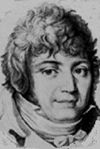
Ferdinando Paer


   Email Print
   Bookmark   Link


Ferdinando Paer


Ferdinando Paër (July 1, 1771 - May 3, 1839) was an Italian
Italy

Italy , officially the Italian Republic , is a country located on the Italian Peninsula in Southern Europe and on the two largest islands in the Mediterranean Sea, Sicily and Sardinia....
 composer.

was born at Parma
Parma

Parma is a city in the Italian region of Emilia-Romagna famous for its architecture and the fine countryside around it. It is the home of the University of Parma, one of the oldest universities in the world....
. His father was a trumpeter with the Ducal Bodyguards and also performed at church and court events. His name, Ferdinando, was after Duke Ferdinand of Parma and was given to him by Archduchess Maria Amalia of Austria, Duke Ferdinand's wife. He studied the theory of music under the violinist Ghiretti, a pupil of the Conservatorio della Pietà de' Turchini at Naples
Naples

Naples is a city in southern Italy, the capital of the region of Campania and of the province of Naples. The city is known for its rich history, art, culture and gastronomy, playing an important role throughout much of its existence; it is over 2,800 years old....
.


Discussion
Ask a question about 'Ferdinando Paer'
Start a new discussion about 'Ferdinando Paer'
Answer questions from other users
Full Discussion Forum


Encyclopedia


Ferdinando Paër (July 1, 1771 - May 3, 1839) was an Italian
Italy

Italy , officially the Italian Republic , is a country located on the Italian Peninsula in Southern Europe and on the two largest islands in the Mediterranean Sea, Sicily and Sardinia....
 composer.

Biography

Paër was born at Parma
Parma

Parma is a city in the Italian region of Emilia-Romagna famous for its architecture and the fine countryside around it. It is the home of the University of Parma, one of the oldest universities in the world....
. His father was a trumpeter with the Ducal Bodyguards and also performed at church and court events. His name, Ferdinando, was after Duke Ferdinand of Parma and was given to him by Archduchess Maria Amalia of Austria, Duke Ferdinand's wife. He studied the theory of music under the violinist Ghiretti, a pupil of the Conservatorio della Pietà de' Turchini at Naples
Naples

Naples is a city in southern Italy, the capital of the region of Campania and of the province of Naples. The city is known for its rich history, art, culture and gastronomy, playing an important role throughout much of its existence; it is over 2,800 years old....
. His first Italian opera
Opera

Opera is an Performing arts in which singers and musicians perform a dramatic work which combines a text and a musical score. Opera is part of the Western classical music tradition....
, Circe, was given in Venice during carnival 1792; others rapidly followed, and his name was soon famous throughout Italy. In 1797 he went to Vienna
Vienna

Vienna is the Capital of Republic of Austria and also one of the nine states of Austria. Vienna is Austria's primary city, with a population of about 1.7 million...
, where his future wife, the singer Francesca Riccardi, had obtained an engagement and he became music director of the Kärntnertortheater until 1801; here he produced a series of operas, including his Camilla (1799) and his Achille (1801). In 1802 he was appointed composer to the court theatre at Dresden
Dresden

Dresden is the capital city of the Germany Federal Free state of Saxony. It is situated in a valley on the River Elbe. The Dresden conurbation is part of the Saxon triangle metropolitan area....
, where his wife was also engaged as a singer, and in 1804 the life appointment of Hofkapellmeister was bestowed upon him by the elector.

He wrote the opera Leonora
Leonora (opera)

Leonora, ossia L?amore coniugale is an opera in two acts by the Italy composer Ferdinando Paer. The libretto, by Giovanni Schmidt, is based on L?onore ou L?Amour conjugal by Jean-Nicolas Bouilly, which was also the source of Beethoven's Fidelio....
 (1804), based on the same story as Beethoven's
Ludwig van Beethoven

Ludwig van Beethoven was a German composer and pianist. He was a crucial figure in the transitional period between the Classical music era and Romantic music eras in classical music, and remains one of the most acclaimed and influential composers of all time....
 Fidelio
Fidelio

Fidelio is a German language opera in two acts by Ludwig van Beethoven. It is Beethoven's only opera. The German libretto is by Joseph Sonnleithner from the French of Jean-Nicolas Bouilly....
. In 1807 Napoleon while in Dresden took a fancy to him, and took him with him to Warsaw
Warsaw

Warsaw is the Capital and World's largest cities of Poland. It is located on the Vistula River roughly from both the Baltic Sea coast and the Carpathian Mountains....
 and Paris
Paris

Paris is the Capital of France and the country's largest city. It is situated on the river Seine, in northern France, at the heart of the ?le-de-France Regions of France ....
 at a salary of 28,000 francs.

1809 Paër composed his most famous opera: Agnese a dramma semiserio per musica in two acts: Agnese, became successful throughout Europe and was performed at the most important theatres (Milan, Naples, Rome, Vienna, London and Paris). It had a deep influence on the following generations of composers and aroused the admiration of many celebrated musicians and musical critics such as Stendhal, Berlioz, Castil-Blaze and Chopin. The primary reason for this success is most certainly the high quality of the music involved, but the dramaturgical structure also presents significant material such as the madness scene of Agnese’s father Uberto (bass).

In 1812 he succeeded Spontini
Gaspare Spontini

Gaspare Luigi Pacifico Spontini was an Italy opera composer and conducting....
 as conductor of the Italian opera in Paris
Paris

Paris is the Capital of France and the country's largest city. It is situated on the river Seine, in northern France, at the heart of the ?le-de-France Regions of France ....
. He retained this post at the Restoration
Bourbon Restoration

Following the ousting of Napoleon I of France in 1814, the Allies restored the House of Bourbon to the France throne. The ensuing period is called the Restoration, following French usage, and is characterized by a sharp conservative reaction and the re-establishment of the Roman Catholic Church as a power in French politics....
, also receiving the posts of chamber composer to the king and conductor of the private orchestra of the duke of Orleans. In 1823 he retired from the Italian opera in favor of Rossini
Gioacchino Rossini

Gioachino Antonio Rossini was a popular Italian composer who created 39 operas as well as sacred music and chamber music. His best known works include Il barbiere di Siviglia , La Cenerentola and Guillaume Tell ....
. It was around this time that he taught composition lessons to the young Franz Liszt
Franz Liszt

Franz Liszt was a Kingdom of Hungary composer, virtuoso pianist and teacher.Liszt became renowned throughout Europe for his great skill as a performer during the 19th century....
. In 1831 Paer was elected a member of the Academy, and in 1832 was appointed conductor of his orchestra by King Louis Philippe.

Paër wrote a total of 55 operas, in the Italian style of Paisiello and Cimarosa
Domenico Cimarosa

Domenico Cimarosa was an Music of Italy opera composer of the Teatro di San Carlo#The great age of Neapolitan opera. He wrote more than eighty operas during his lifetime, including his masterpiece, Il matrimonio segreto ....
. His other works, which include several religious compositions, cantatas, many songs and a short list of orchestral chamber pieces, are worthy of further study and performance. His music is highly imaginative and melodic.

Operas


  • Orphée et Euridice (opera in prosa, 1791, Parma)
  • Circe (opera, libretto by Domenico Perelli, 1792, Venice; also given as Calypso)
  • Le astuzie, o Il tempo fa giustizia a tutti (dramma giocoso
    Dramma giocoso

    Dramma giocoso is the name of a genre of opera common in the mid-18th century. The term is a contraction of "dramma per musica" and is essentially a description of the text rather than the opera as a whole....
    , libretto by Antonio Brambilla, 1792, Parma; also given as La locanda dei vagabondi)
  • I portenti del magnetismo (opera buffa
    Opera buffa

    The term opera buffa was at first used as an informal description of Italy comic operas variously classified by their authors as ?commedia in musica?, ?commedia per musica?, ?dramma bernesco?, ?dramma comico?, ?divertimento giocoso' etc....
    , 1793, Venice)
  • Icilio e Virginia (libretto by Giuseppe Maria Foppa, 1793, Padua)
  • Laodicea (libretto by Giuseppe Maria Foppa, 1793, Padua; also given as Tegene e Laodicea, Florence, 1799)
  • I pretendenti burlati (dramma giocoso, libretto by Gian Carlo Grossardi, 1793, Parma)
  • L'oro fa tutto (dramma giocoso, libretto by Angelo Anelli, 1793, Milan; also given as Geld ist die, 1795, Dresden)
  • Il nuovo Figaro (dramma giocoso, libretto by Lorenzo Da Ponte
    Lorenzo Da Ponte

    Lorenzo Da Ponte was an Republic of Venice libretto and poet....
    , 1794, Parma; also given as Il matrimonio by Figaro)
  • Il matrimonio improvviso (farsa
    Farsa

    Farsa is a genre of opera, associated with Venice in the late 18th and early 19th centuries. It is also sometimes called farsetta.Farse were normally one-act operas, sometimes performed together with short ballets....
    , libretto by Giuseppe Maria Foppa, 1794, Venice; also given as I due sordi, Parma, 1801)
  • I molinari (farsa, libretto by Giuseppe Maria Foppa. 1794, Venice)
  • Il fornaro (farsa, 1794, Venice)
  • L'Idomeneo (dramma serio, libretto by Gaetano Sertor, 1794, Florence)
  • Ero e Leandro (dramma, 1794, Naples)
  • L'inganno in trionfo (intermezzo, 1794, Florence)
  • Una in bene e una in male (dramma giocoso, libretto by Giuseppe Maria Foppa, 1794, Roma; also given as Le astuzie di Patacca, 1802, Dresden)
  • La Rossana (melodramma serio, libretto by Aurelio Aureli, 1795, Milan)
  • Il Cinna (melodramma serio, libretto by Angelo Anelli, 1795, Padua)
  • Anna (opera buffa, 1795, Padua)
  • L'intrigo amoroso (dramma giocoso, libretto by Giovanni Bertati
    Giovanni Bertati

    Giovanni Bertati , an Italians Libretto.In 1763, Bertati wrote his first libretto, La morte di Dimone , set to music by Antonio Tozzi. Two years later, L'isola della fortuna , based on Bertati's libretto and Andrea Luchesi's music, was performed in Vienna....
    , 1795, Venice; also as Saed, ossia Gl'intrighi del serraglio, 1795, Venice; and Il male vien dal buco, 1797, Bologna)
  • L'orfana riconosciuta (dramma giocoso, 1796, Florence)
  • L'amante servitore (commedia in musica, libretto by Antonio Simeone Sografi, 1796, Venice)
  • Il principe di Taranto (dramma giocoso, libretto by Filippo Livigni, 1797, Parma; also as La contadina fortunata, 1807)
  • Il fanatico in Berlina (1797, Vienna)
  • Griselda, ossia La virtù al cimento (dramma semiserio, libretto by Angelo Anelli, 1798, Parma)
  • Camilla, ossia Il sotteraneo (dramma semiserio, libretto by Giuseppe Carpani, after B.-J. Marsollier des Vivetières 1799, Vienna)
  • Il maestro di ballo (farsa, libretto by Giuseppe Maria Foppa, 1799, Venice)
  • Il morto vivo (opera buffa, libretto by Carlo Prospero Defranceschi, 1799, Vienna)
  • La testa riscaldata (farsa, libretto by Giuseppe Maria Foppa, 1800, Venice)
  • La sonnambula (farsa, libretto by Giuseppe Maria Foppa, 1800, Venice)
  • Ginevra degli Almieri (opera tragicomica, libretto by Giuseppe Maria Foppa, 1800, Vienna)
  • Poche ma buone, ossia Le donne cambiate (opera buffa, libretto by Giuseppe Maria Foppa, 1800, Vienna; also as Der lustige Schuster, Offenbach, c 1800 and Leipzig, c 1890)
  • Achille (melodramma eroico, libretto by Giovanni De Gamerra
    Giovanni de Gamerra

    Giovanni de Gamerra was a cleric, a playwright, and a poet. He is best known as a prolific Libretto.Gamerra was born in Livorno, and worked from 1771 at the Teatro Regio Ducal in Milan ? an important centre for opera at the time....
    , after Homer
    Homer

    Homer is traditionally held to be the author of the ancient Greek language epic poems the Iliad and the Odyssey, as well as of the Homeric Hymns....
    , 1801, Vienna)
  • I fuorusciti di Florence (opera semiseria, libretto by Angelo Anelli, 1802, Dresden)
  • Sargino, ossia L'allievo dell'amore (dramma eroicomico, libretto by Giuseppe Maria Foppa, 1803, Dresden)
  • Lodoiska (dramma eroico, libretto by Francesco Gonella, 1804, Bologna)
  • Leonora
    Leonora (opera)

    Leonora, ossia L?amore coniugale is an opera in two acts by the Italy composer Ferdinando Paer. The libretto, by Giovanni Schmidt, is based on L?onore ou L?Amour conjugal by Jean-Nicolas Bouilly, which was also the source of Beethoven's Fidelio....
    , ossia L'amore conjugale
    (dramma semiserio, libretto by Giovanni Schmidt, after J. N. Bouilly, 1804, Dresden)
  • Sofonisba (dramma serio, libretto by Giovanni Schmidt, 1805, Bologna)
  • Il maniscalco (dramma giocoso, 1805, Florence)
  • Numa Pompilio (dramma serio, libretto by Matteo Noris, 1808, Paris)
  • Cleopatra (1808, Paris)
  • Diana e Endimione, ossia Il ritardo (intermezzo, libretto by Stefano Vestris, 1809, Paris)
  • Agnese (dramma semiserio in two acts, libretto Luigi Buonavoglia, 1809, Parma)
  • La Didone (melodramma serio, libretto by Pietro Metastasio, 1810, Paris)
  • Un pazzo ne fa cento (opera buffa, 1812, Florence)
  • I Baccanti (opera seria
    Opera seria

    Opera seria is an Italian musical term which refers to the noble and "serious" style of Italian opera that predominated in Europe from the 1710s to ca....
    , libretto by Gaetano Rossi
    Gaetano Rossi

    Gaetano Rossi was an Italy writer who wrote opera libretti for several composers including Gioachino Rossini, Gaetano Donizetti, and Giacomo Meyerbeer....
    , 1813, Paris)
  • Poche ma buone, ossia La moglie ravveduta (farsa comica, libretto by Giovanni De Gamerra
    Giovanni de Gamerra

    Giovanni de Gamerra was a cleric, a playwright, and a poet. He is best known as a prolific Libretto.Gamerra was born in Livorno, and worked from 1771 at the Teatro Regio Ducal in Milan ? an important centre for opera at the time....
    , 1813, Rome)
  • L'oriflamme (opéra, libretto by C.-G. Etienne and L.P.-M.-F. Baour-Lormian, 1814, Paris)
  • Oro non compra amore (opera buffa, 1814, Pavia)
  • L'eroismo in amore (melodramma serio, libretto by Luigi Romanelli, 1815, Milan)
  • La primavera felice (opera giocosa, libretto by Luigi Balocchi, 1816, Paris)
  • Le maître de chapelle, ou Le souper imprévu (opéra comique
    Opera Comique

    The Opera Comique was a 19th-century opera house constructed between Wych Street and Holywell Street with entrances on the East Strand, London. The theatre opened in 1870 and was demolished in 1902, for the construction of the Aldwych and Kingsway....
    , libretto by S. Gay, after A. Duval, 1821, Paris)
  • Blanche de Provence, ou La cour des fées (opéra, libretto by M. E. G. M. Théaulon
    Emmanuel Théaulon

    Marie-Emmanuel-Guillaume-Marguerite Th?aulon de Lambert was a French playwright.A customs inspector, then an inspector of military hospitals, he composed an Ode on the birth of the Napoleon II of France which brought him thanks from Napoleon himself....
     e de Rancé, 1821, Paris)
  • La marquise de Brinvilliers (opéra comique, 1831, Paris)
  • Un caprice de femme (opéra comique, libretto by J. P. F. Lesguillon, 1834, Paris)


External links

  • Ferdinando Paer and his Agnese http://www.ferdinandopaer.ch