
All Topics  
FAD


   Email Print
   Bookmark   Link


FAD


In biochemistry
Biochemistry

Biochemistry is the study of the chemistry processes in living organisms. It deals with the structure and function of cellular components such as proteins, carbohydrates, lipids, nucleic acids and other biomolecules....
, flavin adenine dinucleotide (FAD) is a redox
Redox

Redox describes all chemical reactions in which atoms have their oxidation number changed.This can be either a simple redox process such as the oxidation of carbon to yield carbon dioxide or the reduction of carbon by hydrogen to yield methane , or it can be a complex process such as the oxidation of sugar in the human body through a ser...
 cofactor
Cofactor (biochemistry)

A cofactor is a non-protein chemical compound that is bound to an enzyme and is required for catalysis. They can be considered "helper molecules/ions" that assist in biochemical transformations....
 involved in several important reactions in metabolism
Metabolism

Metabolism is the set of chemical reactions that occur in living organisms in order to maintain life. These processes allow organisms to grow and reproduce, maintain their structures, and respond to their environments....
. FAD can exist in two different redox states and its biochemical role usually involves changing between these two states. Many oxidoreductases, called flavoenzymes or flavoprotein
Flavoprotein

Flavoproteins are proteins that contain a nucleic acid derivative of riboflavin: the flavin adenine dinucleotide or flavin mononucleotide .Flavoproteins are involved in a wide array of biological processes, including, but by no means limited to, bioluminescence, removal of Radical contributing to oxidative stress, photosynthesis, DNA repa...
s, require FAD as a prosthetic group which functions in electron transfer
Electron transfer

Electron transfer is the process by which an electron moves from one atom or molecule to another atom or molecule. ET is a mechanistic description of the thermodynamic concept of redox, wherein the oxidation states of both reaction partners change....
s.

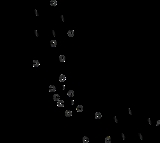
FAD is derived from riboflavin
Riboflavin

Riboflavin , also known as vitamin B2, is an easily absorbed micronutrient with a key role in maintaining health in humans and animals....
 (vitamin B2). It consists of a riboflavin group bound to the phosphate group of an adenosine diphosphate
Adenosine diphosphate

Adenosine diphosphate, abbreviated ADP, is a nucleotide. It is an ester of pyrophosphoric acid with the nucleoside adenosine. ADP consists of the pyrophosphate Functional group, the pentose sugar ribose, and the nucleobase adenine....
 molecule.


Discussion
Ask a question about 'FAD'
Start a new discussion about 'FAD'
Answer questions from other users
Full Discussion Forum


Recent Posts


Encyclopedia


In biochemistry
Biochemistry

Biochemistry is the study of the chemistry processes in living organisms. It deals with the structure and function of cellular components such as proteins, carbohydrates, lipids, nucleic acids and other biomolecules....
, flavin adenine dinucleotide (FAD) is a redox
Redox

Redox describes all chemical reactions in which atoms have their oxidation number changed.This can be either a simple redox process such as the oxidation of carbon to yield carbon dioxide or the reduction of carbon by hydrogen to yield methane , or it can be a complex process such as the oxidation of sugar in the human body through a ser...
 cofactor
Cofactor (biochemistry)

A cofactor is a non-protein chemical compound that is bound to an enzyme and is required for catalysis. They can be considered "helper molecules/ions" that assist in biochemical transformations....
 involved in several important reactions in metabolism
Metabolism

Metabolism is the set of chemical reactions that occur in living organisms in order to maintain life. These processes allow organisms to grow and reproduce, maintain their structures, and respond to their environments....
. FAD can exist in two different redox states and its biochemical role usually involves changing between these two states. Many oxidoreductases, called flavoenzymes or flavoprotein
Flavoprotein

Flavoproteins are proteins that contain a nucleic acid derivative of riboflavin: the flavin adenine dinucleotide or flavin mononucleotide .Flavoproteins are involved in a wide array of biological processes, including, but by no means limited to, bioluminescence, removal of Radical contributing to oxidative stress, photosynthesis, DNA repa...
s, require FAD as a prosthetic group which functions in electron transfer
Electron transfer

Electron transfer is the process by which an electron moves from one atom or molecule to another atom or molecule. ET is a mechanistic description of the thermodynamic concept of redox, wherein the oxidation states of both reaction partners change....
s.

FAD is derived from riboflavin
Riboflavin

Riboflavin , also known as vitamin B2, is an easily absorbed micronutrient with a key role in maintaining health in humans and animals....
 (vitamin B2). It consists of a riboflavin group bound to the phosphate group of an adenosine diphosphate
Adenosine diphosphate

Adenosine diphosphate, abbreviated ADP, is a nucleotide. It is an ester of pyrophosphoric acid with the nucleoside adenosine. ADP consists of the pyrophosphate Functional group, the pentose sugar ribose, and the nucleobase adenine....
 molecule. Note that, though the name "flavin adenine dinucleotide" is a misnomer (the molecule contains only one nucleotide
Nucleotide

Nucleotides are molecules that comprise the structural units of RNA and DNA. Additionally, nucleotides play central roles in metabolism. In that capacity, they serve as sources of chemical energy , participate in cell signaling , and are incorporated into important cofactors of enzymatic reactions ....
, i.e. AMP; the riboflavin
Riboflavin

Riboflavin , also known as vitamin B2, is an easily absorbed micronutrient with a key role in maintaining health in humans and animals....
 moiety is not linked to the D-ribityl group through glycosidic bond
Glycosidic bond

In chemistry, a glycosidic bond is a certain type of functional group that joins a carbohydrate molecule to another, which may be another carbohydrate....
), it is generally accepted now.

FAD can be reduced
Redox

Redox describes all chemical reactions in which atoms have their oxidation number changed.This can be either a simple redox process such as the oxidation of carbon to yield carbon dioxide or the reduction of carbon by hydrogen to yield methane , or it can be a complex process such as the oxidation of sugar in the human body through a ser...
 to the FADH2, whereby it accepts two hydrogen atoms:

The reduced coenzyme FADH2 is an energy-carrying molecule, and it can be used as a substrate for oxidative phosphorylation
Oxidative phosphorylation

Oxidative phosphorylation is a metabolic pathway that uses energy released by the redox of nutrients to produce adenosine triphosphate . Although the many forms of life on earth use a range of different nutrients, almost all carry out oxidative phosphorylation to produce ATP, the molecule that supplies energy to metabolism....
 in the mitochondria. FADH2 is reoxidized to FAD, which produces enough of a proton gradient across the inner mitochondrial membrane for the enzyme, ATP synthase to produce 2.0 equivalents of the high energy compound ATP
Adenosine triphosphate

This article is about the chemical used by cells as an energy carrier. For other uses, see ATP .Adenosine-5'-triphosphate is a multifunctional nucleotide, and plays an important role in cell biology as a coenzyme that is the "molecule unit of currency" of intracellular energy transfer....
. The primary sources of reduced FAD in eukaryotic metabolism are the citric acid cycle
Citric acid cycle

The citric acid cycle ? also known as the tricarboxylic acid cycle ; the Krebs cycle; or, more rarely, the Szent-Gy?rgyi-Krebs cycle) ? is a series of enzyme-catalysed chemical reactions of central importance in all living cell s that use oxygen as part of cellular respiration....
 and the beta oxidation
Beta oxidation

Beta oxidation is the process by which fatty acids, in the form of Acyl-CoA molecules, are broken down in mitochondria and/or in peroxisomes to generate Acetyl-CoA, the entry molecule for the Krebs cycle....
 reaction pathways. In the citric acid cycle, FAD is a prosthetic group
Prosthetic group

A prosthetic group is a non-protein component of a conjugated protein that is required for the protein's biological activity. The prosthetic group may be organic compound or inorganic ....
 in the enzyme succinate dehydrogenase that oxidizes succinate to fumarate, whereas in beta oxidation it serves as a coenzyme in the reaction of acyl CoA dehydrogenase
Acyl CoA dehydrogenase

Acyl-CoA dehydrogenases are a class of enzymes which function to catalyze the initial step in each cycle of fatty acid ? -oxidation in the mitochondria of cells....
.

Additional images


See also

  • Flavin mononucleotide
    Flavin mononucleotide

    Flavin mononucleotide , or riboflavin-5'-phosphate, is a biomolecule produced from riboflavin by the enzyme riboflavin kinase and functions as prosthetic group of various oxidoreductases including NADH dehydrogenase....
  • NAD