
Home      Discussion      Topics      Dictionary      Almanac
Signup       Login
Ethidium bromide

Ethidium bromide

Overview

Discussion
Ask a question about 'Ethidium bromide'
Start a new discussion about 'Ethidium bromide'
Answer questions from other users
Full Discussion Forum
 
Unanswered Questions
Encyclopedia

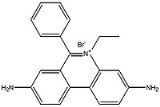
Ethidium bromide is an intercalating
Intercalation (chemistry)
In chemistry, intercalation is the reversible inclusion of a molecule between two other molecules . Examples include DNA intercalation and graphite intercalation compounds.- DNA intercalation :...

 agent commonly used as a fluorescent tag
Fluorescent tag
In molecular biology and biotechnology, a fluorescent tag is a part of a molecule that researchers have attached chemically to aid in detection of the molecule to which it has been attached. The tag is some kind of fluorescent molecule...

 (nucleic acid
Nucleic acid
Nucleic acids are biological molecules essential for life, and include DNA and RNA . Together with proteins, nucleic acids make up the most important macromolecules; each is found in abundance in all living things, where they function in encoding, transmitting and expressing genetic information...

 stain
Staining (biology)
Staining is an auxiliary technique used in microscopy to enhance contrast in the microscopic image. Stains and dyes are frequently used in biology and medicine to highlight structures in biological tissues for viewing, often with the aid of different microscopes...

) in molecular biology
Molecular biology
Molecular biology is the branch of biology that deals with the molecular basis of biological activity. This field overlaps with other areas of biology and chemistry, particularly genetics and biochemistry...

 laboratories for techniques such as agarose gel electrophoresis. It is commonly abbreviated as "EtBr", which is also an abbreviation for bromoethane
Bromoethane
Bromoethane, also known as ethyl bromide, is a chemical compound of the haloalkanes group. It is abbreviated by chemists as EtBr. This volatile compound has an ether-like odour.-Preparation:...

. When exposed to ultraviolet light, it will fluoresce
Fluorescence
Fluorescence is the emission of light by a substance that has absorbed light or other electromagnetic radiation of a different wavelength. It is a form of luminescence. In most cases, emitted light has a longer wavelength, and therefore lower energy, than the absorbed radiation...

 with an orange colour, intensifying almost 20-fold after binding to DNA
DNA
Deoxyribonucleic acid is a nucleic acid that contains the genetic instructions used in the development and functioning of all known living organisms . The DNA segments that carry this genetic information are called genes, but other DNA sequences have structural purposes, or are involved in...

. Under the name homidium, it has been commonly used since the 1950s in veterinary medicine to treat trypanosomosis in cattle, a disease caused by trypanosomes. The high incidence of antibiotic resistance makes this treatment impractical in some areas, where the related isometamidium chloride
Isometamidium chloride
Isometamidium chloride is a trypanocidal agent used in veterinary medicine....

 is used instead. Ethidium bromide may be a mutagen
Mutagen
In genetics, a mutagen is a physical or chemical agent that changes the genetic material, usually DNA, of an organism and thus increases the frequency of mutations above the natural background level. As many mutations cause cancer, mutagens are therefore also likely to be carcinogens...

, carcinogen
Carcinogen
A carcinogen is any substance, radionuclide, or radiation that is an agent directly involved in causing cancer. This may be due to the ability to damage the genome or to the disruption of cellular metabolic processes...

 or teratogen although this depends on the organism and the conditions.

Structure, chemistry, fluorescence


As with most fluorescent compounds
Chemical compound
A chemical compound is a pure chemical substance consisting of two or more different chemical elements that can be separated into simpler substances by chemical reactions. Chemical compounds have a unique and defined chemical structure; they consist of a fixed ratio of atoms that are held together...

, ethidium bromide is aromatic. Its core heterocyclic moiety is generically known as a phenanthridine
Phenanthridine
Phenanthridine is a nitrogen heterocyclic compound that is the basis of DNA-binding fluorescent dyes through intercalation. Examples of such dyes are ethidium bromide and propidium iodide. Acridine is an isomer of phenanthridine....

, an isomer of which is the fluorescent dye acridine
Acridine
Acridine, C13H9N, is an organic compound and a nitrogen heterocycle. Acridine is also used to describe compounds containing the C13N tricycle....

.

The reason for ethidium bromide's intense fluorescence after binding with DNA is probably not due to rigid stabilization of the phenyl moiety, because the phenyl ring has been shown to project outside the intercalated bases. In fact, the phenyl group is found to be almost perpendicular to the plane of the ring system, as it rotates about its single bond to find a position where it will impinge upon the ring system minimally. Instead, the hydrophobic environment found between the base pairs is believed to be responsible. By moving into this hydrophobic environment and away from the solvent, the ethidium cation is forced to shed any water molecules that were associated with it. As water is a highly efficient fluorescent quencher
Quenching (fluorescence)
Quenching refers to any process which decreases the fluorescence intensity of a given substance. A variety of processes can result in quenching, such as excited state reactions, energy transfer, complex-formation and collisional quenching. As a consequence, quenching is often heavily dependent on...

, the removal of these water molecules allows the ethidium to fluoresce.

Applications


Ethidium bromide is commonly used to detect nucleic acids in molecular biology laboratories. In the case of DNA
DNA
Deoxyribonucleic acid is a nucleic acid that contains the genetic instructions used in the development and functioning of all known living organisms . The DNA segments that carry this genetic information are called genes, but other DNA sequences have structural purposes, or are involved in...

 this is usually double-stranded DNA from PCRs, restriction digest
Restriction digest
A restriction digest is a procedure used in molecular biology to prepare DNA for analysis or other processing. It is sometimes termed DNA fragmentation...

s, etc. Single-stranded RNA
RNA
Ribonucleic acid , or RNA, is one of the three major macromolecules that are essential for all known forms of life....

 can also be detected, since it usually folds back onto itself and thus provides local base pair
Base pair
In molecular biology and genetics, the linking between two nitrogenous bases on opposite complementary DNA or certain types of RNA strands that are connected via hydrogen bonds is called a base pair...

ing for the dye to intercalate. Detection typically involves a gel containing nucleic acids placed on or under a UV lamp. Since ultraviolet
Ultraviolet
Ultraviolet light is electromagnetic radiation with a wavelength shorter than that of visible light, but longer than X-rays, in the range 10 nm to 400 nm, and energies from 3 eV to 124 eV...

 light is harmful to eyes and skin, gels stained with ethidium bromide are usually viewed indirectly using an enclosed camera, with the fluorescent images recorded as photographs. Where direct viewing is needed, the viewer's eyes and exposed skin should be protected. In the laboratory the intercalating properties have long been utilized to minimize chromosomal condensation when a culture is exposed to mitotic arresting agents during harvest. The resulting slide preparations permit a higher degree of resolution, and thus more confidence in determining structural integrity of chromosomes upon microscopic analysis.

Ethidium bromide has also been used extensively to reduce mitochondrial DNA copy number in proliferating cells.

Alternatives


There are alternatives to ethidium bromide which are advertised as being less dangerous and having better performance. For example, several SYBR
SYBR Green
SYBR Green I is an asymmetrical cyanine dye used as a nucleic acid stain in molecular biology. SYBR Green I binds to DNA. The resulting DNA-dye-complex absorbs blue light and emits green light . The stain preferentially binds to double-stranded DNA, but will stain single-stranded DNA with lower...

-based dyes are used by some researchers and there are other emerging stains such as Novel Juice. SYBR dyes are less mutagenic than EtBr by the Ames test
Ames test
The Ames test is a biological assay to assess the mutagenic potential of chemical compounds. A positive test indicates that the chemical is mutagenic and therefore may act as a carcinogen, since cancer is often linked to mutation. However, a number of false-positives and false-negatives are known...

 with liver extract. However, SYBR Green I was actually found to be more mutagenic than EthBr to the bacterial cells exposed to UV (which is used to visualize either dye). This may be the case for other "safer" dyes, but whilst mutagenic and toxicity details are available these have not been published in peer reviewed journals. The above article does find that DAPI
DAPI
DAPI or 4',6-diamidino-2-phenylindole is a fluorescent stain that binds strongly to A-T rich regions in DNA. It is used extensively in fluorescence microscopy...

 is a completely nonmutagenic stain. MSDS for SYBR Safe reports a LD50 for rats of >5 g/kg, which is higher than that of EtBr (1.5g/kg), but both are many orders of magnitude higher than the concentrations used in molecular biology. Also, many alternative dyes are suspended in DMSO
Dimethyl sulfoxide
Dimethyl sulfoxide is an organosulfur compound with the formula 2SO. This colorless liquid is an important polar aprotic solvent that dissolves both polar and nonpolar compounds and is miscible in a wide range of organic solvents as well as water...

, which has health implications of its own including increased skin absorption of organic compounds. Despite the performance advantage of using SYBR dyes instead of EtBr for staining purposes, many researchers still prefer EtBr since it is considerably less expensive.

Health risks


Ethidium bromide is thought to act as a mutagen
Mutagen
In genetics, a mutagen is a physical or chemical agent that changes the genetic material, usually DNA, of an organism and thus increases the frequency of mutations above the natural background level. As many mutations cause cancer, mutagens are therefore also likely to be carcinogens...

 because it intercalates double stranded DNA
DNA
Deoxyribonucleic acid is a nucleic acid that contains the genetic instructions used in the development and functioning of all known living organisms . The DNA segments that carry this genetic information are called genes, but other DNA sequences have structural purposes, or are involved in...

 (i.e., inserts itself between the strands), deforming the DNA. This could affect DNA biological processes, like DNA replication
DNA replication
DNA replication is a biological process that occurs in all living organisms and copies their DNA; it is the basis for biological inheritance. The process starts with one double-stranded DNA molecule and produces two identical copies of the molecule...

 and transcription
Transcription (genetics)
Transcription is the process of creating a complementary RNA copy of a sequence of DNA. Both RNA and DNA are nucleic acids, which use base pairs of nucleotides as a complementary language that can be converted back and forth from DNA to RNA by the action of the correct enzymes...

. Ethidium bromide has been shown to be mutagenic to bacteria via the Ames test
Ames test
The Ames test is a biological assay to assess the mutagenic potential of chemical compounds. A positive test indicates that the chemical is mutagenic and therefore may act as a carcinogen, since cancer is often linked to mutation. However, a number of false-positives and false-negatives are known...

, but only after treatment with liver homogenate, which simulates the metabolic breakdown of the molecule being tested. The lack of detected mutagenicity without liver homogenate indicates that ethidium bromide is not directly mutagenic, but that its metabolites are. The identity of these mutagenic metabolites are unknown. The National Toxicology Program states it is nonmutagenic in rats and mice. These results are supported by a subchronic carcinogenicity study in mice conducted at the university of Düsseldorf where also no mutagenic effects could be detected. Ethidium bromide (Homidium brand) use in animals to treat trypanosome infection suggests that toxicity and mutagenicity are not high. Studies have been conducted in animals to evaluate EtBr as a potential antitumorigenic chemotherapeutic agent. Its chemotherapeutic use is due to its toxicity to mitochondria. A more recent study shows that EtBr acts as a topoisomerase I poison, just like several anticancer drugs used in humans. The above studies do not support the commonly held idea that ethidium bromide is a potent mutagen in humans, but they do indicate that it can be toxic at high concentrations.

Most use of ethidium bromide in the laboratory (0.25–1 microgram/ml) is below the level required for toxicity. The level is high enough that exposure may interfere with replication of mitochondrial DNA in some human cell lines, although the implications of that are not clear. Testing in humans and longer studies in any mammalian system would be required to fully understand the potential risk ethidium bromide poses to lab workers.

Ethidium bromide can be added to YPD media and used as an inhibitor for cell growth.

Handling and disposal


Ethidium bromide is not regulated as hazardous waste at low concentrations, but is treated as hazardous waste by many organizations. Material should be handled according to the material safety data sheet (MSDS). Wastes should always be treated in accordance with federal, state and local guidelines.

The disposal of laboratory ethidium bromide remains a controversial subject. Ethidium bromide can be degraded chemically, or collected and incinerated. It is common for ethidium bromide waste below a mandated concentration to be disposed of normally (e.g., pouring it down a drain). A common practice is to treat ethidium bromide with sodium hypochlorite (bleach) before disposal. According to Lunn and Sansone, Chemical degradation using bleach yields compounds which are mutagenic by the Ames test
Ames test
The Ames test is a biological assay to assess the mutagenic potential of chemical compounds. A positive test indicates that the chemical is mutagenic and therefore may act as a carcinogen, since cancer is often linked to mutation. However, a number of false-positives and false-negatives are known...

. Data are lacking on the mutagenic effects of degradation products. Lunn and Sansone describe more effective methods for degradation. EtBr can be removed from solutions with activated charcoal or amberlite ion exchange resin. Various commercial products are available for this use.